
Why Is Panel Replacement So Expensive? (And When You Actually Need It)
⚡ Key Takeaways
- Average Cost in DFW: $2,800-$4,500 for a standard 100A to 200A upgrade in 2026—not because electricians are greedy, but because of mandated safety technology and skilled labor.
- The Real Cost Drivers: AFCI/GFCI “smart breakers” ($50-$90 each vs. $7 for old breakers), 2023 electrical code requirements (emergency disconnect, surge protection), and DFW’s tight labor market.
- When You MUST Replace: Federal Pacific, Zinsco, and Challenger panels are genuine fire hazards—insurance companies are canceling policies over them.
- Common Upsells to Avoid: “Your panel is full” doesn’t always mean you need a $4,000 upgrade—a $900 sub-panel often solves the problem.
- 2026 Tax Credits: Federal IRA credit offers up to $600 back when you pair your panel upgrade with heat pumps or EV chargers.
- The Truth: We’ve seen homeowners quoted $5,000 for full panel replacement when a $500 breaker fix was all they needed. You deserve an honest diagnosis first.
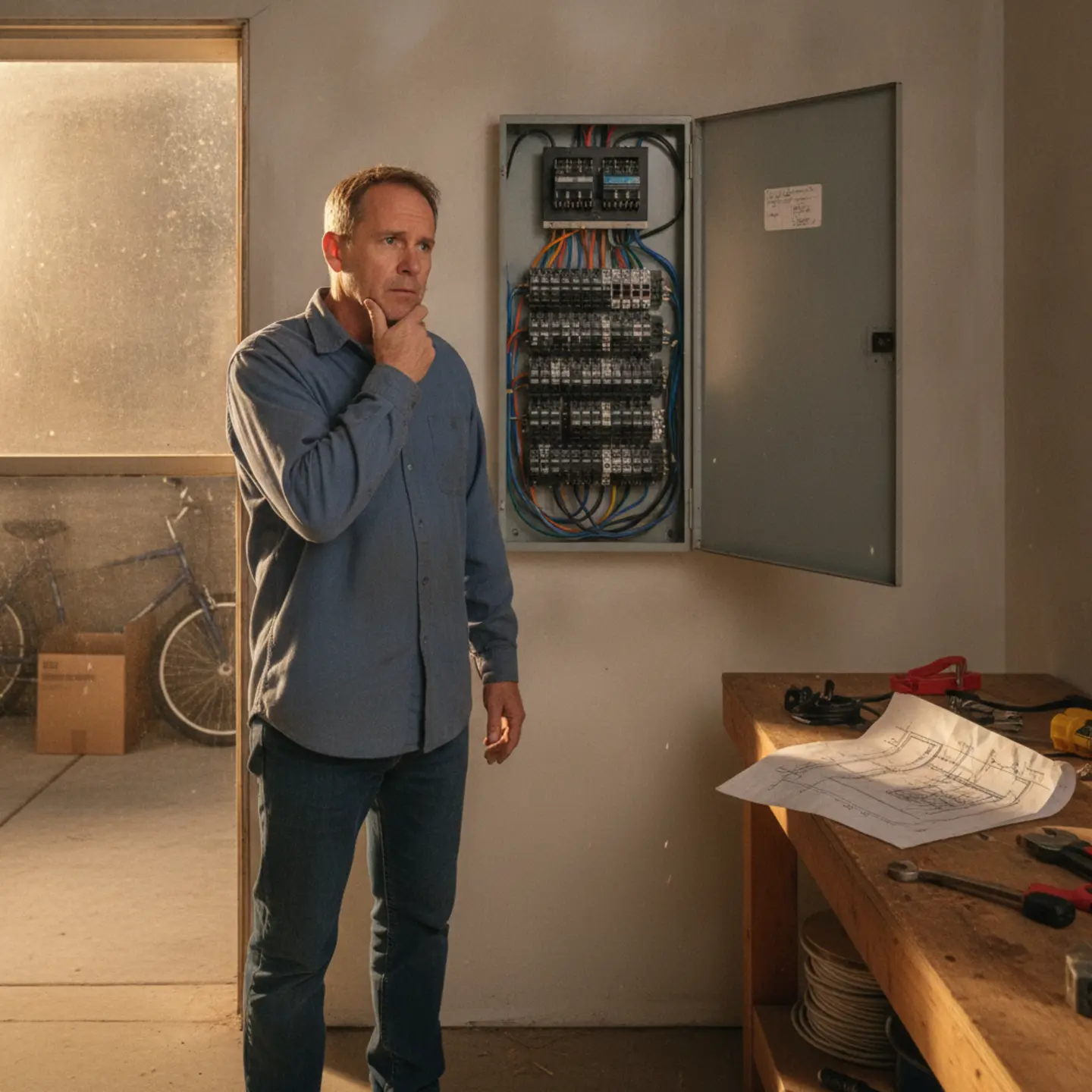
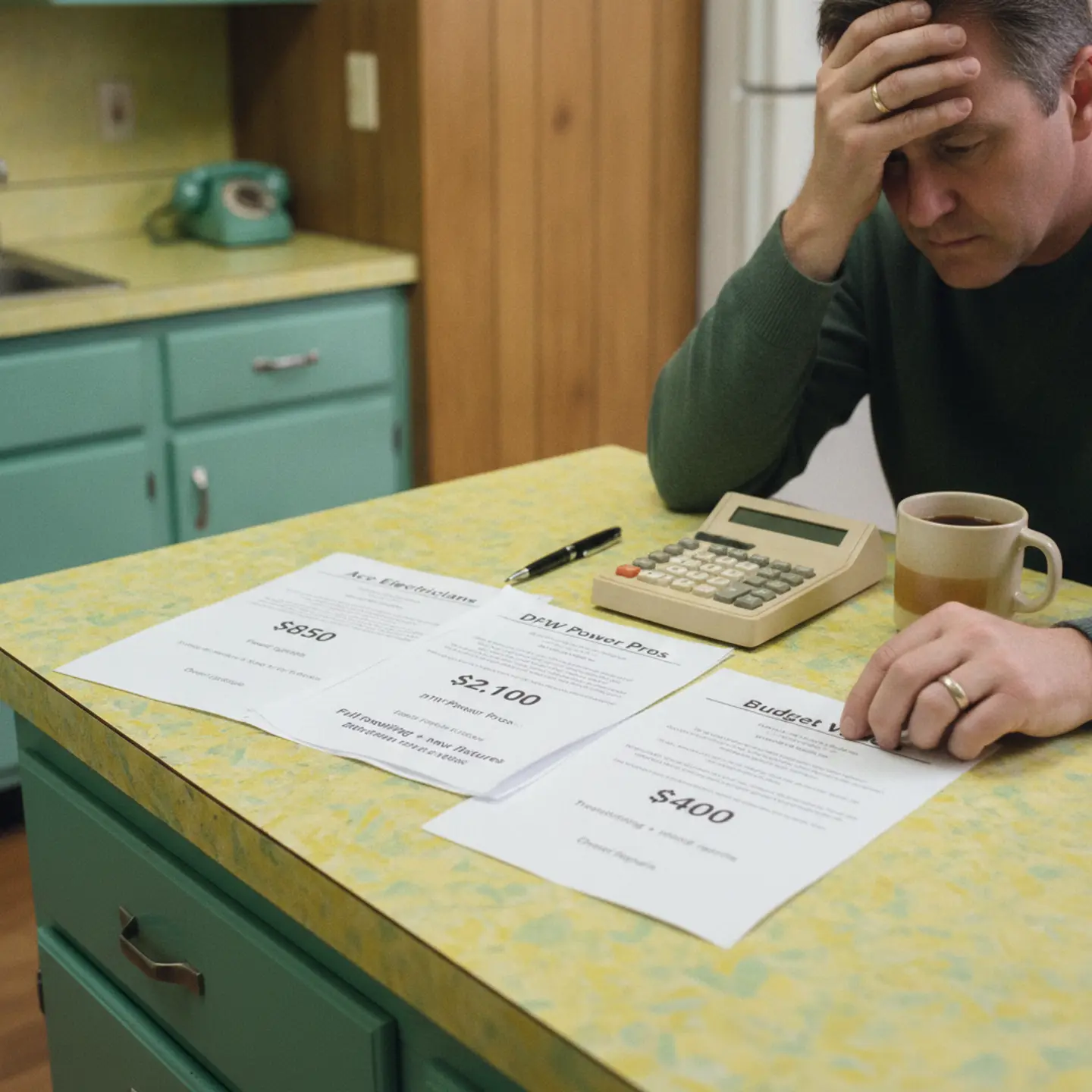
If you’ve recently been quoted $3,000, $4,000, or even $8,000 for electrical panel replacement, you’re probably experiencing some serious sticker shock right now. Maybe you’re wondering if this is really necessary, or if you’re being taken advantage of. Maybe another electrician told you your panel “has to be replaced immediately” and you’re not sure if you should believe them.
Here’s the truth: Yes, panel replacement IS expensive in 2026. And you’re absolutely right to question it.
But here’s what you deserve to know: the cost isn’t arbitrary, and it’s not always necessary. We’ve seen other electricians scare homeowners into $5,000 full panel replacements when a simple $500 breaker connection repair would have worked. In one recent case, a homeowner’s AC stopped working and they were told they needed a complete panel overhaul. We diagnosed the real issue—a burnt breaker terminal—fixed it in a few hours, and their AC started working immediately. They saved thousands by getting an honest assessment first.
This guide breaks down exactly what you’re paying for, when replacement is genuinely necessary (and when it’s not), and how to make the smart decision for your Fort Worth or DFW-area home. No pressure, no upsells—just the facts you need.
What Panel Replacement Actually Costs in DFW (2026)
Let’s start with the numbers. If you’re getting wildly different quotes from electricians, it’s because “panel replacement” isn’t a one-size-fits-all job. Here’s what you can expect to pay in the Dallas-Fort Worth area in 2026:
| Service Type | Amperage | DFW Cost Range | What’s Included |
|---|---|---|---|
| Like-for-Like Swap | 100A – 125A | $2,200 – $2,800 | Direct replacement of damaged panel with same amperage (rare—usually doesn’t meet modern code) |
| Standard Upgrade | 100A to 200A | $2,800 – $4,500 | Most common. New meter base, 200A panel, exterior disconnect, surge protection, grounding updates |
| Heavy-Up / High Capacity | 320A / 400A | $8,000 – $12,000 | For large homes with multiple EVs, heat pumps, pools—requires dual panels and utility coordination |
| Panel Relocation | N/A | +$1,500 – $4,000 | Moving panel from non-compliant location (closet, bathroom) to code-approved spot |
| Sub-Panel Installation | 60A – 100A | $900 – $1,500 | Adding capacity without changing main service—smart alternative if main has room |
💡 Why the Wide Range?
The cost depends on several factors: whether your service is overhead or underground (underground is more expensive), your home’s age (older homes need more code corrections), permit complexity in your city, and whether you need a meter base upgrade or service line replacement. A straightforward 200A upgrade in a 1990s Keller home might be $3,200, while the same upgrade in a 1970s Fort Worth home with corroded connections could be $5,500.
In the DFW area, permit fees vary by city. Fort Worth charges around $120-$150 for a standard panel upgrade based on project valuation. Plano and Frisco have similar fees but stricter aesthetic requirements for external equipment, which can add cost if your HOA requires conduit to be hidden from street view.
Average DFW Panel Upgrade Cost
This is for a standard 100A to 200A residential upgrade in 2026, slightly higher than the national average of $3,000-$4,000 due to DFW’s competitive labor market and booming construction industry.
If you’re seeing quotes significantly higher or lower than these ranges, that’s a red flag to ask more questions. Extremely low quotes often mean corners are being cut (unlicensed workers, no permits, substandard materials). Extremely high quotes may include unnecessary work.
Breaking Down the Invoice—Where Does $4,000 Actually Go?
When you look at an electrical panel—a metal box with plastic switches—it’s hard to understand how it can cost as much as a used car. The answer lies in what’s changed in the electrical industry over the past 5-10 years. This isn’t your grandfather’s panel replacement anymore.
The “Smart Breaker” Era—Why Your Breakers Now Cost $50 Instead of $7
This is the single biggest cost driver that most homeowners don’t know about. The 2023 National Electrical Code (NEC), which Texas adopted in September 2023, now mandates advanced circuit breakers called AFCI (Arc-Fault Circuit Interrupter) and GFCI (Ground-Fault Circuit Interrupter) protection for almost every circuit in your home.
Old standard breaker: $7-$15 each. Simple thermal-magnetic switch—when the circuit overloads, it trips.
New AFCI/GFCI breaker: $50-$90 each. Contains sophisticated microprocessors that monitor current waveforms in real-time to detect dangerous electrical arcing (which causes fires) or ground faults (which cause shocks). These are essentially mini-computers in every breaker slot.
The math: A typical 200-amp panel has 30-40 circuit breakers. If 30 of those now require AFCI/GFCI protection, that’s $1,500-$2,700 in breakers alone—before a single wire is even purchased. In 2010, that same panel’s breakers would have cost around $300 total.
💡 This Isn’t an Upsell—It’s Code
When an electrician tells you they need to use AFCI or GFCI breakers, this isn’t a preference or an optional upgrade. It’s required by the electrical code to pass inspection. You can verify this by checking the Texas AFCI breaker requirements. Any electrician who offers to install standard breakers to “save you money” is planning to do illegal, non-compliant work that will fail inspection.
Labor—Why It Takes a Two-Person Crew 8-10 Hours
In DFW’s booming construction market, skilled labor is expensive. Here’s why:
Texas requires licensed electricians for panel work. A typical crew consists of a Journeyman Electrician (who’s completed years of apprenticeship and passed state exams) supervised by a Master Electrician. In 2026, experienced Journeymen in DFW earn $30-$36 per hour, with Master Electricians earning significantly more.
The “burdened cost” of labor (what it actually costs a business to employ someone) is about double the hourly wage once you factor in payroll taxes, workers’ compensation insurance, liability insurance, vehicle costs, and ongoing training. This is why service rates for a two-person crew typically run $150-$225 per hour in DFW.
Time requirements: A proper, code-compliant 200A upgrade isn’t a 2-hour job. It takes 8-10 hours for two electricians, which equals 16-20 man-hours. That’s $2,000-$3,000 in labor value alone before materials.
What are they actually doing for 8-10 hours? They’re not just swapping a box. They’re:
- Coordinating with Oncor to temporarily disconnect power
- Installing a new meter base and service entrance conductors
- Installing an exterior emergency disconnect (new code requirement)
- Properly sizing and installing new ground rods
- Carefully transferring every circuit to the new panel and labeling them
- Testing each circuit for proper function and code compliance
- Installing whole-home surge protection
- Troubleshooting older wiring issues (shared neutrals, improper grounds)
- Cleaning up and restoring drywall or exterior finishes
This is precision work that requires expertise. One mistake could mean a fire hazard or electrical shock risk for your family.
The 2023 Code Changes That Changed Everything
Two code changes in the 2023 NEC have added significant costs to every panel replacement. These aren’t optional—they’re conditions of passing inspection in Fort Worth, Arlington, Keller, and every other DFW city.
1. Emergency Disconnect Requirement (NEC 230.85)
The code now requires an easily accessible outdoor emergency disconnect for firefighter safety. If your home burns, firefighters need to be able to cut power without entering the building or waiting for Oncor.
Millions of DFW homes built between 1960 and 2000 have their main breaker inside the garage or in a hallway panel. When you replace that panel, you can’t just swap the indoor box anymore—you must retrofit the service with an exterior disconnect.
Why this costs money: The existing service entrance cables are almost always too short to reach a new exterior location. The electrician has to replace the entire riser assembly and service conductors. This adds $500-$1,500 to what would otherwise be a simple panel swap.
Learn more about why the exterior disconnect is required and how it’s installed.
2. Mandatory Whole-Home Surge Protection (NEC 230.67)
All new electrical services must now include a surge protective device (SPD). DFW is prone to severe thunderstorms and lightning strikes, making this particularly important in North Texas.
Cost: A Type 1 or Type 2 surge protector adds $300-$900 to the project. While some modern panels have plug-on surge breakers, many services require an external unit. This protects your expensive electronics, smart home devices, and appliances from voltage spikes.
This isn’t an upsell—it’s required to pass inspection. Read more about whether whole-home surge protection is worth it.
⚠️ The Hidden Troubleshooting Cost
Here’s something most electricians won’t tell you upfront: when they install new AFCI breakers in an older home, the breakers often trip immediately because of outdated wiring methods (like “shared neutrals”). Separating these neutrals requires tracing circuits through your attic, opening junction boxes, and rewiring connections. This is unpredictable, time-consuming work. Reputable contractors factor a “troubleshooting buffer” into their quotes to avoid surprise charges later. This protects you from open-ended hourly billing that could spiral out of control.
When Panel Replacement Is Absolutely Necessary (No Debate)
Let’s be clear: while price is a valid concern, there are situations where the conversation shifts from “how much does it cost?” to “how fast can we get this done?” If you have any of the following in your home, replacement isn’t an upsell—it’s a safety imperative.
The “Must Replace” Panels: Federal Pacific, Zinsco, and Challenger
These panel brands are no longer manufactured, and for good reason. They have well-documented failure rates that make them genuine fire hazards.
Federal Pacific Electric (FPE) “Stab-Lok” Panels
These panels are everywhere in DFW subdivisions built between 1950 and 1980—especially in Richardson, Garland, and Mesquite.
The failure mechanism: The “Stab-Lok” breaker design is prone to jamming. When a circuit overloads (like when a space heater draws too much current), the breaker mechanism can seize in the “ON” position. The handle may appear to flip to “OFF,” but the internal contacts remain welded shut, allowing electricity to continue flowing to the overheated wire until insulation melts and a fire starts.
Failure rate: Independent testing has shown failure rates as high as 60% on certain double-pole breakers.
The insurance crisis: This is the primary driver for replacement in 2026. Major insurance carriers in Texas are refusing to write new policies on homes with FPE panels or requiring replacement within 30 days of closing. If you’re buying or selling a home, an FPE panel will likely kill the deal unless it’s replaced.
Verdict: Immediate replacement required. There is no safe repair or retrofit option. Learn more about Federal Pacific panel replacement costs and why it can’t wait.
Zinsco (GTE-Sylvania) Panels
Common in DFW homes built or remodeled in the 1970s, Zinsco panels have a different but equally dangerous problem.
The failure mechanism: The bus bar (the metal spine of the panel) is made of an aluminum alloy prone to oxidation. As the connection between breaker and bus bar corrodes, electrical resistance increases, generating intense heat that can melt the plastic breaker housing and fuse the breaker permanently to the bus bar.
Visual warning sign: Electricians often find breakers that physically cannot be removed because they’ve welded themselves to the panel.
Verdict: High-priority replacement. While slightly less notorious than FPE, they’re widely recognized as a fire hazard and liability.
Challenger Panels
Installed throughout the 1980s and 90s, Challenger panels have documented overheating issues related to their bus bar design and certain breaker series (Type H). While some can be retrofitted with new Eaton-compatible breakers, the labor cost often justifies full replacement to reset the system’s warranty and safety profile.
🔥 Insurance & Real Estate Impact
During the home buying process, a “4-Point Inspection” often reveals these panels. If found, the buyer typically cannot close without a replacement plan—or the seller must replace it before closing. If you’re planning to sell your home in the next few years, replacing a hazardous panel now prevents it from derailing your sale later. We’ve seen deals fall apart over a $3,500 panel because neither party wanted to pay for it.
Physical Safety Issues That Require Replacement
Even if you don’t have a notorious panel brand, certain physical conditions mean your panel has reached the end of its safe service life:
✅ Warning Signs—Call an Electrician Immediately If You Notice:
- Burning smell near the panel or breakers
- Buzzing or crackling sounds coming from the panel
- Breakers that feel hot to touch (breakers should be cool or slightly warm)
- Visible rust or water damage inside the panel (common in North Texas where meter bases fail)
- Scorch marks on the panel or around breakers
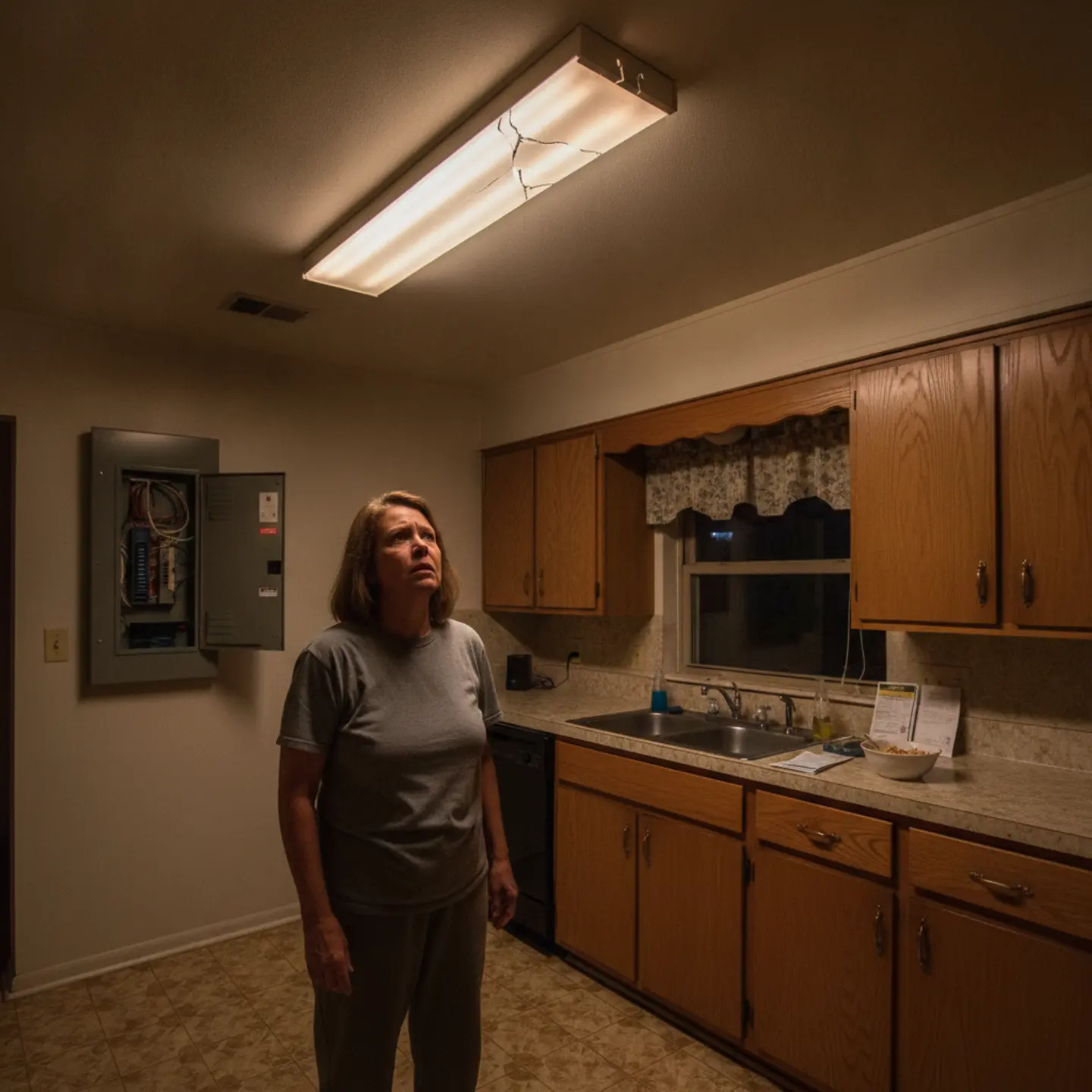
- Breakers that trip constantly, especially when you’re not running anything unusual
- Breakers that won’t reset or feel loose/wobbly
North Texas summers are brutal on outdoor electrical equipment. When temperatures hit 105°F and your attic reaches 140°F, electrical connections expand and contract. Over decades, this causes connections to loosen. Add in the humidity and rain that can seep into improperly sealed meter bases, and you get corrosion on bus bars and terminals. If you see rust streaks inside your panel, it’s not surface-level—it’s a sign of deep degradation that compromises safety.
If you’re experiencing any of these issues, learn why your breaker keeps tripping and what it means for your electrical system’s health.
Our Real-World Example: When Diagnosis Beats Replacement
We recently worked with a homeowner whose AC stopped working in the middle of July. Another electrician came out, opened the panel, saw some age and wear, and immediately recommended a full $5,000 panel replacement. The homeowner was skeptical and called us for a second opinion.
We performed a thorough diagnostic and found the real issue: a single burnt breaker connection. The AC circuit’s breaker terminal had corroded due to a loose connection (common in panels over 20 years old). We replaced the breaker, cleaned and tightened all the connections in the panel, and the AC fired right back up. Total cost: under $500. The homeowner saved over $4,000 by getting an honest assessment instead of an automatic upsell.
This is how we built our reputation. We give you options, not pressure. Sometimes you do need a full panel. Sometimes you don’t. We’ll tell you the truth either way.
When You DON’T Need Panel Replacement—Spotting Common Upsells
Not every electrician operates with your best interests in mind. In an environment of high costs and legitimate safety concerns, some contractors use fear tactics to push unnecessary work. Here’s how to protect yourself.
Upsell #1: “Your Panel Is Full—You Need a $4,500 Upgrade Immediately”
The claim: A technician opens your panel, sees that every breaker slot is occupied, and declares that your panel is “overloaded” and “maxed out.” They quote you $4,000-$5,000 for a service upgrade.
The reality: A panel being physically full (no empty slots) is completely different from being electrically overloaded. Your panel’s main breaker is rated for a certain amperage—typically 100A, 150A, or 200A. If your home’s calculated electrical load (demand) is within that rating, the system is perfectly safe.
What to Do Instead
Ask the electrician to perform a load calculation per NEC Article 220. This is a mathematical formula that determines your home’s actual electrical demand based on square footage, major appliances, and circuits. If your calculated load is 120 amps and you have a 150-amp service, you’re fine—even if every physical slot has a breaker in it.
Cost-effective solutions: If you genuinely need more circuit capacity, a sub-panel installation costs $900-$1,500 and adds physical space for new circuits without replacing your main service. Alternatively, many panels are rated to accept “tandem breakers” (two circuits in one slot), which costs about $50 per breaker instead of $4,000 for a full upgrade.
Upsell #2: “Your Outlets Are Ungrounded—We Have to Rewire the Whole House for $15,000”
The claim: “Your home has old two-prong outlets without grounding. This is a major safety issue. We need to rewire the entire house or replace the panel to fix it.”
The reality: While rewiring is the ideal long-term solution, the National Electrical Code explicitly allows for GFCI protection as a safe, code-compliant alternative. A GFCI breaker or GFCI outlet installed at the beginning of a circuit protects everything downstream from ground faults (electric shocks), even without a ground wire.
The cost difference: Full house rewire: $10,000-$25,000. GFCI protection retrofit: $300-$800. That’s a massive difference for achieving code-compliant safety. Learn more about how GFCI protection works on 2-wire circuits.
Upsell #3: The “Free Inspection” Scam
The scenario: Someone knocks on your door claiming to be from “the electric company” or Oncor, offering a “free safety inspection” or “neighborhood electrical audit.”
The fact: Oncor does not solicit door-to-door residential service. They do not sell panels or electrical work. These individuals are typically lead generators for high-pressure sales companies that use scare tactics to close deals on the spot.
🚨 Red Flags to Watch For
- Any electrician who won’t provide their TDLR Electrical License number (TECL) on request
- Pressure to “sign today” for a “special discount”
- Quotes that are suspiciously low (likely unlicensed workers cutting corners)
- Refusal to pull permits (this is illegal and means failed inspections later)
- Inability to explain why you need the work in clear, non-technical terms
Protect yourself: Always verify licensing at the Texas Department of Licensing and Regulation website. Legitimate electricians proudly display their TECL number on their trucks, uniforms, and business cards.
2026 Tax Credits & Incentives for DFW Homeowners
Now for some good news: if you do need a panel upgrade, there are significant financial incentives available in 2026 that can offset hundreds of dollars of the cost.
Federal Inflation Reduction Act (IRA) Credit—Up to $600 Back
The Energy Efficient Home Improvement Credit (Section 25C) is the most accessible financial tool for DFW homeowners upgrading their electrical panel.
How it works: The credit allows you to deduct 30% of your project cost from your federal tax liability, with a cap of $600 for electrical panel upgrades.
The requirements:
- Panel must be rated for 200 amps or greater
- Panel upgrade must be installed “in conjunction with” another qualified energy property, such as:
- Heat pump HVAC system
- Heat pump water heater
- EV charger installation (under separate 30C credit)
- Solar panels
Important: You cannot claim the credit for a standalone panel replacement due to age or panel brand. The IRS requires that the panel be necessary to support new energy-efficient equipment.
Maximize Your Tax Credit
By bundling a heat pump installation with a panel upgrade, you could claim up to $2,600 in tax credits in a single year ($600 for panel + $2,000 for heat pump). This significantly reduces your out-of-pocket cost.
Strategy: If you’re considering both a panel upgrade and any major appliance replacement (HVAC, water heater, EV charger), bundle the projects in the same tax year to maximize credits.
Oncor Incentives—How They Actually Work
Oncor, the transmission and distribution utility for most of North Texas, manages a state-mandated energy efficiency incentive program. However, it’s not as simple as applying for a rebate after the work is done.
How it works: Oncor does not write checks directly to homeowners. Instead, they pay incentives to Participating Service Providers—contractors who have registered with their program. The contractor then discounts your invoice by the incentive amount.
Actionable advice for DFW residents: You cannot hire a random electrician and apply for the Oncor rebate later. You must verify that your contractor is an active Oncor Participating Service Provider before signing a contract. Visit takealoadofftexas.com to search for approved providers in your zip code.
Not all electrical work qualifies for Oncor incentives—the program focuses on energy efficiency upgrades like high-efficiency HVAC systems, LED lighting retrofits, and smart thermostats paired with electrical work.
Should You Replace Your Panel? The Decision Matrix
Making a multi-thousand-dollar decision is never easy. Use this decision matrix to evaluate your situation objectively:
| Your Situation | Risk Level | Recommendation | Timeline |
|---|---|---|---|
| Federal Pacific or Zinsco panel present | 🔴 Critical | Replace immediately | This week—fire risk and insurance cancellation imminent |
| Burning smell, buzzing, or crackling from panel | 🔴 Emergency | Call licensed electrician today | Today—signs of active electrical arcing |
| Visible rust, water damage, or scorch marks | 🟠 High | Replace soon | 1-2 months—internal corrosion compromises breaker function |
| Adding EV charger to home | 🟡 Moderate | Get load calculation first | 2-3 months—determine if upgrade needed or load management works |
| Renovating kitchen or bathroom | 🟡 Low-Moderate | Upgrade if required by electrician | Plan with renovation timeline—new circuits will trigger AFCI code requirements |
| Panel is “full” but otherwise healthy | 🟢 Low | Consider sub-panel instead | Non-urgent—save money by expanding capacity rather than replacing |
If your situation isn’t on this chart, schedule a professional electrical safety inspection to get a clear assessment.
Vetting Your Electrician—3 Questions That Separate Pros from Predators
When you’re getting quotes in DFW, ask these three questions. The answers will immediately tell you whether you’re dealing with a skilled professional or someone looking to take advantage of your lack of electrical knowledge.
✅ Ask These Questions Before Signing a Contract:
- Question 1: “Will you perform a load calculation (NEC Article 220) before recommending a service size?”
- Red flag answer: “We don’t need to do that” or “I can just look at your panel and tell”
- Professional answer: “Yes, absolutely. We calculate your home’s actual demand to ensure we’re sizing the service correctly.”
- Question 2: “Does your quote include the 2023 NEC requirements for an emergency disconnect and whole-home surge protection?”
- Red flag answer: “Those are optional upgrades” or vague responses
- Professional answer: “Yes, both are included—they’re required by code to pass inspection.”
- Question 3: “Are you an Oncor Participating Service Provider?” (if you want to capture utility incentives)
- Red flag answer: “You can apply for that yourself after we’re done”
- Professional answer: “Yes, we’re registered. We’ll handle the application and discount your invoice.”
💡 Verify the TDLR License
Every electrician in Texas must have a TDLR Electrical Contractor License (TECL number). Ask to see it, then verify it’s active at the Texas Department of Licensing and Regulation website. Legitimate electricians will have this number displayed prominently on their truck, uniforms, and estimates.
We believe that most electrical issues can be solved simply, safely, and honestly. We give you peace of mind by fixing what’s needed—no more. If you don’t need a $4,000 panel replacement, we’ll tell you. If a $500 repair will solve the problem, that’s what we recommend. We built Epic Electrical on transparency, not upsells.
Your Panel Replacement Questions Answered
How much does a 200-amp panel upgrade cost in Fort Worth and DFW in 2026?
A standard 200-amp panel upgrade in the Dallas-Fort Worth area typically costs between $2,800 and $4,500 in 2026. This includes the new panel, meter base, exterior emergency disconnect (required by 2023 NEC), whole-home surge protection, upgraded grounding, labor, and permits. The exact price depends on whether your service is overhead or underground, your home’s age, and whether additional code corrections are needed. Prices in Fort Worth, Arlington, Keller, and Southlake are comparable, with slight variations based on local permit fees and project complexity.
Do I really need to replace my panel, or can I just repair it?
It depends entirely on the specific issue. If you have a Federal Pacific, Zinsco, or Challenger panel, replacement is necessary—these are known fire hazards that cannot be safely repaired. If you’re experiencing frequent breaker trips, burning smells, or visible damage like rust or scorch marks, replacement is likely the safest option. However, if you have a single faulty breaker or a loose connection, a repair may be all you need. We’ve saved homeowners thousands by diagnosing the real issue first instead of automatically recommending full replacement. Always get an honest diagnostic before agreeing to a $4,000+ job.
Why are AFCI breakers so expensive?
AFCI (Arc-Fault Circuit Interrupter) breakers cost $50-$90 each because they contain sophisticated microprocessors that constantly monitor electrical current for dangerous arcing conditions that cause fires. Unlike standard breakers that simply detect overloads, AFCI breakers analyze the waveform of electricity flowing through your circuits in real-time. They’re essentially mini-computers designed to prevent electrical fires before they start. The 2023 National Electrical Code now requires AFCI protection for most circuits in your home, which is why a panel with 30+ AFCI breakers can have $1,500-$2,700 in breakers alone. This isn’t an optional upgrade—it’s mandated for safety.
Can I get tax credits for electrical panel replacement in 2026?
Yes, but with specific requirements. The federal Inflation Reduction Act (IRA) offers a tax credit of up to $600 for electrical panel upgrades, but the panel must be 200 amps or greater and must be installed “in conjunction with” other qualified energy-efficient equipment like heat pumps, heat pump water heaters, or EV chargers. You cannot claim the credit for a standalone panel replacement due to age or brand. If you’re planning to upgrade your HVAC system or install an EV charger anyway, bundling these projects allows you to claim both credits in the same tax year—potentially up to $2,600 total. Always consult a tax professional to verify eligibility for your specific situation.
How long does electrical panel replacement take?
A standard 200-amp panel upgrade typically takes 8-10 hours for a two-person crew, which usually means a full workday. Your power will be temporarily disconnected while the electrician coordinates with Oncor to safely swap the meter. Most of the time, power is restored by late afternoon or evening the same day. More complex jobs—like a 400-amp heavy-up, panel relocation, or extensive code corrections—may take 1.5 to 2 days. A reputable electrician will give you a clear timeline upfront and communicate any delays. The work requires precision and cannot be rushed—proper installation is critical for safety.
What permits are required for panel replacement in Fort Worth, Arlington, and DFW cities?
All electrical panel replacements in DFW require permits, no exceptions. In Fort Worth, permit fees are based on project valuation and typically run $120-$150 for a standard panel upgrade. Arlington, Keller, Southlake, Colleyville, Grapevine, and other DFW cities have similar requirements with fees ranging from $100-$200. The permit process includes an inspection by a city electrical inspector after the work is complete to verify it meets the 2023 National Electrical Code. Any electrician who offers to skip permits to “save money” is doing illegal work that will fail inspection and could void your homeowner’s insurance. Always insist on permitted, inspected work—it protects you and ensures the job is done safely and to code.
Is my Federal Pacific panel really dangerous, or is that just a scare tactic?
It’s a real, documented danger—not a scare tactic. Federal Pacific Electric (FPE) “Stab-Lok” panels have a well-documented history of breaker failures. Independent testing has shown that certain FPE breakers fail to trip during overload conditions up to 60% of the time, allowing dangerous overheating and fires to occur. The U.S. Consumer Product Safety Commission investigated these panels and found they pose a serious fire hazard. In 2026, major insurance companies in Texas are refusing to insure homes with FPE panels or requiring replacement within 30 days as a condition of coverage. This isn’t contractor fear-mongering—it’s a genuine liability. If you have an FPE panel, replacement should be your top priority. Learn more about Federal Pacific panel replacement costs in Fort Worth.
Get an Honest Assessment—No Pressure, Just Facts
Panel replacement is expensive—but you deserve to know exactly what you’re paying for and why. More importantly, you deserve to know if you even need it in the first place.
We’ve built Epic Electrical’s reputation on honest diagnosis and transparent recommendations. We’ll tell you if you need a $50 breaker or a $4,000 panel—and we’ll explain the difference clearly, without pressure or jargon. If your panel is a Federal Pacific fire hazard, we’ll tell you that too, and help you understand your options.
You shouldn’t have to guess whether you’re being taken advantage of. That’s why we start every job with a thorough assessment and a clear explanation of what we find. We give you options, not pressure. We explain dangers and fixes clearly. And we leave your home safe and code-compliant.
Whether you need a simple repair or a full panel upgrade, we’re here to guide you through the process with the honesty and expertise you deserve.
Call or Text: (682) 478-6088
Serving Fort Worth, Arlington, Keller, Southlake, Colleyville, Grapevine, Lewisville, and all of DFW