Do I Need to Upgrade My Electrical Panel for an EV Charger? Fort Worth Homeowner’s Honest Guide
You just bought your dream electric vehicle. The dealership made it sound simple: plug it in at home, wake up with a full charge, never visit a gas station again. Then you called electricians for quotes, and the confusion started.
One company says your 100-amp panel needs a $5,000 upgrade. Another warns that without a 200-amp service, you’re risking a house fire. A third electrician quotes $7,000 with vague mentions of “code compliance” and “future-proofing.” You’re left wondering: Do I actually need this expensive upgrade, or am I being sold something I don’t need?
If you’re reading this, you’re not being paranoid. The confusion is real, and unfortunately, so is the upselling. Large electrical companies know that most homeowners don’t understand load calculations or electrical codes. They use that information gap to their advantage, pushing upgrades that pad their profits but don’t always serve your home’s actual needs.
Here’s what you deserve: the truth about when panel upgrades are genuinely necessary for safety and when they’re optional. You deserve to understand what your home actually requires, backed by math and electrical code, not fear tactics. That’s what this guide delivers.
⚡ Key Takeaways
- Most 100-amp panels CAN support EV charging under specific conditions — it depends on your existing electrical load and appliance types
- Federal Pacific and Zinsco panels MUST be replaced immediately — these are documented fire hazards with breaker failure rates up to 60%, not an upsell
- Load management devices can save you $2,000-$4,000 compared to a full panel upgrade and are specifically code-compliant per NEC 625.42(A)
- A proper NEC Article 220 load calculation is required to determine if your panel can handle the additional load — “eyeballing” it is not valid
- Texas heat affects wire capacity — DFW attics reach 120°F+ in summer, requiring temperature derating for safe EV charging circuits
- All-electric homes usually need upgrades — electric heat, water heater, and range combined with EV charging typically exceeds 100-amp capacity
- The answer is specific to YOUR home — not a one-size-fits-all recommendation based on panel amperage alone
The Short Answer: When You DO and DON’T Need an Upgrade
Let’s cut straight to what determines whether your Fort Worth home needs an electrical panel upgrade for EV charging.
When You Absolutely DO Need an Upgrade
There are three scenarios where a panel upgrade is mandatory, and any electrician who tells you otherwise is cutting corners on safety.
First, if your panel is a Federal Pacific Electric (FPE) “Stab-Lok” or Zinsco brand, it must be replaced before installing an EV charger. These panels are documented fire hazards with breaker failure rates as high as 60%. Installing a high-demand, continuous-load device like an EV charger on a panel known for breaker failure isn’t just risky — it’s negligent. We’ll explain exactly why these panels are dangerous in the next section, but understand this isn’t an upsell. It’s a critical safety issue that insurance companies take seriously. Many Texas insurers including State Farm and Allstate may deny coverage or renewal if they discover these panels during inspections.
Second, if your home runs on all-electric appliances with a 100-amp service, the math simply doesn’t work. When you combine electric heat strips (which can draw 42 amps alone), an electric water heater, an electric range, and then add an EV charger drawing another 30-50 amps, you’ve exceeded your panel’s capacity. There’s no wiggle room here. The electrical demand surpasses what a 100-amp service can safely provide.
Third, if a proper load calculation shows your existing electrical demand is already at 80+ amps before adding the EV charger, you’ve maxed out your capacity. Even if your panel brand is safe, you can’t add a significant continuous load without creating an overload situation. This is where honest math trumps hopeful thinking.
When You DON’T Need an Upgrade
Now for the scenarios where contractors often push unnecessary upgrades, even though your home can safely support EV charging.
If you have a modern 200-amp electrical service installed after 1990, you almost certainly don’t need an upgrade. Most 200-amp panels in Fort Worth homes have 40-50 amps of available capacity even with central AC, modern appliances, and typical usage. Unless you’re planning to install multiple Level 2 chargers simultaneously or you’re adding other major electrical loads like a tankless electric water heater, your existing panel is ready for an EV.
If your home has a 100-amp or 125-amp panel but uses gas for heating, water heating, and cooking, you likely have plenty of electrical capacity available. Gas appliances significantly reduce your electrical load. A home with gas heat, a gas water heater, and a gas range might only use 50-60 amps of its 100-amp capacity before adding an EV charger. Adding a 32-amp EV charger brings your total demand to around 90 amps, which leaves a safety margin and doesn’t require an upgrade.
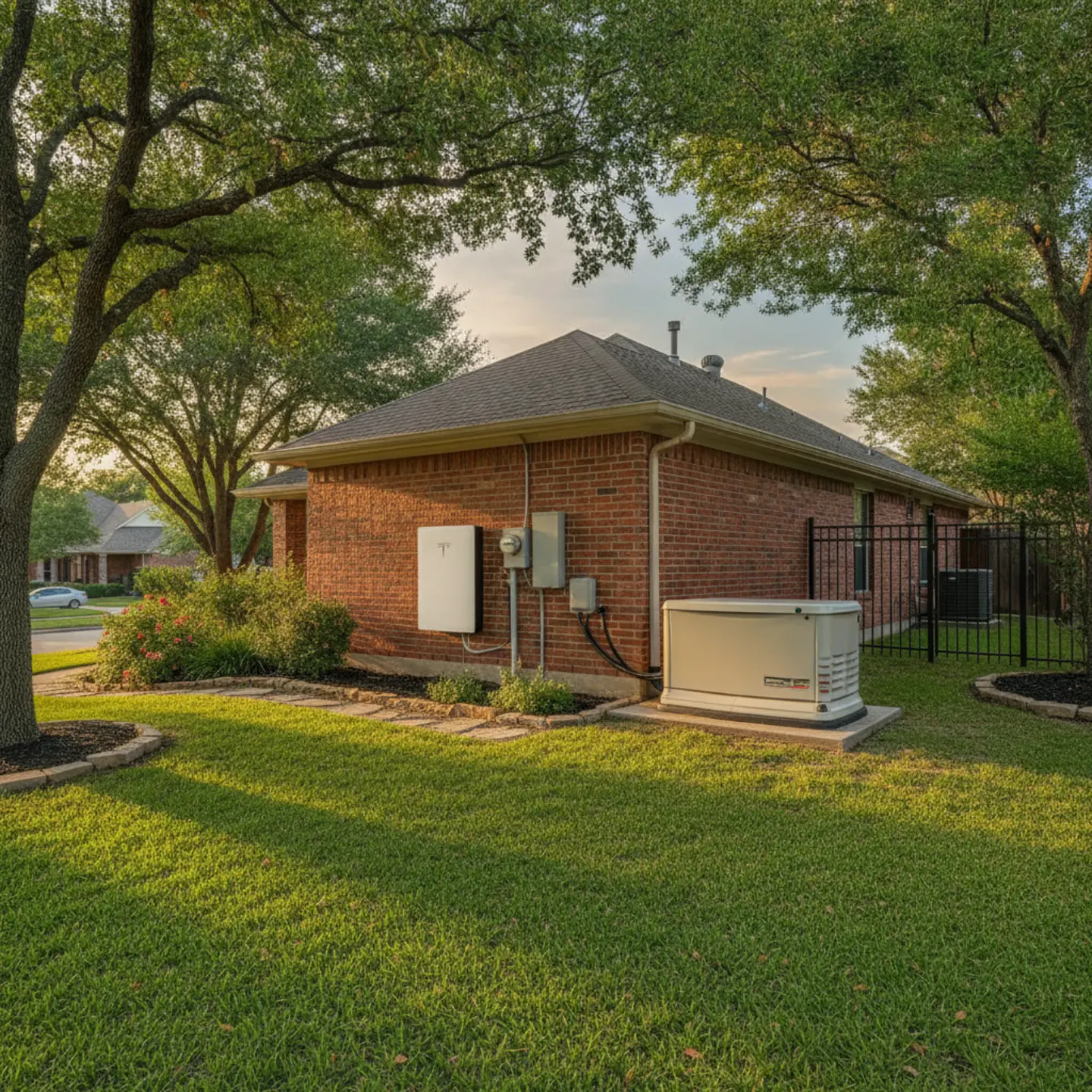
Finally, if your existing panel is at or near capacity but is otherwise safe and modern, a load management device offers a code-compliant alternative that costs roughly half what a full panel upgrade costs. These devices monitor your home’s total electrical consumption in real-time and automatically modulate the EV charger’s power draw when other major appliances are running. Your car still charges fully overnight, but the system intelligently manages the timing to prevent overloads.
💡 The Honest Truth About Load Calculations
A proper electrician should perform an NEC Article 220 load calculation BEFORE quoting a panel upgrade. This involves looking at your appliance labels, measuring your home’s square footage, and doing actual math to determine your electrical demand.
If an electrician glances at your panel for 30 seconds and immediately says “you need 200 amps,” they’re guessing — and usually guessing in their financial favor. Load calculations take 15-20 minutes and involve real numbers. Ask to see the math. Any reputable electrician will gladly show you.
Understanding Your Fort Worth Home’s Electrical Panel
Before we dive deeper into when upgrades are necessary, it helps to understand what your electrical panel actually does and what “100-amp service” really means for your home.
What Does “100-Amp Service” Actually Mean?
Your electrical service rating tells you the maximum current your home can safely draw from the utility company at any given moment. Think of it like water flowing through a pipe — the amperage is the size of that pipe.
A 100-amp service at 240 volts provides roughly 24,000 watts of total capacity. A 200-amp service provides about 48,000 watts. These numbers represent your home’s maximum simultaneous electrical consumption.
Here’s the critical part that many homeowners miss: not all of your circuits run at maximum capacity simultaneously. Your AC might draw 20 amps while running, but it’s not running constantly. Your dryer pulls 25 amps, but only when you’re doing laundry. Your electric range could draw 40 amps, but only when all burners and the oven are on at maximum temperature.
This concept is called “demand” versus “capacity.” Electrical codes recognize that your actual demand (what you’re using) is typically much lower than your theoretical capacity (what every appliance would draw if all running simultaneously). This is why a 100-amp panel can often safely serve a home that has 150+ amps worth of breakers installed. You’re not using everything at once.
The challenge with EV chargers is that they’re continuous loads. When your car is charging, it draws significant power continuously for 3-8 hours. This is different from your dryer running for 45 minutes or your oven preheating for 15 minutes. The National Electrical Code requires calculating continuous loads at 125% of their actual draw to account for sustained heat generation in the wiring and breakers.
The DFW Housing Stock Reality
The age of your Fort Worth-area home tells us a lot about its electrical capacity and whether it’s EV-ready.
Homes built before 1960 in neighborhoods like Ryan Place, Fairmount, or Berkeley typically have 60-amp fuse boxes. These were designed for an era when peak electrical demand meant incandescent lighting and maybe a refrigerator. Many still use cloth-insulated wiring and lack proper equipment grounding (the third prong on outlets). For these homes, adding an EV charger isn’t a matter of upgrading the panel — it requires complete electrical system modernization from the meter to every outlet.
The suburban expansion between 1966 and 1989 built most of Arlington, Hurst, North Richland Hills, and Bedford. These homes typically have 100-amp or 125-amp services designed to handle the new necessity of central air conditioning. This is the “gray area” where proper load calculations become critical. Many of these homes CAN support EV charging, but the answer depends on whether you have gas or electric appliances and how large your home is.
This era also introduced two major problems specific to the DFW market: aluminum branch wiring (due to copper shortages during the Vietnam War) and defective panel brands including Federal Pacific and Zinsco. We’ll address these critical safety issues in the next section.
Homes built from 1990 onward in Keller, Southlake, Colleyville, and North Fort Worth standardized 200-amp service. These homes typically use copper wiring, modern magnetic-hydraulic breakers, and have substantial spare capacity. If your home is from this era and the panel is in good condition, you’re almost certainly EV-ready without modifications. The only caveat is if you’ve added major loads like pool equipment, outdoor kitchens, or if your home exceeds 4,000 square feet with multiple HVAC systems.
Fort Worth Electrical Panel Stats
Documented failure rate of Federal Pacific Electric breakers under continuous load conditions — this is why replacement is mandatory, not optional
Average cost of upgrading from 100-amp to 200-amp service in the Fort Worth area as of 2025, including labor, materials, and permits
Typical DFW attic temperatures during summer months — this extreme heat requires wire derating for safe EV charging installations
The Two Panels You MUST Replace: Critical Safety Warning
If your home has either of these panel brands, stop reading and schedule a replacement immediately. This isn’t an upsell. It’s not a maybe. These panels are documented fire hazards that have been the subject of class-action lawsuits, Consumer Product Safety Commission investigations, and decades of electrical fires across the United States.
Federal Pacific Electric (FPE) “Stab-Lok” Panels
Federal Pacific Electric panels are extremely common in DFW homes built between 1950 and 1980. You can identify them by the “FPE” or “Federal Pacific” label on the panel door and distinctive red-and-black breaker switches labeled “Stab-Lok.”
The fundamental defect is that FPE breakers fail to trip during overload conditions at alarming rates. Independent testing and CPSC investigations have documented failure rates as high as 60% for double-pole (240-volt) breakers. Even worse, the breakers can physically jam in the “on” position during a fault condition, meaning they won’t shut off even when the circuit is dangerously overloaded.
Here’s why this matters for EV charging specifically: An EV charger is a high-stress, continuous electrical load. If a fault occurs in your charging cable, in your vehicle’s charging port, or anywhere in the circuit, and your FPE breaker fails to trip, that wire becomes a heating element inside your walls. The result is structural fire, often starting inside walls where it’s undetectable until smoke appears.
Insurance companies take this seriously. Many major carriers in Texas including State Farm and Allstate have policies about FPE panels. Some will deny new coverage if discovered during initial inspections. Others may deny claims if a fire originates from an FPE panel. When you apply for an electrical permit for EV charger installation, inspectors often flag FPE panels and require replacement before approving the work.
Zinsco (GTE-Sylvania) Panels
Zinsco panels were manufactured from the 1950s through the 1970s and are common in older Fort Worth suburbs. The panels are identifiable by “Zinsco” or “GTE-Sylvania” branding and often have colorful breaker switches (blue, red, yellow).
The fundamental defect involves the connection between the breakers and the main bus bars inside the panel. Zinsco used aluminum bus bars, and when copper breaker clips connect to aluminum bus bars, galvanic corrosion occurs over time. This corrosion increases electrical resistance, which generates heat. It’s common to find Zinsco breakers that have literally melted and welded themselves to the bus bar.
For EV charging, this is catastrophic. The daily thermal cycling of charging your vehicle — the repeated heating and cooling as current flows — accelerates the corrosion process. What might have been a marginal connection becomes a glowing hot connection point that can ignite surrounding materials.
⚠️ Insurance and Real Estate Impact
Beyond the fire risk, FPE and Zinsco panels create practical problems. Many insurance carriers in Texas now deny coverage or renewal if these panels are discovered. This means when you try to sell your home, buyers may have difficulty securing homeowner’s insurance, which kills the deal.
If you’re planning to sell your Fort Worth home within the next few years, replacing these panels proactively prevents deal-breaking issues during inspection. The $4,000-$5,000 replacement cost is recovered in the sale because your home becomes insurable and passes inspection without contingencies.
What You Should Do If You Have These Panels
Immediate Action Steps
If you discover you have a Federal Pacific or Zinsco panel, budget $4,000-$5,500 for a complete panel replacement. This is not negotiable. The good news is that you would need this done eventually for home safety anyway — the EV charger requirement simply forces the issue sooner rather than later.
A reputable electrician will replace the entire panel with a modern Square D, Siemens, or Eaton unit, update your grounding system to current code, and coordinate with Oncor for meter disconnection. You’ll gain not just EV charging capability but also genuine peace of mind that your home’s electrical system is safe.
For honest electrical panel replacement in Fort Worth, we provide transparent quotes that include all permit fees, Oncor coordination, and any code-required upgrades like emergency disconnects.
How Electricians Actually Determine If You Need an Upgrade
This is where the rubber meets the road. A professional electrical assessment involves actual mathematics, not guesswork. The National Electrical Code provides specific formulas for calculating your home’s electrical demand, and honest electricians use these formulas before recommending expensive upgrades.
The Load Calculation (NEC Article 220)
An NEC Article 220 load calculation is the only legitimate way to determine if your existing panel can handle an EV charger. This calculation takes into account your home’s square footage, the number and type of appliances you have, and applies “demand factors” that recognize you don’t use everything simultaneously.
Here’s what goes into a proper calculation: The electrician starts with 3 volt-amperes per square foot for general lighting and receptacle loads. They add 1,500 volt-amperes for each small appliance circuit and laundry circuit. They include the nameplate ratings of your major appliances — range, dryer, water heater, air conditioning. For HVAC, they use whichever is larger between your heating and cooling load. Then they add the EV charger at either 7,200 volt-amperes or its actual rating, whichever is larger.
The critical part is the “demand factor.” The National Electrical Code recognizes that you don’t use everything at maximum capacity simultaneously. After calculating your total connected load, demand factors reduce certain loads based on probability of use. Your total calculated demand is typically 60-75% of your theoretical maximum if every appliance ran at full power at once.
For EV chargers specifically, there’s a crucial rule: they’re classified as continuous loads because they run for three hours or more. The NEC requires calculating continuous loads at 125% of their actual draw. This means a 48-amp EV charger must be treated as pulling 60 amps for calculation purposes. This 25% safety buffer accounts for sustained heat generation in wiring and breakers, but it’s also what often pushes existing panels over their calculated capacity limit.
💡 The Texas Heat Factor
DFW attics routinely reach 120-140°F during summer months. The National Electrical Code’s standard ampacity tables assume 86°F ambient temperature. When wiring passes through Texas attics, electricians must apply temperature correction factors that reduce the wire’s safe current-carrying capacity.
This is why reputable Fort Worth electricians often upsize wire gauge for EV chargers — using #4 AWG copper instead of #6 AWG, for example. It’s not profit-padding; it’s compensating for the brutal Texas heat to prevent insulation degradation and potential fires. Any electrician who doesn’t account for temperature derating in attic installations is cutting corners on safety.
Real DFW Scenarios: When Math Determines the Answer
Let’s walk through three actual Fort Worth-area homes to show how load calculations work in practice.
Scenario A: The 1978 Gas-Heated Arlington Home
This 1,800 square foot home has a 100-amp electrical panel. It uses natural gas for heating, water heating, and cooking. The electrical loads include central air conditioning (3-ton unit), an electric dryer, general lighting and receptacles, and standard appliances.
The load calculation breaks down like this: General lighting and receptacle load comes to about 6,000 watts. The air conditioning unit draws roughly 4,000 watts when running. The electric dryer pulls 5,000 watts. Small appliance circuits add another 3,000 watts. Before adding the EV charger, this home’s calculated demand load totals approximately 15,000 watts, which translates to about 62.5 amps.
Now we add a 32-amp Level 2 EV charger, which must be calculated at 125% per continuous load rules. That’s 7,700 watts. The new total demand becomes 22,700 watts, or approximately 94 amps.
The verdict? This home is right on the edge. A 100-amp panel can technically support this load, but there’s virtually no safety margin. If the homeowner wants a faster 48-amp charger, that pushes the calculation over 100 amps and makes an upgrade mandatory. For a conservative 32-amp charger, a load management device would be the recommended middle ground — allowing safe charging while preserving headroom for occasional simultaneous high loads.
Scenario B: The All-Electric Fort Worth Townhome
This 1,500 square foot townhome has a 100-amp service but runs entirely on electricity. It has an electric heat strip system rated at 10 kilowatts, an electric water heater, and an electric range.
The electric heat strip alone draws 42 amps. The water heater adds 20 amps, and the electric range contributes another 30 amps at full load (though with demand factors, this reduces some). Even with demand factors applied, this home’s calculated winter heating load reaches approximately 85 amps before adding any EV charging.
Adding even a modest 20-amp EV charger (calculated at 25 amps with the 125% continuous load factor) pushes the total over 100 amps. The physics simply don’t support it. For all-electric homes with 100-amp service, panel upgrades are almost always mandatory for EV charging. There’s no wiggle room in the math.
Scenario C: The Modern 2005 Keller Home
This 3,500 square foot home was built with a 200-amp service. It has dual central AC units, a pool pump, modern kitchen appliances, and is considering adding a 48-amp Tesla Wall Connector.
Even with the large square footage and multiple major loads, the calculated demand typically comes to 120-140 amps. A 200-amp panel provides 200 amps of capacity (obviously), leaving 60-80 amps of available headroom. Adding a 48-amp charger (calculated at 60 amps) brings total demand to 180-200 amps maximum.
The verdict? No upgrade needed. Modern 200-amp services in suburban Fort Worth homes have sufficient capacity for EV charging unless you’re planning multiple simultaneous fast chargers or adding other major loads like tankless electric water heaters. Contractors who recommend upgrading to 400-amp service for these homes are almost certainly upselling.
The Money-Saving Alternative: Load Management Devices
For homeowners in the “gray area” — those with 100-amp or 125-amp panels that are safe but near capacity — load management systems offer a code-compliant escape hatch from expensive panel upgrades.
What Is Load Management and How Does It Work?
Load management systems, also called Electric Vehicle Energy Management Systems (EVEMS), use current transformers (CTs) that clamp onto your main electrical service lines inside the panel. These sensors monitor your home’s total electrical consumption in real-time, updating multiple times per second.
Here’s how they work in practice: You’re charging your EV in the garage at 40 amps. Your home’s baseline load is relatively low — maybe 15 amps for lighting, refrigerator, and electronics. Total draw: 55 amps. No problem for your 100-amp panel.
Then you start cooking dinner. The electric range pulls 30 amps. Someone turns on the dryer, adding 25 amps. Your air conditioning kicks on, drawing 20 amps. Suddenly your total demand has jumped to 130 amps — 30% over your panel’s capacity.
Without load management, this scenario would trip your main breaker or, worse, create dangerous overheating in your electrical system. With load management, the system detects when total household load exceeds 80% of panel capacity and automatically reduces power to the EV charger. The charger might drop from 40 amps to 15 amps, or shut off entirely for 20 minutes while you’re cooking.
Once the dryer cycle finishes and the range turns off, the load management system automatically ramps the charger back up to full speed. Your car still charges completely overnight — it just intelligently waits for available capacity rather than competing with other loads simultaneously.
The critical point: This approach is specifically code-compliant. NEC Section 625.42(A) explicitly allows load management systems to manage EV charging loads, permitting installation of chargers on panels that would otherwise be considered overloaded by calculation. This isn’t a hack or a workaround. It’s an approved engineering solution written directly into the electrical code.
Device Options and Costs
Load management solutions fall into two categories: standalone hardware devices and smart panel systems.
“Dumb” Hardware Load Managers like the DCC-9 or SimpleSwitch are physical boxes installed between your panel and the EV charger. They cost $600-$900 for the device itself and require 2-3 hours of installation time for an electrician. Total project cost including the charger installation typically runs $1,900-$3,100.
These devices are straightforward. They work with any EV charger, they’re reliable, and they solve the capacity problem without requiring complex setup or smartphone apps. For homeowners who just want their car to charge safely without spending $5,000 on a panel upgrade, these are the sweet spot.
Smart Panel Systems like SPAN or Leviton represent a different approach. These replace your entire breaker panel with a digital version that offers granular, app-based control of every circuit in your home. You can monitor real-time usage, set priorities for different circuits, and manage loads with sophisticated rules.
The hardware cost for smart panels starts around $3,500 and can exceed $5,000 installed. While these systems are impressive technology, they cost more than traditional panel upgrades. They’re a lifestyle choice for homeowners who want complete control and monitoring of their home’s energy use, not a budget-saving alternative to panel upgrades.
| Solution | Equipment Cost | Installation Cost | Total Project | Savings vs Upgrade |
|---|---|---|---|---|
| Panel Upgrade (100A to 200A) | $1,500-$2,500 | $1,500-$2,500 | $3,500-$5,500 | Baseline |
| Load Manager + Charger Install | $600-$900 | $600-$1,000 | $1,900-$3,100 | $1,600-$2,400 |
| Smart Panel System | $3,500+ | $1,500-$2,500 | $5,000-$8,000 | Premium option |
✅ Real Fort Worth Case Study
The Situation: A 1978-built home in Hurst had a 100-amp General Electric panel in excellent condition. The homeowner had all-electric appliances, and a load calculation showed the house was maxed out at approximately 90 amps peak demand. The home had underground electrical service, which meant a panel upgrade would require trenching and potentially running new conduit from the street — quoted at $6,000+.
The Solution: We installed a DCC-9 load management device that monitors total home consumption and modulates the EV charger accordingly. The charger automatically reduces power when the electric range, dryer, and HVAC system are running simultaneously, then resumes full-speed charging when loads drop.
The Result: Total project cost was $2,100, including the load manager, a 40-amp EV charger, and all installation labor. The homeowner saved approximately $4,000 compared to the panel upgrade option, and their 2021 Nissan Leaf charges fully every night without issues.
What Your EV Charger Actually Needs
Understanding the different types of charging equipment and their electrical demands helps you make informed decisions about what your home requires.
Level 1 vs Level 2 Charging: The Practical Difference
Level 1 charging uses your standard 120-volt household outlets. These provide 1.4 to 1.9 kilowatts of power, which translates to 3-5 miles of range added per hour of charging. For plug-in hybrids with small batteries or occasional drivers who only need 20-30 miles of daily range, Level 1 charging works fine. From an electrical panel perspective, Level 1 charging is negligible — it draws roughly the same power as a hair dryer and has virtually no impact on your panel’s capacity.
Level 2 charging operates at 240 volts and provides 3.3 to 19.2 kilowatts of power, depending on the specific charger and your vehicle’s acceptance rate. Most residential Level 2 chargers deliver 7-12 kilowatts, which provides 25-40 miles of range per hour of charging. For the typical DFW commuter driving 30-50 miles daily, this means your car reaches full charge in 2-4 hours overnight.
Level 2 charging requires a dedicated 240-volt circuit, similar to what your electric dryer or range uses. This is where electrical panel capacity becomes relevant, and where proper planning matters for your home’s infrastructure.
Common Charger Amperage Ratings
EV chargers come in several standard amperage ratings, each requiring a specific circuit size per NEC continuous load rules.
A 32-amp charger requires a 40-amp circuit breaker and delivers 7.7 kilowatts of charging power. This is the “sweet spot” for homes with 100-amp panels. It provides approximately 25 miles of range per hour, which is sufficient for overnight charging for almost all daily drivers. The electrical impact is significant but manageable for most homes with gas appliances.
A 40-amp charger requires a 50-amp circuit and delivers 9.6 kilowatts. This is the standard for plug-in NEMA 14-50 chargers like JuiceBox and ChargePoint Home Flex. Many homeowners choose this option because the NEMA 14-50 outlet is the same one used for RV hookups, making it somewhat “future-flexible” if you change vehicles or chargers.
A 48-amp charger requires a 60-amp circuit and delivers 11.5 kilowatts. The Tesla Wall Connector is the most common example. This provides the fastest residential charging speeds but places the highest stress on your electrical panel. For 100-amp services, 48-amp chargers almost always require either a panel upgrade or load management system.
Hardwired vs Plug-In: Which Connection Type Is Better?
You have two options for connecting your Level 2 charger: hardwired directly into a junction box, or plugged into a NEMA 14-50 receptacle. Each has advantages and significant drawbacks.
Plug-in installations using NEMA 14-50 outlets seem appealing because they’re portable. If your charger fails, you can unplug it and plug in a replacement without calling an electrician. However, plug-in installations have serious reliability issues.
First, the NEC 2023 code requires GFCI protection for EV charging receptacles. GFCI breakers cost $100-$150 compared to $20-$40 for standard breakers. More problematically, GFCI breakers are prone to “nuisance tripping” with EV chargers because the charger itself has internal GFCI protection. The two protection devices interact unpredictably, causing random charging failures that wake you up to an uncharged vehicle.
Second, standard residential-grade NEMA 14-50 receptacles ($10-$20 at hardware stores) are not rated for continuous loads and frequently melt or fail when used for nightly EV charging. Industrial-grade receptacles from Hubbell or Bryant cost $50-$100 and are mandatory for reliability, but many electricians use cheaper residential-grade outlets to cut costs.
Hardwired installations connect the charger directly to the electrical circuit with no plug or receptacle. This creates a more reliable connection with fewer failure points. Hardwired installations typically don’t require GFCI protection (the charger’s internal protection is sufficient), saving $100+ on the breaker cost. They also support higher amperage chargers — 48-amp and above are nearly always hardwired.
The downside is lack of portability. Replacing or upgrading a hardwired charger requires an electrician. However, for long-term reliability and safety, hardwiring is the recommended approach for most Fort Worth homeowners installing permanent home charging.
The Real Costs in Fort Worth: 2025 Pricing Breakdown
Electrical work costs have increased significantly over the past few years due to labor shortages, copper price volatility, and expanded code requirements. Here’s what you should expect to pay in the Fort Worth market for 2025.
Panel Upgrade Costs: 100-Amp to 200-Amp Service
Upgrading your electrical service from 100 amps to 200 amps is a major construction project that involves coordination with both the City of Fort Worth and Oncor Electric Delivery. The average cost ranges from $3,500 to $5,500 depending on several factors.
Labor typically accounts for $1,500 to $2,500 of the total. A panel upgrade requires two licensed electricians working for 6-8 hours. They’re not just swapping a box — they’re coordinating utility shutoffs, installing new service entrance conductors, upgrading grounding systems, and ensuring code compliance with current NEC standards.
Materials cost $1,200 to $1,800 and include the new 200-amp panel enclosure, a full set of circuit breakers, the meter base (the enclosure that holds the utility meter), heavy-gauge copper service entrance cable, grounding rods and conductors, and miscellaneous hardware. Copper prices fluctuate significantly, which is why material costs have a wide range.
Permits and fees add $300 to $500. Fort Worth’s permit fees are relatively reasonable compared to other major Texas cities, but the inspection process requires time and coordination. You’ll need permits from both the city for electrical work and coordination with Oncor for meter disconnection and reconnection.
What increases costs? Several factors can push your project above the $5,500 baseline. Underground electrical service requires trenching if the existing conduit won’t accommodate larger wire. This adds $1,500 or more for excavation and conduit work. Long runs from the meter to your panel location (like meters on the back of the house with panels in the front garage) add wire and conduit costs. The NEC 2023 requirement for emergency disconnects adds $500-$1,000 if your current installation doesn’t have one.
Oncor coordination can add unexpected delays and costs. Oncor must physically disconnect power at the transformer for the electrician to safely upgrade the service. Scheduling this disconnection can take days or weeks depending on Oncor’s workload. If an electrician cuts the meter seal without prior authorization, Oncor charges tampering fees exceeding $400. Always verify your electrician coordinates properly with Oncor before starting work.
EV Charger Installation Costs (Without Panel Upgrade)
If your existing panel can handle the load, installing just the EV charging circuit is significantly less expensive.
A simple installation where your panel is in the garage within 10 feet of where you park costs $800 to $1,200. This includes the dedicated circuit breaker, wire run, conduit (if required), junction box or receptacle, and all labor. Most installations in Fort Worth fall into this category.
Complex installations range from $2,000 to $3,500. What makes an installation complex? Detached garages requiring long underground conduit runs, panel locations far from parking areas requiring 50+ foot wire runs, installations requiring wire to pass through finished spaces or attics with extensive fishing work, and outdoor installations requiring weatherproof enclosures and concrete work.
Material costs vary significantly by distance. Six-gauge copper NM-B cable (rated for 60 amps) costs $4-$6 per foot. A 50-foot run adds $250 in wire cost alone. If the run requires conduit instead of cable (which is often required for garage-to-detached-garage runs), add PVC or EMT conduit costs and additional labor for installation.
Load Management Solution Costs
For homeowners choosing the load management route, total project costs typically run $1,900 to $3,100. This includes the load management device itself ($600-$900), the EV charger circuit installation ($600-$1,000), the EV charger hardware ($400-$600), and permits and inspection fees ($100-$200).
Compared to a full panel upgrade plus charger installation (which totals $4,500 to $6,500), load management solutions save $1,600 to $2,400. For homeowners with safe, modern panels that are simply near capacity, this represents a smart middle ground between “doing nothing” and “replacing everything.”
💡 Fort Worth Area Pricing Reality
Pricing varies somewhat across the DFW metroplex. Fort Worth and Arlington tend to have more competitive pricing due to higher contractor density. Smaller suburbs like Colleyville, Southlake, and Trophy Club sometimes see 10-15% higher pricing due to longer travel times and wealthier customer demographics.
For EV charger installation in Fort Worth, we provide upfront pricing that includes all permit fees, Oncor coordination costs, and any code-required upgrades. No surprise charges, no hidden fees — just honest pricing based on what your specific home requires.
Incentives, Rebates, and Tax Credits: Don’t Leave Money on the Table
While incentives for residential EV charging have decreased compared to earlier years, some money-saving opportunities still exist for Fort Worth homeowners in 2025.
Federal Tax Credit (30C): Alternative Fuel Vehicle Refueling Property Credit
The Inflation Reduction Act revived the federal tax credit for EV charging equipment. The credit provides 30% of your hardware and installation costs, up to a maximum of $1,000.
Here’s the critical limitation that catches many homeowners by surprise: As of 2023, the property must be located in a qualifying census tract to receive the credit. Qualifying tracts include either non-urban areas or low-income census tracts as defined by the IRS and Department of Energy.
What this means for Fort Worth homeowners: Many affluent suburbs including most of Southlake, Colleyville, and parts of Keller do NOT qualify. Older neighborhoods in central Fort Worth, eastern Arlington, and more rural areas on the outskirts of the metroplex generally DO qualify. The difference is substantial — potentially $1,000 in tax savings.
Before counting on this credit, check the IRS and DOE mapping tools to verify your address qualifies. Your tax professional can also confirm eligibility when filing.
One advantage: If you need a panel upgrade to install the charger, the cost of the panel upgrade can be included in the 30% calculation (subject to the $1,000 maximum cap). For a $5,000 panel upgrade plus $1,000 charger installation ($6,000 total), you’d receive the maximum $1,000 credit if you qualify.
Texas State Incentives
Texas state-level incentives for residential EV charging are virtually non-existent for the 2024-2025 period. The Texas Commission on Environmental Quality (TCEQ) administers the Light-Duty Motor Vehicle Purchase or Lease Incentive Program (LDPLIP), which provides up to $2,500 for purchasing or leasing qualifying electric vehicles. However, this is a vehicle purchase rebate, not a charging equipment rebate.
State grant programs for EV charging infrastructure currently focus on public charging stations, fleet charging for commercial operations, and multi-unit dwellings like apartment complexes. Single-family residential charger rebates from the state government are not available.
Oncor and Retail Electric Provider Programs
Oncor Electric Delivery, the transmission and distribution utility serving most of the DFW area, does not offer direct-to-consumer rebates for EV chargers or panel upgrades. Oncor’s incentive programs focus primarily on energy efficiency measures like HVAC upgrades and insulation.
However, many Retail Electric Providers (REPs) — the companies you actually pay your electric bill to, like TXU Energy, Reliant, or Green Mountain — offer special rate plans for EV owners. These “EV plans” typically provide free or heavily discounted electricity during overnight hours (11 PM to 7 AM), when grid demand is lowest.
While not a rebate on installation costs, these plans can save you hundreds of dollars annually in charging costs. For a typical EV driven 12,000 miles per year, free overnight charging saves approximately $600-$800 compared to standard residential rates. Over five years, this offsets a significant portion of your upfront installation costs.
✅ Money-Saving Checklist Before Installation:
- Verify census tract eligibility for federal 30C tax credit using IRS mapping tool
- Ask your electrician if manufacturer rebates are available (Tesla occasionally runs promotions)
- Compare retail electric provider plans — switch to an EV-specific rate plan before installation
- Budget for the full project cost and treat rebates as a bonus rather than assumed savings
- Keep detailed receipts for all costs if claiming the federal tax credit
Red Flags: How to Spot Contractors Who Upsell
Unfortunately, the EV charging installation market attracts its share of contractors who prioritize profit over honesty. Here’s how to identify electricians who are upselling unnecessary work versus those providing legitimate recommendations.
Warning Sign #1: No Load Calculation Performed
If an electrician quotes a panel upgrade after spending 30 seconds looking at your electrical panel without performing any calculations, run. Load calculations take 15-20 minutes minimum and require looking at appliance labels, measuring your home’s square footage, and doing actual math.
An electrician who glances at a panel marked “100A” and immediately declares “you need 200 amps” is guessing. And they’re usually guessing in a direction that favors their wallet over your actual needs. A legitimate assessment involves pulling out a notepad or tablet, recording your major appliance ratings, and showing you the NEC Article 220 calculation that leads to their recommendation.
What you should hear: “Let me take a look at your electrical panel, check your main appliances, and run the numbers. I’ll show you the load calculation and we’ll determine if your existing panel has capacity or if we need to look at alternatives.”
Warning Sign #2: “Future-Proofing” Scare Tactics
Yes, 200-amp service is better for resale value than 100-amp service. Yes, having extra capacity provides flexibility for future additions. These are legitimate benefits of panel upgrades.
What’s NOT legitimate is using fear of imminent disaster to sell an upgrade. If an electrician tells you that running your 100-amp panel at 90 amps “will burn your house down,” they’re either technically incompetent or deliberately manipulating you. Electrical panels are designed to safely operate at their rated capacity. A properly installed 100-amp panel can safely deliver 100 amps continuously.
The issue isn’t immediate danger at 90% capacity — it’s that you have limited room for error and no capacity for additional loads. The conversation should be about capacity planning and safety margins, not apocalyptic disaster scenarios.
What you should hear: “Your current panel is at approximately 90% of capacity with the EV charger added. That’s technically safe, but it leaves no room for future additions and could cause nuisance tripping if multiple major loads run simultaneously. Let’s discuss your options including load management or upgrading for future flexibility.”
Warning Sign #3: Refusal to Discuss Load Management
Load management devices are specifically code-compliant per NEC 625.42(A). They’re not experimental technology or code violations. They’re an engineered solution explicitly recognized by the National Electrical Code.
If an electrician tells you “those don’t work,” “they’re not legal,” or “we don’t install those,” it reveals one of two problems: Either they lack the technical expertise to install load management systems properly, or they prefer the higher profit margin of a $5,000 panel upgrade over a $2,000 load management installation.
A competent, honest electrician will present all code-compliant options and explain the pros and cons of each. They might recommend one approach over another based on your specific situation, but they should never claim that legitimate alternatives “don’t exist” or “aren’t allowed.”
What you should hear: “Based on your load calculation, we have three options. First, we can upgrade your panel to 200 amps for maximum flexibility long-term. Second, we can install a load management system that allows your existing panel to safely handle the charger by monitoring total consumption. Third, we could install a smaller charger that fits within your existing capacity. Let me explain the costs and trade-offs of each option.”
Warning Sign #4: Missing Costs in the Quote
Professional quotes should itemize all costs including permits, utility coordination, and code-required upgrades. If a quote seems surprisingly low compared to others, check what’s missing.
Common missing costs include Fort Worth permit fees ($200-$500), Oncor coordination fees (if applicable), the emergency disconnect required by NEC 2023 ($500-$1,000 when not already present), upgraded grounding system if current system doesn’t meet code, and trenching or concrete cutting for underground or detached installations.
An initial low quote that balloons by $2,000 during the project due to “unexpected” costs isn’t unexpected — it’s a bait-and-switch tactic. Reputable electricians identify these requirements during the initial assessment and include them in the written quote.
⚠️ The Oncor Coordination Trap
Some contractors “forget” to mention Oncor coordination requirements and associated fees. When Oncor must disconnect power for a panel upgrade, there’s a formal coordination process. If an electrician cuts the meter seal without proper authorization, Oncor charges meter tampering fees starting at $400+.
Always ask explicitly: “Does your quote include all Oncor coordination fees and meter disconnect costs?” A reputable Fort Worth electrician will have established relationships with Oncor and build these coordination steps into their standard process.
Questions to Ask Every Electrician
Before hiring an electrician for EV charging installation, ask these specific questions and evaluate their answers:
“Can you show me the NEC 220.82 load calculation for my home?” A competent electrician will either perform this calculation on-site or schedule a follow-up after gathering necessary information. They should be able to show you the math, not just state a conclusion.
“Is my current panel brand considered a safety hazard?” This reveals whether they know Federal Pacific and Zinsco panels are documented fire risks. If they don’t immediately recognize these brands as mandatory replacements, they lack fundamental knowledge.
“Can we use a load management device to avoid a service upgrade?” Their answer tells you if they’re familiar with code-compliant alternatives and willing to discuss options that might be less profitable for them.
“Does your quote include permit fees, Oncor coordination, and all code-required upgrades?” This forces them to itemize hidden costs upfront rather than discovering them mid-project.
“Are you licensed and insured in Texas, and can I verify that?” Licensed electricians in Texas hold licenses issued by municipalities or are registered electrical contractors. They should readily provide license numbers you can verify.
Frequently Asked Questions About EV Panel Upgrades
Can my electrical panel handle an EV charger?
The answer depends on three factors: your panel’s amperage rating (60A, 100A, 125A, 200A), your existing electrical load from appliances and HVAC, and what size EV charger you want to install. A proper NEC Article 220 load calculation determines this definitively. Many 100-amp panels CAN support a 32-amp Level 2 charger if the home uses gas for heating, water heating, and cooking. However, all-electric homes with 100-amp service almost always need upgrades. Modern 200-amp panels typically have sufficient capacity for EV charging without modifications. The only way to know for certain is having a licensed electrician perform a load calculation specific to your home.
How much does it cost to upgrade an electrical panel for an EV charger in Texas?
In the Fort Worth area for 2025, upgrading from 100-amp to 200-amp service costs $3,500 to $5,500 on average. This includes labor, materials (panel, breakers, meter base, wire), permits, and city inspection fees. Costs increase for underground service requiring trenching ($1,500+ additional) or long runs from meter to panel location. Installing just the EV charger circuit without a panel upgrade costs $800-$1,200 for simple installations where the panel is in the garage. Load management devices offer a middle-ground solution at $1,900-$3,100 total project cost, saving $1,600-$2,400 compared to full panel upgrades. The federal 30C tax credit can reduce costs by up to $1,000 if your property is in a qualifying census tract.
Is 200-amp service enough for EV charging?
Yes, 200-amp service is sufficient for EV charging in virtually all residential applications. Even large homes with multiple HVAC systems, pool equipment, and modern appliances typically use 120-140 amps at peak demand, leaving 60-80 amps of available capacity. A 48-amp EV charger (the fastest residential charging speed) requires a 60-amp circuit, which fits comfortably within this headroom. The only scenarios where 200-amp service might be insufficient are homes planning to install multiple simultaneous fast chargers (like a two-EV household with both cars charging at 48 amps), homes adding other major electrical loads like tankless electric water heaters or all-electric HVAC systems, or exceptionally large properties exceeding 5,000 square feet with extensive outdoor equipment. For standard residential EV charging, 200-amp service provides more than adequate capacity.
Do I need to upgrade from 100-amp to 200-amp for an EV?
Not automatically. Whether you need to upgrade from 100-amp to 200-amp depends on your existing electrical load and what appliances you use. If your home uses natural gas for heating, water heating, and cooking, a 100-amp panel often has sufficient capacity for a Level 2 EV charger. The typical gas-heated home uses 50-70 amps for existing loads, leaving room for a 32-40 amp charger. However, if your home is all-electric with electric heat, electric water heater, and electric range, you’ll almost certainly need an upgrade because these appliances alone can consume 80-90 amps. Additionally, if your panel is a Federal Pacific or Zinsco brand, you must upgrade regardless of capacity calculations because these panels are documented fire hazards. The correct approach is having a licensed electrician perform a load calculation specific to your home before making any decisions.
What is the tax credit for upgrading an electrical panel for an EV charger?
The federal Alternative Fuel Vehicle Refueling Property Credit (30C) provides 30% of your hardware and installation costs up to a maximum of $1,000. This credit covers both the EV charger itself and any electrical upgrades necessary to install it, including panel upgrades. The critical limitation is that your property must be located in a qualifying census tract — either a non-urban area or a low-income census tract as defined by the IRS. Many affluent DFW suburbs like Southlake and Colleyville don’t qualify, while older Fort Worth neighborhoods and rural areas typically do. You must check the IRS and Department of Energy mapping tools to verify your address qualifies before counting on this credit. There are currently no Texas state-level tax credits or rebates for residential EV charging equipment or panel upgrades.
How do I tell if my electrical panel needs to be upgraded for car charging?
A professional assessment involves three steps. First, the electrician identifies your panel brand and age — Federal Pacific and Zinsco panels must be replaced regardless of capacity. Second, they perform an NEC Article 220 load calculation by recording your home’s square footage, inventorying major appliances (HVAC, water heater, range, dryer), and calculating your existing electrical demand. Third, they add the proposed EV charger load (calculated at 125% per continuous load rules) to determine if your total demand exceeds your panel’s capacity. Visual indicators you might need an upgrade include frequent breaker trips when multiple appliances run, a panel that’s warm to the touch, or a panel with no available breaker spaces. However, visual inspection alone is insufficient — only a proper load calculation determines capacity definitively. Any electrician who quotes a panel upgrade without performing this calculation is guessing.
Is 150-amp service enough for a Level 2 charger?
Yes, 150-amp service is typically more than sufficient for Level 2 charging. A 150-amp service provides 36,000 watts of total capacity, which is 50% more than a 100-amp service. Most homes with 150-amp service can comfortably support even high-speed 48-amp chargers while running typical household loads. The 150-amp service rating is somewhat uncommon — most homes jump from 100-amp or 125-amp directly to 200-amp — but it provides excellent capacity for modern electrical demands including EV charging. As with any panel size, a load calculation confirms capacity definitively, but 150-amp services rarely require upgrades unless the home has exceptionally high electrical demands from commercial equipment or specialized installations.
How Epic Electrical Approaches EV Charging Assessments
We know you’ve heard plenty of sales pitches from electrical contractors. We’re not interested in adding to that noise. What we’re interested in is giving you accurate information so you can make informed decisions about your Fort Worth home’s electrical system.
Our approach starts with an honest assessment. That means a real NEC Article 220 load calculation, not a glance at your panel followed by an automatic recommendation for the most expensive option. We look at your appliance labels, measure your panel, record your home’s characteristics, and show you the actual math that determines what your home needs.
If your panel is a Federal Pacific or Zinsco brand, we’ll tell you directly that it needs replacement. Not because we want to sell you a $5,000 project, but because these panels are documented fire hazards that have been the subject of decades of safety investigations. Installing a high-demand device like an EV charger on a panel with known breaker failure rates isn’t acceptable. Period.
If your 100-amp panel can safely support your desired EV charger with a load management device, we’ll show you that option and explain how it works. Yes, we make less money on a $2,000 load management installation than a $5,000 panel upgrade. But we’d rather you trust us for future work and refer your neighbors than walk away feeling like you were pushed into something you didn’t need.
We give you options with clear explanations of the trade-offs. Want the peace of mind and future flexibility of a 200-amp upgrade even though your load calculation shows your 100-amp panel can handle it? That’s a legitimate choice, and we’ll explain the benefits and perform the upgrade. Want to save $2,000-$3,000 by using load management instead? We’ll install that and show you how it works. Want to start with a smaller 32-amp charger that fits within your existing capacity? We’ll explain what that means for charging speed and help you decide if it meets your needs.
Everything works as it should when we’re done. Your EV charges reliably overnight. Your breakers don’t trip when your AC kicks on. Your wiring stays within safe temperature ranges during Texas summers. You understand what we did and why we did it, because we explained it in plain English without hiding behind technical jargon.
For electrical services in Fort Worth that prioritize your needs over our profit margins, that’s what we deliver. Not because we’re saints, but because we’ve learned that honest work builds long-term customer relationships that matter more than maximizing individual job profits.
Ready for an Honest Assessment?
The answer to “Do I need a panel upgrade for my EV?” isn’t yes or no. It’s “let’s look at your home.” Your panel’s age, brand, amperage rating, existing electrical load, and appliance types all factor into the decision. A proper load calculation tells the real story, and that’s where honest electricians start.
If you have a Federal Pacific or Zinsco panel, you need a replacement for safety reasons. If you have an all-electric home with 100-amp service, you’ll almost certainly need an upgrade or load management system. If you have a modern 200-amp panel, you’re probably ready to go. And if you’re in the gray area with a 100-amp or 125-amp panel using gas appliances, we’ll show you the math and present all your code-compliant options.
We serve Fort Worth, Arlington, Keller, Southlake, Colleyville, Grapevine, Lewisville, and the entire DFW metroplex with transparent electrical assessments. No automatic upsells. No scare tactics about disaster scenarios that aren’t actually dangerous. Just honest evaluation of what your home requires and clear explanations of your options.
Whether you need a full panel upgrade, a load management solution, or just a straightforward EV charger installation on your existing adequate service, we’ll tell you the truth backed by calculations and code requirements. Your investment in an electric vehicle deserves electrical infrastructure that’s safe, reliable, and appropriate for your home’s actual needs.
Call or Text: (682) 478-6088
Serving Fort Worth, Arlington, Keller, Southlake, Colleyville, Grapevine, Lewisville, and all of DFW