Key Takeaways
- Total installed cost — A SPAN Panel installation in DFW typically runs $4,500–$7,000+ for a standard panel swap, and can exceed $10,000 if service entrance upgrades are required.
- Hardware alone — The SPAN Panel 2 (the current model) costs $2,500–$3,000+ at MSRP, before installer markup, labor, permits, or any additional electrical work.
- Hidden costs are real — Service entrance upgrades, drywall repair, code compliance work, and utility fees can add $1,000–$5,000+ to your total if your existing infrastructure is outdated.
- Permits are non-negotiable — Texas law requires a TECL-licensed contractor to pull all permits. Any electrician who skips this step is a red flag, full stop.
- Federal tax credits exist — The IRA 25C credit may cover up to $600 for qualified panel upgrades, or 30% of cost up to $1,200 annually for energy-efficient home improvements.
- SPAN isn’t for everyone — If you don’t have solar, a battery, or an EV charger, a standard panel replacement may be the smarter, more affordable choice.
- Get it in writing — A detailed scope of work that lists every item, labor hour, permit fee, and contingency plan protects you from surprise costs at the end of the job.
You got a quote for a SPAN Panel and the number stopped you cold. Maybe you were expecting something in the $2,000–$3,000 range—after all, that’s roughly what a standard panel replacement costs. Instead, you’re looking at $5,000, $7,000, maybe more. And now you’re wondering: is this thing actually worth it, or did I just get handed an inflated quote from someone who saw a nice house and a clean driveway?
That’s a completely fair question. The SPAN Panel is a genuinely different product than a standard breaker box, and the price reflects that—but it also reflects labor complexity, permit requirements, and sometimes work that has nothing to do with SPAN itself. Understanding what you’re actually paying for is the difference between feeling confident about your investment and feeling like you got taken.
This guide breaks down every component of SPAN Panel cost in the Dallas-Fort Worth area for 2026: hardware, labor, permits, hidden fees, financing options, and tax credits. We’ll also tell you honestly when SPAN is the right call—and when a standard residential electrical panel replacement will solve your problem for less money. No pressure, no upsell. Just the numbers.
What Is a SPAN Electrical Panel and Why Does It Cost More?
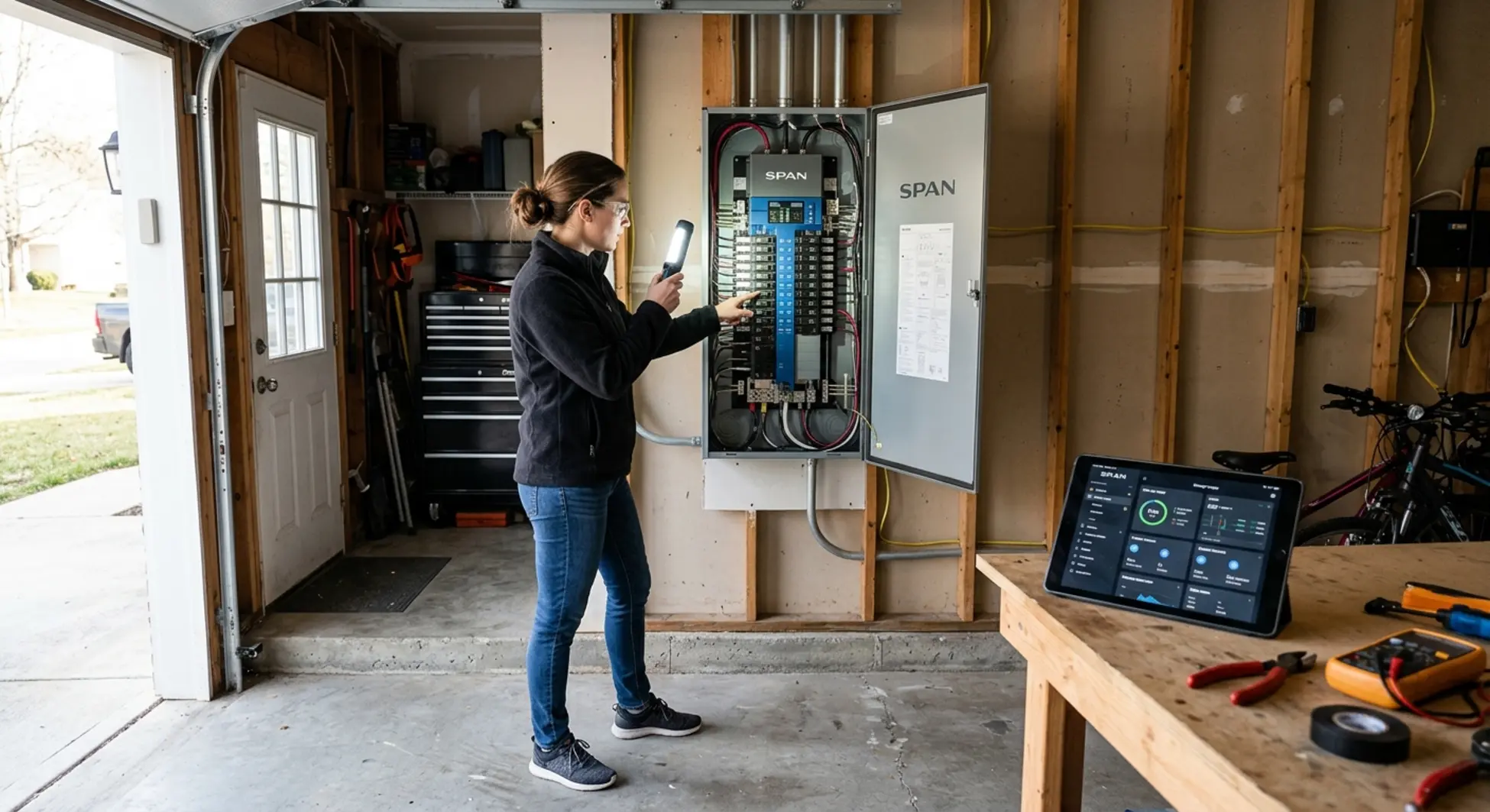
A SPAN Panel is not a standard breaker box with a fancy app slapped on top. It’s a fully digital, software-driven electrical panel that gives you real-time visibility and control over every individual circuit in your home—from your HVAC system to your refrigerator to your EV charger—all from your phone.
Traditional panels are passive. They distribute power and trip breakers when something goes wrong. That’s it. SPAN’s panel actively monitors energy flow, lets you turn circuits on and off remotely, integrates with solar inverters and battery backup systems, and coordinates your home’s energy use in ways a conventional panel simply cannot. When you’re considering an electrical panel installation with smart home energy management in mind, SPAN is in a different category entirely.
The price premium over a standard panel—which runs $2,000–$5,000 installed—reflects three things: advanced hardware with digital architecture, proprietary software and ongoing updates, and the integration engineering required to make it talk to your solar system, battery, and EV charger. You’re not buying a box of breakers. You’re buying a smart energy management system that happens to also be your electrical panel.
SPAN’s value proposition is energy awareness, control, and resilience—not just safety like a traditional panel. That distinction matters when you’re deciding whether the premium is justified for your specific situation.
⚡ Why SPAN Costs More Than a Standard Panel
SPAN’s digital architecture, app control, and integration capabilities add real engineering complexity and require ongoing software support. You’re not just buying a box of breakers—you’re buying a smart energy management system. The price reflects that. A contractor who quotes SPAN at the same price as a standard panel either doesn’t understand what they’re installing or is cutting corners somewhere.
SPAN Panel Hardware Costs: What You’re Actually Buying
Before you can talk about total installed cost, you need to understand what the hardware itself costs—because this is where a lot of homeowners get confused. They see a total quote and assume the bulk of it is labor. Often, it’s not.
The SPAN Panel 2—the current primary model as of 2026—carries an MSRP of roughly $2,500–$3,000+, depending on amperage rating. A 200A configuration will sit at the lower end of that range; 400A configurations push higher. If you’ve seen references to the original SPAN Panel at a lower price point, verify current availability directly with SPAN.IO, as product lines evolve and older models may be discontinued or harder to source.
That MSRP is not what you’ll pay as a homeowner purchasing through a licensed installer. Electricians typically add a 20–50% markup on top of the manufacturer’s price. This isn’t gouging—it covers their specialized training, the service relationship, warranty support, and the liability they carry by installing and standing behind the product. After installer markup, you’re looking at hardware costs to the homeowner of roughly $3,000–$4,500 before a single hour of labor is billed.
Why SPAN Costs More Than a Standard Panel
The digital architecture inside a SPAN Panel is fundamentally different from a conventional breaker box. Real-time circuit monitoring requires embedded sensors, processors, and wireless communication hardware in every circuit position. The app control functionality—the ability to remotely toggle circuits, set schedules, and receive alerts—requires a software platform that SPAN maintains and updates continuously. That ongoing software relationship is part of what you’re paying for upfront.
Integration capability is the other major cost driver. SPAN’s built-in compatibility with solar inverters, battery systems like the Tesla Powerwall or Enphase IQ Battery, and EV chargers requires engineering that a standard panel simply doesn’t have. Every one of those integration points adds complexity—and complexity costs money to design, manufacture, and install correctly.
✅ You’re Not Alone in Sticker Shock
SPAN Panel costs surprise homeowners because they’re used to $2,000–$5,000 standard panel replacements. The premium reflects real value—advanced technology, integration, and control—but it’s completely okay to question whether you need it. We’ll tell you honestly if a standard panel solves your problem. That’s how we’ve operated for three generations, and we’re not about to change.
Total SPAN Panel Installation Costs in DFW: The Complete Breakdown
Hardware is just the beginning. The total cost of a SPAN Panel installation in Dallas-Fort Worth depends on the scope of work required at your specific home—and that scope varies significantly based on your existing electrical infrastructure, your city’s permit requirements, and what else you’re adding alongside the panel.
Here’s how the numbers break down by scenario:
| Installation Scenario | Estimated Total Cost (DFW) |
|---|---|
| Simple panel swap (same amperage, existing service) | $4,500–$7,000 |
| Service entrance upgrade (new meter base, service lines) | $6,000–$10,000+ |
| New construction integration | $4,000–$6,000+ |
| Subpanel addition or complex integration | Add $500–$1,500+ |
Licensed electricians in the DFW market typically charge $100–$200+ per hour. A standard panel swap runs 8–16 hours of labor depending on complexity, which puts labor costs alone at $800–$3,200+ before you account for materials, permits, or any additional work your home requires.
Labor and Installation Time
A straightforward panel replacement—same amperage, existing service entrance in good condition, no major code issues—typically takes 8–12 hours of labor spread over one to two days. At DFW electrician rates, that’s $800–$2,400 in labor alone. Add the hardware cost ($3,000–$4,500 after markup) and you’re already at $3,800–$6,900 before permits, inspections, or utility fees.
Service entrance work—replacing the meter base, upgrading the service lines from the utility connection to the panel—adds significant time and cost. Expect 12–20+ hours of labor for this scope, adding $1,200–$4,000+ to the total. This is the scenario where SPAN installations can push past $10,000, and it’s not because anyone is overcharging—it’s because the underlying infrastructure work is genuinely extensive.
Complexity factors that extend installation time include: the condition of existing wiring (knob-and-tube or aluminum wiring creates complications), accessibility of the panel location, code compliance requirements that surface during the work, and integration with existing solar or battery systems. Our team always walks through these variables during the estimate so you know what you’re looking at before work begins.
Permits and Inspection Fees in DFW
Permit fees vary by municipality across the DFW metroplex. Here’s what to expect in the cities we serve most frequently:
- Dallas: $150–$300 for electrical permit
- Fort Worth: $100–$250
- Arlington: $125–$275
- Plano: $100–$200
- North Richland Hills: Comparable to surrounding cities; verify with the city’s building department
Inspection fees typically run $50–$150 per inspection, and most panel work requires one to two inspections. Oncor disconnect/reconnect fees—required when the utility must cut power to your meter during installation—add another $100–$300. When you add it all up, plan for $250–$650 in permit, inspection, and utility fees on top of hardware and labor.
The DFW metroplex has over 7.5 million residents across dozens of municipalities, each with its own permitting office and fee schedule. What costs $150 in Dallas might cost $275 in Arlington. A qualified local electrician will know the specific requirements for your city and build those costs into your estimate from day one.
Not sure if your home needs a full service entrance upgrade or just a panel swap? That’s exactly what a free estimate is designed to answer—we’ll assess your existing system and give you a detailed breakdown of what’s actually required, with no obligation.
Hidden SPAN Panel Costs Homeowners Often Miss
The quote you get upfront is based on what the electrician can see. What they find once work begins is a different story—and in DFW’s aging housing stock, surprises are common. Here are the costs that catch homeowners off-guard most often.
Service entrance or meter base upgrades. If your existing meter base is outdated, undersized, or doesn’t meet current code, it has to be replaced before SPAN can be installed properly. This alone can add $1,000–$5,000 to your total, depending on the scope of the work and whether trenching is required.
Trenching and utility work. New service lines running from the utility connection to your home require trenching through your yard. Depending on distance and ground conditions—and DFW soil can be notoriously difficult—this adds $500–$2,000+ to the project.
Drywall repair and patching. Panels are often recessed into interior walls. Removing and replacing a panel means opening up that wall, and closing it back up isn’t part of the electrical scope—it’s a separate repair. Budget $200–$500 for drywall patching after the job is done, or plan to handle it yourself.
Code compliance upgrades. Texas follows the National Electrical Code (NEC), and local amendments apply in DFW cities. If your home has outdated wiring, missing GFCI protection in bathrooms and kitchens, or grounding issues, those have to be corrected as part of a permitted panel replacement. GFCI/AFCI breakers, bonding improvements, and grounding upgrades can add $300–$1,000 to your total.
Utility fees for temporary service. If power must be disconnected during installation and you need temporary service to keep critical systems running, that’s an additional $100–$300 in utility fees. It’s rare, but it happens on complex jobs.
None of these are things a reputable electrician invents to pad your bill. They’re real conditions that exist in real homes—especially in DFW neighborhoods where much of the housing stock was built in the 1960s through 1980s. The difference between a good contractor and a bad one is whether they tell you about these possibilities before work starts or surprise you with them on the final invoice.
⚠️ The Permit Trap: Why You Can’t DIY This
Electrical panel work requires a TECL-licensed contractor in Texas. Homeowners cannot pull permits for this work themselves. Unlicensed installations void manufacturer warranties, create serious safety hazards, and can cause significant problems with your homeowner’s insurance if a claim is ever filed. Always verify your contractor’s license at tdlr.texas.gov before any work begins. This takes two minutes and can save you thousands.
What We Tell Every Customer About Hidden Costs
A good electrician will walk you through every potential cost before work starts—not hand you a surprise invoice when the job is done. That’s not just good business practice; it’s the only way to build the kind of trust that keeps customers coming back for three generations.
When you get an estimate for a SPAN Panel installation, ask your contractor directly: “What happens if you find outdated wiring or code violations during the work?” The answer to that question tells you everything about how they operate. A contractor who has a clear, honest answer—with specific numbers—is someone you can trust. A contractor who waves it off with “we’ll cross that bridge when we come to it” is someone who’s going to surprise you at the end.
Get a detailed scope of work in writing before you sign anything. That document should list every item, every labor hour, every permit fee, and a contingency plan for the most likely surprises. If your electrician won’t provide that, find someone who will. Our free estimate process is built around exactly this kind of transparency—you’ll know what you’re paying for and why before we touch a single wire.
💡 Pro Tip: Get Everything in Writing
A detailed scope of work in writing protects you from surprise costs. It should list every item, labor hour, permit fee, and contingency plan. If your electrician won’t provide this level of detail before work starts, that’s your signal to find someone else. The best contractors have nothing to hide and everything to explain.
Financing Your SPAN Panel Installation in DFW
A $5,000–$10,000 project is a significant outlay for most households, even when the investment makes sense. The good news is that several financing options exist that can make the upfront cost more manageable—and some of them are genuinely attractive.
SPAN manufacturer financing. Check SPAN.IO directly for current financing programs. SPAN has offered promotional financing options—sometimes 0% APR for 12–24 months—through their installer network. These programs change, so verify current terms before counting on them, but they’re worth checking first.
Home equity loans and HELOCs. If you have equity in your home, a home equity loan or line of credit is often the most straightforward financing option for a project of this size. DFW banks and credit unions offer competitive rates; as of 2026, HELOC rates in Texas generally run in the 6–9% range depending on your credit profile and the lender. The interest may also be tax-deductible if the funds are used for home improvement—consult your tax advisor.
HERO/PACE financing. Property Assessed Clean Energy financing allows homeowners to finance energy-efficient upgrades through their property tax bill. Availability varies by region in Texas, so check whether your city or county participates before counting on this option.
Credit card promotional periods. If you have a credit card with a 0% introductory APR period of 12–18 months, this can work for smaller portions of the project—or even the full amount if you’re confident you can pay it off before the promotional period ends. Don’t use this as a long-term financing strategy; the standard interest rates on most cards make it expensive quickly.
Utility on-bill financing. Oncor and other DFW utility providers have explored on-bill financing for energy efficiency upgrades, though direct panel upgrade financing through utilities remains uncommon. Check Oncor’s current programs for any emerging options, particularly if you’re also adding EV charging infrastructure—our EV charger installation service often pairs naturally with panel upgrades.
Trying to figure out which financing option makes sense for your situation? We can walk you through the numbers during a free consultation and help you understand which tax credits you might qualify for before you commit to anything.
Federal Tax Credits and Rebates You Can Claim for a SPAN Panel
The Inflation Reduction Act (IRA) created meaningful federal tax incentives for home energy upgrades, and SPAN Panel installations may qualify under several provisions. This is one of the areas where doing your homework upfront can meaningfully reduce your net cost.
IRA Section 25C tax credit. This credit covers 30% of the cost of qualified energy-efficient home improvements, up to $1,200 annually across all eligible upgrades. For electrical panel upgrades specifically, the credit is capped at $600. SPAN’s smart load controller functionality may qualify as an energy management system under IRA guidelines—but the specific eligibility depends on your installation and how it’s categorized. Check SPAN.IO’s current documentation and consult a tax professional before assuming you qualify.
The $600 cap matters. If you’re also claiming credits for insulation, windows, or a heat pump in the same tax year, those credits share the $1,200 annual cap. Plan your upgrade timing accordingly to maximize what you can claim in any given year.
Oncor and DFW utility rebates. Direct rebates for electrical panel upgrades from utilities are uncommon. Oncor’s rebate programs are primarily focused on smart thermostats, HVAC efficiency, and demand response programs. That said, rebate programs evolve—check Oncor’s website for current offerings, particularly if you’re adding EV charging or solar alongside your SPAN installation.
Texas state incentives. Texas currently offers limited state-level incentives specifically for electrical panel upgrades. The federal IRA credits are your primary opportunity. Focus your research there rather than counting on state programs that may not exist or may be very limited in scope.
Tax credit eligibility is specific to your installation, your income level, and how the work is categorized. A tax professional who understands energy credits is worth the consultation fee—especially on a project of this size.
Comparing SPAN to Standard Electrical Panel Replacement: Is the Premium Worth It?
This is the question at the center of everything. You can get a standard 200A panel replacement in DFW for $2,000–$5,000 installed. A SPAN Panel installation runs $4,500–$7,000+ for the same basic scope. That’s a $2,500–$3,000+ premium. What do you actually get for that difference?
A standard panel gives you safety and capacity. It replaces aging or dangerous equipment, adds breaker capacity for modern loads, and brings your home up to current electrical code. If your panel is failing, tripping constantly, or flagged by an inspector, a standard electrical panel replacement solves the problem cleanly and affordably.
SPAN gives you all of that plus a fundamentally different relationship with your home’s energy. Individual circuit monitoring means you can see exactly how much power your HVAC, dryer, EV charger, and refrigerator are drawing in real time. App control means you can shut off circuits remotely, set schedules, and receive alerts when something draws unexpected power. Integration capability means SPAN can coordinate with your solar inverter, battery backup, and EV charger to optimize when and how energy flows through your home.
Estimated annual energy savings from optimized SPAN load management, based on typical DFW household usage patterns. Payback timeline: 8–15 years on the premium over a standard panel.
That ROI timeline—8 to 15 years to recover the premium through energy savings alone—is honest and important to understand. SPAN’s financial case is not primarily about direct energy savings. It’s about control, resilience, and the ability to manage an increasingly complex home energy system. If you have solar panels, a battery backup like a Tesla Powerwall, or an EV charger, SPAN’s coordination capabilities deliver real value that a standard panel cannot replicate. If you’re wondering whether a panel upgrade is even necessary before adding an EV charger, our guide on whether you need a panel upgrade for an EV charger walks through that decision in detail.
When SPAN makes sense: You have solar, a battery backup, or an EV charger—or you’re planning to add them. You want granular visibility into your home’s energy use. You’re building a comprehensive home energy system and want a panel that can grow with it. You live in an area where grid reliability is a concern (and after Winter Storm Uri, that’s a real consideration for a lot of DFW homeowners).
When a standard panel makes more sense: Your panel is failing and you need a safety upgrade. You have no plans to add solar, batteries, or EV charging. You want the most cost-effective solution to a straightforward electrical problem. In that case, we’ll tell you that directly—and help you find the right standard panel for your home’s needs. You can also use our panel upgrade calculator to get a quick sense of what your home actually requires.
✅ SPAN Makes Sense If You’re Going All-In on Home Energy
If you have or plan to add solar, a battery backup, or an EV charger, SPAN’s premium cost is justified by its coordination and management capabilities. If you just need a basic electrical safety upgrade, a standard panel is the smarter, more affordable choice—and we’ll be the first ones to tell you that.
Finding a Qualified SPAN Panel Installer in DFW: What to Look For
SPAN Panel installation is not a job for a general handyman or a contractor who’s vaguely familiar with electrical work. It requires a TECL-licensed electrician with specific experience installing and configuring SPAN’s digital systems—and in DFW, that’s a shorter list than you might expect. Plenty of electricians can swap a standard panel. Far fewer have the hands-on SPAN experience to do it right.
Verify the TECL license. This is non-negotiable. Go to tdlr.texas.gov, navigate to “Search Licensees,” and look up the contractor’s license number or company name. Check that the license is active and look for any disciplinary actions. This takes two minutes and tells you immediately whether you’re dealing with a legitimate operation. Epic Electrical’s licensed team carries all required credentials—and we encourage every homeowner to verify them independently.
Ask about SPAN-specific experience. How many SPAN Panels have they installed? Can they walk you through how SPAN integrates with your existing solar or battery system? Can they provide references from SPAN installations specifically? A contractor who’s installed dozens of standard panels but has never touched a SPAN unit is not the right person for this job.
Confirm they handle all permits. A qualified installer pulls all permits and schedules all inspections. They don’t ask you to handle it, they don’t suggest skipping it “to save time,” and they don’t work without a permit in hand. If a contractor suggests avoiding the permit process for any reason, walk away immediately.
Check insurance and bonding. Minimum $1 million in general liability insurance is standard for reputable electrical contractors. Bonding protects you if the contractor fails to complete the work or causes damage. Ask for proof of both before signing anything.
Get multiple quotes. DFW homeowners typically get 2–4 quotes for major electrical projects, and that’s smart practice. Comparing detailed estimates helps you understand what’s actually included in each quote—and reveals which contractors are thorough and which are cutting corners on scope.
Red Flags to Avoid When Hiring a SPAN Installer
- Unlicensed contractors, or contractors who discourage you from verifying their license
- Vague pricing with no detailed scope of work in writing
- Pressure to decide immediately or pay a large cash deposit upfront
- Inability to explain SPAN’s features or how it integrates with your existing systems
- No clear warranty on labor, or a warranty that’s verbal rather than written
- Poor online reviews or no verifiable references from similar projects
- Suggesting you skip the permit to “speed things up”—this is a serious red flag
DFW’s electrical contractor market is large, but SPAN-specific expertise is still relatively specialized. SPAN.IO maintains an installer locator on their website—that’s a good starting point for finding contractors who have completed SPAN’s training program. You can also ask solar companies in your area for referrals, since many solar installers partner with electricians who have SPAN experience.
Epic Electrical has installed SPAN Panels throughout DFW and handles every step—permits, inspections, and integration with your existing solar or EV charger setup. Get a free estimate and see what your specific installation would cost.
DFW-Specific Factors That Affect Your SPAN Panel Cost
A SPAN Panel installation in North Richland Hills is not the same project as one in Dallas proper or in a newer Plano subdivision. The DFW metroplex is enormous and diverse, and several local factors can push your total cost up or down significantly.
City permit requirements. Dallas, Fort Worth, Arlington, Plano, North Richland Hills, and the dozens of other municipalities in DFW each have their own permitting offices, fee schedules, and processing timelines. Some cities turn permits around in a few days; others take two to three weeks. That timeline affects how quickly work can begin and how long the overall project takes. A contractor who works regularly in your specific city will know these timelines and plan accordingly.
Oncor’s service area and disconnect fees. Most of DFW is served by Oncor Electric Delivery. Oncor’s disconnect/reconnect fees ($100–$300) are a standard part of any panel replacement, and their scheduling for service disconnects can affect your project timeline. In some areas, Oncor’s scheduling backlog can add days to a project.
Aging housing stock. A significant portion of DFW’s residential housing was built between the 1950s and 1980s. Homes from that era frequently have outdated wiring—aluminum branch circuit wiring, inadequate grounding, or panels that haven’t been touched in 40 years. When those issues surface during a permitted panel replacement, they have to be corrected to meet current NEC requirements. That’s not optional, and it adds $300–$1,000+ depending on the scope of the corrections needed. If you’ve been wondering why panel replacement costs so much, this is often the answer—the panel itself is just the starting point.
EV charger demand. DFW is one of Texas’s fastest-growing EV markets, and Level 2 home charger installations frequently accompany SPAN Panel upgrades. If you’re adding a Level 2 charger alongside SPAN, expect additional circuit work that adds $500–$1,500 to your total. Our EV charger installation team handles this work regularly and can bundle it efficiently with your panel upgrade.
Solar integration. Texas is a leading state for residential solar adoption, and DFW homeowners are adding solar at an increasing rate. If you already have solar or are planning to add it, SPAN’s installation may be bundled with inverter upgrades or additional integration work that adds $500–$2,000+ to the project. The good news is that SPAN’s value is maximized in exactly this scenario—the panel and solar system working together is where the smart energy management really delivers.
ERCOT grid reliability concerns. Winter Storm Uri in 2021 changed how a lot of DFW homeowners think about their electrical systems. The interest in home backup power and energy management solutions has grown significantly since then, and SPAN’s ability to coordinate with battery backup systems directly addresses that concern. If grid resilience is part of your motivation for considering SPAN, you’re not alone—it’s one of the most common reasons we hear from customers across our DFW service area.
Whether you’re in North Richland Hills, Arlington, Keller, or Southlake, the underlying cost drivers are the same—but the specific numbers vary based on your city’s permit process, your home’s age, and what you’re integrating alongside SPAN. That’s why a site-specific estimate matters more than any general price range.
Why We’re Honest About What You Actually Need
We’ve been doing electrical work in DFW for three generations. In that time, we’ve learned that the fastest way to lose a customer—and to deserve to lose them—is to sell them something they don’t need. So let’s be direct about something most electricians won’t say out loud.
If you don’t have solar, a battery backup system, or an EV charger—and you have no concrete plans to add any of them—a standard panel upgrade is probably the smarter choice for your situation. A well-installed 200A panel from a reputable manufacturer will serve your home safely and reliably for decades. It costs less, installs faster, and solves the actual problem you have.
SPAN shines when you’re building a comprehensive home energy system. It’s the right panel when you need a central hub that can coordinate solar production, battery storage, EV charging, and grid interaction in real time. In that context, the premium is justified and the features deliver genuine value. In the context of a basic electrical safety upgrade, it’s overkill.
We’ll tell you which category your situation falls into—honestly, without pressure—because that’s how we’ve stayed in business for three generations. If a standard panel solves your problem, we’ll recommend it. If SPAN is the right tool for what you’re building, we’ll explain exactly why and show you the numbers. Either way, you’ll leave the conversation knowing more than when you started. That’s the whole point. Contact us for a free estimate and let’s figure out what your home actually needs.
Frequently Asked Questions About SPAN Panel Costs in DFW
How much does a SPAN electrical panel cost to install in DFW?
Total installed cost in the Dallas-Fort Worth area typically ranges from $4,500–$7,000+ for a standard panel swap, and can exceed $10,000 if service entrance upgrades are required. This includes the SPAN Panel 2 hardware ($2,500–$3,000+ at MSRP, plus installer markup), licensed electrical labor ($1,500–$4,000+ depending on complexity), and permit and inspection fees ($250–$650). The wide range exists because every home is different—your existing infrastructure, your city’s permit fees, and what you’re integrating alongside SPAN all affect the final number. A site-specific estimate is the only way to know what your project will actually cost.
Does SPAN require a monthly subscription fee?
As of 2026, SPAN offers its core app features and energy monitoring without a mandatory subscription fee—the basic functionality you’d use day-to-day is included in the purchase price. That said, software pricing models evolve, and SPAN may introduce optional premium features or subscription tiers in the future. Before making your purchase decision, verify the current terms directly on SPAN.IO rather than relying on information that may be outdated. It’s a reasonable question to ask your installer as well, since they’ll have current information from their SPAN relationship.
Can I get a tax credit for installing a SPAN Panel in Texas?
The Federal IRA Section 25C tax credit covers 30% of the cost of qualified energy-efficient home improvements, up to $1,200 annually across all eligible upgrades. For electrical panel upgrades specifically, the credit is capped at $600. SPAN’s smart load controller functionality may qualify as an energy management system under IRA guidelines, but specific eligibility depends on your installation and how it’s categorized by the IRS. Texas currently offers limited state-level incentives for electrical panels, so the federal credit is your primary opportunity. Consult a tax professional and review SPAN.IO’s current documentation before assuming you qualify—the rules are specific and the credit is worth getting right.
Does SPAN work without solar panels or a battery backup system?
Yes—SPAN functions as a smart electrical panel even without solar or battery integration. You’ll still get individual circuit monitoring, real-time energy visibility, and app-based circuit control from day one. The panel provides genuine value on its own, particularly for homeowners who want detailed insight into their home’s energy use or the ability to remotely manage circuits. That said, SPAN’s most powerful capabilities—coordinating solar production with battery storage, managing backup power during outages, optimizing EV charging around time-of-use rates—are unlocked when paired with complementary systems. If you’re planning to add those systems in the future, installing SPAN now means you’re ready when the time comes.
What’s the difference between SPAN and a standard electrical panel upgrade?
A standard 200A panel replacement in DFW costs $2,000–$5,000 installed and provides safety and capacity upgrades—it replaces aging or dangerous equipment, adds breaker capacity for modern loads, and brings your home up to current electrical code. SPAN costs $4,500–$7,000+ installed and adds app-controlled circuit management, real-time energy monitoring, and built-in integration with solar inverters, battery backup systems, and EV chargers. The $2,500–$3,000+ premium buys you a fundamentally different relationship with your home’s energy—not just a safer breaker box. Whether that premium is worth it depends entirely on what you’re trying to accomplish. You can explore the comparison further in our breakdown of panel upgrades vs. full electrical retrofits.
How long does a SPAN Panel installation take in DFW?
The physical installation of a standard panel swap typically takes 8–12 hours of labor, usually spread over one to two days. Service entrance upgrades—replacing the meter base, upgrading service lines—can extend the work to two to three days. The full process from initial consultation to final inspection is typically two to four weeks, with permit processing time being the primary variable. Some DFW cities turn permits around in a few days; others take two to three weeks. Your contractor should give you a realistic timeline based on your specific city’s current processing speed—and that timeline should be part of your written scope of work.
Get Honest Answers and a Real Number for Your SPAN Panel Project
If you’ve made it through this guide, you know more about SPAN Panel costs than most homeowners who’ve already signed a contract. That knowledge is worth something—and so is getting a quote from someone who will give you the same level of honesty in person.
We’re a family electrical business serving DFW for three generations. We’ll assess your home, tell you what your installation actually requires, and give you a detailed estimate with no pressure and no surprises. If a standard panel is the right answer, we’ll tell you that too.
No pressure. No surprises. Just honest electrical work from people who’ve been doing this long enough to know the difference.
Or call us directly: (682) 478-6088
Serving Fort Worth · Arlington · Keller · Southlake · Colleyville · Grapevine · North Richland Hills · Euless · Lewisville · Irving · Denton · and all of DFW
7304 Hialeah Cir W, North Richland Hills, TX 76182