Key Takeaways
- SPAN is a smart electrical panel — it replaces traditional circuit breakers with individually controlled digital breakers you can monitor and manage from your phone.
- Total installation costs in DFW range from $3,700 to $7,800+ — covering hardware, licensed labor, permits, and inspections. Complex integrations cost more.
- A permit is required — any panel replacement in Southlake must be pulled by a TDLR-licensed electrician and pass City inspection. No exceptions.
- SPAN shines when paired with EVs, solar, or battery storage — but it works as a standalone smart panel even without those systems.
- Federal tax credits may offset costs — the IRA’s Section 25C credit offers up to $1,200 annually for qualified smart load controllers. Verify eligibility with a tax professional.
- Not every home needs SPAN — if you just need a safer, higher-capacity panel, a standard upgrade may be the smarter, more affordable move.
- Verify your electrician’s license — check tdlr.texas.gov before anyone touches your panel. It takes 60 seconds and can save you thousands.
You’re getting quotes for an EV charger or talking to a solar company, and suddenly everyone keeps mentioning a “SPAN Panel.” Maybe your neighbor has one. Maybe a salesperson brought it up. Maybe you Googled it at midnight and ended up more confused than when you started. That’s exactly where most Southlake homeowners land with this technology — and honestly, it makes sense. SPAN is newer, it’s marketed heavily, and the people selling it aren’t always the best at explaining what it actually does versus what it just sounds like it does.
Here’s what we’re going to do in this guide: explain what a SPAN Panel is in plain English, tell you who actually benefits from one, walk you through what it costs in the DFW market right now, and — most importantly — tell you when a standard panel upgrade is the smarter, more affordable choice. We’re a family-owned electrical contractor serving Southlake and the surrounding area, and we’ve built our reputation on giving people honest advice. If SPAN is right for your home, we’ll tell you. If it’s overkill, we’ll tell you that too.
Let’s start with the basics.
What Is a SPAN Panel? The Basics Explained
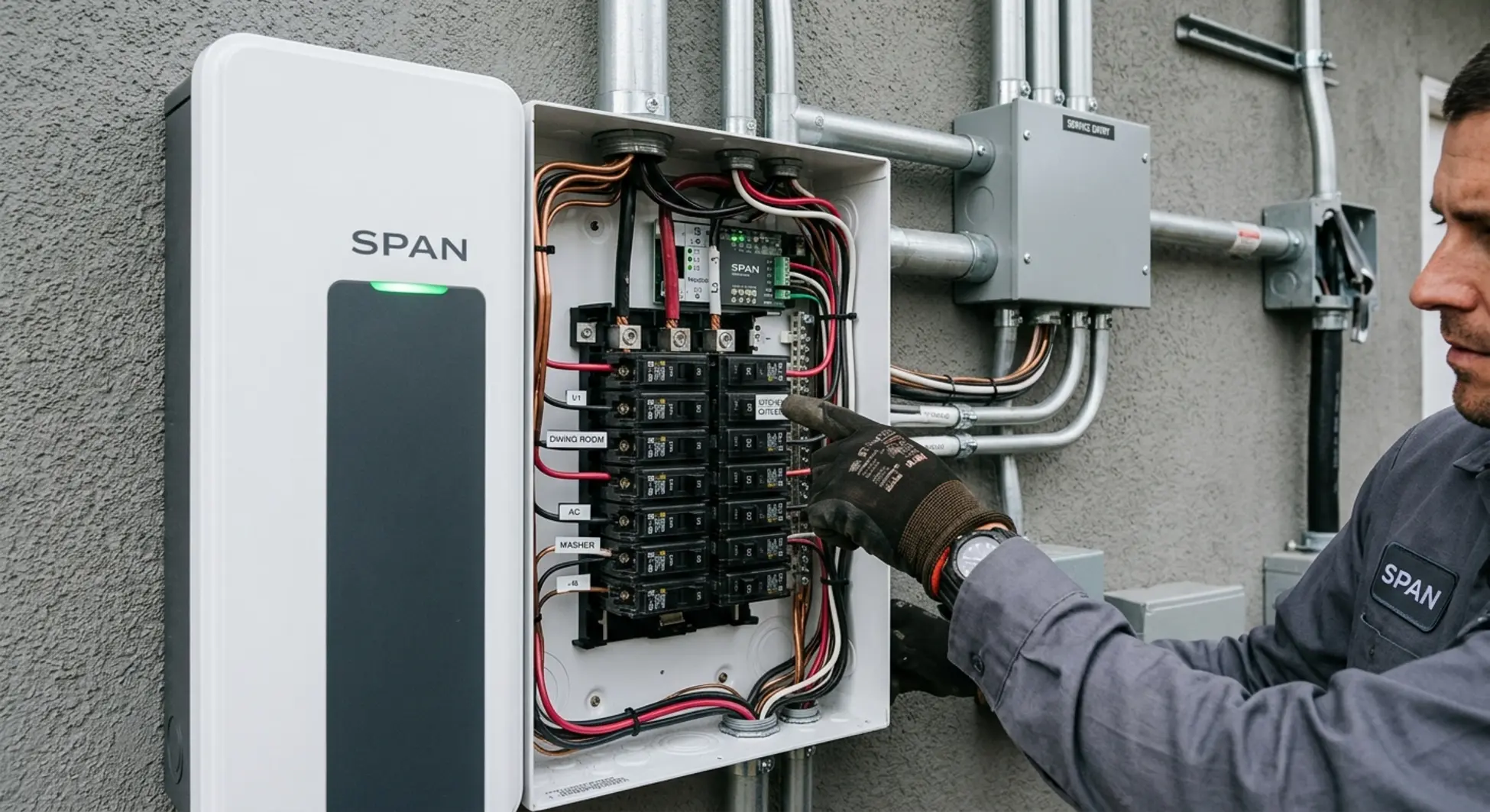
A SPAN Panel is a smart electrical panel — manufactured by a company called SPAN.IO — that replaces your traditional breaker box with a digitally controlled system. Instead of the standard row of manual circuit breakers that you flip on and off by hand, a SPAN Panel gives every single circuit in your home its own intelligent, app-controlled digital breaker.
That means you can pull out your phone, open the SPAN Home app, and see exactly how much power your kitchen, HVAC system, EV charger, or pool pump is drawing — right now, in real time. You can turn individual circuits on or off remotely, set schedules, create automation rules, and integrate the whole system with solar panels, battery storage, and smart home platforms.
It’s worth being clear about what SPAN is not: it’s not a replacement for basic electrical safety. Your home still needs proper wiring, proper grounding, and proper overcurrent protection. What SPAN adds is visibility and control on top of that foundation. Think of it like the difference between a basic thermostat and a Nest — the heating system still works the same way, but now you have data, scheduling, and remote access. If you’ve been researching an electrical panel upgrade for your home, SPAN is one of the premium options at the top of that spectrum.
How SPAN Differs From a Traditional Electrical Panel
Your current breaker panel — whatever brand it is — does one thing well: it protects your circuits from overloads. When too much current flows through a circuit, the breaker trips and cuts power. That’s it. The panel doesn’t communicate with you, doesn’t track energy usage, and doesn’t know or care whether your dryer is running at 2 AM when electricity rates are highest.
Traditional panels are, in the industry’s own words, “dumb.” They protect. They don’t optimize. SPAN changes that equation by adding a layer of digital intelligence to every circuit. Each breaker becomes individually addressable — you can control it from anywhere, monitor its consumption in real time, and build automation rules around it. The panel communicates with your phone, with your solar inverter, with your battery system, and potentially with your utility’s demand response program.
That’s a fundamentally different device. It’s not just a newer version of the same thing — it’s a different category of product entirely.
The Core Components of a SPAN Panel System
The SPAN system has a few key pieces that work together:
- The main panel unit — available in 100A, 125A, and 200A configurations, with 24 individual smart circuit breakers built in.
- The SPAN Home app — available on iOS and Android, this is your control center for monitoring, scheduling, and managing every circuit in real time.
- Integration gateway — allows SPAN to connect with solar inverters (Enphase, SolarEdge), battery storage systems (Tesla Powerwall, Enphase IQ Battery), and smart home hubs.
- Real-time monitoring — circuit-level energy data that shows you exactly where your electricity is going, updated continuously.
🤔 Confused About SPAN? You’re Not Alone.
Most homeowners have never heard of SPAN Panels until they start researching EV chargers or solar. It’s a newer technology, and there’s a lot of marketing noise around it. This guide cuts through the jargon and gives you the straight story — including when it’s worth the investment and when a simpler solution makes more sense.
Why Southlake Homeowners Are Considering SPAN Panels Now
Southlake isn’t a random market for smart electrical technology. With a median household income of approximately $226,000 and a homeownership rate exceeding 85%, this community has both the financial capacity and the motivation to invest in premium home upgrades. Large custom homes with multiple HVAC systems, pools, extensive lighting, and now EV chargers put real demands on electrical infrastructure — and those demands are growing.
There are three specific drivers pushing Southlake homeowners toward smart panel conversations right now, and they’re all real trends — not marketing hype.
Southlake sits in Northeast Tarrant County, an area that’s seen significant growth in both EV registrations and residential solar installations over the past several years. As a Southlake electrician serving this community, we’ve watched these conversations shift from “should I get an EV charger?” to “how do I manage everything my home now needs electrically?” That’s exactly the problem SPAN was designed to solve.
The EV Charging Connection
Level 2 EV chargers — the kind that actually charge your car overnight rather than over three days — require a dedicated 240V circuit drawing 30 to 50 amps. That’s a significant load. For homes with older 100-amp or even 150-amp service, adding an EV charger can push the panel toward its limits, especially when the HVAC, oven, and dryer are all running simultaneously.
SPAN addresses this directly. Its load management capabilities let you set your EV charger to run only when other major loads are off, or schedule it to start at 2 AM when off-peak utility rates kick in. Texas aims for 1 million EVs on the road by 2030, and Tarrant County is tracking with that trend. If you’re planning an EV charger installation, understanding how it interacts with your panel’s capacity is a conversation worth having before you commit to any hardware.
You can also use our EV charging calculator to estimate what your home’s charging needs will look like before calling anyone for a quote.
Solar Integration and Energy Independence
North Texas has seen permit volumes for residential solar installations grow year-over-year, and that trend isn’t slowing. When you add solar to a home, you’re no longer just a consumer of electricity — you’re also a producer. Managing that production and consumption intelligently is where SPAN earns its premium.
SPAN integrates directly with major solar inverter brands including Enphase and SolarEdge. It can see when your panels are producing peak power (typically midday) and automatically prioritize charging your battery storage system during those hours. When evening peak demand hits and utility rates climb, SPAN can draw from the battery and shed non-essential loads to minimize what you pull from the grid. For homes with battery storage like the Tesla Powerwall or Enphase IQ Battery, this kind of intelligent load management can meaningfully reduce electricity costs over time.
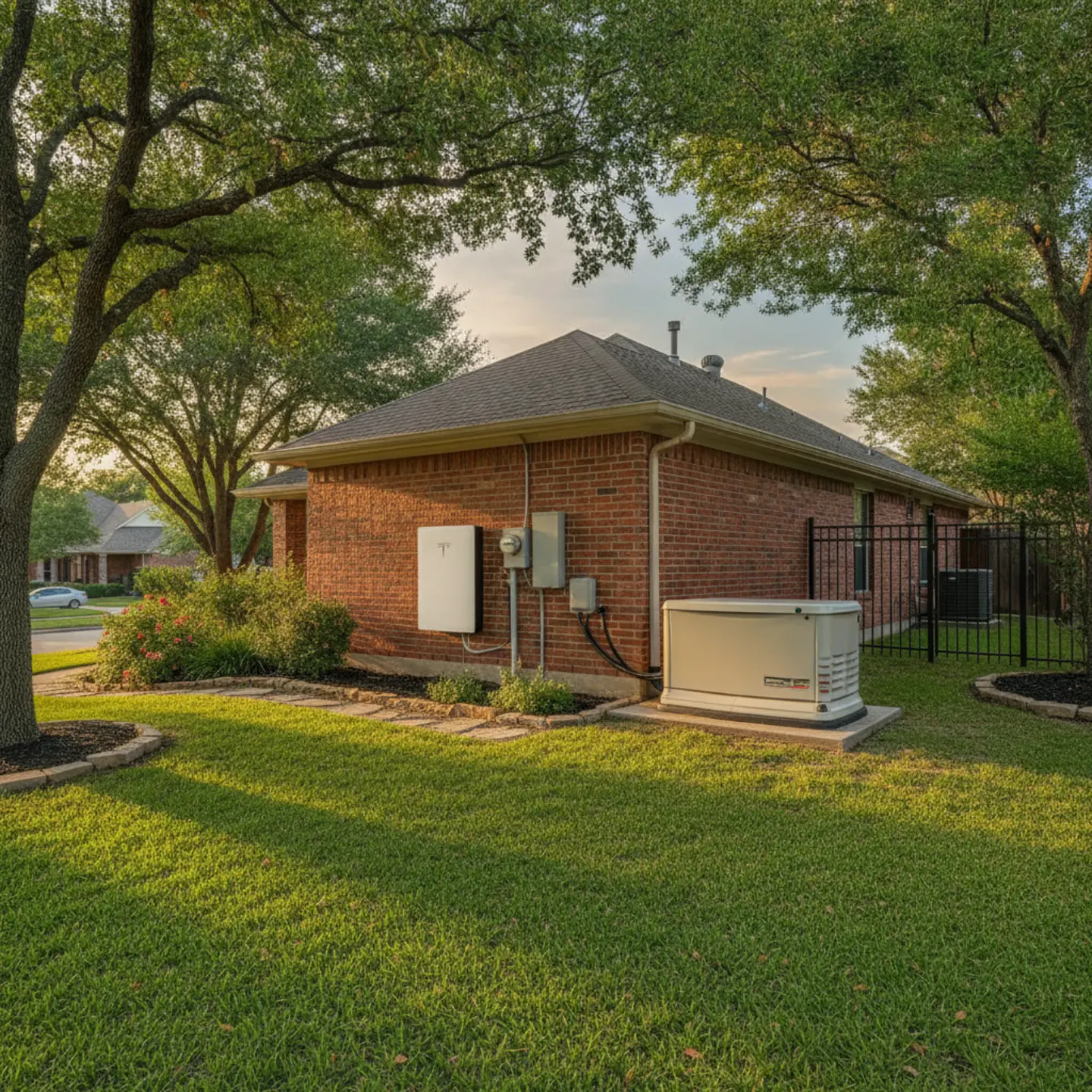
And then there’s the grid reliability factor. After Winter Storm Uri, DFW homeowners learned firsthand that the Texas grid isn’t invincible. Interest in backup power and energy resilience has been elevated ever since. A SPAN Panel paired with battery storage gives you a level of control and visibility during grid events that a standard panel simply cannot provide.
🔍 What’s the Difference Between SPAN and a Standard Panel Upgrade?
A standard panel upgrade replaces old or undersized breakers with new ones — it’s a safety and capacity fix. SPAN does all of that plus adds app control, real-time circuit-level monitoring, and smart integration with solar, batteries, and EVs. You’re paying for convenience and control on top of the safety baseline. Whether that premium is worth it depends entirely on what you’re actually trying to accomplish.
How a SPAN Panel Actually Works (Without the Tech Jargon)
Let’s make this concrete. When a licensed electrician installs a SPAN Panel in your home, they’re replacing your existing breaker box with the SPAN unit. Each of your home’s circuits gets connected to one of SPAN’s 24 smart breakers. From that point forward, every circuit has its own digital identity — the panel knows what’s connected to it, how much power it’s drawing, and can respond to commands from the app or from automated rules you’ve set up.
The SPAN Home app on your phone becomes your electrical dashboard. You can see, in real time, that your HVAC is drawing 4.2 kW, your EV charger is pulling 7.2 kW, and your kitchen appliances are using another 1.8 kW. You can see which circuits are idle. You can turn them off remotely. You can set schedules. You can tell SPAN: “If the total load exceeds 18 kW, automatically pause the EV charger until something else turns off.” That’s load shedding — and it’s one of the most practical features SPAN offers for homes with high electrical demands.
For homes with smart home electrical systems already in place, SPAN can integrate with those ecosystems to create a more unified, automated experience across lighting, climate, security, and energy management.
Real-World Example: A Day in the Life of SPAN Control
Here’s what a typical day might look like for a Southlake homeowner with a SPAN Panel, solar panels, a home battery, and an EV:
- 2:00 AM: The EV charger kicks on automatically — you scheduled it to start during off-peak utility hours when electricity rates are lowest. The rest of the house is quiet, so the panel has plenty of headroom.
- 11:00 AM: Solar production is at its peak. SPAN sees the excess generation and automatically routes it to charge the home battery rather than sending it back to the grid at the lower export rate.
- 6:00 PM: Peak demand hours. Your HVAC is running hard because it’s July in North Texas. SPAN dims the pool pump circuit and pauses the EV charger to keep total load under your set threshold, drawing from the battery to cover the gap.
- 10:30 PM: You’re in bed and realize you left the outdoor landscape lights on. You open the app and turn off that circuit without getting up.
None of that requires you to be an engineer. The app is designed for homeowners, not electricians. That’s a deliberate part of SPAN’s product philosophy.
Safety and Monitoring Features
Beyond convenience, SPAN adds a meaningful safety layer. The app sends real-time alerts if a circuit is drawing abnormally high power — which can be an early warning sign of a failing appliance, a wiring issue, or an overload condition. Individual circuit protection reduces the risk of cascading failures. And because SPAN is designed to work with modern safety features including AFCI (arc fault circuit interrupter) and GFCI (ground fault circuit interrupter) protection, it doesn’t compromise on the safety fundamentals that a traditional panel provides.
Older panels — particularly brands like Federal Pacific or Zinsco — lack these modern protections entirely. If your home has one of those panels, the safety argument for upgrading is strong regardless of whether you choose SPAN or a standard replacement. You can read more about Federal Pacific panel replacement costs if that’s relevant to your situation.
Not sure whether SPAN makes sense for your specific setup — EV charger, solar, or just an aging panel? A free estimate can answer that question directly. We’ll assess your home’s actual electrical needs and give you an honest recommendation, even if that recommendation is a simpler, less expensive solution.
SPAN Panel Installation Costs in Southlake and DFW
Let’s talk money — because this is where a lot of homeowners get surprised, and where some contractors aren’t fully transparent. A SPAN Panel installation is not cheap, and the advertised hardware price is rarely the full picture. Here’s a realistic breakdown of what you should expect to budget in the Southlake and DFW market in 2026.
💰 2026 SPAN Panel Installation Cost Range — Southlake / DFW
For context, a standard 200-amp panel upgrade in DFW typically runs $2,000 to $5,000 all-in. The SPAN premium over a standard upgrade is roughly $1,700 to $2,800 — that’s what you’re paying for the smart technology, app control, and integration capabilities on top of the basic panel replacement.
If you want to understand what a standard residential electrical panel replacement typically involves and costs, that’s a useful baseline for comparison before deciding whether SPAN’s premium features justify the added investment for your home.
Breaking Down the Costs
| Cost Component | Estimated Range | Notes |
|---|---|---|
| SPAN Panel Hardware | $2,000 – $3,000+ | Varies by amperage (100A, 125A, 200A) |
| Licensed Electrician Labor | $1,500 – $4,000+ | Highly variable — older homes cost more |
| Permit Fees (City of Southlake) | $100 – $500+ | Depends on scope of work |
| Electrical Inspection Fees | $100 – $300+ | City of Southlake Building Department |
| Total Estimated Range | $3,700 – $7,800+ | Before any service upgrades or add-ons |
Hidden Costs to Anticipate
The range above assumes your home’s existing electrical service is adequate for the upgrade. That’s not always the case — especially in Southlake’s older established neighborhoods. Here are the additional costs that can push a SPAN installation well beyond the base estimate:
- Service entrance upgrades: If your main lines from the utility to your home are undersized or outdated, upgrading them adds $1,000 to $5,000 or more depending on scope.
- Rewiring for older homes: Homes with aluminum wiring, knob-and-tube, or outdated branch circuit wiring may need remediation before a smart panel installation makes sense.
- Dedicated circuits for EV chargers or other devices: Each new dedicated circuit adds $300 to $800 in labor and materials.
- Smart home integration hardware: Hubs, gateways, or additional smart devices can add $200 to $500 or more.
- Post-installation inspection and final sign-off: Required by the City of Southlake — budget this as a non-negotiable line item.
Our panel upgrade calculator can give you a rough starting estimate based on your home’s current setup — it’s a useful first step before scheduling a site visit.
Financing and Incentives: Making SPAN More Affordable
A $5,000 to $7,000 electrical upgrade is a real number for most families, even in an affluent market like Southlake. The good news is that there are legitimate ways to reduce the out-of-pocket cost — through federal tax credits, financing options, and potentially utility programs. Here’s what’s actually available as of 2026.
Federal Tax Credits and Incentives
The Inflation Reduction Act (IRA) created the Energy Efficient Home Improvement Credit (Section 25C), which offers meaningful credits for qualifying electrical upgrades. Here’s what’s potentially on the table:
- Up to $600 for qualified panel and service upgrades.
- Up to $1,200 annually (30% of costs) for qualified energy property including smart electric load controllers — a category that SPAN may qualify under.
The important caveat: SPAN’s specific eligibility for these credits should be verified with SPAN’s official documentation and confirmed with a qualified tax professional before you count on it. Tax credit rules can be nuanced, and the IRS has specific requirements for what qualifies. Don’t let a contractor promise you a tax credit as part of their sales pitch — verify it independently.
Utility Rebates and Demand Response Programs
Oncor, the transmission and distribution utility serving most of the DFW area including Southlake, periodically offers programs for customers participating in smart thermostat or load management initiatives. While direct rebates for panel upgrades are less common, SPAN’s integration with demand response programs can indirectly benefit homeowners through lower peak demand charges over time.
It’s worth checking with your retail electric provider (REP) as well — some Texas REPs offer time-of-use rate plans that pair well with SPAN’s scheduling capabilities, effectively letting you reduce your bill by shifting consumption to off-peak hours. For more on how Texas electricity pricing works and how smart technology can help, our post on saving money on Texas electricity bills covers this topic in more depth.
For financing, Southlake homeowners with significant home equity have access to HELOCs and home equity loans — in 2025, rates on these products typically ranged from 6% to 10%. PACE (Property Assessed Clean Energy) financing may also be available for energy-efficiency upgrades. Check SPAN.IO directly for any manufacturer financing programs they currently offer.
💡 Check Your Federal Tax Credits Before You Decide
The IRA offers up to $1,200 annually for qualified smart load controllers under Section 25C. A SPAN Panel may qualify — but verify this with SPAN’s documentation and a tax professional before assuming. If it does qualify, that credit could offset a significant chunk of your installation cost and meaningfully change the financial calculus.
Trying to figure out whether SPAN fits your budget after factoring in credits and financing? We can walk you through the real numbers for your specific home — what the installation would cost, what incentives might apply, and whether the investment makes sense given your plans for EVs, solar, or other upgrades. No pressure, just honest numbers.
Permitting and Regulations: What Southlake Homeowners Need to Know
This section matters more than most homeowners realize — and it’s where some contractors cut corners in ways that can cost you dearly later. Let’s be direct: a permit is not optional for a SPAN Panel installation in Southlake. It’s not a technicality. It’s the law, and it exists to protect you.
Any electrical panel replacement or upgrade — including SPAN — requires a permit from the City of Southlake Building Department. The work must be performed by a contractor holding a valid TECL (Texas Electrical Contractor License) with a licensed Master Electrician supervising the job. The installation must comply with the National Electrical Code (NEC 2020 or the latest adopted edition in Texas). And when the work is done, it must pass inspection before the panel can be energized.
Skipping the permit doesn’t save you money — it creates liability. Unpermitted electrical work can void your homeowner’s insurance coverage, fail inspection when you sell your home, result in fines from the City, and in worst-case scenarios, create safety hazards that aren’t caught until something goes wrong. The permit fee is cheap insurance. A licensed electrician who tells you permits are optional is a contractor you should walk away from immediately.
How to Verify Your Electrician’s License
Before you sign any contract or let anyone touch your electrical panel, spend two minutes on the Texas Department of Licensing and Regulation’s website. Here’s exactly how:
- Go to tdlr.texas.gov
- Navigate to “Search the Licensee Database”
- Search by the company name (their TECL number) or the individual electrician’s name
- Verify the license status is Active (not expired or inactive)
- Check for any disciplinary actions or complaints on record
- Confirm that a Master Electrician is listed and will actually be supervising your specific project
That last point matters more than most people realize. A company can hold a valid TECL, but if the Master Electrician on record isn’t actually overseeing your job — if they’re just a name on the license while journeymen or unlicensed workers do the actual work — that’s a compliance issue and a safety risk.
The Permit Process in Southlake
Here’s what the process looks like when done correctly:
- Your licensed electrician submits a permit application to the City of Southlake Building Department before work begins.
- The permit fee is paid — typically $100 to $500 depending on the scope of work.
- Work proceeds according to the approved scope and NEC requirements.
- A City inspector visits for rough-in inspection (if applicable) and final inspection upon completion.
- Final sign-off is issued before the panel is energized and put into service.
- You receive a permit certificate for your records — keep this. It matters when you sell.
A good contractor handles the entire permit process for you. You shouldn’t have to navigate City of Southlake’s Building Department on your own. If a contractor asks you to pull your own permit or suggests you can “handle it later,” that’s a red flag — not a convenience.
✅ Pro Tip: Always Verify Your Electrician’s License
Before hiring anyone to touch your electrical panel, spend 2 minutes on tdlr.texas.gov to verify their license. It takes 60 seconds and can save you thousands in liability and safety issues. Check that the license is active, look for disciplinary actions, and confirm a Master Electrician is listed on the account.
⚠️ The Permit Trap: Why “No Permit” Isn’t a Bargain
Some contractors will offer to skip the permit to save you money — or to save themselves the hassle. Don’t fall for it. Unpermitted work can void your homeowner’s insurance, fail inspection when you sell, and create serious safety liabilities. The permit fee is $100 to $500. The cost of unpermitted work discovered during a home sale can be thousands in remediation, price reductions, or deal-killing delays. The permit is cheap insurance.
SPAN Panel vs. Other Smart Breaker Options: An Honest Comparison
SPAN isn’t the only smart panel option on the market. Leviton and Schneider Electric (Square D) both offer smart panel and smart breaker products, and the right choice depends on your specific situation rather than brand loyalty or marketing. Here’s a straightforward look at where SPAN stands relative to the alternatives.
SPAN Panel Strengths
- Consumer-friendly app interface: SPAN was designed from the ground up as a consumer product. The app is intuitive and doesn’t require an electrician to operate day-to-day.
- Strong solar and battery integration: SPAN’s integrations with Enphase and SolarEdge are well-developed and actively maintained. For homes with solar, this is a significant advantage.
- Circuit-level monitoring: Real-time energy data at the individual circuit level is SPAN’s core differentiator. Most competitors offer whole-home monitoring or monitoring at the panel level, not per-circuit.
- Designed for modern smart home ecosystems: SPAN integrates with major smart home platforms and is built to be the energy management hub of a connected home.
- Growing ecosystem: SPAN continues to add integrations and features through software updates, which means the product you buy today may be more capable in two years.
When to Consider Alternatives
- Leviton: If you already have a significant investment in Leviton smart home infrastructure, Leviton’s smart panel and breaker products may integrate more seamlessly with your existing ecosystem.
- Square D (Schneider Electric): For larger homes or installations requiring commercial-grade reliability and capacity, Square D’s products have a long track record and broad contractor familiarity. Our post comparing Square D vs. Eaton panels for DFW homes covers this in more detail.
- Contractor familiarity: Some electricians have more experience with traditional smart breaker systems than with SPAN specifically. An experienced contractor who knows Square D inside and out may deliver a better installation than one who’s only done SPAN once.
- Budget constraints: If your primary goal is modernizing an aging panel and you don’t have plans for solar, battery, or EV integration, a simpler smart breaker solution — or even a standard upgrade — may deliver 80% of the value at 50% of the cost.
“There’s no single ‘best’ smart panel. The right choice depends on what you’re actually trying to accomplish — and a good electrician will help you figure that out before recommending a product.”
Is a SPAN Panel Right for Your Southlake Home? Key Questions to Ask Yourself
Here’s the honest version of this conversation — the one we’d have with you if you called us today. SPAN is a genuinely impressive product. But it’s not the right answer for every home, and the premium you pay for it only makes sense if you’re actually going to use what it offers.
Ask yourself these questions before committing to a SPAN installation:
You Probably Need SPAN If…
- You’re installing an EV charger and want to optimize charging schedules to avoid overloading your panel or paying peak electricity rates.
- You have or are planning to install solar panels and battery storage — SPAN’s integration capabilities are a genuine advantage here.
- You’re building a comprehensive smart home ecosystem and want your electrical panel to be part of it.
- You want real-time visibility into which circuits are consuming the most energy and the ability to act on that information.
- You’re interested in participating in utility demand response programs that reward you for reducing load during peak hours.
- Your current panel is aging or undersized and you have plans for the smart features — so you’re upgrading anyway and want to do it once, right.
If you’re already asking questions like “do I need a panel upgrade for my EV charger?”, our dedicated post on panel upgrades for EV chargers in Fort Worth walks through that specific scenario in detail.
A Standard Panel Upgrade Might Be Enough If…
- Your main concern is replacing an aging, unsafe, or undersized panel — and you don’t have plans for EVs, solar, or battery storage.
- You prefer simplicity. If the idea of managing your electrical system through an app sounds like more complexity than convenience, SPAN may not be the right fit.
- Your budget is tight and you need the most cost-effective solution that solves your immediate problem.
- Your electrician, after assessing your home, recommends a standard upgrade based on your actual needs — not because SPAN is too complicated, but because it’s genuinely more than you need.
A standard residential panel installation from a qualified electrician is a solid, reliable solution that will serve most homes well for decades. Don’t let anyone convince you that you need SPAN if a standard upgrade genuinely addresses your situation.
Red Flags: What to Watch Out For When Hiring an Electrician
The electrical contracting market in DFW is competitive, and most contractors are legitimate professionals who do good work. But the growth of smart home technology — and the premium prices that come with it — has attracted some operators who are more interested in a sale than in your home’s actual needs. Here’s how to protect yourself.
Questions to Ask Before Hiring
Before any contractor starts work on your panel, get clear answers to these questions:
- “Are you TDLR licensed? Can you provide your TECL number for verification?”
- “Have you installed SPAN Panels specifically? Can you provide references from similar jobs?”
- “Will you pull all necessary permits and handle inspections from start to finish?”
- “What is your warranty on labor, and what does it cover?”
- “Can you provide a detailed written estimate before any work begins?”
- “What is your experience with solar, battery storage, and EV charging integration?”
A reputable licensed electrical contractor will answer all of these questions without hesitation. Vague answers, deflection, or pressure to move forward without written documentation are warning signs.
How to Verify Contractor Credentials
- TDLR license check: Visit tdlr.texas.gov and search by company name or individual name. Verify active status and check for disciplinary actions.
- Master Electrician confirmation: Confirm that the Master Electrician listed on the TECL will actually be supervising your project — not just lending their name to the license.
- Insurance verification: Ask for proof of liability insurance. The minimum in Texas is $1 million in general liability coverage. This protects you if something goes wrong during or after the installation.
- Online reviews: Check Google, Yelp, and Angi for recent reviews. Look specifically for reviews mentioning panel work, smart home installations, or EV charger projects.
- References: Ask for and actually contact references from recent SPAN Panel or smart panel installations. A contractor who’s done this work before will have customers willing to vouch for them.
The biggest red flags to walk away from: contractors who won’t pull permits (“we can skip that to save you money”), unlicensed operators offering prices that seem too good to be true, high-pressure bundling of multiple services, and anyone who can’t or won’t provide a written estimate before starting work.
Ready to move forward? We’re a licensed, family-owned electrical contractor with 30+ years serving DFW — three generations of honest work. We pull permits, handle inspections, and give you straight advice, even if that advice is “you don’t need SPAN.” Let’s talk about what your home actually needs.
Common SPAN Panel Questions Answered
Before we get to the full FAQ section, here are quick answers to the questions we hear most often from homeowners who are early in the research process.
Does SPAN work without solar or battery storage? Yes. SPAN functions as a smart circuit breaker panel even as a standalone installation. You get circuit-level monitoring, app control, and scheduling capabilities without any solar or battery system. The full energy management and backup power benefits come when you add those systems, but SPAN is useful on its own — particularly for EV charging management and energy visibility.
Are there subscription fees? As of 2026, SPAN’s core app functionality is free. However, it’s always worth checking SPAN.IO directly for the latest terms — software companies can change their pricing models, and you want to know what you’re committing to before installation.
Can SPAN save me money on my electric bill? Potentially, yes — but it’s not a guaranteed savings device. The savings come from behavioral changes enabled by the data and control SPAN provides: shifting loads to off-peak hours, avoiding demand charges, and optimizing solar and battery usage. Homes that actively engage with the system and have time-of-use rate plans will see more benefit than homes where the app sits unused after the first month.
How long does installation take? A typical SPAN Panel installation takes one to three days depending on the complexity of your home’s electrical system, whether service entrance upgrades are needed, and how many additional circuits or integrations are involved. Your electrician should give you a realistic timeline during the estimate process.
What if my home has older electrical service? Older homes — particularly those with 100-amp service, aluminum wiring, or outdated branch circuits — may need service entrance upgrades or remediation work before a SPAN installation makes sense. This is one of the most important things a site visit will reveal. Don’t commit to SPAN pricing from a phone quote without an in-person assessment of your current electrical service.
Southlake has a mix of older established homes and newer custom builds. If your home was built before 1990, there’s a reasonable chance your service entrance or branch circuit wiring will need attention before or during a panel upgrade. Our explanation of why panel replacement costs vary so much goes deeper on this topic if you want to understand the factors before your estimate.
Frequently Asked Questions About SPAN Panels in Southlake, TX
What exactly is a SPAN Panel and how is it different from a regular electrical panel?
A SPAN Panel is a smart electrical panel that replaces traditional circuit breakers with individually controlled digital breakers. Unlike standard panels, SPAN lets you monitor and control each circuit via a smartphone app, manage energy usage in real-time, and integrate with solar or battery systems for enhanced load balancing and backup power. Standard panels are essentially “dumb” — they protect circuits from overloads but don’t communicate, optimize, or give you any visibility into what’s actually happening on each circuit. SPAN changes the panel from a passive safety device into an active energy management tool.
Do I need a permit to install a SPAN Panel in Southlake, TX?
Yes, absolutely — no exceptions. Any electrical panel replacement or upgrade, including SPAN, requires a permit from the City of Southlake Building Department. The work must be performed by a TDLR-licensed electrician with a Master Electrician overseeing the job, and it must pass inspection to comply with the National Electrical Code. Skipping the permit can result in fines from the City, failed inspections when you sell your home, and potential voiding of your homeowner’s insurance coverage. Any contractor who suggests permits are optional is not someone you want working on your home’s electrical system.
What are the total costs for a SPAN Panel installation in DFW?
Total costs in the Southlake and DFW market typically range from $3,700 to $7,800 or more, covering the SPAN Panel hardware ($2,000–$3,000+), licensed electrician labor ($1,500–$4,000+), permit fees ($100–$500+), and inspection fees ($100–$300+). That range can expand significantly if your home needs service entrance upgrades ($1,000–$5,000+), rewiring, or complex integrations with solar or battery systems. The SPAN premium over a standard panel upgrade is roughly $1,700 to $2,800 — that’s the cost of the smart technology on top of what you’d pay for a basic panel replacement.
Does SPAN work without solar panels or a battery backup system?
Yes, SPAN functions as a smart circuit breaker panel even without solar or battery integration. As a standalone installation, you still get circuit-level energy monitoring, remote on/off control via the app, scheduling capabilities, and real-time alerts for abnormal circuit behavior. These features are genuinely useful for EV charging management, energy visibility, and convenience — even without renewable energy systems. That said, SPAN’s most powerful capabilities for energy optimization, demand management, and backup power are fully realized when paired with solar and battery storage.
What questions should I ask an electrician before installing a SPAN Panel?
Ask about their specific experience with SPAN Panel installations — not just general panel work — and request references from similar jobs. Confirm they’re TDLR licensed with a Master Electrician actively supervising your project, and verify that they handle all permitting and inspections from start to finish. Ask about their labor warranty and what it covers, and insist on a detailed written estimate before any work begins. Red flags include reluctance to pull permits, inability to provide a TECL number for verification, vague answers about SPAN-specific experience, or pressure to bundle unrelated services into the quote.
Are there subscription fees for the SPAN Panel app?
As of 2026, SPAN offers its core app functionality and monitoring services free of charge — there are no monthly subscription fees for the standard feature set. However, software companies can and do change their pricing models, and it’s always advisable to check SPAN.IO’s official documentation for the most current information before committing to an installation. If ongoing subscription costs are a concern, ask your electrician or contact SPAN directly to get clarity on what’s included and what might cost extra in the future.
Ready to Upgrade Your Electrical Panel? Let’s Talk About Your Home.
Whether you’re thinking about a SPAN Panel, an EV charger, solar integration, or just a standard panel upgrade, we’ll give you honest advice — no pressure, no upsell. We’ll look at your home’s actual needs, walk you through real costs and financing options, and tell you straight whether SPAN is worth it for your situation or whether a simpler solution makes more sense. That’s how we’ve operated for three generations.
Contact us for a free, no-obligation estimate. We’ll answer your questions, verify your options, and help you make the right decision for your Southlake home.
Or call us directly: (682) 478-6088
Proudly serving Southlake, Fort Worth, Arlington, Keller, Colleyville, Grapevine, North Richland Hills, Lewisville, and all of DFW.