Federal Pacific Panel Replacement: Upgrading to Safe 200A Service in DFW
If your home inspector, insurance company, or electrician just told you that your Federal Pacific electrical panel needs to be replaced, you’re probably feeling a mix of concern and sticker shock. You’re worried about fire risk, confused about why replacement costs so much, and wondering if this is a real emergency or just a scare tactic.
Here’s what we’ll cover in this guide: the real safety data behind Federal Pacific (FPE) panels—not fear-mongering, just facts—along with transparent cost breakdowns for the Dallas-Fort Worth area, honest guidance on whether you need 100 amps or 200 amps, and a clear explanation of the code requirements that affect your final price.
We’ll give you the honest truth about Federal Pacific panels: the real dangers backed by engineering data, what replacement actually costs in Dallas-Fort Worth (including materials, labor, and permits), and what you truly need versus what you’re sometimes told you need. No pressure, just facts.
- We explain the engineering, not just say “it’s dangerous”
- We show you exactly what materials cost vs. what labor covers
- We guide your 100A vs 200A decision based on YOUR situation, not automatic upsells
- We handle all city permits and Oncor coordination—no surprises
- We give you options, not pressure
Why Federal Pacific Panels Are Actually Dangerous (The Real Data)
Before we talk about costs or replacements, let’s address the elephant in the room: Is this danger real, or is it a scare tactic used by electricians to sell expensive work?
Short answer: It’s real. Here’s the data.
The Mechanical Jamming Defect
Federal Pacific Electric “Stab-Lok” breakers have a design flaw in their internal mechanism. Here’s how a circuit breaker is supposed to work: Under electrical overload, a bi-metallic strip inside the breaker heats up, bends, and releases a trip latch that cuts power to the circuit. This protects your wiring from overheating and prevents fires.
In FPE Stab-Lok breakers, internal friction causes the mechanism to jam. The breaker stays closed—continuing to conduct electricity—even when it should trip and cut power. The result: wires overheat, insulation melts, and fires start.
Dr. Jesse Aronstein’s forensic engineering studies tested thousands of FPE breakers harvested from real homes. His findings: 51% of double-pole Stab-Lok breakers fail to trip when subjected to just 135% of their rated current.
Why does 135% matter? This represents a “modest” overload—not a massive short circuit that might force the breaker open mechanically. At 135% overload, the breaker generates enough heat to melt wire insulation and ignite surrounding materials, but not enough to cause an obvious explosion or blown fuse. It’s a silent, invisible fire hazard.
The Usage Paradox (Why Testing Makes It Worse)
If you’ve thought, “I’ll just test my breakers by flipping them on and off to make sure they work,” don’t. Counterintuitively, “exercising” FPE breakers actually increases their failure rates.
According to testing data:
- Breakers that have never been manually switched: 25% failure rate
- Breakers that have been cycled on and off: 65% failure rate
The mechanical action of toggling the breaker degrades the already-faulty internal mechanism. What you think is preventive maintenance actually makes the panel more dangerous.
The UL Listing Fraud
This isn’t about a design that seemed fine at the time but didn’t age well. This is about fraud.
In the early 1980s, Reliance Electric Company—which had acquired Federal Pacific Electric—publicly admitted to the Securities and Exchange Commission that FPE had employed “deceptive and improper practices” to secure Underwriters Laboratories (UL) safety certification.
The fraud involved manipulating test conditions. UL standards required breakers to trip consistently under specific overload scenarios. FPE engineers reportedly used remote switches to manually trip the breakers during UL surveillance tests, masking the fact that the internal mechanisms were jamming. Reliance Electric acknowledged that the UL listing was fraudulently obtained, and UL stripped the certification from the product line—yet millions of units remained installed in homes across America.
When homeowners say, “But it’s worked fine for 40 years,” our response is simple: It hasn’t been “working”—it’s been dormant. The panel never met minimum safety standards, even when it was new.
Fire Statistics
Statistical modeling based on fire reports and failure rate data estimates that Federal Pacific Stab-Lok panels are responsible for approximately 2,800 residential fires annually in the United States. These incidents result in an estimated 13 deaths and over $40 million in property damage each year.
The “latent hazard” nature of the defect makes these statistics particularly insidious. Unlike a leaking pipe that shows visible water damage or a faulty furnace that makes strange noises, a jammed circuit breaker exhibits no external symptoms until a fire occurs.
Federal Pacific panels ARE dangerous—the data is clear. But your house won’t burn down tonight. Unless you smell burning or see scorch marks on your panel, this is a serious issue to address within the next few months, not a drop-everything emergency.
We won’t use fear to pressure you into making a rushed decision. We’ll give you honest guidance and a reasonable timeline to plan for replacement properly.
Why the CPSC Didn’t Issue a Recall
You might wonder: If these panels are so dangerous, why wasn’t there a mandatory recall?
The Consumer Product Safety Commission (CPSC) launched a high-profile investigation into FPE breakers in the early 1980s. Their internal testing confirmed the high failure rates identified by independent engineers. However, the investigation was closed in 1983 without a mandatory recall.
The CPSC cited “budgetary constraints” and the prohibitive cost of a nationwide recall as the primary reasons for ending the probe. Critically, the CPSC never declared the panels safe—the agency simply lacked the funding to force a recall. This regulatory ambiguity transferred the burden of risk management to the private sector, specifically to insurance carriers, mortgage lenders, and electrical contractors.
What Does Federal Pacific Panel Replacement Actually Cost in Dallas-Fort Worth?
Let’s talk about the number that probably shocked you: the quote you received for replacement. To most homeowners, $4,000–$5,000 for “swapping a box” seems insane. But here’s what’s actually in that number.
Material Costs: What You’re Actually Buying
Material costs for a 200-amp upgrade in 2024-2025 range from $1,975 to $2,900. Here’s the itemized breakdown:
| Component | Cost Range | Why It’s Needed |
|---|---|---|
| 200A Load Center (Square D Homeline) | $225–$350 | The main panel box with bus bars |
| Standard breakers (20 circuits) | $150–$200 | Basic 15A/20A breakers at $7–10 each |
| AFCI/GFCI breakers (15 circuits) | $800–$1,200 | Arc-fault protection – CODE REQUIRED |
| 2/0 Copper wire (60 feet) | $250–$400 | Service entrance conductors (heavier gauge for 200A) |
| Meter-Main Combo (outdoor) | $250–$400 | Meter + emergency disconnect – NEC 2023 required |
| Whole-house surge protector | $150 | Protects appliances – CODE REQUIRED in Dallas/Fort Worth |
| Grounding conductors & hardware | $50–$100 | #4 or #6 copper ground wire, rods, connectors |
| Conduit, mounting, labels, misc. | $100–$200 | Service entrance conduit, panel mounting, circuit labels |
| TOTAL MATERIALS | $1,975–$2,900 | Before labor and permits |
The single biggest cost shock for homeowners is the AFCI/GFCI breaker requirement. These breakers cost $50–80 EACH, compared to $7–10 for standard breakers. A typical home needs 15+ of these because the 2023 electrical code requires arc-fault and ground-fault protection for bedrooms, living areas, kitchens, and bathrooms. That’s $800–$1,200 in breakers alone—and it’s not optional. It’s code.
Labor Costs: What You’re Paying For
You’re not just paying for 8–10 hours of someone turning screws. Here’s what professional electrical labor covers:
- Licensed journeyman electrician (DFW average base wage: $33/hour)
- Total burdened cost with business overhead: significantly higher
- Typical billed rate to customers: $100–200/hour
- Project takes 8–10 hours of actual skilled work
What’s included in your labor cost:
- Permit application and coordination with the city
- Disconnecting and de-energizing the existing panel safely
- Installing new meter base and service entrance equipment
- Running and terminating all new conductors
- Installing and wiring all new circuit breakers
- Properly labeling all circuits
- Coordinating Oncor disconnect and reconnect scheduling
- Managing city inspection and obtaining approval
- Testing all circuits after power is restored
- Cleanup and haul-away of old equipment
Labor cost range: $800–$2,000 depending on job complexity, panel location, and additional work required.
Permit and Inspection Fees
| City | Permit Cost | Timeline | Notes |
|---|---|---|---|
| Dallas | $150–$300 | 3–7 days | Valuation-based; fee structure changing late 2025 |
| Fort Worth | $161.42 base | 3–7 days | Amperage-based for services >100A |
| Plano | $65–$150 | 3–7 days | Scope-based for alterations |
| Arlington | $75–$150 | 3–7 days | Phased fee adjustments in progress |
| Irving | $50–$100 | 3–7 days | Generally lower base fees |
Three Real-World Cost Scenarios
| Scenario | Materials | Labor | Permits | Total | When This Applies |
|---|---|---|---|---|---|
| A: Basic 100A Replacement | $350–$500 | $600–$1,600 | $100–$200 | $1,050–$2,300 | Rare in 2025; minimal code enforcement |
| B: Standard 200A Upgrade | $1,800–$2,500 | $800–$2,000 | $150–$300 | $2,750–$4,800 | Most common; full NEC 2023 compliance |
| C: Complex 200A Upgrade | $2,500–$3,500 | $1,000–$2,400 | $200–$300 | $4,200–$7,200 | Difficult location, underground service |
Scenario Descriptions:
Scenario A: Panel in accessible garage location, no amperage increase, municipality with relaxed code enforcement. Almost never happens in 2025 due to NEC 2023 adoption across DFW.
Scenario B: The standard job. Panel in garage or hallway, upgrading from 100A to 200A, full NEC 2023 compliance including outdoor emergency disconnect, AFCI/GFCI breakers, and surge protection. This is what most DFW homeowners should budget for.
Scenario C: Panel in difficult location (attic, interior wall requiring drywall work), underground service requiring trenching or Oncor service drop replacement, extensive grounding system upgrades needed.
Here’s what frustrates homeowners: A decade ago, a panel swap cost $1,500–$2,000. Today it’s $4,000+. Are contractors gouging?
No. The difference is code requirements:
2015 Panel Swap: Simple indoor panel replacement, standard breakers
Cost: ~$1,500–$2,000
2025 Panel Replacement (NEC 2023):
- Outdoor emergency disconnect: +$400
- AFCI breakers (15 circuits): +$900
- Surge protection: +$150
- Upgraded grounding: +$200
- Total code-driven increase: ~$1,650
The work is the same. The code requirements are what changed. We’re not upselling you—we’re bringing your home up to current safety standards as required by Dallas, Fort Worth, and other DFW cities.
Epic’s Pricing Philosophy
Our typical range for a standard 200A upgrade is $2,750–$4,800, and here’s how we approach pricing:
- Itemized quotes showing material vs. labor breakdown
- Clear explanation of which costs are code-required vs. optional
- Same-day assessment and quote (no mystery pricing or delays)
- All Oncor coordination included (no surprise fees)
- Warranty on workmanship and materials
Red flags for overpricing:
- Quotes above $6,000 for standard garage panel location
- Refusal to itemize costs or explain charges
- Pressure tactics (“must decide today”)
- Automatic assumption you need 400A service (rare for residential)
Do You Need 100 Amps or 200 Amps? (Honest Guidance, Not Automatic Upsells)
One of the most common questions we get: “Do I really need to upgrade to 200 amps, or is that just upselling?” Here’s our honest answer: For most DFW homes in 2025, 200A is the right choice. But not always. Let’s look at your actual electrical loads.
Understanding Appliance Amp Draw
| Appliance/System | Typical Amp Draw | Notes |
|---|---|---|
| Central A/C (4-ton, typical DFW) | 21–27 amps | Runs continuously in summer |
| Level 2 EV Charger | 40–48 amps | Continuous load – massive impact |
| Electric Range/Oven | 40–50 amps | Peak when all burners + oven on |
| Electric Dryer | 24–30 amps | Runs 1–2 hours per load |
| Electric Water Heater | 18–23 amps | Cycles throughout day |
| Heat Pump System | 25–35 amps | Heating/cooling load |
| Dishwasher | 10–12 amps | Runs 2–3 hours |
| Microwave | 10–12 amps | Short duration, high draw |
| Refrigerator | 6–8 amps | Continuous but low |
The EV Factor (Why 200A Is Becoming Essential)
The single biggest game-changer in residential electrical loads is the electric vehicle. A Level 2 EV charger draws 40–48 amps continuously—that’s nearly 50% of a 100A panel’s entire capacity.
Real-world scenario: Imagine this: It’s a hot August evening in Dallas. Your air conditioning is running (25 amps), someone’s doing laundry with the electric dryer (25 amps), and you plug in your EV to charge overnight (40 amps). Total simultaneous load: 90 amps. Your 100A main breaker trips, shutting down your entire house.
Even if you don’t own an EV now, think about the next 5–10 years. The market is moving toward electric vehicles, and the next buyer of your home will likely expect—or require—200A service.
Load Calculation Examples
Small Home Scenario (1,200 sq ft, Gas Appliances):
- Lighting & receptacles: ~30 amps
- Central A/C: ~25 amps
- Gas water heater: 0 amps
- Gas dryer: 0 amps
- Kitchen appliances: ~15 amps
- Total typical load: ~70 amps
- Verdict: 100A might be sufficient (IF no EV plans)
Medium Home Scenario (1,800 sq ft, Mixed Appliances):
- Lighting & receptacles: ~40 amps
- Central A/C: ~25 amps
- Electric water heater: ~20 amps
- Electric dryer: ~25 amps
- Kitchen appliances: ~20 amps
- Total peak simultaneous: ~130 amps
- Verdict: 200A required
Large Home Scenario (2,500+ sq ft, All-Electric + EV):
- Lighting & receptacles: ~50 amps
- Central A/C (possibly 2 units): ~40 amps
- Electric water heater: ~20 amps
- Electric dryer: ~25 amps
- Electric range: ~40 amps
- EV Charger: ~40 amps
- Total peak load: ~215 amps
- Verdict: 200A minimum
✅ Choose 100A Service If:
- Home under 1,500 sq ft
- All gas appliances (heat, water, dryer, stove)
- No EV ownership planned (next 5–10 years)
- No plans for heat pump or major additions
- Tight budget and safety is only concern
- Staying in home short-term
✅ Choose 200A Service If:
- Home 1,500+ sq ft
- Any electric major appliances
- Current or future EV ownership
- Planning solar, heat pump, or additions
- Staying in home 5+ years
- Want to maximize resale value
- Cost difference ($500–$800) is manageable
The Marginal Cost Argument
Here’s the economics: During a panel replacement, the labor to install a 100A panel versus a 200A panel is virtually identical. The cost difference is almost entirely materials.
Cost breakdown for upgrading to 200A:
- Panel cost difference: $100–$150
- Wire gauge difference (2/0 vs. #2 copper): $100–$200
- Meter base upgrade: $100–$200
- Total additional cost for 200A: $500–$800
Value gained:
- 100% more electrical capacity
- EV-ready without future upgrade expense
- Future additions (pool, workshop, mother-in-law suite) possible
- Meets modern buyer expectations
- Likely increases resale value by more than the $500–$800 spent
Epic’s recommendation: Unless you’re in a very specific situation (small home, all gas appliances, no EV plans, tight budget), we recommend 200A. The cost difference is minimal, but the peace of mind and flexibility is significant.
Why Your Quote Includes Things Your Neighbor’s Didn’t in 2015 (NEC 2023 Code Requirements)
The most common source of confusion—and sticker shock—is the code compliance requirements that went into effect when DFW cities adopted the 2023 National Electrical Code.
Three Code Changes That Affect Every FPE Replacement
1. Emergency Disconnect (NEC 230.85)
What it is: This code requires an outdoor disconnect switch in a “readily accessible location” that allows you to shut off all power to the house from outside. It’s a critical safety feature for firefighters and emergency responders.
Why it matters for FPE: Most Federal Pacific panels are installed INDOORS—in garages, hallways, or utility rooms. Under the old code, we could simply swap the indoor panel for a new one. Under NEC 2023, we must add an outdoor disconnect.
Solution: We typically install a “Meter-Main Combo”—a single outdoor enclosure that houses both the meter and a main disconnect breaker. Alternatively, we can install a separate disconnect box next to your existing meter.
Cost impact: $300–$500 in materials and labor
Epic’s message: “This isn’t our requirement or an upsell—it’s Dallas and Fort Worth city code for your safety. Firefighters and emergency responders need to be able to shut off power from outside in an emergency.”
2. AFCI/GFCI Protection (NEC 210.12 & 406.4)
What it is: Arc-Fault Circuit Interrupters (AFCI) detect dangerous electrical arcing and sparks in your wiring. Ground-Fault Circuit Interrupters (GFCI) prevent electrical shocks in wet locations. Modern dual-function breakers combine both protections.
Where required:
- AFCI: Bedrooms, living rooms, dining rooms, family rooms, hallways
- GFCI: Kitchens, bathrooms, garages, outdoor outlets, basements
- Most circuits need dual-function protection
Why it’s expensive:
- Standard breaker: $7–$10
- Dual-function AFCI/GFCI breaker: $50–$80
- Typical home needs 15+ protected circuits
- Cost impact: $800–$1,200 in breakers alone
Epic’s message: “These breakers prevent electrical fires and shocks. They’re expensive, but they’re also proven life-savers. This is code-required, not optional.”
3. Surge Protection (NEC 230.67)
What it is: A Type 1 or Type 2 Surge Protective Device (SPD) is required on all residential electrical services. It protects against lightning strikes and power surges from the utility grid.
Why it’s required: Modern homes contain thousands of dollars worth of sensitive electronics—HVAC control boards, refrigerator computers, smart appliances, televisions, and computers. A single power surge can destroy these systems. Whole-home surge protection is far more effective than individual plug-in surge strips.
Cost impact: $150 for device and installation
2015 Panel Swap (Pre-NEC 2023):
- Indoor panel replacement
- Standard breakers throughout
- No surge protection required
- Total: ~$1,500–$2,000
2025 Panel Replacement (NEC 2023 Compliant):
- Outdoor emergency disconnect: +$400
- AFCI/GFCI breakers (15 circuits @ $60 each): +$900
- Whole-house surge protection: +$150
- Updated grounding system: +$200
- Code compliance additions: ~$1,650
- New Total: ~$3,150–$3,650
Bottom line: The price didn’t go up because contractors got greedier. It went up because safety codes got stricter—and your home is safer because of it.
DFW Code Adoption Status
Not all DFW cities adopted the 2023 code at the same time. Here’s where your city stands:
- Dallas: NEC 2023 (adopted May 2023) – Strict enforcement of emergency disconnects
- Fort Worth: NEC 2023 (adopted March 2023) – Requires surge protection on all services
- Plano: NEC 2023 (recently adopted) – Full compliance with latest standards
- Arlington: NEC 2020 (reviewing 2023 adoption) – Emergency disconnect still required under 2020
- Irving: NEC 2020 – Enforces 2020 standards
What to Expect: The FPE Replacement Process Step-by-Step
Understanding the timeline helps manage expectations. This isn’t a same-day job—it involves permits, utility coordination, and inspections. Here’s the realistic timeline.
| Phase | Duration | What Happens |
|---|---|---|
| 1. Initial Assessment & Quote | Same day | Electrician inspects panel, measures loads, provides itemized quote |
| 2. Permit Application | 3–7 days | Contractor submits plans to city building department |
| 3. Oncor Disconnect Request | 3–10 days | Schedule power disconnect for service upgrade (200A only) |
| 4. Installation Work | 5–8 hours | Panel, meter base, wiring installed – Power is OUT |
| 5. City Inspection | 1–5 days | Building inspector reviews work, issues “Green Tag” |
| 6. Oncor Reconnection | Same–3 days | Utility crew reconnects power at pole/transformer |
| TOTAL TIMELINE | 2–4 weeks | From start to power-on |
Working With Oncor (Power Coordination)
What is Oncor? Oncor Electric Delivery is the utility company that owns the power lines and meters in most of the DFW area. Any service upgrade from 100A to 200A requires their direct involvement.
Two types of coordination:
PMT (Planned Meter Test): Used for simple panel swaps with no amperage change. The contractor can pull the meter themselves with advance notice to Oncor. This is faster but rare in 2025 due to code requirements that typically mandate service upgrades.
Service Upgrade: Required for 100A to 200A upgrades. Oncor must disconnect power at the transformer or pole, and they may need to upgrade the service drop wires (the cables from the pole to your house). This requires Oncor engineering review and scheduling, which adds 3–10 days to the timeline.
Critical warning: Never re-use old, undersized service drop wires with a new 200A meter base. Those utility-side wires may be rated for only 100A and will melt under the higher load capacity. Always coordinate with Oncor for service drop evaluation.
Preparing for Installation Day
What to do before the work begins:
- Clear a 3-foot area around your existing panel
- Identify critical circuits (refrigerator, medical equipment, work-from-home setup)
- Plan for a 5–8 hour power outage
- Move refrigerated items to a cooler if needed
- Charge all phones, laptops, and devices
- If you work from home: Take the day off
- If you have medical equipment that requires power: Arrange backup
What happens on installation day:
- Epic arrives and verifies Oncor has disconnected power
- Old panel is carefully removed
- New meter base and panel are installed
- All circuits are terminated and properly labeled
- Grounding system is upgraded to current code
- Site is cleaned up and old equipment hauled away
- City inspector is called for final review
One of the biggest frustrations homeowners report about other contractors is poor coordination with Oncor and the city. This leads to delays, multiple visits, and prolonged power outages.
Epic’s process:
- We submit permits before scheduling any work
- We coordinate Oncor disconnect well in advance
- We schedule the city inspection before we leave your property
- We provide clear timeline expectations upfront
- No surprises, no delays, no “we’ll come back tomorrow”
Our goal: 2–3 weeks from quote acceptance to power-on, with minimal disruption to your life.
Why Your Insurance Company and Mortgage Lender Care About Your FPE Panel
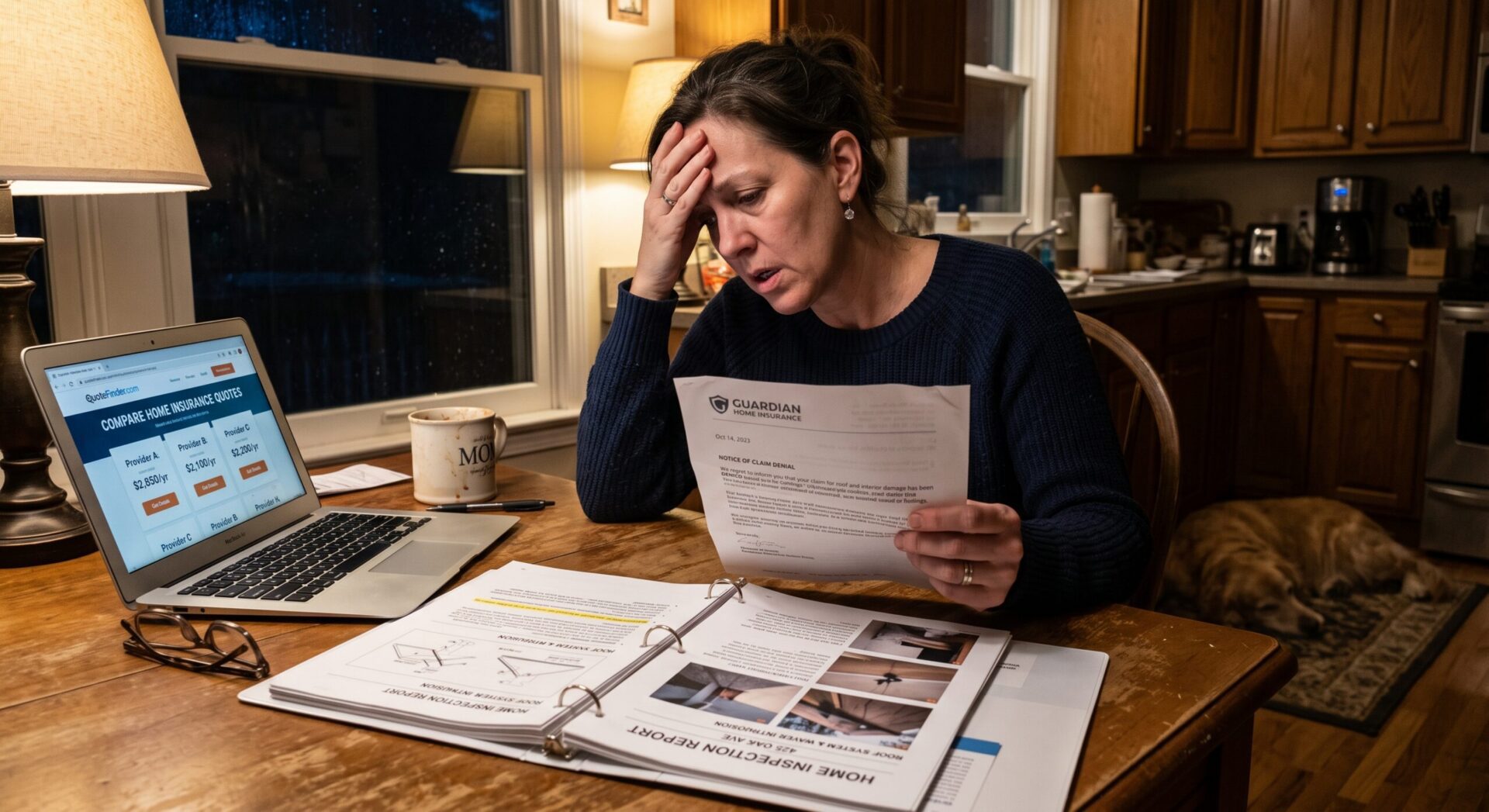
The most powerful reason to replace a Federal Pacific panel isn’t technical—it’s financial. These panels can make your home uninsurable and unsellable.
The Insurance Blockade
Major Texas insurance carriers—including State Farm, Allstate, and others—are actively flagging Federal Pacific panels as unacceptable risks. Here’s what’s happening:
- Many carriers refuse to write new policies on homes with FPE panels
- Existing policies may not be renewed upon discovery of an FPE panel
- For homes 40+ years old, insurers often require a “4-Point Inspection”
What is a 4-Point Inspection? This inspection assesses four critical systems:
- Roof
- HVAC
- Plumbing
- Electrical ← Federal Pacific panels get flagged here
If the electrical section identifies “Federal Pacific” or “Stab-Lok,” the insurance application is typically halted until proof of replacement is provided. Some insurers give homeowners a 30–90 day deadline to complete the replacement, after which coverage is cancelled or not renewed.
FHA and VA Loan Requirements
If you’re selling your home to a buyer using an FHA or VA loan, a Federal Pacific panel will stop the sale.
FHA (Federal Housing Administration) and VA (Veterans Affairs) appraisers are specifically instructed to flag “observable health and safety hazards.” Due to the widespread documentation of FPE fire risks, these panels are almost universally flagged during the appraisal process.
The loan cannot fund until the hazard is remedied. This forces the seller to pay for the replacement immediately—often under significant time pressure—or the deal dies and the buyer walks away.
Real estate impact:
- Sale delayed by 2–4 weeks minimum for emergency replacement
- Seller bears the full cost of replacement
- Buyer may walk and find a different house
- Negotiation leverage shifts heavily to the buyer
Conventional loans: While not as strict as FHA/VA, conventional mortgage lenders are increasingly scrutinizing Federal Pacific panels based on home inspector reports.
Epic Electrical offers priority scheduling for home sales under contract. If your deal is contingent on FPE panel replacement:
- We provide same-day assessment and quote
- Priority scheduling with 10–14 day turnaround
- All FHA/VA compliant documentation provided
- Direct communication with agents and title companies
- We’ve saved dozens of closings across DFW
Call us when the inspection flags the panel—we’ll keep your deal on track.
Contact Epic Electrical
Get 30% Back: Tax Credits for Electrical Panel Upgrades
Here’s some good news: You may be able to reclaim 30% of your panel upgrade cost through federal tax credits.
Inflation Reduction Act (25C Credit)
What it is:
- 30% tax credit on qualifying electrical panel upgrades
- Maximum credit: $600
- Available for tax years 2023–2032
Requirements: Your panel upgrade must support energy efficiency improvements such as:
- EV charging capability (most common qualifier)
- Heat pump installation
- Solar system installation
- Other qualifying electrification upgrades
How it works:
- Install qualifying 200A panel upgrade: $4,000
- Tax credit (30%): $1,200 → Capped at $600
- Net cost to you: $3,400
How to claim:
- Use IRS Form 5695 (Residential Energy Credits)
- Keep all receipts and contractor documentation from Epic
- File with your annual tax return
- Consult a tax professional for your specific situation
Epic’s guidance: When we install your 200A panel, we design it to support EV charging—we can pre-wire a 60-amp circuit even if you don’t have an electric vehicle yet. This qualifies you for the tax credit and future-proofs your home for when you do purchase an EV.
- Standard 200A FPE Replacement: $4,000
- Minus 25C Tax Credit (30%, max $600): -$600
- Your Net Cost: $3,400
This effectively discounts your safety upgrade by $600. Keep your Epic Electrical invoice and itemized receipt for tax filing.
Federal Pacific Panel Replacement: Your Questions Answered
Based on hundreds of conversations with DFW homeowners, here are the most common questions about Federal Pacific panel replacement.
Why DFW Homeowners Choose Epic Electrical for Federal Pacific Panel Replacement
We’ve explained the technical details, the costs, and the code requirements. Now let’s talk about how Epic Electrical approaches these projects differently than other contractors in the Dallas-Fort Worth area.
Our Four Commitments to You
1. Technical Transparency
We explain the engineering behind the failure, not just say “it’s dangerous and you need to fix it.” You’ll understand the jamming mechanism, the UL certification fraud, and why the statistical data supports replacement. We respect your intelligence and give you the information you need to make an informed decision.
2. Itemized Value
Every quote shows exactly what you’re paying for: materials broken down by component (panel, breakers, wire, meter base), labor hours and what work is included, and permit fees specific to your city. No mystery pricing. No “trust us” numbers. We show our work.
3. Code Compliance Guidance
When we show you the cost of AFCI breakers or outdoor disconnects, we clearly explain that these are city code requirements—not our recommendations for additional profit. We help shift the conversation from “the contractor is charging too much” to “these are the safety standards your city requires.” We’re your ally in compliance, not a profiteer.
4. Honest 100A vs. 200A Guidance
We base our amperage recommendation on YOUR actual situation: home size, current and planned appliances, EV ownership timeline, future goals, and budget. If you genuinely only need 100A service, we’ll tell you. But we’ll also explain why 200A might be worth the extra $600–$800 for most homeowners in 2025.
What Sets Epic Apart
Oncor Coordination Expertise: We handle 100% of utility coordination. No delays, no confusion, no penalties for improper meter handling. We know Oncor’s system inside and out.
Same-Day Quotes: No waiting a week for a proposal. We assess your panel, explain your options, and provide detailed, itemized pricing the same day.
Realtor Partnership (“Closing Guarantee”): Is your home sale under contract with an FPE contingency? We offer priority scheduling and fast turnaround (10–14 days) with all FHA/VA-compliant documentation. We’ve saved dozens of closings across DFW.
Transparent Timeline Expectations: We give you realistic timelines upfront—2–4 weeks from start to power-on. No overpromising, no unrealistic expectations.
Ready to Replace Your Federal Pacific Panel? Here’s What Happens Next
Step 1: Call Epic Electrical or visit our website
Step 2: We schedule a same-day assessment at your convenience
Step 3: We inspect your panel, measure electrical loads, and discuss your specific needs
Step 4: You receive an itemized quote showing all costs transparently
Step 5: We handle permits, Oncor coordination, and all scheduling
Step 6: Installation completed in 2–4 weeks, home brought to full code compliance
Step 7: You have a safe, modern 200A electrical system
No pressure. No surprises. Just honest guidance and expert work.
The Bottom Line on Federal Pacific Panel Replacement
Federal Pacific panels aren’t just “old”—they’re document ably dangerous, with a 51% failure rate under engineering testing conditions. But replacing them doesn’t have to be confusing, overwhelming, or feel like you’re being taken advantage of.
When you understand the real costs—materials ($1,975–$2,900), skilled labor ($800–$2,000), and code compliance requirements—the pricing makes sense. When you understand the 100A versus 200A decision based on your actual electrical loads and future plans, you can make a confident choice. And when you understand the insurance and lending implications, you realize this isn’t just about safety—it’s about protecting your financial investment in your home.
At Epic Electrical, we believe in treating you like an informed adult, not a sales target. Yes, Federal Pacific panel replacement is a significant investment—$2,750–$4,800 for most DFW homes—but it’s also a necessary safety upgrade that protects your family, satisfies your insurance company and mortgage lender, and ensures you can sell your home when the time comes.
We give you options, not pressure. Everything works as it should when we’re done.
Call Epic Electrical today for your honest Federal Pacific panel assessment:
Visit epicelectrical.com or contact us directly
Serving Dallas, Fort Worth, Plano, Arlington, Irving, and the entire DFW Metroplex with honest, transparent electrical services. Licensed, insured, and committed to your safety.
- Whole-Home Generator Installation – Protect your home from power outages
- Customer Testimonials – See what DFW homeowners are saying about Epic
- Contact Epic Electrical – Schedule your free assessment today