Generac vs. Emporia Level 2 EV Charger: Which One Is Right for Your DFW Home?
⚡ Key Takeaways
- Emporia Pro’s load management can genuinely avoid a panel upgrade — it reads your home’s total electrical demand 3,000 times per second and throttles the charger accordingly. But it doesn’t work in every situation.
- Generac is built for homes that want everything on one ecosystem — generator, battery, and EV charger all talk to each other automatically during outages and peak demand.
- Both require a 60A dedicated circuit and #6 wire — installation complexity and cost are similar regardless of brand.
- In DFW, hardwired + THHN wire in conduit is the right call — attic temps hit 140°F and plug-in setups conflict with NEC 2020 GFCI requirements.
- Emporia is the “enthusiast’s choice” — app-heavy, data-rich, great for time-of-use billing optimization. Generac is “set it and forget it” with local dealer backup.
- Warranty support works differently — Generac dispatches a local service tech. Emporia ships you a replacement unit. Labor cost to swap it is on you.
- Federal 30C tax credit covers 30% up to $1,000 — but it expires June 30, 2026. If you’re considering a charger, this year matters.
You have an EV. You’re tired of plugging into a regular outlet and waking up to 60%. You’ve Googled “best Level 2 home charger” and now you’re three tabs deep into amp ratings, load management explainers, and Reddit threads arguing about Wi-Fi reliability.
You didn’t buy an electric vehicle to become an electrical engineer.
Here’s what we’ve found after installing Level 2 chargers all across DFW: most homeowners don’t need to pick the best charger on the market. They need to pick the right charger for their specific home. And those are two very different things.
Generac and Emporia are both excellent. But they were built with different homes in mind — and by the end of this post, you’ll know exactly which one fits yours.
What Level 2 Actually Means for Your Daily Life
Before we get into the comparison, let’s make sure Level 2 is even the right move for you.
Your EV came with a standard 120V cord. That’s Level 1. It delivers about 3–5 miles of range per hour. If you drive 40 miles a day — a pretty normal DFW commute — you’d need to be plugged in for 8–12 hours just to break even. Miss a night, and you’re starting your morning already behind.
A Level 2 charger runs on 240V — same voltage as your dryer — and delivers 30–40 miles of range per hour. Most DFW drivers are fully charged in 2–4 hours. Plug in when you get home, wake up to 100% regardless of what the day looked like.
Level 1 vs. Level 2 Speed
A Level 2 charger is roughly 8 times faster than a standard 120V outlet — the difference between managing your charging and just never thinking about it.
Here’s what most comparison posts skip: at 48A, Generac and Emporia deliver identical charging speed. Both hit 11.5 kW. The difference between these two brands has nothing to do with how fast your car charges. It has everything to do with how the charger fits into your home’s electrical system — and what happens when things get complicated.
If you’re not sure whether Level 2 is the right call for your driving habits, we put together a full guide for that: Do I Need a Level 2 EV Charger at Home?
Who Makes These Chargers — And Why That Background Matters
Generac: Home Power Is Their Whole Business
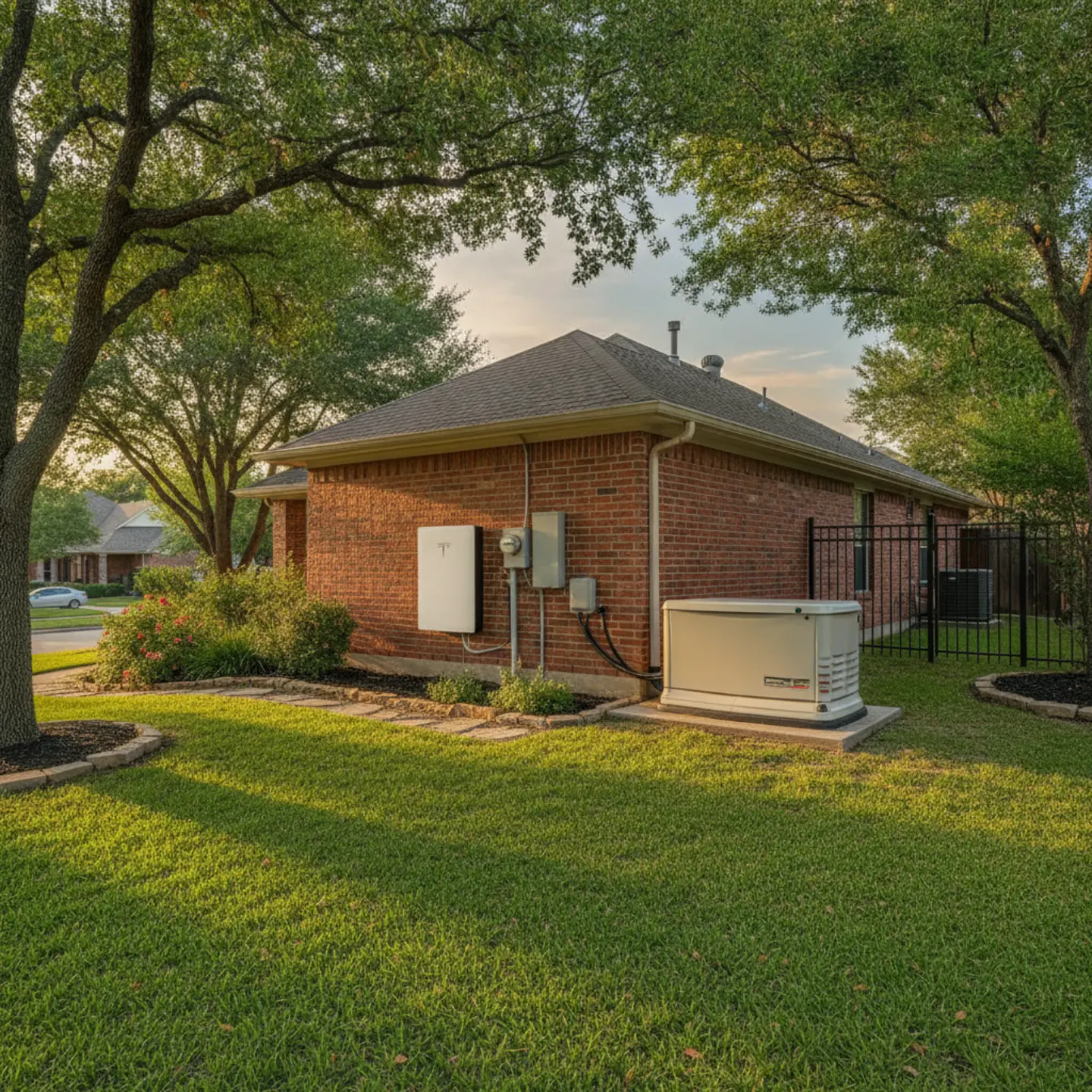
Most people know Generac from standby generators — the ones that kick on automatically when the power goes out. What fewer people realize is that Generac has spent the last several years building an entire home energy ecosystem around that generator foundation: the PWRcell battery, the PWRmanager load control module, solar integration, and yes, EV chargers.
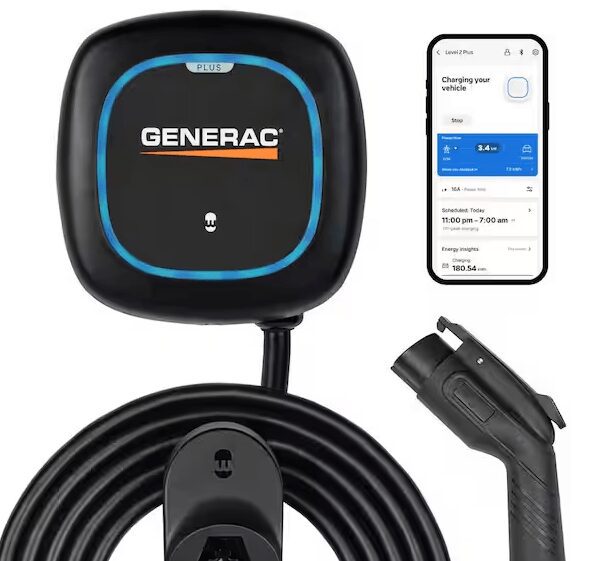
The Generac 40A Plus and 48A Plus are their residential Level 2 lineup. The 40A delivers 9.6 kW. The 48A steps up to 11.5 kW — enough to charge virtually any EV or plug-in hybrid from near-empty to full overnight. Both are ENERGY STAR certified and carry a NEMA Type 4 enclosure rating.
That NEMA 4 rating is worth pausing on. Most competitors use NEMA 3R — which handles rain but not windblown dust or hose-directed water. NEMA 4 handles both. If you’ve seen what a North Texas thunderstorm looks like sideways at 60 mph, you understand why that matters for something mounted on your garage exterior.
Generac also backs their chargers with a network of over 9,000 authorized service dealers nationwide. For DFW homeowners, that means warranty issues are resolved by a local technician who can come to your home — not a phone call and a return shipping label.
💡 Already Have a Generac Generator?
The decision gets a lot simpler. The Generac EV charger integrates directly with the Mobile Link app used to manage Generac standby generators. During a grid outage, the PWRmanager module can automatically shed the EV charger load so your generator keeps the essential circuits running — HVAC, refrigeration, lights — without missing a beat. That kind of automatic handoff doesn’t exist with other brands. See how the full ecosystem works in our whole-home generator installation guide.
Emporia: Energy Data Company That Happens to Make Great Chargers
Emporia’s origin story is different. They started as a home energy monitoring company — the Vue energy monitor was their first product, designed to show homeowners exactly where their electricity dollars were going, circuit by circuit. The EV charger came out of that same DNA: a device that doesn’t just charge your car, but gives you granular visibility into when, how fast, and what it’s costing you.
Emporia offers two residential Level 2 options in 2025:
The Emporia Classic is a standalone 48A smart charger — NEMA 4 rated, ENERGY STAR certified, with a strong app and scheduling features. At $399–$429, it’s one of the most competitively priced UL-listed 48A chargers on the market. It also comes in a native NACS (Tesla-style) connector option, which means Tesla owners don’t need an adapter.
The Emporia Pro is a different proposition entirely. For $599, you get the charger plus the Vue 3 energy monitor bundled in — the hardware that makes true whole-home load management possible. That $150–$200 monitor is what separates the Pro from the Classic, and it’s the reason the Pro can help many homeowners skip a panel upgrade entirely.
Emporia has earned genuine enthusiast loyalty — 4.8–4.9 star ratings across thousands of reviews. The app is deep, the energy data is real, and the cost-tracking features are genuinely useful if you’re on a time-of-use rate plan with Oncor or TXU.
💡 Tesla Owner? Emporia Has a Native Option
Emporia is one of the few brands offering a native NACS connector — the Tesla-style plug — without needing an adapter. If you drive a Tesla, the Emporia Classic or Pro is worth a serious look. We also broke down the full Emporia vs. Tesla Wall Connector comparison for DFW homeowners if that’s the question on your mind.
Spec-by-Spec: What You’re Actually Comparing
| Feature | Generac 48A Plus | Emporia Pro | Emporia Classic |
|---|---|---|---|
| Max Amperage | 48A | 48A | 48A |
| Max Power Output | 11.5 kW | 11.5 kW | 11.5 kW |
| Amperage Range | 6A–48A | 6A–48A | 6A–48A |
| Cable Length | 25 ft | 24–25 ft | 24–25 ft |
| Connector Type | SAE J1772 | J1772 or NACS | J1772 or NACS |
| Enclosure Rating | NEMA Type 4 | NEMA Type 4 | NEMA Type 4 |
| Connectivity | Wi-Fi + Bluetooth | Wi-Fi (2.4 GHz) | Wi-Fi (2.4 GHz) |
| ENERGY STAR | Yes | Yes | Yes |
| Whole-Home Load Mgmt | Via PWRmanager (separate) | Built-in (Vue 3 included) | Not included |
| Ecosystem Integration | Generac generators/battery | Emporia Vue ecosystem | Emporia Vue ecosystem |
| MSRP | $699–$769 | $599 | $399–$429 |
| Warranty | 3 years (labor included yr 1–2) | 3 years (hardware only) | 3 years (hardware only) |
| Warranty Service | Local dealer dispatched | Replacement unit shipped | Replacement unit shipped |
Specs current as of 2025. Verify with manufacturer for the most up-to-date information.
The Real Question: Does Your Panel Need an Upgrade?
This is where the comparison gets real — and where most homeowners get either worried or confused. Let’s work through it clearly.
A 48A charger running continuously is a “continuous load” under the NEC. That requires a dedicated 60A double-pole breaker and #6 AWG copper wire. The math: 48A × 1.25 (NEC continuous load factor) = 60A.
In a newer DFW home with 200-amp service and plenty of open breaker slots, that’s usually straightforward. In an older home with 100-amp or 125-amp service — or a fully loaded 200A panel — you’re looking at whether the panel can handle one more 60A circuit. Sometimes it can. Sometimes it can’t without an upgrade.
This is where Generac and Emporia take completely different approaches.
How Emporia’s PowerSmart Load Management Actually Works
The Vue 3 monitor included with the Emporia Pro installs in your main panel and measures your home’s total electrical draw 3,000 times per second. It’s tracking everything — HVAC cycling on, oven preheating, dryer running — in real time.
That data gets communicated via Wi-Fi to the Emporia Pro charger. The charger constantly adjusts its output amperage so that the total home load never exceeds your panel’s rated capacity. Running the AC and dryer at the same time? The charger pulls back. Everything quiet at midnight? The charger runs at full 48A.
This is explicitly permitted under NEC Article 625.42(B) and 750.30, which allow energy management systems to ensure combined loads don’t exceed service capacity — even when individual circuit breakers add up to more than the panel’s total rating. It’s legal, it’s code-compliant, and it genuinely works.
In many 100A and 125A panel homes, this means no panel upgrade needed. That’s $2,000–$5,000 in savings — real money.
How Generac Handles Load Management
Generac’s approach is different — and to be fair about it, more powerful in the right setup, but less plug-and-play for most homeowners.
The Generac charger itself includes “Power Boost” and “Power Sharing” features that prevent multiple Generac chargers from overloading a shared circuit. Useful if you have two EVs. But this is charger-to-charger coordination — it doesn’t monitor your whole home’s load.
For true whole-home load management, Generac uses the PWRmanager module — a separate piece of hardware with twelve 60-amp relays that can shed non-essential loads during high-demand periods or outages. But here’s the honest reality: the PWRmanager is primarily deployed as part of a larger PWRcell solar and battery installation. It’s not typically bundled with a standalone EV charger purchase.
So the bottom line: if you’re buying a Generac charger on its own, you’re getting excellent hardware without built-in whole-home load monitoring. The Emporia Pro includes that monitoring out of the box.
⚠️ When Load Management Doesn’t Save You
Load management is powerful — but it’s not magic. There are situations where a panel upgrade is unavoidable regardless of which charger you choose:
Service entrance wires rated under 100A: If the physical conductors from the utility transformer to your house are undersized, no software can safely expand their capacity. This is a physical limitation, not a panel limitation.
Recalled panel brands: If you have a Federal Pacific or Zinsco panel, an upgrade is mandatory for safety before adding any significant new load — EV charger or otherwise. See our guide on Federal Pacific panel replacement in DFW.
Wi-Fi failure: Emporia’s PowerSmart depends on a live Wi-Fi connection. If your router goes down, the charger drops to 6A safe mode until connectivity is restored. Not dangerous — but worth knowing.
Not sure if your panel can handle a Level 2 charger? That’s exactly what we assess during a free estimate. We’ll look at your service entrance, your current panel load, and tell you honestly what’s needed — no upsell, no pressure. Our panel upgrade assessment guide walks through what we check.
The DFW Factor — Why Installation Details Matter More Here
Here’s the thing about living in North Texas: the climate creates installation requirements that don’t show up in most national buying guides. If you’re getting a Level 2 charger installed in DFW, these details matter more than the brand name on the box.
Attic Heat and the Right Wire for Texas
DFW attic temperatures regularly hit 140°F during summer. That heat affects your wiring in a real way.
Standard NM-B cable (Romex) has a lower thermal tolerance and loses ampacity when surrounded by hot insulation. #6 THHN wire in conduit — rated for 90°C / 194°F — is what professional DFW electricians use for EV charger circuits. It handles the thermal stress, maintains full ampacity, and will be there 20 years from now.
Any installer cutting corners with Romex on a Texas EV charger circuit is setting you up for problems. We don’t do it. It’s not worth the risk.
Both Generac and Emporia units have been tested to perform well in high-ambient conditions — but the charger is only as good as the circuit feeding it. In DFW, that means THHN wire in conduit, every time.
The GFCI Nuisance Trip Problem (And the Easy Fix)
This one trips up a lot of homeowners — no pun intended.
Under NEC 2020 Article 210.8(A), any 240V receptacle in a garage needs GFCI protection. But here’s the problem: both Generac and Emporia chargers have built-in ground-fault protection. When you plug a charger with internal GFCI into a GFCI-protected outlet, the two systems conflict — and you get “nuisance tripping” where the circuit shuts off for no apparent reason.
The solution — and what virtually every serious DFW electrician recommends — is to hardwire the charger. When a charger is hardwired, it’s classified as “fixed equipment” rather than a receptacle. That means a standard (non-GFCI) 60A breaker is required — saving you roughly $150 on the breaker alone, improving reliability, and keeping you code-compliant. Win-win-win.
If someone quotes you a plug-in EV charger installation using a NEMA 14-50 outlet, ask them how they’re handling NEC 2020 GFCI compliance. If they don’t have a clear answer, that’s a red flag. See how we approach Level 2 EV charger installation in DFW.
Permits Are Not Optional Here
Fort Worth, Arlington, Keller, Southlake, and virtually every other DFW municipality requires a permit for new 240V circuit installations. Permit cost runs $50–$175. It’s not the expensive part.
What is expensive: skipping the permit and having a problem later. An unpermitted install can void your homeowner’s insurance in the event of an electrical fire — and can create real complications when you sell your home.
We pull permits and coordinate inspections on every EV charger install. That’s not an extra — it’s how the job is supposed to be done. After 2021’s winter storm reminded everyone what grid instability looks like in Texas, the peace of mind from having everything properly permitted and inspected is worth a lot more than it used to be.
What It Actually Costs in DFW
Let’s put real numbers on this. Installation cost varies based on distance from your panel, conduit routing complexity, and whether a panel upgrade is needed.
| Cost Component | Generac 48A Plus | Emporia Pro |
|---|---|---|
| Charger MSRP | $699–$769 | $599 |
| Typical DFW Installation | $700–$2,000 | $900–$1,500 |
| Permit & Inspection | $50–$175 | $50–$175 |
| Panel Upgrade (if needed) | $2,000–$5,000 | $0 (if load mgmt works for your home) |
| Total — Standard Install | $1,449–$2,944 | $1,549–$2,274 |
| Total — Panel Upgrade Required | $3,449–$7,944 | $3,549–$7,274 |
A few things worth knowing about available offsets:
Federal 30C Tax Credit: Homeowners in eligible low-income or non-urban census tracts can claim 30% of hardware and installation cost, up to $1,000. This credit is scheduled to expire June 30, 2026. If you’ve been sitting on this decision, this year is the year to move.
TXU Free EV Miles Plan: TXU offers plans that allow free charging between 7 PM and 1 PM the following day with the required telematics setup. Both Generac and Emporia can be scheduled to charge in that window.
United Cooperative Services Rebate: UCS offers up to $500 (50% of installation cost) for customers who agree to charge during off-peak hours. Worth checking if you’re in their service territory.
For the full DFW cost breakdown, see our EV charger installation cost guide for Dallas-Fort Worth.
So Which One Is Right for Your Home?
Here’s the honest answer — the one we give every customer who asks us in person.
✅ Choose the Generac 48A Plus if:
- Your home has 200-amp service with available panel capacity (most DFW construction after 2000)
- You already have a Generac generator or are planning to add one
- You want a local service technician who can come to your home for warranty work — not a box from Colorado
- “Set it and forget it” matters more than deep energy monitoring
- You’re planning a larger whole-home power upgrade (PWRcell, solar, etc.) down the road
✅ Choose the Emporia Pro if:
- Your home has a 100A or 125A panel and you want to avoid a $2,000–$5,000 upgrade
- You’re on a time-of-use rate plan and want to optimize your charging costs down to the dollar
- You drive a Tesla and want a native NACS connector
- You want detailed home energy monitoring beyond just the charger
- You’re budget-conscious — the Classic at $399 is one of the best value 48A chargers on the market
✅ Not Sure Which Category Your Home Falls Into?
That’s the most common answer we hear — and it’s completely reasonable. The panel capacity question isn’t something you should have to figure out from a blog post. It’s something a licensed electrician should tell you after looking at your actual panel. That’s exactly what our free estimate covers — we check your service entrance, assess your current load, and tell you straight: Generac fits, Emporia Pro fits, or here’s what needs to happen first. No pressure either way. Schedule your free assessment here.
Frequently Asked Questions
Does the Emporia Pro really eliminate the need for a panel upgrade?
In many cases, yes — and it’s not a gimmick. The Vue 3 monitor reads your home’s total electrical demand 3,000 times per second and throttles the charger’s output so the combined load never exceeds your panel’s rating. This is explicitly permitted under NEC Article 625.42(B) and 750.30. That said, it can’t fix undersized service entrance wires, recalled panel brands like Federal Pacific or Zinsco, or situations where Wi-Fi connectivity is unreliable. A licensed electrician can tell you definitively whether your home qualifies.
Can a Generac generator charge my EV during a power outage?
Not automatically in the way most people imagine — but with the right setup, yes. A Generac standby generator can power a Generac EV charger, and the PWRmanager module can shed the EV load automatically if the generator reaches capacity. What it won’t do on its own is prioritize your EV over your HVAC. The smart move during an outage is usually to let the generator handle essentials and charge the car once demand drops. The Generac ecosystem manages this intelligently when configured correctly.
Do I need a permit to install a Level 2 EV charger in Fort Worth?
Yes — and in virtually every other DFW municipality. Installing a new 240V dedicated circuit modifies your home’s electrical load and requires a permit, licensed electrician sign-off, and inspection. Permit cost typically runs $50–$175. Skipping the permit can void your homeowner’s insurance and create problems when selling. We pull permits and coordinate inspections on every install we do.
What’s the difference between the Emporia Classic and Emporia Pro?
The charger hardware is largely the same — both deliver 48A at 11.5 kW. The Pro includes the Emporia Vue 3 whole-home energy monitor, which is what enables PowerSmart Load Management. Without the Vue 3, the Classic is a smart charger with scheduling and app control, but it doesn’t monitor your home’s total electrical draw. If avoiding a panel upgrade is your goal, you need the Pro — or you’d need to purchase the Vue 3 separately anyway.
Should I hardwire my EV charger or use a plug-in outlet?
Hardwired — almost always. NEC 2020 requires GFCI protection on 240V garage receptacles, but both Generac and Emporia have built-in ground-fault protection. Connecting a charger with internal GFCI to a GFCI outlet causes nuisance tripping. Hardwiring classifies the charger as fixed equipment, which allows a standard 60A breaker, saves roughly $150, improves reliability, and keeps you code-compliant. In DFW’s heat, hardwired connections also hold up better long-term than plug connections that can loosen or corrode.
Is the federal tax credit still available for EV charger installation in Texas?
Yes — but not for everyone, and not for long. The federal 30C Alternative Fuel Vehicle Refueling Property Credit covers 30% of the combined hardware and installation cost, up to $1,000, for homeowners in eligible low-income or non-urban census tracts. It’s currently scheduled to expire June 30, 2026. Ask us during your estimate whether your address qualifies — we check this as part of every job.
Ready to Stop Waking Up to a Half-Charged Battery?
You bought an electric vehicle to make your life simpler — not to spend weekends researching amp ratings and load management protocols.
We’re certified Generac installers. We know Emporia well. And when you call us, we’ll ask about your panel, look at your home’s electrical situation, and tell you honestly which one makes sense — Generac, Emporia Pro, or Emporia Classic. We’ll also tell you if neither one is the right fit until something else gets addressed first.
That’s what “informative without being pushy” means in practice. No upsell. No pressure. Just the right answer for your home, installed correctly, permitted, and inspected — so everything works as it should when we’re done.
Call or Text: (682) 478-6088
Serving Fort Worth, Arlington, Keller, Southlake, Colleyville, Grapevine, Lewisville, and all of DFW