
DFW Commercial Tenants: The Hidden Electrical Costs That Blow Your $40/sq ft TI Budget (And How to Avoid Them)
⚡ Key Takeaways
- Budget Reality Check: That $40/sq ft TI allowance covers cosmetic work—not electrical infrastructure upgrades
- The “Base Building” Trap: Landlords define “white box” differently than you expect, leaving major electrical costs on your plate
- Code Triggers Cost Money: NEC 2023 requirements like arc energy reduction can add $50K-$150K if your project triggers building-wide upgrades
- Old Buildings = Hidden Costs: 1980s suburban offices often have aluminum wiring, obsolete panels (Federal Pacific/Zinsco), and “spaghetti” cabling that must be removed by code
- The 50% Rule Danger: If your renovation costs exceed 50% of the building’s market value, you trigger full code compliance—a six-figure surprise
- Restaurant Kitchen Reality: Grease hood electrical interlocks, three-phase power, and fire suppression coordination are where budgets blow up
- Due Diligence Saves Thousands: A $2K forensic electrical walkthrough before signing your lease can prevent $50K+ in surprise costs
- Lease Language Matters: Get “code compliance” and “panel capacity” clauses in your lease—shift base building risks back to the landlord
- 15-20% Contingency Minimum: For buildings built before 1990, budget 15-20% contingency for electrical (not the standard 5%)
You’re 60 days from opening your new office, retail space, or restaurant in DFW. Your architect assured you the $40 per square foot TI allowance would “cover everything.” The lease is signed. The buildout has started. Then your contractor drops the bomb: DFW commercial tenant electrical costs are going to blow your budget—the electrical work alone will cost $18/sq ft, and that’s before you discovered the building’s panels are Federal Pacific (uninsurable), the aluminum wiring needs retrofitting, and the City of Dallas requires lighting controls commissioning you didn’t budget for.
Sound familiar?
Here’s what nobody tells you during lease negotiations: that $40/sq ft allowance is a relic from 2015. In 2025 DFW, with NEC 2023 code requirements, aging building infrastructure, and inflation that permanently reset construction costs, commercial tenant electrical costs routinely exceed entire TI allowances. The average electrical work alone runs $15-$25 per square foot—before you touch finishes, HVAC, or plumbing.
You’re not alone, and you’re not being unreasonable. Commercial tenants across Fort Worth, Arlington, and Dallas are getting blindsided by electrical costs that were “hidden” only because nobody explained where to look during due diligence.
We’re going to walk through exactly where DFW commercial tenant electrical costs come from, how to spot them before you sign a lease, and how to protect yourself with the right lease language and budgeting. According to the National Fire Protection Association (NFPA), which publishes the National Electrical Code, the 2023 code cycle introduced significant changes that affect commercial electrical costs. No jargon. No upselling. Just the information you need to make informed decisions about your commercial space.
💡 Why This Matters More in DFW
The Dallas-Fort Worth metroplex has massive inventory from the 1980s oil boom—beautiful buildings with cheap rent but electrical systems that are 40 years old, built with aluminum wiring, and full of obsolete panels. The “value” of lower rent gets eaten by mandatory electrical upgrades. Richardson, Addison, Arlington, and the Mid-Cities are particularly affected by this aging infrastructure.
The $40/SF TI Allowance: What It Actually Buys (Spoiler: Not Much)
Let’s start with the uncomfortable truth about that tenant improvement allowance your landlord offered.
Breaking Down a “Standard” $40/SF Budget
When you see “$40 per square foot TI allowance” in your lease proposal, here’s what that money actually covers in the 2025 DFW market:
- Architectural and soft costs: $4-$6 per square foot (design fees, permit expediting, plan review)
- General conditions: $3-$5 per square foot (dumpsters, supervision, cleaning, insurance)
- Demolition: $2-$4 per square foot (removing old carpet, walls, ceiling tiles)
- Finishes: $15-$20 per square foot (paint, carpet tile, baseboard, minimal millwork)
- MEP (Mechanical, Electrical, Plumbing): $10-$15 per square foot for all three trades combined
That last line is where the budget falls apart.
With commercial electrical costs ranging from $6 to $15 per square foot for basic work—just swapping fixtures, relocating outlets, and standard safety checks—your $40 budget allocates roughly $10-15/SF for all three mechanical trades combined. That’s before you factor in:
- New electrical panels ($3,000-$5,000 each)
- Dedicated server room circuits with redundant cooling
- Floor coring for conference room power boxes ($1,000 per location in high-rise buildings)
- Lighting controls required by the 2021 International Energy Conservation Code (Dallas mandate)
- Three-phase power for commercial kitchen equipment or manufacturing
- Generator hookups for medical facilities or critical operations
Market Reality Check
Actual per-square-foot build-out costs for Class A office space in DFW (2024-2025)
Restaurant buildouts: $220-$360/SF | Medical spaces: $350-$800/SF
Meanwhile, your TI allowance? Still sitting at $30-$55/SF.
That gap—sometimes 5-6 times the allowance—comes straight out of your pocket.
What “Base Building” Actually Means (The Definition That Costs You $50K)
One of the biggest sources of frustration—and surprise costs—is the definition of “base building” electrical delivery.
Here’s what most tenants assume when they hear “white box” or “shell space with base building electrical”:
“The electrical system is ready. I just need to add my lights and outlets.”
Here’s what landlords actually deliver in many cases:
“There’s a main disconnect switch or a high-voltage bus duct tap somewhere in the building. Everything from there to your suite is your problem.”
The cost difference between these two scenarios? Massive.
⚠️ The Panel Capacity Trap
What you assumed: The electrical closet on your floor has a panel with spare capacity ready for your new 5,000 square foot office.
The reality: The floor’s distribution panel is completely full. No physical space for additional breakers. Or worse—the panel exists, but it’s at capacity and can’t handle your load.
Your hidden cost: Installing a new sub-panel, tapping the main bus riser, coordinating a building-wide shutdown to do the work (which means after-hours labor at double-time rates), and potentially hiring a structural engineer to verify the new panel’s weight won’t exceed floor loading limits.
Total surprise cost: $10,000-$25,000 for work you thought was included in “base building.”
For a 10,000-square-foot tenant, the difference between connecting to an existing panel with available capacity and having to install a new 400-amp service entrance can represent a $25,000 to $50,000 swing in your electrical budget.
This is the single most common cause of budget variance we see with commercial electrical projects in DFW.
Understanding DFW Commercial Tenant Electrical Costs: The Aging Building Stock Problem
The Dallas-Fort Worth metroplex is a patchwork of architectural eras, and each one comes with its own electrical baggage. Understanding the age of your prospective building gives you a roadmap for what hidden costs are likely waiting for you.
The 1980s “Boom” Buildings (Richardson, Addison, Arlington, Mid-Cities)
The massive suburban expansion of Dallas in the 1970s and 1980s—fueled by the oil boom—left a legacy of office stock in areas like Richardson, Addison, Arlington, and the Mid-Cities. These buildings look fine from the outside. The rent is attractive. But electrically, they’re ticking time bombs for your budget.
Three major problems lurk in these buildings:
1. The Aluminum Wiring Hazard
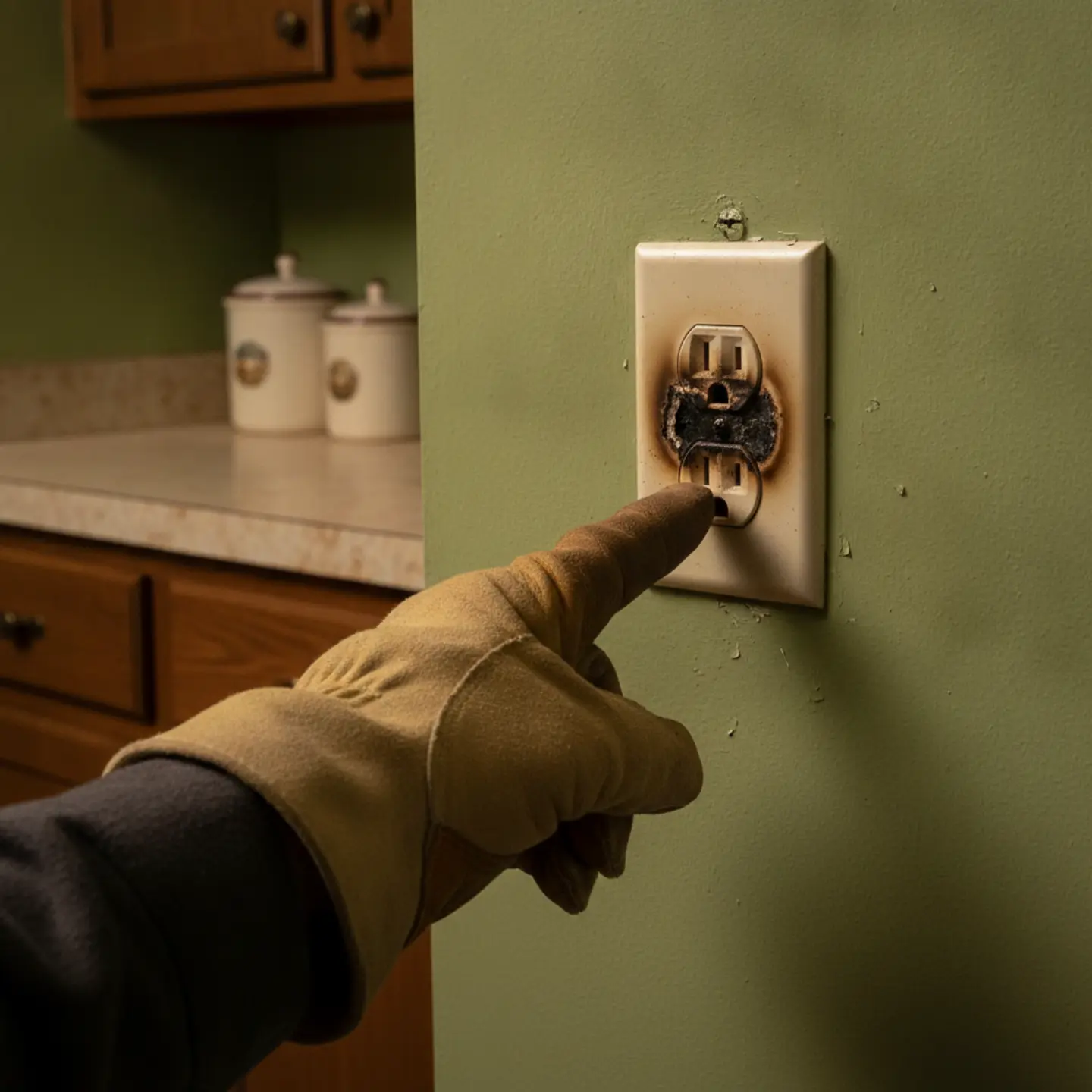
During the 1970s and early 1980s, builders frequently used aluminum wiring for branch circuits to save money on copper. The problem? Aluminum expands and contracts with heat far more than copper does. Over 40+ years, this creates loose connections, high-resistance “hot spots,” and legitimate fire hazards.
If your tenant improvement involves modifying any of these circuits—which it almost certainly will—a diligent electrical inspector may require a complete retrofit. Your options are installing specialized “alumiconn” connectors (extremely labor-intensive) or doing a complete rewire of the affected areas.
Hidden cost range: $5,000-$15,000+ depending on how much of your space is affected.
We’ve written extensively about aluminum wiring safety concerns in DFW homes, and the same issues affect commercial spaces—often with higher stakes due to larger loads and longer wire runs.
2. Obsolete Panels That Insurance Won’t Touch
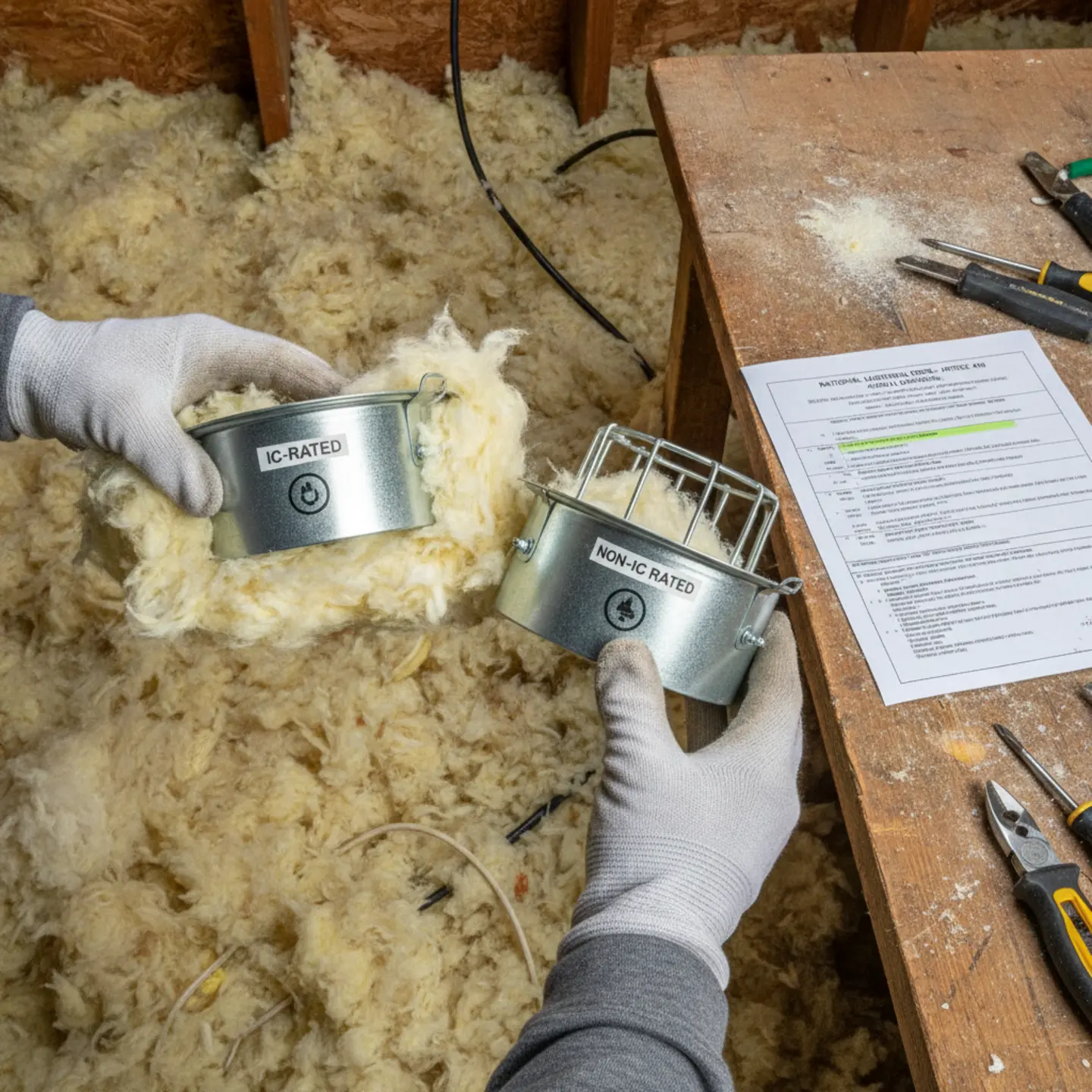
Buildings from this era frequently contain electrical panels manufactured by companies like Federal Pacific Electric (the infamous “Stab-Lok” breakers) or Zinsco. These panels have lost their UL listing due to documented high failure rates and fire risks. The breakers often fail to trip during an overload—the exact opposite of what they’re supposed to do.
Here’s the kicker: Many commercial insurance carriers now refuse to underwrite policies for spaces containing this equipment. You may sign your lease, start your buildout, and then discover you literally cannot obtain property insurance until these panels are replaced.
Mandatory replacement cost: $3,000-$8,000 per panel, and that’s before the additional expense of bringing the feeder wires up to current grounding standards.
If you’re evaluating office space built in the 1980s, read our detailed guide on Federal Pacific panel replacement and 200-amp upgrades to understand what you’re looking at.
3. The “Spaghetti Wiring” Problem
Above the drop ceilings of older offices lies decades of abandoned cabling. Previous tenants ran new data cables and power circuits, then when they moved out, they simply cut the cables and left them in the plenum space. The result? Thousands of feet of dead copper, fiber optic, and coaxial cable creating a massive fire load.
The National Electrical Code now requires the removal of “abandoned” cables to reduce this fire risk. Your electrician will spend days—sometimes weeks for larger spaces—stripping out cabling that you never used and don’t benefit from.
Hidden cost: $5,000-$15,000 in labor charges, billed time-and-materials, just to clear the way for your actual electrical work to begin.
💡 The Ceiling Tile Test
During your space walkthrough, ask to pop open a few ceiling tiles in different areas. If you see a tangled mess of cables—some still connected, some cut and hanging—budget $5,000-$10,000 minimum for demolition and removal before any new electrical work can proceed.
This simple 5-minute inspection can give you advance warning of a cost that contractors often discover mid-project and bill as a change order.
Downtown Dallas & Fort Worth: The Historic Building Challenge
Renovating historic properties in Sundance Square or the Dallas West End presents a completely different set of electrical challenges.
The primary hidden cost is vertical accessibility. Historic masonry buildings from the 1920s-1950s often lack the stacked electrical closets or vertical risers found in modern towers. If you need to run new high-amperage risers to upper floors, you’re looking at:
- Creating new shaft ways (triggering structural engineering reviews)
- Significant demolition and restoration work
- Navigating historical preservation requirements
- Working around structural clay tile or heavy masonry walls that make concealing conduit impossible
The alternative—surface-mounted raceways (Wiremold)—affects aesthetics significantly. Many tenants end up investing in expensive furring out of walls to hide the infrastructure, adding architectural costs on top of electrical.
For truly problematic historic buildings, some tenants are now exploring “Digital Electricity” and Power over Ethernet (PoE) systems to minimize high-voltage wiring. These systems work beautifully but carry high initial capital costs that a standard TI allowance won’t touch.
The NEC 2023 Code Bomb: New Rules = New Costs
The regulatory environment in Texas underwent a seismic shift with the adoption of the 2023 National Electrical Code (NEC). Unlike previous code cycles that focused incrementally on safety, the 2023 NEC introduced requirements that fundamentally alter the cost structure of commercial electrical distribution—a reality that dramatically affects DFW commercial tenant electrical costs.
Article 240.87: Arc Energy Reduction (The Silent Budget Killer)
For large commercial tenants—think law firms taking full floors, data centers, large medical facilities—the most financially devastating change is the tightening of Arc Energy Reduction requirements.
Here’s what you need to know:
The rule: Circuit breakers rated at 1,000 amperes or higher must now have systems in place to reduce the energy released during an arc fault event. This includes zone-selective interlocking (ZSI), differential relaying, or energy-reducing maintenance switches (ERMS).
When it affects you: If you’re taking enough space to require a service upgrade—say, a 20,000-square-foot floor in a downtown tower—and the building’s main bus needs to be tapped with a new 1,200-amp switch for your space.
The cost mechanism: You cannot use a standard thermal-magnetic breaker. You must install a breaker with electronic trip units and the required arc energy reduction features. The cost difference between a standard 1,200A breaker and one with these safety systems is often $10,000 or more per breaker.
If the main building switchgear needs retrofitting to accommodate these new requirements, the cost can balloon to $50,000-$150,000 depending on complexity and equipment age.
Real-World Example
Unbudgeted electrical upgrade for law firm tenant
A law firm leased 20,000 square feet in a Downtown Dallas tower. The existing building electrical was insufficient for their server loads and lighting requirements. The utility upgraded the transformer to provide more capacity. The increased fault current made the building’s existing main breaker non-compliant with its AIC (amperage interrupting capacity) rating under NEC 2023.
Result: $85,000 building switchgear upgrade—pushed onto the tenant whose project “triggered” the requirement, even though the upgrade benefits the entire building.
This is directly related to arc flash study requirements for commercial buildings in DFW. If you’re taking significant space in a Class A tower, understanding these requirements before lease negotiation is critical.
The “50% Rule”: Substantial Improvement Trigger
In Dallas, Fort Worth, and surrounding communities that participate in FEMA flood programs, there’s a regulatory trap called the “Substantial Improvement” rule.
How it works: If the cost of your renovations equals or exceeds 50% of the market value of the structure (or your specific tenant space, depending on how the building is legally structured), your project must bring the entire associated structure into compliance with current flood protection and safety codes.
The tenant trap: In older, depreciated Class C buildings, the “market value” of the structure may be quite low. Your high-end tenant improvement can easily exceed 50% of the shell’s appraised value, even though you’re only renovating a portion of the building.
When triggered, this requires:
- Elevating all electrical equipment above designated flood elevations
- Full ADA compliance retrofits for the entire site
- Comprehensive energy code upgrades throughout
- Potential sprinkler system installations
Hidden cost exposure: Six figures, and it’s often not discovered until mid-project during permit review.
Before signing any lease for renovation-intensive work, verify the tax appraisal value of your specific suite or the building as a whole, and compare it to your construction budget. This is especially critical in areas like the Dallas Design District or older Fort Worth industrial conversions.
Dallas Green Building Code & IECC 2021 Requirements
Dallas is unique in Texas for its stringent Green Building Ordinance (Chapter 61) and adoption of the 2021 International Energy Conservation Code. These aren’t suggestions—they’re enforceable requirements that add real costs to your electrical work and significantly impact DFW commercial tenant electrical costs.
Lighting controls you didn’t budget for:
- Daylight harvesting: Lights near windows must automatically dim based on available sunlight (requires photocell sensors and control systems)
- Occupancy/vacancy sensors: Almost every room requires automated shutoff (add $60-$100 per room in hardware plus installation labor)
- Plug load control: A percentage of standard wall outlets must automatically de-energize when the space is vacant to prevent “vampire” power draw from monitors, heaters, and other devices
These aren’t just hardware costs. The City of Dallas requires third-party commissioning for lighting control systems. You must hire a registered third-party provider to verify the system functions as designed, document the results, and provide a “Green Tag” before your Certificate of Occupancy will be issued.
Hidden “soft cost”: $2,000-$5,000 for commissioning services—a separate contract from your electrical contractor that’s frequently missed in initial budgets.
Understanding what electrical work requires permits in Texas is essential, because these green building requirements only apply to permitted work—and in Dallas, that’s essentially everything beyond changing light bulbs.
Sector-Specific Electrical Landmines
The “average” electrical cost is meaningless because requirements vary wildly by business type. Let’s look at where the budget landmines are buried for specific commercial sectors.
Corporate Office: The Low Voltage Blind Spot
In modern office design, the electrical budget is often dwarfed by the low voltage budget—yet low voltage work is frequently excluded from TI allowances entirely or severely underestimated.
Structured cabling reality: Cat6A cabling is now the standard for commercial offices. The cost is roughly $300-$500 per drop when you factor in materials, labor, testing, and certification.
A 100-person office with 2 data drops per workstation equals $60,000-$100,000 in structured cabling alone. That’s before you add:
- Access control systems (card readers, mag locks, door contacts)
- Security cameras and NVR systems
- Conference room AV infrastructure
- Wi-Fi 6 access points requiring PoE++ power
- Sound masking systems (which require power in the plenum)
The server room surprise: A properly designed server room requires redundant cooling (mini-split AC units), UPS power with battery backup, and often a separate dedicated circuit panel. Budget $20,000-$50,000 for a professional-grade server room buildout.
💡 Power to Furniture Islands
Open office plans with “bench desking” or electrified cubicle systems require bringing power to furniture islands in the middle of the floor. Your options are expensive: core drilling through the concrete slab ($1,000+ per penetration) or using surface-mounted power poles (which affect aesthetics and can be tripping hazards).
The electrical “whip” connection from the building system to the furniture is a specific interface that furniture vendors and electricians both frequently exclude from their quotes, leading to finger-pointing and last-minute change orders.
Medical & Ambulatory Surgery Centers: Type 1 Essential Electrical Systems
Medical facilities are subject to NFPA 99 health care facilities code and strict state licensing requirements from the Texas Department of Licensing and Regulation. Any facility using general anesthesia must have a Type 1 Essential Electrical System—a requirement that creates some of the highest DFW commercial tenant electrical costs in any business category.
What that actually means for your electrical budget:
- Emergency generators: Must be capable of restoring power within 10 seconds of utility failure
- Automatic transfer switches (ATS): Commercial-grade equipment to manage load transfer between utility and generator power
- Separation of circuits: Critical Branch, Life Safety Branch, and Equipment Branch must be wired in completely separate conduits and panels (massive labor multiplier)
- Patient care vicinity requirements: All receptacles within 6 feet of a patient bed or chair must have redundant grounding—the “green dot” receptacles that require running a dedicated insulated ground wire
Retrofitting a standard office building to accommodate a Type 1 system is exponentially expensive. The generator alone requires:
- A fuel source (1,000-gallon diesel tank or natural gas line extension)
- A concrete pad (minimum 5 feet from the building for vibration isolation)
- Sound attenuation enclosure (neighborhoods and landlords don’t appreciate generator noise)
- Exhaust routing that meets code
If your medical facility is on an upper floor of a multi-tenant building, running the emergency power risers from the rooftop generator down to your suite can involve traversing other tenants’ spaces, requiring complex legal easements and coordination.
Budget reality for medical TI electrical: $50-$120 per square foot just for electrical and low voltage—often consuming your entire TI allowance before you touch finishes.
Restaurants & Retail: The Power-Hungry Reality
Restaurant electrical is where budgets go to die. The kitchen alone can consume $15-$25 per square foot in electrical costs due to the unique requirements of commercial cooking.
The grease hood electrical ecosystem:
If there’s one place where electrical costs consistently blow up, it’s the coordination of the commercial kitchen hood system. The electrical requirements are deceptively complex:
- The make-up air unit (MUA) and exhaust fan must be electrically interlocked—if one fails, the other must shut down
- The fire suppression system must have a “shunt trip” connection that kills power to all electrical cooking appliances under the hood when the suppression system activates
- Variable frequency drives (VFDs) for the exhaust fans to meet energy code
- Control panels to coordinate all of these systems
The problem? The hood is supplied by the mechanical contractor. The fire suppression is supplied by a fire protection subcontractor. The cooking equipment is supplied by a kitchen equipment vendor. And the electrical coordination of all three falls to your electrician—who often bids based on “standard connections” only to discover he’s wiring complex control panels and specialized interlocks.
Where the change orders come from: $5,000-$15,000 in electrical work that wasn’t in the original scope because nobody coordinated the interfaces during design.
Three-phase power requirements:
Commercial cooking equipment—ovens, ranges, fryers, even some refrigeration—requires 208-volt or 480-volt three-phase power. Many older retail buildings in DFW were designed for single-phase power only.
Getting three-phase power to your space may require:
- Utility transformer upgrade or replacement
- New service entrance equipment
- Dedicated distribution panel for kitchen equipment
And here’s the timeline nightmare: transformer lead times in 2024-2025 are running 50+ weeks in some cases due to supply chain constraints. If you discover mid-buildout that you need a new transformer, you could be looking at a year-long delay.
Convenience outlets in retail: Retail floor displays require power boxes for lighting and point-of-sale equipment. Core drilling for floor boxes in post-tensioned concrete slabs (extremely common in DFW commercial construction) requires x-ray inspection to locate the tensioned cables, then precision drilling to avoid catastrophic structural failure.
Cost: $800-$1,500 per floor box after x-ray, coring, and installation.
The Change Order Economy: Why Bids Always Go Up
Even with perfect planning, change orders happen. Understanding why they happen helps you minimize them.
The Three Primary Triggers
1. Drawing gaps: The electrical engineer writes “contractor to verify dimensions in field” on the drawings. The contractor bids based on the drawing dimensions. The field conditions don’t match. The electrician needs to reroute conduit, add circuits, or relocate equipment. Change order.
2. Schedule compression: You need to open by a specific date. Equipment is delayed. The contractor agrees to work overtime to hit your deadline. Overtime labor (often double-time for weekends or after-hours work in occupied buildings) gets billed as a change order with a 15-20% premium over standard rates.
3. Inspector discretion: The local electrical inspector interprets a code requirement differently than the engineer who designed the system. The inspector issues a “field directive” requiring changes. This becomes a change order because it wasn’t in the original scope.
⚠️ The Change Order Premium
Contractors in the competitive DFW market often bid low on the base scope to win projects, knowing they’ll make their margin on change orders. The premium for change order work versus base bid work typically runs 15-20% higher because of workflow disruption and remobilization costs.
Example: Adding a floor box during the bidding phase: $600. Adding that same floor box after the slab is poured, requiring x-ray and contractor remobilization: $1,200.
Minimize change orders by doing extensive field verification before design is finalized and by building contingency into your budget for the inevitable surprises.
The Oncor Factor: Utility Coordination Surprises
Oncor is the transmission and distribution service provider for most of DFW. If your project requires upgrading electrical service with the utility, understand these realities:
Lead times are brutal: Transformer procurement can have 50-week lead times currently. If your project timeline depends on a utility upgrade, build in at least a year of lead time.
The AIC rating trap: When Oncor upgrades the transformer in the alley behind your building to provide more capacity, the “available fault current” at your service entrance increases. If the new transformer pushes the fault current from 42,000 amps to 65,000 amps, your existing main breaker—which is rated for only 42,000 AIC—is now non-compliant and a legitimate safety hazard.
The breaker must be replaced with one rated for the new fault current. This is a massive, rarely foreseen cost triggered by a utility upgrade that was supposed to help your project.
Hidden cost: $15,000-$50,000 for main breaker replacement and associated switchgear work.
Permitting & Bureaucracy: The Hidden Time Tax
Time is money, and the DFW permit process can stall your project for months if you’re not prepared.
Dallas vs. Fort Worth Permit Timelines
City of Dallas: Standard commercial permit reviews for new construction or major remodels take 4-8 weeks, compared to 3-6 weeks in Houston. The delay is often driven by backlogs in Fire Department reviews and the complexity of Green Building compliance checks.
The “Q-Team” solution: Dallas offers a pre-scheduled meeting service where all trade reviewers (electrical, mechanical, plumbing, fire, structural) sit in one room and review your plans simultaneously. This can result in same-day permit issuance or immediate feedback on corrections needed.
The catch? The Q-Team service costs $1,000+ per hour for the team meeting, and your plans must be 100% complete and accurate. Any errors and you’re paying for another meeting. For projects on aggressive schedules, it’s essentially a mandatory “pay-to-play” expense.
City of Fort Worth: Fort Worth’s “Change of Use” trigger is particularly aggressive. Converting a retail space to medical, or office to restaurant, triggers a full code review as if it were new construction. This can retroactively apply current energy codes and accessibility requirements to a building that was previously “grandfathered.”
Fort Worth also requires a licensed Professional Engineer’s seal for any space over 5,000 square feet, adding engineering fees to your soft costs.
Third-Party Inspection Fees Often Missed in Contractor Bids
The Dallas Green Building Code requires independent third-party inspections for:
- Insulation and thermal envelope installation
- Lighting controls functionality
- Mechanical system efficiency
These inspections cost $2,000-$5,000 per project and are billed as consultant fees, not contractor fees. General contractors frequently exclude these from their base bids because they’re not performing the work—but you still have to pay for them or you don’t get your Certificate of Occupancy.
This is separate from the standard electrical inspection process. For comprehensive information about inspection requirements, see our guide on electrical safety inspections in Fort Worth.
Your Defense Strategy: Due Diligence & Lease Protection
The hidden costs we’ve outlined are only “hidden” if you don’t know where to look. Here’s how to protect yourself before signing that lease.
The Forensic Electrical Walkthrough (Do This BEFORE Signing Your Lease)
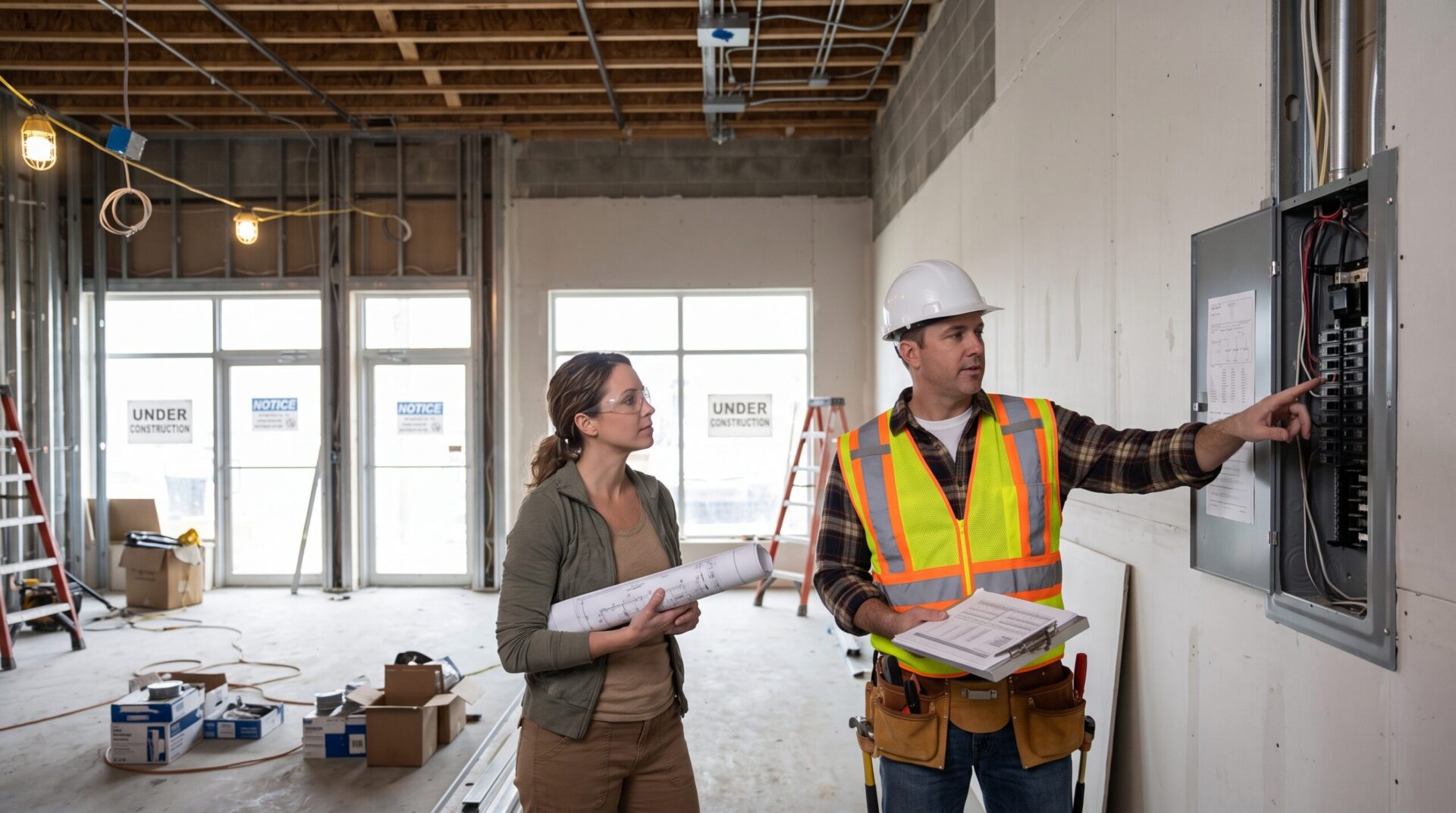
This isn’t an architectural tour of the space. This is an infrastructure audit. Ideally, bring a licensed commercial electrician with you, or at minimum, arm yourself with this checklist:
✅ Pre-1990 Building Checklist:
- Open the electrical panels – Are they Federal Pacific or Zinsco brands? If yes, budget $5,000 per panel for mandatory replacement before you can get insurance
- Listen for audible hum or buzz in the electrical room – Signs of arcing, loose connections, or failing equipment
- Smell test – Fishy or ozone smell indicates overheated insulation and failing equipment
- Pop ceiling tiles – Look for abandoned “spaghetti” wiring that must be removed by code (demolition cost risk)
- Check the meter location – Is there physical space for a new meter if you need to separately meter your space?
- Inspect panel labels – Are circuits clearly labeled? If the panel is a mess of handwritten, outdated labels, budget for circuit tracing (time and materials labor)
✅ Post-2000 Building Checklist:
- Lighting assessment – Are existing lights LED? If not, energy code will mandate full fixture replacement, not just bulbs
- Metering structure – Is the suite separately metered, or will you pay a pro-rata share of the building’s total electrical usage (which you can’t control)?
- Panel capacity verification – Are spare breaker slots physically available in the distribution panel?
- HVAC electrical – If you’re planning significant equipment changes, verify electrical capacity for new HVAC loads
A professional forensic electrical walkthrough by a licensed electrician costs $500-$2,000 depending on building size and complexity. This investment can literally save you $50,000+ in surprise costs during construction.
Lease Negotiation Strategies That Save $50K+
The time to protect yourself financially is during lease negotiations—not after you’ve signed and discovered the problems.
Strategy 1: Define “Base Building Condition” Aggressively
Get this language into your lease:
“Landlord shall deliver the electrical system in good working order and in compliance with all current laws and codes as of the delivery date.”
This one sentence can save you $50,000. If the electrical panels are obsolete Federal Pacific or Zinsco equipment, or if the aluminum wiring doesn’t meet current code, the landlord must fix it before delivering the space to you—at their cost, not deducted from your TI allowance.
Strategy 2: The “Code Trigger” Clause
Negotiate a clause that clearly delineates responsibility for code-triggered upgrades:
“Any building-wide code upgrades triggered by Tenant’s specific use (such as medical generator requirements) shall be Tenant’s cost. Any code upgrades triggered generally by the fact of construction or renovation (such as ADA requirements, energy code compliance for shell improvements, or electrical system safety upgrades) shall be Landlord’s cost.”
This prevents you from being stuck with the bill for building-wide electrical work that benefits the landlord’s entire asset.
Strategy 3: Electrical Capacity Guarantees
Include specific language about available electrical capacity:
“Landlord warrants that the electrical distribution system serving the Premises has sufficient capacity and available breaker space to serve Tenant’s anticipated load of [X] watts per square foot, and that connection to this capacity is included in Base Building delivery.”
Without this language, “available capacity” is subjective. The landlord may argue that capacity exists somewhere in the building—but getting it to your space is your problem and expense.
Strategy 4: Amortize Capital Improvements Over Useful Life
If your project requires a generator, switchgear upgrade, or transformer replacement, these are capital improvements with 15-20 year useful lives that benefit the building long-term. Argue that the cost should be amortized over the equipment’s useful life, with you paying only the portion coinciding with your lease term.
For a 10-year lease and a $100,000 switchgear upgrade with a 20-year life, you’d pay $50,000 instead of the full $100,000.
Budget Best Practices: Contingency Is King
The standard 5% construction contingency is negligent for commercial electrical work in DFW’s aging building stock.
✓ Realistic Contingency Guidelines
- 10% minimum for second-generation space (previously occupied)
- 15-20% minimum for pre-1980s buildings in Richardson, Addison, Arlington, Mid-Cities
- 20-25% for downtown historic buildings (Sundance Square, Dallas West End)
- 25%+ for complex uses (medical, high-tech manufacturing, restaurants with commercial kitchens)
This isn’t padding—this is realistic budgeting based on actual field conditions in DFW’s commercial building stock.
Hire an independent third-party consultant before the GC is hired:
For medical, high-tech, or large-scale office projects, hiring an independent electrical engineer or MEP (mechanical-electrical-plumbing) consultant to review the “test fit” against actual building infrastructure can validate your budget before you’re locked into a lease.
Their fee structure is typically $150-$200 per hour, totaling $3,000-$10,000 for a comprehensive review. This is a fraction of the cost of a single major change order, and they work for you—not the general contractor—so their incentive is to find problems early, not hide them until construction is underway.
Frequently Asked Questions
Is a $40/sq ft TI allowance enough for a restaurant buildout in DFW?
No. Restaurant electrical work alone typically costs $15-$25 per square foot due to three-phase power requirements, grease hood electrical interlocks, fire suppression coordination, and commercial kitchen equipment loads. Total restaurant buildouts in DFW average $220-$360 per square foot. That $40 allowance covers roughly 15-20% of actual costs. You need to negotiate a substantially higher allowance or prepare for $100,000+ in out-of-pocket expenses for a 2,500-square-foot restaurant space.
How do I know if a building has Federal Pacific or Zinsco panels before signing my lease?
During your space walkthrough, specifically ask to see the electrical room and open the panel doors. Federal Pacific panels have “Stab-Lok” breakers clearly marked on the breaker handles. Zinsco panels have the brand name visible on the panel cover or interior. If the landlord or property manager refuses to let you inspect the electrical equipment, consider that a significant red flag. These panels are uninsurable with many commercial insurance carriers, meaning you’ll be forced to replace them at $3,000-$8,000 per panel before you can obtain property insurance—work that should be the landlord’s responsibility if disclosed upfront. See our detailed guide on Federal Pacific panel replacement costs in Fort Worth for budget planning.
What is the “50% Rule” and how does it affect my commercial tenant improvement?
The “50% Rule” or “Substantial Improvement” requirement states that if your renovation costs equal or exceed 50% of the building’s market value, your project must bring the entire associated structure into compliance with current building codes—not just your tenant space. This includes flood protection, ADA accessibility, energy efficiency, and electrical safety upgrades. The trap: older, depreciated Class C buildings have low appraised values, so a high-quality tenant improvement can easily trigger this requirement. The result can be six-figure compliance costs for building-wide work. Before signing any lease, check the property’s tax appraisal value and compare it to your projected construction budget.
Do I need permits for electrical work during my commercial TI in Dallas or Fort Worth?
Yes. Any electrical work beyond basic maintenance (changing light bulbs, replacing outlet covers) requires a permit in Texas. Dallas has a 4-8 week standard permit review timeline, which can be shortened using the “Q-Team” expediting service for approximately $1,000+ per hour. Fort Worth is particularly strict on “Change of Use” permits—converting retail to medical or office to restaurant triggers enhanced code review as if it were new construction, with 6-8 week timelines. Budget for both permit costs and the holding costs of paying rent during the review period with no revenue. Our complete guide on electrical work that requires permits in Texas covers the specific triggers and requirements.
Why are electrical change orders so expensive during commercial construction?
Change orders are priced at a 15-20% premium over base bid rates for several reasons. First, they disrupt established workflow, requiring crews to stop current work, remobilize, and return to a previous area. Second, contractors in competitive markets often bid low on base scope to win projects, planning to make profit margin on change orders. Third, if change order work requires weekend or after-hours execution (common in occupied commercial buildings to avoid disrupting other tenants), you’re paying overtime labor rates—often double-time on weekends. Finally, once your project is underway, you have limited negotiating leverage. The best defense is extensive field verification before design is finalized and building 15-20% contingency into your budget for inevitable surprises.
Should I hire an independent electrical consultant for my commercial TI?
For complex projects—medical facilities, high-tech operations, large office spaces, or restaurants with commercial kitchens—absolutely. An independent electrical engineer or MEP consultant works for you, not the general contractor, and reviews your architectural “test fit” against actual building electrical infrastructure before construction begins. They identify capacity issues, code compliance problems, and help you understand true DFW commercial tenant electrical costs while you still have negotiating leverage with the landlord. Their fee typically runs $150-$200 per hour, totaling $3,000-$10,000 for a comprehensive pre-construction review. This is a fraction of what they’ll save you by catching one major issue before it becomes a mid-construction change order. Think of it as insurance against budget-destroying surprises.
What’s the difference between “shell space” and “second-generation space” for electrical costs?
Shell space (particularly “cold dark shell”) has no electrical distribution system installed—just a service entrance or transformer tap. You’re building from scratch, which is expensive but predictable in cost. Second-generation space was previously occupied and has existing electrical infrastructure, which sounds cost-effective but often isn’t. You’ll pay to demolish and remove “spaghetti” wiring (abandoned cables that must be removed per NEC 2023), spend days of labor tracing circuits to figure out what connects to what, and bring “grandfathered” non-compliant systems up to current code standards. The hidden costs in second-gen space often exceed the cost of new construction in shell space, because you’re paying for both demolition and detective work before new installation can even begin. For buildings older than 1990, budget the same or more for electrical in second-gen space as you would for shell space.
The Bottom Line: Moving from “Allowances” to “Analysis”
The $40 per square foot TI allowance is a relic of a different era—a time before NEC 2023 arc energy reduction requirements, before the adoption of strict energy codes, and before 40 years of deferred maintenance in DFW’s 1980s building stock came due. Understanding real-world DFW commercial tenant electrical costs is the difference between a successful tenant improvement and a budget-destroying nightmare.
But here’s the important part: these hidden electrical costs are only “hidden” to tenants who don’t know where to look.
By understanding the specific mechanisms—from aluminum wiring issues in Richardson suburban offices to substantial improvement triggers in Class C buildings to grease hood interlock complexity in restaurant kitchens—you can build realistic budgets. More importantly, you can protect yourself during lease negotiations, shifting base building risks back where they belong: on the landlord’s balance sheet. This knowledge is your best defense against unexpected DFW commercial tenant electrical costs.
The key mindset shift is this: treat your electrical infrastructure not as a commodity line item in a construction budget, but as a critical business asset requiring forensic-level due diligence. A $2,000 pre-lease electrical audit can prevent $50,000 in post-lease surprises. Spending 4 hours in lease negotiations to get proper “base building” definitions and code compliance clauses can save you six figures.
We’re not here to scare you away from leasing commercial space in DFW. The metroplex offers incredible opportunities, diverse building stock, and competitive lease rates. We’re here to make sure you go into your lease with your eyes open, your budget realistic, and your legal protections in place.
Because the difference between a successful tenant improvement and a budget-destroying nightmare often comes down to asking the right questions two weeks before you sign the lease—not two months after construction has started.
✓ Don’t Sign That Lease Until You Know What You’re Really Paying For
Before you commit to a commercial space in DFW, let us conduct a forensic electrical walkthrough of the building. We’ll identify:
- Obsolete panels (Federal Pacific, Zinsco) that require mandatory replacement
- Aluminum wiring that needs retrofitting to meet current safety standards
- Actual electrical capacity versus what your business needs
- Code compliance issues that will cost you during construction
- Realistic electrical budget for your specific business type and use
This one-hour assessment can save you $50,000+ in surprise costs and give you the information you need to negotiate a better lease.
We don’t upsell. We don’t push work you don’t need. We give you clear information so you can make informed decisions about your commercial space. That’s it.
Call or Text: (682) 478-6088
Serving commercial tenants throughout Fort Worth, Arlington, Dallas, Keller, Southlake, Colleyville, Grapevine, Lewisville, Richardson, Plano, and all of DFW