
Key Takeaways
- Insurance Surcharge Reality — Aluminum wiring typically increases homeowners insurance premiums by 10–25% in Texas, adding $450 or more per year to your bill—and many carriers now refuse coverage entirely for unmitigated aluminum-wired homes.
- The Hidden Cost Adds Up Fast — Over 10 years, insurance surcharges alone accumulate to $4,500+, and unmitigated aluminum wiring can cost you $7,000–$17,500 in price concessions when you sell your DFW home.
- CPSC-Approved Pigtailing Is the Smart Fix — Pigtailing with AlumiConn or Ideal 65 connectors is the most cost-effective CPSC-approved remediation method, typically running $9,000–$16,500 for a 1,800 sq ft home—far less than a full rewire at $15,000–$40,000+.
- Permits and Licensing Are Non-Negotiable — Any electrician who skips permits, avoids CPSC-approved methods, or can’t provide a Texas Electrical Contractor License (TECL) number is a red flag that leaves your home unprotected and your insurance invalid.
- Trust Epic Electrical for transparent pricing, master electrician expertise, and honest aluminum wiring remediation across DFW — visit Epic Electrical to protect your home and restore your coverage.
How Much Does Aluminum Wiring Increase Your Home Insurance Cost in DFW?
Aluminum wiring typically increases homeowners insurance premiums by 10–25% or more in Texas—often adding $450+ per year to your bill. In a tightening insurance market, many carriers now refuse coverage entirely for homes with unmitigated aluminum wiring, forcing owners into expensive specialty plans or leaving them uninsured. The good news: CPSC-approved remediation removes these surcharges and restores standard coverage, making it a long-term investment in both safety and affordability.
Understanding the full financial and safety impact of aluminum wiring—and your remediation options—is essential for DFW homeowners, especially those selling, refinancing, or facing insurance renewal challenges.
Epic Electrical
Free Quote & Honest Diagnosis — No Upsells
Core Service Programs:
- Electrical Repairs, Wiring & Lighting for tripping breakers, faulty wiring, GFCI issues, and indoor/outdoor lighting
- EV Chargers, Generators & Panel Upgrades for Level 2 EV charging, whole-home generator installs, panel replacements, and surge protection
- Commercial, Warehouse & Industrial Electrical for restaurants, offices, industrial buildouts, LED retrofits, and dedicated circuits
Why Choose Epic Electrical:
- ✓ Trusted by customers with 140+ five-star Google reviews
- ✓ Father-and-son master electricians — a third-generation electrical family
- ✓ Serving North Richland Hills and the DFW Metroplex since 2009
- ✓ 50+ years of combined electrical experience on every job
- ✓ No upsells, no jargon, no pressure — we fix what’s actually broken
- ✓ Small repairs fixed same-visit; big jobs get a written quote with no hidden costs
- ✓ Texas-licensed electrical contractor (TECL #33192)
Why Aluminum Wiring Costs You More on Insurance
The fire risk is the whole story. Aluminum expands and contracts at a different rate than copper, and over years of heating and cooling cycles, connections at outlets, switches, and fixtures work loose. Loose connections overheat. Overheated connections start fires—often inside walls where you can’t see them until it’s too late.
The CPSC documented this risk clearly: homes wired with aluminum are 55 times more likely to have fire-hazardous connections than homes wired with copper. Insurance underwriters know this number. It’s exactly why carriers treat aluminum wiring as a major red flag in their underwriting process—and why the Texas insurance market, already tightening due to hail, wind, and foundation risk, has become especially strict about it.
In practice, that means surcharges applied at renewal, exclusions written into your policy for fire damage originating from wiring, or outright denial of new coverage. If your carrier exits the market or non-renews your policy, finding a replacement with unmitigated aluminum wiring is genuinely difficult. You may end up in the Texas FAIR Plan or a specialty carrier charging 25–50% above standard market rates—if you can get coverage at all.
In North Richland Hills, Hurst, Bedford, Euless, and Haltom City—cities where a large share of the housing stock dates to the 1960s and 1970s—this isn’t a rare edge case. Tens of thousands of homes across Tarrant and Dallas counties are estimated to still have original, unmitigated aluminum branch-circuit wiring. If your home was built between 1965 and 1973, there’s a real chance yours is one of them.
ℹ️ You’re Not Alone—Thousands of DFW Homes Have This Issue
Approximately 10–15% of DFW’s housing stock built between 1965 and 1973 contains original aluminum wiring. If your home was built during this era, you’re in good company—and remediation is a straightforward, proven solution.
If you want a deeper look at how insurers specifically evaluate aluminum wiring risk, the full breakdown of why home insurance companies flag aluminum wiring covers the underwriting logic in detail.
The Real Cost: Insurance Surcharges and Hidden Expenses
The surcharge alone stings, but it’s only part of the picture. Here’s what aluminum wiring actually costs DFW homeowners across multiple scenarios:
| Cost Category | Estimated Impact | Notes |
|---|---|---|
| Annual insurance surcharge | $300–$750+/year | 10–25% on a $3,000 base premium |
| 10-year surcharge accumulation | $3,000–$7,500+ | Without remediation |
| Specialty carrier premium (if denied standard coverage) | 25–50% above market rate | If standard carriers refuse to write policy |
| Home sale price concession | $7,000–$17,500 | 2–5% on a $350K home |
| Additional days on market | 10–30 days | Buyer hesitation, inspection flags |
| Potential claim denial (fire from wiring) | Varies—could be total loss | Some policies exclude wiring-caused fire damage |
The break-even math on insurance savings alone is long—14 to 45 years depending on home size and surcharge amount. But that’s the wrong frame. Remediation isn’t just about recovering the surcharge. It eliminates a documented fire hazard, makes your home insurable at standard rates, and removes a deal-breaker that buyers and their agents flag every time. Those benefits don’t show up in a simple payback calculation, but they’re real.
If you’re curious how these costs compare specifically for the pigtailing method, the pigtailing cost breakdown for Fort Worth homes goes deeper on the numbers.
Remediation Options and Costs in DFW
There are three CPSC-approved paths for addressing aluminum wiring. Understanding them helps you have an informed conversation with any electrician you’re evaluating.
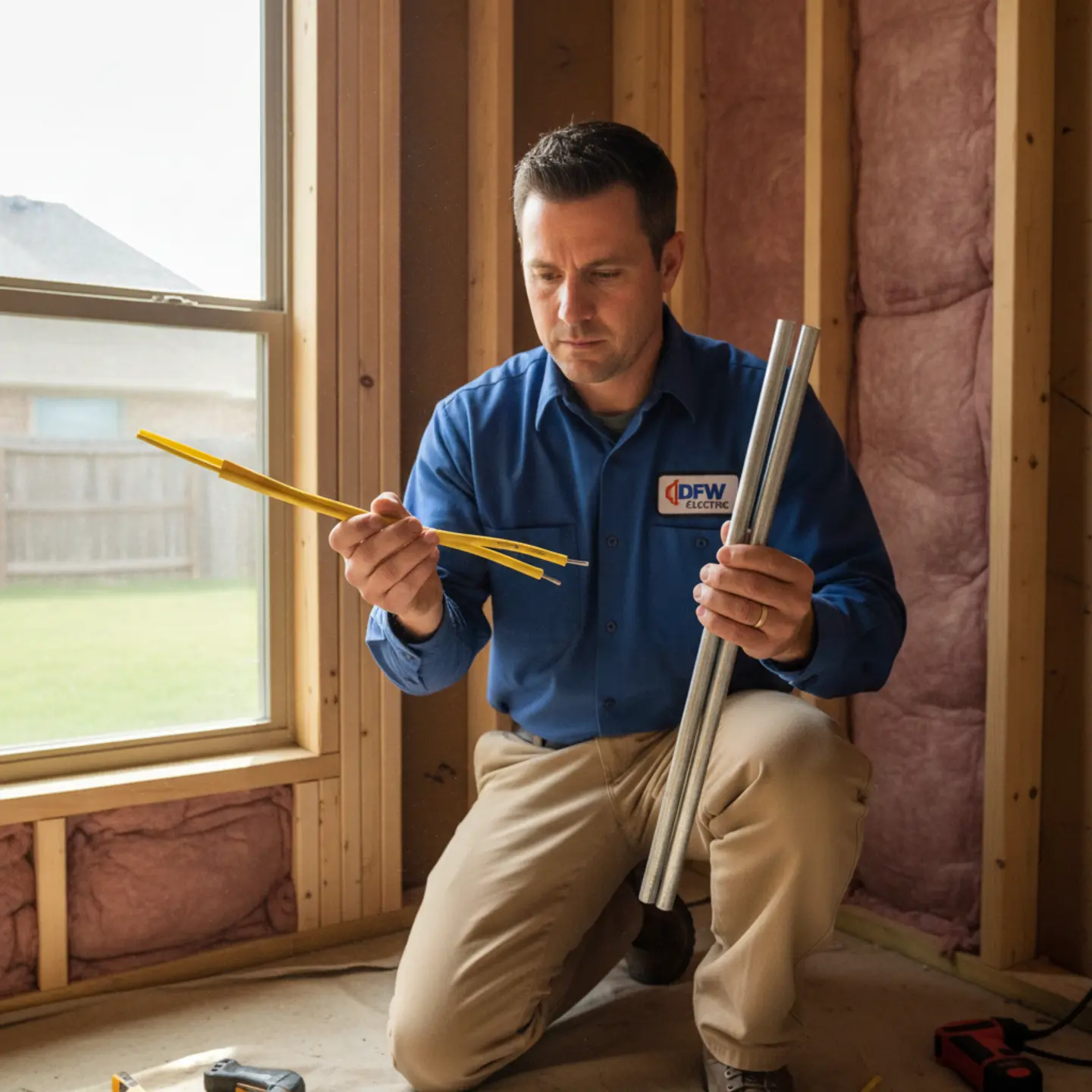
Pigtailing with AlumiConn or Ideal 65 connectors is the most widely used and cost-effective method. A licensed electrician connects a short copper “pigtail” to each aluminum wire terminus using a specialized connector that contains a lubricant preventing oxidation at the joint. The copper pigtail then connects to the outlet, switch, or fixture. This method is recognized by the CPSC, accepted by Texas insurance carriers, and doesn’t require opening walls beyond access to each connection point.
CO/ALR device replacement installs specially rated switches and receptacles designed to work safely with aluminum wire at the connection point. This is less common and limited in scope—it doesn’t address every connection in the home.
Full rewire replaces all aluminum branch-circuit wiring with copper throughout the home. It’s the most comprehensive solution but also the most disruptive and expensive—and rarely necessary when CPSC-approved pigtailing is available.
Epic Electrical’s transparent rate for pigtailing is $90–$110 per outlet, switch, and fixture connection. Here’s what that looks like by home size:
- 1,200 sq ft home (approx. 70–100 connections): $6,300–$11,000
- 1,800 sq ft home (approx. 100–150 connections): $9,000–$16,500
- 2,500 sq ft home (approx. 150–200 connections): $13,500–$22,000
All-in costs—including panel upgrades where needed, permits, and city inspections—typically run $9,000–$20,000+ for a standard 3-bedroom DFW home. A full rewire, by comparison, runs $15,000–$40,000+. Both are CPSC-approved and accepted by insurance carriers, but pigtailing delivers the same safety outcome at a fraction of the cost.
If your home also has an older Federal Pacific, Zinsco, or undersized panel, your insurance carrier may require that to be addressed concurrently. Epic’s residential panel replacement service handles that as part of the same project scope, so you’re not coordinating multiple contractors.
Financing is available for larger remediation projects—the residential electrical project financing guide covers payment options if upfront cost is a concern.
💡 Pro Tip: Get Multiple Detailed Quotes Before Deciding
Request itemized quotes from at least two licensed contractors that break down per-connection rates, panel work, permits, and timeline. Transparent pricing (like Epic’s $90–$110 per connection) makes it easy to compare and understand exactly what you’re paying for.
Licensing, Permits, and Safety Standards You Must Verify
Aluminum wiring remediation is not a job for an unlicensed handyman or a general contractor who “does some electrical.” Texas law requires a Texas Electrical Contractor License (TECL) for this work, and the stakes of getting it wrong are serious: unpermitted work won’t be recognized by your insurance carrier, and your home remains at fire risk regardless of what was done.
Here’s what to verify before any work begins:
- TECL license number — Verify it at tdlr.texas.gov using the license search tool. Epic Electrical’s license is TECL #33192.
- Master Electrician designation — This is the highest competency level in Texas. It means the person overseeing your job has passed rigorous exams and demonstrated comprehensive knowledge of the National Electrical Code.
- CPSC-approved methods — The electrician should be able to name AlumiConn or Ideal 65 connectors specifically. If they’re vague about the method or suggest “purple wire nuts,” walk away.
- Permits and inspections — Most DFW municipalities require an electrical permit for this work. The city inspector signs off after completion. Any contractor who says permits aren’t necessary is either uninformed or cutting corners—either way, your insurance won’t recognize the work.
- Documentation for your carrier — After completion, you’ll need a Certificate of Electrical Inspection from the city and a Letter of Completion from the licensed contractor. Your insurance company will require both to remove the surcharge and restore standard coverage.
⚠️ Red Flag: Contractors Who Skip Permits or Avoid CPSC Methods
Any electrician who says permits aren’t necessary, recommends unapproved connectors (like purple wire nuts), or avoids discussing CPSC-approved methods is a major red flag. Insurance carriers won’t recognize unpermitted work, and your home remains at risk.
For a detailed comparison of connector types and why the specific connector matters, the AlumiConn vs. other connectors breakdown is worth reading before you hire anyone.
DFW Market Reality: Aluminum Wiring and Home Sales
Texas real estate law requires disclosure of known material defects, and aluminum wiring qualifies. Home inspectors are trained to identify it, and in neighborhoods like North Richland Hills, Hurst, Bedford, and Euless—where much of the housing stock dates to the late 1960s and early 1970s—it comes up regularly.
When it does, buyers have options: request remediation as a condition of sale, ask for a price concession, or walk. In 2026’s more balanced DFW market, many buyers are choosing to walk or negotiate hard. Sellers with unmitigated aluminum wiring are routinely absorbing $7,000–$17,500 in concessions on a $350K home, plus an additional 10–30 days on market while buyers sort out their insurance options.
Remediation before listing eliminates the issue entirely. Buyers see a home that has already been addressed by a licensed electrician with permits pulled and city inspections passed—that’s a selling point, not a liability. Real estate agents and insurance agents in DFW are increasingly referring sellers to remediation contractors as a standard pre-listing step, not an afterthought.
If you’re buying rather than selling, the new homebuyer electrical inspection guide for older homes covers what to look for and how to negotiate when aluminum wiring is flagged during inspection.
For a city-specific look at how this plays out in real transactions, the aluminum wiring guide for Bedford real estate agents is a useful reference.
Questions to Ask Any Electrician Before Hiring
Most DFW electricians don’t specialize in aluminum wiring remediation. Many treat it as incidental to a full rewire rather than offering the more cost-effective pigtailing approach. A few questions will quickly separate qualified contractors from those who aren’t equipped for this specific job.
- What is your TECL license number? — Ask for it upfront and verify it at tdlr.texas.gov before scheduling.
- Are you familiar with AlumiConn and Ideal 65 connectors? — A qualified contractor will answer immediately and explain why these specific connectors matter. Vagueness is a red flag.
- Will you pull permits and arrange city inspections? — The answer must be yes. No exceptions.
- Can you give me an itemized quote? — You want a per-connection rate or a clearly scoped flat rate, not a vague “starting from” number.
- Do you have references for aluminum wiring remediation specifically? — General electrical references don’t tell you much about this specialized work.
- What documentation will you provide for my insurance carrier? — They should know exactly what’s needed: city inspection certificate and a contractor letter of completion.
Red flags to watch for: vague pricing without an in-home inspection, pressure to do a full rewire without first evaluating whether pigtailing is appropriate, unfamiliarity with CPSC-approved methods, or any suggestion that permits aren’t required. These aren’t minor issues—they’re indicators that the work won’t be recognized by your insurance company and may not actually fix the problem.
The full aluminum wiring safety guide for DFW homeowners covers the technical background if you want to go deeper before your first contractor conversation.
Why Epic Electrical Is the Right Choice for DFW Aluminum Wiring Remediation
Epic Electrical has earned 140+ five-star Google reviews from DFW homeowners—not by being the cheapest option, but by being straight with people. Father-and-son master electricians Mike and Griffin bring 50+ years of combined experience to every job. This is a third-generation electrical family that has been serving the DFW area since 2009, and they operate the same way they always have: tell the homeowner what’s actually wrong, explain the options clearly, and fix what needs fixing without padding the scope.
For aluminum wiring remediation specifically, that means a transparent $90–$110 per connection rate for CPSC-approved pigtailing, all permits pulled and managed by Epic, and city inspections coordinated so you have the documentation your insurance carrier requires. If your panel also needs to be addressed—which many carriers require—Epic handles that in the same project without sending you to a second contractor. There are no maintenance markups, no upsells, and no pressure to do a full rewire when pigtailing is the right call.
Epic Electrical is based at 7304 Hialeah Cir W, North Richland Hills, TX 76182, and serves homeowners throughout the DFW Metroplex. You can review what past customers have said about their experience on the Epic Electrical testimonials page.
If there’s a cheaper fix for your situation, Epic will tell you. If aluminum wiring remediation is the right solution, they’ll explain exactly why and what it costs—no surprises, no hidden fees, no pressure. That’s the standard they hold themselves to on every job.
Get a Free Estimate from Epic Electrical — honest diagnosis, transparent pricing, and the documentation your insurance company needs to restore standard coverage.
Frequently Asked Questions: Aluminum Wiring and Home Insurance in DFW
Is pigtailing with AlumiConn connectors really enough to satisfy my insurance company, or do I need a full rewire?
Yes, pigtailing with CPSC-approved AlumiConn or Ideal 65 connectors is recognized as a safe and sufficient remediation method by both the CPSC and Texas insurance carriers. Insurance companies typically remove surcharges and grant standard coverage once a licensed electrician completes this work and provides proper documentation—city permits, inspections, and a contractor letter of completion. A full rewire is also CPSC-approved and accepted by carriers, but it costs significantly more and is rarely necessary when pigtailing is available and correctly performed.
Will remediating my aluminum wiring increase my home’s resale value or make it easier to sell in DFW?
Yes, remediation significantly improves your home’s marketability in the DFW market. It won’t always translate to a dollar-for-dollar increase in sale price, but it eliminates one of the most common deal-breakers buyers encounter in older homes—and removes the 2–5% price concession pressure that unmitigated aluminum wiring typically creates. Buyers who are hesitant about insurance costs and fire risk become much more willing to proceed when the issue has already been resolved by a licensed electrician with permits and inspections on record. You’ll also likely spend fewer days on market.
Can simply replacing my outlets with GFCI outlets solve the aluminum wiring problem?
No. GFCI outlets protect against electrical shock by detecting ground faults, but they do nothing to address the fire hazard created by aluminum wiring. The core problem is expansion and contraction at aluminum connections over time, which causes loose connections that overheat and can ignite fires inside walls. GFCI protection is completely separate from that risk. CPSC-approved remediation—pigtailing with AlumiConn or Ideal 65 connectors, or a full rewire—is the only way to actually mitigate the fire hazard that drives insurance surcharges and carrier denials.
What’s the typical cost difference between a full rewire and the pigtailing method for aluminum wiring remediation in DFW?
A full rewire—replacing all aluminum branch-circuit wiring with copper throughout the home—typically costs $15,000 to $40,000+ for a DFW home, depending on size and complexity. Pigtailing with CPSC-approved connectors is significantly more affordable, ranging from roughly $6,300 for a smaller home to $22,000+ for a larger one. Both methods are accepted by the CPSC and recognized by Texas insurance carriers, so the choice almost always comes down to cost. Pigtailing delivers the same safety outcome at a fraction of the price, which is why it’s the standard recommendation for most DFW homeowners.
What makes Epic Electrical different from other electricians for aluminum wiring remediation?
Epic Electrical stands out with 140+ five-star Google reviews, father-and-son master electricians with 50+ years of combined experience, and transparent, honest pricing at $90–$110 per connection with no hidden costs or upsells. As a Texas-licensed contractor (TECL #33192) serving DFW since 2009, Epic pulls all permits, manages city inspections, and provides the documentation your insurance carrier needs to remove surcharges and restore standard coverage. If there’s a cheaper fix for your situation, they’ll tell you—no pressure, no inflated scope. Get a Free Estimate from Epic Electrical and see why DFW homeowners trust them with their electrical safety.
Ready to Restore Your Home’s Safety and Insurance Coverage in DFW?
Aluminum wiring doesn’t have to mean higher premiums, coverage denials, or a harder home sale. CPSC-approved remediation is a proven, straightforward fix—and Epic Electrical handles everything from the first diagnosis to the final city inspection. You’ll walk away with the documentation your insurance carrier needs and the peace of mind that comes from knowing the job was done right.
No pressure. No upsells. Just an honest assessment and transparent pricing from master electricians who’ve been doing this in DFW for over 15 years.
Serving Fort Worth, Arlington, North Richland Hills, Hurst, Bedford, Euless, Keller, Colleyville, Southlake, Grapevine, and all of DFW.
Pricing, equipment specifications, and project scope mentioned in this article are accurate as of the date of publication and are subject to change. Code requirements and permit needs vary by municipality and property. Please contact us directly for a current quote on your specific home or business.