
Key Takeaways
- 55x Higher Fire Risk — The U.S. Consumer Product Safety Commission (CPSC) found that homes with aluminum branch circuit wiring installed between 1965 and 1973 are 55 times more likely to have fire-hazard conditions at connections than copper-wired homes.
- Three CPSC-Approved Fixes — AlumiConn pigtailing ($5,000–$8,500 for a typical DFW home), COPALUM crimping, and full copper rewire are the only remediation methods major Texas insurers will accept — standard wire nuts do not qualify.
- Documentation Is Non-Negotiable — Insurers require a formal “Certification of Remediation” letter from a TECL-licensed contractor confirming CPSC-approved work was completed and passed city inspection before they’ll reinstate or issue a policy.
- Texas Law Requires Disclosure — The TREC Seller’s Disclosure Notice specifically asks about aluminum wiring; failure to disclose can trigger legal action under the Texas Deceptive Trade Practices Act (DTPA).
- Trust Epic Electrical for honest aluminum wiring diagnosis, CPSC-approved remediation, and the insurance documentation your carrier requires — visit Epic Electrical to learn more about DFW’s father-and-son electrical team.
Why Do Home Insurance Companies Flag Aluminum Wiring?
Home insurance companies flag aluminum wiring because homes with aluminum branch circuit wiring installed between 1965 and 1973 are 55 times more likely to have fire-hazard conditions at electrical connections than copper-wired homes, according to the U.S. Consumer Product Safety Commission (CPSC). This dramatically elevated fire risk makes aluminum-wired homes a liability for insurers, leading them to deny coverage, apply surcharges, or require CPSC-approved remediation before they’ll renew or issue a policy. The good news: remediation is straightforward, and you have multiple options to satisfy your insurer and protect your home.
Understanding why insurers are concerned—and what they actually require to lift the flag—is the first step toward getting your home back on solid insurance footing.
Epic Electrical
Free Quote & Honest Diagnosis — No Upsells
Core Service Programs:
- Electrical Repairs, Wiring & Lighting for tripping breakers, faulty wiring, GFCI issues, and indoor/outdoor lighting
- EV Chargers, Generators & Panel Upgrades for Level 2 EV charging, whole-home generator installs, panel replacements, and surge protection
- Commercial, Warehouse & Industrial Electrical for restaurants, offices, industrial buildouts, LED retrofits, and dedicated circuits
Why Choose Epic Electrical:
- ✓ Trusted by customers with 123+ five-star Google reviews
- ✓ Father-and-son master electricians — a third-generation electrical family
- ✓ Serving North Richland Hills and the DFW Metroplex since 2009
- ✓ 50+ years of combined electrical experience on every job
- ✓ No upsells, no jargon, no pressure — we fix what’s actually broken
- ✓ Small repairs fixed same-visit; big jobs get a written quote with no hidden costs
- ✓ Texas-licensed electrical contractor (TECL #33192)
The Fire Risk Behind the Flag: What Insurers Know
Aluminum branch circuit wiring was widely used in residential construction between 1965 and 1973, when copper prices spiked and builders turned to aluminum as a cheaper alternative. At the time, the full consequences of that substitution weren’t understood. Decades of field data and CPSC research have since made the picture very clear.
The core problem is how aluminum behaves at connection points. Aluminum oxidizes when exposed to air, forming a layer that increases electrical resistance. It also expands and contracts more than copper with temperature changes — a process that gradually loosens connections at outlets, switches, junction boxes, and fixtures. Poor-quality crimping practices common in the 1960s and ’70s compounded the problem. The result: connection points that overheat, arc, and create fire-hazard conditions over time, often without any visible warning signs.
Homes with aluminum branch circuit wiring are 55 times more likely to have fire-hazard conditions at connections than copper-wired homes, per CPSC Publication No. 516.
That 55x figure from the CPSC isn’t a theoretical estimate — it’s based on documented field inspections of actual homes. It’s why nearly 100% of major Texas insurers (State Farm, Allstate, Farmers, USAA, Nationwide, and others) now flag aluminum-wired homes, apply surcharges of 10–50% or more, or decline coverage outright without documented CPSC-approved remediation. From an underwriting standpoint, the math is simple: the risk is too high to ignore.
💡 You’re Not Alone — Aluminum Wiring Is a Common DFW Problem
Tens of thousands of DFW homes built between 1965 and 1973 contain aluminum wiring. If your insurer flagged it, you’re in good company — and the fix is straightforward.
The DFW metroplex has one of the highest concentrations of aluminum-wired homes in Texas. The post-WWII suburban building boom transformed cities like North Richland Hills, Haltom City, Bedford, Euless, Irving, Arlington, Garland, and Mesquite from open land into dense residential neighborhoods — almost entirely during the aluminum wiring era. Estimates suggest 20–40% of DFW’s existing housing stock was built between 1965 and 1973, which translates to tens of thousands of homes that may still have original aluminum branch circuit wiring in service today.
How Insurers Discover Aluminum Wiring (And Why You Can’t Hide It)
Some homeowners wonder whether they can simply not mention aluminum wiring and hope their insurer never finds out. That approach carries serious legal and financial risks — and it almost never works.
The most common discovery point is a home inspection during a real estate transaction. Home inspectors are trained to identify aluminum wiring, and they flag it consistently as a material safety concern. With DFW’s active resale market generating a high volume of transactions, aluminum wiring gets discovered and disclosed constantly. If you’re selling, your buyer’s inspector will find it.
Insurance carriers have also become significantly more proactive. Over the past few years, major insurers have tightened underwriting guidelines and now use third-party inspection services and data analytics to identify aluminum-wired homes — sometimes before a policy renewal even comes up for discussion. Policy non-renewal or cancellation notices are the most common way homeowners first learn their insurer has flagged the issue.
Other discovery triggers include refinance inspections, electrical permits pulled for other upgrades like panel installations or EV charger additions, and general electrical work that opens walls or accesses junction boxes.
Under the Texas Deceptive Trade Practices Act (DTPA), sellers are legally required to disclose known material facts that could affect a buyer’s decision. The TREC Seller’s Disclosure Notice specifically asks whether the seller is aware of aluminum wiring. Non-disclosure isn’t just an ethical problem — it’s a legal one that can result in civil action against the seller. If you know it’s there, you’re required to say so.
What Insurers Actually Require: CPSC-Approved Remediation Methods
When an insurer flags aluminum wiring, they’re not asking you to tear your house apart. They’re asking for documented proof that a CPSC-approved remediation method was performed by a licensed Texas Electrical Contractor (TECL), with permits pulled and a city inspection passed. There are three methods the CPSC recognizes as effective — and understanding the differences helps you make a confident decision.
AlumiConn Pigtailing: The Most Common DFW Solution
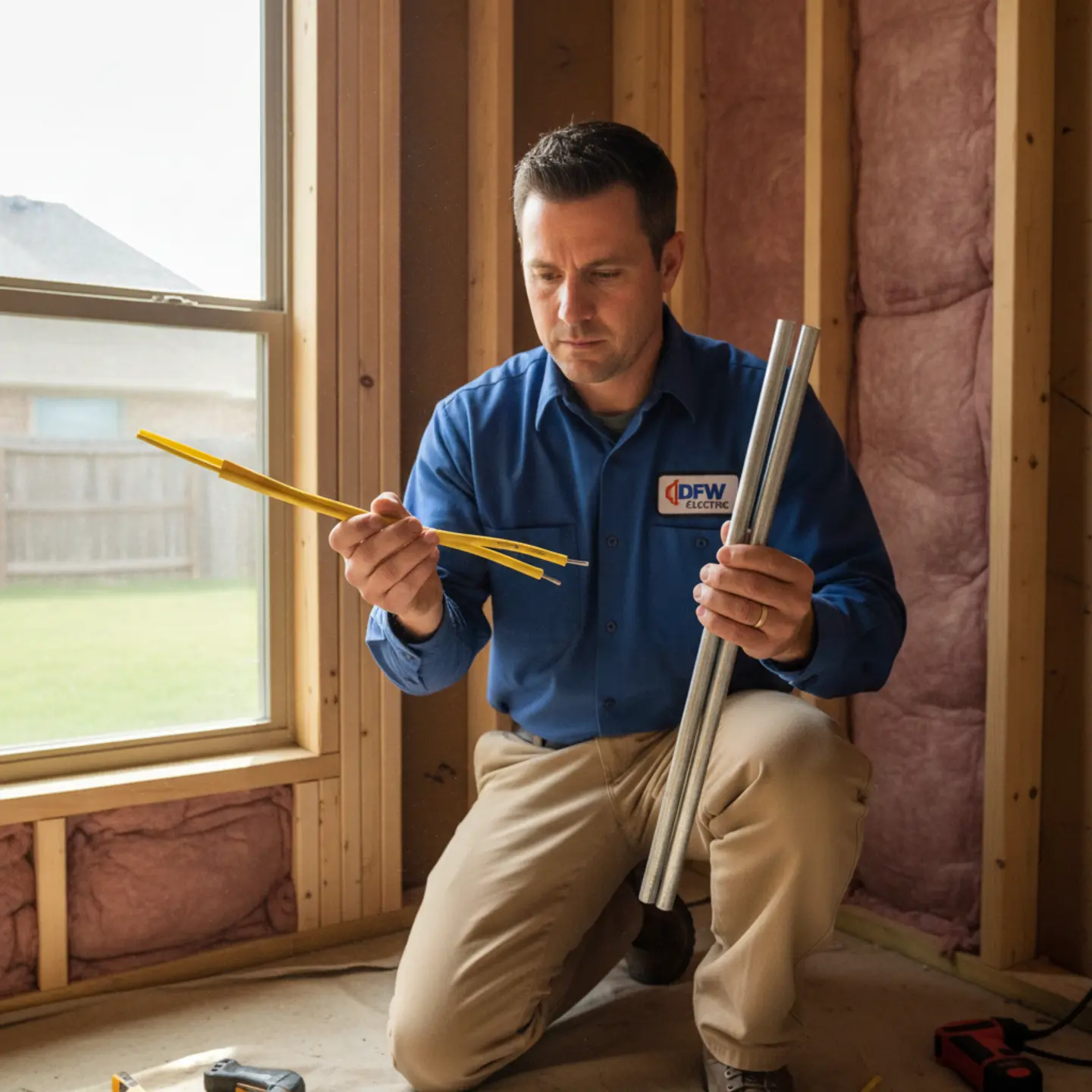
AlumiConn connectors are UL-listed and CPSC-approved devices designed specifically to terminate aluminum wiring safely at every connection point. The process involves installing short copper “pigtails” from the aluminum wires to outlets, switches, junction boxes, and light fixtures using AlumiConn connectors. The aluminum wiring itself stays in the walls — only the connection points are upgraded.
For a typical 1,800 sq ft DFW home, AlumiConn pigtailing costs between $5,000 and $8,500 and takes 2–5 days to complete. Smaller homes (around 1,200 sq ft) typically run $3,500–$6,000; larger homes over 2,500 sq ft can reach $7,500–$15,000 or more. In most cases, you can remain in the home during the work, though power will be shut off to sections of the house periodically. This is the method most DFW homeowners choose — it’s CPSC-approved, widely available, and fully satisfies insurer requirements when performed by a licensed TECL contractor with proper permits and city inspection. You can find detailed cost breakdowns in our guide to pigtail aluminum wiring costs in Fort Worth.
COPALUM Crimping: The Specialized Alternative
COPALUM is a permanent crimp connector system developed by TE Connectivity that requires proprietary UL-listed tools and factory training to install correctly. It’s highly effective — the CPSC considers it a permanent repair — but the scarcity of COPALUM-certified technicians in the DFW residential market makes it less practical for most homeowners. Expect to pay $50–$100 or more per connection point, with whole-house costs typically ranging from $10,000 to $25,000 or higher. Longer wait times and higher costs due to technician scarcity make COPALUM the less common choice in this market, even though it’s a solid option where available.
Full Rewire: The Complete Solution
A full copper rewire replaces all aluminum branch circuit wiring throughout the home. It eliminates aluminum entirely and is the most comprehensive solution — but also the most expensive and disruptive. Costs for a typical DFW home range from $30,000 to $50,000, and larger or more complex homes can exceed $80,000 when drywall repair and repainting are factored in. Full rewires typically require 1–3 weeks and often necessitate temporary relocation. This option is rarely necessary if AlumiConn or COPALUM remediation is properly executed — and any contractor pushing you toward a full rewire without a clear reason should raise questions.
Regardless of which method you choose, your insurer will require a formal “Certification of Remediation” letter from the TECL-licensed contractor who performed the work. This letter must specify the CPSC-approved connectors used, confirm that all identified aluminum connections were addressed, affirm the work was completed to current electrical code, and confirm it passed city inspection.
The DFW Market: Prevalence, Costs, and Contractor Landscape
DFW’s post-WWII suburban building boom created the aluminum wiring landscape that homeowners and insurers are navigating today. Tarrant and Dallas Counties have some of the highest concentrations of mid-century tract homes in Texas — and with the metroplex adding nearly 178,000 residents between mid-2023 and mid-2024 alone, demand for the existing housing stock (and the remediation services that come with it) continues to grow.
Over 5,000 TECL-licensed electrical contractors operate in the DFW area, but only a specialized subset actively advertise aluminum wiring remediation expertise and understand the CPSC guidelines, specific connector requirements, and insurance documentation that insurers expect. This isn’t a job for a general handyman or an electrician who hasn’t done it before — the documentation requirements alone can trip up contractors unfamiliar with what insurers actually need.
DFW pricing for aluminum wiring remediation runs comparable to or slightly above (5–15%) the national average, driven by strong demand from the active real estate market, stringent insurer requirements, and competitive skilled labor costs in the region. Hidden costs to watch for include electrical panel upgrades if your existing panel is outdated (a 200-amp panel upgrade can add $2,800–$9,500), permit fees that vary by municipality, and re-inspection fees if initial work doesn’t pass. If your home has a Federal Pacific Electric or Zinsco panel, plan to address that at the same time — our electric panel replacement page covers what’s involved. If cost is a concern, financing options like HELOCs and FHA 203(k) rehabilitation loans are worth exploring — see our residential project financing guide for details.
Vetting Contractors: What to Look For and Red Flags to Avoid
Choosing the right contractor for aluminum wiring remediation isn’t just about price — it’s about making sure the work is done correctly, documented properly, and will actually satisfy your insurer. Here’s what to verify before you sign anything.
Start by confirming the contractor holds an active Texas Electrical Contractor License (TECL) on TDLR.texas.gov. This is non-negotiable. TECL holders are legally authorized to perform electrical work, employ a licensed Master Electrician to supervise and pull permits, and carry the general liability insurance ($300,000 minimum per occurrence) required by Texas law. Ask for a current Certificate of Insurance (COI) — not just the contractor’s word that they’re covered.
Ask specifically which CPSC-approved method they recommend and why. A knowledgeable contractor will explain their reasoning clearly. Confirm they will pull all required electrical permits from your city and arrange for the municipal inspection — this is mandatory in all DFW municipalities, including Fort Worth, Arlington, Haltom City, and North Richland Hills. And confirm in writing that they will provide a formal “Certification of Remediation” letter for your insurer upon completion. Get at least three detailed, itemized quotes and check Google, BBB, and Nextdoor reviews.
⚠️ Beware of Unlicensed Contractors and Unpermitted Work
Unlicensed electricians may offer cheap remediation without permits, leaving you with unpermitted work that fails future home sale inspections and voids insurance coverage. Always verify TECL license on TDLR.texas.gov and confirm permits will be pulled.
Red Flags That Signal Trouble
- “You don’t need a permit for this” — a major legal and insurance red flag that will haunt you at resale
- Inability or unwillingness to provide a TECL license number or current COI
- Claiming “special wire nuts” or non-CPSC-approved connectors are sufficient for remediation
- Refusing to provide a formal certification letter for your insurer
- Suggesting partial remediation — outlets and switches only — without addressing junction boxes and light fixtures
- Significantly lowball quotes or high-pressure sales tactics pushing an unnecessary full rewire
💡 Get Multiple Quotes — But Focus on Expertise, Not Just Price
Seek at least 3 detailed quotes from TECL-licensed contractors. The cheapest option isn’t always the best if the contractor lacks aluminum wiring remediation experience or won’t provide proper documentation for your insurer.
For a broader look at how aluminum wiring compares to copper in terms of long-term safety, our post on copper vs. aluminum wiring safety upgrades in DFW walks through the details. And if you’re dealing with warning signs like flickering lights or a burning smell, our guide to overheating home wiring causes and solutions is worth a read before you call anyone.
Why Epic Electrical Is the Right Choice for DFW Homeowners
We’ve been doing this work in DFW since 2009. As a father-and-son team of master electricians with 50+ years of combined experience, we’ve remediated hundreds of aluminum-wired homes across North Richland Hills, Haltom City, Bedford, Euless, and the broader metroplex. We know what insurers need, we know the permit process in every DFW municipality we serve, and we know how to get your home back to insurable without unnecessary drama or expense.
Our 123+ five-star Google reviews reflect something we take seriously: we tell you what your home actually needs, not what generates the biggest invoice. If AlumiConn pigtailing is the right solution — and it usually is — that’s what we’ll recommend. We won’t push you toward a $40,000 full rewire you don’t need. We’re TECL-licensed (TECL #33192), fully insured with General Liability and Workers’ Compensation coverage, and we handle every permit and city inspection from start to finish.
When the work is done, we provide the formal “Certification of Remediation” letter your insurer requires — clearly specifying the CPSC-approved connectors used, confirming all connections were addressed, and documenting that the work passed city inspection. No surprises, no hidden costs, no chasing us down for paperwork. You can read what DFW homeowners say about working with us on our testimonials page.
Get a Free Estimate from Epic Electrical — honest diagnosis, CPSC-approved remediation, and every document your insurer needs, handled start to finish.
Frequently Asked Questions About Aluminum Wiring and Home Insurance
Do AlumiConn connectors fully satisfy insurance requirements, or do some insurers still require a full rewire?
The vast majority of major Texas insurance carriers fully accept CPSC-approved pigtailing with AlumiConn connectors as a satisfactory remediation method. They generally do not require a full rewire if the AlumiConn installation is performed by a licensed electrician, permitted, and documented with a formal “Certification of Remediation” letter. The CPSC considers AlumiConn pigtailing a permanent and effective repair — not a temporary fix. If a contractor or insurer is pushing you toward a full rewire without a specific structural reason, get a second opinion.
Am I legally required to disclose aluminum wiring when selling a Texas home?
Yes. Under Texas law, sellers must disclose any known material facts about a property that could affect a buyer’s decision — and aluminum wiring absolutely qualifies. The TREC Seller’s Disclosure Notice specifically asks whether the seller is aware of aluminum wiring in the home. Failure to disclose can expose you to legal action under the Texas Deceptive Trade Practices Act (DTPA), which allows buyers to pursue actual damages, attorney fees, and in some cases treble damages. If you know it’s there, disclose it.
What specific documentation does an insurance company actually require after aluminum wiring remediation is complete?
Your insurance company will require a formal “Certification of Remediation” letter from the TECL-licensed contractor who performed the work. This letter must clearly state that CPSC-approved remediation was used (specifying AlumiConn or COPALUM connectors), confirm that all identified aluminum connections throughout the home were addressed, affirm the work was completed to current electrical code standards, and confirm it passed the required city inspection. Photos of the completed work can be a helpful supplement but typically aren’t sufficient on their own without the formal letter.
How long does aluminum wiring remediation typically take for a DFW home, and can I live in the house during the process?
For a typical DFW home between 1,500 and 2,500 square feet, CPSC-approved pigtail remediation with AlumiConn connectors usually takes 2–5 days, depending on the home’s size, number of devices, and attic or wall accessibility. In most cases, you can remain in the home during the process, though power will be shut off to sections of the house periodically throughout each workday. A full copper rewire is a different story — that’s a 1–3 week project that often requires temporary relocation due to the extent of wall opening and power disruption involved.
What makes Epic Electrical different from other electrical contractors in DFW for aluminum wiring remediation?
Epic Electrical brings 50+ years of combined master electrician experience, 123+ five-star Google reviews, and a father-and-son commitment to honest diagnosis — we’ll tell you if AlumiConn pigtailing is the right solution for your home instead of upselling an expensive full rewire. We’re TECL-licensed (TECL #33192), carry full General Liability and Workers’ Compensation insurance, handle all permits and city inspections, and provide the formal “Certification of Remediation” letter your insurer requires, with no hidden costs. Get a Free Estimate from Epic Electrical and find out exactly what your home needs — no pressure, no guesswork.
Ready to Satisfy Your Insurer and Protect Your DFW Home?
If your insurance company flagged aluminum wiring — or you suspect your home has it — you don’t have to figure this out alone. Epic Electrical has helped hundreds of DFW homeowners get their coverage restored with CPSC-approved remediation, proper permits, and the documentation their insurers actually need. We’ll give you a straight answer about what your home requires and a written quote with no hidden costs.
Serving North Richland Hills, Haltom City, Bedford, Euless, Fort Worth, Arlington, and the entire DFW Metroplex.
Or call us directly: (682) 478-6088
Serving Fort Worth · Arlington · Keller · Southlake · Colleyville · Grapevine · North Richland Hills · Haltom City · Bedford · Euless · Lewisville and all of DFW
Pricing, equipment specifications, and project scope mentioned in this article are accurate as of the date of publication and are subject to change. Code requirements and permit needs vary by municipality and property. Please contact us directly for a current quote on your specific home or business.