Key Takeaways
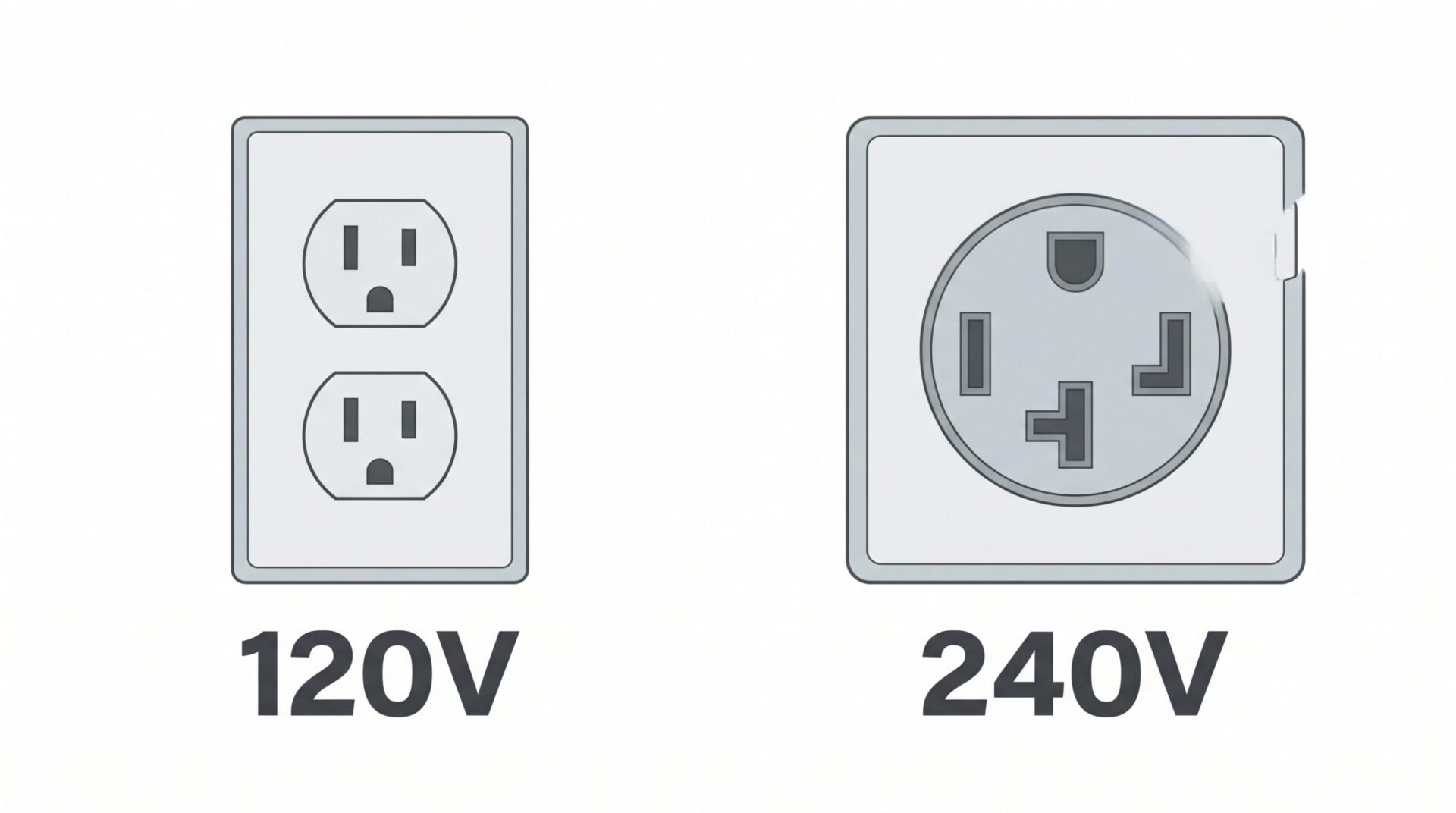
- 120V vs. 240V: The Core Difference — 120V outlets use single-phase power for everyday devices (15–20 amps), while 240V outlets use two-phase power for high-demand appliances like EV chargers, dryers, and hot tubs (30–60 amps).
- DFW Installation Costs — A new 120V outlet runs $135–$310 in DFW; a 240V outlet costs $675–$2,000+ depending on appliance type, panel capacity, and distance from the panel. Permit fees add $120–$410 depending on your city.
- Panel Upgrades Are Common — Up to 40–60% of DFW homes adding a major 240V appliance require a panel upgrade from 100-amp to 200-amp service, adding $5,800+ to the total project cost.
- Always Hire a Licensed Electrician — Texas law requires a TECL-licensed contractor for all outlet and circuit work. Unpermitted or unlicensed 240V installations can void your homeowner’s insurance and create serious fire hazards.
- Trust Epic Electrical for honest, no-upsell electrical work from master electricians with 60+ years of combined DFW experience — visit Epic Electrical to learn more about what they can do for your home.
What’s the Difference Between 120V and 240V Outlets, and Which Do I Need?
A 120V outlet delivers single-phase power for everyday devices like lamps and chargers, while a 240V outlet delivers double-phase power for high-demand appliances like dryers, EV chargers, and hot tubs. The key difference is voltage and amperage capacity—240V circuits can deliver significantly more power, making them essential for modern home upgrades in DFW. Understanding which outlet type you need depends on your appliance, your home’s electrical panel capacity, and your long-term plans.
This guide breaks down the technical and practical differences, real DFW installation costs, and what homeowners should know before upgrading their electrical system.
Epic Electrical
Free Quote & Honest Diagnosis — No Upsells
Core Service Programs:
- Electrical Repairs, Wiring & Lighting for tripping breakers, faulty wiring, GFCI issues, and indoor/outdoor lighting
- EV Chargers, Generators & Panel Upgrades for Level 2 EV charging, whole-home generator installs, panel replacements, and surge protection
- Commercial, Warehouse & Industrial Electrical for restaurants, offices, industrial buildouts, LED retrofits, and dedicated circuits
Why Choose Epic Electrical:
- ✓ Trusted by customers with 138+ five-star Google reviews
- ✓ Two master electricians with 60+ years of combined experience
- ✓ Serving North Richland Hills and the DFW Metroplex since 2009
- ✓ 60+ years of combined electrical experience on every job
- ✓ No upsells, no jargon, no pressure — we fix what’s actually broken
- ✓ Small repairs fixed same-visit; big jobs get a written quote with no hidden costs
- ✓ Texas-licensed electrical contractor (TECL #33192)
120V vs. 240V Outlets: Core Technical Differences
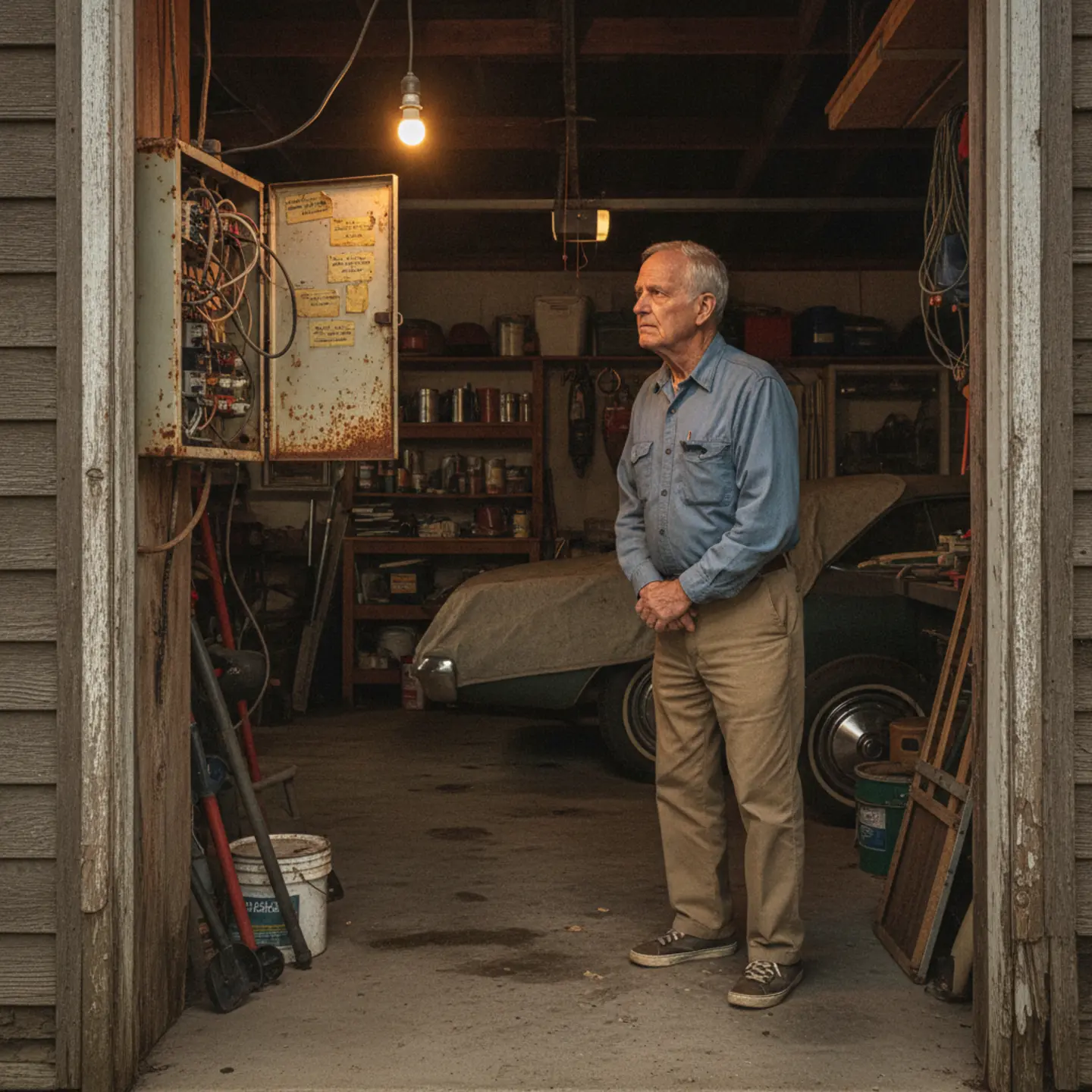
Most DFW homes run on both voltage types simultaneously — you just don’t think about it until you need to add something new. Your standard wall outlets are 120V. Your dryer, HVAC, and electric range run on 240V. The two systems are fundamentally different in how they’re wired, how much power they deliver, and what safety requirements they carry.
A 120V outlet uses a single hot wire, a neutral wire, and a ground — delivering power at 15 to 20 amps for most household circuits. A 240V outlet uses two hot wires (each carrying 120V), a neutral, and a ground — combining to deliver 240 volts at significantly higher amperage, typically 30 to 60 amps depending on the application.
How Voltage and Amperage Work Together
Voltage is the electrical pressure pushing power through a circuit; amperage is the volume of electrical current flowing through it. Together, they determine how much power a circuit can actually deliver — measured in watts (watts = volts × amps). A standard 120V, 15-amp outlet safely delivers up to 1,800 watts. A 240V, 50-amp circuit delivers up to 12,000 watts — nearly seven times more power. That’s why high-demand appliances like Level 2 EV chargers (30–50 amps) and electric ranges (40–50 amps) simply cannot run safely on a standard 120V outlet.
Wire Gauge and Circuit Protection Requirements
The National Electrical Code (NEC) mandates specific wire gauges based on circuit amperage to prevent overheating and fire risk. A 30-amp 240V circuit — the standard for most electric dryers — requires 10-gauge wire. A 50-amp circuit for an EV charger or electric range requires heavier 6-gauge wire. Every 240V circuit must also have its own dedicated breaker sized to match the wire gauge and the appliance’s power demand. These aren’t suggestions — they’re code requirements enforced during permit inspections in every DFW city.
| Feature | 120V Outlet | 240V Outlet |
|---|---|---|
| Wiring Configuration | 1 hot wire + neutral + ground | 2 hot wires + neutral + ground |
| Typical Amperage | 15–20 amps | 30–60 amps |
| Max Power Delivery | ~1,800–2,400 watts | ~7,200–14,400 watts |
| Wire Gauge (common) | 14-gauge (15A) / 12-gauge (20A) | 10-gauge (30A) / 6-gauge (50A) |
| Dedicated Circuit Required? | Sometimes (kitchen, bathroom) | Always |
| Permit Required in DFW? | For new circuits, yes | Yes, always |
| Common Uses | Lamps, chargers, TVs, small appliances | Dryers, EV chargers, ranges, hot tubs, HVAC |
Common Uses for 120V and 240V Outlets in DFW Homes
Knowing which outlet type an appliance needs isn’t just about convenience — it’s a safety issue. Plugging a high-draw appliance into an undersized circuit causes overheating, tripped breakers, appliance damage, and in serious cases, electrical fires. Here’s how to think about which voltage class your devices fall into.
120V Appliances and Devices
Standard 120V outlets handle the vast majority of what you plug in day-to-day: lamps, phone and laptop chargers, televisions, countertop kitchen appliances, bathroom outlets, and entertainment systems. These circuits are rated for 15 to 20 amps, and it’s generally safe to run multiple lower-draw devices on the same circuit as long as the total load doesn’t exceed the breaker rating. If you’re noticing tripping breakers on circuits with multiple devices, that’s a sign the circuit is being pushed beyond its safe capacity.
240V Appliances and Why They Need Dedicated Circuits
High-demand appliances require their own dedicated 240V circuits — meaning nothing else shares that breaker. This is a code requirement, not just a recommendation. Here’s what typically needs a dedicated 240V circuit in a DFW home:
- Electric dryers and ranges/ovens: 30–50 amps, dedicated circuit required
- Electric water heaters: 30–50 amps, dedicated circuit mandatory
- Central air conditioning: 30–60 amps, dedicated circuit required
- Level 2 EV chargers: 30–50 amps — North Texas surpassed 145,000 registered EVs in 2025, a 34% year-over-year increase, making EV charger installation one of the fastest-growing electrical services in DFW
- Hot tubs and spas: 30–60 amps, dedicated circuit with weatherproof outlet
- Whole-home generators: Require a dedicated transfer switch and 240V connection — see Epic’s generator installation service for details
Older DFW homes — particularly those built before 1990 — often have 100-amp service panels that were designed for a simpler era of appliances. Adding even one modern 240V load to an undersized panel creates real risk. An estimated 60–70% of DFW homes were built before 2000, meaning a large portion of the housing stock is working with electrical infrastructure that wasn’t designed for today’s demands.
DFW Installation Costs: 120V vs. 240V Outlets
One of the most common questions homeowners ask before starting an electrical project is: “What’s this actually going to cost?” The honest answer is that it depends — but here are the real numbers from the DFW market so you can budget accurately.
⚠️ Beware of Unlicensed Contractors
Hiring an unlicensed electrician for 240V work is illegal and dangerous. Unpermitted work can void your homeowner’s insurance, create fire hazards, and cause serious problems during home sales. Always verify a TECL license at tdlr.texas.gov before hiring any electrician in Texas.
120V Outlet Installation Costs Breakdown
- Basic outlet replacement (existing circuit): $100–$150
- New circuit to an accessible location: $200–$310
- New circuit through finished walls (drywall repair required): $300–$500+
- Faulty or damaged wiring repair: $560–$2,170
- Permit fees: Typically $50–$150 in most DFW cities
For most straightforward 120V outlet additions, you’re looking at $135–$310 all-in. The cost jumps when a new dedicated circuit is needed or when the work requires running wire through finished walls. If existing wiring repairs are discovered during the project, that adds to the total.
240V Outlet Installation Costs by Appliance Type
| Appliance / Application | Typical DFW Cost Range | Key Cost Drivers |
|---|---|---|
| Level 2 EV Charger | $675–$2,000 | Distance from panel, charger model, conduit requirements |
| Electric Dryer or Range | $800–$1,800 | Existing circuit availability, distance from panel |
| Hot Tub / Spa | $2,100–$2,500 | Outdoor weatherproofing, GFCI protection, distance from panel |
| Whole-Home Generator | $14,000 base (Epic) | Includes unit, transfer switch, up to 15 ft fuel line |
| Permit Fees (DFW cities) | $120–$410 | Fort Worth ~$120; Frisco ~$410 |
Panel Upgrade Costs: The Hidden Game-Changer
Here’s the cost factor most homeowners don’t see coming: if your home has a 100-amp panel, adding a major 240V appliance may require upgrading to 200-amp service before any outlet work can begin. In DFW, that upgrade runs $5,800–$8,000+ (Epic’s base price is $5,800). Up to 40–60% of projects adding a major 240V appliance in older homes require this upgrade. The total all-in cost for a panel upgrade plus a new 240V outlet typically lands between $6,500 and $9,000+.
The upgrade includes a new breaker panel, main disconnect, outdoor emergency disconnect (required when the panel is not on an exterior wall), and a municipal inspection. It’s a significant investment — but it’s also a one-time fix that future-proofs your home’s electrical capacity for decades. If you’re trying to estimate your project budget, Epic’s panel upgrade calculator is a useful starting point, and residential financing options are available for larger projects.
Why Your DFW Home Might Need a Panel Upgrade Before Adding 240V Service
A lot of DFW homeowners are surprised to learn that the outlet isn’t the problem — it’s what’s behind the wall. Homes built before 1990 typically have 60- to 100-amp service panels, which were designed for a world without EV chargers, electric tankless water heaters, or multiple HVAC systems. Today’s electrical loads are a different story.
💡 Pro Tip: Schedule Electrical Work in Winter for Faster Service
January and February are typically the slowest months for electrical work in DFW, meaning faster scheduling and potentially more competitive pricing. If your project isn’t urgent, winter is an ideal time to plan your electrical upgrade.
✓ You’re Not Alone: Many DFW Homes Need Panel Upgrades
If your home was built before 1990, you’re in good company — an estimated 30–40% of DFW homes have outdated 60–100-amp service. The good news: a modern panel upgrade is a one-time investment that future-proofs your home for years of reliable electrical service.
Warning signs that your panel may be undersized for a new 240V load include: breakers that trip frequently, lights that flicker when large appliances run, outlets that feel warm to the touch, or the simple inability to run multiple appliances at the same time. Any of these symptoms warrant a professional load calculation before you add anything new to the system.
A licensed electrician performs a load calculation by measuring your panel’s current capacity against the total demand of all existing and planned circuits. This is the only accurate way to determine whether your panel can safely handle a new 240V load — and it’s something Epic Electrical includes as part of every estimate for panel and circuit work in the DFW area.
Beyond capacity, there are code compliance and insurance implications. Homeowner’s insurance policies can be voided or claims denied when electrical work is done without permits or by unlicensed contractors. Panel upgrades also bring your home into compliance with the 2023 NEC, which added requirements for outdoor emergency disconnects and whole-home surge protection on all new panel installations.
Top Electrical Contractors in DFW: Compared and Reviewed
With over 5,000 active TECL-licensed electrical contractors serving the DFW metro, the range in quality and reliability is significant. Price is rarely the best filter — a low quote from an unlicensed contractor can cost far more in the long run. Here’s how the major categories of providers compare, so you can make an informed hiring decision.
Before hiring anyone, verify their TECL license at tdlr.texas.gov and confirm they carry general liability insurance with a minimum of $300,000 per occurrence. Ask whether they’ll pull permits and manage inspections — a contractor who discourages permits is a red flag, not a bargain. For a full checklist of what to ask, see our guide on how to hire an electrician.
| Provider | License / Credentials | Specializations | Best For |
|---|---|---|---|
| Epic Electrical (TECL #33192) 7304 Hialeah Cir W, North Richland Hills, TX 76182 |
TECL licensed; two master electricians on staff; 60+ years combined experience | Panel upgrades, EV charger installs, generators, hot tub wiring, outlet work, emergency repairs | Homeowners who want honest diagnosis, transparent pricing, and full permit management |
| Tarrant Electric | TECL licensed; residential and commercial experience | Panel upgrades, outlet installations, emergency services | Fort Worth area homeowners with solid local referral base |
| Tsai Electro | TECL licensed; master electrician oversight | Residential upgrades, new construction, commercial work | Homeowners prioritizing detailed inspections and code-compliant installs |
| Franchise Providers (Mr. Electric, Mister Sparky) | TECL licensed; national brand with local franchises | General residential electrical; standardized service processes | Homeowners prioritizing brand consistency; typically higher pricing due to overhead |
Epic Electrical serves the full DFW metroplex, including Fort Worth, Arlington, Colleyville, Hurst, and surrounding communities. Their full service area covers most of the metroplex for residential and commercial electrical work.
Why Epic Electrical Is the Right Choice for DFW Homeowners
When you’re dealing with something as consequential as your home’s electrical system, who does the work matters as much as what gets done. Epic Electrical has built its reputation in DFW on one simple principle: give homeowners honest information and let them make the call. No upsells, no scare tactics, no hidden costs buried in a final invoice.
The numbers back that up. Epic has earned 138+ five-star Google reviews from DFW homeowners — not by being the cheapest option, but by being the most trustworthy one. Customers consistently mention the same things: clear communication, fair pricing, and work that passes inspection the first time. You can read what they’re saying on the Epic Electrical testimonials page.
The team brings more than 60 years of combined electrical experience to every job. That depth of knowledge matters when you’re dealing with older DFW homes where the panel, wiring, and outlet configuration may not match what’s on the original blueprints. Epic’s master electricians have seen it all — and they know how to diagnose accurately before recommending any work.
Serving DFW since 2009, Epic understands the local permit landscape across dozens of municipalities. That means faster approvals, fewer surprises during inspections, and full compliance with the 2023 NEC standards that govern all new electrical work in Texas. Every project includes complete permit management and inspection coordination — protecting your homeowner’s insurance and ensuring the work is done right, not just done fast.
If there’s a cheaper fix for your situation, Epic will tell you. That’s not a marketing line — it’s how they operate.
Get a free estimate from Epic Electrical today — honest diagnosis, transparent pricing, and no pressure.
Frequently Asked Questions About 120V and 240V Outlets
Can I install a 240V outlet myself to save money, especially for something like a dryer?
No — and this is one of the more dangerous DIY projects a homeowner can attempt. Installing a 240V outlet involves high voltage, requires dedicated wiring and circuit protection sized to the appliance, and must comply with the National Electrical Code and local DFW permit requirements. Improper installation poses a serious risk of electrical fire and shock, and can void your homeowner’s insurance policy entirely. Texas law requires a TECL-licensed electrician for this work, and most DFW cities require a permit and inspection before the circuit can be used.
How do I know if my electrical panel can handle a new 240V outlet for an EV charger or hot tub?
You need a licensed electrician to perform a load calculation on your existing panel — this is the only accurate way to determine whether your system has the capacity for a new high-demand circuit. Older DFW homes with 100-amp service often can’t safely support a Level 2 EV charger (30–50 amps) or a hot tub (30–60 amps) without risking frequent breaker trips or creating a fire hazard. An electrician will assess your current load, identify available capacity, and recommend whether a panel upgrade is needed before any new 240V work begins.
What wire gauge do I need for a 240V outlet, and how is it determined?
The correct wire gauge depends on the amperage of the circuit the outlet will serve. A 30-amp 240V circuit — the standard for most electric dryers — requires 10-gauge wire. A 50-amp circuit for a high-output EV charger or electric range requires heavier 6-gauge wire. These specifications are mandated by the National Electrical Code and are non-negotiable — using undersized wire on a high-amperage circuit is a leading cause of electrical fires. Your licensed electrician will determine the correct gauge based on the appliance specs and circuit length.
Is a permit required to install a new 240V dryer outlet in DFW?
Yes, in virtually every DFW city, installing a new 240V outlet — even for a standard dryer — requires an electrical permit. This ensures the work is inspected by a municipal authority and meets current safety codes. Permit fees range from approximately $120 in Fort Worth to $410 in Frisco. A licensed electrical contractor handles all permit applications and inspection scheduling as part of the job — if a contractor suggests skipping the permit to save money, that’s a serious red flag.
What makes Epic Electrical different from other electrical contractors in DFW?
Epic Electrical stands out with 138+ five-star Google reviews, master electricians with more than 60 years of combined experience, and a straightforward commitment to honest diagnosis with no upsells or hidden costs. Serving DFW since 2009, Epic handles everything from simple outlet installations to complex panel upgrades and EV charger installs — with full permit management and strict adherence to 2023 NEC code standards on every job. If there’s a cheaper fix, they’ll tell you. Contact Epic Electrical for a free estimate and see the difference for yourself.
Ready to Upgrade Your Home’s Electrical System in DFW?
Whether you need a new 240V outlet for an EV charger, a dryer, or a hot tub — or you’re not sure if your panel can handle the load — Epic Electrical gives you straight answers and honest pricing. No pressure, no upsells, just expert electrical work done right the first time.
Master electricians with 60+ years of combined DFW experience are ready to assess your home and walk you through exactly what’s needed — and what isn’t.
Call us: (682) 478-6088
Serving Fort Worth, Arlington, Keller, Southlake, Colleyville, Grapevine, Hurst, North Richland Hills, Lewisville, and all of DFW.
Pricing, equipment specifications, and project scope mentioned in this article are accurate as of the date of publication and are subject to change. Code requirements and permit needs vary by municipality and property. Please contact us directly for a current quote on your specific home or business.