Key Takeaways
- 200 amps is the modern standard — Most Texas homes built after 1990 need a 200-amp panel to safely handle central HVAC, electric water heaters, EV chargers, and smart home devices.
- Older panels are a real risk — Homes built before 1980 often still have 60-amp or 100-amp panels that are undersized for today’s electrical loads and can cause overloads, breaker trips, and fire hazards.
- Hazardous panels (FPE, Zinsco) must be replaced — Major insurance carriers in Texas refuse to cover homes with Federal Pacific or Zinsco panels; replacement is mandatory for safety and insurability.
- A code-compliant 200-amp upgrade in DFW costs $2,800–$4,500 — This includes the new panel, meter base, exterior emergency disconnect, whole-home surge protection, labor, and permits.
- Trust Epic Electrical for honest panel diagnosis, master electrician expertise, and full permit management across DFW — visit Epic Electrical to learn why 140+ five-star Google reviews back every job we do.
What Size Electrical Panel Do I Need for My Texas Home?
Most modern Texas homes need a 200-amp electrical panel to safely handle today’s electrical demands—from air conditioning and water heaters to EV chargers and smart home devices. Homes built before 1980 often still have undersized 60-amp or 100-amp panels, which are inadequate and risky. The right panel size depends on your home’s square footage, appliances, and future needs, but 200 amps is the current standard for safety and resale value.
Understanding your panel size is critical for safety, insurance, and home value—and it’s easier than you think.
Epic Electrical
Free Quote & Honest Diagnosis — No Upsells
Core Service Programs:
- Electrical Repairs, Wiring & Lighting for tripping breakers, faulty wiring, GFCI issues, and indoor/outdoor lighting
- EV Chargers, Generators & Panel Upgrades for Level 2 EV charging, whole-home generator installs, panel replacements, and surge protection
- Commercial, Warehouse & Industrial Electrical for restaurants, offices, industrial buildouts, LED retrofits, and dedicated circuits
Why Choose Epic Electrical:
- ✓ Trusted by customers with 140+ five-star Google reviews
- ✓ Father-and-son master electricians — a third-generation electrical family
- ✓ Serving North Richland Hills and the DFW Metroplex since 2009
- ✓ 50+ years of combined electrical experience on every job
- ✓ No upsells, no jargon, no pressure — we fix what’s actually broken
- ✓ Small repairs fixed same-visit; big jobs get a written quote with no hidden costs
- ✓ Texas-licensed electrical contractor (TECL #33192)
Why Panel Size Matters: Safety, Capacity & Code
Your electrical panel is the nerve center of your home. Every circuit—your HVAC, refrigerator, outlets, lights—runs through it. When that panel is too small for the load your home actually draws, things go wrong fast. Breakers trip constantly, voltage fluctuates, and appliances wear out prematurely. In worst-case scenarios, an overloaded panel overheats and starts a fire.
Modern electrical loads are dramatically heavier than what homes built in the 1960s or 1970s were designed to handle. A central HVAC system alone can draw 30–60 amps. Add an electric water heater, a dishwasher, a washer and dryer, and a few dozen outlets in use simultaneously, and a 100-amp panel is already stretched. Throw in an EV charger or a heat pump and you’ve exceeded its capacity entirely.
Beyond the safety risk, there’s an insurance problem. Major carriers—Travelers, Progressive, State Farm—refuse to insure homes with Federal Pacific Electric (FPE) or Zinsco panels due to their documented fire hazard rates. Even a functioning but undersized panel can raise red flags with insurers. If you’re selling your home, common electrical red flags in Texas home inspections consistently include undersized or outdated panels, and buyers use them as negotiation leverage or walk away entirely.
A properly sized, code-compliant panel isn’t just a safety upgrade—it’s a financial one. It protects your coverage, your appliances, and your home’s resale value.
100-Amp vs. 200-Amp Panels: What’s the Difference?
Amperage is your panel’s capacity—how much electrical load it can handle simultaneously without tripping or overheating. The higher the amperage, the more circuits and appliances you can run at the same time.
100-amp panels were the standard for homes built before 1980, typically sized for 1,000–1,500 square feet with basic appliances: a few lights, a gas range, a window AC unit. They were never designed for central HVAC, electric water heaters, or anything resembling today’s connected home.
200-amp panels are the current standard, required for homes built after 1990 and strongly recommended for any home with modern electrical demands. They support 2,000+ square feet, central HVAC systems, electric water heaters, EV chargers, and the full range of smart home technology without strain.
One important distinction: upgrading from 100 to 200 amps isn’t just swapping the box. It’s a service upgrade—meaning the meter base, service entrance conductors, and often the exterior emergency disconnect all need to be replaced or added to handle the increased capacity. Understanding the difference between a panel swap and a full service upgrade matters when you’re comparing quotes. You can read more about the scope of that work in our breakdown of residential electric panel replacement.
How to Determine Your Home’s Correct Panel Size
You don’t need to be an electrician to get a clear picture of where your home stands. Here’s a straightforward framework:
- Check your current panel. Open the panel door and look at the main breaker label. It will show your current capacity: 60A, 100A, 150A, or 200A. That number tells you what you’re working with right now.
- Factor in your home’s age and size. If your home was built before 1980 and still has its original panel, it’s almost certainly undersized. Homes over 2,000 square feet with central HVAC typically need 200 amps at minimum.
- List your major appliances and future plans. Central HVAC, electric water heater, electric range, pool or spa, and EV charger each add significant load. A Level 2 EV charger alone requires a dedicated 40–60 amp circuit.
- Get a professional load calculation. Per NEC Article 220, a licensed electrician calculates your home’s actual electrical demand based on square footage, appliances, and usage patterns. Most electricians include this free as part of a quote. Use our panel upgrade calculator to get a preliminary estimate before calling.
💡 Plan Ahead for EV Charging
If you’re considering an electric vehicle, a Level 2 home charger requires a dedicated 40–60 amp circuit. Upgrading to a 200-amp panel now saves you from a second, expensive upgrade in a few years.
The smartest move is to size your panel for where your home is going, not just where it is today. If an EV, heat pump, or whole-home generator is on your five-year horizon, account for that load now. A second upgrade down the road costs far more than planning ahead. If you’re specifically weighing EV charging options, our guide on EV charger load management vs. panel upgrades in DFW walks through the tradeoffs in detail.
DFW-Specific Factors That Affect Panel Size Decisions
DFW isn’t just any market. The combination of extreme summer heat, rapidly aging housing stock, and surging EV adoption creates a unique set of electrical demands that make panel sizing decisions more urgent here than in most parts of the country.
Extreme summer heat. DFW’s summers push HVAC systems to run continuously for months. That’s a heavy, sustained electrical load—and undersized panels feel it. Overheating breakers, nuisance trips during peak afternoon heat, and appliance damage from voltage fluctuations are all signs a panel is being pushed past its limits.
EV adoption surge. Tarrant and Dallas counties saw EV registrations grow over 50% annually in 2023–2024, and that trajectory continues into 2026. Every new EV owner who wants Level 2 home charging needs a dedicated 240-volt circuit. For homes with 100-amp panels, that almost always means a panel upgrade first. Our EV charger installation page covers what’s involved from start to finish.
Aging housing stock. Many DFW homes built in the 1960s through 1980s—particularly in inner-ring suburbs like North Richland Hills, Hurst, Euless, and Bedford—still have their original 100-amp panels. These homes are prime candidates for upgrades, and many also have aluminum branch wiring from the 1965–1973 era, which requires specialized remediation due to fire risk.
Insurance requirements. If your home has a Federal Pacific or Zinsco panel, major carriers will either refuse coverage or require replacement within 30 days. This isn’t a negotiation—it’s a hard line. Upgrading protects your coverage and removes a significant liability.
Real estate impact. Electrical issues are consistently among the top flags in DFW home inspections. A modern 200-amp panel removes a major negotiation barrier and demonstrates that your home is ready for modern demands. Learn more about how panel upgrades support EV charger readiness and resale value in the current DFW market.
Costs, Permits & What to Expect During an Upgrade
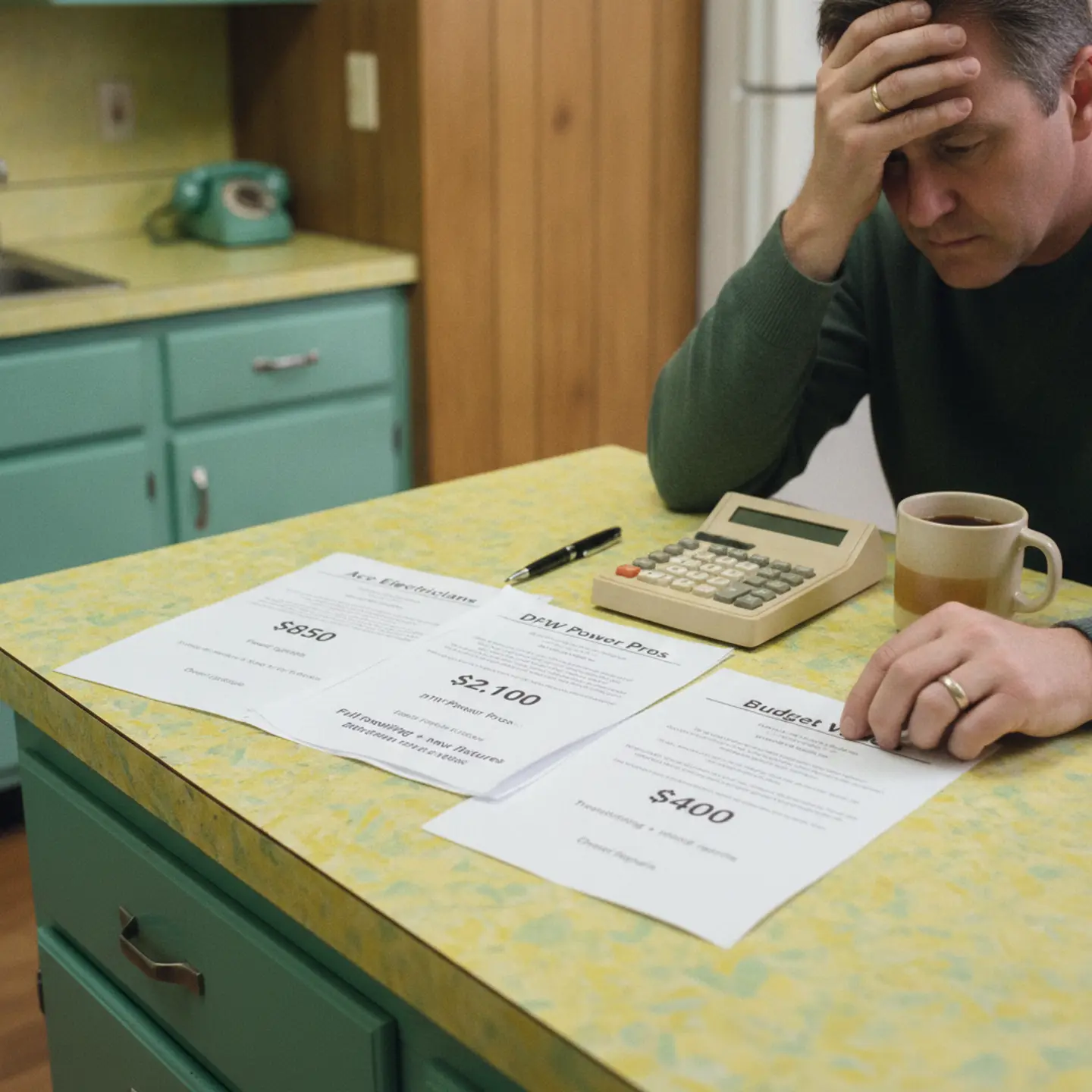
One of the most common questions we hear is: “Why does a panel upgrade cost so much?” It’s a fair question, and the honest answer is that a code-compliant upgrade involves a lot more than just swapping a box.
💡 Sticker Shock Is Normal—Here’s Why
A $5,800–$7,500 panel upgrade feels expensive, but it includes mandatory safety upgrades (AFCI/GFCI breakers at $50–$90 each), permits, inspections, and DFW’s higher labor rates. You’re paying for code compliance and peace of mind, not just a box swap.
A standard 200-amp panel upgrade in DFW runs $2,800–$4,500 for a code-compliant installation. That includes the new panel, meter base, exterior emergency disconnect (required by the 2023 NEC), whole-home surge protection, upgraded grounding, labor, and permits. Complex jobs—panel relocation, overhead mast work, or extensive AFCI/GFCI breaker upgrades—can push costs higher.
Here’s what drives price variation:
- AFCI/GFCI breakers: The 2023 NEC requires arc fault and ground fault protection for most circuits. These breakers cost $50–$90 each versus $7 for a standard breaker. A 30-circuit panel adds $1,500–$2,700 in breaker costs alone.
- Outside disconnect: If your panel isn’t on an exterior wall, an exterior emergency disconnect must be added—a 2023 NEC requirement.
- Panel relocation: Moving a panel from a closet or interior wall adds labor, materials, and potential drywall repair.
- City code triggers: Some DFW municipalities require interconnected smoke detectors when a building permit is pulled. Texas Health & Safety Code § 766.002(b) ties permit activity to smoke detector compliance.
- DFW labor rates: Skilled electrician labor in DFW runs 30–50% above national averages due to trade shortages and high regional demand.
Permits are mandatory—no exceptions. Every DFW municipality requires an electrical permit and final inspection for a panel replacement. Permit fees range from $100–$410 depending on the city. Unpermitted work is illegal, voids your insurance, and creates serious problems at resale. For a deeper breakdown of what drives quote variation, see our guide on why panel replacement costs what it does.
Timeline: Physical installation takes 8–10 hours—typically one workday. The full process, including permit approval, Oncor coordination for disconnect/reconnect, and city inspection, takes 5–10 business days. Financing is available, and federal tax credits of up to $600 apply when a panel upgrade is paired with qualifying energy-efficient equipment. Our residential project financing guide covers your options.
Red Flags: Hazardous Panels & When You Must Upgrade
⚠️ Hazardous Panels Are a Deal-Breaker
Federal Pacific and Zinsco panels are fire hazards that insurance companies refuse to cover. If your home inspection flags one of these, replacement is not optional—it’s mandatory for safety and insurability.
Not all panel problems are about capacity. Some panels are outright dangerous regardless of amperage, and they require immediate replacement.
Federal Pacific Electric (FPE) Stab-Lok panels were manufactured from roughly 1950 to 1980 and are found throughout older DFW neighborhoods. Independent testing has shown breaker failure rates as high as 60%—meaning the breaker may not trip when it should, allowing dangerous overcurrents to continue. FPE panels are linked to thousands of residential fires. Major insurers refuse coverage; replacement is the only safe option. See our detailed breakdown of Federal Pacific panel replacement and 200-amp upgrade costs in DFW.
Zinsco panels are similarly problematic. Corrosion causes breakers to fuse to the bus bar, making them impossible to trip manually during an emergency. If you have a Zinsco panel, read our guide on whether to replace your Zinsco panel—the short answer is yes.
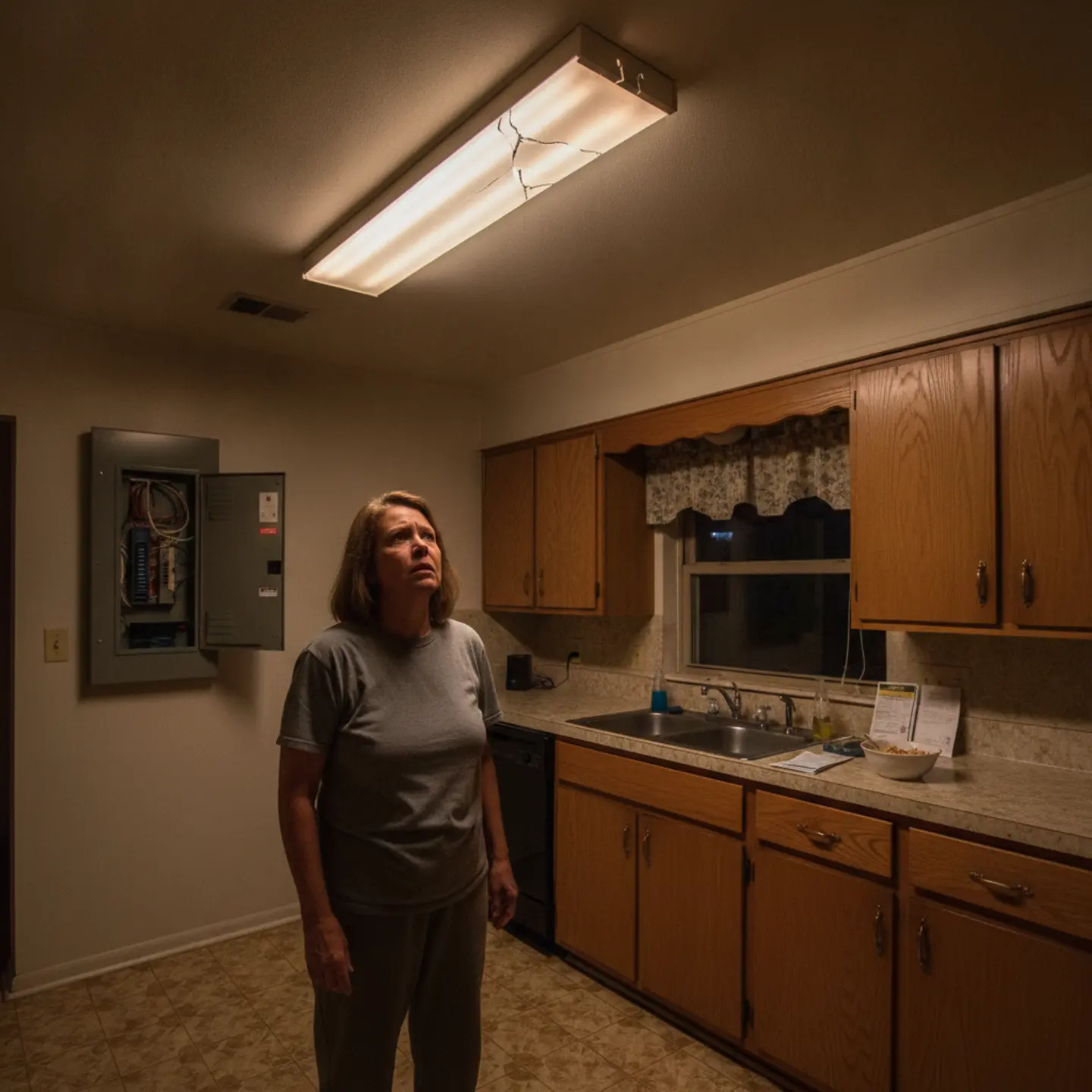
Signs your panel is in distress: Scorching or melting around the panel, loose or burnt connections, frequent breaker trips that don’t resolve, flickering lights throughout the house, warm outlets, or buzzing sounds from the panel box. Any of these warrant an immediate professional inspection—not a wait-and-see approach.
Aluminum branch wiring is common in DFW homes built between 1965 and 1973, particularly in Hurst, Euless, Bedford, and North Richland Hills. It’s not automatically a reason to panic, but it does require specialized remediation due to its tendency to expand, contract, and loosen connections over time—a fire risk that compounds with an undersized or aging panel. Our electrical wiring repairs and maintenance page covers aluminum wiring remediation options.
Ungrounded outlets are common in pre-1970 homes. A 3-prong outlet on a 2-wire circuit without GFCI protection is a code violation and will fail inspection. GFCI protection is the standard fix, running $90–$250 per outlet in DFW.
Why Epic Electrical Is the Right Choice for Your DFW Panel Upgrade
Panel upgrades aren’t a commodity job. The difference between a compliant, safe installation and one that fails inspection—or worse, creates a hazard—comes down to who’s doing the work. Here’s what sets Epic Electrical apart for DFW homeowners.
Our father-and-son team has been serving DFW since 2009 with 50+ years of combined master electrician experience. We’ve handled thousands of panel upgrades, hazardous panel replacements, and complex code-compliance projects across North Richland Hills, Fort Worth, and the surrounding communities. We know the local code landscape, the common issues in DFW’s aging housing stock, and exactly what each municipality’s inspectors are looking for.
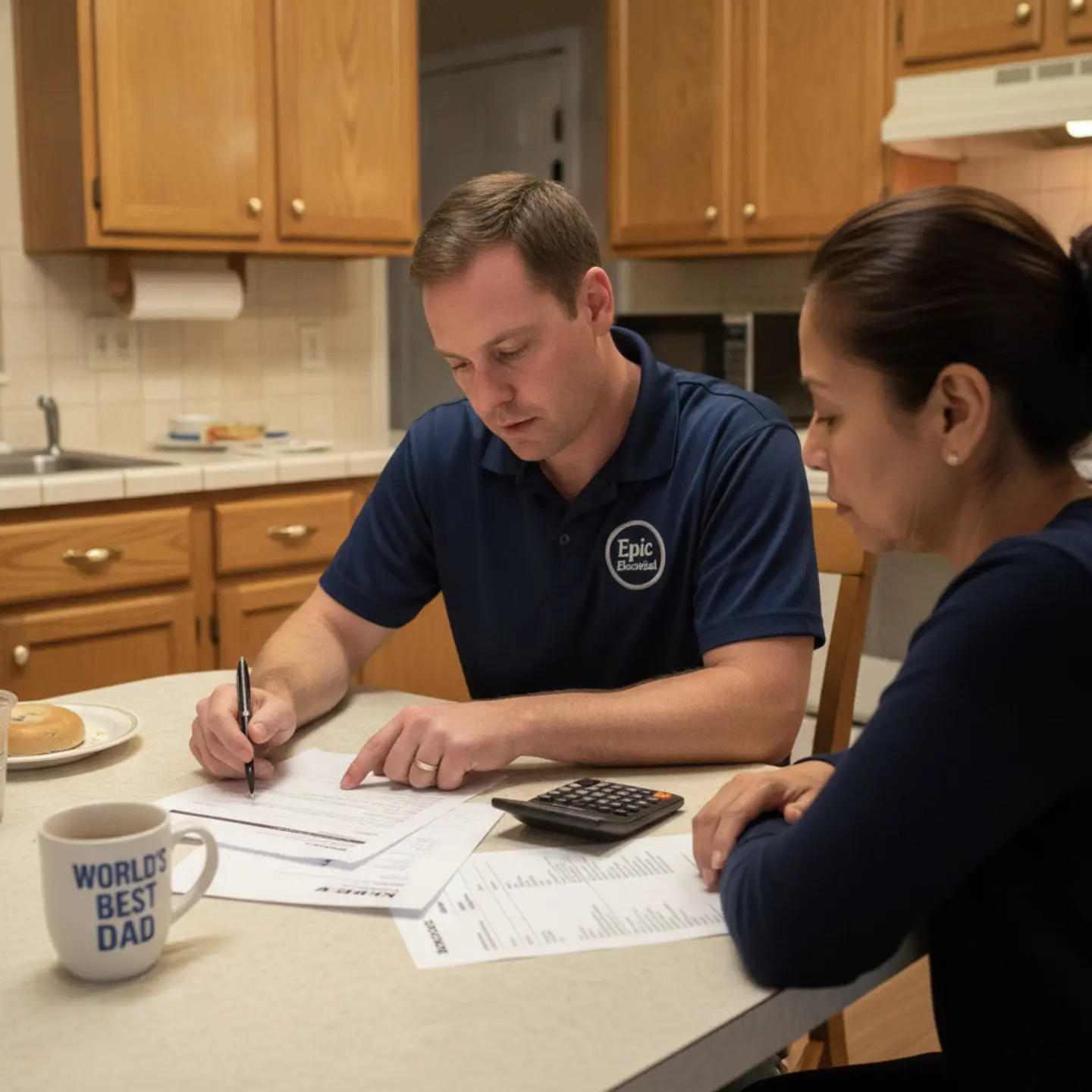
Our 140+ five-star Google reviews reflect one consistent theme: we tell you the truth. If a cheaper fix solves your problem, we’ll say so. If an upgrade is genuinely necessary, we’ll explain exactly why—without pressure and without hidden costs. Every quote is written, detailed, and honest before any work begins.
We handle everything: permits pulled from your city, coordination with Oncor for disconnect and reconnect, final inspection scheduling, and full 2023 NEC code compliance—including exterior emergency disconnects, AFCI/GFCI breakers, and whole-home surge protection. You don’t have to manage any of it. We’re licensed (TECL #33192), fully insured, and verifiable at tdlr.texas.gov. Financing is available, and we’ll walk you through any applicable federal tax credits that can offset your costs.
Contact Epic Electrical for a free, no-obligation estimate — we’ll give you an honest answer about what your home actually needs, and a clear path forward.
Frequently Asked Questions About Electrical Panel Size in Texas
How do I know if my electrical panel is too small or outdated?
The most common signs are frequent breaker trips, flickering lights throughout the house, buzzing sounds from the panel, warm-to-the-touch outlets, or difficulty adding new appliances like an EV charger. If your home was built before 1980 and still has its original 60-amp or 100-amp panel, it’s very likely undersized for modern electrical demands. A professional load calculation will confirm whether your current capacity matches your actual usage—and what size panel your home actually needs.
Is a 100-amp electrical panel still safe or legal?
A functioning 100-amp panel in an older home is generally “grandfathered” under existing codes, meaning it’s technically legal unless modifications are made or a specific hazard is identified. However, legal doesn’t mean adequate or safe for modern electrical loads. Running central HVAC, an electric water heater, and everyday appliances through a 100-amp panel increases the risk of overloads, nuisance trips, and long-term damage. Upgrading to 200 amps is strongly recommended for any home where the electrical load has grown beyond what the original panel was designed to handle.
Will upgrading my electrical panel increase my home’s value?
Yes—a 200-amp panel upgrade is one of the few home improvements that consistently delivers a strong return, particularly in older DFW properties. It removes a common red flag for home inspectors and buyers, improves safety, and signals that the home is ready for modern demands like EV charging and smart home technology. In many cases, upgrading before listing recovers 100% or more of the cost by eliminating buyer concessions or price reductions that a flagged panel would otherwise trigger.
Do I need a permit for an electrical panel replacement in DFW?
Absolutely—no exceptions. Every municipality in the Dallas-Fort Worth area requires an electrical permit and a final city inspection for a panel replacement. The permit process ensures the work is done safely and to current code, creates an official record for insurance and resale purposes, and protects you if questions arise later. Unpermitted panel work is illegal, voids your homeowner’s insurance, and creates significant problems when you sell. Any electrician who suggests skipping the permit is a red flag—walk away.
What makes Epic Electrical different from other electricians in DFW?
Epic Electrical is a father-and-son master electrician team with 50+ years of combined experience, serving DFW since 2009 out of North Richland Hills. We’re licensed (TECL #33192), fully insured, and have earned 140+ five-star Google reviews by doing one thing consistently: telling homeowners the truth. We don’t upsell, we don’t pressure, and we don’t quote one thing and install another. We pull all permits, coordinate with your utility, manage city inspections, and ensure full 2023 NEC code compliance on every job. If a cheaper fix solves your problem, we’ll tell you. If an upgrade is necessary, we’ll explain exactly why. Get a free estimate from Epic Electrical and find out why DFW homeowners trust us with their home’s electrical safety.
Ready to Find Out What Panel Size Your Texas Home Actually Needs?
If your home was built before 1990, your breakers keep tripping, or you’re planning an EV charger or major appliance upgrade, your panel deserves a professional look. Our master electricians will assess your home’s actual load, walk you through your options without pressure, and give you a written quote with no hidden costs.
Epic Electrical serves North Richland Hills, Fort Worth, Arlington, Hurst, Euless, Bedford, Colleyville, Grapevine, and communities across the DFW Metroplex. Call us or request your free estimate online—we’ll give you a straight answer about what your home needs.
Serving Fort Worth · Arlington · North Richland Hills · Hurst · Euless · Bedford · Colleyville · Grapevine · Keller · Southlake · and all of DFW
Pricing, equipment specifications, and project scope mentioned in this article are accurate as of the date of publication and are subject to change. Code requirements and permit needs vary by municipality and property. Please contact us directly for a current quote on your specific home or business.