Key Takeaways
- TREC Regulations Are Clear — Texas law under §535.227 explicitly prohibits home inspectors from removing electrical panel covers. This is not laziness or incompetence — it’s the law.
- Arc Flash Is a Real, Deadly Hazard — Inside your panel are live bus bars carrying 100–200+ amps. Arc flash temperatures can exceed 35,000°F. This requires specialized training and PPE that only licensed electricians possess.
- “Further Evaluation” Is Not a Disaster — It means your inspector did their job. Many flagged panels need only minor repairs, not full replacement.
- Two Different Licenses, Two Different Jobs — TREC licenses home inspectors for visual assessment. TDLR licenses electricians (TECL) for actual electrical work. Both matter, and neither can do the other’s job legally.
- Panel Evaluations Are Affordable — A professional electrician’s panel evaluation in DFW typically costs $200–$400. That’s a small price compared to what ignoring a flagged panel can cost.
- Older Panel Brands Are a Real Concern — Federal Pacific Stab-Lok, Zinsco, and Pushmatic panels have documented safety issues. If your inspector flagged one, take it seriously.
- Never Remove the Cover Yourself — Even if you’re handy, the hazards inside an electrical panel require professional training. This is not a DIY situation.
- Get It in Writing — Always request an itemized written quote before any electrical work begins. This protects you and makes it easy to compare recommendations.
You get the inspection report back, and there it is, buried near the bottom of the electrical section: “Electrical panel requires further evaluation by a licensed electrician.” Your first reaction is probably something like — why didn’t the inspector just open it up and look? It would have taken two minutes. Instead, you’re left with a vague note, a pending closing date, and a question nobody seems to want to answer directly.
We hear this all the time. It’s one of the most common questions we get from homebuyers and homeowners in the DFW area, and honestly, it’s a completely reasonable thing to wonder. The answer isn’t complicated once you understand the regulatory framework and the very real safety hazards involved — but most people never get that explanation. They just get the referral and a shrug.
This article is going to walk you through exactly why home inspectors can’t remove electrical panel covers, what they can tell you, what happens when a licensed electrician takes over, and how to navigate the whole process without getting oversold or caught off guard. Whether you’re in the middle of a home purchase, just got a flagged report, or you’re simply curious — this is the straight answer you’ve been looking for.
The Inspection Report Moment: Why That ‘Further Evaluation’ Note Exists
Let’s start with the frustration itself. You paid for a home inspection — a thorough one, you were told — and the inspector walked through every room, checked the roof, tested the outlets, and spent two hours documenting everything they could see. But when it came to the electrical panel, they looked at the outside of the box, maybe noted the brand and approximate age, and then wrote a note telling you to call someone else. What gives?
Here’s the thing: your inspector wasn’t being lazy, and they weren’t avoiding work. They were following the law. Home inspectors in Texas are licensed by the Texas Real Estate Commission (TREC) — not by the electrical licensing board. Their license authorizes them to perform visual assessments of accessible systems. It does not authorize them to open electrical panels, operate breakers, or perform any kind of invasive examination of electrical components. You can verify your inspector’s TREC credentials directly on the commission’s website to confirm their license type and status.
This isn’t a technicality that some inspectors use as an excuse. It’s an explicit, written prohibition in the TREC Standards of Practice that every licensed inspector in Texas must follow.
What TREC Actually Says About Electrical Panels
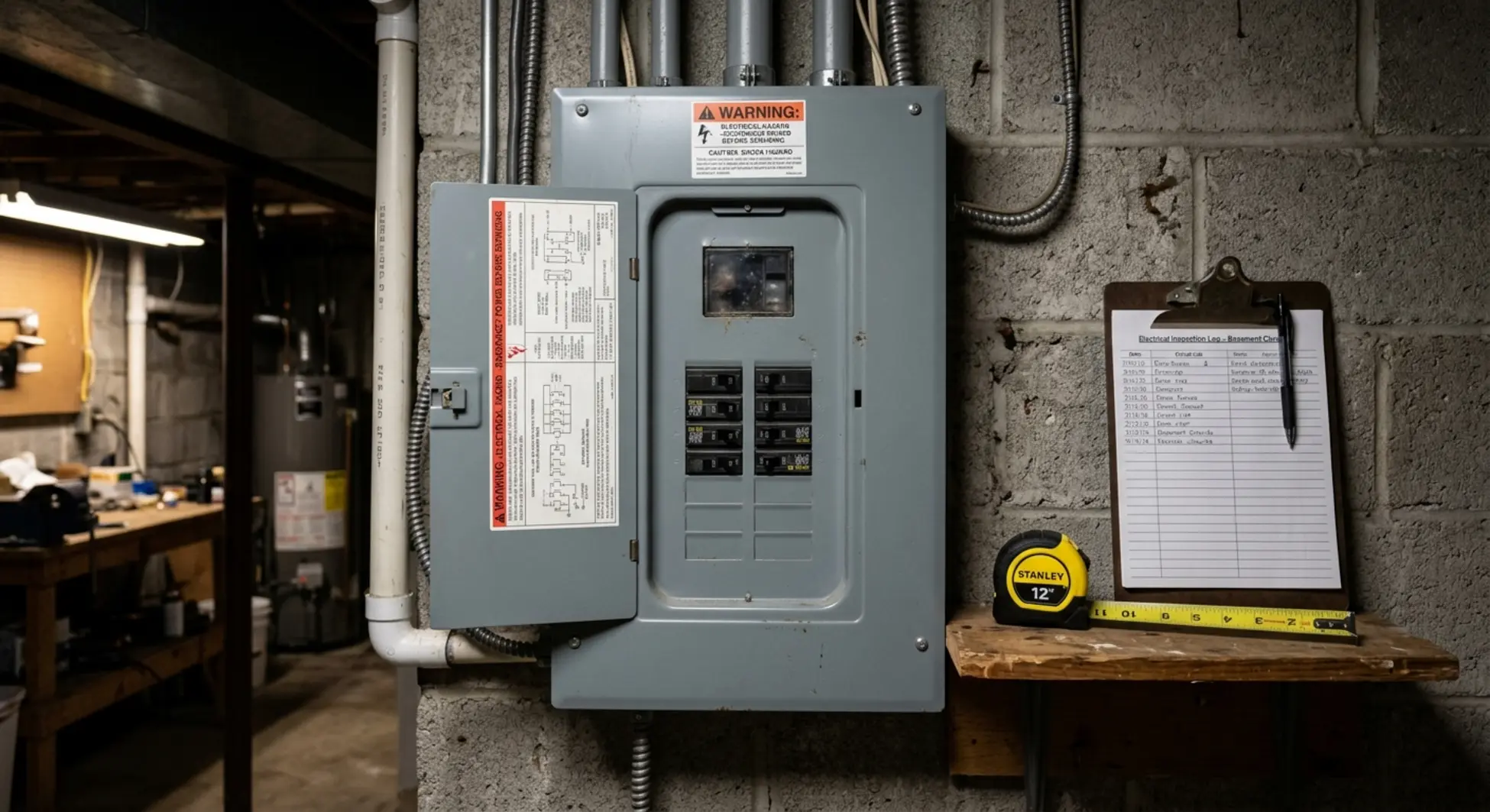
TREC’s Standards of Practice, specifically §535.227, spells out exactly what inspectors are and are not required to do when it comes to electrical systems. The language is unambiguous: inspectors shall not be required to “remove cover plates or access panels to inspect electrical components or wiring.” They’re also prohibited from operating electrical systems, switches, or circuit breakers, and from inspecting or testing any electrical system or component that is not accessible.
What they are required to inspect includes the visible, accessible portions of the service entrance conductors, the meter base, visible disconnects, and the accessible distribution panel — from the outside. That means they can look at the panel’s exterior, note its location, identify the brand, check for visible damage, and flag anything that looks concerning from the outside. But the moment that cover comes off, they’ve stepped outside their licensed scope entirely.
This isn’t a loophole or a gray area. It’s intentional regulation designed to protect both homeowners and inspectors — and we’ll get into exactly why in the next section.
The Difference Between ‘Visual Inspection’ and ‘Internal Evaluation’
Think of it this way: a home inspector’s job is to observe and report on the visible, accessible condition of your home’s systems. An electrician’s job is to actually work on those systems — diagnose them, test them, repair them, and certify their safety. These are genuinely different jobs that require different training, different licenses, and different insurance coverage.
Visual inspection covers things like: the panel’s exterior condition, its location (is it in a safe, accessible area?), the brand and approximate age, any visible signs of damage, corrosion, or previous repairs, and whether the service entrance wiring looks properly installed.
Internal evaluation covers: opening the panel cover, examining bus bars and connections, checking for proper wiring, testing breakers, verifying grounding and bonding, and assessing the overall safety of the internal components. That’s electrician territory — full stop.
Both steps are valuable. Neither replaces the other. They’re just different parts of the process, handled by different licensed professionals.
🙋 You’re Not Alone in Wondering This
Homebuyers ask this question constantly — it’s one of the most common things we hear after someone gets their inspection report back. It’s a completely reasonable question, and the answer has nothing to do with inspectors being lazy or cutting corners. It’s about safety regulations that exist for good reason. Once you understand the why, the “further evaluation” note starts to make a lot more sense.
The Real Reason: Arc Flash, Shock Hazards, and Why This Isn’t Overcautious
If TREC’s regulations feel like bureaucratic box-checking to you, the physics inside your electrical panel will change that perspective quickly. The reason those regulations exist isn’t administrative — it’s because the interior of a residential electrical panel is one of the most legitimately dangerous environments in your home, and working around it safely requires specialized knowledge that home inspectors simply aren’t trained for.
Inside a standard residential panel are live bus bars carrying between 100 and 200+ amps of electricity at 120/240 volts. These components remain energized even when individual breakers are switched off. There is no “safe” way to casually peek inside without understanding exactly what you’re looking at and how to avoid contacting the wrong thing. If you need a licensed electrician in DFW to handle this safely, that’s not an overreaction — it’s the appropriate response to a genuine hazard.
What Is Arc Flash and Why It Matters
Arc flash is a term that gets thrown around in electrical safety discussions, but most homeowners have never heard it explained clearly. Here’s what it actually means: arc flash is a sudden, explosive release of electrical energy caused when electricity jumps (or “arcs”) between two conductors or from a conductor to ground. It doesn’t require direct contact with a live wire. It can happen when a conductive object — a tool, a ring, even a hand — gets close enough to a live component to bridge the gap.
The results are catastrophic. Arc flash events generate temperatures that can exceed 35,000°F — that’s hotter than the surface of the sun. The explosion of heat, light, pressure, and molten metal that follows can cause severe burns across a wide area, blindness from the flash, and fatal injuries in a fraction of a second. The Electrical Safety Foundation International (ESFI) documents arc flash incidents as among the most severe electrical injuries, and they occur even among trained professionals who make momentary lapses in judgment.
This isn’t a remote theoretical risk. It’s a documented, well-understood hazard that the National Electrical Code (NEC), the National Electrical Contractors Association (NECA), and the International Association of Electrical Inspectors (IAEI) all treat with the utmost seriousness. Texas currently enforces the 2023 NEC, which includes specific requirements around arc flash safety for electrical work.
Why Home Inspectors Aren’t Trained for This
Home inspector training is genuinely rigorous — but it’s focused on visual assessment, documentation, and reporting across dozens of different home systems. It is not focused on electrical hazard mitigation, arc flash safety protocols, or working around energized components. That’s not a criticism; it’s just a description of what the job actually is.
Licensed electricians, by contrast, complete 4–5 years of apprenticeship training before they can work independently. That training includes extensive instruction on arc flash safety, proper personal protective equipment (PPE), lockout/tagout procedures, safe work practices around energized equipment, and the specific techniques required to safely open and work inside an electrical panel. They also carry liability insurance that specifically covers electrical work — whereas home inspector E&O insurance explicitly excludes coverage for electrical panel work, because that work falls outside the defined scope of a home inspection.
Asking a home inspector to open your panel isn’t just asking them to do something they’re not licensed for. It’s asking them to perform a task they haven’t been trained to do safely, without the equipment to do it safely, and without insurance coverage if something goes wrong. That’s not a reasonable ask — even if it feels like a quick look.
⚠️ Never Remove a Panel Cover Yourself
Even if you’re handy, the electrical hazards inside a residential panel — arc flash, live bus bars, exposed conductors — require professional training, proper PPE, and specific safety protocols. This is not a DIY job, and it’s not a “quick peek” situation. The ESFI and NFPA both document residential electrical injuries and fatalities stemming from exactly this kind of well-intentioned but uninformed access. Please don’t risk it.
What Your Home Inspector CAN Tell You About Your Electrical Panel
Now that we’ve established what inspectors can’t do and why, let’s give credit where it’s due — because a good home inspector can tell you quite a lot about your electrical panel without ever touching the cover. Within their scope, they’re gathering information that’s genuinely valuable, and understanding what they can and can’t see helps you interpret their report more accurately.
One of the most important things an inspector can identify is the panel’s brand. This matters enormously in DFW, where a significant portion of the housing stock was built during eras when certain problematic panel brands were commonly installed. If you want to understand which common electrical panel brands are flagged in DFW homes and why insurance companies care about them, that context is critical before you even get to the electrician evaluation stage.
Red Flags Your Inspector Will Catch (Even Without Opening It)
A trained, thorough home inspector working within their TREC scope can identify several significant red flags from the exterior of your panel:
- Federal Pacific Stab-Lok, Zinsco, or Pushmatic panels — These brands are known for documented safety issues. Federal Pacific Stab-Lok breakers have a well-documented history of failing to trip during overloads, which is a fire risk. Zinsco panels have similar problems, and many insurers won’t cover homes that still have them installed. If your inspector identifies one of these brands, that note deserves serious attention.
- Rust, corrosion, or signs of water intrusion — Visible rust around the panel enclosure or on the exterior suggests moisture has been getting in. Water and electricity are a dangerous combination, and corrosion on the outside almost always means worse corrosion inside.
- Evidence of previous amateur repairs or modifications — Mismatched covers, improper conduit connections, or signs of DIY work around the panel are red flags that something was done without proper permits or expertise.
- Improper grounding or bonding visible from outside — A missing or improperly connected grounding electrode conductor is something a trained inspector can sometimes spot without opening the panel.
- Panel location in unsafe areas — A panel installed in a bathroom, near a water heater, in an unprotected outdoor location, or in a space that doesn’t meet clearance requirements is a code violation that doesn’t require opening the cover to identify.
Why ‘Requires Further Evaluation’ Is Actually Good News
We know that phrase doesn’t feel like good news when you’re staring at it in a report. But reframe it this way: your inspector saw something worth investigating, and instead of guessing or ignoring it, they flagged it for the appropriate professional. That’s exactly what they’re supposed to do.
“Further evaluation” is not a death sentence for your home purchase or your wallet. Industry experience suggests that a significant portion of flagged panels — when evaluated by a licensed electrician — turn out to need only minor repairs, simple corrections, or in some cases, just documentation that the panel is functioning safely despite its age. The note means you need a closer look, not that you’re automatically facing a $4,000 panel replacement.
Better to know now, during the inspection contingency period, than to discover a problem six months after closing when you have no leverage and no recourse.
🔍 What ‘Further Evaluation’ Really Means
This phrase doesn’t mean your home is unsafe or that you’re looking at a $5,000 repair bill. It means the inspector spotted something that warrants a closer look by a specialist — and that’s exactly what they should do when something is outside their scope. Many “further evaluation” outcomes result in minor fixes, simple reassurance, or just documentation. The worst outcome is finding out about a real problem now, when you can still negotiate or plan for it.
If your inspection report flagged your electrical panel, a professional evaluation is the straightforward next step — and it’s designed to answer exactly the questions your inspector couldn’t. You’ll know what’s actually going on inside that box, not just what it looks like from the outside.
Texas Regulations: Why Home Inspectors and Electricians Have Different Licenses
The division between what a home inspector can do and what an electrician can do isn’t arbitrary — it’s the result of two separate regulatory frameworks, each designed to protect consumers in different ways. Understanding this helps explain why the “just open it” approach isn’t as simple as it sounds.
In Texas, home inspectors are licensed and regulated by the Texas Real Estate Commission (TREC). Electricians are licensed and regulated by the Texas Department of Licensing and Regulation (TDLR). These are entirely separate agencies with different requirements, different scopes of authorized work, and different liability frameworks. You can verify a Texas electrician’s license directly through TDLR’s online search tool — and we strongly recommend doing so before hiring anyone to work on your panel.
TDLR requires licensed electrical contractors to follow the National Electrical Code (NEC), carry liability insurance, and meet ongoing continuing education requirements. These aren’t suggestions — they’re conditions of licensure. An unlicensed person performing electrical work in Texas is breaking the law, and any work they do is uninsured and unpermitted.
TREC License vs. TECL License: What’s the Difference?
Here’s the practical breakdown:
- TREC Professional Inspector License — Authorizes the holder to visually inspect and report on the condition of accessible home systems. Cannot perform electrical work, remove panel covers, operate circuit breakers, or test internal electrical components. Carries E&O insurance that explicitly excludes electrical panel work.
- TECL (Texas Electrical Contractor License) — Authorizes the holder to perform electrical work, including panel diagnostics, repairs, upgrades, and installations. Required to follow the NEC, pull permits for qualifying work, and carry liability insurance. This is the license you need for anyone working inside your panel.
A TREC inspector cannot legally perform TECL work. A TECL contractor isn’t required to be a TREC inspector. These are separate professions, and the regulatory boundary between them exists specifically to ensure that the right trained professional handles each type of task.
If you’re dealing with a failed electrical inspection during a DFW home sale, understanding this licensing distinction is the first step toward knowing who you actually need to call and what authority they have to resolve the issue.
How to Verify Your Inspector and Electrician Are Legitimate
Before you hire either professional, take five minutes to verify their credentials. It’s easy, it’s free, and it protects you from unqualified contractors who might cause more problems than they solve.
- Home Inspector (TREC) — Visit the TREC license holder search and enter the inspector’s name or license number. Check for active status and review any disciplinary actions or complaints on record.
- Electrician (TDLR) — Visit TDLR’s license search, select “Electrical,” and enter the company or individual’s name or TECL number. Verify active status and check for any disciplinary history.
- Ask both professionals for proof of liability insurance before any work begins. A legitimate contractor will provide this without hesitation.
In the DFW market, where real estate transactions move quickly and inspection timelines are tight, it’s tempting to skip the verification step and just trust the referral. Don’t. The few minutes it takes to confirm a license could save you from a significant headache — or worse, a safety risk — down the road.
What Happens When You Hire an Electrician for Panel Evaluation
Once you’ve decided to follow through on the inspector’s recommendation — and you should — knowing what to expect from the electrician’s visit takes a lot of the anxiety out of the process. This isn’t a mysterious or complicated procedure. It’s a methodical, professional assessment that gives you real answers instead of vague notes.
A licensed electrician performing a panel evaluation will safely remove the cover using proper insulated tools and appropriate PPE — typically including arc-rated gloves, eye protection, and in some cases arc-rated clothing. They’ll visually inspect all internal components, check connections, look for signs of overheating or corrosion, verify proper wiring practices, and assess the overall condition of the panel. They may use testing equipment to verify grounding, bonding, and proper breaker operation. If you’re planning electrical panel replacement or just need a thorough evaluation, understanding this process helps you ask better questions and evaluate the recommendations you receive.
In the DFW market, a professional panel evaluation — cover removal and visual internal inspection — typically costs $200–$400. A more detailed evaluation with testing may run $300–$600 or more depending on the complexity. That’s a reasonable investment for the clarity it provides, especially when you’re making a major real estate decision.
The Safe Panel Evaluation Process
Here’s what a properly conducted panel evaluation looks like, step by step:
- The electrician verifies the panel is live (to understand the system as it operates under normal conditions) and dons appropriate PPE before approaching the panel.
- Using insulated tools, they carefully remove the panel cover and set it aside safely.
- They visually inspect all internal components — bus bars, breakers, wiring, connections, and the panel enclosure itself — without unnecessarily touching live parts.
- They check for proper grounding and bonding, verify that breakers are correctly sized for their circuits, and look for any signs of overheating, arcing, or improper wiring.
- They document their findings, typically with photos and detailed notes, and provide you with a written report and recommendations.
This process is thorough, safe, and gives you an accurate picture of what’s actually happening inside your panel — something no visual exterior inspection can provide.
Questions to Ask Your Electrician Before They Start
Before any work begins, ask these questions. A qualified, honest contractor will answer all of them without hesitation:
- “Are you a licensed TECL contractor in Texas?” (Verify independently on TDLR’s website.)
- “Do you carry liability insurance?” (Ask for a certificate of insurance.)
- “Can you provide a written quote before starting work?”
- “What’s your experience with [specific panel brand, if known]?”
- “Will you pull permits if repairs or upgrades are needed?”
💡 Pro Tip: Get Your Electrician’s Quote in Writing
Always ask for a detailed, itemized written quote before any work begins. This isn’t about distrust — it’s just smart consumer practice. A written quote protects you from scope creep, makes it easy to compare recommendations from multiple contractors, and gives you documentation if there’s ever a dispute about what was agreed to. Any reputable electrician will provide this without making you feel difficult for asking.
Trying to figure out whether your panel needs a simple repair or something more significant? A professional evaluation takes the guesswork out of it entirely. We’ll tell you exactly what we find and what — if anything — actually needs to be done.
Common Electrical Panel Issues Found in DFW Homes (And What They Cost to Fix)
One of the most anxiety-inducing parts of getting a “further evaluation” note is not knowing what you might be walking into financially. Let’s put some real numbers on the table so you can plan appropriately. The DFW housing market includes a wide range of home ages, and the electrical issues that show up in inspections reflect that diversity.
If you’re considering calculating the cost of a panel upgrade for your specific situation, that tool can give you a preliminary sense of what different service levels cost in this market. But here’s a general breakdown of what DFW homeowners typically encounter:
| Issue | Typical Cost Range (DFW) |
|---|---|
| Panel evaluation (cover removal + visual inspection) | $200 – $400 |
| Loose connections or minor corrosion repair | $300 – $800 |
| Double-tapped breakers or improper wiring correction | $200 – $600 |
| Outdated panel replacement (Federal Pacific, Zinsco) | $2,200 – $4,500+ |
| 100-amp to 200-amp service upgrade | $2,200 – $4,500+ |
| Water damage or significant rust repair | $500 – $2,000+ |
| Permit fees (required by law) | $50 – $300 |
| Drywall repair (if wall access required) | $100 – $500 |
Why Older Panel Brands Are Flagged So Often
In DFW, where a substantial portion of the housing stock was built between the 1960s and 1990s, certain panel brands come up again and again in inspection reports. Understanding why helps you evaluate the recommendation you receive with appropriate seriousness — and appropriate skepticism if someone tries to oversell you.
Federal Pacific Stab-Lok panels are the most commonly flagged. These panels have a well-documented history of breaker failures — specifically, breakers that fail to trip during overloads, which is the primary safety function of a circuit breaker. When a breaker doesn’t trip, circuits can overheat, wiring insulation can melt, and fires can start. The Federal Pacific panel replacement process in DFW is something we’ve handled many times, and the safety concerns are real and well-documented.
Zinsco panels have similar issues — breaker failures, overheating, and a design that many insurers now refuse to cover. If you have a Zinsco panel, don’t be surprised if your homeowners’ insurance company has opinions about it at renewal time.
Pushmatic panels are an older design that’s largely been discontinued. Parts are difficult to source and expensive, and the design doesn’t meet modern code requirements in many respects. Age alone doesn’t always mean a panel needs replacement — but these specific brands have documented safety concerns that go beyond just being old.
Budget Planning: What to Expect if Your Panel Needs Work
Here’s the honest version of budget planning for a flagged panel situation:
- Best case: Minor issues identified, simple repairs needed. Budget $300–$800 plus the evaluation fee.
- Middle case: Some corrections needed — double-tapped breakers, loose connections, a faulty breaker or two. Budget $600–$1,500.
- Significant case: Panel replacement needed due to brand recall, widespread corrosion, or undersized service. Budget $2,200–$4,500+ including permits.
- Don’t forget: Permit fees ($50–$300), potential drywall repair ($100–$500), and possible utility coordination costs.
If you’re exploring financing options for larger electrical work, there are residential electrical project financing options available that can make a significant panel upgrade more manageable without derailing a home purchase.
🏠 Insurance Matters: Don’t Ignore a Flagged Panel
Homeowners’ insurance companies take electrical panel flags seriously. If your insurer discovers you ignored a professional recommendation about a known problematic panel — especially a Federal Pacific or Zinsco — they may increase your premiums, require the panel to be replaced before renewing your policy, or in some cases deny claims if a fire occurs that can be traced to the known defect. Addressing the issue now is both a safety decision and a financial one.
The Hidden Costs of Ignoring a Flagged Electrical Panel
We understand the temptation to table the electrical panel issue and deal with it later. Closing is stressful, budgets are stretched, and “later” feels manageable in the moment. But the financial and safety math on ignoring a flagged panel is not in your favor — and the consequences tend to compound over time in ways that are genuinely expensive.
If you have electrical safety concerns that were flagged in an inspection, addressing them promptly is the responsible next step — not because we want to scare you into action, but because the data on what happens when you don’t is pretty clear.
Insurance and Liability: The Real Financial Risk
Homeowners’ insurance policies typically contain exclusions for known, unaddressed defects. If you have documentation that a professional flagged an electrical panel issue — your inspection report is exactly that documentation — and you chose not to address it, your insurer may use that against you if you ever file a claim related to electrical damage or fire.
In the worst-case scenario: a fire starts in or near your electrical panel. The fire investigation determines the cause was a defect in the panel. Your insurer discovers you had an inspection report noting “electrical panel requires further evaluation” and you never followed up. Your claim could be denied entirely. The NFPA reports that electrical failures are consistently among the leading causes of home fires nationally, and Texas-specific data aligns with that trend.
Beyond claims denial, insurers can increase premiums when they discover flagged electrical issues during renewal, or in some cases refuse to renew coverage altogether. The cost of addressing a flagged panel now almost always looks reasonable compared to the cost of losing your insurance coverage or having a major claim denied.
How Small Electrical Problems Become Big Ones
Electrical problems don’t stay the same size. They follow a predictable escalation pattern that’s worth understanding:
- Loose connection → creates resistance → generates heat → damages wire insulation → creates fire risk. What costs $300 to fix today could cost $3,000+ if it causes secondary wiring damage.
- Faulty breaker → fails to trip during overload → circuit stays energized past safe capacity → equipment damage or wiring failure. A single breaker replacement is $150–$300. The equipment it fails to protect could be worth thousands.
- Corrosion → reduces conductivity → creates voltage drop → generates heat throughout the system → accelerates deterioration of other components. What starts as surface rust can progress to widespread panel failure.
- Undersized service → constant near-overload conditions → accelerated wear on all components → eventual failure. The longer you run a 100-amp service in a home with modern electrical loads, the more stress you’re putting on every component in the system.
The NFPA’s data on residential electrical fires consistently shows that many of these incidents were preceded by warning signs that were either missed or ignored. Understanding overheating home wiring causes and solutions in Fort Worth gives you a clearer picture of how these escalation patterns play out in real homes.
The longer you wait on an electrical concern, the more expensive it tends to become. A professional evaluation now gives you accurate information and options — so you can make a smart decision instead of a reactive one.
Red Flags: When to Be Skeptical of an Electrician’s Recommendations
Here’s something we’ll say plainly because we think you deserve to hear it: not every electrician who looks at your panel will give you an honest assessment. The electrical service industry, like any trade, has its share of contractors who use fear-based sales tactics, inflate recommendations, and pressure homeowners into expensive upgrades that aren’t actually necessary. Knowing the red flags protects you from that.
Finding a trusted electrical contractor in DFW means knowing what honest looks like — and recognizing when something feels off. Getting multiple quotes from established, licensed contractors is always smart, and any reputable electrician will tell you the same thing.
Questions That Reveal Whether an Electrician Is Being Honest
Ask these questions and pay attention to how the contractor responds — not just what they say:
- “Can you explain exactly what you found and why it needs to be fixed?” A good electrician can walk you through their findings in plain language. Vague answers or technical jargon without explanation is a yellow flag.
- “Is there a less expensive option that would still be safe?” An honest contractor will tell you if a repair is a viable alternative to replacement. If the answer is always “no, you need the full replacement,” get a second opinion.
- “Can you provide references from recent panel work?” Established contractors have satisfied customers who are willing to vouch for them.
- “Will you put your recommendations in writing?” Any legitimate contractor will document their findings and recommendations. Reluctance to do so is a significant red flag.
- “What happens if I get a second opinion?” A confident, honest contractor will tell you that’s completely reasonable. Pushback or pressure against getting a second opinion is a major warning sign.
Predatory Practices to Watch For
These specific tactics are worth knowing by name so you can recognize them in the moment:
- Flat-rate “panel replacement packages” without itemizing what’s included. You should always know exactly what you’re paying for.
- Fear-based sales language — “This could catch fire any day,” “You’re living with a time bomb,” etc. Real safety concerns deserve honest explanation, not theatrical urgency.
- Pressure to decide immediately without time to get other quotes. Any contractor who won’t give you 24–48 hours to think about a major recommendation is not acting in your interest.
- Claiming a specific brand automatically requires replacement without actually evaluating the panel’s condition. Even Federal Pacific panels deserve an honest assessment of their current state before a replacement recommendation is made.
- “Special deals” that expire today. This is a classic high-pressure sales tactic. Legitimate pricing doesn’t have an expiration time of 4 hours.
- Claiming permits aren’t necessary. Permits are required by law for panel work in Texas. Any contractor who tells you otherwise is either uninformed or trying to cut corners — neither is acceptable.
“A good electrician will explain why something needs to be done, not just that it does. If you can’t get a clear explanation, that’s your cue to get a second opinion.”
Your Action Plan: From Inspection Report to Safe Resolution
If you’ve made it this far, you now have more context about electrical panel inspections than most homeowners ever get. Let’s turn that knowledge into a clear, practical roadmap. This doesn’t have to be complicated — it just needs to happen in the right order.
The first concrete step is to get a professional electrical evaluation from a licensed TECL contractor. Everything else flows from what that evaluation reveals.
Your Step-by-Step Action Plan
- Step 1: Review your inspection report carefully. Note exactly what was flagged — the panel brand, any specific concerns mentioned, and the exact language used.
- Step 2: Contact a licensed TECL electrician for a professional panel evaluation. Verify their license on TDLR’s website before scheduling.
- Step 3: Request a detailed written quote before any work begins. Make sure it itemizes labor, materials, and permit fees separately.
- Step 4: If the recommendation involves significant work (anything over $1,000), get at least one additional quote from another licensed contractor.
- Step 5: Ensure permits are pulled for any qualifying work. Ask for the permit number and verify it with your local building department if you want extra assurance.
- Step 6: Request documentation of completed work — photos, written findings, and any inspection sign-off from the municipality.
How to Find a Reputable Electrician in DFW
The DFW market has no shortage of electrical contractors, which means the quality range is wide. Here’s how to find someone trustworthy:
- Ask your real estate agent for referrals. Agents work with contractors regularly and tend to know who does quality work and who creates problems.
- Check Google, Yelp, and Angi reviews for local contractors. Look for consistent patterns in reviews — both positive and negative — rather than just the star rating.
- Verify the TECL license on TDLR’s website before calling. This takes two minutes and confirms you’re dealing with a legitimate, licensed contractor.
- Get at least 2–3 quotes for major work. This isn’t disloyal — it’s smart consumer behavior, and any honest contractor will tell you the same.
- Ask about recent similar projects and whether they can provide references from customers who had comparable work done.
In the DFW area, we serve homeowners across Fort Worth, Arlington, Keller, Southlake, Colleyville, Grapevine, Lewisville, and surrounding communities. The housing stock varies significantly across these areas — from newer construction in Collin and Denton counties to older homes in established Fort Worth and Arlington neighborhoods — and the electrical issues we see reflect that range.
What to Do If You Disagree With the Electrician’s Recommendation
Getting a recommendation you’re not sure about is not the end of the conversation. Here’s how to handle it constructively:
- Get a second opinion from another licensed electrician. Ask both contractors to explain their reasoning in writing.
- Contact your local building department if you’re uncertain about code requirements. Building officials can clarify what’s required versus what’s recommended.
- Trust your instincts. If something feels like a hard sell, it probably is. A good electrician will explain why something needs to be done, not just pressure you to agree.
- Remember that “recommended” and “required” are different things. An upgrade might be a good idea without being strictly necessary for safety. Understanding that distinction helps you make an informed decision.
Why We Tell People They Don’t Always Need a Full Panel Replacement
We’re going to be straight with you about something, because we think it matters: a lot of homeowners come to us after being told by another contractor that they need a full panel replacement, and after we do a thorough evaluation, we find that a targeted repair would have solved the problem at a fraction of the cost. This happens more than it should.
We’ve been doing this for three generations. Our reputation in DFW is built on telling people what they actually need — not what generates the biggest invoice. If a repair is the right answer, we’ll tell you it’s a repair. If you want to understand the honest assessment of whether you need a panel change, that’s exactly the kind of straightforward evaluation we provide.
When a Repair Is Enough (And When Replacement Is Necessary)
Here’s the honest breakdown of when each option makes sense:
A repair is likely sufficient when:
- The panel brand doesn’t have documented safety recalls or known defect patterns
- Issues are isolated — a single faulty breaker, a loose connection, minor surface corrosion
- The panel is adequately sized for the home’s current electrical load
- The overall condition is functional and safe, just needing targeted correction
Replacement is genuinely necessary when:
- The panel is a documented recalled brand (Federal Pacific Stab-Lok, Zinsco) with widespread breaker failures
- There is widespread corrosion, water damage, or evidence of overheating throughout the panel
- Multiple breakers have failed or are failing to operate correctly
- The service is undersized for the home’s current and anticipated electrical loads (100-amp service in a home with modern appliances, EV charging, or HVAC demands)
- The panel’s condition poses an active safety risk that targeted repairs can’t adequately address
Age alone is not a sufficient reason for replacement. A 40-year-old panel from a reputable manufacturer that’s been properly maintained and is correctly sized can continue to serve a home safely. What matters is condition, safety, and adequacy — not the number on the calendar.
If you’re comparing panel options for a replacement situation, understanding the differences between Square D and Eaton panels for DFW homes can help you make an informed choice about what goes in when the old panel comes out.
The Family Business Approach: Honest Recommendations, Fair Pricing
Three generations in this business has taught us one thing above everything else: your reputation is the only thing that actually lasts. We’d rather save you $2,000 on a repair that solves the problem than sell you a replacement you didn’t need. That’s not a marketing line — it’s how we’d want to be treated if we were the ones getting the inspection report.
We explain our reasoning. We show you what we found. We tell you what’s required versus what’s optional. And if you want to get a second opinion, we’ll tell you that’s a smart move. That’s what an honest electrical contractor looks like.
We’re based in North Richland Hills and serve the entire DFW metroplex — from Fort Worth to Arlington to Lewisville. We’ve seen the full range of what DFW homes have inside their panels, and we’re not here to scare you — we’re here to give you accurate information so you can make the right decision for your home and your budget.
Frequently Asked Questions: Home Inspector Electrical Panel Limitations
Why won’t the home inspector just pop the cover off the electrical panel? It’s a quick look!
Home inspectors are trained to perform visual assessments of accessible systems — not invasive procedures. Removing an electrical panel cover exposes them to significant hazards including electric shock and arc flash, which require specialized safety equipment and training that only licensed electricians possess. Beyond the physical danger, Texas regulations under TREC’s Standards of Practice (§535.227) explicitly prohibit inspectors from removing panel covers, because this action falls outside the defined scope of a home inspection. Their E&O insurance also excludes coverage for this type of work, meaning they’d be personally liable for any incident that occurred. It’s genuinely not a “quick look” situation — it’s a regulated, hazardous procedure.
My inspector just said the panel ‘needs further evaluation.’ What does that mean, and do I really need an electrician?
This phrase means the inspector observed something that warrants a closer look by a qualified professional — something that was either beyond their permitted scope or that they couldn’t fully assess from the exterior. It could relate to the panel’s age, brand, visible signs of wear, wiring condition visible at the service entrance, or simply that the panel is a brand known for safety issues. Yes, you absolutely need a licensed TECL electrician to safely evaluate the panel’s internal components and determine whether any repairs or upgrades are necessary. The good news is that many “further evaluation” outcomes are minor — but you won’t know until a professional looks inside.
Can I just remove the panel cover myself to see what the inspector is worried about?
This is strongly advised against, even if you’re comfortable with DIY home projects. Inside the panel are live electrical components carrying significant voltage — bus bars that remain energized even when individual breakers are switched off. Without proper training, insulated tools, arc-rated PPE, and an understanding of electrical hazard protocols, you risk severe electric shock, arc flash burns, or causing damage to the system that creates a fire risk. The ESFI documents residential electrical injuries and fatalities that stem from exactly this kind of well-intentioned but uninformed access. The $200–$400 cost of a professional evaluation is genuinely worth it for the safety alone.
My inspector found an old Federal Pacific panel. Should I just automatically plan to replace the whole thing?
While Federal Pacific Stab-Lok panels are known for documented safety concerns — specifically, breakers that fail to trip during overloads — it’s not always an immediate necessity to replace without a professional evaluation first. A licensed electrician needs to inspect the specific panel’s condition, wiring connections, breaker operation, and overall safety before making a recommendation. That said, the safety concerns with Federal Pacific panels are well-documented and taken seriously by both electricians and insurance companies, so if replacement is recommended after a thorough evaluation, it’s worth taking that recommendation seriously. Don’t let anyone pressure you into a decision without seeing the actual findings in writing.
How much should I budget if my inspection report mentions electrical panel concerns?
Budgeting depends entirely on what the professional evaluation reveals. A panel evaluation (cover removal and visual inspection) in DFW typically costs $200–$400. Minor repairs — loose connections, a faulty breaker, double-tapped circuits — generally run $300–$800. If a full panel replacement is needed, budget $2,200–$4,500+ for a 200-amp service upgrade in the DFW market. Always factor in permit fees ($50–$300, required by law for panel work) and potential drywall repair costs ($100–$500) if wall access is required. Don’t let anyone skip the permit — unpermitted electrical work creates liability issues and can complicate future home sales.
If the inspector missed a major electrical problem, what can I do?
If you believe a licensed home inspector failed to identify a significant defect that was visible and within their scope of inspection, you may have grounds for a complaint with TREC. Texas also provides potential recourse under the Texas Deceptive Trade Practices-Consumer Protection Act (DTPA), though this typically requires legal consultation to evaluate properly. The key is documentation — keep your inspection report, any subsequent electrician findings, photos, and all written communications. It’s worth noting that inspectors are only responsible for defects within their defined scope; if the issue was inside the panel (which they’re prohibited from opening), that’s a different situation than a visible defect they should have caught.
Get a Straightforward Electrical Panel Evaluation — No Pressure, No Upsell
If your home inspection flagged your electrical panel, the next step is simple: get a professional evaluation from a licensed electrician who will tell you exactly what you need — and what you don’t. We’ve been serving DFW homeowners for three generations, and we believe in honest recommendations and fair pricing.
Whether your panel needs a simple repair or a full upgrade, we’ll walk you through what we found, explain your options clearly, and help you make the right decision for your home and your budget. No fear tactics, no inflated quotes, no pressure to decide on the spot.
That’s what we’d want for our own family — and it’s what we’ll give you.
Or call us directly: (682) 478-6088
Serving Fort Worth · Arlington · Keller · Southlake · Colleyville · Grapevine · Lewisville · North Richland Hills · and all of DFW
Epic Electrical · 7304 Hialeah Cir W, North Richland Hills, TX 76182