What Is a UL Listing — And Why Should DFW Homeowners Care?
⚡ Key Takeaways
- UL stands for Underwriters Laboratories — an independent, nonprofit safety testing organization that has been evaluating electrical products since 1894.
- A “UL Listed” label means a product passed rigorous safety testing — it’s not a government stamp, but it carries major legal, insurance, and code weight.
- The National Electrical Code requires listed equipment — if a panel or device doesn’t carry a recognized listing, it likely doesn’t meet code.
- Some panels have LOST their UL listing — Federal Pacific (Stab-Lok), certain Zinsco, and some Sylvania panels are no longer listed, which creates real problems for insurance and home sales.
- An unlisted panel can delay or kill a home sale — inspectors flag them, insurance companies reject coverage, and buyers get nervous.
- Replacement resolves the issue completely — installing a currently listed panel like Square D or Eaton brings your home back to code, restores insurability, and removes the red flag.
- In DFW, panel replacements are permitted jobs — which means the new panel must also be UL listed to pass inspection.
You’ve probably seen the letters “UL” on an extension cord, a breaker, or maybe even stamped on the side of your electrical panel. You may have nodded and moved on — most people do. It’s one of those details that seems too technical to bother with.
Until it isn’t.
If you’re buying or selling a home in the DFW area, dealing with an insurance renewal, or thinking about a panel upgrade, “UL listed” can become a term that suddenly matters a lot. And if you’ve ever had an inspector circle something on your panel and scribble “not listed” next to it — you’re probably here for exactly that reason.
This post breaks it all down: what UL actually means, why the listing matters, which panels have lost their listing, and what you can do about it if yours is one of them.
What Is UL — And Who Are They?
UL stands for Underwriters Laboratories. It was founded in 1894 by engineer William Merrill, originally to evaluate safety concerns for electrical devices at the 1893 World’s Columbian Exposition in Chicago. The organization has operated independently ever since — it’s not a government agency, not affiliated with any manufacturer, and not funded by the products it tests.
Today, UL (now officially called UL Solutions) is one of the most widely recognized product safety certification organizations in the world. They develop safety standards, test products against those standards, and issue certifications when products pass. They cover everything from smoke detectors to data cables to electrical panels.
💡 Not a Government Agency — But Still Legally Significant
UL is a private, independent organization — but that doesn’t make its certifications optional. The National Electrical Code (NEC), which Texas adopts and enforces, specifically requires that electrical equipment be “listed” by a nationally recognized testing laboratory (NRTL). UL is the most common NRTL, but others like ETL (Intertek) and CSA also issue listings that satisfy this requirement. If equipment isn’t listed, it doesn’t meet code — full stop.
What Does “UL Listed” Actually Mean?
When a manufacturer wants a UL listing, they submit their product for independent testing at a UL facility. The product is evaluated against published safety standards specific to that product category. For electrical panels, that standard is UL 67. For circuit breakers, it’s UL 489. These standards define how a product must perform under normal conditions, overload conditions, and fault conditions.
If the product passes, UL grants the listing and authorizes the manufacturer to place the UL mark on the product. UL also conducts periodic follow-up audits and factory inspections to make sure production quality stays consistent. The listing isn’t a one-time checkmark — it’s an ongoing relationship.
💡 UL Listed vs. UL Recognized vs. UL Classified — What’s the Difference?
UL Listed means the complete product has been evaluated and meets applicable safety standards for use as a standalone product in its end application — this is what you want to see on a panel or breaker. UL Recognized covers components intended for use inside larger products (like a transformer inside a device). UL Classified applies to products evaluated only for specific properties or in specific applications. For electrical panels in your home, “UL Listed” is the designation that matters.
Why Does the UL Listing Matter for Your Home?
This is where it stops being abstract and starts being very practical. The UL listing on your electrical panel has direct consequences in three areas: code compliance, insurance coverage, and real estate transactions.
1. Code Compliance
The National Electrical Code — the standard that governs all permitted electrical work in Texas — requires that electrical equipment be listed by a recognized testing laboratory. This applies to panels, breakers, wiring devices, and more. When a licensed electrician pulls a permit for electrical work in Texas, the city inspector will verify that listed equipment is being used. A panel without a current, valid listing won’t pass inspection.
This is also why you can’t just grab a used panel off Craigslist and install it. Even if the brand looks familiar, if the listing has been withdrawn — or if the panel was manufactured during a production run with known defects — it won’t pass a permitted inspection.
2. Homeowner’s Insurance
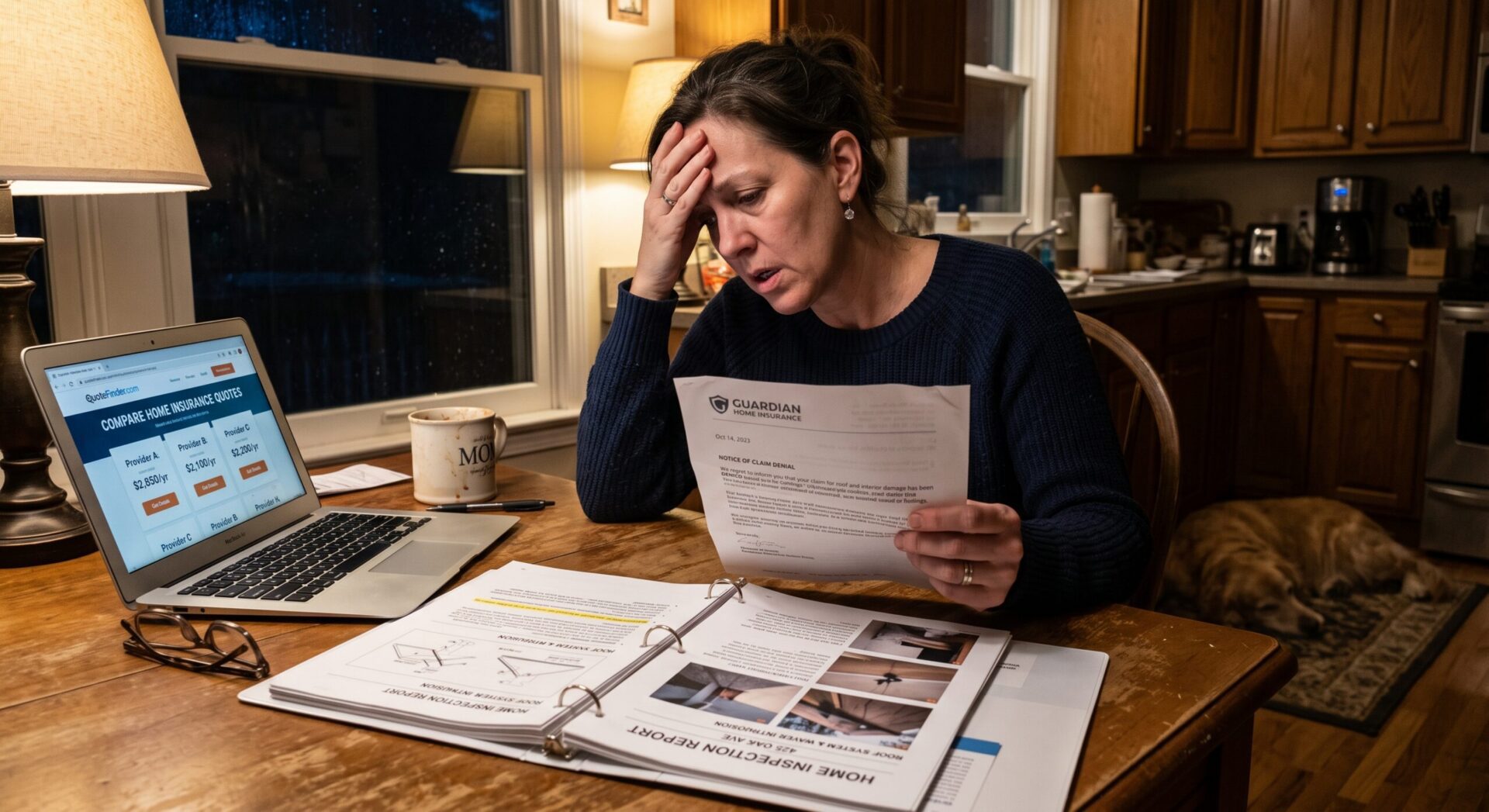
Insurance underwriters care deeply about product listings because listings represent safety verification. If you have a panel that no longer carries a UL listing — or one that’s been flagged for safety issues — your insurer may deny coverage, decline to renew, or require replacement before they’ll write the policy.
This is increasingly common in DFW. As homes age and more insurers run electrical database checks during underwriting, unlisted panels are being flagged at renewal time. Homeowners are getting letters telling them they have 30 to 60 days to replace the panel or lose coverage. If you’ve received one of those letters, you’re not alone — and it’s a real problem worth solving before it becomes a crisis.
⚠️ Insurance Can Drop You Over an Unlisted Panel
Some Texas insurers have become very aggressive about panels with known safety records — particularly Federal Pacific Stab-Lok and certain Zinsco models. Even if your panel has been working without incident for decades, an insurer can deny renewal based on the panel brand alone. Replacement isn’t just a code issue — it may be a coverage issue too.
3. Home Sales and Inspections
Home inspectors in DFW are trained to flag panels with known listing issues. When a buyer’s inspector writes up “Federal Pacific Stab-Lok — no longer UL listed, recommend replacement” or “Zinsco panel — listing withdrawn,” that note lands in the inspection report — and it becomes a negotiating point, a contingency, or sometimes a deal-killer.
Some buyers will walk. Others will demand a credit or a replacement as a condition of closing. Either way, an unlisted panel complicates a sale. Getting ahead of it — before you list the home — is almost always the better financial move.
If you’re preparing to sell and want an honest look at what an inspector might flag, a residential electrical safety inspection can identify issues before they show up on a buyer’s report.
Which Panels Have Lost Their UL Listing?
This is the part most homeowners really want to know. There are three brands that come up most often in DFW homes — and all three have serious listing-related histories.
Federal Pacific Electric (Stab-Lok Panels)
Federal Pacific Electric panels, commonly called Stab-Lok panels after their proprietary breaker design, were installed in millions of American homes from the 1950s through the 1980s. Research and consumer reports raised significant concerns about these breakers failing to trip during overloads — meaning a breaker that should protect your home from a fire might simply not do its job.
The UL listing for these panels was ultimately withdrawn. Today, insurance companies routinely decline to cover homes with Stab-Lok panels, and home inspectors flag them in every report. If you have a Federal Pacific panel, replacement is the recognized resolution — there are no UL-listed replacement breakers available for these panels.
We’ve covered this in depth in our guide to Federal Pacific panel replacement costs in Fort Worth, including what the process actually costs when you account for all required code items.
Installed in DFW Homes
The era when Federal Pacific, Zinsco, and split-bus Sylvania panels were commonly installed in DFW homes — meaning many mid-century homes in Fort Worth, Arlington, and surrounding areas may still have these panels today.
Zinsco (and GTE-Sylvania Zinsco) Panels
Zinsco panels — and their close relative the GTE-Sylvania Zinsco — share similar problems. The aluminum bus bar in these panels is prone to corrosion, and the breaker connections can fail over time, sometimes allowing breakers to appear “on” while actually not providing protection. The listing for Zinsco panels has been withdrawn, and like Federal Pacific, no listed replacement breakers exist.
Our guide on Zinsco panel replacement in DFW walks through the specifics if you’ve confirmed you have one.
Certain Sylvania and Pushmatic Panels
Not all Sylvania panels are problematic — but certain models are. Some older Sylvania panels share components or lineage with the Zinsco design and carry similar concerns. If your panel has “Sylvania” on the door, it’s worth confirming which model you have. Our breakdown of which Sylvania panels are dangerous in Fort Worth covers this specifically.
⚠️ Split-Bus Panels Are a Separate Issue — But Often Misunderstood
You may have heard about “split-bus panels” and wondered if they’re the same as unlisted panels. Split-bus panels are a design format, not a brand — they have two sets of breakers rather than one main breaker controlling everything. They were common in the 1960s and 70s. Some split-bus panels are still listed. The concern is that they’re an older design that may no longer meet current code requirements, and their age alone raises questions. If you have a split-bus panel, it’s worth a professional evaluation to determine its current condition and listing status.
What About Panels That Are Still Listed?
Not every older panel has a listing problem. Brands like Square D, Eaton (formerly Cutler-Hammer), Siemens, and Leviton maintain active UL listings for their current residential panels. Replacement breakers for these brands are also listed, which matters if a breaker needs to be swapped out down the road.
When we do a panel replacement in the DFW area, we install new panels from these currently listed manufacturers. That’s not a brand preference — it’s a code and insurance requirement. The replacement panel needs to be listed to pass the permitted inspection.
If you’re curious about how current brands compare, our breakdown of Square D vs. Eaton panels for DFW homes covers the practical differences.
💡 How to Check If Your Panel Is Listed
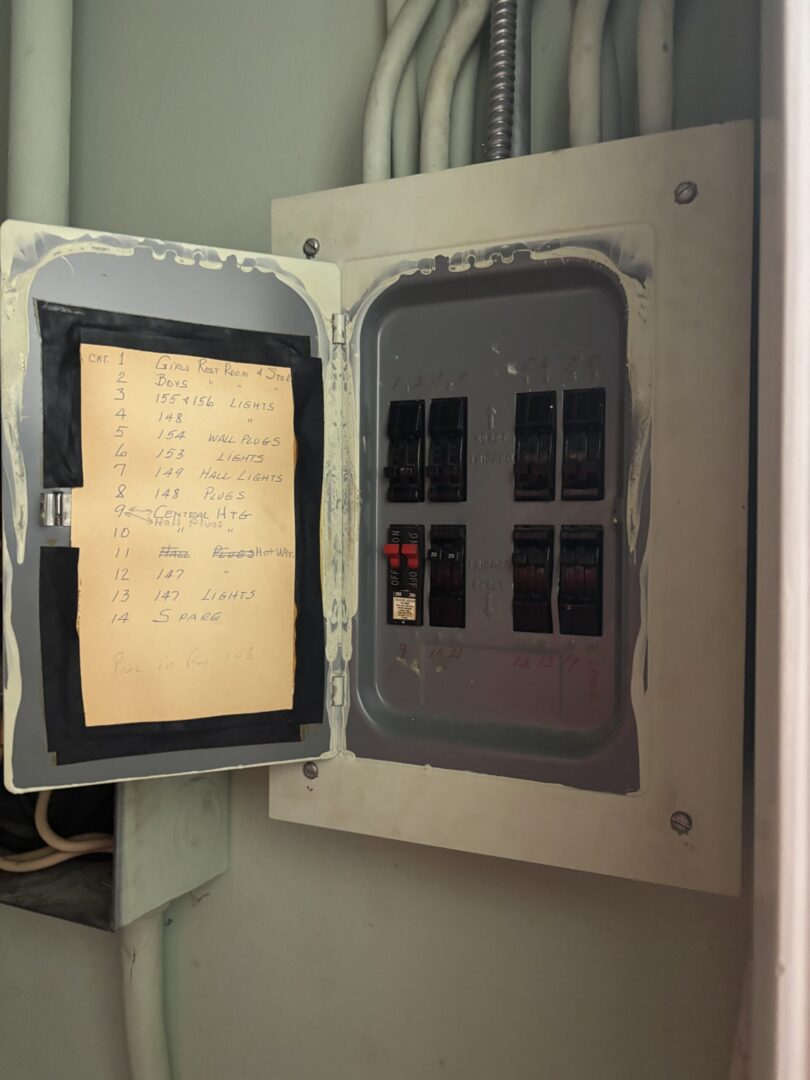
Open the panel door and look for the UL mark on the inside of the door or on the panel box itself. Also look for the brand name on the main breaker and the bus bar. If you see “Stab-Lok” anywhere on the breakers, that’s Federal Pacific. If you see the Zinsco name, that’s another red flag. If you’re not sure what you’re looking at, don’t dig around inside a live panel — that’s a job for a licensed electrician who can identify the equipment safely.
What Happens During a Panel Replacement in Texas?
If you have an unlisted panel and need it replaced, here’s what the process actually looks like in Texas — not the oversimplified version you might find online.
First, any panel replacement in Texas requires a permit. That permit triggers a city inspection, which means the installation has to meet current code requirements — not just install a new box. Those code requirements include:
- Outside emergency disconnect (NEC 230.85) — a disconnect located outside the home so first responders can cut power without entering
- Whole-home surge protection (NEC 230.67) — a Type 1 or Type 2 surge protective device installed at the panel
- AFCI breakers — arc fault circuit interrupters for bedrooms, living rooms, and other living spaces as required by current NEC
- Intersystem bonding termination — a grounding connection point for cable, phone, and similar systems
- Grounding system upgrades — if the existing grounding is inadequate, it has to be corrected
These aren’t upsells. They’re code requirements that apply to any permitted panel replacement in Texas — and they’re why honest DFW contractors quote panel replacements in the $4,000–$8,000 range, not the $1,500–$2,500 figures you see quoted on national websites that don’t account for Texas-specific requirements.
That range accounts for the panel itself, the required code items, labor, and permit fees. If a quote comes in significantly below that, it’s worth asking specifically which code items are and aren’t included — because they’ll either need to be done as part of the job or flagged by the inspector after the fact.
You can learn more about what permitted electrical work actually requires in our guide to electrical permits in Texas.
✅ The Good News
Once you replace an unlisted panel with a currently listed panel installed to current code, the issue is resolved — completely. Insurance companies accept the new panel, inspectors have nothing to flag, and the red flag disappears from future inspection reports. It’s a one-time fix with long-lasting benefits.
Does UL Listing Apply to Other Electrical Products Too?
Yes — and this matters beyond just the panel. Outlets, breakers, wiring devices, EV chargers, surge protectors, light fixtures, generators, and more all have listing requirements under the NEC. When a homeowner buys a cheap breaker off Amazon or a no-name outlet at a flea market, there’s a real possibility it carries no legitimate listing at all — or carries a counterfeit UL mark.
Counterfeit electrical products are a genuine safety concern. UL has documented counterfeit marks on products including extension cords, surge protectors, and electrical panels. If you’re shopping for electrical components, buying from established suppliers — or having a licensed electrician source the materials — is the safest approach.
This also comes up with circuit breakers specifically. Circuit breakers must be listed for use in a specific panel — using a “compatible” breaker from a different manufacturer that hasn’t been tested in your panel doesn’t satisfy the listing requirement, even if it physically fits. That’s why breaker manufacturers publish compatibility lists, and why proper replacement matters.
⚠️ Watch Out for Counterfeit UL Marks
The UL mark is widely counterfeited on low-cost electrical products. Signs of a counterfeit include slightly off proportions in the UL circle, misspelled text, unusually low prices, and products from unfamiliar overseas brands with no verifiable testing documentation. UL maintains a searchable online database at ul.com where you can verify whether a specific product carries a genuine, current listing.
Signs Your Panel May Have a Listing Problem
Even if you’re not planning to sell your home anytime soon, it’s worth knowing whether your panel might have a listing issue. Here are the indicators to look for:
✅ Check Your Panel For These Red Flags:
- The brand name says “Federal Pacific Electric,” “FPE,” or the breakers are labeled “Stab-Lok”
- The brand name says “Zinsco” or “GTE-Sylvania Zinsco”
- The panel is a split-bus design (two rows of breakers with no single main breaker)
- The UL mark on the inside of the panel door is missing, worn, or illegible
- Your insurance carrier has sent a letter asking about your panel brand
- A previous home inspector flagged the panel in a report
- The panel is more than 30–40 years old and you don’t know the brand history
- Breakers feel hot to the touch, have burn marks, or have a burning smell around the panel
If any of those apply, it’s worth having a licensed electrician take a look. A qualified evaluation can tell you exactly what you’re dealing with — and whether replacement is genuinely needed or just being recommended out of caution. For more signs that something might be wrong, our guide on signs of home electrical problems covers the broader picture.
In North Texas, the combination of older housing stock in established neighborhoods like Wedgwood, Ridglea Hills, and Forest Hill — and the era in which many DFW homes were built — means Federal Pacific and Zinsco panels are more common here than homeowners might expect. If your home was built between 1960 and 1990 and you’ve never had the panel evaluated, it’s worth a look.
Frequently Asked Questions About UL Listings
Is a UL listing required by law?
Not directly by federal law — but the National Electrical Code, which most states (including Texas) adopt as their electrical standard, requires that electrical equipment be “listed” by a nationally recognized testing laboratory. Since building permits and inspections are enforced at the local level using the NEC as the standard, a UL listing (or equivalent from another NRTL like ETL or CSA) is effectively required for any electrical work that requires a permit in Texas. Unlisted equipment will fail a permitted inspection.
Can I keep using my panel if it’s no longer UL listed?
Legally, you’re not automatically forced to replace a panel the moment its listing is withdrawn — your home isn’t retroactively out of code the day a listing changes. But practically, the consequences stack up: insurance companies may drop or deny coverage, home inspectors will flag it in any sale, and any permitted work on the panel will require bringing it up to current standards. For Federal Pacific and Zinsco panels specifically, the safety concerns are well-documented enough that most electricians and inspectors strongly recommend replacement rather than continued use.
How do I know if my panel is UL listed?
Look for the UL mark on the inside of your panel door or on the panel enclosure itself. You can also search the product on UL’s online database at ul.com using the brand name and model number. If you’re unsure what you’re looking at inside the panel, don’t probe around — contact a licensed electrician who can identify the equipment safely and tell you its current listing status.
Are there any currently UL-listed replacement breakers for Federal Pacific panels?
No. There are aftermarket breakers marketed as compatible with Stab-Lok panels, but none carry a current UL listing for use in Federal Pacific panels. This is one of the key reasons replacement is the recommended resolution rather than a piecemeal breaker swap. A listed replacement panel — Square D, Eaton, Siemens — comes with listed breakers and satisfies the code requirement that the equipment as installed be listed.
Does a panel replacement in Texas really cost $4,000–$8,000?
Yes, in most cases. The range reflects real-world DFW pricing when you account for all the code requirements that must be satisfied on a permitted panel replacement: outside emergency disconnect, whole-home surge protection, AFCI breakers for applicable circuits, intersystem bonding, and grounding corrections if needed. National websites that quote $1,500–$2,500 are typically describing a bare panel swap without permit or without these required code items included. Getting a detailed quote that specifies what’s included — and what’s not — is the best way to compare accurately.
Can any electrician do a panel replacement, or does it need to be a licensed contractor?
In Texas, panel replacements require a licensed electrician and a permit. The job is inspected by the city after completion. Using an unlicensed person to do panel work means the permit can’t be properly pulled, the work won’t be inspected, and you’ll have no documentation that it was done to code — which creates problems when you eventually sell or file an insurance claim. Always verify that your electrician holds a current Texas Electrical License before work begins.
What’s the difference between UL listing and ETL listing?
Both UL and ETL (Intertek) are nationally recognized testing laboratories (NRTLs) recognized by OSHA. ETL listings are less common in residential products but are equally valid under the NEC. If you see an ETL mark instead of a UL mark, it doesn’t indicate a lesser product — it just means a different testing lab certified it. For most homeowners, the practical distinction matters very little; what matters is that the listing exists and is current.
How Epic Electrical Handles Panel Replacements in DFW
When a homeowner calls us because an inspector flagged their Federal Pacific panel, or their insurance company sent a letter, or they just noticed something that looked off — we don’t start by quoting them a replacement. We start by taking an honest look at what’s actually there.
Sometimes the concern is legitimate and replacement is the right call. Sometimes it’s a smaller issue — a breaker swap, a wiring correction — that resolves what’s flagged. We tell people what we actually find and give them options, not pressure. That’s the whole approach.
If replacement is what’s needed, we pull the permit, install a currently listed panel with all required code items, and handle the inspection. When we leave, the job is done, documented, and ready to hold up to any future scrutiny — from an inspector, an insurer, or a future buyer.
We serve Fort Worth, Arlington, Keller, Southlake, Colleyville, Grapevine, Lewisville, and surrounding DFW communities. If you’re in a mid-century home and haven’t had your panel looked at — or if you know you have one of the panels mentioned in this post — we’re glad to take a look and tell you exactly what you’re working with.
Call or Text: (682) 478-6088
Serving Fort Worth, Arlington, Keller, Southlake, Colleyville, Grapevine, Lewisville, and all of DFW