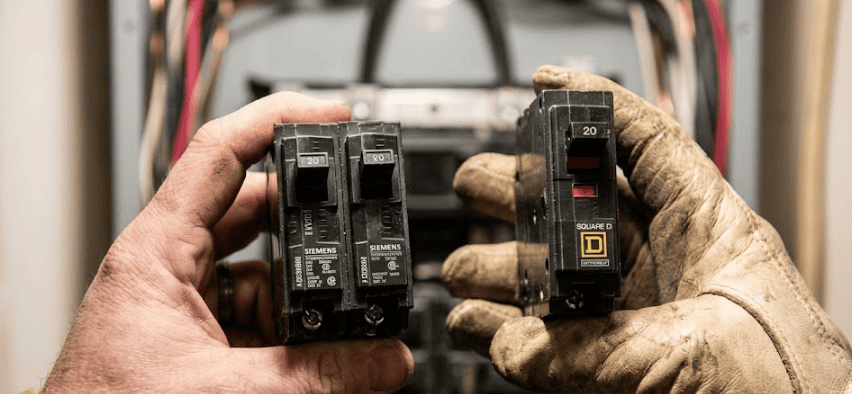
- Both brands are UL-listed and code-compliant — Siemens and Square D both meet NEC and UL 67 standards; neither is inherently unsafe when properly installed.
- Square D QO is the premium choice — bolt-on breakers, Visi-Trip indicators, and superior build quality justify the higher price for long-term investments; Siemens and Square D Homeline offer comparable value at a lower cost.
- The Homeline recall was limited — CPSC Recall #23-085 (Feb 2023) affected specific 1P AFCI breakers manufactured Feb 2022–Jan 2023, not the Homeline panel itself; the replacement program has resolved the issue.
- Installation quality matters more than brand — a licensed, TECL-certified electrician who pulls permits, sizes the panel correctly, and installs proper AFCI/GFCI breakers will determine the long-term safety of your system far more than which name is on the box.
- Trust Epic Electrical for honest panel advice and expert installation — 123+ five-star Google reviews, 50+ years of combined master electrician experience, and zero upsells — visit Epic Electrical to see why DFW homeowners keep coming back.
Siemens vs. Square D Breaker Panels: Which Is Better for Your DFW Home?
Both Siemens and Square D are reputable, UL-listed brands trusted by electricians nationwide. The real difference lies in build quality, price, and your specific needs: Square D QO offers premium bolt-on construction and durability, Siemens provides solid reliability at a competitive price, and Square D Homeline delivers budget-friendly performance. The quality of installation by a licensed electrician matters far more than the brand itself.
To help you make an informed decision, we’ve broken down the key differences in cost, safety, features, and what DFW electricians actually recommend.
Epic Electrical
Free Quote & Honest Diagnosis — No Upsells
Core Service Programs:
- Electrical Repairs, Wiring & Lighting for tripping breakers, faulty wiring, GFCI issues, and indoor/outdoor lighting
- EV Chargers, Generators & Panel Upgrades for Level 2 EV charging, whole-home generator installs, panel replacements, and surge protection
- Commercial, Warehouse & Industrial Electrical for restaurants, offices, industrial buildouts, LED retrofits, and dedicated circuits
Why Choose Epic Electrical:
- ✓ Trusted by customers with 123+ five-star Google reviews
- ✓ Father-and-son master electricians — a third-generation electrical family
- ✓ Serving North Richland Hills and the DFW Metroplex since 2009
- ✓ 50+ years of combined electrical experience on every job
- ✓ No upsells, no jargon, no pressure — we fix what’s actually broken
- ✓ Small repairs fixed same-visit; big jobs get a written quote with no hidden costs
- ✓ Texas-licensed electrical contractor (TECL #33192)
Understanding Breaker Panel Basics: Why This Matters for Your Home
Your electrical panel isn’t a commodity — it’s the central hub that distributes power to every circuit in your home. When it fails, everything fails. When it’s undersized, your appliances suffer. When it’s outdated, your insurance company takes notice.
In DFW, a significant portion of the housing stock was built between the 1970s and 2000s. That means a large number of homes have original panels that are now 25 to 50 years old — well past the point where a professional evaluation makes sense. Rapid growth in Tarrant and Collin Counties is also driving demand for panel upgrades as homeowners add EV chargers, solar systems, and home additions that older panels simply weren’t designed to handle.
A properly sized and installed panel does more than keep the lights on. It prevents electrical fires, protects your appliances from voltage fluctuations, ensures code compliance for insurance coverage, and gives you the capacity headroom to grow. According to the NFPA, electrical distribution and lighting equipment contribute to an estimated 34,000 home fires annually in the U.S., resulting in $1.5 billion in direct property damage. That’s not a scare tactic — it’s the reason panel choice and installation quality deserve serious attention.
If your home was built before 1990 and you’ve never had the panel professionally evaluated, now is a reasonable time to schedule that conversation — especially before summer, when DFW’s heat pushes electrical systems to their limits.
Siemens vs. Square D: Head-to-Head Comparison
Both Siemens and Square D manufacture UL 67-listed residential load centers that meet all current NEC code requirements. At the entry and mid-range price points, they’re genuinely competitive. Where they diverge is in build quality, breaker design, and cost — particularly once you factor in the AFCI and GFCI breakers that current code requires.
⚠️ Never Mix Breaker Brands or Product Lines
Using a Siemens breaker in a Square D panel, or a Homeline breaker in a QO panel, is a serious code violation that creates fire and shock hazards. Always verify breaker compatibility with your panel’s manufacturer before purchasing or installing.
Price Breakdown: Loadcenter, Breakers & Installation
The panel box itself is rarely the biggest cost driver. A 200A, 40-space loadcenter runs $150–$350 for both Siemens and Square D Homeline. Square D QO jumps to $300–$600+ due to its premium construction. Standard 15A/20A breakers are $5–$15 for Siemens and Homeline; QO standard breakers run $15–$30.
The real cost driver is AFCI and GFCI breakers, which current NEC code mandates for most circuits in a full panel replacement. Siemens and Homeline AFCI/GFCI breakers run $40–$80 each. QO AFCI/GFCI breakers are $70–$120+. For a fully loaded 200A panel with 20–30 circuits, breaker costs alone can reach $800–$2,500+. Add DFW labor rates of $90–$150 per hour, permit fees of $75–$300+ depending on your city, and potential service entrance upgrades, and the total project cost for a mid-range 200A upgrade typically lands between $2,500 and $6,500. You can use the panel upgrade calculator to get a rough estimate for your specific situation before calling anyone.
Safety & Reliability: Recent Recalls & Field Performance
Siemens has no CPSC recalls on residential panels or breakers in the last 10 years — a clean safety record that many DFW electricians cite when recommending the brand. Square D QO shares a similarly strong track record with no recent recalls and widespread praise for its robust construction.
Square D Homeline had a notable recall: CPSC Recall #23-085 (February 2023) covered approximately 1.4 million 1P AFCI breakers manufactured between February 2022 and January 2023 due to a failure-to-trip hazard. Schneider Electric ran a replacement program that addressed the issue. The recall was specific to those breaker batches — not the Homeline panel itself — and Homeline panels remain UL listed and safe when installed with compatible, non-recalled breakers. If you have a Homeline panel, it’s worth checking whether any AFCI breakers fall within that manufacturing window. Our circuit breaker recall list covers this and other safety alerts in detail.
Both brands carry 10-year limited warranties covering defects in materials and workmanship. Neither warranty covers labor costs for removal or reinstallation — that falls on the contractor’s workmanship warranty.
Build Quality & Installer Preference
Square D QO uses a bolt-on breaker connection — the breaker physically bolts to the bus bar rather than simply snapping in. This makes it more secure, less prone to loose connections over time, and easier to identify a tripped breaker thanks to the Visi-Trip red indicator. It’s the reason many DFW electricians reach for QO when a homeowner wants the best long-term investment.
Siemens and Homeline use plug-in connections — standard, reliable, and widely trusted when properly seated. The difference isn’t dramatic for most residential applications, but for a panel that’s going to be in your home for 30+ years, the bolt-on design has a real advantage. For new panel installations, the choice between these product lines is one of the first conversations we have with homeowners.
| Feature | Siemens (PL/ES/S2) | Square D Homeline | Square D QO |
|---|---|---|---|
| 200A Loadcenter Price | $150–$350 | $150–$350 | $300–$600+ |
| Standard Breaker (15A/20A) | $5–$15 | $5–$15 | $15–$30 |
| AFCI/GFCI Breaker | $40–$80 | $40–$80 | $70–$120+ |
| UL Listing | UL 67 Listed | UL 67 Listed | UL 67 Listed |
| CPSC Recall (last 10 yrs) | None | Specific AFCI breakers (2022–2023) | None |
| Breaker Connection Type | Plug-in | Plug-in | Bolt-on |
| Visi-Trip Indicator | No | No | Yes |
| Warranty | 10-year limited | 10-year limited | 10-year limited |
| DFW Availability | Excellent | Excellent | Excellent |
| Best For | Quality + value balance | Budget-conscious installs | Premium, long-term investment |
DFW-Specific Factors: Why Panel Choice Matters in North Texas
The DFW metro is projected to reach approximately 8.6 million residents by 2026, with Tarrant and Collin Counties among the fastest-growing in the nation. That growth means more new construction, more remodels, and more homeowners discovering that their 1980s panel wasn’t built for a 2026 electrical load.
DFW summers are brutal on electrical systems. When HVAC units run at full capacity from June through September, older or undersized panels face real thermal stress — especially if the panel is located in an unconditioned garage or attic. This is one of the most common triggers for emergency panel calls we see every summer.
EV charger adoption is accelerating across North Texas. Installing a Level 2 charger requires a dedicated 240V circuit drawing 40–60 amps — and many older homes with 100-amp service simply don’t have the headroom. Industry estimates suggest 25–50% of homes require a panel upgrade before an EV charger can be safely installed. If that’s your situation, our EV charger installation page walks through what’s typically involved.
Oncor, the primary utility serving most of DFW, has specific requirements for service entrance equipment, meter bases, and disconnect procedures during panel work. These aren’t suggestions — they’re mandatory steps that licensed electricians coordinate directly with Oncor. Permit requirements also vary by city: Fort Worth, Arlington, North Richland Hills, Keller, and other DFW municipalities each have their own building departments, fees ($75–$300+), and inspection schedules. A contractor who works across multiple DFW cities needs to know each jurisdiction’s process cold.
The skilled electrician shortage in DFW is real. Over 5,000 active TECL-licensed contractors operate in the metro, but demand consistently outpaces supply — particularly for complex panel work. Non-emergency upgrades scheduled in the fall or early spring typically see better availability and more predictable timelines than summer emergency calls.
Cost of Delaying a Panel Replacement: What You Need to Know
A panel that’s 40+ years old isn’t automatically dangerous — but it’s a candidate for a professional evaluation, not continued assumption that everything is fine. The NFPA data is clear: electrical system failures cause an estimated 34,000 home fires annually. Aging panels, undersized service, and overloaded circuits are contributing factors that don’t announce themselves before something goes wrong.
✅ Aging Panels Are a Real Safety Concern — You’re Not Overreacting
If your home’s electrical panel is 40+ years old, you’re right to be concerned. Older panels face higher fire risk, may be undersized for modern loads, and can lead to insurance denial if an electrical incident occurs. A professional evaluation is a smart investment in your family’s safety.
Beyond fire risk, there are practical financial consequences to delaying necessary panel work. Homeowners with identified hazardous or outdated panels may face higher insurance premiums or difficulty renewing coverage after an electrical incident. Inconsistent power from an overloaded panel damages sensitive electronics and appliances — costs that add up quietly over time. And if you’re planning to add an EV charger, solar system, or a home addition, an undersized panel becomes a hard stop, not a soft inconvenience.
Emergency panel work during peak summer months or after a severe storm almost always costs more and takes longer. Scheduling a panel evaluation proactively — before the system forces your hand — is almost always the smarter financial decision. If you’re weighing financing options for a larger project, our residential project financing guide covers what’s available in the DFW market.
Licensing, Permits & Safety: What Texas Law Requires
In Texas, all electrical panel work must be performed by a TECL-licensed electrical contractor. This isn’t a technicality — it’s the law, and it exists because panel work done incorrectly can kill people. An unlicensed handyman cannot legally perform this work, cannot pull permits, and cannot ensure the installation meets code. If something goes wrong with unlicensed work, your homeowner’s insurance will likely deny the claim.
💡 Verify Your Contractor’s License Before Hiring
Go to tdlr.texas.gov/LicenseSearch/, search for your contractor’s TECL license number, and confirm it shows “Active” status with no disciplinary actions. This 30-second check protects you from unlicensed work that could void your insurance and create significant liability.
A valid TECL requires the contractor to employ a Master Electrician as the Master of Record and comply with the currently adopted NEC code. Texas operates under NEC 2020, with NEC 2023 adoption anticipated. Under NEC 2020, AFCI protection is required for most 120V branch circuits in living areas, and GFCI protection is mandated for wet locations — bathrooms, kitchens, garages, outdoors, and more. A full panel replacement triggers these requirements across all new circuits, which is why AFCI/GFCI breakers are such a significant cost factor.
Permits are mandatory for panel replacements in every DFW municipality. They exist to ensure inspections happen and code compliance is verified by a third party. Unpermitted work can void your insurance, create liability when you sell the home, and in some cases require the work to be completely redone at your expense. A legitimate contractor will always pull the permit in their company’s name — if a contractor suggests skipping the permit to save money, walk away. For more on what’s involved in residential panel replacement, we’ve put together a detailed overview of the full process.
Contractors must also carry minimum general liability insurance — $300,000 per occurrence, $600,000 aggregate — to protect you against property damage or injury resulting from their work. Always ask for proof of insurance before any work begins.
What DFW Electricians Actually Recommend (And Why)
Ask a licensed DFW electrician which panel they prefer, and you’ll get a range of answers — but the reasoning behind those answers is remarkably consistent. Square D QO is the top recommendation when a homeowner wants the best long-term investment. The bolt-on breaker connection, Visi-Trip indicator, and overall build quality justify the premium price for a panel that’s going to be in your home for decades. For electricians who do a lot of high-end residential work, QO is the default.
Siemens is a strong alternative that earns genuine respect in the trade. It’s reliable, widely available at DFW supply houses and retailers, and trusted by many contractors for standard residential installations. If your budget is a real constraint but you still want a quality panel from a reputable manufacturer, Siemens is a legitimate choice — not a compromise.
Square D Homeline is popular with builders and budget-conscious homeowners. Despite the 2022–2023 AFCI breaker recall, electricians who understand the specifics of that recall — a limited batch of breakers, not the panel itself — continue to install Homeline with confidence. The key is using properly dated, non-recalled breakers and ensuring AFCI/GFCI compliance throughout.
The consistent message from experienced DFW electricians: the brand matters less than the electrician. Proper sizing, correct AFCI/GFCI breaker selection, code-compliant installation, and a pulled permit are what determine whether your panel is safe and reliable for the next 30 years. Always get 2–3 quotes from licensed contractors and compare the full scope of work — not just the bottom-line price. Our guide on when to call an electrician for breaker work can help you understand what’s actually involved before you start making calls.
Why Epic Electrical Is the Right Choice for DFW Homeowners
Epic Electrical has earned 123+ five-star Google reviews from DFW homeowners — not by being the cheapest option, but by being honest. When you call us about a panel issue, we diagnose what’s actually wrong. If a breaker replacement solves the problem, we’ll tell you. If a full panel upgrade is genuinely necessary, we’ll explain exactly why and walk you through your options — Siemens, Square D QO, Homeline, or another brand — based on your home’s specific needs and your budget.
Our father-and-son master electricians bring 50+ years of combined experience to every job. We’ve installed, repaired, and upgraded panels for three generations of families across the DFW metroplex, and we’ve seen what happens when panel work is done wrong. That’s why we pull every permit, follow every code requirement, and treat every installation — whether it’s a simple breaker swap or a full 200A upgrade — with the same attention to detail. You can read what our customers say on our testimonials page.
Licensed TECL #33192 since 2009, we operate across North Richland Hills, Fort Worth, Arlington, Keller, Colleyville, and the broader DFW area. No hidden costs. No upsells. No pressure. If there’s a cheaper fix, you’ll hear about it from us first.
Contact Epic Electrical today for a free estimate — honest advice, no surprises, and a clear answer about what your panel actually needs.
Frequently Asked Questions: Siemens vs. Square D Breaker Panels
Does the brand of breaker panel really matter more than the electrician who installs it?
The brand matters — you want a UL-listed panel from a reputable manufacturer like Siemens or Square D. But the electrician’s skill is what determines whether that panel is actually safe. A premium Square D QO panel installed incorrectly can be more dangerous than a standard Siemens panel installed perfectly to code by an experienced professional. Proper sizing, correct breaker selection, permit compliance, and quality workmanship are the real safety factors. Always prioritize hiring a qualified, TECL-licensed, and insured electrical contractor over chasing the lowest bid.
Are Square D Homeline panels safe, especially after that recall?
Yes — Square D Homeline panels themselves are UL listed and safe when properly installed with compatible breakers. The 2023 recall (CPSC #23-085) was specifically for 1P AFCI circuit breakers manufactured between February 2022 and January 2023, not the Homeline panel line as a whole. Schneider Electric ran a free replacement program that addressed the affected units. If you have a Homeline panel, check whether any AFCI breakers fall within that manufacturing window and contact Schneider Electric if they do. The panel itself is not the issue.
Can I use Siemens breakers in a Square D panel, or vice versa?
Absolutely not. Using breakers from one manufacturer in a panel not specifically listed for them — or mixing Square D QO and Homeline breakers in the same panel — is a serious NEC code violation (110.3(B), 110.14(B)). The breakers are physically different and designed for different bus bar configurations. Mixing them creates arcing, overheating, and a real fire hazard, while voiding your manufacturer warranty and potentially invalidating your homeowner’s insurance. A licensed electrician will never do this. If you’re concerned about what’s in your current panel, our circuit breaker repair and inspection service can identify any compatibility issues.
What should I do if my electrical panel was replaced without a permit?
Contact your city’s building department immediately to report the unpermitted work. They may require an inspection, and if the installation doesn’t meet code, it could be ordered to be corrected or fully redone — at your expense. Unpermitted electrical work is illegal in every DFW municipality, often unsafe, and can void your homeowner’s insurance coverage for any related claim. If the contractor who did the work holds a TECL license, you can also file a complaint with TDLR. Going forward, always confirm that your electrician pulls the required permit before any panel work begins.
Why should I choose Epic Electrical over other electrical contractors in DFW?
Epic Electrical brings 50+ years of combined master electrician experience, 123+ five-star Google reviews, and a straightforward commitment: honest diagnosis with no upsells, no hidden costs, and no pressure. We’re TECL licensed (#33192) since 2009, we pull all required permits, and we present your best options — whether that’s Siemens, Square D QO, Homeline, or something else — based on your home’s actual needs and your budget. We’re a father-and-son family business that treats every customer the way we’d want our own family treated. Get your free estimate from Epic Electrical today — no pressure, just honest expertise.
Ready to Get a Clear, Honest Answer About Your Breaker Panel?
Whether you’re comparing Siemens vs. Square D, dealing with a breaker that keeps tripping, or planning a full 200A upgrade, Epic Electrical gives you straight answers — no upsells, no pressure, no surprises. We’ll assess your panel, explain your options, and give you a written quote based on what your home actually needs.
Serving Fort Worth, Arlington, Keller, North Richland Hills, Colleyville, Southlake, Grapevine, and all of DFW.
Pricing, equipment specifications, and project scope mentioned in this article are accurate as of the date of publication and are subject to change. Code requirements and permit needs vary by municipality and property. Please contact us directly for a current quote on your specific home or business.