
Do I Need an Electrician to Replace a Circuit Breaker? Here’s How to Know For Sure
⚡ Key Takeaways
- One trip, one reset, no smell = probably fine — a breaker that trips once from overload and stays reset is just doing its job.
- Won’t reset? Stop trying — if the breaker trips immediately upon reset, you have a hard fault. Repeated resets damage the breaker and increase fire risk.
- 7 symptoms always require a licensed electrician — burning smell, hot breaker, burnt terminals, won’t stay reset, flickering lights, multiple breakers tripping, or a breaker 25+ years old.
- Texas law allows DIY — but DFW cities require permits anyway — Fort Worth, Arlington, and Keller all require permits and inspections even if you do the work yourself.
- FPE and Zinsco panels change everything — if your panel is one of these brands, do not attempt any breaker work. These have documented fire risks that no single breaker swap can fix.
- Most breaker repairs in DFW cost $150–$300 — far less than the risks of unpermitted work, a failed home sale, or a denied insurance claim.
- The real issue is often not the breaker itself — a tripping breaker is a symptom. A licensed electrician diagnoses what it’s actually protecting you from.
You’re standing at the panel. The breaker tripped again. You reset it — and it trips right back. Or maybe it held this time, but this is the third time this month. Now you’re wondering: is this serious? Is the whole panel shot? Or is this a simple fix you’re overthinking?
Nobody wants to call an electrician and walk away with a $3,000 estimate when they really just needed a $150 repair. That fear of being upsold is completely legitimate — and it’s exactly why so many homeowners end up Googling at midnight, trying to figure out if they can just handle this themselves.
We get this question all the time at Epic Electrical. So here’s the honest answer — no jargon, no pressure, no worst-case-scenario upselling. Just a straight explanation of what your breaker is telling you, when you genuinely need a pro, and what it actually costs in the Fort Worth and DFW area.
💡 Real Story From Our Work
A homeowner’s AC stopped working. Another electrician told them the whole panel needed to be replaced — a $3,000+ job. They called us for a second opinion. We diagnosed the real issue: a single burnt breaker connection. We replaced it, corrected a few small panel issues while we were there, and had the AC running within the hour. Total cost: a fraction of what they were quoted. That’s what honest diagnosis looks like.
First — What Is Your Breaker Actually Telling You?
Here’s the thing most people miss: a breaker that trips is not broken. It’s working exactly as designed. Circuit breakers are precision safety devices — they exist to interrupt the flow of electricity before heat can build up and ignite the wiring inside your walls.
So when your breaker trips, it’s not the problem. It’s the message. The real question is: what is it protecting you from?
The 4 Reasons a Breaker Trips
1. Overloaded circuit — This is by far the most common cause, and often the most harmless. It happens when too many appliances are pulling power from the same circuit at once. Running a space heater, a hair dryer, and a microwave on the same 15-amp circuit at the same time? The breaker trips because the combined load exceeds what the wiring can safely carry. This is the breaker doing its job perfectly.
2. Short circuit — This is more serious. A short circuit happens when a hot (live) wire makes direct contact with a neutral wire, bypassing the load entirely and causing an immediate, massive spike in current. You’ll usually hear a loud pop, smell something like ozone or burning plastic, and the breaker will trip instantly. A breaker that trips with this kind of force and immediately re-trips when reset almost always indicates a short circuit.
3. Ground fault — Similar to a short, but the hot wire contacts a grounding pathway — the bare copper ground wire, a metal outlet box, or a metal appliance casing. Ground faults can be quiet and deceptive. They can cause a breaker to trip without any obvious sign of burning. In wet areas like kitchens, bathrooms, or garages, ground faults carry a real electrocution risk.
4. A failing breaker — Breakers do wear out. They’re rated for a finite number of trip cycles, and DFW’s extreme heat accelerates that degradation. A breaker that trips under loads it should be able to handle, that won’t hold after reset, or that feels warm to the touch when it shouldn’t, may have reached the end of its service life.
⚠️ Stop Resetting It If This Happens
If your breaker trips immediately when you reset it — even with everything unplugged — stop. That’s called a hard fault. It means there’s a short circuit or ground fault somewhere in the wiring. Repeatedly resetting under these conditions degrades the breaker’s internal contacts and increases the risk of an arc flash event. Leave it off and call a licensed electrician.
Can You Reset It Yourself? Yes — Here’s When That’s Fine
Let’s give you credit where it’s due. Not every tripping breaker is an emergency. If your circuit overloaded because you had too much running at once, you can absolutely reset it yourself — here’s how to do it right.
Before you touch the panel, turn off and unplug everything connected to the affected circuit. Lights off, appliances unplugged. Then go to the panel and find the breaker that’s in the middle position — neither fully on nor fully off. Flip it firmly to the OFF position first, then flip it fully back to ON. That middle position is the tripped state, and a lot of people try to push it back to ON without going through OFF first — that won’t work.
If the breaker holds and doesn’t immediately trip again, you’re likely looking at a simple overload. Go back to the room and redistribute your load. Don’t run the space heater and the hair dryer on the same circuit. If it holds for the rest of the day and doesn’t repeat, you’re probably fine.
💡 The One-Trip Rule
One trip, one clean reset, no burning smell, no repeat = most likely just an overloaded circuit. Redistribute your appliances and keep an eye on it. If it trips again within a few days — especially under normal load — that’s when you call an electrician.
When You Need to Call an Electrician — The 7 Warning Signs
There’s a big difference between a breaker that tripped once from overload and a breaker that’s telling you something is genuinely wrong. Here are the seven situations where you should stop troubleshooting and pick up the phone.
1. The breaker won’t stay reset. If it trips the moment you flip it back to ON — even with nothing running on that circuit — you have a hard fault somewhere in the wiring. This is not a “try it a few more times” situation. The breaker is protecting you from something dangerous downstream.
2. You smell burning from the panel. This is the one that should send you straight to the phone. A burning smell near your electrical panel means something is overheating — whether it’s a loose connection, a degraded breaker, or compromised wiring. Cut the power to that circuit, do not reset it, and call a licensed electrician before touching anything else.
3. The breaker feels hot to the touch. A slight warmth is normal under load. A breaker that’s genuinely hot — too hot to hold your hand on — indicates either a failing breaker or a loose terminal connection that’s building up dangerous resistance.
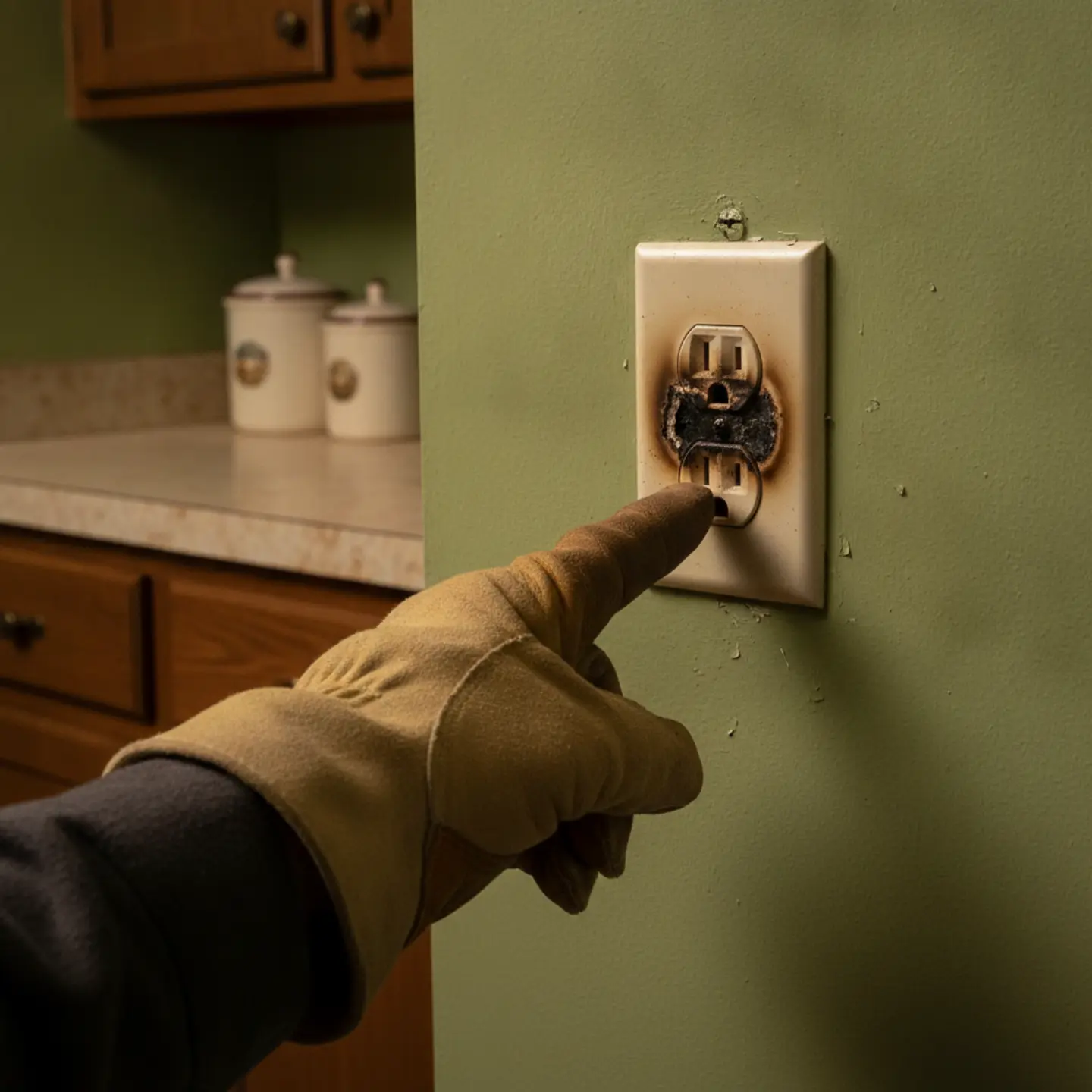
4. You see burnt or discolored wires or terminals. If you open the panel cover and see any blackening, scorch marks, or melted insulation near a breaker, that’s physical evidence of a thermal event. This goes beyond a breaker replacement — the underlying cause and any damaged components need to be addressed by a professional.
5. Multiple breakers are tripping at the same time. When more than one breaker trips together, the issue is rarely isolated to a single breaker. This can indicate a problem at the main service level, a failing main breaker, or significant wiring issues throughout the system.
6. Lights flicker even after a reset. Flickering lights, especially when appliances kick on, can signal a loose connection in the panel, a failing breaker, or deteriorating wiring. It’s easy to dismiss as a minor annoyance — but it’s often an early warning of a connection that’s arcing inside your wall.
7. The breaker is 25 or more years old and keeps failing. Breakers are engineered to last decades — but DFW’s extreme heat accelerates wear significantly. A breaker that’s been thermally stressed through hundreds of Texas summers may no longer trip reliably at its rated amperage, which is exactly the kind of failure that leads to electrical fires.
⚠️ Burning Smell = Stop Everything
Any burning smell from your electrical panel is an emergency. Don’t try to diagnose it yourself. Cut power to that circuit, unplug any devices on it, and call a licensed electrician before flipping it back on. A burning smell is often the last warning before a connection fails catastrophically.
Do I Actually Need an Electrician to Replace the Breaker? The Honest Answer
What Texas Law Actually Says
Texas is governed by the Texas Electrical Safety and Licensing Act, administered by the Texas Department of Licensing and Regulation (TDLR). The law is clear: any electrical work — including replacing circuit breakers — requires a licensed electrician.
There is a “Homeowner Exemption” in the law, and yes, it technically allows you to perform electrical work on your own primary residence. But before you grab a screwdriver, here’s what the exemption actually means in the DFW area.
The exemption only applies if you own the home and live in it as your primary residence. It does not apply to rental properties, investment properties, or homes you’re flipping. You must perform the work yourself — you cannot hire an unlicensed handyman and use the exemption as cover. And critically — this is the part most people miss — the exemption does not override local municipal ordinances.
📋 DFW Municipal Permit Requirements
Even if the state exemption technically applies to you, Fort Worth, Arlington, and Keller all require a permit and inspection for breaker work — regardless of who does it. Fort Worth requires a sworn Homestead Affidavit and a formal permit application. Arlington charges a $100 base permit fee and a $200 reinspection fee if your work fails. Keller requires a notarized Owner Affidavit and mandates inspection scheduling before 7 a.m. the day of. The standard you’re held to is identical to what a licensed electrician would face.
Why “Just Swapping the Breaker” Is More Complicated Than It Sounds
Even setting aside the legal requirements, the actual technical execution of a breaker replacement has gotten significantly more complex. The 2023 National Electrical Code — now adopted in DFW — includes requirements most homeowners have never heard of.
One of the biggest is torque specification compliance. Every terminal connection in an electrical panel must now be tightened to a precise calibrated value using a torque screwdriver — not your gut feel, not “tight enough.” Under-torqued connections loosen over time under thermal stress, creating resistance that generates heat, which leads to arcing and fires. The professional-grade insulated torque tools required to meet this standard cost $100–$300. Most DIYers don’t own one.
Then there’s the compatibility issue. Not all breakers fit all panels. In fact, installing a breaker from a different brand — even one that physically fits — is a code violation that voids your panel’s UL safety certification. Mismatched breakers can create fretting corrosion and arcing at the bus bar connection that isn’t visible from the outside.
Finally, if your home was built before the early 2000s, it likely has older wiring configurations — including shared neutral conductors on multi-wire branch circuits. When modern AFCI or GFCI breakers are installed on these circuits, they trip immediately because of how they monitor current. Correcting that requires advanced diagnostics and rewiring inside the panel — well beyond a standard breaker swap.
The Scale of Electrical Fire Risk
U.S. home fires caused by electrical failure or malfunction annually — resulting in 390 deaths, 1,330 injuries, and $1.5 billion in property damage. Electrical distribution equipment (panels, wiring, breakers) is the single leading cause of electrical fire property damage. (Source: NFPA)
Does Your Home Have a Federal Pacific or Zinsco Panel? Read This First.
If your home was built between 1950 and 1985, there’s a meaningful chance it contains one of two panel brands that the electrical safety industry has unanimously condemned: Federal Pacific Electric (FPE) and Zinsco. These panels are still present in thousands of DFW homes — particularly in older neighborhoods across Fort Worth, Arlington, and inner-ring suburbs — and they require a completely different conversation.
Federal Pacific Electric “Stab-Lok” panels have a documented design flaw: their breakers fail to trip during overcurrent events at an alarming rate. Peer-reviewed research published by the IEEE found that these breakers fail to trip during severe short circuits or sustained overloads up to 60–65% of the time. They are estimated to be responsible for approximately 2,800 residential fires, 13 fatalities, and $40 million in property damage annually across the United States. Some breakers in these panels remain energized even when the handle is switched to “OFF.”
Zinsco panels present a different but equally serious hazard. Their aluminum bus bars are highly susceptible to corrosion at the connection points where the breaker clips on. As corrosion builds, so does electrical resistance — and heat. In many cases, this heat melts the plastic breaker casing, physically fusing the breaker to the bus bar. A homeowner attempting to remove a Zinsco breaker will often find it immovable. Forcing it can snap the brittle bus bar and expose live 240-volt components.
Homes built in Fort Worth, Arlington, and surrounding DFW suburbs between 1955 and 1985 are particularly likely to contain these panels. If you purchased your home without a pre-purchase electrical inspection, it’s worth knowing what brand is in your wall before any electrical work is attempted.
⚠️ Don’t Replace a Single Breaker in These Panels
If your panel says Federal Pacific Electric, Stab-Lok, Zinsco, or GTE-Sylvania — do not attempt any breaker work. Replacing a single breaker does not address the system-level hazard. The only safe and ethical remediation for these panels is a complete panel replacement by a licensed electrician. Reputable electrical contractors will not install individual replacement breakers in these panels for this reason.
What Does a Licensed Electrician Actually Do When Your Breaker Trips?
A good electrician doesn’t walk in, pull the breaker, and hand you a bill. The breaker isn’t the diagnosis — it’s the starting point. Here’s what professional diagnosis actually looks like.
The first step is a load analysis. Using a digital clamp meter, an electrician measures the exact current draw on the circuit in real time. This tells them immediately whether the circuit is genuinely overloaded, or whether the breaker is tripping under loads it should be able to handle — which points to a failing breaker or a wiring issue.
If there’s any suspicion of a fault within the in-wall wiring, a qualified electrician will use insulation resistance testing — a tool that a standard multimeter cannot replicate. This test identifies compromised wire insulation caused by rodent damage, water intrusion, or age-related degradation, buried deep inside your walls where no visual inspection can reach.
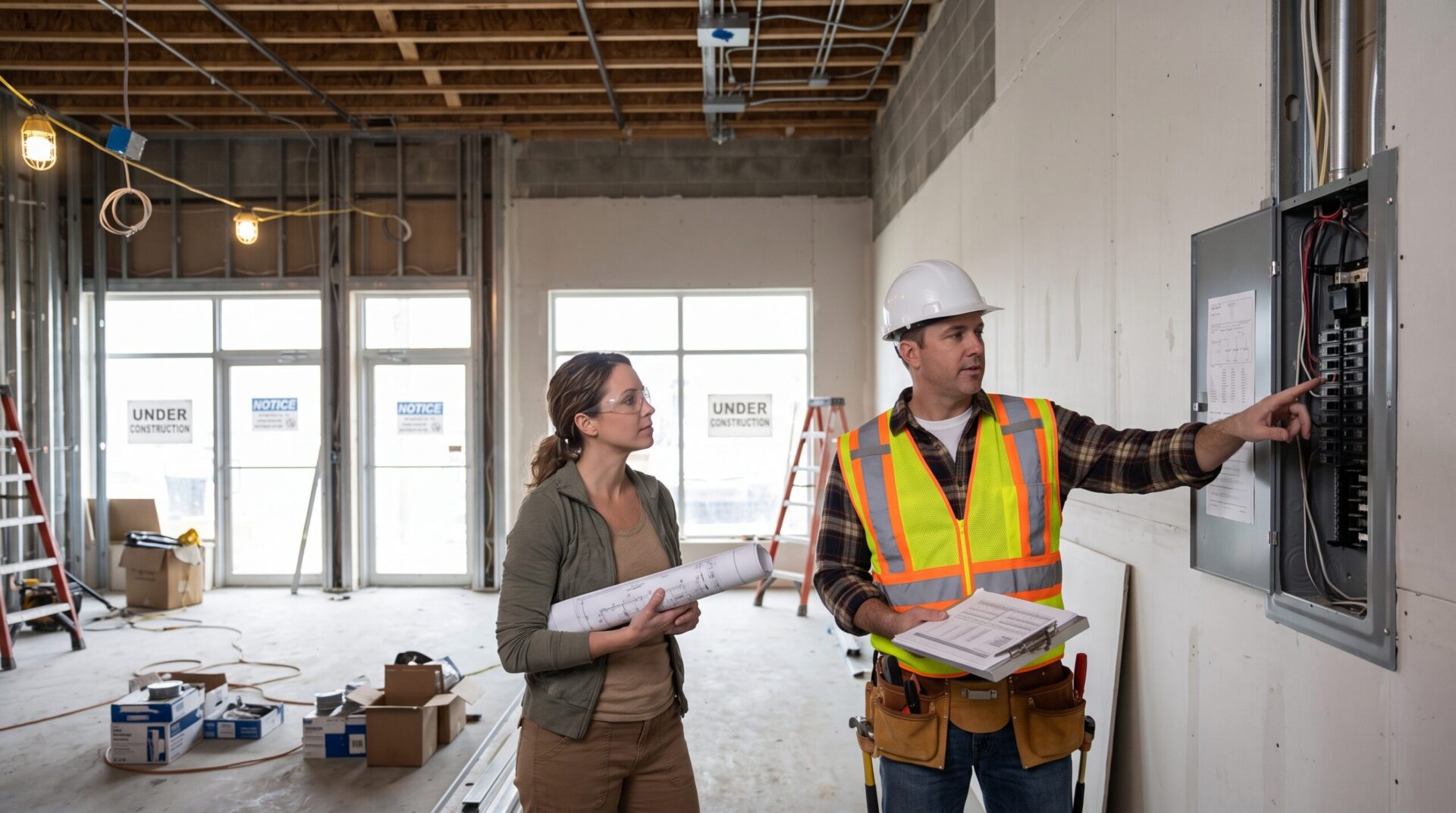
They’ll also perform a visual inspection of the panel itself — checking for double-tapped breakers (two wires sharing a terminal designed for one), signs of heat damage at the terminals, loose connections, and overall panel condition. Often, what brings an electrician in for a tripping breaker results in the discovery of a separate issue — a loose connection, a code violation, or an aging component — that would have caused a problem on its own timeline.
When that diagnostic work is done, you’ll get a clear explanation of what was found and a transparent quote for what actually needs to be repaired. No worst-case guesses. No unnecessary upgrade recommendations. Just what needs to be fixed — and what doesn’t.
What to Do Right Now If Your Breaker Keeps Tripping
1. Try one clean reset after unplugging everything on the circuit. If it holds, redistribute your load and monitor it.
2. If it trips again — especially under normal load — stop resetting and call a licensed electrician.
3. If you smell burning, see discoloration, or the breaker feels hot: don’t reset it. Call immediately.
4. If you don’t know what brand your panel is, have an electrician identify it before doing anything else.
How Much Does It Cost to Replace a Circuit Breaker in DFW?
Here’s what you can realistically expect to pay for breaker-related work in the Fort Worth and Arlington market in 2025. These are real-world ranges — not best-case minimums or worst-case scare figures.
| Service | Estimated Cost (DFW) | Typical Timeline |
|---|---|---|
| Diagnostic service call | $75–$125 | 30–60 minutes |
| Single breaker replacement (standard) | $150–$300 | 1–2 hours |
| AFCI or GFCI breaker upgrade | $200–$350 | 1–2 hours |
| Main breaker replacement | $400–$2,000 | 2–4 hours |
| Full panel replacement (if required) | $1,500–$4,500+ | Half to full day |
In the Fort Worth and Arlington market, most single-breaker replacements by a licensed electrician run $150–$300 all-in — including the diagnostic, parts, and labor. To put that in perspective: that’s less than Arlington’s $200 reinspection fee if your DIY attempt fails a permit inspection. And it’s dramatically less than the cost of unpermitted work discovered during a home sale.
💡 Got a Scary Estimate? Get a Second Opinion.
If another electrician told you that you need a full panel replacement, it’s worth getting a second opinion before signing anything. Sometimes a panel replacement is the right call — but sometimes the real fix is a targeted repair at a fraction of the cost. We’ll give you an honest diagnosis either way and explain exactly what we found and why we’re recommending what we are.
What Happens If You Skip the Permit?
This section isn’t meant to scare you — it’s meant to protect you. Because the financial risk of unpermitted electrical work in Texas is real, and most homeowners don’t find out about it until the worst possible moment.
Under Section 5.008 of the Texas Property Code, sellers of residential properties are legally required to complete a Seller’s Disclosure Notice (TREC Form OP-H). This document requires you to disclose any known alterations, repairs, or modifications made without the required permits or not in compliance with building codes. Electrical work is explicitly covered.
In a competitive DFW real estate market, checking “yes” to unpermitted electrical work can trigger buyers to demand substantial price reductions, require you to fund a full remediation by a licensed electrician before closing, or simply walk away from the deal entirely.
The insurance angle is equally serious. Following any residential electrical fire, insurance carriers send forensic investigators. If the fire’s origin is traced to the panel and investigators find evidence of unpermitted work — wrong breaker brand, under-torqued connections, bypassed AFCI protection — the claim can be denied entirely. The homeowner is left to bear the total cost of the structure and its contents.
⚠️ Texas Disclosure Law Is Not Optional
Texas law requires you to disclose unpermitted electrical work when selling your home. If you don’t disclose it and a subsequent electrical failure or fire occurs after closing, you can be sued for fraudulent concealment or negligent misrepresentation. The legal exposure goes far beyond the cost of the original repair.
Insurance Risk: FPE Panels
Rate at which Federal Pacific Electric Stab-Lok breakers fail to trip during severe short circuits, according to IEEE research. Insurance carriers are increasingly refusing coverage or canceling policies on Texas homes with these panels until they are fully replaced by a licensed professional.
Frequently Asked Questions
Can I replace a circuit breaker myself in Texas?
Technically, Texas’s Homeowner Exemption allows you to perform electrical work on your own primary residence. However, the majority of DFW cities — including Fort Worth, Arlington, and Keller — still require a permit and inspection for panel work, regardless of who performs it. You’ll need to submit an affidavit, pull a permit, and pass the same inspection standard as a licensed electrician. For most homeowners, hiring a licensed electrician is more cost-effective when you factor in permit fees, required tools, and the risk of a failed inspection.
How do I know if my breaker is bad or if it’s a wiring problem?
A bad breaker typically trips under normal loads it should be able to handle, won’t hold after a reset, feels warm when it shouldn’t, or won’t switch cleanly to either ON or OFF. A wiring problem is indicated by a breaker that trips immediately upon reset (even with nothing plugged in), burning smells from the panel, multiple breakers tripping together, or flickering lights throughout the home. Distinguishing between the two requires professional diagnostic equipment — a visual inspection alone isn’t sufficient.
How long does it take an electrician to replace a circuit breaker?
A straightforward single-breaker replacement typically takes one to two hours, including the diagnostic work beforehand. If the electrician discovers additional issues — like a damaged connection, a shared neutral conflict, or a code upgrade requirement — the job may take longer. At Epic Electrical, we diagnose before we quote, so you know what you’re getting into before work begins.
What does it mean when a breaker won’t reset?
A breaker that won’t stay in the ON position after resetting — especially if it trips immediately — indicates a hard fault: a short circuit or ground fault somewhere in the wiring. The breaker is actively protecting your home from something downstream. Stop resetting it, leave it in the OFF position, and call a licensed electrician. Repeated forced resets degrade the breaker’s internal contacts and can make the underlying problem worse.
Should I replace a breaker or the whole panel?
That depends entirely on the diagnosis. If the issue is a single worn-out breaker in an otherwise sound panel, a breaker replacement is likely all you need. If the panel itself is damaged, undersized for your home’s current load, outdated (FPE, Zinsco), or lacks space for modern AFCI/GFCI requirements, a full panel replacement may be the right call. We don’t recommend panel replacements unless the diagnosis actually supports it — and we’ll walk you through exactly why if it does.
Is it safe to keep resetting a tripping breaker?
It depends on why it’s tripping. If it was a one-time overload and the breaker holds after a clean reset, that’s fine. If it’s tripping repeatedly — especially if it trips immediately or under normal load — repeated resets are not safe. Each forced reset under fault conditions degrades the breaker’s internal mechanism and increases the risk of an arc flash or fire. If in doubt, leave it off and call an electrician.
The Bottom Line — Here’s What We Recommend
Most breaker problems are simpler and less expensive than you fear. And the goal of this post isn’t to scare you into calling an electrician for every tripped breaker. It’s to give you the information to make a smart call.
If it tripped once, you reset it cleanly, there’s no smell, and it hasn’t repeated — monitor it, redistribute your load, and move on. If it keeps tripping, won’t reset, smells burnt, or shows any of the warning signs above — call a licensed electrician. Don’t keep forcing resets, don’t attempt the swap yourself without understanding the permit requirements and technical standards, and don’t ignore it hoping it resolves on its own.
And if you don’t know what brand your panel is — especially if your home was built before 1985 — get that identified before anything else. It changes what options are actually on the table.
At Epic Electrical, we diagnose the real issue first. We explain what we found in plain English. We repair what needs repairing and quote larger work transparently if it’s needed. We don’t recommend a full panel replacement when a breaker swap will do — and we don’t recommend a breaker swap when the problem is actually the wiring. Everything works as it should when we’re done.
We serve Fort Worth, Arlington, Keller, Southlake, Colleyville, Grapevine, Lewisville, and surrounding DFW communities. Same-day service available for urgent electrical issues.
✅ Quick Decision Checklist:
- Tripped once, reset cleanly, no repeat, no smell → Monitor it, you’re likely fine
- Trips immediately upon reset → Stop. Call an electrician today.
- Burning smell from panel → Emergency. Cut that circuit, call now.
- Hot breaker, burnt terminals, or visible scorch marks → Call before resetting.
- Multiple breakers tripping → System-level issue. Needs professional diagnosis.
- FPE or Zinsco panel → Call before doing anything. This is a different conversation.
- Home built before 1985, don’t know your panel brand → Find out before any electrical work.
Call or Text: (682) 478-6088
Serving Fort Worth, Arlington, Keller, Southlake, Colleyville, Grapevine, Lewisville, and all of DFW