- Kitchen upgrade costs vary widely — A DFW kitchen electrical upgrade ranges from $1,000 for minor GFCI work to $20,000+ for full rewiring and panel replacement, depending on your home’s age, panel capacity, and project scope.
- Permits are non-negotiable — Every significant kitchen electrical modification in DFW municipalities (Fort Worth, North Richland Hills, Arlington, Plano) requires a permit and inspection; any contractor who says otherwise is breaking the law.
- Texas requires a TECL license — All electrical contracting work in Texas must be performed by a TDLR-licensed contractor; verify any electrician’s TECL number at tdlr.texas.gov before signing a contract.
- Hidden costs add up fast — Budget a 10–20% contingency on top of your quote to cover permit fees, drywall repair, panel upgrades triggered by code compliance, and specialty device hardware.
- Trust Epic Electrical for licensed, transparent kitchen electrical work with no upsells and 123+ five-star reviews — visit Epic Electrical to see why DFW homeowners have relied on this father-and-son team since 2009.
How Much Does a Kitchen Electrical Upgrade Cost in DFW, and What Code Requirements Must You Meet?
A kitchen electrical upgrade in the Dallas-Fort Worth area typically costs between $3,000 and $20,000+, depending on scope—from adding GFCI outlets to a full panel upgrade. The exact price depends on your home’s age, existing panel capacity, wiring condition, and local permit requirements. Every project must comply with the 2023 National Electrical Code (NEC) and your specific city’s local amendments, which is why hiring a licensed TECL contractor and pulling permits isn’t optional—it’s essential for safety, code compliance, and protecting your home’s value.
Understanding the cost drivers, regulatory landscape, and what separates legitimate contractors from risky ones will help you budget accurately and avoid costly mistakes.
Epic Electrical
Free Quote & Honest Diagnosis — No Upsells
Core Service Programs:
- Electrical Repairs, Wiring & Lighting for tripping breakers, faulty wiring, GFCI issues, and indoor/outdoor lighting
- EV Chargers, Generators & Panel Upgrades for Level 2 EV charging, whole-home generator installs, panel replacements, and surge protection
- Commercial, Warehouse & Industrial Electrical for restaurants, offices, industrial buildouts, LED retrofits, and dedicated circuits
Why Choose Epic Electrical:
- ✓ Trusted by customers with 123+ five-star Google reviews
- ✓ Father-and-son master electricians — a third-generation electrical family
- ✓ Serving North Richland Hills and the DFW Metroplex since 2009
- ✓ 50+ years of combined electrical experience on every job
- ✓ No upsells, no jargon, no pressure — we fix what’s actually broken
- ✓ Small repairs fixed same-visit; big jobs get a written quote with no hidden costs
- ✓ Texas-licensed electrical contractor (TECL #33192)
DFW Market Context: Why Kitchen Electrical Upgrades Are in High Demand Right Now
The Dallas-Fort Worth metro added over 120,000 residents between July 2024 and July 2025, pushing the total population to an estimated 8.48 million—second nationally in numeric growth behind only greater Houston. That growth puts constant pressure on the housing stock, and a large portion of that stock is aging. North Richland Hills saw significant development in the 1960s and 70s. Keller and Colleyville have established core neighborhoods built well before 1990. Homes from that era were wired for a different world—100-amp panels, no GFCI protection on countertop outlets, and wiring that was never designed to power induction cooktops, smart ovens, or multiple high-draw appliances running simultaneously.
In affluent DFW suburbs like Keller (median household income: $174,950) and Colleyville ($218,328), homeowners are investing heavily in kitchen renovations that include full appliance electrification—replacing gas ranges with induction cooktops, adding smart home controls, and integrating under-cabinet lighting systems. Each of those upgrades requires dedicated circuits, and many older panels simply don’t have the capacity to support them without a full panel replacement.
Labor shortages in skilled trades compound the challenge. DFW electricians are consistently booked out, especially during spring (March–May) and fall (September–November) peak seasons. If your timeline is flexible, late summer or early winter scheduling often means faster availability and more competitive bids from contractors keeping their crews busy between peak periods.
💡 You’re Not Alone: Outdated Wiring Is a Common DFW Problem
Thousands of DFW homeowners discover their 1970s–1990s electrical systems can’t handle modern kitchens. If you’re feeling overwhelmed by the scope or cost, that’s normal—and it’s exactly why hiring a licensed professional to assess your specific situation is the smart first step.
Kitchen Electrical Upgrade Costs Broken Down by Component
There’s no single number for a kitchen electrical upgrade because the scope varies enormously depending on what your kitchen actually needs. Here’s how the major components break down in the 2026 DFW market:
| Component | Entry-Level | Mid-Range | Premium |
|---|---|---|---|
| GFCI Outlet (countertop/wet area) | $150–$250 | $250–$400 | $400–$600+ |
| Dedicated Circuit (per circuit) | $300–$600 | $600–$1,000 | $1,000–$2,000+ |
| Panel Upgrade (100A to 200A) | $2,500–$4,500 | $4,500–$7,000 | $7,000–$12,000+ |
| Under-Cabinet Lighting (full install) | $400–$800 | $800–$1,500 | $1,500–$3,000+ |
| Range Hood Wiring (dedicated circuit) | $400–$700 | $700–$1,200 | $1,200–$2,500+ |
| Whole-Kitchen Rewiring | $4,000–$8,000 | $8,000–$15,000 | $15,000–$30,000+ |
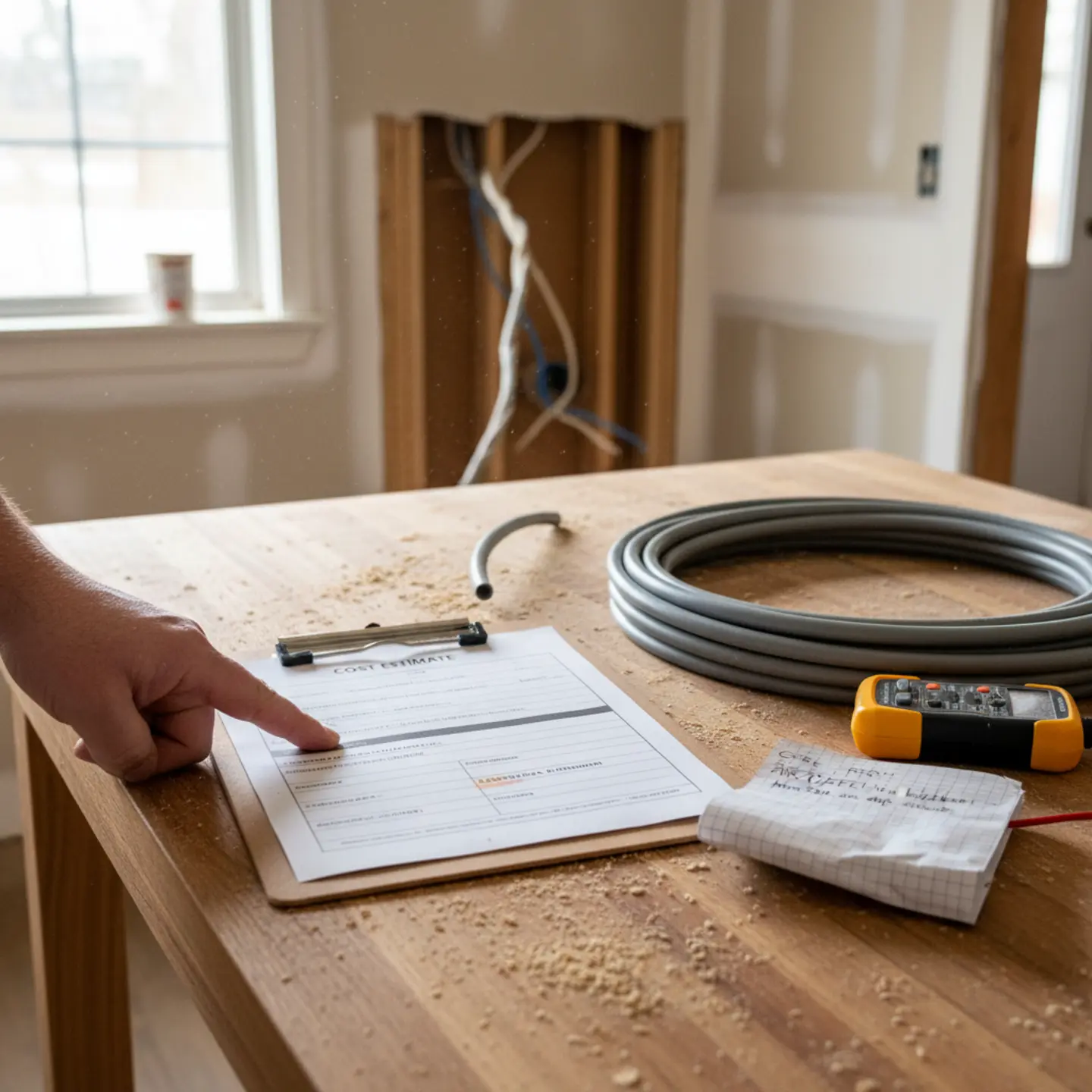
The “true total cost” of a kitchen electrical project also includes permit fees ($75 to several hundred dollars depending on your DFW city), drywall repair after wire runs, and specialty hardware like smart switches or pop-up countertop outlets—none of which are automatically included in a contractor’s base quote. Build a 10–20% contingency into your budget from day one. If you’re weighing financing options, Epic Electrical’s residential project financing guide walks through the most common approaches available to DFW homeowners.
💡 Pro Tip: Schedule Off-Peak for Better Availability
DFW electricians are busiest in spring (March–May) and fall (September–November). If your timeline is flexible, scheduling in late summer or early winter may get you faster scheduling and potentially more competitive bids from contractors looking to keep crews busy.
What Drives Costs Up or Down in Your DFW Kitchen Project
Two kitchens in the same neighborhood can produce quotes that differ by thousands of dollars. Here’s why:
- Foundation type: Slab-on-grade construction—the norm across most of DFW—forces electricians to route new circuits through attics or exterior walls rather than under the floor. That means more labor, more material, and sometimes drywall cuts that need patching. Pier-and-beam homes offer easier access and generally lower costs for new runs.
- Distance from panel to kitchen: A kitchen on the opposite side of the house from the main panel requires significantly more wire and labor than one directly adjacent. This single factor can add hundreds of dollars per circuit.
- Panel capacity: If your 100-amp panel is full with no spare breaker slots, any new circuit forces a panel upgrade. If you have available capacity and a modern panel, you avoid that cost entirely. Use Epic Electrical’s panel upgrade calculator to get a ballpark sense of whether your panel needs replacing before you call for quotes.
- Existing wiring condition: Aluminum wiring—common in DFW homes built in the late 1960s and 70s—requires remediation or full replacement before new work can be safely added. Damaged or undersized wiring discovered behind walls adds thousands to the project scope.
- Attic heat: DFW attics regularly exceed 120°F in summer. Code-compliant installations in these conditions require higher-temperature-rated wire and specific installation methods, which affects both material and labor costs.
- City permit fees: Fort Worth, North Richland Hills, Arlington, and Plano each have their own fee structures. These costs are real and should be itemized in any legitimate quote.
If your DFW home was built between 1970 and 1995, assume your kitchen electrical system will need at least some remediation to meet current code—and budget accordingly. A licensed electrician can perform a full assessment before you commit to a scope of work.
Texas Licensing, Code Compliance, and Regulatory Requirements
Every electrical contractor performing work in Texas must hold a Texas Electrical Contractor License (TECL) issued by the Texas Department of Licensing and Regulation (TDLR). This isn’t a formality—it’s the legal baseline. You can verify any contractor’s license status, check for disciplinary actions, and confirm active standing at tdlr.texas.gov/LicenseSearch/. If a contractor can’t provide a TECL number or their license shows as inactive or disciplined, walk away.
Texas has adopted the 2023 National Electrical Code (NEC) as its baseline standard, but individual DFW municipalities layer additional local amendments on top of it. Fort Worth, North Richland Hills, Arlington, and Plano each have their own requirements that can be stricter than the NEC minimum—covering everything from specific conduit types to enhanced AFCI protection beyond what the NEC requires. A contractor who only knows the NEC baseline and not your city’s local amendments is a liability on your project.
For kitchen work specifically, the 2023 NEC requires GFCI protection on all countertop outlets and within six feet of sinks, and AFCI protection on most branch circuits supplying outlets and devices in living spaces including kitchens. These aren’t optional upgrades—they’re code requirements that must be met before your project passes inspection. If your home’s existing wiring lacks these protections, bringing it up to code is part of the job scope, not an upsell.
Permits are mandatory for significant electrical work, and inspections happen at multiple stages of the project. Any contractor who tells you a permit isn’t needed for adding a circuit or relocating an outlet is either uninformed or deliberately cutting corners. Unpermitted work voids homeowner’s insurance coverage, creates problems during resale inspections, and—most importantly—leaves unsafe work hidden behind your walls with no official verification that it was done correctly.
On the insurance side, require a Certificate of Insurance from any contractor before work begins. General liability coverage of $300,000 to $1,000,000 per occurrence is standard for legitimate DFW electrical contractors. Ask to be listed as an additional insured on the certificate for the duration of the project. If a contractor hesitates to provide this, that’s your answer. For more on what proper electrical wiring repairs and maintenance should look like from a licensed contractor, that resource covers the standards in detail.
⚠️ Red Flag: ‘You Don’t Need a Permit for This’
Any contractor who tells you a permit isn’t necessary for significant electrical work is either unlicensed or cutting corners. Unpermitted work voids insurance coverage, fails home inspections, and creates serious fire hazards. Always verify that your contractor has pulled an active permit for your address before work begins.
How to Vet Electricians and Spot Red Flags in DFW
The DFW market has no shortage of contractors, but not all of them are operating legitimately. Here’s a practical vetting process before you sign anything:
- Verify the TECL license at tdlr.texas.gov before the first conversation goes further. Confirm it’s active and check for any disciplinary history in the TDLR enforcement database.
- Confirm an active permit for your address before work begins—not just a promise that one will be pulled. Most DFW cities have online permit search portals where you can look up your address.
- Request an itemized quote that separates labor, materials, and permit fees. A vague lump-sum estimate with no breakdown is a red flag, not a convenience.
- Ask who performs the work. A Master Electrician must supervise all electrical work in Texas. If the answer is “my helpers,” ask for their licensing credentials.
- Check Google reviews, Nextdoor recommendations, and ask for references from recent kitchen projects in your area. Personal referrals and verified online ratings carry the most weight in this market.
Common predatory patterns in DFW include bait-and-switch pricing—a low initial quote that balloons once walls are opened and the contractor claims “unforeseen” issues—and permit avoidance schemes where the homeowner is told permits will slow things down or aren’t required. Both leave you exposed legally and financially. Any scope change after work begins should come with a written change order for your approval before the additional work proceeds.
For homeowners in North Richland Hills, Keller, and Colleyville specifically, the combination of older housing stock and high-value homes makes this market a target for contractors who know homeowners have both the need and the budget. Doing your homework on licensing and permit history before hiring is the single best protection you have.
If you want to understand what separates a legitimate panel replacement from a rushed job, this breakdown of Federal Pacific panel replacements and 200-amp upgrades in DFW covers the process in detail.
Why Epic Electrical Is the Right Choice for DFW Homeowners
Epic Electrical is a father-and-son team of Master Electricians—Mike and Griffin—with 50+ years of combined experience and a third-generation commitment to doing electrical work the right way. They’ve been serving DFW homeowners from their North Richland Hills base (7304 Hialeah Cir W, North Richland Hills, TX 76182) since 2009, holding TECL license #33192 and earning 123+ five-star Google reviews from homeowners across Fort Worth, Keller, Colleyville, Arlington, and beyond.
What makes that track record meaningful in the context of kitchen electrical upgrades specifically is their approach to diagnosis. If your kitchen needs a $400 GFCI outlet swap and nothing more, that’s what you’ll hear—not a pitch for a full panel replacement. If your panel genuinely needs upgrading to support the new circuits your kitchen requires, they’ll explain exactly why, show you the code requirement, and give you a written quote with no hidden line items. That’s not a marketing position; it’s how a family business with a 17-year reputation in a tight-knit market has to operate.
Every project Epic Electrical takes on is fully permitted, inspected, and compliant with local DFW codes. They handle the regulatory complexity—navigating Fort Worth’s permit office, North Richland Hills’ inspection process, or Plano’s requirements—so you don’t have to track it down yourself. Scope changes discovered mid-project come with written change orders and your approval before any additional work proceeds.
For homeowners who’ve been burned by vague quotes or contractors who disappeared after the deposit, the difference is straightforward: Epic Electrical puts the details in writing upfront and communicates clearly when anything changes. You can read what other DFW homeowners have said on the Epic Electrical testimonials page.
Contact Epic Electrical today for a free consultation — no pressure, no hidden agenda, just straightforward advice from electricians who’ve been serving DFW families for over a decade.
Frequently Asked Questions: Kitchen Electrical Upgrades in DFW
Do I really need a permit for a minor electrical change in my DFW kitchen?
Yes—for most electrical modifications in your kitchen, a permit is required by DFW municipalities including Fort Worth, North Richland Hills, Plano, and Arlington. Even changes that seem minor, like adding a new circuit or relocating an outlet, fall under permitting requirements to ensure the work meets current NEC and local code standards. Permits protect you from unsafe installations and prevent problems during resale or with insurance claims. A contractor who skips this step is putting you at legal and financial risk, not saving you time.
What triggers a full electrical panel upgrade during a kitchen remodel?
A full panel upgrade—typically from 100-amp to 200-amp service—is triggered when your existing panel is outdated (old fuse box, hazardous breaker brands like Federal Pacific or Zinsco), lacks capacity for new high-draw appliances like induction ranges or multiple dedicated circuits, or has no available breaker slots for the new circuits your kitchen requires. Code compliance mandates adequate capacity for your home’s total electrical load. In many DFW homes built before 1990, a kitchen remodel makes a panel upgrade unavoidable rather than optional. Learn more about what the panel installation process involves before your project begins.
Will my existing kitchen wiring pass current electrical code in an older DFW home?
If your DFW home was built before 1990, your existing kitchen wiring likely does not fully comply with the 2023 NEC. Common deficiencies include missing GFCI protection on countertop outlets, absent AFCI protection on branch circuits, insufficient dedicated circuits for modern appliances, and in some cases unsafe aluminum wiring. These aren’t cosmetic issues—they’re fire and shock hazards that code requirements are specifically designed to address. A licensed electrician can perform a thorough inspection to identify exactly which gaps exist in your specific home before you commit to a scope of work.
How can I budget for unexpected costs during a kitchen electrical upgrade?
Build a contingency fund of 10–20% on top of your initial project estimate to cover hidden issues like outdated wiring behind walls, an undersized panel that can’t support new circuits, or structural challenges specific to slab construction. Older DFW homes are particularly prone to surprises once walls are opened. A reputable electrician will communicate any scope changes with a written change order for your approval before proceeding—never just adding work and billing for it after the fact. If you’re concerned about managing the total cost, residential financing options can help spread larger projects over time.
What makes Epic Electrical different from other DFW electrical contractors?
Epic Electrical is a father-and-son team of Master Electricians with 50+ years of combined experience and 123+ five-star Google reviews from DFW homeowners. They’ve served the North Richland Hills area and the broader DFW metroplex since 2009 under TECL license #33192, with a straightforward policy: honest diagnosis, no upsells, and no hidden costs. If there’s a cheaper fix, they’ll tell you. Every kitchen electrical project is fully permitted, code-compliant, and backed by transparent written quotes. Get a free estimate from Epic Electrical and find out exactly what your kitchen project will cost before any work begins.
Ready to Get a Clear, Honest Estimate for Your DFW Kitchen Electrical Upgrade?
Whether you need a few GFCI outlets updated or a full panel replacement to support a modern kitchen remodel, Epic Electrical gives you a straight answer and a written quote—no pressure, no surprises. Mike and Griffin have been doing this for over 50 combined years, and they’ll tell you exactly what your kitchen needs and what it will cost before a single wire is touched.
Serving Fort Worth, North Richland Hills, Keller, Colleyville, Arlington, Southlake, Grapevine, and all of DFW.
*Pricing, equipment specifications, and project scope mentioned in this article are accurate as of the date of publication and are subject to change. Code requirements and permit needs vary by municipality and property. Please contact us directly for a current quote on your specific home or business.