Key Takeaways
- Permits Are Non-Negotiable — Every DFW city requires a permit for an electrical panel change, with fees ranging from $120 (Fort Worth) to $410 (Frisco), and your contractor should handle all paperwork and scheduling.
- 2023 NEC Adds Mandatory Upgrades — A panel replacement in Texas now triggers three required additions: an outdoor emergency disconnect ($1,000–$1,650), whole-home surge protection ($300–$900), and AFCI/GFCI breakers ($50–$90 each) — these are not optional extras.
- Budget $5,800–$7,500 for a Standard 200-Amp Upgrade — DFW labor rates run 30–50% above the national average, and the true all-in cost includes the panel, code-compliance upgrades, permits, and utility coordination with Oncor.
- Lowball Estimates Are a Red Flag — If a contractor’s quote is significantly lower than others, they’re likely excluding mandatory code-compliance items; always ask explicitly whether the outdoor disconnect, surge protection, and AFCI breakers are included.
- Trust Epic Electrical for transparent panel upgrades with no upsells, no hidden costs, and 50+ years of combined DFW electrical experience — visit Epic Electrical to see why 123+ DFW homeowners gave us five stars.
What Is Required When Doing An Electrical Panel Change in DFW?
An electrical panel change in DFW requires a permit from your city, a licensed TECL contractor, utility company coordination (usually Oncor), and compliance with the 2023 National Electrical Code — including a new outdoor emergency disconnect, whole-home surge protection, and AFCI/GFCI breakers. The process typically takes 2–4 weeks from start to finish, involves 1–2 inspections, and costs between $5,800 and $7,500 for a standard 100-amp to 200-amp upgrade. Beyond the panel itself, you’ll need to budget for code-compliance upgrades, potential service entrance work, and utility disconnect/reconnect fees.
Understanding these requirements upfront helps you compare contractor estimates accurately and avoid surprise costs down the road.
Epic Electrical
Free Quote & Honest Diagnosis — No Upsells
Core Service Programs:
- Electrical Repairs, Wiring & Lighting for tripping breakers, faulty wiring, GFCI issues, and indoor/outdoor lighting
- EV Chargers, Generators & Panel Upgrades for Level 2 EV charging, whole-home generator installs, panel replacements, and surge protection
- Commercial, Warehouse & Industrial Electrical for restaurants, offices, industrial buildouts, LED retrofits, and dedicated circuits
Why Choose Epic Electrical:
- ✓ Trusted by customers with 123+ five-star Google reviews
- ✓ Father-and-son master electricians — a third-generation electrical family
- ✓ Serving North Richland Hills and the DFW Metroplex since 2009
- ✓ 50+ years of combined electrical experience on every job
- ✓ No upsells, no jargon, no pressure — we fix what’s actually broken
- ✓ Small repairs fixed same-visit; big jobs get a written quote with no hidden costs
- ✓ Texas-licensed electrical contractor (TECL #33192)
Why DFW Homeowners Are Upgrading Electrical Panels Right Now
DFW isn’t slowing down. The metro added 177,922 residents between July 2023 and July 2024 alone, making it the third-fastest-growing metro in the country, with projections to reach 8.6 million people by January 2026. That kind of growth puts enormous pressure on housing stock — much of which was built when 60-amp or 100-amp panels were considered perfectly adequate.
EV adoption is one of the biggest drivers. North Texas surpassed 145,000 registered electric vehicles in 2025, a 34% year-over-year increase. Each Level 2 home charger draws 30–50 amps — a significant load that older 100-amp panels simply weren’t designed to handle. If you’re thinking about adding a home charger, it’s worth understanding whether you need a panel upgrade or load management before committing to either.
Solar is another major factor. Commercial solar installations in DFW grew 142% between 2022 and 2024, and battery storage systems require panel upgrades to safely manage the new power sources coming in and going out. Meanwhile, 71,788 new residential units were authorized in DFW in 2024, and home additions routinely trigger the need for additional panel capacity.
Then there’s the hazardous panel problem. An estimated 25 million homes nationwide still contain Federal Pacific or Zinsco panels — brands installed heavily in DFW homes built between 1950 and 1990. FPE Stab-Lok breakers have documented failure rates up to 60% in independent testing. Insurance companies across Texas are increasingly refusing to cover homes with these panels or imposing severe restrictions. If your home was built before 1990 and has never had a panel replacement, there’s a real chance you’re dealing with one of these recalled brands. Learn more about Federal Pacific panel replacement and 200-amp upgrades in DFW.
The Permit and Inspection Process: What You Need to Know
Every DFW city requires a permit before any electrical panel replacement work begins. This isn’t a formality — it’s how your city verifies that the work meets current safety codes and that a licensed contractor performed it. Your contractor handles all permit paperwork and scheduling; you don’t need to visit a city office or fill out forms yourself.
Permit fees vary by municipality. Fort Worth runs $120–$150 for a standard panel upgrade. Plano is $250–$400, Frisco $260–$410, and Garland $190–$320. Processing timelines also differ: Irving typically processes permits in 1–3 weeks, Fort Worth in 2–4 weeks, and Dallas residential permits are generally faster than commercial (which can run 4–8 weeks). The northern suburbs — Frisco, Plano — typically process in 1–3 weeks but may have stricter aesthetic requirements for exterior electrical equipment.
Most panel replacements require 1–2 inspections: an initial inspection after the panel is installed and wired, and a final inspection once all code-compliance work is complete. Inspection fees are typically included in the permit cost. You cannot legally close out a panel replacement without passing inspection — and a reputable contractor will ensure the work passes on the first try.
Mandatory Code-Compliance Upgrades That Add to Your Bill
This is where a lot of homeowners get surprised — and where lowball estimates hide their true costs. The 2023 National Electrical Code introduced several mandatory upgrades that are now triggered any time you replace or upgrade a panel in Texas. These aren’t optional add-ons; they’re required by law, and any estimate that doesn’t include them is either incomplete or dishonest.
ℹ️ Confused by All the Code Requirements?
You’re not alone. The 2023 NEC introduced several new mandatory upgrades (outdoor disconnect, AFCI breakers, surge protection) that many homeowners don’t expect. A reputable contractor will explain each requirement and why it matters for your home’s safety.
Here’s what the 2023 NEC now requires for panel replacements in Texas:
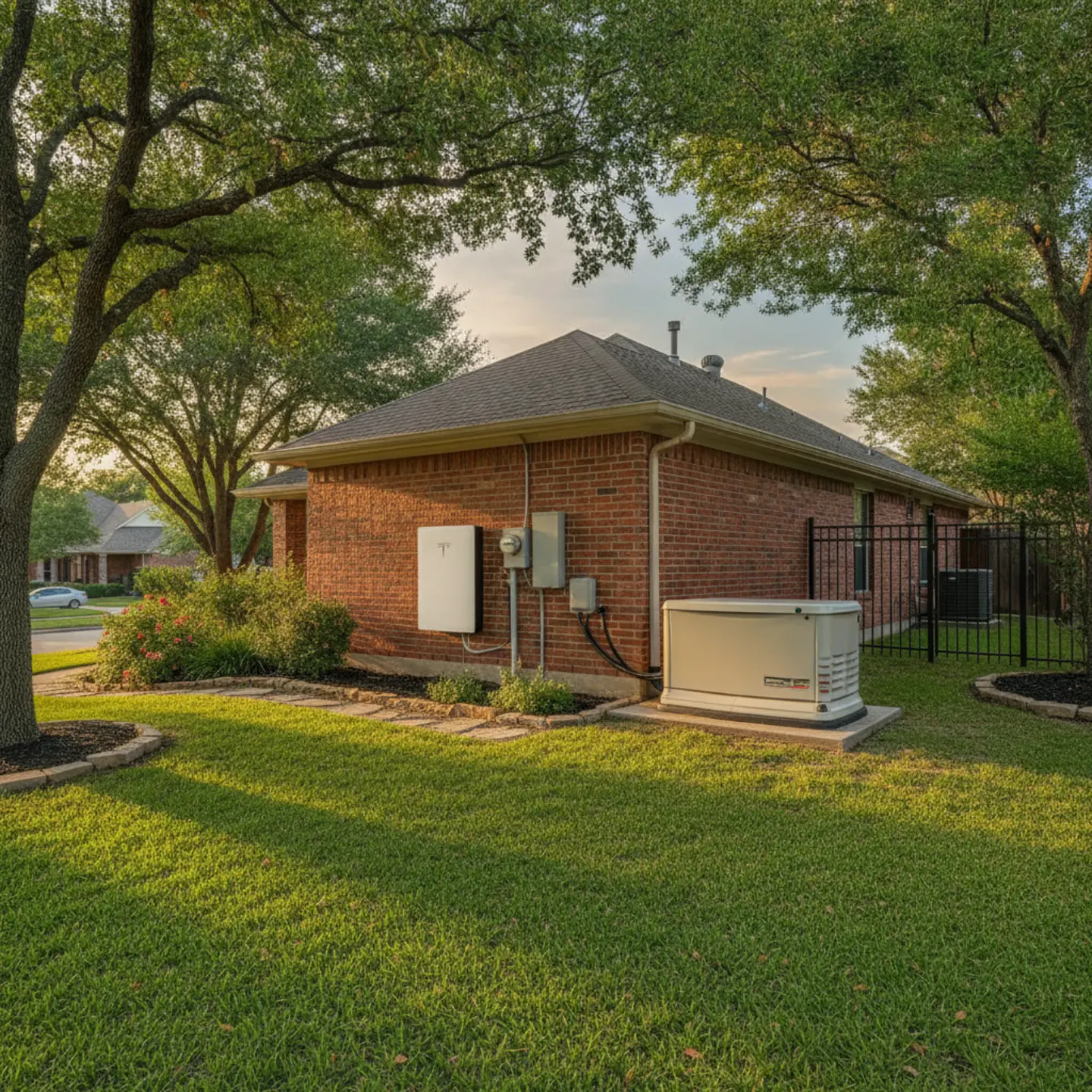
- Outdoor Emergency Disconnect (NEC 230.85): Mandated for all service upgrades and panel replacements in Texas since September 1, 2023. This provides a visible, accessible way to shut off power from outside your home in an emergency — critical for first responders. Adds $1,000–$1,650 to the project. Read more about why the outdoor emergency disconnect is required under NEC 230.85.
- AFCI/GFCI Breakers: Arc Fault Circuit Interrupter (AFCI) protection is now required for most circuits. These breakers detect dangerous arcing — when electricity jumps where it shouldn’t — before it starts a fire. At $50–$90 per breaker, a full panel with 30+ AFCI breakers adds $1,500–$2,700 in materials alone.
- Whole-Home Surge Protection: Required by the 2023 NEC for new and upgraded services, whole-home surge protection shields your electronics and appliances from power surges. Costs $300–$900 installed.
- Upgraded Grounding System: Modern code requires a robust grounding system to safely dissipate electrical faults. Older homes often have inadequate grounding that gets corrected during a panel replacement.
- Aluminum Wiring Remediation: If your home was built between 1965 and 1973, it may have aluminum branch wiring, which is prone to overheating at connections. Pigtailing or replacement can add $800–$3,500 to the project. Our team handles electrical wiring repairs and remediation as part of the panel replacement process.
Breaking Down the Costs: What a DFW Panel Upgrade Really Costs
DFW labor rates run 10–20% above the Texas average and 30–50% above national averages, driven by skilled-trade shortages and high demand from the metro’s explosive growth. That’s the primary reason DFW panel upgrade costs are higher than what you’ll see quoted in national “average cost” articles. Here’s a realistic breakdown by tier:
| Upgrade Type | DFW Cost Range (2026) | What’s Typically Included |
|---|---|---|
| 100-Amp Panel Replacement (same amperage) | $1,150–$1,600 | Direct swap, minimal code upgrades; less common due to NEC 2023 requirements |
| 200-Amp Upgrade (most common) | $5,800–$7,500 | New panel, meter base, outdoor disconnect, surge protection, grounding, labor, permits |
| 400-Amp Service Upgrade | $6,000–$18,000+ | Large homes with multiple EV charger installations or extensive electrical demands; includes service entrance work |
Beyond the panel itself, budget for these commonly overlooked costs: drywall repair ($200–$600 if the panel is recessed in an interior wall), Oncor disconnect/reconnect fees ($100–$300), and service entrance work ($500–$2,000+ if conductors need replacement or underground trenching is required). Use our panel upgrade calculator to get a ballpark figure for your specific situation before you start calling contractors.
One more thing worth knowing: replacing a recalled Federal Pacific or Zinsco panel eliminates the risk of insurance denial or cancellation — and avoids the far larger cost of an electrical fire. That long-term value doesn’t show up in a contractor’s quote, but it’s very real.
How to Compare Contractor Estimates and Spot Red Flags
⚠️ Beware of Lowball Estimates
If a contractor’s estimate is significantly lower than others, they’re likely cutting corners or hiding scope. Ask explicitly whether the estimate includes the outdoor emergency disconnect, AFCI/GFCI breakers, surge protection, and all 2023 NEC compliance work. If it doesn’t, that’s a red flag.
Getting multiple estimates is smart. Comparing them fairly requires knowing what should be in every complete estimate. A legitimate, code-compliant quote for a DFW panel upgrade should itemize: the panel cost and brand, labor hours, permit fees, the outdoor emergency disconnect, whole-home surge protection, AFCI/GFCI breakers, grounding upgrades, and any service entrance work required.
Ask every contractor this exact question: “Does this estimate include the outdoor emergency disconnect, whole-home surge protection, and all code-compliance upgrades required by the 2023 NEC?” If they hesitate or say those items aren’t necessary, walk away. They’re either uninformed or deliberately hiding scope to win the bid.
Other red flags to watch for: contractors who won’t provide a written, itemized estimate; those who pressure you to decide on the spot; and anyone who can’t provide their TECL (Texas Electrical Contractor License) number on request. You can verify any TECL license number through the state database. For Fort Worth electrical work or anywhere else in DFW, licensing verification takes two minutes and protects you from unlicensed operators.
💡 Schedule Your Upgrade in January or February for Better Rates
January and February are typically the slowest months for electrical work in DFW. Scheduling your panel upgrade during these months often means faster contractor availability and potentially more competitive pricing than summer peak season.
Also check reviews carefully. Look for contractors with consistent five-star ratings, verifiable testimonials from DFW homeowners, and a track record of transparent pricing. Our customer testimonials reflect what we hear from real homeowners: no surprises, clear communication, and work that passes inspection the first time.
Utility Company Requirements and Coordination
Oncor Electric Delivery serves most of the DFW metro and must be involved any time you upgrade service from 100 amps to 200 amps or higher. They handle the meter disconnect before work begins and the reconnect after the panel passes inspection. Oncor charges $100–$300 for this service. You don’t contact Oncor directly — your contractor coordinates everything, schedules the disconnect, completes the installation, and schedules the reconnect.
Oncor’s Electric Service Guidelines, updated in February 2025, specify requirements for equipment installation and interconnection. Your contractor must follow these guidelines for the work to pass inspection and for Oncor to re-energize your meter. Unauthorized meter removal or tampering can result in penalties — always use a licensed contractor for any utility-side work.
If you’re in Garland, your utility is Garland Power & Light (GP&L), not Oncor. GP&L has its own “Specifications for Electric Service” that contractors must follow. One benefit: Garland homeowners upgrading their meter base as part of electrical repairs may receive a new meter base free of charge from GP&L. For Irving and most other DFW cities, Oncor is your utility provider and the coordination process is the same.
Why Epic Electrical Is the Right Choice for DFW Homeowners
We’re a father-and-son team of master electricians — Mike and Griffin — with 50+ years of combined experience and roots in DFW going back to 2009. We’re a third-generation electrical family, not a corporate call center with rotating crews. When you call Epic Electrical, you get the same people on your job from start to finish.
Our 123+ five-star Google reviews tell the same story over and over: honest diagnosis, transparent pricing, no upsells, no surprises. We hold Texas Electrical Contractor License #33192 and stay current on DFW’s municipal codes, Oncor’s requirements, and the latest NEC 2023 compliance standards — so your panel replacement passes inspection the first time, every time.
When it comes to panel upgrades specifically, we handle the entire process: permit applications, inspection scheduling, Oncor coordination, and all mandatory code-compliance upgrades. You get one point of contact and a written quote with no hidden costs. If there’s a cheaper fix that solves your problem without a full panel replacement, we’ll tell you that too. That’s just how we operate. Learn more about our family and our approach to electrical work in DFW.
Contact Epic Electrical today for a free, no-obligation consultation — we’ll walk you through exactly what’s required, what it costs, and answer every question you have about your panel upgrade.
Frequently Asked Questions About Electrical Panel Changes in DFW
How long does an electrical panel replacement take in DFW?
The entire process typically takes 2–4 weeks from permit application to final inspection and utility reconnection. The actual installation work usually takes 1–2 days, but permit processing and inspection scheduling account for most of the timeline. Some DFW cities offer expedited permitting for an additional fee if you need to move faster — ask your contractor whether that option is available in your municipality.
Can I upgrade my panel myself, or do I need a licensed contractor?
You must use a licensed TECL (Texas Electrical Contractor License) contractor. Electrical panel work is high-voltage, life-safety work that requires specialized training, permits, and inspections. DIY panel work is illegal in Texas and voids your homeowner’s insurance — and that’s before you consider the serious risk of electrocution or fire from working on energized service equipment. Always hire a licensed professional for this type of work.
Will my home lose power during the panel replacement?
Yes, your home will lose power during the installation, typically for 2–4 hours. Your contractor coordinates with Oncor (or your local utility) to schedule the disconnect and reconnect around the installation window. Plan accordingly — avoid scheduling the work on days when you need refrigeration for medications, medical equipment, or other critical power-dependent systems.
What’s the difference between a panel replacement and a panel upgrade?
A panel replacement swaps out an existing panel with a new one of the same amperage — for example, replacing an old 100-amp panel with a new 100-amp panel. A panel upgrade increases your service capacity, such as going from 100 amps to 200 amps, which requires new service entrance conductors, meter base work, and utility coordination with Oncor. Upgrades are more complex and costly, but they provide the additional capacity needed for modern electrical loads. If you’re unsure which applies to your home, our guide on whether you need a panel change can help you figure it out.
What makes Epic Electrical different from other DFW electrical contractors?
Epic Electrical is a father-and-son team of master electricians with 50+ years of combined experience and 123+ five-star Google reviews from real DFW homeowners. We’re a third-generation family business that has been serving the DFW metro since 2009, and we hold Texas Electrical Contractor License #33192. We’re committed to honest diagnosis with no upsells or hidden costs — if there’s a cheaper fix, we’ll tell you. We handle the entire panel replacement process, including permits, inspections, Oncor coordination, and all 2023 NEC code-compliance upgrades, so you have one trusted point of contact from start to finish. Get a free, no-obligation estimate from Epic Electrical today.
Ready to Get a Clear, Honest Estimate for Your DFW Panel Upgrade?
A panel upgrade is one of the most significant electrical investments you’ll make in your home — and the requirements in DFW are more involved than most homeowners expect. We’ll walk you through exactly what’s required, what it costs, and what to watch out for when comparing estimates.
No pressure, no upsells. Just a straight answer from a licensed DFW electrician who’s been doing this since 2009.
Serving Fort Worth, Arlington, North Richland Hills, Keller, Southlake, Colleyville, Grapevine, Lewisville, and all of DFW
(682) 478-6088
Pricing, equipment specifications, and project scope mentioned in this article are accurate as of the date of publication and are subject to change. Code requirements and permit needs vary by municipality and property. Please contact us directly for a current quote on your specific home or business.