What Electrical Work Requires a Permit in Texas? A Homeowner’s Guide
You’re staring at an outlet that needs replacing. Or maybe you want to add a circuit for that new workshop in the garage. And the question hits you: Do I need a permit for this?
You’re not alone. We get calls every week from Fort Worth homeowners who are genuinely confused about electrical permits. The internet gives conflicting answers. One forum says you can do anything in your own home. Another says you need a permit to change a light bulb (not true, by the way). And nobody wants to accidentally break the law or void their homeowner’s insurance over a simple repair.
Here’s the straight answer: Most electrical work that changes your system requires a permit—not just the “big” projects. But there are clear exceptions, and understanding them can save you time, money, and a lot of stress.
Let’s cut through the confusion and give you the clarity you deserve.
Key Takeaways
- Most electrical work that alters your system requires a permit—including adding outlets, upgrading panels, or installing appliances like EV chargers
- In Texas, homeowners CAN do their own electrical work, but you’re NOT exempt from getting permits and following code
- Permit costs in Fort Worth typically run $40-$300. Fixing unpermitted work later can cost $5,000 or more
- Like-for-like replacements (swapping an outlet for the same type in the same spot) usually DON’T need permits
- Insurance companies can deny fire claims if they discover the electrical work causing the fire wasn’t permitted and inspected
The Big Misunderstanding About Texas Electrical Work
Let’s start with the question we hear most often:
Can Homeowners Do Their Own Electrical Work in Texas?
Yes—with important conditions.
Texas has what’s called a “Homeowner Exemption.” It means you don’t need to be a licensed electrician to work on the home you own and live in. Sounds great, right?
Here’s where people get tripped up: You’re exempt from the licensing requirement, but you’re NOT exempt from permits.
Think of it this way. The state of Texas (through the Texas Department of Licensing and Regulation) controls who can call themselves an electrician. Cities and counties control building safety through permits and inspections. These are two separate things.
So yes, you can legally do electrical work on your own primary residence without holding an electrician’s license. But if the city of Fort Worth says that work requires a permit, you still need to get one. You’ll follow the same rules, get the same inspections, and meet the same safety standards as a licensed electrician would.
Why This Matters
Permits aren’t bureaucratic red tape designed to annoy you. They exist because electricity is genuinely dangerous when installed incorrectly.
A permit triggers an inspection. An inspection means a qualified third party verifies your work is safe before the walls get closed up or the power gets turned on. That inspector checks that your wiring is properly sized, your circuits are protected, and your grounding system will actually protect you from a shock.
Skip the permit, and nobody checks the work. You might think everything is fine—until it’s not.
Electrical Work That REQUIRES a Permit in Texas
If you’re changing the electrical system—adding something new, moving something, or upgrading capacity—you almost always need a permit. Here’s what that looks like in practical terms:
Panel Upgrades or Replacements
You need a permit if you’re:
- Replacing your breaker panel
- Upgrading from 100-amp service to 200-amp service
- Adding a sub-panel
Why it matters: The utility company won’t reconnect your power without an inspection release from the city. When you upgrade your electrical service, they physically disconnect the power. They won’t turn it back on until Fort Worth’s building inspector signs off that your new grounding system, bonding, and panel installation meet code.
We’ve seen homeowners try to DIY a panel upgrade only to discover they’re stuck without power—and now they need to hire a professional anyway to fix the issues the inspector flagged. A panel upgrade is one area where calling a licensed electrician from the start saves time and headaches.
If you have an older home with a Federal Pacific panel, replacement is especially critical for safety—and yes, it requires a permit.
Adding New Circuits or Outlets
You need a permit if you’re:
- Running new wiring to add outlets in a room
- Installing a dedicated circuit for a garage freezer or power tools
- Moving an outlet from one wall to another
- Extending an existing circuit by adding new boxes
Even “just adding one outlet” typically requires a permit.
Here’s why: When you add to a circuit, you’re changing the load. Modern electrical code also requires specific safety devices called Arc-Fault Circuit Interrupters (AFCIs) for most living areas. If you’re extending a circuit in a bedroom, you may trigger the requirement to upgrade that entire circuit with AFCI protection—something most DIYers don’t realize until an inspector fails their work.
The permit process ensures your new work doesn’t overload the circuit and includes the proper safety devices your home needs. If you’re having issues with GFCI outlets that won’t reset, that’s often a sign of circuit problems that should be evaluated by a professional.
Major Appliance Installations
You need a permit for:
- Electric vehicle (EV) chargers (Level 2, 240-volt models)
- Electric ranges and ovens (new installations, not replacing existing)
- Hot tubs and spas
- Central air conditioning units (the electrical portion)
- Electric water heaters requiring new circuits
These are what electricians call “continuous loads”—they run at high capacity for extended periods. An EV charger, for example, might pull 40-50 amps for hours while your car charges overnight. That stresses your electrical system differently than a toaster that runs for two minutes.
Permits ensure your panel can handle the additional load without overheating, and that the wiring is properly sized to safely carry that much current for that long. If you’re considering an EV charger, check out our guide on EV charger installation costs in the Dallas-Fort Worth area.
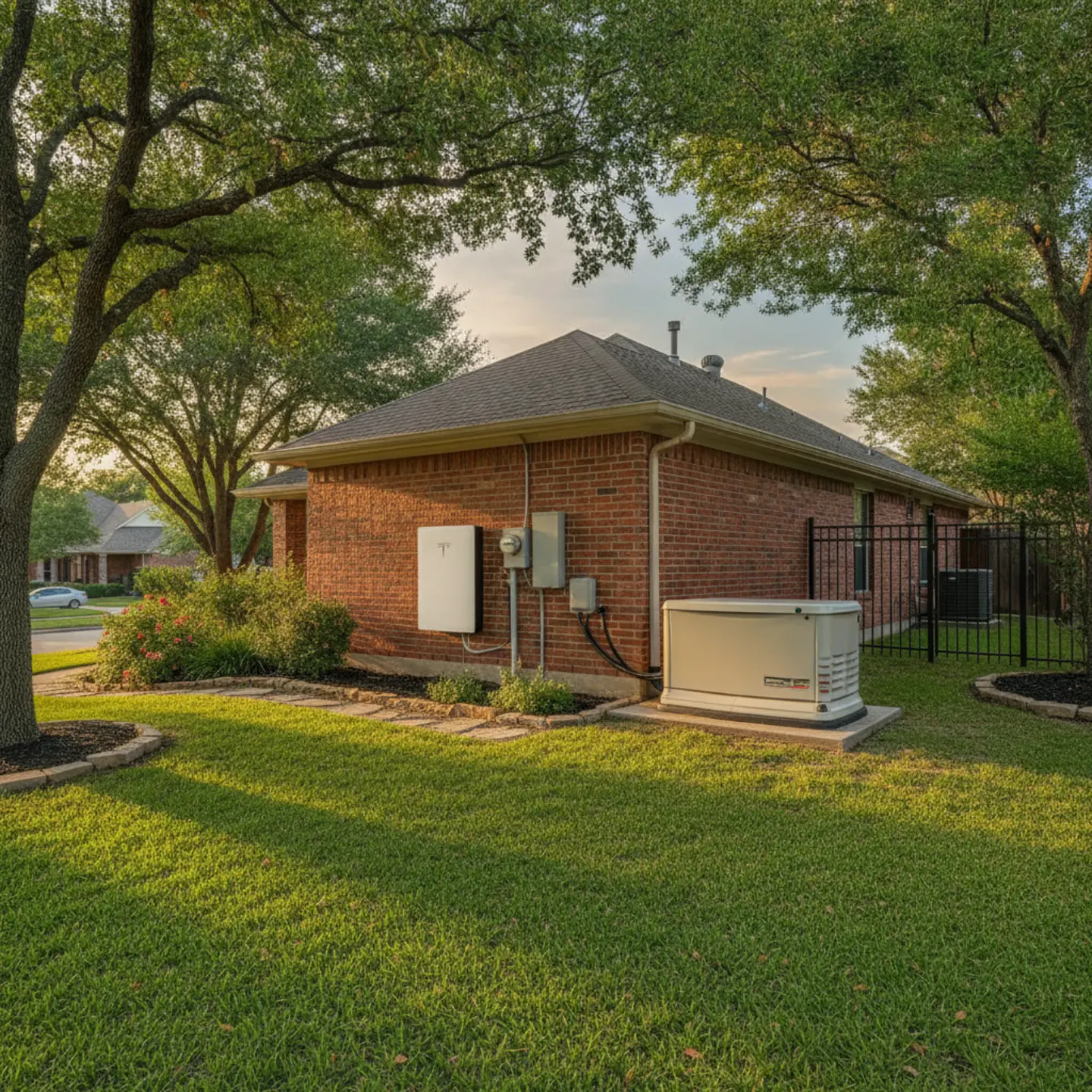
Generators
You need a permit for:
- Whole-home standby generators
- Transfer switches
- Generator sub-panels
This one is critical for safety beyond just your home. A generator that’s installed incorrectly can “back-feed” electricity onto the utility lines during a power outage. That can electrocute utility workers who are miles away trying to restore power to your neighborhood.
Transfer switches prevent this, but only if they’re installed correctly. That’s why generator installations always require permits and inspections—the risk isn’t just to you.
Choosing between brands? We have a detailed comparison of Generac vs. Kohler generators for Colleyville homes, and guidance on 30-amp vs. 50-amp generator inlets.
Solar Panels & Battery Systems
You need a permit for:
- Grid-tied solar panel systems
- Battery backup systems connected to your home’s wiring
- Any electrical work connecting renewable energy to your panel
Solar installations involve coordination between the city, your utility company, and sometimes your HOA. Fort Worth has specific requirements for how solar systems connect to the grid to prevent damage to transformers and ensure firefighter safety.
Outdoor Electrical Work
You need a permit for:
- Permanent landscape lighting installations
- Outdoor outlets (especially if running new wire underground)
- Pool and spa electrical systems
- Detached garage or shed wiring
Outdoor wiring faces moisture, temperature extremes, and physical damage risks that indoor wiring doesn’t. Code requirements for burial depth, conduit types, and GFCI protection are strict. Permits ensure outdoor electrical work can handle Texas weather without creating shock hazards.
Whether you’re installing landscape and security lighting or interior lighting upgrades, proper permitting ensures safety and code compliance.
Rewiring or Major Repairs
You need a permit for:
- Replacing old wiring behind walls
- Fixing code violations flagged during a home inspection
- Adding circuits to unfinished spaces (attics, basements, garages)
If a home inspector flags outdated or unsafe wiring and you need to fix it to pass a real estate inspection, that repair work typically requires a permit. The city wants to verify the fix actually brings things up to current code.
Common repairs like circuit breaker issues or lights flickering when the AC runs usually don’t require permits if they’re simple component replacements, but major rewiring does.
So that’s what DOES need a permit. But what about the smaller stuff?
Work That Usually DOESN’T Need a Permit
Good news: Texas does allow some electrical work without permits. Here’s the “maintenance exception”:
Like-for-Like Replacements
You typically DON’T need a permit for:
- Replacing an outlet with the same type in the same location using the existing box
- Replacing a light switch (including upgrading to smart switches like Lutron or Leviton)
- Swapping out a light fixture
- Replacing a ceiling fan
The key qualifier here is “same box, same wiring, same function.” You’re not adding anything new or changing how the system works—you’re just replacing a worn-out part with a new one.
If you’re moving the outlet to a different spot, upgrading from a standard outlet to a USB outlet that requires different wiring, or cutting into the wall to install a bigger box, you’ve crossed the line into work that typically needs a permit.
Plug-in Appliances
You DON’T need a permit for:
- Plugging in a window air conditioner
- Moving your refrigerator
- Any appliance that connects via a standard cord and plug
This seems obvious, but it’s worth stating: the appliance itself doesn’t need a permit. However, if that appliance needs a special outlet that doesn’t currently exist (like a 240-volt outlet for a dryer), installing that outlet absolutely requires a permit.
Low-Voltage Systems
You typically DON’T need permits for:
- Doorbell wiring
- Thermostat wiring for HVAC systems
- Some landscape lighting (under 50 volts)
- Structured wiring for internet/TV
These systems run at low voltages that don’t present the same shock and fire risks as standard household circuits.
There’s one exception: security alarm systems sometimes require a separate alarm permit from the city, even though the electrical work itself might be low-voltage. Check with Fort Worth if you’re installing a security system.
Simple Bulb Changes
And yes, you can change light bulbs without a permit. We’d never get anything done otherwise.
A quick note: Even for “exempt” work, it still needs to be done safely and to code. If you’re unsure whether your project needs a permit, a quick call to Fort Worth’s building department can give you a definitive answer. Or call us—we’re happy to walk you through it without any pressure to hire us.
For more electrical safety guidance, check out our electrical safety tips every Fort Worth resident should know.
What Happens If You Skip the Permit?
We get it. Permits feel like a hassle. There’s paperwork, fees, waiting for inspectors, and the worry that they might fail your work and make you redo it.
But here’s what actually happens when electrical work isn’t permitted:
Financial Penalties
Fort Worth, like most Texas cities, enforces a “double fee” penalty. If code enforcement discovers you did work without a permit, you’ll pay double the normal permit fee just to start the process of making it legal.
In Fort Worth, that means:
- A standard electrical permit that would’ve cost $150 now costs $300
- Plus you may face additional fines up to $2,000 depending on the violation
- Plus you’ll need to correct any code violations the inspector finds
But the real cost is in remediation. Here’s a real scenario:
Original permit cost: $150
Discovery during home sale: Buyer’s inspector flags unpermitted basement outlets
Retroactive permit fee (doubled): $300
Demolition of drywall to inspect hidden wiring: $1,500
Rewiring to bring up to current code: $2,000
Drywall repair and repainting: $1,500
Total cost of non-compliance: ~$5,300
You can see how “saving” $150 upfront becomes very expensive later.
Insurance Complications
This is where unpermitted work gets truly costly.
Insurance companies can deny claims for damage caused by unpermitted electrical work. If a fire starts in an unpermitted panel or circuit, the insurer investigates. They’ll ask for permit records. When they discover none exist, they can deny your claim, arguing the damage resulted from negligent or illegal work.
We’re not talking about small claims. We’re talking about total loss of your home.
Beyond claim denials, if an insurer discovers major unpermitted work (like an addition or panel upgrade) during a routine inspection or claim, they can cancel your policy for misrepresenting the property’s condition. Now you’re scrambling to find coverage, and you’ll pay higher premiums because you’re seen as a higher risk.
Home Sale Problems
Texas law requires sellers to complete a disclosure notice. This document specifically asks about permits for additions, modifications, and repairs.
Many sellers think listing a property “As-Is” protects them. It doesn’t—not if you actively hide unpermitted work. If you check “No” or “Unknown” on the disclosure form when you actually know you added a room or upgraded a panel without permits, that’s fraud under Texas Property Code.
We’ve seen homeowners on real estate forums facing this exact situation: they built a shed office with electrical outlets years ago without permits. Now they’re selling. If they disclose, the buyer demands fixes or walks away. If they don’t disclose and the buyer discovers it later, they face a lawsuit for fraudulent concealment.
Lenders also care about permits. If an appraisal reveals unpermitted additions or major work, the lender may refuse to close until permits are obtained and inspections passed. That can kill a sale or force you to spend thousands right before closing to make things legal.
Safety Risks: The Real Reason Permits Exist
The money matters, but here’s the real cost of unpermitted work:
In November 2025, a family in Houston lost their home to a fire that started near a front porch light. Investigators determined faulty electrical wiring was the cause. The family escaped, but everything they owned was destroyed.
That same year, in Longview, Texas, three people were displaced after an electrical fire started in their attic. The resident had been using daisy-chained extension cords and power strips to run space heaters because the existing outlets “weren’t working.” Instead of installing a proper dedicated circuit (which requires a permit), they created a fire hazard. The fire department determined electrical overload was the cause.
These aren’t scare tactics. These are real events that happened to real Texas families in the past year.
Permits aren’t red tape. They’re a safety net. An inspector catching a loose connection or undersized wire before you close the walls could literally save your life.
Worried about existing unpermitted work? Give us a call. We can assess what you have, advise on the best path forward, and handle the permitting if needed. No judgment—we’ve helped plenty of homeowners get unpermitted work corrected and legal.
How to Get an Electrical Permit in Fort Worth
If you’re in Fort Worth and need a permit, here’s how the process works:
For Homeowners Doing DIY Work
Step 1: Verify your eligibility
You must own the home AND live in it as your primary residence. Investment properties and rentals don’t qualify for homeowner permits.
Step 2: Submit a Homestead Affidavit
Fort Worth requires an affidavit where you swear you’ll do the work yourself without hiring help. You’ll need valid ID showing your address matches the permit location.
Step 3: Apply for the permit
You can apply online through Fort Worth’s CFW Permit Assist portal or Accela system, or visit the Development Services office in person. You’ll describe the work and may need to submit simple drawings for larger projects.
Step 4: Pay the fees
Permit fees in Fort Worth are tiered based on the project scope. Most residential electrical permits run between $40 and $300. The city’s website has a fee calculator.
Step 5: Schedule inspections
Once your permit is issued, you’ll schedule two inspections:
- Rough-in inspection: After wiring is installed but before you cover it with drywall or insulation
- Final inspection: After everything is complete but before you energize the new circuits
The inspector will check grounding, wire sizing, proper connections, and code compliance. If everything passes, you get a signed-off permit. If not, they’ll tell you what needs to be corrected.
For Contractor Work (The Easier Path)
When you hire a licensed electrician for permitted work, they handle all of this for you:
- They pull the permit (it’s included in their quote)
- They know exactly what the inspector will look for
- They coordinate the inspection schedule
- They fix any issues immediately if something doesn’t pass
Red flag warning: If a contractor asks YOU to pull the permit for them, that’s a warning sign. It usually means they’re unlicensed, have unresolved code violations, or are trying to dodge accountability. Licensed, legitimate electricians pull their own permits.
What Inspectors Actually Check
Homeowners sometimes fear inspections, worried the inspector will fail them over minor issues or force expensive upgrades.
In reality, inspectors are checking specific safety items:
- Proper grounding and bonding (protects you from shocks)
- Correct wire sizing (prevents overheating and fires)
- Load calculations (ensures your panel can handle the work)
- Required GFCI and AFCI protection (modern safety devices)
- Proper box fill (wires aren’t crammed too tightly)
- Secure connections (nothing loose that could arc)
If something doesn’t meet code, they’ll explain what needs to be fixed. It’s not personal—they’re making sure your home is safe.
Most homeowners find it easier and safer to have a licensed electrician handle both the work and the permitting. We do this every day, so we know exactly what Fort Worth inspectors expect, and we get it right the first time.
FAQ: Your Permit Questions Answered
Can I do electrical work without a license in Texas?
Yes, if you own and live in the home as your primary residence. The “Homeowner Exemption” allows you to work on your own electrical system without holding an electrician’s license.
However, you still need to obtain permits for any work that requires them, and your work must meet the same code standards as a licensed electrician’s work. You’re also responsible if something goes wrong.
How much does an electrical permit cost in Fort Worth?
Most residential electrical permits in Fort Worth range from $40 to $300, depending on the scope of work. Small projects like adding a few outlets might be at the lower end. Panel upgrades or whole-home rewiring will be higher.
The city’s Development Services department can give you an exact quote based on your specific project. And remember: if you start work before getting a permit, that fee doubles.
Do I need a permit to replace an outlet?
Not usually—IF you’re doing a true like-for-like replacement in the same location using the existing electrical box.
You DO need a permit if you’re:
- Adding new outlets where none existed before
- Moving an outlet to a different location
- Installing a different type of outlet that requires rewiring
- Cutting into walls to install new boxes
When in doubt, call Fort Worth’s building department or a licensed electrician. A quick question now beats expensive fixes later.
Do I need a permit to replace my electrical panel?
Yes, always.
Panel replacements and upgrades are among the most dangerous electrical projects. The utility company must disconnect your service, and they won’t reconnect it without a city inspection approval.
Panel work involves coordination between you, the electrician, the city inspector, and the power company. This is one project we always recommend leaving to a licensed professional. The risks—both safety and legal—are too high for DIY.
What if I already did electrical work without a permit?
You can apply for a retroactive permit. Fort Worth allows this, but expect to pay double the normal permit fee as a penalty.
You may also need to open up walls or ceilings so the inspector can see the hidden wiring and verify it meets code. If the work doesn’t meet code, you’ll need to correct it before the permit can be finalized.
The best time to address unpermitted work is before you sell the house. Buyers and their inspectors will find it, and it becomes a negotiation point that can kill deals or cost you thousands in credits.
If you’ve got unpermitted work and need advice on how to handle it, we can assess the situation and help you determine the best path forward.
Can a handyman do electrical work in Texas?
No. Texas law is clear: only licensed electricians or qualifying homeowners (working on their own primary residence) can perform electrical work that requires a permit.
Handymen are legally limited to minor work that doesn’t require permits. If a handyman offers to wire your garage, add circuits, or upgrade your panel, they’re breaking the law—and you could be held liable for any damage or injuries that result.
Always verify that any electrician you hire holds a valid license through the Texas Department of Licensing and Regulation (TDLR). You can check their license status online.
Do I need a permit to install an EV charger?
Yes. Level 2 EV chargers (the 240-volt models most people install at home) always require permits.
These chargers are considered “continuous loads” because they can run at high amperage for hours while charging your car. They require dedicated circuits, specific wire sizing, proper grounding, and sometimes panel upgrades if your home’s electrical service can’t handle the additional load.
EV charger installations also need to meet specific NEC requirements that changed in the 2023 code update. A permit and inspection ensure your charger is installed safely and won’t overload your electrical system.
When to Call a Professional
Look, we get it. Some electrical work seems simple enough to tackle yourself. You’re handy, you’ve watched YouTube tutorials, and you want to save money.
Here’s the reality: Most homeowners don’t have the specialized tools, the deep knowledge of current electrical code, or the time to research and execute electrical work safely. What seems like a simple outlet addition can quickly become complicated when you discover shared neutrals, old wiring that needs upgrading, or load calculations that require a panel upgrade.
A licensed electrician can often complete the work AND handle all the permitting faster than you could research how to do it yourself. We’ve been doing this for years. We know what Fort Worth inspectors expect. We have the tools in our trucks. And we know how to troubleshoot the unexpected issues that almost always come up in older homes.
Beyond speed and expertise, there’s peace of mind. When we do the work, it’s done right. It passes inspection. It’s covered by our warranty. And if anything ever goes wrong, we’re here to fix it.
You’re not paying us to flip switches and twist wires. You’re paying for years of training, experience with thousands of different electrical situations, and the assurance that your family is safe.
Get Your Electrical Work Done Right
If you’re in the Fort Worth area and need electrical work—whether it’s a simple repair, a panel upgrade, or installing an EV charger—we’re here to help.
We handle all the permitting, explain the work clearly so you understand exactly what we’re doing and why, and we guarantee everything works as it should when we’re done. No upselling unnecessary upgrades. No confusing jargon. No surprises on the bill.
Just honest electrical service from people who genuinely care about keeping your home safe.
Ready to get started?
Or call us at 682-478-6088 to talk through your project. We’re happy to answer questions even if you’re not ready to hire anyone yet. That’s just how we do business.
Epic Electrical is a licensed electrical contractor serving Fort Worth and the surrounding area. We specialize in residential electrical repairs, panel upgrades, code corrections, and inspection-related fixes. Our goal is simple: fix what’s broken, explain what we’re doing, and leave your home safe. No pressure, no upselling—just electrical work done right.