New Construction Commercial Wiring North Texas: What General Contractors Must Know Before Breaking Ground
Key Takeaways
- Start electrical planning early — involve your electrical contractor 3–4 months before groundbreaking, during the design phase, not after plans are finalized.
- North Texas code is not the same as national code — Dallas, Fort Worth, Arlington, and surrounding jurisdictions each enforce local amendments on top of the 2023 NEC that can catch unprepared contractors off guard.
- Load calculations are non-negotiable — undersized or oversized panels create inspection failures, budget overruns, and long-term operational problems for your building’s tenants.
- Permit timelines in North Texas run 2–4 weeks — submitting permits late is one of the most common and most preventable causes of project delays.
- Commercial wiring typically costs $8–25+ per square foot depending on building complexity, backup power requirements, and data infrastructure needs.
- Build in 20–30% spare capacity during initial construction — it costs a fraction of what retrofitting costs when tenants upgrade equipment or technology demands increase.
- Red flags in contractor selection matter — unusually low bids, skipped coordination meetings, and contractors who don’t ask about your building’s future use are warning signs worth taking seriously.
- Electrical planning during construction is 3–5x more expensive than planning during the design phase — this is the single most important number in this guide.
Picture this: You’re six weeks into a new commercial build in Frisco. The framing is done, rough-in is underway, and the project is humming along. Then the electrical inspector shows up and flags three code violations — a grounding system that doesn’t meet Dallas County amendments, conduit sizing that’s off for the HVAC load, and missing surge protection requirements for the data infrastructure. The rework alone pushes your timeline back four weeks. The cost? Nearly $40,000 in labor and materials that weren’t in the budget.
The contractor on that job wasn’t careless. He wasn’t cutting corners. He just didn’t know about the recent NEC updates or the specific local amendments that North Texas jurisdictions enforce on top of national standards. He found out the hard way — during an inspection, with a crew standing by and a client asking questions.
You don’t have to learn this the hard way.
This guide is written specifically for general contractors planning new commercial builds in the Dallas-Fort Worth area. We’re going to walk through everything that matters — code requirements, planning timelines, load calculations, backup power, permits, and how to select and work with an electrical contractor who actually knows this market. By the time you’re done reading, you’ll have a clear picture of what to expect, what to plan for, and what questions to ask before a single shovel hits the ground.
Why Commercial Wiring Planning Matters Before You Break Ground
Commercial electrical work is a different animal than residential. That’s not a knock on residential contractors — it’s just the reality of the complexity involved. A commercial build has higher voltage systems, more demanding load requirements, stricter code oversight, and significantly more coordination with other trades. When something goes wrong on a commercial electrical project, it doesn’t just affect one family. It affects your timeline, your client’s opening date, your budget, and your reputation.
The decisions made during the design phase — where panels go, how conduit is routed, what size service entrance the building needs — directly determine what the project costs, how long it takes, and whether it passes inspection on the first try. These aren’t decisions you can revisit easily once framing is done. Moving a panel location after the walls are up isn’t a minor adjustment. It’s a significant rework that costs real money and real time.
Here’s what we’ve seen over and over again working on commercial electrical services in the Dallas-Fort Worth area: the projects that go smoothly are the ones where the electrical contractor was at the table during design. The projects that run into trouble are the ones where electrical was treated as something to figure out once construction started.
North Texas adds another layer of complexity that contractors from other markets don’t always anticipate. The DFW metroplex isn’t a single jurisdiction — it’s dozens of cities, each with their own building departments, inspection processes, and local code amendments. What passes in Plano might not pass in Fort Worth. What an Arlington inspector prioritizes might be different from what a Denton inspector flags. This isn’t bureaucratic inconsistency for its own sake — it reflects real differences in building stock, infrastructure demands, and local risk factors. But it means your electrical contractor needs to know the specific requirements for your specific city, not just the national standard.
Most contractor delays and cost overruns on commercial projects stem from electrical surprises — things that could have been caught during pre-construction planning but weren’t. The fix is straightforward: get your electrical contractor involved early, do the planning work thoroughly during the design phase, and don’t treat electrical as an afterthought. The rest of this guide explains exactly how to do that.
✅ You’re Not Alone in This Complexity
Most general contractors don’t specialize in electrical work — that’s exactly why early coordination with a licensed electrical contractor matters. You’re not expected to know every NEC amendment or local code variation. You’re expected to know who to call and when to call them. Getting the right people at the table during design is the job — everything else follows from that.
North Texas Commercial Electrical Code Requirements You Can’t Ignore
The 2023 National Electrical Code is the baseline for commercial electrical work across the country. But “baseline” is the key word — it’s the floor, not the ceiling. North Texas jurisdictions build on top of the NEC with local amendments that reflect regional conditions, building types, and enforcement priorities. If your electrical contractor is only familiar with the national standard and hasn’t worked extensively in DFW, you’re taking on risk you don’t need to take on.
Dallas, Fort Worth, Arlington, Plano, Frisco, McKinney, and the surrounding municipalities each maintain their own building departments with their own inspection cultures. Some are known for being particularly thorough about grounding systems. Others focus heavily on conduit sizing for commercial HVAC loads, which in North Texas — where cooling systems run hard for eight months of the year — are often the largest electrical draw in the building. Data centers and tech-forward commercial buildings face additional scrutiny around surge protection and redundancy requirements that go beyond what the NEC alone requires.
Working with licensed commercial electrical contractors familiar with North Texas codes isn’t just a nice-to-have — it’s the difference between a project that sails through inspection and one that gets flagged for rework. A contractor who knows the local inspectors, understands what they prioritize, and has built relationships with the building departments in your project’s jurisdiction is worth their weight in avoided delays.
ℹ️ Why North Texas Code Matters
North Texas jurisdictions enforce the NEC plus local amendments. What passes inspection in Houston might fail in Dallas. What an Arlington inspector approves might require additional documentation in Fort Worth. Your contractor must know the specific requirements for your city and building type — not just the national standard. This is one of the most common sources of mid-project surprises for contractors who are new to the DFW market.
Key Code Areas for New Commercial Construction
When we’re reviewing plans for a new commercial build in North Texas, these are the areas that require the most attention from a code compliance standpoint:
Load calculations and panel sizing are foundational. The NEC provides calculation methods, but local amendments and inspector expectations around demand factors, diversity, and future growth can affect how those calculations are applied. Undersizing creates bottlenecks and fails inspection. Oversizing wastes money on infrastructure you don’t need. Getting this right requires someone who knows the local standard, not just the national formula.
Emergency backup power and generator requirements vary significantly by building type. Hospitals and critical care facilities have obvious requirements, but many commercial buildings — including those with fire alarm systems, emergency lighting, and life safety infrastructure — have backup power obligations that aren’t always obvious during the design phase. We’ll cover this in more detail in a later section.
Fire alarm and life safety system integration with the main electrical system is an area where coordination between trades is critical. The fire alarm contractor, the electrical contractor, and the MEP engineer need to be working from the same set of plans. Conflicts discovered during installation are expensive to resolve.
Data and communication infrastructure conduit planning is increasingly important as commercial buildings become more technology-dependent. Undersized or poorly routed data conduit is a problem that’s cheap to fix during design and expensive to fix after the walls are closed.
The Pre-Construction Electrical Planning Timeline
One of the most consistent mistakes we see on commercial projects is treating electrical planning as something that happens after the architectural plans are done. By the time the architect hands off drawings, critical decisions about panel placement, conduit routing, and service entrance sizing need to have already been made — or at minimum, coordinated with the electrical contractor. Retrofitting those decisions into finalized architectural plans is possible, but it’s inefficient and often expensive.
The right timeline starts 3–4 months before groundbreaking. That’s when your electrical contractor should be reviewing preliminary architectural drawings, identifying potential conflicts with HVAC and plumbing layouts, and beginning the load calculation process. This isn’t a long process when it’s done proactively — it becomes a long, expensive process when it’s done reactively during construction.
Permit applications for electrical work in North Texas typically take 2–4 weeks to process. That’s not 2–4 weeks from when you’re ready to start installation — that’s 2–4 weeks from when you submit the application. If you wait until you’re ready to install before submitting for permits, you’ve built a 2–4 week delay into your schedule that didn’t need to be there. Engaging commercial electrical planning services early in the design phase means permits are submitted while other pre-construction work is happening, not after.
Month-by-Month Breakdown
Months 1–2: Design phase coordination. This is when the electrical contractor reviews architectural plans, performs preliminary load calculations, and produces initial electrical drawings. Coordination with the MEP engineer and architect happens here to identify conflicts and finalize panel locations, conduit routes, and service entrance requirements. Don’t skip this step — it’s where the expensive surprises get caught cheaply.
Months 2–3: Finalize plans and submit for permits. Once the electrical drawings are finalized and coordinated with the full set of construction documents, permit applications go in. This is also when inspector comments and plan review feedback get addressed. In some North Texas jurisdictions, plan review can require one or two rounds of revisions — building in time for that prevents delays downstream.
Months 3–4: Permits obtained, materials ordered, inspections scheduled. Long-lead materials — large panels, specialty conduit, custom switchgear — need to be ordered well in advance. Supply chain conditions have made this more important than ever. Rough-in inspection scheduling should happen during this phase so there are no gaps between framing completion and electrical rough-in.
Month 4 and beyond: Installation, inspections, and closeout. Rough-in installation, rough-in inspection, panel installation, final installation, and final inspection follow in sequence. Each inspection must pass before the next phase begins. This is where thorough planning pays off — projects that are well-planned sail through inspections. Projects that weren’t planned well spend this phase doing rework.
⚠️ The Cost of Waiting Until Construction Starts
Electrical planning during construction is 3–5x more expensive than planning during the design phase. Conduit routing, panel placement, and load calculations must be finalized before framing begins — not after. Every week you delay electrical planning during design adds days or weeks to your construction timeline and dollars to your budget. This is the most preventable cost overrun in commercial construction.
If you’re planning a new commercial build in North Texas and want to avoid the electrical surprises that derail timelines and budgets, a free consultation is the right first step. We can review your plans, identify potential issues, and give you realistic timelines and costs before you break ground.
Load Calculations and Panel Sizing: Getting It Right the First Time
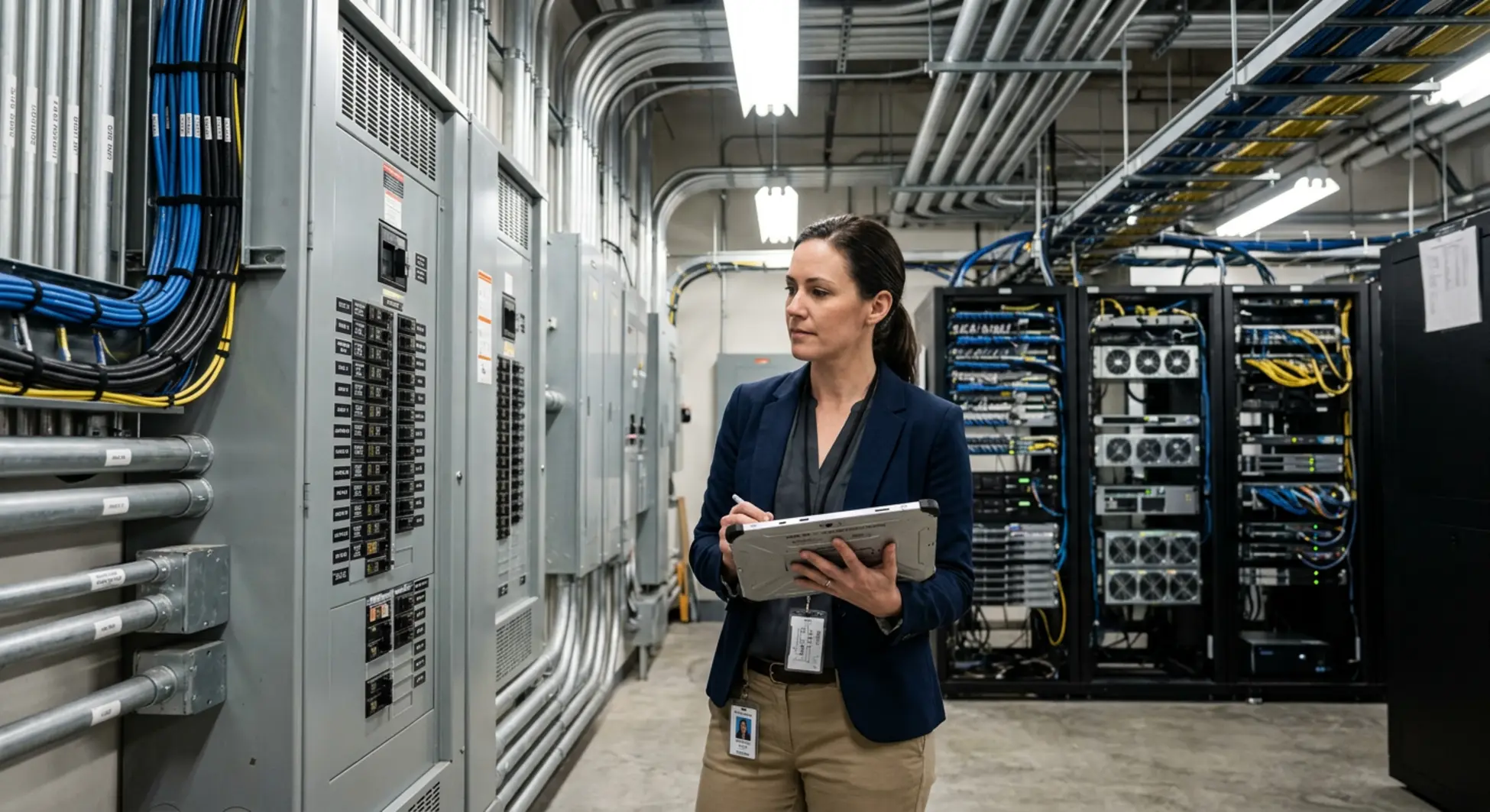
Load calculations are the foundation of your entire electrical system. They determine the size of your main service entrance, the capacity of your distribution panels, and the sizing of every circuit in the building. Get them right and your electrical system works efficiently for the life of the building. Get them wrong and you’re looking at inspection failures, operational bottlenecks, and expensive retrofits when tenants need more power than the system can deliver.
This is not a guess-and-check process. The NEC provides specific calculation methods, and a licensed electrical engineer or experienced electrical contractor applies those methods to your building’s specific load profile — taking into account demand factors, diversity (the fact that not every load runs at full capacity simultaneously), and future growth projections. The result is a calculated load number that drives panel sizing decisions.
Undersized panels are the more common problem. A panel that’s sized for current loads without accounting for future tenant needs or equipment upgrades creates a bottleneck that limits what the building can do. When a tenant wants to add a server room, upgrade their HVAC, or bring in manufacturing equipment, an undersized panel means either a costly service upgrade or a disappointed tenant. Neither outcome is good for building owners or the contractors who built the project.
Oversized panels aren’t free either. Excess capacity costs money in equipment, installation labor, and ongoing maintenance. The goal is accurate sizing — not conservative undersizing, not excessive oversizing, but a panel that meets current needs with appropriate headroom for growth.
North Texas commercial buildings have specific load characteristics that require careful attention. HVAC loads in DFW are substantial — cooling systems in this climate run hard, and they’re often the largest electrical draw in the building. Data infrastructure, manufacturing equipment, and commercial kitchen loads each have their own calculation requirements. A contractor who’s done this work in North Texas knows these nuances. One who hasn’t may miss them.
The cost multiplier for electrical changes made during construction versus during the design phase. Every dollar spent on thorough planning saves three to five dollars in rework.
Common Load Calculation Mistakes
Forgetting future tenant loads. A building designed for a single office tenant today might house a medical practice, a tech company, or a light manufacturing operation in five years. Load calculations that only account for the initial tenant create a system that can’t grow with the building.
Miscalculating HVAC and refrigeration loads. These are typically the largest draws in a commercial building, and they’re also the most variable. In North Texas, where summer temperatures regularly exceed 100°F and cooling systems run at or near capacity for months at a time, accurate HVAC load calculations aren’t optional. Getting them wrong means either an undersized system that can’t keep up or an oversized one that wastes money.
Not factoring in simultaneous usage patterns. Demand factor calculations account for the fact that not everything runs at full load simultaneously. But applying the wrong demand factors — or ignoring them entirely — produces inaccurate load numbers that lead to incorrectly sized panels.
Ignoring North Texas summer peak demand. The regional grid context matters. Buildings in DFW face peak demand conditions during summer months that affect both utility service requirements and system sizing decisions. An electrical contractor who works in this market understands this. One who doesn’t may produce calculations that look right on paper but don’t account for real-world operating conditions.
Conduit Routing and Infrastructure: Plan for Access and Future Flexibility
Conduit routing is one of those things that looks simple on paper and gets complicated fast in the field. The basic principle is straightforward: run conduit from the panel to the loads, sized appropriately for the conductors it carries. The reality involves coordinating with HVAC ductwork, plumbing lines, structural elements, and fire protection systems — all of which are competing for the same ceiling and wall space.
The time to resolve those conflicts is during the design phase, when changes cost nothing but time. The time not to resolve them is during framing, when a conflict between a conduit run and an HVAC duct means someone is stopping work, calling a meeting, and waiting for a redesign. We’ve seen projects lose a week or more to conduit routing conflicts that could have been resolved in an afternoon during design coordination.
North Texas commercial buildings often require multiple conduit runs for redundancy and future expansion. This is especially true for data and communication infrastructure, where a single conduit run that gets damaged or becomes undersized can affect the entire building’s connectivity. Planning for redundant pathways during initial construction adds minimal cost and provides significant operational flexibility.
Material selection matters too. PVC conduit and metal conduit (EMT, rigid, IMC) each have appropriate applications depending on building type, environment, and code requirements. Outdoor runs, areas subject to physical damage, and high-temperature environments each have specific conduit requirements under the NEC and North Texas local amendments. Selecting the wrong material isn’t just a code violation — it’s a durability problem that can require replacement well before the building’s expected service life.
💡 Pro Tip: Build in Spare Capacity
Oversizing your main panel and conduit runs by 20–30% during initial construction costs a few thousand dollars now but saves tens of thousands when your tenant needs to upgrade equipment or add new systems later. We’ve seen building owners spend $60,000–$80,000 retrofitting conduit infrastructure that would have cost $4,000–$6,000 to upsize during the original build. It’s one of the clearest examples of where spending a little more upfront pays for itself many times over.
Conduit Planning Best Practices
Identify all electrical loads and their locations before finalizing conduit routes. This sounds obvious, but it requires coordination with the architect, MEP engineer, and sometimes the end user or tenant. A conduit route that works for a general office layout may not work for a building that will house a data center or commercial kitchen.
Plan for 20–30% spare capacity in main conduit runs. This is the single most cost-effective future-proofing measure available during initial construction. Pulling additional wire through existing conduit is cheap. Installing new conduit runs after the building is occupied is expensive, disruptive, and often requires ceiling demolition.
Coordinate with the MEP engineer to avoid conflicts. The MEP coordination process exists specifically to identify and resolve conflicts between electrical, HVAC, plumbing, and structural systems before they become field problems. Don’t skip it, don’t rush it, and don’t treat it as a formality. The time invested in MEP coordination pays back multiple times during construction.
Use labeled conduit systems for easy identification. Color-coded or labeled conduit makes maintenance, troubleshooting, and future modifications significantly easier. It’s a small investment during installation that building owners and future contractors will appreciate for decades.
Backup Power and Emergency Systems: What North Texas Requires
Not every commercial building in North Texas requires a backup generator. But more buildings require some form of backup power than most general contractors realize, and the requirements are specific enough that assuming you don’t need it without checking is a risky approach.
The NEC and North Texas local amendments require emergency lighting and exit sign power for virtually all commercial buildings — this is a life safety requirement, not optional. Fire alarm systems require backup power. Buildings with elevators have specific requirements for elevator recall power. Hospitals, dialysis centers, and other healthcare facilities have extensive backup power requirements that go well beyond basic life safety. Data centers and critical infrastructure facilities often have contractual requirements for backup power that exceed what code mandates.
For buildings that do require backup power, the planning implications are significant. Generator sizing must be based on critical loads — the loads that need to stay on during a power outage — not total building load. A generator sized for total building load is almost always oversized and overpriced. A generator sized only for critical loads is appropriately sized and cost-effective. Getting that calculation right requires understanding which loads are critical for your specific building type and use.
Fuel storage for standby generators must comply with North Texas fire codes, which have specific requirements for tank sizing, placement, and containment. These requirements affect where the generator can be located on the site and how fuel delivery is managed — decisions that need to be made during the design phase, not after the building is framed.
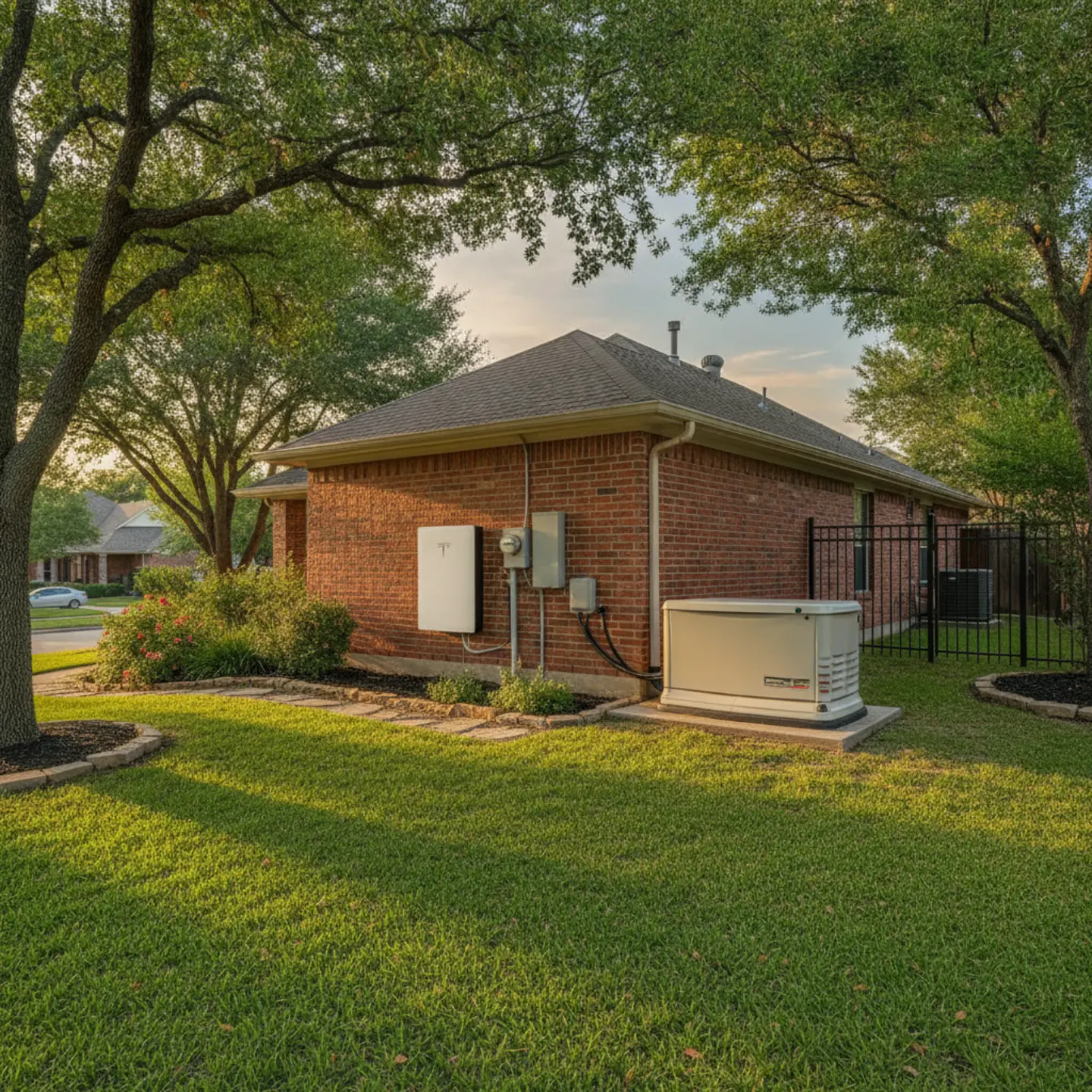
The automatic transfer switch (ATS) is the component that detects a utility power failure and switches the building to generator power automatically. ATS placement, sizing, and wiring must be planned during design to ensure it can perform this function reliably. An ATS that requires manual intervention to switch over isn’t meeting code requirements for most emergency power applications. For comprehensive guidance on emergency electrical systems and backup power solutions, involving your electrical contractor during the design phase is essential.
Generator and ATS Considerations
Generator capacity sizing. Size for critical loads, not total building load. Work with your electrical contractor to identify which loads must remain operational during a power outage and size the generator accordingly. This produces a right-sized system that costs less to purchase, install, and maintain.
Fuel supply and storage compliance. North Texas fire codes have specific requirements for diesel fuel storage tanks, including secondary containment, distance from building openings, and spill prevention. These requirements affect site planning and must be coordinated with the civil engineer and fire marshal during the design phase.
ATS placement and wiring. The ATS must be located where it can monitor utility power and control the generator reliably. Wiring between the utility service, the ATS, and the generator must be planned and sized during the design phase. Retrofitting ATS wiring after construction is expensive and often disruptive to occupied spaces.
Testing and maintenance requirements. NFPA 110, which governs emergency and standby power systems, requires regular testing and maintenance of backup power systems. Building owners need to understand these requirements before occupancy — they’re not optional, and they have real ongoing costs that should be factored into building operations budgets.
Coordinating with Your Electrical Contractor: What to Expect
The relationship between a general contractor and an electrical contractor on a commercial project works best when it starts early and stays communicative throughout. We’ve been on both sides of this relationship, and the projects that go well are the ones where everyone is at the table from the beginning — not where the electrical contractor shows up after the plans are finalized and is expected to make everything work.
Early contractor involvement catches design conflicts before they become field problems. It also identifies cost-saving opportunities that aren’t visible from the architect’s drawings alone. An experienced electrical contractor who reviews plans during the design phase will often find ways to simplify conduit routing, optimize panel placement, or specify materials that perform better and cost less than what was originally specified. That value doesn’t exist if the contractor isn’t involved until construction starts.
Regular coordination meetings — with the electrical contractor, architect, MEP engineer, and other key trades — are essential on commercial projects. These don’t need to be lengthy or formal. A 30-minute weekly coordination call during the design phase catches conflicts early and keeps everyone aligned. The cost of these meetings is negligible compared to the cost of resolving conflicts discovered during construction.
Clear communication about budget, timeline, and code requirements prevents misunderstandings that derail projects. If your electrical contractor tells you the timeline you’re proposing isn’t realistic for permit processing in your jurisdiction, listen to them. If they tell you the budget doesn’t account for a required backup power system, that’s not a negotiating position — it’s a code reality. Working with experienced commercial electrical contractors in North Texas means you get honest assessments, not just the answers you want to hear.
A good contractor will push back on unrealistic timelines and budgets. That’s not a problem — that’s exactly what you want. A contractor who agrees to everything without question is either not paying attention or planning to figure it out later. Later is when it gets expensive.
Questions to Ask Your Electrical Contractor
Before you commit to an electrical contractor for a new commercial build in North Texas, these questions will tell you a lot about whether they’re the right fit:
“How many similar commercial projects have you completed in North Texas in the last three years?” Experience in this specific market matters. The code landscape, the inspection culture, and the supply chain dynamics in DFW are different from other markets. You want someone who knows this territory.
“What’s your experience with our specific building type and use case?” A contractor who specializes in office buildings may not have the same depth of experience with data centers, healthcare facilities, or light manufacturing. Match the contractor’s experience to your project’s requirements.
“How do you handle code changes or inspector feedback during construction?” This question reveals how the contractor manages the unexpected. The right answer involves a clear process for reviewing feedback, communicating with the GC, and implementing changes efficiently. A vague answer is a yellow flag.
“What’s your process for coordinating with other trades and the general contractor?” Look for a contractor who has a defined coordination process — regular meetings, shared documentation, clear communication protocols. Contractors who work in isolation create problems for everyone else on the project.
“Can you provide references from recent commercial projects in North Texas?” References from projects similar to yours, completed recently, in this market are the best evidence of capability. Call the references. Ask specifically about timeline adherence, communication, and how the contractor handled problems when they arose.
If you’re at the design phase and want to make sure your electrical plan is solid before you break ground, a quick review by someone who’s done this hundreds of times in North Texas can save you thousands in rework and delays. No pressure, no sales pitch — just a straight assessment of where your plan stands.
Budget Planning: What Commercial Wiring Actually Costs
Commercial wiring costs vary widely, and anyone who gives you a precise number without knowing your building’s size, complexity, and specific requirements is guessing. That said, there are reasonable benchmarks that help with budget planning, and understanding the factors that drive costs up or down helps you have more productive conversations with your electrical contractor.
For basic commercial buildings — office spaces, retail, straightforward mixed-use — commercial wiring in North Texas typically runs $8–15 per square foot. That range covers standard panel sizing, basic conduit infrastructure, lighting circuits, and power outlets without specialized systems. For more complex buildings — those with data centers, backup power systems, manufacturing equipment, or specialized HVAC loads — costs typically run $15–25 per square foot or more. Healthcare facilities and critical infrastructure can go higher still.
Material costs have increased significantly over the past several years. Copper wire, conduit, and electrical panels are all more expensive than they were five years ago, and supply chain volatility has made pricing less predictable. This is another reason to involve your electrical contractor early — they can provide current material pricing and flag long-lead items that need to be ordered well in advance of installation.
Labor costs in North Texas are competitive relative to other major metros, but they vary based on contractor experience, project complexity, and market conditions. Tight labor markets — which DFW has experienced in recent years — push costs up and extend timelines. A contractor who’s honest about current labor market conditions and their own capacity is more valuable than one who promises whatever it takes to win the bid.
✅ Budget Surprises Are Preventable
Most electrical cost overruns stem from incomplete planning, not market fluctuations. A thorough design phase with accurate load calculations and code review prevents roughly 80% of budget surprises. The remaining 20% — genuine market changes and unforeseen field conditions — are manageable with a 10–15% contingency built into your electrical budget. Plan thoroughly, budget honestly, and the surprises become manageable.
Cost Factors That Impact Your Budget
Building size and square footage. Larger buildings benefit from economies of scale — the cost per square foot typically decreases as building size increases because fixed costs (service entrance, main panel, mobilization) are spread over more square footage. But larger buildings also have more complex distribution systems, so the relationship isn’t perfectly linear.
Complexity of electrical loads. A 20,000-square-foot office building and a 20,000-square-foot data center have very different electrical systems. The data center requires higher-capacity service, redundant power distribution, UPS systems, and precision cooling — all of which add significant cost. Manufacturing facilities with heavy equipment loads, commercial kitchens with high-amperage cooking equipment, and healthcare facilities with life safety systems all carry cost premiums over basic office or retail construction.
Code requirements specific to your building type. Backup power systems, fire alarm integration, emergency lighting, and redundancy requirements add cost that’s non-negotiable. These aren’t optional upgrades — they’re code requirements. Budget for them from the beginning rather than treating them as surprises.
Material availability and long-lead items. Large transformers, custom switchgear, and specialty panels can have lead times of 16–24 weeks or more in the current market. Ordering these items late adds weeks to your project timeline and may require expediting fees. Your electrical contractor should identify long-lead items during the design phase and get orders placed as early as possible.
Labor availability. The DFW construction market is competitive, and experienced commercial electricians are in demand. Contractors who are overcommitted take longer and make more mistakes. Verify that your electrical contractor has the crew capacity to staff your project appropriately before you sign a contract.
Permits, Inspections, and Closeout: The Final Stretch
The permit and inspection process is where thorough planning either pays off or comes back to haunt you. Projects that were well-planned sail through inspections. Projects that weren’t spend the final stretch doing rework, waiting for re-inspections, and explaining delays to clients who were expecting a different completion date.
Electrical permits in North Texas typically take 2–4 weeks to obtain, depending on the jurisdiction and the complexity of the project. Some cities have expedited review processes available for a fee — worth considering if your timeline is tight. The key point is that permit processing time is fixed — you can’t rush it by starting installation without a permit. The only way to avoid permit-related delays is to submit early, which means having your electrical plans finalized early enough to submit during the pre-construction phase.
Inspections occur at multiple stages of the project, and each must pass before the next phase can begin. This isn’t a bureaucratic formality — it’s a quality control process that protects the building, its occupants, and the contractor. North Texas inspectors are thorough, code-focused, and not inclined to overlook issues. Expect detailed reviews and be prepared to address feedback promptly. Working with commercial electrical services that handle permits and inspections as part of their standard process means you’re not navigating this alone.
Closeout documentation is often underestimated in its importance. As-built drawings, equipment certifications, maintenance manuals, and warranty documentation are all required for project closeout and are often required by the building owner’s lender or insurance carrier. Contractors who treat closeout documentation as an afterthought create headaches at the end of the project when everyone is ready to move on. Build closeout documentation requirements into your contract with the electrical contractor from the beginning.
Inspection Checkpoints and Common Issues
Rough-in inspection covers conduit routing, box placement, wire sizing, and installation methods. Common issues at this stage include improper conduit support spacing, boxes that aren’t accessible or are improperly sized, and wire sizing that doesn’t match the circuit’s overcurrent protection. These are all things that should have been caught during design review but occasionally make it to the field.
Panel inspection focuses on the main panel and distribution panels — breaker sizing, branch circuit organization, labeling, and grounding. Inspectors look carefully at whether the panel is properly sized for the calculated load, whether circuits are properly labeled, and whether the grounding system meets local requirements. Missing or incomplete labels are a surprisingly common reason for panel inspection failures.
Final inspection is the comprehensive review — load testing, grounding continuity verification, emergency system functionality, and overall system performance. This is where everything comes together, and where any issues that weren’t caught earlier become apparent. A well-planned, well-executed project passes final inspection on the first try. A project with planning gaps or installation shortcuts often doesn’t.
Common failure points across all inspection stages include improper grounding, undersized conductors, missing or incorrect labels, and code violations that resulted from using outdated code versions or failing to account for local amendments. All of these are preventable with thorough planning and a contractor who knows current North Texas requirements.
Future-Proofing Your Commercial Electrical System
Commercial buildings don’t stay the same. Tenants change. Equipment gets upgraded. Technology demands increase. The building you’re constructing today will be used in ways that aren’t fully predictable — and the electrical infrastructure you put in during initial construction either supports that evolution or constrains it.
Building in spare capacity during initial construction is the most cost-effective future-proofing strategy available. Oversizing your main panel by 20–30%, running conduit with 20–30% spare capacity, and planning panel space for future circuits costs a fraction of what retrofitting costs later. We’ve seen building owners spend $50,000–$100,000 on electrical upgrades that would have cost $8,000–$12,000 to build in during initial construction. The math is clear.
Data and communication infrastructure planning should account for future bandwidth and connectivity needs that go well beyond current requirements. Fiber optic infrastructure, structured cabling systems, and wireless access point wiring all require conduit pathways that are cheap to install during construction and expensive to add after. Plan for where technology is going, not just where it is today.
Smart building systems — energy management, automated lighting, HVAC controls, access control, and security systems — require electrical infrastructure that isn’t always obvious from a basic electrical plan. These systems are increasingly standard in commercial buildings, and the wiring and panel space they require needs to be planned during the design phase, not added as an afterthought during construction.
Planning for Technology and Sustainability
EV charging infrastructure is increasingly required or expected in commercial buildings, particularly in North Texas where electric vehicle adoption is accelerating. Planning conduit pathways and panel capacity for EV charging during initial construction is significantly cheaper than retrofitting. Even if EV charging isn’t required now, designing the infrastructure to support it later is a low-cost investment in the building’s long-term value.
Solar-ready electrical systems require specific conduit pathways from the roof to the main electrical room, panel space for inverter connections, and in some cases, structural provisions for panel weight. Adding solar to a building that wasn’t designed for it is possible but expensive. Designing for solar during initial construction — even if solar installation is years away — costs very little and significantly reduces future installation costs.
Energy monitoring and management systems require sub-metering infrastructure, communication wiring, and panel space that needs to be planned during design. These systems are increasingly required by building owners and tenants who want visibility into energy consumption, and they’re a prerequisite for many energy efficiency certifications.
LED and smart lighting systems require different wiring infrastructure than traditional lighting. Dimming circuits, occupancy sensor wiring, and daylight harvesting controls all require planning during the design phase. Retrofitting smart lighting controls into a building wired for traditional switching is possible but adds cost and complexity.
Planning for future growth and technology changes during the initial build is smart business. If you want to make sure your electrical infrastructure is ready for whatever comes next — EV charging, solar, smart building systems — we can help you think through those decisions before they become expensive retrofits.
Red Flags: When to Pause and Get a Second Opinion
Not every electrical contractor is the right fit for every project. And in a market as active as North Texas commercial construction, there are contractors who win bids by underbidding and figure out the details later. Here’s what to watch for — and when to slow down and get another set of eyes on the situation.
If your electrical contractor hasn’t asked detailed questions about your building’s use and future plans, that’s a red flag. A contractor who’s willing to produce a bid without understanding what the building will be used for, what loads it will carry, and what the owner’s plans are for the next 10–15 years is either not paying attention or planning to bid low and change-order their way to profitability. Neither is good for your project.
Unusually low bids deserve scrutiny. We’re not saying the lowest bid is always wrong — sometimes a contractor has a genuine cost advantage. But a bid that’s significantly below the others usually means something was missed, something was underestimated, or the contractor plans to make up the difference through change orders. Ask the low bidder to walk through their bid in detail. The conversation will tell you a lot about whether the number is real.
If code requirements or inspector feedback surprise you mid-project, your planning phase wasn’t thorough enough. This isn’t always the electrical contractor’s fault — sometimes architects or MEP engineers miss things too. But it is a signal that the coordination process broke down somewhere. When surprises happen, the question to ask is: how do we prevent this from happening again on this project and on future projects?
“If you don’t understand the electrical plan, ask questions until you do. Confusion during the design phase costs nothing to resolve. Confusion during construction costs real money and real time.”
Contractors who rush the design phase or skip coordination meetings are setting you up for problems. The design phase isn’t overhead — it’s investment. Every hour spent in coordination during design saves multiple hours of rework during construction. A contractor who treats coordination meetings as optional doesn’t understand this, or doesn’t care. Either way, it’s a problem.
Working with commercial electrical contractors you can trust means working with people who are honest about what they know, what they don’t know, and what your project actually requires. That kind of honesty isn’t always comfortable in the short term — nobody likes hearing that their timeline isn’t realistic or their budget is short. But it’s far more valuable than a contractor who tells you what you want to hear and delivers problems instead of results.
Frequently Asked Questions: Commercial Wiring for New Construction in North Texas
How early should I involve an electrical contractor in the design phase?
Ideally, during the initial design phase — 3–4 months before groundbreaking. Early involvement allows the electrical contractor to review architectural plans, identify conflicts with other trades, and provide accurate load calculations and cost estimates that reflect current material and labor costs. Waiting until construction starts is significantly more expensive and often creates delays that affect your entire project schedule, not just the electrical scope.
What’s the difference between North Texas electrical code and the National Electrical Code?
The NEC is the national standard, but North Texas jurisdictions — Dallas, Fort Worth, Arlington, Plano, and others — add local amendments and enforce specific requirements that go beyond the national baseline. Your contractor must be familiar with both the NEC and your specific city’s amendments, because what passes inspection in one jurisdiction may fail in another. Code violations discovered during inspection can halt your project and require expensive rework that affects your timeline and budget.
How much should I budget for electrical work in a new commercial building?
Commercial wiring in North Texas typically costs $8–15 per square foot for basic systems — standard office, retail, or mixed-use buildings without specialized loads. Complex buildings with backup power, data infrastructure, manufacturing equipment, or healthcare systems typically run $15–25 per square foot or more. Budget 10–15% contingency for unexpected code requirements or design changes, and get detailed quotes from licensed contractors who are familiar with North Texas projects and current material pricing.
What happens if my electrical contractor finds a code violation during construction?
Code violations discovered mid-project require rework, which delays your timeline and increases costs — sometimes significantly. This is precisely why thorough planning and coordination during the design phase is so important. A contractor who catches issues early, during design review, saves you far more money than one who discovers them during construction or, worse, during inspection. When violations are found during construction, the priority is resolving them quickly and documenting the correction for the inspector.
Do I need backup power for my commercial building in North Texas?
It depends on your building type and use. Hospitals, data centers, critical facilities, and most commercial buildings with life safety systems — including emergency lighting and fire alarms — require some form of backup power under North Texas code. Your electrical contractor and your local building department can clarify the specific requirements for your project during the design phase, before you’ve committed to a site plan or building layout that might need to accommodate generator placement.
How long does the electrical permit process take in North Texas?
Electrical permits typically take 2–4 weeks to obtain in North Texas jurisdictions, though this varies by city and project complexity. Some municipalities offer expedited review for an additional fee. The critical point is not to wait until you’re ready to install before submitting — permits should be submitted during the design phase so processing time overlaps with other pre-construction activities. Multiple inspections occur during construction (rough-in, panel, final), and each must pass before the next phase can begin.
Ready to Plan Your North Texas Commercial Wiring Project the Right Way?
We’ve helped hundreds of general contractors in North Texas navigate the electrical planning process for new commercial builds. We know the code, we know the inspectors, and we know how to catch problems before they become expensive disasters. If you’re ready to plan your project the right way — with honest timelines, accurate costs, and no surprises — we’re here to help. No pressure, no sales pitch. Just straight answers from people who’ve done this work for three generations in this market.
Serving Fort Worth, Dallas, Arlington, Keller, Southlake, Colleyville, Grapevine, Frisco, Plano, McKinney, and all of North Texas