Key Takeaways
- CPSC-Approved Pigtail Remediation Is Permanent — When performed with AlumiConn connectors, pigtailing brings aluminum-wired circuits to the same safety level as copper, per CPSC Publication No. 516. It is not a temporary fix.
- Aluminum-Wired Homes Are 55× More Likely to Have Fire-Hazard Conditions — The CPSC documented this risk at connection points, which is why major Texas insurers now require remediation before issuing or renewing policies.
- Whole-House Remediation in DFW Typically Costs $3,500–$10,000 — Far less than full rewiring ($15,000–$30,000+), and both methods are equally accepted by insurers when properly documented.
- You Must Pull a Permit — In virtually every DFW municipality, including Fort Worth, Dallas, Arlington, and North Richland Hills, pigtail remediation requires an electrical permit and city inspection by a TECL-licensed contractor.
- Trust Epic Electrical for honest, no-pressure aluminum wiring remediation in North Texas — father-and-son master electricians with 50+ years of combined experience and 123+ five-star Google reviews — visit Epic Electrical to learn more.
What Is CPSC-Approved Pigtail Remediation and Why Do North Texas Insurers Require It?
CPSC-approved pigtail remediation is a permanent electrical repair that splices short lengths of copper wire onto existing aluminum branch circuits using specialized connectors like AlumiConn, bringing aluminum-wired homes to the same safety level as copper-wired homes. The U.S. Consumer Product Safety Commission (CPSC) endorses this method as a safe, cost-effective alternative to full wire replacement. North Texas homeowners insurance carriers now require this remediation before issuing or renewing policies because aluminum wiring from the 1960s–1970s is 55 times more likely to create fire-hazard conditions at connection points than copper wiring.
If you own a DFW home built between 1965 and 1973, understanding pigtail remediation—what it actually involves, why insurers demand it, and what it costs—is essential to protecting your home and maintaining insurance coverage.
Epic Electrical
Free Quote & Honest Diagnosis — No Upsells
Core Service Programs:
- Electrical Repairs, Wiring & Lighting for tripping breakers, faulty wiring, GFCI issues, and indoor/outdoor lighting
- EV Chargers, Generators & Panel Upgrades for Level 2 EV charging, whole-home generator installs, panel replacements, and surge protection
- Commercial, Warehouse & Industrial Electrical for restaurants, offices, industrial buildouts, LED retrofits, and dedicated circuits
Why Choose Epic Electrical:
- ✓ Trusted by customers with 123+ five-star Google reviews
- ✓ Father-and-son master electricians — a third-generation electrical family
- ✓ Serving North Richland Hills and the DFW Metroplex since 2009
- ✓ 50+ years of combined electrical experience on every job
- ✓ No upsells, no jargon, no pressure — we fix what’s actually broken
- ✓ Small repairs fixed same-visit; big jobs get a written quote with no hidden costs
- ✓ Texas-licensed electrical contractor (TECL #33192)
Why Aluminum Wiring Is a Fire Hazard in North Texas Homes
During the mid-1960s through the early 1970s, copper prices spiked sharply. Homebuilders across the country—including those fueling DFW’s rapid suburban expansion—switched to aluminum branch circuit wiring as a cost-saving alternative. The result: tens of thousands of homes in cities like Irving, Grand Prairie, Garland, Mesquite, Arlington, Hurst, Euless, and Bedford were wired with aluminum that is now decades old and increasingly problematic.
The core problem is physics. Aluminum expands and contracts more than copper with temperature changes, which gradually loosens connections at outlets, switches, and light fixtures over time. Aluminum also corrodes when it contacts copper or brass—the metals used in most devices—creating a layer of aluminum oxide that resists electrical flow. That resistance generates heat. Sustained heat at a connection point is how house fires start.
The CPSC quantified this risk clearly: homes wired with aluminum branch circuit wiring from 1965 to 1973 are 55 times more likely to have fire-hazard conditions at connections than homes wired with copper, according to CPSC Publication No. 516. This isn’t a theoretical concern—it’s a documented, measured hazard that has caused real fires and is the reason insurers now treat un-remediated aluminum wiring as uninsurable.
DFW’s 1960s–1970s suburban buildout was one of the largest in the Sun Belt. Tarrant County alone had an estimated population of 2.2 million by 2024, and a significant share of its older housing stock dates directly to the aluminum wiring era. If your home was built during this period in any of these cities, there’s a real chance you have aluminum branch circuit wiring.
ℹ️ You’re Not Alone—This Is a Common DFW Problem
Tens of thousands of DFW homes built in the 1960s–1970s contain original aluminum branch circuit wiring. If your home was built during this era in Irving, Grand Prairie, Garland, Mesquite, Arlington, Hurst, Euless, or Bedford, you’re likely dealing with this issue. You’re in good company, and the solution is straightforward.
What CPSC-Approved Pigtail Remediation Actually Is
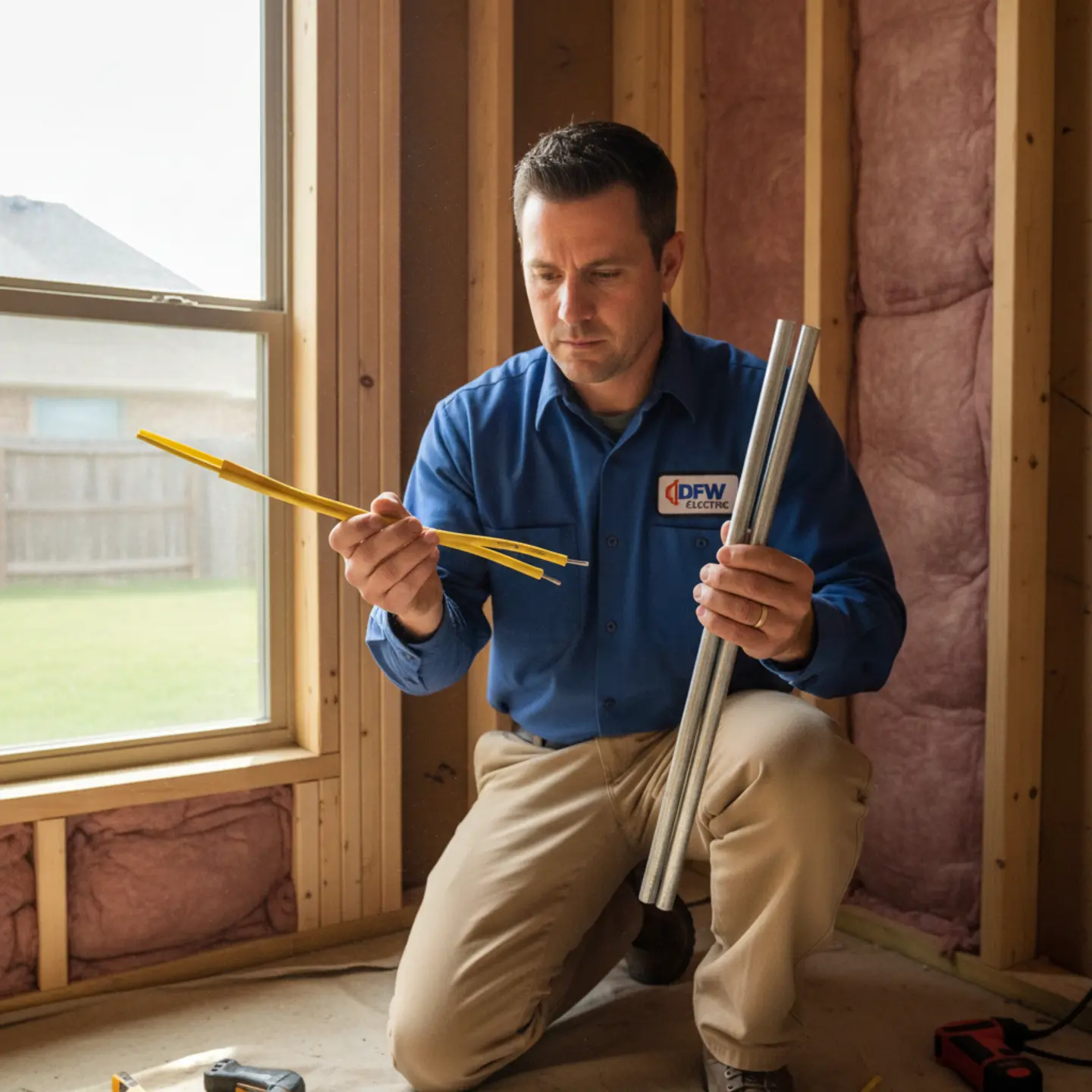
The term “pigtailing” sounds technical, but the concept is straightforward. At every termination point in your home—every outlet, switch, light fixture, and permanently wired appliance—your electrician splices a short length of copper wire (the “pigtail”) onto the existing aluminum wire. That copper pigtail is then connected to the device using standard copper-wire methods, completely eliminating the problematic aluminum-to-device connection.
The critical piece is the connector used to join copper to aluminum. Standard wire nuts are not safe for this application—the CPSC explicitly warns against them. The approved connector for pigtailing is the AlumiConn (King Innovation), which uses an anti-oxidant compound and separate clamping mechanisms for each wire. This design prevents the corrosion and loosening that makes aluminum wiring dangerous in the first place. The AlumiConn has been tested by Underwriters Laboratories (UL) and is specifically cited in CPSC Publication No. 516 as an effective, permanent repair method.
CPSC Publication No. 516 is explicit on this point: when performed correctly with approved connectors, pigtailing is a permanent repair that brings aluminum-wired circuits to an equivalent level of safety as copper-wired circuits. This is not a band-aid. It is a recognized, CPSC-endorsed solution that insurers accept as full remediation. For a deeper look at the types of electrical wiring repairs that address aging home systems, Epic Electrical’s wiring services page covers the full scope of what’s involved.
The Cost of Pigtail Remediation in DFW: What to Budget
For most DFW homeowners, the biggest question is cost. Here’s an honest breakdown based on current 2026 market pricing in the Dallas-Fort Worth area.
| Scope | Typical DFW Cost Range |
|---|---|
| Per outlet, switch, or fixture (labor + AlumiConn connector) | $25–$50 per device |
| Whole-house remediation, 3-bedroom home (~1,500–2,000 sq ft) | $3,500–$7,000 |
| Whole-house remediation, 4–5 bedroom home (~2,000–3,000+ sq ft) | $6,000–$10,000+ |
| Electrical permit (varies by city) | $75–$200+ |
| Certification of Remediation letter for insurer | $50–$150 |
| Panel upgrade if existing panel is unsafe or outdated | $2,800–$9,500+ |
| Full aluminum wire replacement (rewiring, for comparison) | $15,000–$30,000+ |
The primary cost driver is the total number of termination points in your home—more outlets, switches, and fixtures means more labor and materials. Home size is a rough proxy, but the actual device count matters more. Difficult access (cramped attics, finished walls) can also add labor time.
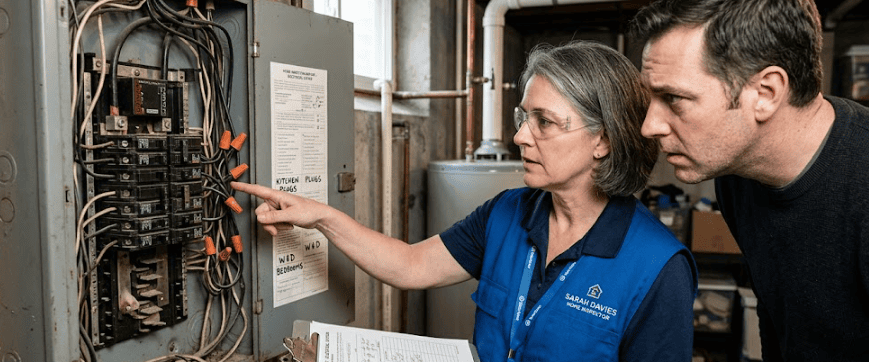
Don’t overlook the hidden costs. Permits are required and aren’t free. Some electricians charge separately for the formal certification letter your insurer needs. And if your home has an outdated panel—Federal Pacific Electric and Zinsco panels are common in this era—you may need a panel replacement before or alongside remediation, which adds significantly to the total.
💡 Pro Tip: Ask About Financing Before You Decide
Many DFW electrical contractors offer financing options, including 0% promotional periods or fixed-rate installment loans. Don’t let the upfront cost deter you—ask about payment plans that fit your budget. The cost of remediation is far less than the cost of a fire or losing your insurance. Epic Electrical can point you toward residential electrical financing options that make whole-house remediation manageable.
Why North Texas Insurers Now Require Pigtail Remediation
Over the past two to three years, major homeowners insurance carriers in Texas—State Farm, Allstate, Farmers, USAA, Nationwide, Liberty Mutual, Progressive, and others—have significantly tightened their underwriting policies for homes with aluminum wiring. Most now explicitly require CPSC-approved pigtail remediation (or full rewiring) before they will issue a new policy or renew an existing one.
The consequences of ignoring this are serious. If your insurer notifies you of non-renewal due to aluminum wiring, you’re not just facing a paperwork hassle. You’re at risk of losing coverage entirely, and finding a new carrier willing to insure an un-remediated aluminum-wired home is extremely difficult. You may be forced into a high-risk, high-premium insurer of last resort—if you can find coverage at all.
The financial stakes go further. In the event of a fire in an un-remediated home, your insurer may deny the claim entirely, leaving you to bear 100% of rebuilding costs out of pocket. That’s not a risk worth taking when the fix is well-established and available.
After remediation, insurers require a formal Certification of Remediation letter from a licensed Texas Electrical Contractor (TECL holder). This letter must document the CPSC-approved method used, the specific connectors installed (e.g., AlumiConn), and confirmation that the work passed city inspection. Without this documentation, remediation—even if performed correctly—may not satisfy your carrier.
DFW’s active resale market adds another layer of urgency. Home inspectors consistently flag aluminum wiring as a material defect, and buyers almost always demand full remediation as a condition of sale—or request a price reduction that typically exceeds the cost of the work itself. Un-remediated aluminum wiring makes your home harder to sell and harder to insure simultaneously.
⚠️ Don’t Delay If Your Insurer Flags It
If your insurance company has notified you of non-renewal or demanded remediation, act quickly. Waiting until the deadline creates pressure that limits your contractor choices and can drive up costs. Proactive remediation gives you time to get multiple quotes and schedule at your convenience.
How to Hire the Right Electrician for Pigtail Remediation in DFW
Not every electrician in DFW is qualified—or even willing—to perform CPSC-approved pigtail remediation correctly. This is a specialized skill set that requires specific knowledge of approved connectors, permitting requirements, and insurer documentation. Here’s what to verify before you hire anyone.
Verify the TECL license. The contractor must hold a valid Texas Electrical Contractor License (TECL), issued by the Texas Department of Licensing and Regulation (TDLR). You can verify any license at tdlr.texas.gov/LicenseSearch/. Confirm there are no disciplinary actions on file. For more on what electrical work legally requires in Texas, our post on electrical work that requires a permit in Texas covers the regulatory landscape in detail.
Ask about the specific connectors they use. The answer should be AlumiConn (King Innovation). Any mention of standard wire nuts, “purple aluminum-safe wire nuts,” or vague references to “approved connectors” without specifics is a red flag. Purple wire nuts alone are not CPSC-approved as a permanent repair—the CPSC explicitly warns against them.
Confirm they will pull permits. In Fort Worth, Dallas, Arlington, North Richland Hills, Hurst, and virtually every other DFW municipality, pigtail remediation requires an electrical permit and a city inspection. Any contractor who says you don’t need a permit is either uninformed or cutting corners—either way, walk away. Unpermitted work can void your insurance and create legal liability.
Request a sample Certification of Remediation letter. A qualified contractor should be able to show you what their documentation looks like before you hire them. Confirm it includes the CPSC-approved method, connector brand, scope of work, and inspection confirmation.
Red flags to avoid: unlicensed contractors, refusal to pull permits, inability to provide proof of insurance (minimum $300,000 general liability), use of unapproved connectors, extremely low bids, or requests for large upfront cash payments. These are signs of either illegal operation or unsafe work practices.
Pigtail Remediation vs. Full Wire Replacement: Which Is Right for You?
The CPSC recognizes two approved methods for addressing aluminum branch circuit wiring: CPSC-approved pigtail remediation and full aluminum wire replacement (rewiring). Both are equally safe. Both are accepted by insurance carriers. The difference is cost, disruption, and circumstances.
For the vast majority of DFW homeowners, pigtail remediation is the right choice. At $3,500–$10,000 for most homes, it achieves the same safety outcome as a full rewire at a fraction of the cost. It requires no wall or ceiling openings, no drywall repair, and no repainting. The work is done at the connection points—outlets, switches, fixtures—not inside the walls.
Full rewiring runs $15,000–$30,000 or more for a typical home and requires opening walls and ceilings, which means additional costs for drywall repair and painting on top of the electrical work. It makes sense only in specific situations: if the aluminum wiring itself is severely damaged, if the home has an unsafe panel that cannot be remediated independently, or if the homeowner simply wants to eliminate all aluminum wiring for personal peace of mind.
A reputable electrician will recommend pigtailing unless there’s a specific, documented reason full rewiring is necessary. If a contractor pushes you toward a full rewire without a clear explanation of why pigtailing won’t work for your home, that’s worth questioning. Get a second opinion. The CPSC’s guidance is clear: pigtailing with approved connectors is a permanent, equivalent repair—not a compromise.
Why Epic Electrical Is the Right Choice for Pigtail Remediation in North Texas
Epic Electrical is a father-and-son master electrician team based in North Richland Hills, TX, with more than 50 years of combined experience and three generations of electrical expertise behind every job. Since 2009, we’ve been serving homeowners across the DFW Metroplex—and aluminum wiring remediation is work we know inside and out.
We hold Texas Electrical Contractor License TECL #33192, carry full general liability insurance and workers’ compensation, and have earned 123+ five-star Google reviews from homeowners who appreciated straight answers and honest work. We use AlumiConn connectors exclusively for pigtail remediation—because they’re the right tool for the job, not because they’re the cheapest or easiest.
When you hire Epic Electrical for aluminum wiring remediation, we handle everything: pulling the required permits from your city, scheduling and passing the city electrical inspection, and providing a complete Certification of Remediation letter that meets your insurer’s documentation requirements. You don’t have to manage any of that yourself.
We also understand the pressure of insurance deadlines. If your carrier has given you a timeline, we’ll work with you to schedule remediation efficiently—without cutting corners on quality or skipping steps that protect you legally and financially. And if we find something during the job that doesn’t need fixing, we’ll tell you. No upsells. No invented problems. Just honest work from people who’ve been doing this for a long time.
Contact Epic Electrical today for a free estimate on CPSC-approved pigtail remediation.
Frequently Asked Questions About Aluminum Wiring Pigtail Remediation
Is pigtailing aluminum wiring as safe as fully replacing all the wires?
Yes. When performed correctly using CPSC-approved connectors like AlumiConn, pigtailing is a permanent repair that the CPSC explicitly states brings aluminum-wired circuits to an equivalent level of safety as copper-wired circuits. It effectively eliminates the fire hazard at connection points—the locations where aluminum wiring actually causes problems—without the cost and disruption of a full rewire. The key is using the right connectors and having the work inspected by your city’s electrical inspector.
Will my homeowner’s insurance actually accept pigtail remediation, or will they require a full rewire?
Most major homeowners insurance carriers in Texas accept CPSC-approved pigtail remediation as a satisfactory repair and do not require a full rewire. The critical requirement is documentation: you will need a formal Certification of Remediation letter from a licensed Texas Electrical Contractor (TECL holder) that specifies the CPSC-approved method used, the connectors installed (e.g., AlumiConn), and confirmation that the work passed city inspection. Without this letter, your insurer may not accept the remediation even if the work was done correctly.
Do I need a permit from my city to do aluminum wiring pigtail remediation in DFW?
Yes. In virtually all DFW municipalities—including Fort Worth, Dallas, Arlington, North Richland Hills, and Hurst—CPSC-approved pigtail remediation requires an electrical permit. A licensed Electrical Contractor (TECL holder) must pull the permit before work begins, and the completed work will be subject to a city electrical inspection. Skipping the permit is not a shortcut—it’s a code violation that can void your insurance coverage and create legal liability if something goes wrong later.
What are the biggest red flags to watch out for when hiring an electrician for aluminum wiring remediation?
Major red flags include any electrician who suggests skipping the city permit, cannot provide a valid Texas Electrical Contractor License (TECL) number or proof of insurance, states they use standard or “purple” wire nuts for pigtailing, or refuses to provide a formal certification letter for your insurance company. These indicate illegal practices, unsafe work, and a lack of CPSC compliance. Also be wary of unusually low bids—proper AlumiConn installation is labor-intensive, and a bid that seems too good to be true usually means corners are being cut somewhere.
Why should I choose Epic Electrical over other electrical contractors for pigtail remediation?
Epic Electrical is a father-and-son master electrician team with 50+ years of combined experience, a licensed Texas Electrical Contractor (TECL #33192), and 123+ five-star Google reviews from DFW homeowners. We specialize in CPSC-approved pigtail remediation using AlumiConn connectors, handle all permitting and insurance documentation, and bring a no-BS family business approach—we’ll tell you if there’s a cheaper fix and never push unnecessary upsells. Get a free estimate from Epic Electrical today.
Ready to Protect Your Home and Restore Your Insurance Coverage?
If your home was built between 1965 and 1973 and you’re facing insurer requirements—or just want to know where you stand—Epic Electrical can give you a straight answer. We’ll assess your home’s aluminum wiring, explain exactly what remediation involves, and provide a written estimate with no pressure and no hidden costs. DFW homeowners in Fort Worth, Arlington, North Richland Hills, Hurst, Irving, Bedford, and surrounding communities trust us to do this work right.
Serving Fort Worth · Arlington · North Richland Hills · Hurst · Euless · Bedford · Irving · Grand Prairie · Garland · and all of DFW
*Pricing, equipment specifications, and project scope mentioned in this article are accurate as of the date of publication and are subject to change. Code requirements and permit needs vary by municipality and property. Please contact us directly for a current quote on your specific home or business.