Commercial Electrician for Warehouses – Free Estimates in DFW
Key Takeaways
- Free Estimates, No Pressure — Epic Electrical provides detailed, itemized warehouse electrical estimates at no cost and with zero obligation to proceed.
- Electrical Downtime Costs Real Money — Every hour your warehouse is down due to electrical failure hits your bottom line directly; preventive maintenance costs far less than emergency repairs.
- Warehouses Need Specialized Commercial Expertise — Commercial electrical systems carry higher loads, stricter code requirements, and greater liability than residential work — residential electricians aren’t equipped for this.
- Common Problems Are Fixable — Overloaded circuits, outdated panels, inadequate outlets, and aging wiring are all issues we see regularly in DFW warehouses — and all of them have straightforward solutions.
- Upgrades Pay for Themselves — LED lighting alone can reduce energy costs by 40–60%, and modern panel systems reduce waste and equipment strain over time.
- We’ll Tell You If You Don’t Need It — As a 3rd-generation family business, we’d rather lose a job than oversell you. If a cheaper fix works, that’s what we’ll recommend.
- 24/7 Emergency Response — Critical electrical failures don’t follow business hours, and neither do we. Same-day response for urgent warehouse safety issues across Dallas-Fort Worth.
Picture this: it’s peak shipping season, your warehouse is running at full capacity, and the lights start flickering. Then a breaker trips. Then another. Your forklift charging stations go offline, your security system throws an error, and your team is standing around waiting while every minute ticks by. You call the first electrician you can find online, and they show up, look around, and hand you a quote that makes your stomach drop — with no real explanation of what you’re actually paying for.
That scenario plays out more often than it should in warehouses across the Dallas-Fort Worth area. And the frustrating part isn’t just the downtime — it’s the uncertainty. You don’t know if the problem is minor or serious, whether the quote is fair, or whether the electrician actually understands commercial systems. You just need someone honest to walk through your facility, tell you what’s going on, and give you a straight answer.
That’s exactly what we do. Epic Electrical is a 3rd-generation family business serving DFW warehouses with free estimates, honest pricing, and no pressure to buy anything you don’t need. If there’s a cheaper fix, we’ll tell you. If something can wait, we’ll say so. And if something genuinely needs attention right now, we’ll explain exactly why — in plain language, not electrician jargon.
This guide covers everything warehouse managers and business owners need to know about commercial electrical service — from the most common problems we see in DFW facilities to what a proper estimate actually looks like, and how to think about upgrades that make financial sense for your operation.
Why Warehouses Need Reliable Commercial Electrical Service
A warehouse isn’t just a big building with lights. It’s a complex operational environment where electricity powers nearly every critical system — from the forklifts and charging stations to the HVAC keeping your team comfortable, the security cameras watching your inventory, the dock door controls, and the lighting that determines whether your workers can safely do their jobs. When any part of that electrical infrastructure underperforms or fails, the ripple effects hit fast.
Our commercial electrical services are built specifically for environments like this — high-demand, high-stakes, and zero tolerance for downtime. Residential electrical work and commercial electrical work are fundamentally different disciplines, and warehouses sit at the more complex end of the commercial spectrum. The loads are heavier, the systems are more interconnected, and the codes are stricter. Getting this work done right the first time isn’t just about convenience — it’s about protecting your people, your equipment, and your business.
The Cost of Electrical Downtime
Let’s talk numbers for a moment, because this is where the stakes become very real. Every hour your warehouse is down due to an electrical failure is an hour of lost productivity. Depending on your operation, that could mean delayed shipments, missed fulfillment windows, idle labor costs, or penalties from clients expecting on-time delivery. For a mid-sized warehouse operation, even a few hours of downtime can cost thousands of dollars — far more than the cost of the repair itself.
Here’s the part that catches a lot of warehouse managers off guard: emergency electrical repairs typically cost two to three times more than the same work done proactively. When you call an electrician in a crisis — after hours, during peak operations, with pressure to get back online fast — you’re paying a premium for urgency. The parts are the same, the labor hours may be similar, but the circumstances drive the cost up significantly. Preventive maintenance and scheduled upgrades, by contrast, can be planned, budgeted, and executed on your timeline.
There’s also the insurance angle. Many commercial property insurance policies include provisions about maintaining electrical systems in safe, code-compliant condition. If an electrical fire or equipment failure occurs and an investigation reveals that the system had known issues that weren’t addressed, your claim could be denied or reduced. That’s a risk most warehouse operators don’t think about until it’s too late.
Safety and Compliance in Commercial Spaces
OSHA’s electrical safety standards apply directly to warehouse environments, and they’re not optional. Employers are required to maintain electrical equipment in safe condition, ensure proper grounding and bonding, and protect workers from electrical hazards. Local codes in Texas — which follow the National Electrical Code with state-specific amendments — add additional requirements around wiring methods, panel capacity, and circuit protection.
Faulty wiring is one of the leading causes of commercial building fires in the United States. In a warehouse environment, where you may have flammable materials, cardboard, packaging supplies, and densely stacked inventory, the risk is amplified. Proper grounding protects expensive equipment from damage. Surge protection prevents a single power event from wiping out thousands of dollars in electronics and control systems. These aren’t nice-to-haves — they’re the foundation of a safe facility.
When you hire an inexperienced electrician or someone without commercial credentials to work on your warehouse, you’re not just risking a bad repair. You’re potentially creating code violations that can surface during inspections, sales, refinancing, or insurance audits. The liability exposure from non-compliant work in a commercial setting is significant — and it falls on the property owner or operator, not the electrician who did the work.
Common Warehouse Electrical Problems We See in DFW
After decades of working in warehouses across the Dallas-Fort Worth area, we’ve seen the same problems come up again and again. Sometimes they develop slowly over years as a facility ages and equipment demands grow. Sometimes they show up suddenly after a new piece of equipment gets added to an already-strained system. Either way, recognizing these issues early is the difference between a scheduled repair and an emergency shutdown.
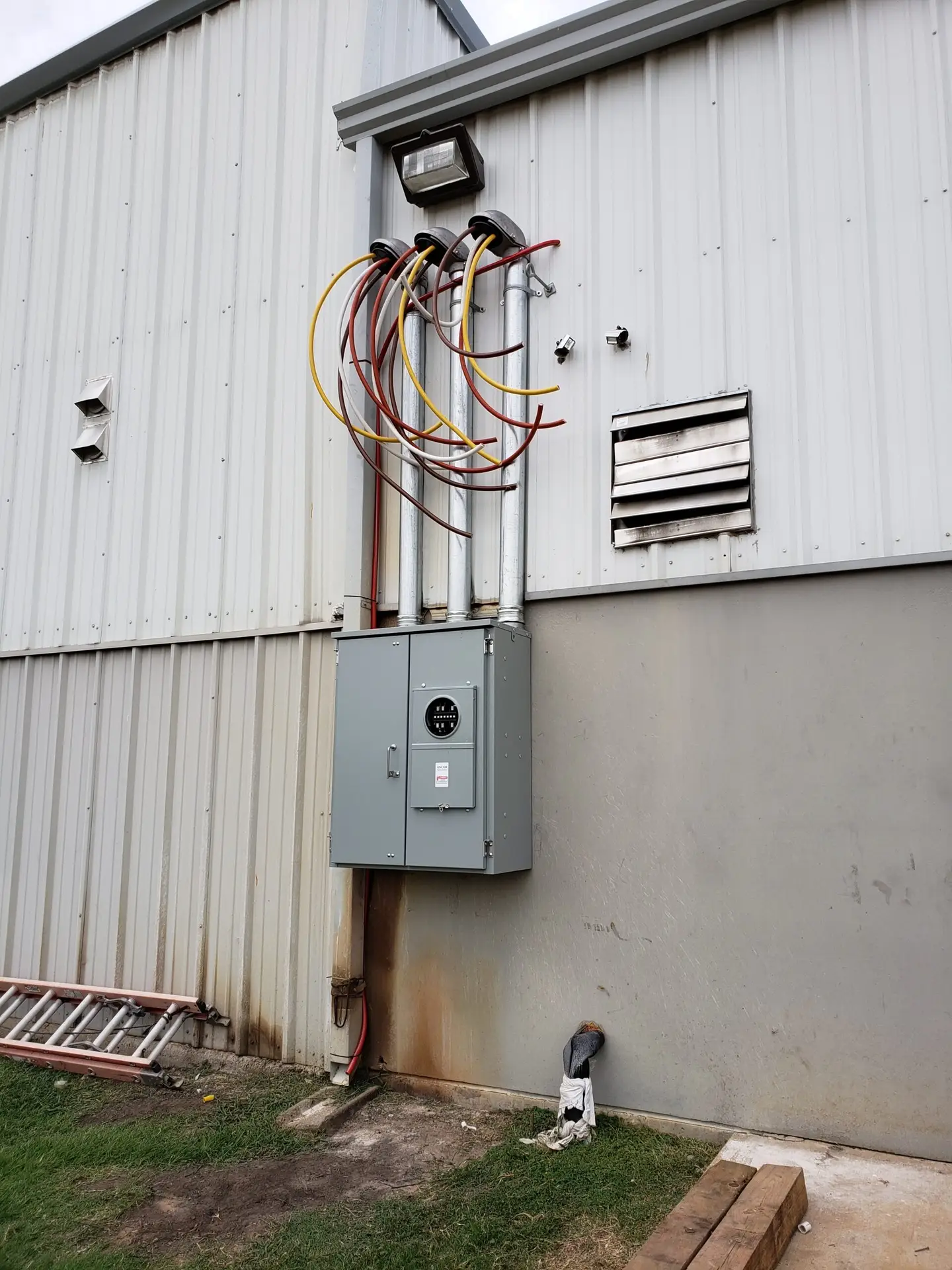
One of the most common calls we get involves electrical panel upgrades — specifically, older panels that were sized for the equipment loads of 10 or 20 years ago and simply can’t keep up with what’s running in the building today. If your warehouse has grown, added automation, or brought in heavier machinery since the building was last updated, there’s a good chance your panel is the bottleneck.
Here’s a rundown of the most common warehouse electrical problems we diagnose in DFW facilities:
- Overloaded circuits and frequent breaker trips — When too much load is placed on a single circuit, the breaker does its job and trips. But if it’s happening regularly, that’s a sign the system isn’t designed for your current needs.
- Flickering or dimming lights — Beyond being annoying, inconsistent lighting is a safety hazard in a warehouse environment where workers are operating machinery and moving heavy loads.
- Outdated panel systems — Older panels may use fuse-based protection or undersized breakers that can’t handle modern equipment loads safely.
- Inadequate outlet placement — When outlets aren’t where equipment needs them, workers use extension cords. In a warehouse, that’s a tripping hazard, a fire risk, and often a code violation.
- Aging wiring — Wiring that’s 20, 30, or 40 years old may have degraded insulation, loose connections, or materials that don’t meet current code requirements.
Signs Your Warehouse Electrical System Needs Attention
Some electrical problems announce themselves loudly. Others are quiet until they become a crisis. Here are the warning signs that should prompt you to call a commercial electrician — not next month, but soon:
- Breakers that trip regularly or won’t reset after being switched off and back on
- A burning smell near outlets, the panel, or electrical equipment — this is a serious red flag
- Visible corrosion, discoloration, or physical damage to wiring, outlets, or connections
- Equipment that shuts down unexpectedly or performs inconsistently
- Lights that flicker, dim, or buzz, especially when heavy equipment is running
- Outlets or switches that feel warm to the touch
⚠️ Don’t Ignore These Red Flags
Burning smells, frequent breaker trips, or visible damage to wiring and connections aren’t problems to put on the back burner. These are active fire hazards that need professional attention immediately — not after the busy season, not when you get around to it. A fire in a warehouse can be catastrophic and fast-moving. If you’re seeing any of these signs, call a licensed commercial electrician today.
What to Expect From a Free Warehouse Electrical Estimate
A lot of people are hesitant to call for an estimate because they expect a sales pitch. They’ve been burned before — an electrician shows up, walks around for 20 minutes, and hands over a quote that’s padded with services they may or may not need, with no real explanation of what’s actually wrong or why each item is on the list. That experience makes people reluctant to invite another contractor in.
We understand that hesitation, and it’s exactly why we do things differently. When you get a free estimate from Epic Electrical, you’re not starting a sales process — you’re getting an honest assessment of your electrical system from people who’ve been doing this for three generations. Here’s what that actually looks like:
- A thorough walkthrough of your electrical system, including the panel, wiring, outlets, and any specific problem areas you’ve noticed
- Identification of any immediate safety concerns that need to be addressed right away
- A clear explanation of what needs fixing versus what’s optional or can be phased in later
- Honest pricing with no hidden fees, inflated markups, or pressure to approve work on the spot
- A written estimate you can take away, review, and compare against other quotes
Why We Don’t Charge for Estimates
Some contractors charge for estimates, especially on commercial jobs. We don’t, and there’s a simple reason: we’re a family business, and we believe in earning your trust before asking for your money. Charging for an estimate puts you in a position where you feel obligated to use the contractor just to justify the cost. That’s not how we want to start a relationship.
A free estimate also gives you the freedom to compare. We’re confident in our pricing and our honesty, and we’d rather you compare us against other contractors and choose us because we’re genuinely the best fit — not because you felt locked in. And if we walk through your warehouse and find that the issue is minor and you don’t need a major repair? We’ll tell you that too. We’d rather lose a job than oversell a customer. That’s not a marketing line — it’s how we operate.
How We Keep Estimates Accurate
An estimate is only useful if it’s accurate. We’ve all heard stories about contractors who come in low to win the job and then find “unexpected issues” that drive the final price up significantly. We avoid that by doing the work upfront. During an estimate, we inspect the full system — not just the area where you’ve noticed a problem. We test load capacity to understand what your system is currently handling and where the bottlenecks are. We look at wiring age and condition, panel capacity, grounding, and outlet placement.
The result is an itemized breakdown that tells you exactly what you’re paying for, why each item is on the list, and what the priority level is. You’ll know what’s urgent, what’s recommended, and what’s optional. No surprises, no vague line items, no “miscellaneous fees” that appear on the final invoice.
✅ You’re Right to Get Multiple Estimates
Shopping around for electrical work isn’t disloyal — it’s smart. Comparing quotes from different contractors helps you understand the scope of work, identify any red flags in pricing or recommendations, and make a confident decision. We’re comfortable being one of several quotes you receive. Our honesty and our pricing will stand on their own. And if a cheaper fix genuinely works for your situation, we’ll be the ones to tell you.
You’ve just read about what an honest estimate looks like. If you’re curious about what your warehouse’s electrical system actually needs, there’s an easy way to find out — no cost, no commitment, no sales pressure.
Warehouse Electrical Upgrades That Pay for Themselves
When warehouse managers hear the word “upgrade,” they often think “expense.” And that’s understandable — capital expenditures require justification, especially in a tight budget environment. But the right electrical upgrades aren’t just safety improvements. They’re investments with measurable returns, and many of them pay for themselves faster than you’d expect.
The most straightforward example is lighting. Switching from older fluorescent or HID fixtures to modern LED lighting solutions typically reduces energy costs by 40 to 60 percent. In a large warehouse where lights run 10, 12, or 16 hours a day, that’s a significant reduction in your monthly utility bill. Most LED upgrades in warehouse environments pay for themselves within two to three years through energy savings alone — and the fixtures last significantly longer than what they replace, reducing maintenance costs as well.
Calculate Your Savings
Here’s a simple way to think about the math. If your warehouse currently spends $2,000 per month on lighting-related electricity costs, a 50% reduction through LED upgrades saves you $1,000 per month — $12,000 per year. If the LED upgrade costs $18,000 installed, you’ve recouped the investment in 18 months. Everything after that is pure savings. And because LED fixtures typically last 50,000 to 100,000 hours, you’re looking at years of reduced costs before you need to replace anything.
Modern panel systems offer a different kind of ROI. An undersized or aging panel that’s constantly under strain doesn’t just create safety risks — it also causes inefficiencies that cost money over time. Equipment that’s running on unstable power draws more energy, wears out faster, and is more likely to fail unexpectedly. Upgrading to a properly sized, modern panel reduces that strain, extends equipment life, and eliminates the productivity losses that come with unexpected failures.
Preventive maintenance is perhaps the most underappreciated financial argument in commercial electrical. The cost of an annual inspection and any minor repairs identified during that inspection is a fraction of the cost of a single emergency repair call. Emergency service — especially after hours or during peak operations — carries a significant premium. Catching a worn connection or an overloaded circuit during a scheduled inspection costs far less than dealing with the failure it would eventually cause.
Future-Proof Your Warehouse
One of the smartest things you can do when planning electrical upgrades is think beyond your current needs. Warehouses don’t stay static — equipment gets added, operations expand, automation gets introduced, and power demands grow. If you’re upgrading your panel today, sizing it for 20 to 30 percent more capacity than you currently need is a relatively small additional cost that can save you from a full panel replacement in five years.
The same logic applies to outlet placement. Installing adequate outlets throughout your facility today eliminates the extension cord problem and gives you flexibility to reconfigure your floor layout without electrical constraints. Extension cords in warehouse environments aren’t just a code violation — they’re a genuine safety hazard. Forklifts run over them. Workers trip on them. They get overloaded. Permanent outlet installations in the right locations are a one-time cost that eliminates an ongoing risk.
Surge protection is another upgrade that pays for itself the first time it works. A single power surge event can damage or destroy variable frequency drives, programmable logic controllers, computer systems, and other sensitive electronics. The cost of protecting those systems with proper surge protection is trivial compared to the cost of replacing them.
💡 Pro Tip: Phase Your Upgrades
You don’t have to tackle everything at once, and we’d never expect you to. When we do an estimate, we help you prioritize — safety issues first, then efficiency upgrades, then future-proofing improvements. We can build a phased plan that fits your budget and timeline, so you’re always moving forward without taking on more than makes sense right now. A good electrical upgrade plan is a multi-year roadmap, not a single overwhelming bill.
Why Choose Epic Electrical for Your Warehouse
There’s no shortage of electricians in the Dallas-Fort Worth area. So why does it matter who you choose? Because in commercial electrical work — especially in a warehouse environment — the difference between a contractor who knows what they’re doing and one who doesn’t shows up in ways that are expensive to fix later. Wrong wire sizing, inadequate circuit protection, code violations that fail inspection, work that doesn’t hold up under real operating conditions. These aren’t hypothetical risks. They’re things we’ve been called in to fix after other contractors left them behind.
Read about Epic Electrical and you’ll see what makes us different: we’re a 3rd-generation family business with over 40 years of experience in the DFW area. This is a father-son operation — not a franchise, not a large corporate contractor, not a company where you never know who’s going to show up. When you work with us, you’re working with people who have a personal stake in doing the job right, because our reputation in this community is everything to us.
Local Expertise You Can Trust
DFW warehouses have specific characteristics that matter for electrical work. The Texas heat puts enormous demand on HVAC systems, which in turn puts demand on the electrical infrastructure supporting them. Many DFW warehouse facilities were built during periods of rapid industrial growth and are now running equipment loads that far exceed what the original electrical design anticipated. We know these buildings. We know the common failure points, the code requirements specific to Texas, and the practical realities of doing electrical work in an active warehouse environment without disrupting operations more than necessary.
We’ve worked with distribution centers, manufacturing facilities, cold storage operations, and light industrial warehouses across Fort Worth, Arlington, Dallas, Keller, Grapevine, Southlake, Lewisville, and the surrounding DFW area. That breadth of local experience means we’re not learning on your job — we’ve seen your situation before, and we know how to handle it efficiently.
DFW’s industrial corridor has seen significant growth over the past decade, and many warehouse facilities are running electrical systems that simply weren’t designed for today’s operational demands. If your building is more than 15 years old and you haven’t had a comprehensive electrical assessment, there’s a good chance you’re running on infrastructure that’s due for attention.
No-BS Approach to Electrical Work
We explain problems in plain language. When we find an issue, we show you what it is, explain why it matters, and tell you what the options are — including the cheaper option if one exists. We don’t use technical jargon to make problems sound more serious than they are, and we don’t manufacture urgency to push you into a decision. If something can wait, we’ll say so. If something genuinely needs attention now, we’ll tell you exactly why.
We also respect your budget. Not every warehouse manager has unlimited capital for electrical upgrades, and we understand that. Our job is to help you make smart decisions about where to spend your electrical budget for maximum impact — safety first, then efficiency, then future-proofing. We’d rather help you build a realistic plan than pressure you into spending more than you need to right now.
🤝 You Deserve an Electrician Who’s Honest
Too many contractors look at a warehouse and see a big job with a big bill attached. We look at a warehouse and see a business that needs reliable power, a team that needs a safe environment, and an owner or manager who needs honest advice they can trust. Our goal isn’t to maximize what we charge you — it’s to solve your problem correctly and earn the kind of relationship where you call us first whenever something comes up.
Warehouse managers across DFW trust Epic Electrical because we show up, tell the truth, and do the work right. If you’re ready to see what that looks like for your facility, we’re ready to come out.
Emergency Electrical Service for Warehouses
Electrical emergencies don’t schedule themselves around your business hours. A breaker failure at 2 a.m. during a night shift, a complete power loss on a Saturday when you’re trying to fulfill a rush order, a burning smell that stops operations cold at 6 p.m. on a Friday — these situations happen, and when they do, you need someone who can respond fast and actually knows what they’re doing in a commercial environment.
Our emergency electrical service is available 24/7 for critical failures in warehouse and commercial facilities. We understand that warehouse downtime isn’t just inconvenient — it has a direct dollar cost that compounds with every hour you’re waiting for help. Our priority in any emergency response is rapid diagnosis and the fastest safe path back to operation.
When to Call for Emergency Service
Not every electrical issue is an emergency, and we’ll always be honest with you about the difference. But some situations require immediate attention, and trying to wait them out or work around them is genuinely dangerous. Call for emergency service when you’re dealing with:
- Complete power loss or multiple simultaneous breaker failures that won’t reset
- A burning smell anywhere near your electrical panel, outlets, or equipment — this is a potential fire in progress
- Visible sparks or arcing from any electrical component
- Equipment shutdowns that are affecting your operations and can’t be traced to a simple cause
- Any situation where you believe there’s an immediate safety risk to your team
In any of these situations, the right call is to get people away from the affected area, shut off power to that section if you can do so safely, and call a licensed commercial electrician immediately. Don’t attempt to diagnose or repair electrical emergencies without proper training and equipment — the risks are serious.
Preventive Maintenance Plans
The best way to reduce emergency calls is to prevent the conditions that cause them. Regular inspections catch deteriorating connections, overloaded circuits, and aging components before they fail. A scheduled maintenance visit that finds a worn breaker and replaces it costs a fraction of what an emergency call costs — and it doesn’t come with the operational disruption of an unplanned outage.
We offer preventive maintenance plans for warehouse clients that include regular inspections, load testing, and priority scheduling for any issues identified. These plans are designed around your operational schedule — we work around your peak hours and plan any necessary downtime for off-peak periods. The goal is to keep your facility running reliably while systematically addressing the issues that would otherwise become emergencies.
DFW’s extreme summer heat puts additional stress on electrical systems — particularly HVAC-related circuits and cooling equipment for cold storage facilities. We see a predictable uptick in electrical issues during peak summer months, and warehouses with aging systems are most vulnerable. Scheduling a pre-summer inspection is one of the most cost-effective things you can do to protect your operation.
Commercial Electrical Code Compliance in Texas
Texas follows the National Electrical Code (NEC) as its baseline standard for electrical installations, with state-specific amendments adopted through the Texas Department of Licensing and Regulation. For warehouse facilities, this means your electrical system must meet a specific set of requirements around wiring methods, circuit protection, grounding, outlet spacing, and more. These aren’t suggestions — they’re legal requirements, and non-compliance creates real liability.
Our commercial electrical compliance work covers everything from initial assessments to upgrade work designed to bring facilities into full compliance with current code. We stay current on code updates and amendments, which is important because the NEC is revised on a three-year cycle and Texas periodically adopts new editions with state-specific modifications.
What Inspectors Look For
When a commercial electrical inspection occurs — whether it’s triggered by a permit, a sale, a refinancing, or a routine compliance check — inspectors are looking at several key areas:
- Proper grounding and bonding — Every piece of electrical equipment and the building’s electrical system as a whole must be properly grounded to protect against fault currents and lightning.
- Correct wire sizing and circuit protection — Wires must be sized appropriately for the loads they carry, and circuit breakers must be properly rated to protect those wires.
- Adequate outlet spacing and accessibility — Commercial codes specify minimum outlet spacing requirements and require that panels and disconnects remain accessible and unobstructed.
- Fire-rated conduit and wiring methods — In certain areas of a warehouse — particularly near fire walls, in plenum spaces, or in high-hazard locations — specific wiring methods and materials are required.
- GFCI and AFCI protection — Ground fault and arc fault protection is required in specific locations and has expanded with each NEC revision.
Staying Compliant Long-Term
Code compliance isn’t a one-time achievement — it’s an ongoing responsibility. As the NEC is updated and Texas adopts new editions, requirements can change. Equipment that was compliant when installed may not meet current standards when you’re doing renovation work or adding new circuits. Any new electrical work must meet current code, even if the surrounding system was installed to older standards.
Annual inspections are the most effective way to stay ahead of compliance issues. They catch problems before they become violations, document the condition of your system over time, and give you a clear picture of what needs attention. That documentation is also valuable if you ever need to demonstrate due diligence to an insurer, a buyer, or a regulatory authority.
⚠️ Why Code Compliance Matters More Than You Think
Non-compliant electrical systems can void your commercial property insurance, create significant liability exposure if an accident or fire occurs, and fail inspections when you sell or refinance the property. We’ve seen situations where a business owner discovered compliance issues during a sale — at the worst possible time, with the least possible leverage. Don’t let that happen to you. Regular inspections and proactive upgrades are far less painful than discovering compliance problems under pressure.
Warehouse Electrical System Planning for Growth
One of the most common and most expensive mistakes we see in warehouse electrical planning is designing for today’s needs without any consideration for tomorrow’s. A warehouse that’s running smoothly right now may be adding a new production line in two years, bringing in automated picking systems in three, or doubling its forklift fleet in five. Each of those changes adds electrical load, and if the infrastructure isn’t ready, you’re looking at costly upgrades under pressure rather than planned improvements on a budget.
Smart electrical panel capacity planning accounts for growth. The general rule of thumb is to plan for 20 to 30 percent more capacity than your current peak demand, which gives you room to grow without hitting the ceiling immediately. The incremental cost of oversizing a panel during an upgrade is relatively small — far less than the cost of replacing it again in five years because you ran out of capacity.
Assessing Your Current Capacity
Before you can plan for growth, you need an accurate picture of where you stand today. During an estimate or inspection, we analyze your current electrical load — what’s running, when it’s running, and how close you are to the limits of your existing system. This isn’t just about the panel capacity on paper; it’s about the real-world demand patterns of your operation, including peak loads during shift changes, startup surges from large motors, and the cumulative effect of all your equipment running simultaneously.
We identify bottlenecks — circuits that are consistently running near capacity, panels that have limited space for new breakers, wiring runs that aren’t sized for additional load. Then we can help you build a growth plan that addresses those bottlenecks proactively, before they become operational constraints. The goal is to get ahead of your growth curve, not chase it.
Backup Power and Redundancy
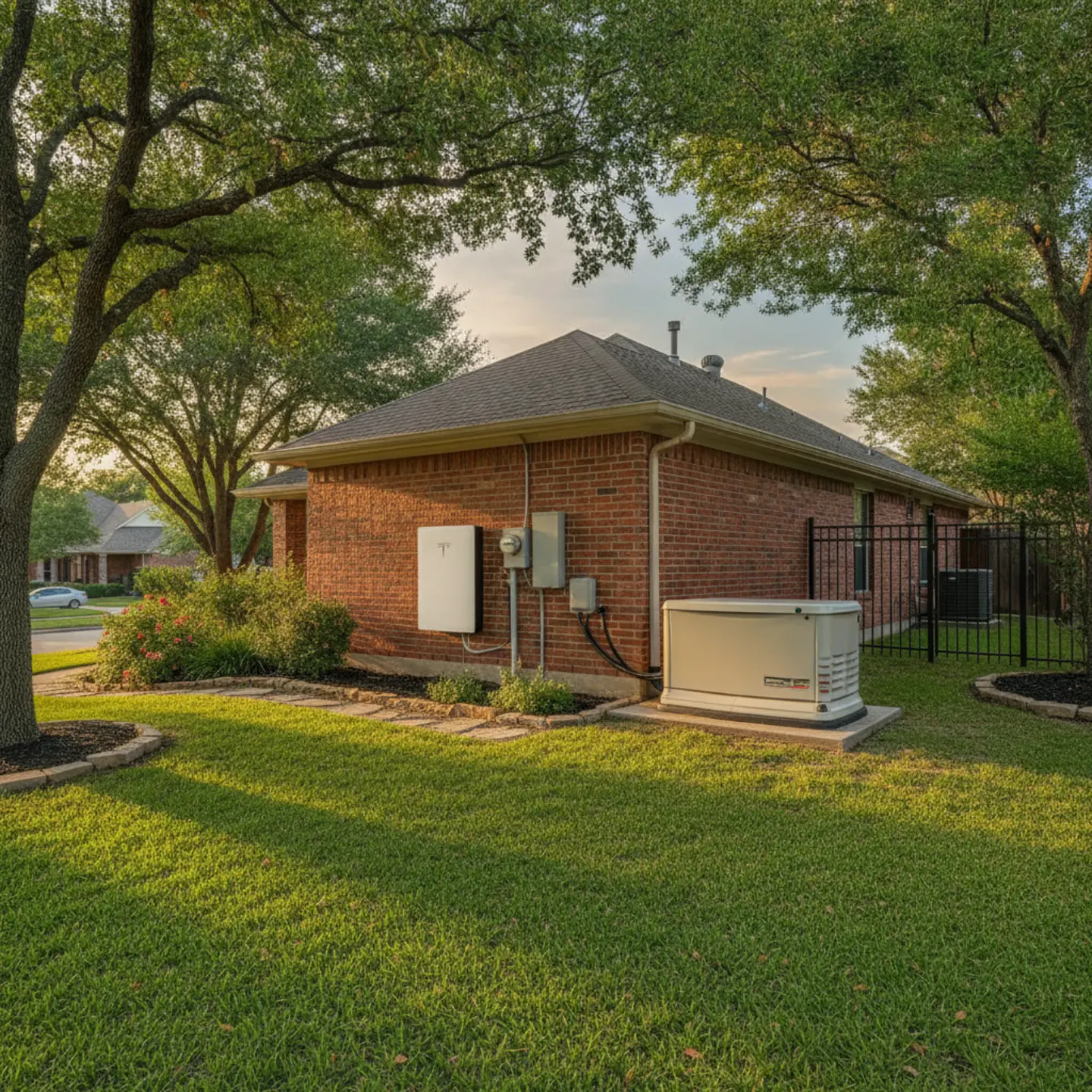
For warehouses where continuous operation is critical — cold storage, fulfillment centers with tight delivery windows, facilities that run 24/7 — backup power systems are worth serious consideration. A generator system sized for your critical loads can keep operations running through a grid outage that would otherwise shut you down completely. The cost of a generator installation is real, but so is the cost of losing a full shift’s production or spoiling temperature-sensitive inventory.
Redundant circuits for critical systems — such as security, fire suppression controls, and key production equipment — protect against single-point failures. If one circuit fails, a redundant path keeps the critical system running while the primary issue is addressed. Uninterruptible power supply (UPS) systems provide bridge power for sensitive electronics and control systems, preventing data loss and equipment damage during the transition to backup power.
These aren’t systems every warehouse needs, but for the right operations, they’re essential infrastructure. We can help you assess whether backup power makes sense for your facility and what level of redundancy is appropriate for your risk tolerance and operational requirements.
Not sure if your warehouse’s electrical system is ready to support your growth plans? We can walk through your current setup and help you think through what you’ll need — no commitment required.
How to Prepare for Your Warehouse Electrical Estimate
We want to make the most of your time and ours during an estimate visit. The more information you can share upfront, the more useful and accurate the assessment will be. You don’t need to have everything perfectly organized — we’ll guide the process — but a little preparation goes a long way toward making the estimate thorough and efficient.
When you contact Epic Electrical for your free estimate, here’s what’s helpful to have ready:
- Basic information about your electrical system — Do you know when the panel was last updated? What’s the rated capacity? Has there been any electrical work done in the past few years? Even partial information is helpful.
- A log of any problems you’ve noticed — Flickering lights, breaker trips, burning smells, equipment issues. When did they start? How often do they happen? Do they correlate with specific equipment or times of day?
- Planned equipment additions or operational changes — If you’re planning to add equipment, expand your operation, or change how the facility is used, tell us. This affects how we assess your current capacity and what we recommend.
- Areas where you need more outlets or better lighting — Walk the floor and note the spots where workers are using extension cords or where lighting feels inadequate.
- Clear access to your electrical panel — Make sure the area around your main panel is accessible and that any sub-panels are also reachable during the visit.
Questions to Ask During Your Estimate
A good estimate visit is a two-way conversation. You should leave with clear answers to the questions that matter most to your operation. Here are the questions worth asking any commercial electrician during an estimate — and the ones we’re always prepared to answer honestly:
- What’s the priority order for repairs or upgrades? — What needs to happen now for safety, what’s recommended soon, and what can be phased in over time?
- How long will the work take and what’s the timeline? — Realistic scheduling matters for your operations planning.
- Will the work cause downtime, and how can we minimize it? — Can work be done in phases, during off-hours, or in sections to keep operations running?
- What’s the warranty on parts and labor? — Any reputable commercial electrician should stand behind their work with a clear warranty.
- Are there financing options available? — For larger projects, payment flexibility can make the difference between doing the work right and deferring it.
These aren’t trick questions — they’re the questions a smart, informed buyer should always ask. We welcome them, and we’ll give you straight answers to every one.
Warehouse Electrical Maintenance Tips Between Service Calls
We want your warehouse to run reliably — not just right after we leave, but all year long. There are practical steps your team can take between professional service calls to reduce the risk of electrical problems and catch issues early before they become serious. None of these require electrical training; they’re basic awareness and housekeeping practices that make a real difference.
For ongoing support and scheduled inspections, our preventive maintenance plans are designed to keep your system in good shape year-round. But here’s what your team can do in the meantime:
- Keep electrical panels and equipment clear — Nothing should be stored in front of or on top of electrical panels. Panels need to be accessible at all times, and clutter near electrical equipment creates both safety hazards and code violations.
- Avoid overloading outlets — Don’t plug multiple high-draw devices into a single outlet using adapters or power strips. Use proper power distribution equipment rated for commercial use.
- Report problems immediately — Flickering lights, a breaker that trips and won’t reset, a burning smell, or an outlet that feels warm should be reported to management and to a licensed electrician right away. These aren’t problems to monitor — they’re problems to fix.
- Keep records of electrical work and inspections — Document every service call, repair, and inspection. This history is valuable for troubleshooting, for insurance purposes, and for demonstrating due diligence.
- Schedule annual inspections — Don’t wait for a problem to call an electrician. An annual inspection is the single most cost-effective thing you can do to protect your electrical infrastructure.
Safety Practices for Your Team
Your employees are your first line of defense when it comes to catching electrical problems early. A team that knows what to look for and what to report can prevent small issues from becoming serious ones. Basic electrical safety training doesn’t need to be elaborate — it just needs to cover the fundamentals:
- Never attempt electrical repairs, even minor ones, without proper training and authorization. This includes replacing breakers, rewiring outlets, or working in the panel.
- Report damaged power cords, frayed wiring, cracked outlet covers, or any visible damage to electrical equipment immediately — don’t wait for the next shift or the next week.
- Keep electrical areas clearly marked and free of obstructions. Panels, disconnects, and emergency shutoffs need to be reachable in seconds, not minutes.
- Never use electrical equipment that’s been exposed to water or moisture until it’s been inspected and cleared by a qualified electrician.
- Understand where the main disconnect is and how to use it in an emergency.
In DFW warehouses, we see a particular issue with moisture intrusion during heavy rain events — especially in older facilities where roof or wall penetrations around conduit runs have degraded over time. If your facility has experienced flooding or significant water intrusion near electrical components, have a licensed commercial electrician inspect those areas before resuming normal operations.
Frequently Asked Questions About Commercial Electrical Service for Warehouses
How much does a commercial electrical estimate cost?
Epic Electrical provides completely free estimates for all warehouse electrical work in the DFW area. We don’t charge for our time to come out, assess your system, and put together a detailed quote. You’ll receive an itemized written estimate that breaks down exactly what’s included and why — with no obligation to proceed and no pressure to make a decision on the spot. We believe earning your trust starts before you spend a single dollar with us.
How quickly can you respond to an electrical emergency in my warehouse?
We offer 24/7 emergency response with same-day service for critical electrical issues in warehouse and commercial facilities. We know that warehouse downtime has a direct cost to your operation, and we treat urgent situations with the urgency they deserve. When you call us for an emergency, you’ll speak to someone who understands commercial systems and can dispatch help quickly — not a call center routing you through a queue. For non-emergency issues, we offer flexible scheduling that works around your operational hours.
What’s the difference between residential and commercial electrical work?
Commercial electrical systems operate at significantly higher power loads, use different wiring methods and materials, and must meet stricter code requirements than residential systems. Warehouse electrical work in particular involves three-phase power, heavy motor loads, specialized panel configurations, and OSHA compliance requirements that residential electricians simply aren’t trained or licensed to handle. Hiring a residential electrician for commercial work isn’t just a quality issue — it can create code violations, insurance problems, and safety hazards that are expensive to correct. Commercial electrical work requires a licensed commercial electrician with relevant experience.
How often should my warehouse electrical system be inspected?
We recommend annual inspections for most warehouse facilities as a baseline. If your facility has experienced electrical issues, added significant new equipment, or hasn’t been inspected in several years, more frequent inspections are warranted. Annual inspections catch deteriorating components, overloaded circuits, and code compliance issues before they become failures or violations. They also create a documented history of your system’s condition, which is valuable for insurance purposes and for planning future upgrades on a realistic timeline.
Can you help with electrical upgrades while we’re still operating?
Yes — this is something we do regularly for warehouse clients. We understand that taking a facility offline for electrical work isn’t always practical, and we work with your operations team to minimize disruption. Depending on the scope of work, we can phase upgrades across multiple visits, schedule work during off-hours or weekends, or work in sections of the facility while the rest remains operational. We’ll be upfront during the estimate about what will require downtime and how we can structure the work to minimize it.
Do you offer financing for large electrical projects?
We can discuss financing options during your estimate for larger warehouse electrical projects. Many of the upgrades we recommend — LED lighting conversions, panel upgrades, outlet additions — are investments that pay for themselves through energy savings and reduced maintenance costs over time. We want to help you find a payment structure that makes financial sense for your business, and we’ll walk through the numbers with you honestly so you can make an informed decision. Reach out and we can talk through what’s available for your specific project.
Get an Honest Assessment of Your Warehouse Electrical System — No Cost, No Pressure
Whether you’re dealing with a problem right now or just want to know where your system stands before something goes wrong, we’re here to give you a straight answer. Epic Electrical is a 3rd-generation family business that’s been serving DFW warehouses for over 40 years — and we’ll tell you exactly what you need, what you don’t, and what makes sense for your budget and timeline. No sales pressure, no inflated quotes, just honest advice from people who care about getting it right.
Get Your Free Warehouse Electrical Estimate
Serving Fort Worth, Arlington, Dallas, Keller, Southlake, Colleyville, Grapevine, Lewisville, and all of DFW | (682) 478-6088