Key Takeaways
- Surge protection costs $250–$900 installed — a fraction of what a single surge event can cost in appliance damage ($500–$5,000+).
- Two main types exist — Type 2 (panel-mounted) is the most common residential upgrade; Type 1 (service entrance) adds an extra layer of protection against utility-line surges.
- Permits are required — The City of North Richland Hills requires permits for any main panel work; expect $50–$150 in permit fees handled by your electrician.
- Texas law requires a Master Electrician (TECL) — verify any electrician’s license at tdlr.texas.gov before hiring.
- DFW’s weather and ERCOT grid strain make surge protection especially important — Tarrant County sees hundreds of lightning strikes annually.
- 40–50% of NRH homes built before 2000 may have panels that need evaluation before a surge protector can be installed.
- Installation takes 1–3 hours and is minimally disruptive — a brief power outage of 30–60 minutes is typical.
Last spring, a North Richland Hills homeowner watched a thunderstorm roll in from the west — the kind of fast-moving DFW storm that goes from clear skies to hail in twenty minutes. The lights flickered twice, the power went out, and when it came back on, the refrigerator was dead. So was the smart TV, the gaming console, and the router. The HVAC system threw an error code it had never shown before. By the time an appliance repair tech came out, the damage estimate was over $2,800. The homeowner’s insurance covered none of it. A whole house surge protector would have cost less than $600 installed.
That scenario plays out dozens of times every storm season across Tarrant County. It’s not bad luck — it’s a predictable risk for homes that don’t have whole house surge protection. The good news is that the solution is straightforward, affordable, and can be installed by a licensed Master Electrician in a single afternoon. This guide breaks down exactly what whole house surge protection costs in North Richland Hills in 2026, what’s required by Texas law, how to find a qualified electrician, and what to watch out for so you don’t get overcharged or misled.
No upselling here. If there’s a cheaper fix that works, we’ll tell you. If you don’t need a panel upgrade, we’ll say that too. Let’s get into it.
Why North Richland Hills Homeowners Need Whole House Surge Protection
North Richland Hills sits squarely in one of the most electrically volatile regions in the country. Tarrant County records hundreds of lightning strikes annually, and the DFW Metroplex as a whole is one of the most lightning-active urban areas in Texas. That alone is reason enough to think seriously about surge protection. But lightning is only part of the story.
ERCOT — the Texas power grid — operates independently from the rest of the national grid, which means when demand spikes during a summer heat wave or a winter freeze, voltage fluctuations can ripple through residential neighborhoods without warning. These aren’t dramatic, lights-out events. They’re brief, invisible voltage spikes that travel through your wiring and quietly degrade or destroy sensitive electronics and appliances. Your HVAC system, water heater, refrigerator, smart home devices, and EV charger are all vulnerable every time the grid hiccups.
North Richland Hills has a significant share of homes built before 2000 — estimates suggest 40–50% of the housing stock may have original electrical panels not designed for the demands of modern electronics or the integration of surge protection devices. These older panels aren’t just less compatible with surge protectors; they’re also more vulnerable to the effects of voltage events because they lack the built-in protections that newer panels include.
The financial math is simple. A single major surge event can damage $500 to $5,000 or more in appliances and electronics. A whole house surge protector installed by a licensed electrician in North Richland Hills costs $250 to $900 all-in. You’re protecting thousands of dollars in equipment for the cost of a car payment or two. And unlike insurance — which often won’t cover surge damage unless you have specific surge protection riders — a whole house protector works proactively, before the damage happens.
If you’re not sure how vulnerable your home’s electrical system actually is, a professional electrician assessment can give you a clear picture of your panel’s condition and what type of surge protection makes sense for your specific setup.
✅ You’re Right to Be Concerned About Surge Damage
A single power surge during a DFW thunderstorm can destroy thousands of dollars in electronics and appliances. Your concern is valid, and whole house surge protection is the proven solution. The question isn’t really whether to install it — it’s about finding the right type and a qualified electrician to do it properly.
What Is a Whole House Surge Protector and How Does It Work?
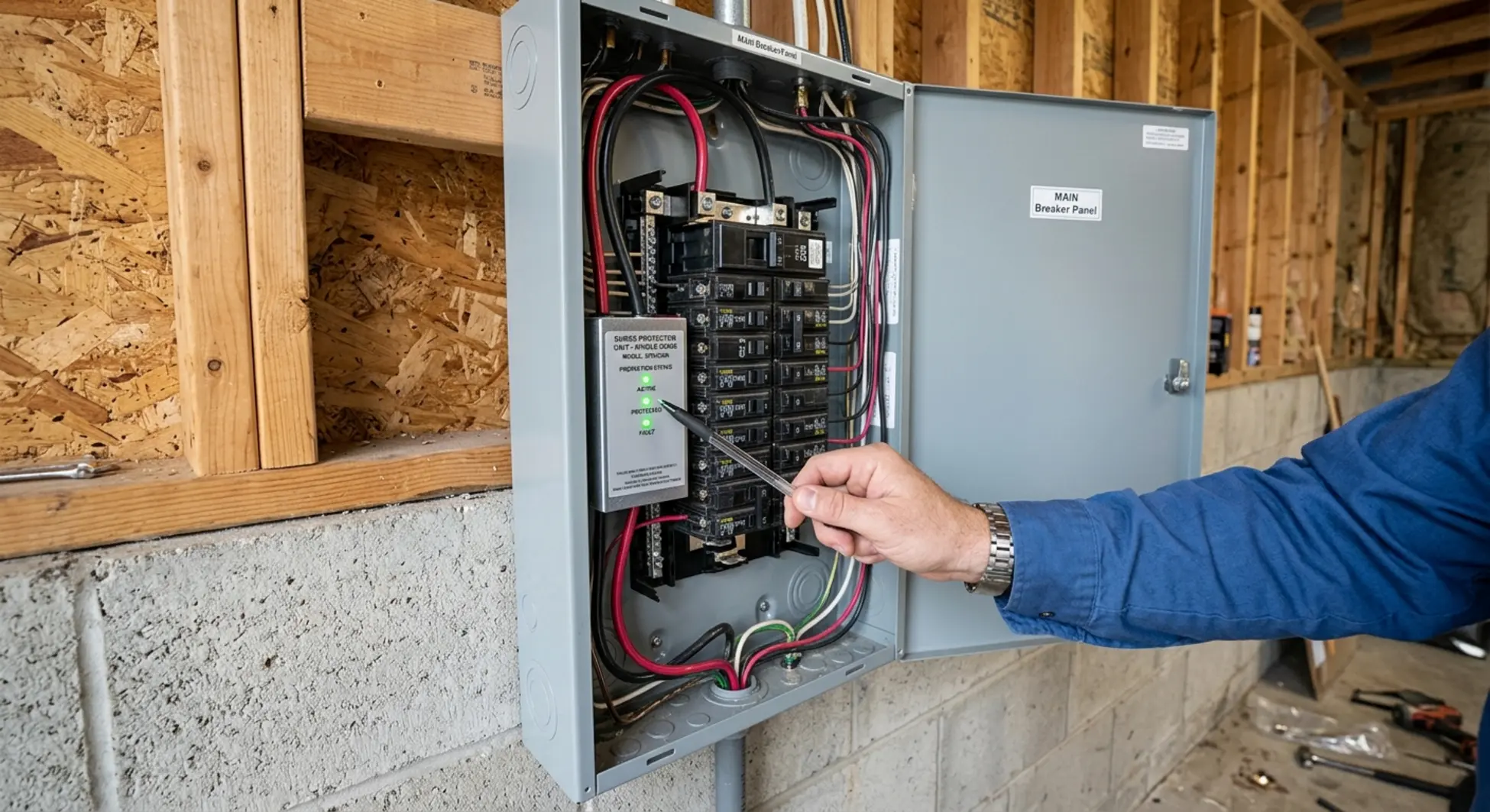
A whole house surge protector is a device that monitors the voltage coming into your home’s electrical system and, when it detects a spike above the safe threshold, diverts that excess electricity safely to ground — away from your appliances and electronics. Think of it as a pressure relief valve for your electrical system. When voltage spikes, the protector absorbs or redirects the excess before it reaches your devices.
Unlike the power strip surge protectors you plug into an outlet, whole house units protect every circuit in your home simultaneously. They’re installed directly at or near your main electrical panel, which means every outlet, every appliance, and every hardwired device in the house benefits from the protection. Point-of-use surge protectors at individual outlets still have value as a secondary layer, but they don’t protect against surges entering through the main service line — only a whole house unit does that.
There are two main categories of whole house surge protectors, and understanding the difference matters when you’re getting quotes and deciding what’s right for your home. For a deeper comparison, our guide on Type 1 vs. Type 2 whole home surge protection covers the technical differences in detail.
Type 1 vs. Type 2: Which One Do You Need?
Type 1 surge protectors install at the service entrance — on the utility side of your meter, before power even enters your home. They’re the first line of defense against surges coming in from the utility line, including those caused by lightning strikes on nearby power lines or grid switching events. Type 1 units are more expensive and require more complex installation because they’re working with the full utility voltage before it passes through your meter.
Type 2 surge protectors install inside your main electrical panel, on the load side (after the meter). They protect against surges that originate within the home — from large appliances cycling on and off, from internal wiring issues, and from smaller voltage events that make it past the meter. Type 2 is the most common residential upgrade because it’s easier to retrofit into an existing home and costs less to install.
For most North Richland Hills homeowners, a Type 2 installation is the standard recommendation and provides meaningful protection against the majority of surge events. If your home is in an area with frequent lightning or you want maximum protection, a combination of Type 1 and Type 2 is the gold standard. Your electrician can assess your specific situation and make a recommendation based on your panel, location, and risk factors — not on what earns the highest invoice.
ℹ️ Why Type 2 Is Most Common (But Type 1 Offers More Protection)
Type 2 surge protectors install inside your main panel and are easier to retrofit into existing homes — no work on the utility side of the meter required. Type 1 protectors at the service entrance catch utility-line surges before they even enter your home. For maximum protection in lightning-prone DFW, both together is ideal. But Type 2 alone is the most popular and cost-effective residential upgrade, and it handles the vast majority of surge events most homeowners will ever face.
Whole House Surge Protector Pricing in North Richland Hills (2026)
Let’s talk real numbers. One of the most frustrating things about getting electrical work done is not knowing what to expect before you call. Here’s a transparent breakdown of what whole house surge protector installation actually costs in the North Richland Hills and DFW market in 2026, based on current pricing data from licensed contractors in the area.
| Installation Type | Equipment Cost | Labor Cost | Total Range |
|---|---|---|---|
| Entry-Level Type 2 (Panel-Mount) | $50–$150 | $200–$400 | $250–$550 |
| Mid-Range Dual-Mode | $100–$250 | $250–$450 | $350–$700 |
| Premium Type 1 Service Entrance | $150–$400+ | $300–$500+ | $450–$900+ |
| City of NRH Permit Fee | Required for all main panel work | $50–$150 | |
These ranges reflect current DFW market pricing. Labor costs in the North Richland Hills and Mid-Cities area tend to run slightly higher than Texas averages because of higher demand for licensed electricians and the cost of doing business in a major metro. That’s not a complaint — it’s just the reality of the market, and it’s worth knowing when you’re comparing quotes.
If your panel needs an upgrade before a surge protector can be installed, that’s a separate cost — typically $1,000 to $3,000 or more depending on the panel’s condition and size. A good electrician will be upfront about whether your panel actually needs an upgrade or whether it can accommodate a surge protector as-is. If someone is pushing you hard toward a panel upgrade before even inspecting your current setup, that’s worth a second opinion. You can read more about what’s involved in residential panel installation and upgrades to understand what that work actually entails.
Cost Factors That Affect Your Quote
No two homes are identical, and neither are surge protector installation quotes. Here’s what actually drives the price up or down:
- Panel age and condition: Older panels may need inspection or minor work before a surge protector can be safely installed. If your panel is original to a home built in the 1980s or 1990s, budget for the possibility of additional findings.
- Main breaker size: Larger panels (200-amp vs. 100-amp) may require different equipment or slightly more labor time.
- Panel location and accessibility: A panel in a finished utility room is easier to work on than one in a cramped attic or behind stored items. Accessibility affects labor time directly.
- Available breaker slots: Type 2 surge protectors typically require a dedicated breaker slot. If your panel is full, a tandem breaker or panel evaluation may be needed.
- NEC code compliance: If your home’s wiring doesn’t meet current NEC 2023 standards in areas relevant to the installation, additional work may be required to bring it up to code before the permit can be closed.
Hidden Costs to Watch For
A few costs that don’t always show up in the initial quote but are worth asking about upfront:
- Service call fees ($75–$150): Some companies charge a diagnostic or inspection fee even if you don’t proceed with the installation. Ask about this before scheduling.
- Code compliance upgrades: If your panel has older breakers that don’t meet current AFCI or GFCI requirements, an electrician may note these during the inspection. These aren’t always required to install the surge protector, but they may come up. AFCI/GFCI breakers run $50–$150 each.
- Permit fees: These are real and required. A licensed electrician will pull the permit for you and typically include this in their quote, but verify it’s included before signing anything.
- Warranty registration: Usually free, but required to activate manufacturer coverage. Your electrician should walk you through this at installation.
Ready to find out what surge protection would cost for your specific home?
A free estimate from a licensed Master Electrician in North Richland Hills will break down the exact costs based on your panel and needs — no pressure, no surprises.
How to Get an Accurate Quote for Your Home
Getting a quote for electrical work shouldn’t feel like a guessing game. When you know what information to have ready and what a good quote looks like, you’re in a much stronger position to compare options and make a confident decision. Most homeowners get one quote and accept it — but getting two or three takes maybe an extra hour and can save you hundreds of dollars or help you identify a contractor who’s not being straight with you.
Before you call, gather the following information about your home’s electrical system:
- Your panel brand (usually printed on the inside door — common brands include Square D, Eaton, Siemens, Leviton, GE)
- The age of your panel (check your home inspection report if you have one, or look for a date stamp inside the panel door)
- Your main breaker size (100-amp, 150-amp, or 200-amp — printed on the main breaker)
- Whether you’ve had any recent electrical work done
- Whether your panel has any open breaker slots (look for empty slots with no breaker installed)
A legitimate, itemized quote should include: equipment cost (with the specific make and model of the surge protector), labor, permit fees, timeline, and warranty terms. If a quote is just a single number with no breakdown, ask for the itemization. A good electrician won’t hesitate to provide it. You can also check our resource on electrician hourly rates in North Richland Hills to understand what fair labor pricing looks like in this market.
Red flags to watch for when getting quotes:
- Refusal to pull a permit (“We can skip the permit and save you money” is not a favor — it’s a liability)
- Vague, all-in pricing with no itemization
- Pressure to upgrade your panel before even inspecting it
- No mention of warranty on parts or labor
- Can’t provide a TECL license number when asked
Questions to Ask Every Electrician
These aren’t trick questions — they’re standard due diligence. Any qualified, licensed electrician will answer them without hesitation:
- Are you a licensed Master Electrician (TECL) in Texas? What’s your TECL number? (Verify at tdlr.texas.gov)
- Is your company insured and bonded? What’s your General Liability coverage amount?
- Which NEC edition do you follow? (Should be NEC 2023, adopted in Texas as of January 1, 2024)
- What type of surge protector do you recommend for my panel, and why?
- Will you pull a permit from the City of North Richland Hills? Is that included in your quote?
- What is your warranty on parts and labor, and how long does it last?
- Can you provide references or photos of recent surge protector installations?
✅ It’s Normal to Feel Overwhelmed by Electrical Decisions
Surge protection, panel upgrades, permits, licensing — it’s a lot to sort through when you’re not an electrician. That’s exactly why working with someone who explains everything clearly and doesn’t pressure you matters so much. You don’t need to be an expert. A good electrician will walk you through your options and let you decide what makes sense for your home and budget.
Licensing, Permits, and Code Requirements in Texas
This section matters more than most homeowners realize. Texas has specific licensing requirements for electrical work, and understanding them protects you from bad actors — and from unknowingly creating problems with your home’s insurance or future sale.
Under Texas Occupations Code §1305, a Master Electrician (TECL) license is required to legally perform work on main electrical panels and to pull permits for that work. A Journeyman Electrician can perform the physical installation, but only under the direct supervision of a licensed Master. An apprentice cannot perform this work independently under any circumstances. When you hire an electrical company, you’re hiring the Master Electrician’s license — that’s the legal accountability behind the work.
Licensed residential electricians in Texas are also required to carry General Liability Insurance — typically a minimum of $300,000 to $500,000 in coverage. Many also carry Workers’ Compensation. This matters because if something goes wrong during the installation, you need to know that the contractor has coverage. Without it, you could be liable for injuries or damages that occur on your property.
Texas adopted NEC 2023 as the state electrical code standard as of January 1, 2024. This edition includes updated provisions for surge protection requirements — notably NEC 230.67, which now requires surge protection on new dwelling services. While this doesn’t automatically mandate retrofitting existing homes, it sets the standard your electrician should be working to. Ask specifically which NEC edition they follow.
How to Verify a Master Electrician’s License
This takes about two minutes and is absolutely worth doing before you hire anyone. Here’s exactly how:
- Go to tdlr.texas.gov
- Navigate to “Online Application/Renewal/License Search” and select “Search Electrical Licenses”
- Enter the electrician’s name or the company’s TECL number
- Look for “Active” status — not “Inactive,” “Expired,” or “Suspended”
- Review the “Disciplinary Actions” section for any past complaints or violations
If an electrician gives you a TECL number that doesn’t come up in the search, or if the status is anything other than Active, walk away. This isn’t being overly cautious — it’s protecting your home, your insurance, and your investment.
Why Permits Matter (Even Though They Cost Extra)
Permits aren’t bureaucratic red tape. They exist for real reasons, and skipping them creates real problems:
- Code compliance: Permits ensure the work meets current NEC 2023 standards and local building codes. An inspector will verify this before closing the permit.
- Safety catch: Permit inspections catch issues — wiring problems, improper grounding, panel concerns — before they become fires or failures.
- Insurance coverage: Unpermitted electrical work can void your homeowner’s insurance coverage if damage occurs and the insurer discovers the work wasn’t properly permitted.
- Home sale liability: When you sell your home, unpermitted work can derail the sale, require remediation, or expose you to legal liability. Buyers’ inspectors flag unpermitted electrical work regularly.
A licensed electrician handles the permit process for you. You shouldn’t have to do anything except be available for the final inspection if one is required. The $50–$150 permit fee is worth every dollar.
⚠️ Red Flag: Unlicensed Electricians and Unpermitted Work
Hiring an unlicensed electrician or skipping the permit process might save $100–$200 upfront, but it can void your home insurance, create serious liability issues, and fail inspection when you sell your home. TDLR complaint data consistently shows permit violations and unlicensed work among the most common issues in residential electrical contracting. Always verify TECL license status at tdlr.texas.gov before signing anything.
Financing, Rebates, and Ways to Reduce Your Cost
The total cost of a surge protector installation — $250 to $900 — is manageable for most homeowners, but it’s still an unexpected expense if you weren’t planning for it. Here are legitimate ways to reduce your out-of-pocket cost or spread it over time.
Financing through your electrician: Many established electrical contractors in the DFW area offer financing through partners like Synchrony Financial or Wells Fargo Home Projects. Terms often include 0% interest for 12 to 24 months if paid in full within the promotional period. Ask about this when you’re getting quotes — it’s not always advertised upfront but is commonly available.
Manufacturer rebates: Brands like Siemens, Eaton, and Square D periodically offer rebates on specific surge protector models. These aren’t always easy to find on your own, but a licensed electrician who works with these brands regularly will know what’s currently available. Ask specifically: “Are there any current manufacturer rebates on the unit you’re recommending?”
Utility incentives: Oncor and TXU Energy occasionally offer rebates for energy efficiency improvements. These don’t always apply directly to surge protector installation, but if you’re bundling surge protection with a panel upgrade or other efficiency work, it’s worth asking your electrician whether any current programs apply.
Bundle the work: If you have other electrical projects on your list — adding an outlet, installing an EV charger, or upgrading outdoor lighting — scheduling them together reduces overall labor costs. You’re paying for the electrician’s time and the service call regardless; adding a surge protector installation to an existing job is often significantly cheaper than a standalone visit.
To get a detailed quote that shows all available options and any current incentives, get a free estimate from a licensed electrician who can review your specific situation.
💡 Pro Tip: Schedule During Off-Peak Season
If you’re not in an emergency situation, scheduling your surge protector installation in fall or winter — before storm season kicks in — can mean faster scheduling, more flexible appointment times, and potentially better pricing than the busy spring and summer months. Demand for surge protection spikes every April through June in North Texas. Getting ahead of it saves time and possibly money.
The Real Cost of NOT Installing Surge Protection
Let’s flip the math around. You’ve seen what surge protection costs to install. Now let’s look at what it costs when you don’t have it and a surge event hits your home.
Average appliance and electronics damage from a single major surge event in a DFW home
That number isn’t exaggerated. Here’s what a single surge can cost to replace, based on current appliance pricing:
- HVAC system (compressor or control board damage): $3,000–$5,000
- Water heater (electric, with smart controls): $1,000–$2,000
- Refrigerator: $1,500–$3,000
- Smart TV and entertainment system: $500–$2,000
- Desktop or laptop computers: $500–$2,000
- Smart home hub and connected devices: $200–$800
A single event that takes out your HVAC and refrigerator — which is not uncommon in a significant surge — can cost $4,500 to $8,000 in replacements. Compare that to $250–$900 for whole house protection, and the decision becomes obvious. If you’re wondering whether it’s really worth the investment, our article on whether a whole house surge protector is worth it walks through the ROI in detail.
There’s also the cumulative damage problem that’s easy to overlook. Smaller surges — the kind that happen dozens of times a year from appliances cycling on and off, from grid fluctuations, from nearby lightning — don’t destroy your appliances in one shot. They degrade them over time. Your HVAC compressor that should last 15 years starts failing at 10. Your refrigerator compressor goes at 8 years instead of 12. You never connect it to surge damage because there was never a dramatic event. But the cumulative effect is real, and it shortens the lifespan of every major appliance in your home.
“Insurance rarely covers surge damage unless you have a specific surge protection rider — and even then, deductibles apply. Proactive protection is almost always cheaper than reactive replacement.”
The bottom line: the cost of whole house surge protection is a fraction of the cost of replacing even one major appliance. The math is clear. The only question is timing — and the best time is before the surge, not after.
Worried about surge damage to your appliances and electronics?
That’s exactly what whole house surge protection is designed to prevent. A licensed electrician can walk you through your options and answer any questions — no obligation, no pressure.
Seasonal Demand and Scheduling in North Richland Hills
If you’ve decided you want surge protection installed, timing matters more than most people realize — not because there’s any urgency manufactured to pressure you, but because the North Texas electrical services market has real seasonal patterns that affect scheduling and sometimes pricing.
Spring is the busiest season for surge protector installations in DFW. March through June brings the highest concentration of severe weather — thunderstorms, hail, high winds, and the lightning that comes with all of it. After the first major storm of the season, electricians’ phones light up with homeowners who just experienced a surge and want protection installed immediately. Wait times that are normally a few days can stretch to two or three weeks during peak demand.
Summer heat waves add another demand spike. When ERCOT issues conservation warnings and grid stress events occur — as they have in recent summers — homeowners become acutely aware of their electrical system’s vulnerability. Post-storm and post-grid-event demand surges are real and predictable in North Texas, and they affect both availability and pricing for expedited service.
The aftermath of major weather events like Winter Storm Uri in 2021 also created lasting awareness of grid vulnerability in Texas. That event — and the grid stress events that followed in subsequent summers — drove a sustained increase in demand for electrical resilience upgrades, including surge protection, whole house generators, and panel upgrades. That demand hasn’t fully subsided, which means the market for licensed electricians in Tarrant County stays active year-round.
The practical takeaway: if you’re not responding to an active emergency, scheduling your installation in fall or winter gives you faster access to your preferred electrician, more flexibility on appointment times, and potentially better pricing. If you do need emergency or expedited service during storm season, expect to pay a premium and wait longer. Planning ahead is simply the smarter play.
Common Mistakes Homeowners Make When Installing Surge Protection
After years of working on homes across North Richland Hills and the Mid-Cities area, we’ve seen the same mistakes come up again and again. Here’s the honest rundown of what not to do — and why each mistake matters.
- Mistake #1: Relying only on outlet surge protectors. Those power strips with surge protection built in are better than nothing, but they don’t protect against surges entering through the main service line. A utility-line surge or a nearby lightning strike will blow right past them. Whole house protection is the only way to cover your entire home.
- Mistake #2: Hiring an unlicensed electrician to save money. The savings are usually $100–$200. The risks are voided insurance, code violations, failed inspections, and potentially unsafe work. It’s not a trade worth making.
- Mistake #3: Skipping the permit process. Already covered above, but worth repeating: unpermitted electrical work creates real liability when you sell your home and can void your homeowner’s insurance. Don’t let any contractor talk you into skipping it.
- Mistake #4: Accepting a vague quote without itemized costs. “It’ll be about $500” isn’t a quote — it’s a guess that can become a much larger number once the work starts. Always get itemized pricing in writing before any work begins.
- Mistake #5: Delaying installation until after a surge event. By then it’s too late. Surge protection only works proactively. Once the damage is done, a surge protector can prevent future damage but can’t undo what already happened.
- Mistake #6: Not verifying the electrician’s TECL license before hiring. This is a two-minute check at tdlr.texas.gov that can save you from a world of problems. Do it every time, for every contractor.
What to Expect During Installation Day
One of the things that makes people hesitant about electrical work is not knowing what’s going to happen when the electrician shows up. Here’s exactly what a typical surge protector installation looks like from start to finish.
Total time: Most installations take between one and three hours, depending on your panel’s accessibility and whether any unexpected findings require attention. A straightforward Type 2 installation on an accessible panel with an available breaker slot is typically 60–90 minutes. A Type 1 service entrance installation or a panel with complications will take longer.
Power outage: The electrician will need to turn off power to the main panel during installation. This outage is typically 30 to 60 minutes. Plan for it by saving any open work on computers, letting family members know, and being prepared to reset digital clocks and any devices that lose their settings when power goes out.
What the electrician does: They’ll inspect your panel, confirm the installation plan matches what was quoted, install the surge protector, connect it to the appropriate breaker, and test the unit to verify it’s functioning correctly. A good electrician will walk you through what they did and show you the installed device before they leave.
Documentation: You should receive written documentation of the installation, including the make and model of the surge protector, the date of installation, and warranty information. Keep this in a safe place — you’ll need it if you ever need to make a warranty claim or if the question comes up during a home sale.
Permit inspection: If a permit was pulled (and it should have been), the City of North Richland Hills may require a final inspection. Your electrician will coordinate this — you typically don’t need to do anything except be home when the inspector comes, or in some cases the inspection can happen without you present. The electrician will let you know what’s required.
Maintenance and Lifespan of Your Surge Protector
One of the things homeowners appreciate most about whole house surge protection is how low-maintenance it is. Once it’s installed, it works quietly in the background without requiring any regular attention from you. That said, there are a few things worth knowing about the device’s lifespan and what to watch for over time.
Expected lifespan: Type 2 surge protectors installed inside the main panel typically last 10 to 15 years under normal operating conditions. Type 1 units at the service entrance can last 15 years or longer. These are general estimates — actual lifespan depends on how many surge events the device has absorbed over its life.
Surge events and premature failure: This is the important caveat. A major surge event — a direct lightning strike on a nearby power line, a significant grid voltage event — can degrade or destroy a surge protector prematurely, regardless of its age. This is actually the device doing its job: it absorbs the energy so your appliances don’t have to. After a significant storm or known surge event, it’s worth having a licensed electrician check the unit to confirm it’s still functioning properly.
No regular maintenance required: You don’t need to schedule annual service or do anything special to maintain your surge protector. An occasional visual inspection — looking for any indicator lights that signal a fault, or any signs of physical damage — is all that’s needed between professional checks.
Replacement cost: When it’s time to replace the unit — whether due to age or a significant surge event — the cost is similar to the initial installation: $250 to $900 depending on the type and any changes to your panel in the interim. Think of it as a recurring investment every 10 to 15 years in exchange for continuous protection.
Manufacturer warranty: Most reputable surge protectors come with a 10-year manufacturer warranty, but only if the device was properly registered after installation. Make sure your electrician walks you through the registration process, or do it yourself using the documentation they provide. An unregistered device may not be covered if it fails.
A one-time investment that lasts 10–15 years with minimal maintenance.
Once you understand the long-term value, the decision becomes clear. The next step is getting a detailed quote tailored to your home and panel.
Finding the Right Licensed Electrician in North Richland Hills
The electrical services market in Tarrant County is active and competitive, which is good news for homeowners. There are plenty of qualified, licensed Master Electricians working in North Richland Hills and the surrounding Mid-Cities area. The challenge isn’t finding someone who can do the work — it’s finding someone you can trust to do it right, at a fair price, without unnecessary upsells.
Here’s what to look for when evaluating electricians for your surge protector installation:
- Verified TECL license: Check tdlr.texas.gov before you even call. Active status, no disciplinary actions. This is non-negotiable.
- Local reputation: Google Reviews and Nextdoor recommendations from actual NRH and Mid-Cities homeowners carry real weight. Look for consistent patterns in the reviews — not just the star rating, but what people say about communication, pricing transparency, and quality of work.
- Insured and bonded: Ask for proof of General Liability Insurance. A legitimate contractor will provide it without hesitation.
- Detailed, itemized quotes: As discussed earlier, a good electrician gives you a quote you can actually read and understand — not a single number with no explanation.
- Willingness to pull permits: Any electrician who suggests skipping the permit is not someone you want working on your home’s electrical system.
- Patient, pressure-free communication: A good electrician answers your questions without making you feel rushed or uninformed. If someone is pushing hard for an immediate decision or an unnecessary upgrade, trust that instinct and get a second opinion.
Epic Electrical is a family-owned, father-son team serving North Richland Hills and the broader DFW area. Third-generation electricians with licensed Master Electrician credentials, full insurance and bonding, and a straightforward approach: we tell you what you need, explain why, and give you an honest price. No high-pressure sales, no unnecessary upsells. You can learn more about top electrician companies in North Richland Hills to compare your options and make the right choice for your home.
If you want to understand what the process looks like before committing to anything, Epic Electrical’s free estimate process is a no-pressure conversation about your home’s electrical system and what surge protection options make sense for your specific situation. We’re also happy to answer questions about electrical services throughout the Fort Worth area if you have other projects on your list.
Frequently Asked Questions: Whole House Surge Protection in North Richland Hills
Does a whole house surge protector installation in North Richland Hills require a permit?
Yes. The City of North Richland Hills requires permits for any work on the main electrical panel, and surge protector installation qualifies. This isn’t unique to NRH — it’s consistent with Texas regulations and NEC standards statewide. A licensed Master Electrician will handle the entire permit process for you, from application to coordinating the final inspection. Permit fees in NRH typically run $50–$150 and should be included in your electrician’s quote.
Can I legally install a whole house surge protector myself in Texas, or do I need a licensed electrician?
Technically, a homeowner can perform electrical work on their own home in Texas under certain conditions — but installing a whole house surge protector on the main electrical panel is strongly not recommended as a DIY project. Texas Occupations Code §1305 requires a Master Electrician (TECL) to pull permits and perform work on main electrical panels. DIY installation without a permit risks safety hazards, code violations, voided manufacturer warranties, and potential denial of insurance claims if damage occurs. The cost of professional installation is modest compared to those risks.
My electrical panel is old. Will it be compatible with a whole house surge protector?
Compatibility depends on the panel’s age, brand, and available breaker space. Many older panels in North Richland Hills homes — particularly those from the 1980s and 1990s — can accommodate a Type 2 surge protector if there’s an available breaker slot and the panel is in reasonable condition. However, some older panels may be too outdated, too full, or in poor enough condition that a panel upgrade is the right first step. A qualified Master Electrician will assess your panel during an inspection and give you an honest answer about what’s needed — without pushing an upgrade if one isn’t necessary.
What’s the difference between Type 1 and Type 2 surge protectors, and which do I need for my North Richland Hills home?
Type 1 surge protectors install at the service entrance — on the utility side of your meter — and catch surges coming in directly from the power line, including those caused by lightning strikes on nearby infrastructure. Type 2 units mount inside your main electrical panel and protect against surges that originate within the home or make it past the meter. For most North Richland Hills homeowners, a Type 2 installation provides solid protection against the vast majority of surge events and is the most cost-effective upgrade. For maximum protection in lightning-prone DFW — especially if your home is in an area with frequent direct strikes — a combination of Type 1 and Type 2 is the gold standard. Your electrician can assess your specific risk factors and make a recommendation.
Can I get a discount on my homeowner’s insurance in Texas for installing a whole house surge protector?
Insurance discounts for surge protection are not universally offered and vary significantly by provider. Some insurers — including certain USAA, State Farm, and Allstate policies — may offer a modest discount, while many others do not. The more important insurance consideration is making sure your policy actually covers surge damage, which often requires a specific rider or endorsement. Contact your insurance company directly to ask about both surge coverage and any available discounts for whole house surge protection installation. Keep your installation documentation and permit records in case you ever need to file a claim.
What happens if the whole house surge protector itself fails during a power surge event?
Reputable whole house surge protectors come with manufacturer warranties — typically 10 years if the device is properly registered after installation. If the unit fails while absorbing a surge event, the warranty generally covers the cost of the protector itself. Some manufacturers also offer connected equipment protection warranties that cover damage to appliances and electronics up to a specified dollar limit, provided the device was properly installed by a licensed electrician and registered with the manufacturer. This is one of the reasons professional installation and proper registration matter — an unregistered or improperly installed device may not qualify for warranty coverage when you need it most.
Ready to Protect Your North Richland Hills Home From Power Surges?
You now understand the risks, the costs, and why whole house surge protection matters for homes in North Richland Hills. The only thing left is getting a personalized quote from a licensed Master Electrician who can assess your specific panel and needs.
No high-pressure sales. No unnecessary upsells. Just honest advice and transparent pricing from a family-owned team that’s been doing this work for three generations.
We’re here to answer questions and help you make the right decision for your home — whatever that turns out to be.
Licensed Master Electrician • Insured & Bonded • Transparent Pricing • City of North Richland Hills Permits Included
Serving North Richland Hills, Fort Worth, Arlington, Keller, Southlake, Colleyville, Grapevine, Lewisville, Hurst, Euless, Bedford, Watauga, and all of DFW.
(682) 478-6088 | epicelectrical.com