Key Takeaways
- Overhead service costs less upfront — Standard 200A overhead service upgrades in DFW run $5,800–$7,500, compared to $6,000–$15,000+ for underground installation.
- Underground service is dramatically more reliable — Utility industry data shows overhead lines experience 3–10 times more outages than underground lines, a critical factor in DFW’s severe weather environment.
- Permits are mandatory for both service types — Any service upgrade requires a city electrical permit, a rough-in inspection, a final city inspection, and a utility reconnection inspection from Oncor. Unpermitted work voids your homeowner’s insurance.
- The total cost gap narrows over time — Over 20 years, cumulative overhead outage costs, emergency repairs, and storm damage claims often exceed the upfront price difference between the two service types.
- Trust Epic Electrical for honest, code-compliant service upgrades with no upsells and 123+ five-star Google reviews — visit Epic Electrical to get started with a free estimate.
Underground vs. Overhead Electrical Service: Which Is Better for Your DFW Home?
Underground electrical service is more reliable and aesthetically superior, but overhead service is significantly cheaper to install and maintain. The choice depends on how the utility company like Oncor or Co-Serve has connected your home to power from the pole, your budget, weather concerns, and long-term property plans. For DFW homeowners facing severe weather, underground service offers protection from outages; for those prioritizing upfront cost savings, overhead remains the practical default.
Understanding the real differences—costs, code requirements, reliability, and installation timelines—helps you make the right choice for your home and wallet.
Epic Electrical
Free Quote & Honest Diagnosis — No Upsells
Core Service Programs:
- Electrical Repairs, Wiring & Lighting for tripping breakers, faulty wiring, GFCI issues, and indoor/outdoor lighting
- EV Chargers, Generators & Panel Upgrades for Level 2 EV charging, whole-home generator installs, panel replacements, and surge protection
- Commercial, Warehouse & Industrial Electrical for restaurants, offices, industrial buildouts, LED retrofits, and dedicated circuits
Why Choose Epic Electrical:
- ✓ Trusted by customers with 123+ five-star Google reviews
- ✓ Father-and-son master electricians — a third-generation electrical family
- ✓ Serving North Richland Hills and the DFW Metroplex since 2009
- ✓ 50+ years of combined electrical experience on every job
- ✓ No upsells, no jargon, no pressure — we fix what’s actually broken
- ✓ Small repairs fixed same-visit; big jobs get a written quote with no hidden costs
- ✓ Texas-licensed electrical contractor (TECL #33192)
Overhead Electrical Service: The Standard, Budget-Friendly Option
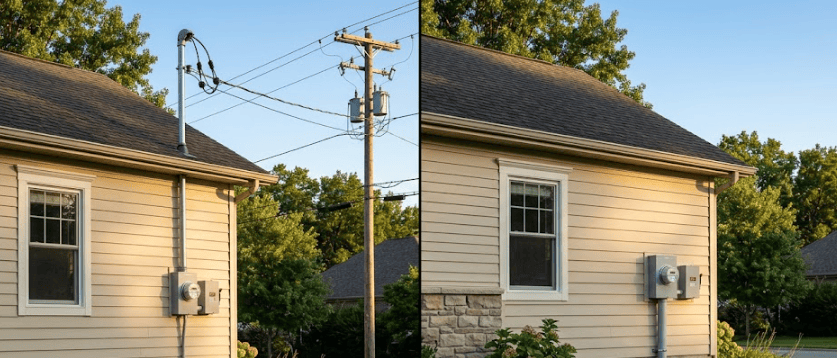
Overhead service is the default configuration in most DFW neighborhoods—and for good reason. It’s proven, widely understood, and significantly cheaper to install than underground alternatives. If your home was built before the 2000s, there’s a strong chance you already have overhead service running from a utility pole to a weatherhead mounted on your roof or exterior wall.
How Overhead Service Works
Power travels from the utility pole to your home via overhead service conductors—the wires you can see running from the street. Those conductors connect to a weatherhead (also called a service head), which is the curved cap mounted at the top of the service mast on your home’s exterior. From there, the conductors run down the mast to your meter base and into your main electrical panel.
One small but critical detail: the drip loop. This is the intentional downward curve formed in the conductors just before they enter the weatherhead. Its job is to prevent rainwater from tracking along the wires and entering the service mast. It sounds minor, but home inspectors flag missing or inadequate drip loops regularly—and for good reason.
💡 The Drip Loop: A Small Detail That Prevents Big Problems
The drip loop—the downward curve in overhead service conductors before the weatherhead—is a critical safety feature that prevents rainwater from entering your service mast and causing corrosion or electrical faults. Home inspectors frequently flag missing or inadequate drip loops as a code violation.
Common Overhead Service Problems in DFW
DFW’s weather is hard on overhead service. Ice storms and high winds frequently damage masts, weatherheads, and service drops. Falling tree limbs are a leading cause of emergency service calls. Beyond weather, aging components create their own problems: corroded or deteriorated masts fail inspection, missing drip loops allow water ingress, and improper clearances from windows, roofs, and vegetation violate NEC code and create fire and shock hazards.
For a standard 200A overhead service upgrade in DFW, expect to budget $5,800–$7,500 for a typical project. More complex jobs—mast relocation, panel upgrades, or significant code corrections—can push costs toward $9,000. That said, overhead service remains the most cost-effective starting point for most homeowners.
Underground Electrical Service: The Reliable, Weather-Resistant Choice
Underground service routes electrical conductors through buried conduit from the utility’s connection point to your home’s meter and panel. Because everything is buried, it’s shielded from wind, ice, falling debris, and most of what DFW’s weather throws at it. The tradeoff is cost: underground installation runs $6,000–$15,000 or more, roughly 2–3 times the price of a comparable overhead upgrade.
Why Underground Service Outperforms in DFW Weather
DFW experiences some of the most damaging weather in the country—ice storms, hail, high winds, and tornadoes that routinely knock out overhead lines. Utility industry data from the Department of Energy and Edison Electric Institute consistently shows that overhead lines experience 3 to 10 times more outages than underground lines. In areas with overhead service, DFW homeowners can expect 15–25 significant outages per year during storm season. Underground service areas typically see only 1–3 outages annually, and most of those originate on the utility side rather than from weather damage to your service.
Insurance companies and appraisers recognize underground service as a reliability and safety upgrade. While there’s no single published figure for the home value increase, the reduction in weather-related claims and the improved curb appeal from eliminating visible overhead wires are tangible benefits that factor into a property’s overall desirability.
⚠️ Storm Damage Is Real in DFW
If you’ve experienced power outages during DFW’s ice storms or high winds, you’re not alone. Overhead service damage is one of the most common reasons homeowners consider switching to underground service—and for good reason. The data backs up what you’ve experienced.
Installation Complexity and Timeline
Underground service requires trenching from the utility’s connection point to your home—often 50 to 200+ feet depending on your property layout. Soil conditions, existing underground utilities, and property obstacles can complicate the project. Before any digging starts, a “dig-safe” check is mandatory to locate existing buried utilities and avoid damaging them.
Proper burial depth matters: NEC requires a minimum of 18–24 inches for residential underground conductors, and durable conduit is essential to protect the wiring long-term. The total project timeline typically runs 2–6 weeks. The actual electrical work may take only a few days; the longest delays usually come from permit lead times and utility scheduling for the disconnect and reconnect with Oncor.
Cost Comparison: Overhead vs. Underground Service
The cost gap between overhead and underground service is real and significant. Overhead service installation is 50–70% cheaper upfront, which is why it remains the default for most homeowners. Underground service carries higher initial costs but lower long-term maintenance expenses and fewer outage-related repair bills. Over a 20-year period, the cumulative cost of overhead outages, emergency repairs, and storm damage claims often closes that gap considerably.
| Cost Category | Overhead Service | Underground Service |
|---|---|---|
| Installation (DFW, 200A) | $2,500–$9,000 (avg. $5,800–$7,500) | $6,000–$15,000+ |
| Permit Fees | $200–$500 | $200–$500 |
| Trenching/Excavation | None | $1,500–$5,000+ (varies by distance) |
| Utility Coordination | Required; standard scheduling | Required; longer scheduling window |
| Annual Maintenance | Moderate; weather exposure increases frequency | Low; protected from elements |
| Storm Damage Repairs | $500–$3,000+ per incident | Rare; faults are infrequent |
| Fault Repair Cost (when needed) | $200–$1,000+ per incident | $1,000–$5,000+ (requires excavation) |
| Expected Service Life | Shorter; weather degrades components | Longer; conduit protects conductors |
| 20-Year Total Cost (estimated) | Higher due to cumulative outage/repair costs | Lower long-term despite higher upfront |
If you’re weighing the financial side of a larger service upgrade, Epic Electrical’s residential project financing guide walks through payment options that can make a bigger project more manageable.
Code Requirements and Permitting for Both Service Types
Whether you go overhead or underground, the same fundamental rule applies: you need a permit. Both service types must comply with the National Electrical Code (NEC 2023) and your local DFW municipality’s ordinances. A valid electrical permit from your city is mandatory for any service upgrade—no exceptions.
For overhead service, NEC specifies minimum clearance requirements: at least 10 feet above roofs, 12 feet above driveways, and proper distance from windows and vegetation. For underground service, conductors must be buried at the correct depth (18–24 inches for residential) and protected by approved conduit to prevent future damage from digging or ground movement.
Both service types require a final electrical inspection by the city and a reconnection inspection by your utility provider (Oncor, for most DFW homeowners) before power is restored. Modern NEC 2023 updates also mandate AFCI and GFCI breakers, whole-home surge protection, and outdoor disconnects—upgrades that apply regardless of which service type you choose. These requirements are worth factoring into your total project budget. For a deeper look at how these code updates affect your panel, the panel change guide covers the specifics.
⚠️ Beware of Unpermitted Work
Contractors offering significantly lower prices by skipping permits are operating illegally and putting your home at risk. Unpermitted work voids homeowner insurance, creates liability in a future sale, and can result in fines or forced remediation.
Real-World Reliability: Outage Frequency and Storm Damage in DFW
The reliability difference between overhead and underground service isn’t theoretical—it shows up every time a DFW ice storm rolls through. Overhead lines in DFW areas experience an average of 15–25 significant outages per year, driven by ice accumulation, high winds, and falling tree limbs. Average restoration time for an overhead outage runs 4–8 hours, though major storm events can stretch that to days.
Underground service areas typically see only 1–3 outages per year, and those are usually caused by utility-side issues rather than weather damage to your service entrance. When underground faults do occur, restoration takes longer—often 24 hours or more—because locating and repairing a buried fault requires specialized equipment and excavation. But the sheer frequency difference means underground customers spend far less cumulative time without power.
Storm damage claims for overhead service in DFW average $500–$3,000 per incident. Over a 20-year period, those claims—combined with emergency repair costs and the disruption of frequent outages—often exceed the upfront cost difference between overhead and underground service. For homeowners who work from home, rely on medical equipment, or simply can’t afford multi-day outages, that math matters.
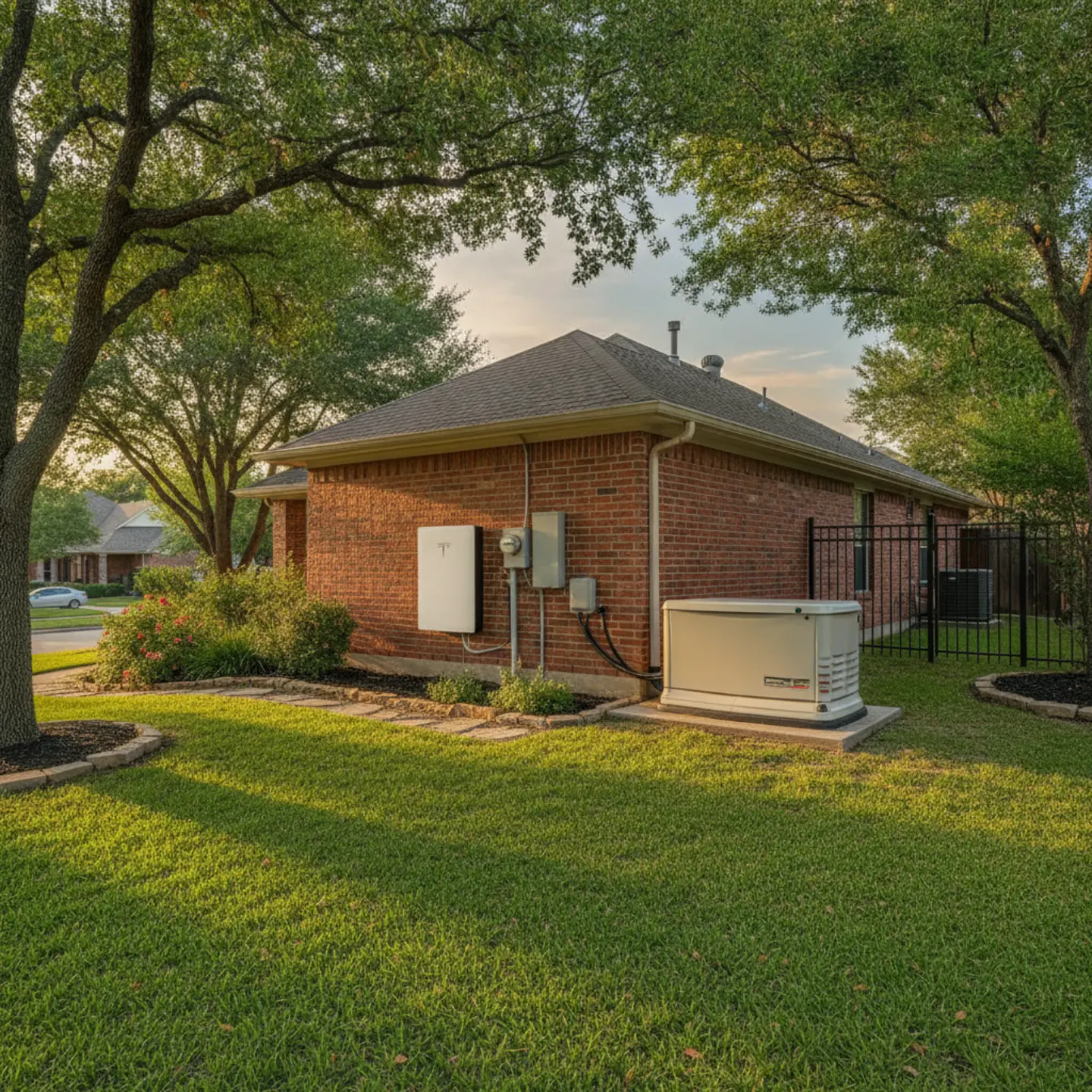
If outage risk is a primary concern, a whole-home generator paired with either service type is another layer of protection worth considering—especially given DFW’s storm history.
Choosing Between Overhead and Underground: Decision Framework
There’s no universal right answer here. The best choice depends on your specific situation, budget, and priorities. Here’s a straightforward way to think through it:
- Choose overhead service if you’re prioritizing upfront cost savings, plan to stay in the home fewer than 10 years, or live in a lower-storm-risk area of DFW.
- Choose underground service if you value reliability above all else, experience frequent outages, plan long-term ownership, or live in a high-storm-risk DFW location.
- Consider your home’s age: Older homes with aging overhead service may benefit from a full underground conversion during a major upgrade rather than patching a deteriorating system.
- Check your insurance situation: Some insurers offer premium discounts for underground service due to reduced weather-related claims—worth a call to your agent before deciding.
- Factor in your lifestyle: Frequent outages disrupt work-from-home setups, medical equipment, and family routines in ways that are hard to put a dollar figure on.
For DFW homeowners in neighborhoods prone to ice storm damage—particularly in northern Tarrant County and areas with mature tree canopy—the reliability case for underground service is especially strong. The 2021 winter storm was a stark reminder of how vulnerable overhead infrastructure can be.
The best starting point is an honest assessment of your specific property. A Fort Worth electrician familiar with local code requirements and utility coordination can walk you through accurate cost estimates and help you weigh the options without pressure.
Why Epic Electrical Is the Right Choice for DFW Homeowners
Epic Electrical has been serving the DFW area since 2009—and the father-and-son team behind the company brings more than 50 years of combined electrical experience to every job. That’s not a marketing line; it means that when you call Epic, you’re getting master electricians who have seen every variation of overhead and underground service configuration in North Texas, know what local inspectors look for, and understand exactly how Oncor’s reconnection process works.
With 123+ five-star Google reviews, Epic’s reputation is built on one consistent principle: honest diagnosis with no upsells. If your existing overhead service can be repaired for $400, that’s what they’ll tell you. If your aging system genuinely needs a full underground conversion, they’ll explain why in plain language and give you a transparent, itemized quote—no hidden costs, no pressure. As a Texas-licensed electrical contractor (TECL #33192), every project Epic touches is permitted, inspected, and code-compliant.
Whether you’re in North Richland Hills, Fort Worth, or anywhere across the DFW Metroplex, Epic handles the entire service upgrade process: permits, utility coordination with Oncor, inspections, and final reconnection. You don’t have to manage the complexity—that’s what they’re there for.
For homeowners considering a panel upgrade alongside a service change, Epic’s panel replacement services are often bundled with service entrance work to streamline the permitting and inspection process.
Get a free estimate from Epic Electrical and let our master electricians assess your specific situation with no obligation.
Frequently Asked Questions
Who is responsible for the cost of converting overhead electrical service to underground?
The homeowner is typically responsible for the full cost of converting from overhead to underground service on their property. This includes the electrician’s labor and materials, trenching, conduit, and permit fees. Your utility provider—Oncor, for most DFW homeowners—is generally only responsible for the portion of the service lateral up to their connection point, usually at or near the property line. Everything on the home side of that connection is the homeowner’s financial responsibility.
Does converting to underground electrical service require a permit and inspection?
Yes, absolutely. Converting to underground service requires a permit from your local DFW municipality and will go through multiple inspections. The inspection process typically includes a rough-in inspection before the trench is backfilled (so the inspector can verify burial depth and conduit), a final electrical inspection by the city after all work is complete, and a reconnection inspection by Oncor before power is restored. Skipping any of these steps creates serious legal and insurance liability.
How long does it take to convert from overhead to underground electrical service?
The total project timeline typically runs 2 to 6 weeks or longer. The actual electrical work—trenching, running conduit, installing the new service entrance—usually takes a few days. The bigger time variables are permit lead times from your city and, most significantly, scheduling the utility disconnect and reconnect with Oncor. Oncor’s scheduling window alone can add several weeks to the overall timeline, which is why it’s important to start the process early if you have a target completion date.
What happens during the utility reconnection process after an electrical service upgrade?
After your electrician completes the service upgrade and passes the city’s final electrical inspection, they notify Oncor. Oncor then schedules a time to temporarily disconnect power to your home so the electrician can safely make the final connections to the new service entrance. Once those connections are made and verified, Oncor re-energizes your service. Your power will typically be off for a few hours during this phase. The key point: no work can be done on the service entrance while the line is energized, which is why utility coordination is a non-negotiable step in the process.
What makes Epic Electrical different from other electrical contractors in DFW?
Epic Electrical stands out with 123+ five-star Google reviews, a father-and-son team of master electricians with 50+ years of combined experience, and Texas-licensed contractor status (TECL #33192). Unlike contractors who push the most expensive option, Epic provides honest diagnosis with no upsells—if a simpler fix solves your problem, that’s what they’ll recommend. They handle all permits, utility coordination with Oncor, and inspections from start to finish, removing the complexity from your project entirely. Request a free estimate from Epic Electrical and experience the difference that integrity and expertise make.
Ready to Upgrade Your Electrical Service in DFW?
Whether you’re weighing overhead versus underground service, dealing with a deteriorating mast, or planning a full service entrance upgrade, getting an accurate assessment from a licensed master electrician is the right first step. Epic Electrical serves homeowners across Fort Worth, North Richland Hills, and the entire DFW Metroplex with honest, no-pressure evaluations and transparent quotes.
There’s no obligation, no upsell, and no jargon—just a clear answer about what your home actually needs and what it will cost.
Serving Fort Worth, North Richland Hills, Arlington, Keller, Southlake, Colleyville, Grapevine, Lewisville, and all of DFW.
(682) 478-6088 | View all service areas
Pricing, equipment specifications, and project scope mentioned in this article are accurate as of the date of publication and are subject to change. Code requirements and permit needs vary by municipality and property. Please contact us directly for a current quote on your specific home or business.