Key Takeaways
- Single pole breakers = 120 volts — They protect everyday circuits like lighting, standard outlets, and kitchen appliances, occupying one slot in your electrical panel.
- Double pole breakers = 240 volts — They protect high-draw appliances like electric dryers, ranges, EV chargers, and central AC units, occupying two adjacent panel slots.
- Wrong breaker type = serious fire hazard — Using a single pole breaker on a 240-volt circuit leaves one hot leg completely unprotected, violating the National Electrical Code and creating a real risk of fire or appliance damage.
- No available slots means a bigger conversation — If your panel has no open double pole slots, you’re likely looking at a subpanel addition or a full panel upgrade before you can add that EV charger, hot tub, or generator circuit.
- Trust Epic Electrical for honest, expert electrical work across DFW — father-and-son master electricians, TECL #33192, 123+ five-star Google reviews, and transparent pricing with no upsells — visit Epic Electrical to learn more.
Single Pole vs. Double Pole Breakers: Which One Do You Actually Need?
Single pole breakers protect 120-volt circuits (lighting, outlets) and occupy one slot in your panel; double pole breakers protect 240-volt circuits (dryers, ranges, EV chargers) and occupy two slots. Using the wrong breaker type is a serious fire hazard and code violation. Understanding which breaker your circuit needs is essential for safe electrical work and proper home maintenance.
Let’s break down exactly how these breakers work, when you need each type, and why getting this wrong can be dangerous and expensive.
Epic Electrical
Free Quote & Honest Diagnosis — No Upsells
Core Service Programs:
- Electrical Repairs, Wiring & Lighting for tripping breakers, faulty wiring, GFCI issues, and indoor/outdoor lighting
- EV Chargers, Generators & Panel Upgrades for Level 2 EV charging, whole-home generator installs, panel replacements, and surge protection
- Commercial, Warehouse & Industrial Electrical for restaurants, offices, industrial buildouts, LED retrofits, and dedicated circuits
Why Choose Epic Electrical:
- ✓ Trusted by customers with 123+ five-star Google reviews
- ✓ Father-and-son master electricians — a third-generation electrical family
- ✓ Serving North Richland Hills and the DFW Metroplex since 2009
- ✓ 50+ years of combined electrical experience on every job
- ✓ No upsells, no jargon, no pressure — we fix what’s actually broken
- ✓ Small repairs fixed same-visit; big jobs get a written quote with no hidden costs
- ✓ Texas-licensed electrical contractor (TECL #33192)
What Single Pole Breakers Do (120-Volt Circuits)
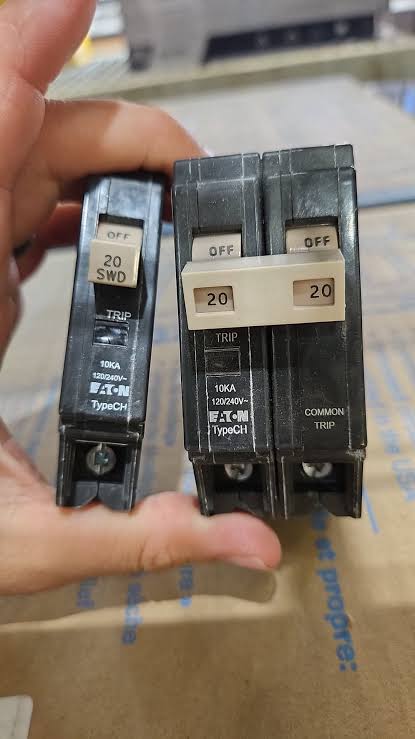
Single pole breakers are the workhorses of your electrical panel. They connect to one hot bus bar, deliver 120 volts, and protect the circuits you use every single day — bedroom outlets, bathroom lighting, the refrigerator, the microwave, and most standard plug-in devices throughout your home.
In a typical residential panel, single pole breakers are rated at either 15 amps (protecting 14-gauge wire) or 20 amps (protecting 12-gauge wire). Each one occupies a single slot, which is why a standard 200-amp panel can accommodate a large number of individual circuits. When one trips, it cuts power only to that specific circuit — your lights go out in one room, not the whole house.
For most of the common electrical issues DFW homeowners encounter, the circuit involved is a 120-volt single pole circuit. Overloaded shared circuits, nuisance tripping on kitchen appliances, and GFCI-related problems in bathrooms all fall into this category. Understanding that these circuits are single pole helps you communicate clearly with your electrician — and helps you recognize when a problem is more serious than a simple breaker reset.
What Double Pole Breakers Do (240-Volt Circuits)
Double pole breakers are a different animal entirely. They connect to both hot bus bars simultaneously inside your panel, delivering 240 volts to circuits that demand serious power. They physically occupy two adjacent slots and are typically rated anywhere from 30 amps up to 60 amps or higher for specialized equipment.
The appliances that require double pole breakers are the ones that define modern home comfort and convenience: electric dryers, electric ranges, water heaters, central air conditioning units, hot tubs, and increasingly, Level 2 EV charger installations. If you’re planning to add a whole-home standby generator after the hard lessons of Winter Storm Uri, that transfer switch connection requires a substantial double pole circuit as well.
There’s a critical safety feature built into every double pole breaker: when it trips — whether from an overload or a fault — it simultaneously disconnects both hot legs at once. That simultaneous disconnection is not optional. It’s what keeps you, your appliances, and your home safe. A single pole breaker physically cannot do this for a 240-volt circuit, which is why mixing them up is never just a technicality.
In DFW suburbs like North Richland Hills, Keller, and Flower Mound, new construction and rapid home renovations have driven a surge in demand for 240-volt dedicated circuits. Between EV chargers, induction cooktops, and whole-home generators, homeowners are discovering that their panels need more double pole slots than they ever anticipated.
Single Pole vs. Double Pole Breakers: Feature Comparison
ℹ️ You’re Not Alone: DFW Homeowners Face Real Electrical Challenges
If you’re confused about breakers or worried about your home’s electrical capacity, you’re in good company. An estimated 30–40% of DFW homes still have undersized 100-amp panels, and the surge in EV adoption and generator demand means many homeowners are discovering their panels lack available slots for new circuits.
| Feature | Single Pole Breaker | Double Pole Breaker |
|---|---|---|
| Voltage | 120V | 240V |
| Panel Slots Used | 1 slot | 2 adjacent slots |
| Typical Amperage Range | 15–20 amps (residential) | 30–60+ amps |
| Common Applications | Lighting, outlets, refrigerators, microwaves, small appliances | Electric dryers, ranges, water heaters, AC units, EV chargers, hot tubs, generators |
| Hot Bus Bars Connected | One | Both |
| Trip Behavior | Disconnects one hot leg | Simultaneously disconnects both hot legs |
| Typical Cost to Add (DFW, 2026) | $150–$350 | $250–$500 (slot available) |
| NEC Governing Article | Article 210 / Article 240 | Article 210 / Article 240 |
Why Using the Wrong Breaker Type Is Dangerous
⚠️ The Hidden Fire Hazard of Mismatched Breakers
Using a single pole breaker on a 240-volt circuit or installing a breaker that doesn’t match your panel brand creates a serious fire hazard. NFPA data shows electrical distribution failures are a leading cause of residential fires — responsible for an estimated 35,600 home fires annually in the U.S. — and improper breaker installation is a common culprit.
Here’s the specific danger: a 240-volt circuit carries current on two hot wires. A double pole breaker monitors both simultaneously and trips both when something goes wrong. If you install a single pole breaker on that circuit, only one hot wire is protected. The other runs completely unmonitored. If a fault or overload occurs on the unprotected leg, there is nothing to interrupt the current — and that’s how wiring overheats, insulation burns, and fires start inside walls where you can’t see them.
This isn’t a theoretical risk. The NFPA’s most recent reporting identifies electrical distribution and lighting equipment as a leading cause of residential fires, with overloaded circuits and improper wiring cited as consistent contributors. The average direct property damage per electrical home fire runs into the tens of thousands of dollars — and that’s before accounting for the possibility of an insurance claim denial.
That last point matters more than most homeowners realize. If an electrical fire occurs and an investigation reveals unpermitted work, an improperly installed breaker, or a known hazardous panel that wasn’t addressed, your insurance company may reduce or deny your claim entirely. The financial exposure isn’t just the cost of the fire — it’s the full cost of rebuilding without coverage.
Breaker compatibility is another layer of this problem. Each electrical panel is designed and listed for specific breaker brands. Installing an off-brand or non-listed breaker — even one that physically fits — violates the National Electrical Code and can create overheating at the bus bar connection. A licensed electrician performing residential circuit breaker repairs will always verify compatibility before touching your panel.
In DFW, local municipalities including Fort Worth, Arlington, Keller, and North Richland Hills enforce NEC compliance through the permit and inspection process. Unpermitted breaker work that later causes damage leaves homeowners with no legal or financial protection.
When You Need a Panel Upgrade Instead of Just Adding a Breaker
💡 The Real Cost of Avoiding a Panel Upgrade
Many homeowners delay panel upgrades due to sticker shock, but the true cost of waiting can be higher: inability to install an EV charger, frequent breaker trips, appliance damage, or insurance claim denial after an electrical fire. Transparent pricing upfront — like Epic’s $5,800 floor for a 200-amp panel upgrade including permit and whole-home surge protection — helps you plan and avoid these hidden costs.
Sometimes the answer to “I need a new circuit” is “your panel doesn’t have room for one.” This is where the conversation gets more involved — and where many homeowners encounter sticker shock they weren’t expecting.
An estimated 30–45% of older DFW homes, particularly those built before the early 1990s, still operate on 100-amp panels. These panels typically have 20–30 circuit slots total, and after decades of accumulated circuits for lighting, outlets, appliances, and HVAC, there are often no open double pole slots left. Adding a 240-volt circuit for an EV charger or hot tub simply isn’t possible without first creating capacity.
Your options at that point are a subpanel addition (typically $1,500–$3,500 depending on complexity) or a full panel upgrade. Epic Electrical’s residential panel installation starts at $5,800 for a 200-amp upgrade, which includes the permit, the panel itself, and whole-home surge protection on an exterior wall. That’s a real, all-in number — not a teaser price that grows once the job starts.
One thing DFW homeowners often don’t anticipate: when you pull a permit for a panel upgrade, many municipalities across the metroplex will require you to bring your smoke detection system up to current code. That typically means interconnected, hardwired smoke alarms with battery backup throughout the home. It’s a genuine safety improvement, but it’s also an additional cost to budget for. A good electrician tells you this upfront. If you want to use our panel upgrade calculator to get a rough sense of scope before calling, that’s a solid starting point.
The demand for panel upgrades in DFW isn’t slowing down. Texas EV registrations have grown at 50%+ year-over-year, post-Uri generator demand remains elevated, and modern kitchen renovations routinely require multiple new 240-volt circuits. If your panel is already at capacity, the question isn’t whether you’ll need an upgrade — it’s when.
If cost is a concern, Epic also offers guidance on residential electrical project financing so you can address the work now rather than waiting for a problem to force the issue.
Top Electrical Contractors in DFW for Breaker and Panel Work: Compared and Reviewed
DFW has hundreds of TECL-licensed electrical contractors ranging from solo operators to large regional franchises. Before hiring anyone for breaker or panel work, verify their TECL number on the TDLR website at tdlr.texas.gov, confirm they carry general liability and workers’ compensation insurance, and ask directly whether they pull permits for new circuit work. The contractors below represent a cross-section of the market for homeowners doing their research.
Epic Electrical
Address: 7304 Hialeah Cir W, North Richland Hills, TX 76182 | TECL #33192
Epic Electrical is a father-and-son operation with 50+ years of combined master electrician experience, serving the DFW area since 2009. With 123+ five-star Google reviews, they’ve built their reputation on transparent pricing and honest diagnosis — if a cheaper fix exists, they’ll tell you. Their base price for a 200-amp panel upgrade is $5,800, which includes the permit and whole-home surge protection. Generator installations start at $14,000, covering the unit, electrical hookup, and up to 15 feet of fuel line. They specialize in panel upgrades, electric panel replacement for Zinsco and Federal Pacific panels, EV charger installations, and generator transfer switches — no hidden costs, no unnecessary upsells.
Mr. Electric of DFW
An established local franchise with strong online presence and multiple service locations across the metroplex. TECL-licensed with experience in panel work and circuit additions. Pricing tends toward the mid-to-higher range; the standardized franchise model provides consistency but can mean less flexibility on pricing transparency compared to independent shops. Strong brand recognition in the DFW market.
Mister Sparky of Dallas
A well-known regional electrical contractor with experience in residential panel and circuit work across multiple DFW service areas. TECL-licensed with competitive service packages available. Good online reviews, though pricing transparency varies by location and job scope. A solid option for homeowners who prefer a recognizable regional brand.
| Contractor | License | Panel Upgrade Pricing | Generator Install Pricing | Pricing Transparency | Local Since |
|---|---|---|---|---|---|
| Epic Electrical | TECL #33192 | From $5,800 (200-amp, permit + surge protection included) | From $14,000 (unit + electrical + 15 ft fuel line) | High — published base pricing | 2009 |
| Mr. Electric of DFW | TECL-licensed | Quote required; mid-to-higher range | Quote required | Moderate — standardized franchise model | Established |
| Mister Sparky of Dallas | TECL-licensed | Quote required; competitive packages | Quote required | Moderate — variable by location | Established |
Why Epic Electrical Is the Right Choice for DFW Homeowners
When the subject is circuit breakers and electrical panels, experience isn’t just a selling point — it’s a safety requirement. Epic Electrical’s father-and-son master electricians bring more than 50 years of combined hands-on experience to every job, along with deep familiarity with DFW-specific code requirements. That includes knowing which municipalities will trigger an interconnected smoke detector requirement during a panel upgrade, how to handle the aging Zinsco and Federal Pacific panels still found in older DFW homes, and how to properly size circuits for the EV chargers and whole-home generators that North Texas homeowners are adding at a rapid pace.
With 123+ five-star Google reviews and TECL #33192, Epic has earned trust the old-fashioned way — by showing up, doing the work right, and being honest about what’s actually needed. Their pricing model reflects that: $5,800 for a 200-amp panel upgrade that includes the permit and whole-home surge protection, $14,000 for a generator installation that covers the unit, electrical hookup, and up to 15 feet of fuel line. No hidden fees, no surprise add-ons after the job starts. If a simpler fix will solve your problem, they’ll tell you that instead.
As a locally-owned DFW business since 2009, Epic understands the real challenges homeowners here face — undersized 100-amp panels in homes built before the 1990s, panels with no available slots for new 240-volt circuits, and the post-Winter Storm Uri push for generator-ready homes. They serve Fort Worth, Arlington, North Richland Hills, and communities across the DFW metroplex. You can read what their customers say firsthand on their testimonials page.
Ready to upgrade your electrical panel, add a dedicated 240-volt circuit, or install a generator? Get a Free Estimate from Epic Electrical and let our master electricians assess your home’s electrical needs with complete transparency.
Frequently Asked Questions About Single Pole and Double Pole Breakers
Can I replace a circuit breaker myself, or do I need an electrician?
Working inside an electrical panel means working near live bus bars that cannot be de-energized without the utility company pulling your meter — and even then, the service entrance wires at the top of the panel remain live. A like-for-like breaker swap might seem simple, but selecting the wrong amperage, using an incompatible brand, or failing to verify the circuit’s wire gauge can create a fire hazard. Texas law also requires a TECL-licensed contractor for electrical work performed for compensation. For safety, code compliance, and proper panel compatibility, hire a licensed electrician rather than treating this as a DIY project.
What happens if a single pole breaker is used on a 240-volt appliance?
A 240-volt circuit runs two hot wires — one from each bus bar in your panel. A double pole breaker monitors and protects both simultaneously. If you install a single pole breaker on that circuit, only one hot wire has overcurrent protection. The second wire runs completely unguarded. Under an overload or fault condition on the unprotected leg, current continues to flow with nothing to interrupt it, which can overheat wiring, damage the appliance, and start a fire inside your walls. This configuration also violates NEC Article 240 and constitutes a code violation that could void your homeowner’s insurance coverage if a fire results.
Why does my breaker keep tripping, even after I reset it?
A breaker that trips repeatedly after being reset is telling you something is wrong — it’s doing its job by protecting the circuit, but the underlying cause hasn’t been addressed. The most common culprits are an overloaded circuit (too many devices drawing more current than the circuit is rated for), a short circuit (a direct connection between hot and neutral or ground), or a ground fault (current escaping to an unintended path). A failing breaker itself can also cause repeated tripping. Don’t keep resetting it and hoping the problem resolves — have a licensed electrician diagnose the cause before the repeated fault damages wiring or creates a fire risk. You can also review signs of home electrical problems to understand when it’s time to call.
Do I need a dedicated circuit for my new EV charger or hot tub?
Yes — without exception. High-draw 240-volt appliances like Level 2 EV chargers, hot tubs, electric ranges, and central AC units require their own dedicated circuit with a properly sized double pole breaker and appropriately gauged wire. Sharing a circuit with other loads creates overload conditions that trip breakers, damage equipment, and create fire risk. The NEC and local DFW building codes mandate dedicated circuits for these applications, and any installation without a permit and proper inspection leaves you exposed if something goes wrong. If you’re planning an EV charger installation, our EV charging calculator can help you understand the electrical requirements before you call.
What makes Epic Electrical different from other DFW electrical contractors?
Epic Electrical is a father-and-son master electrician team with 50+ years of combined experience, TECL #33192 licensing, and 123+ five-star Google reviews earned since 2009. What genuinely sets them apart is the combination of technical depth and honest business practices: published base pricing ($5,800 for panel upgrades, $14,000 for generator installations), no hidden fees, and a straight-talk policy — if a cheaper fix exists, they’ll recommend it instead of upselling you on a larger project. They have specific expertise in DFW code requirements, including interconnected smoke detector triggers during panel upgrades, and hands-on experience with the Zinsco and Federal Pacific panels still found in older North Texas homes. Get a free estimate from Epic Electrical and experience the difference honest, expert electrical service makes.
Ready to Add a 240-Volt Circuit or Upgrade Your Panel in DFW?
Whether you’re adding a dedicated circuit for an EV charger, replacing an undersized 100-amp panel, or dealing with a breaker that won’t stop tripping, you deserve a straight answer and a fair price — not a high-pressure sales pitch. Epic Electrical’s master electricians will assess your home’s electrical system honestly, explain exactly what’s needed, and give you a written quote with no hidden costs.
Serving Fort Worth, Arlington, North Richland Hills, Keller, Southlake, Colleyville, Grapevine, Lewisville, and all of DFW — since 2009.
Or call us directly: (682) 478-6088
Pricing, equipment specifications, and project scope mentioned in this article are accurate as of the date of publication and are subject to change. Code requirements and permit needs vary by municipality and property. Please contact us directly for a current quote on your specific home or business.