Key Takeaways
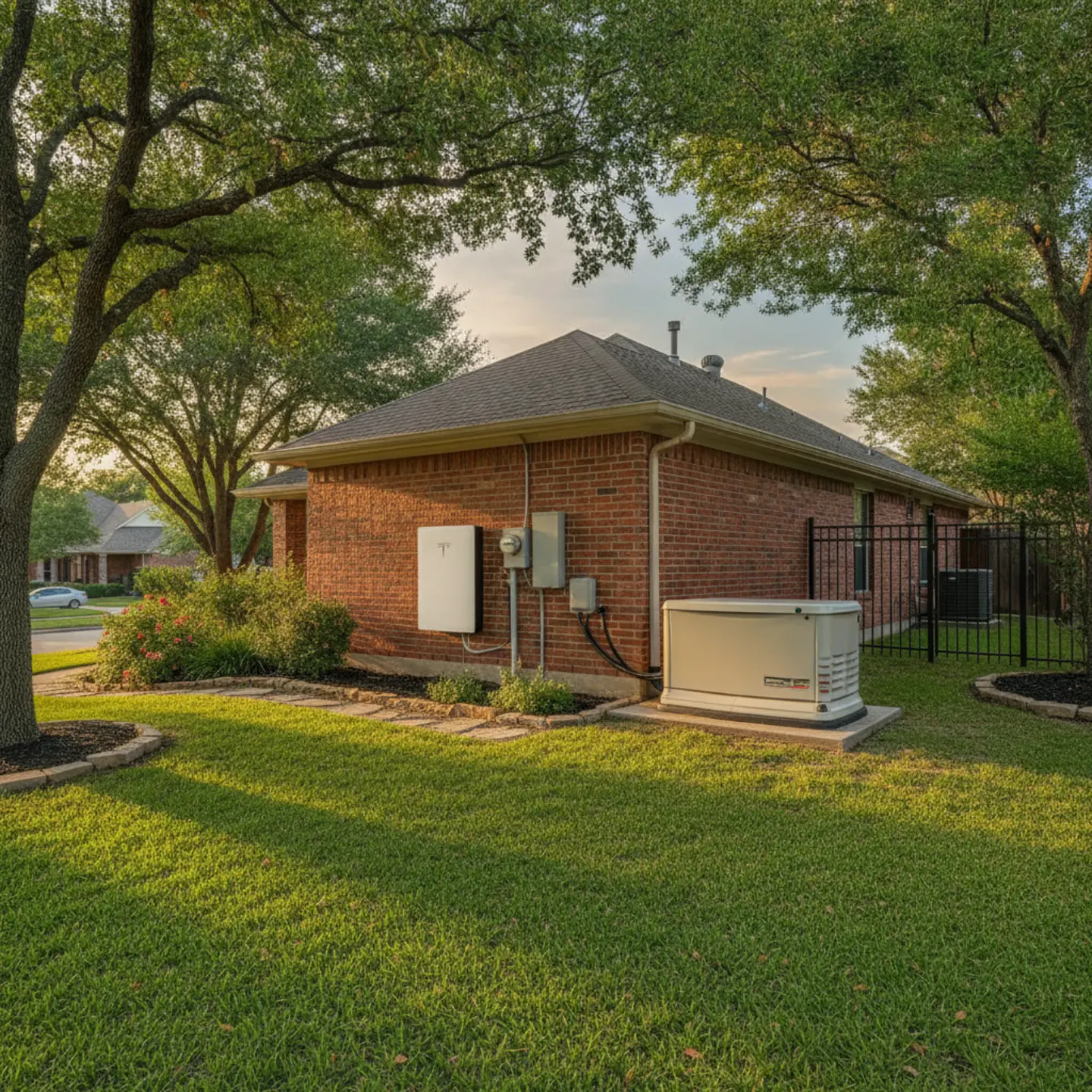
- Standby Generator Cost — A whole-home standby generator installation in DFW typically runs $10,000–$25,000+, with Epic Electrical’s transparent base price of $14,000 covering the unit, electrical hookup, and up to 15 feet of fuel line.
- Portable vs. Standby TCO — Portable generators cost $400–$3,500 upfront but carry a 5-year total cost of ownership of $2,850–$4,000+; standby units run $16,000–$18,000+ over five years but deliver automatic, whole-home protection with zero manual effort.
- Why Quotes Vary — Fuel line distance beyond 15 feet, electrical panel upgrades, generator kilowattage, and local permit fees are the biggest cost escalators that push installations beyond any base price.
- License Verification Is Non-Negotiable — Always confirm your installer holds a Texas Electrical Contractor License (TECL) via TDLR and a separate TSBPE license for fuel line work before signing any contract.
- Trust Epic Electrical for transparent generator pricing, licensed master electricians, and honest diagnosis with no upsells — visit Epic Electrical to learn more about protecting your home.
How Much Does a Home Generator Installation Really Cost in DFW?
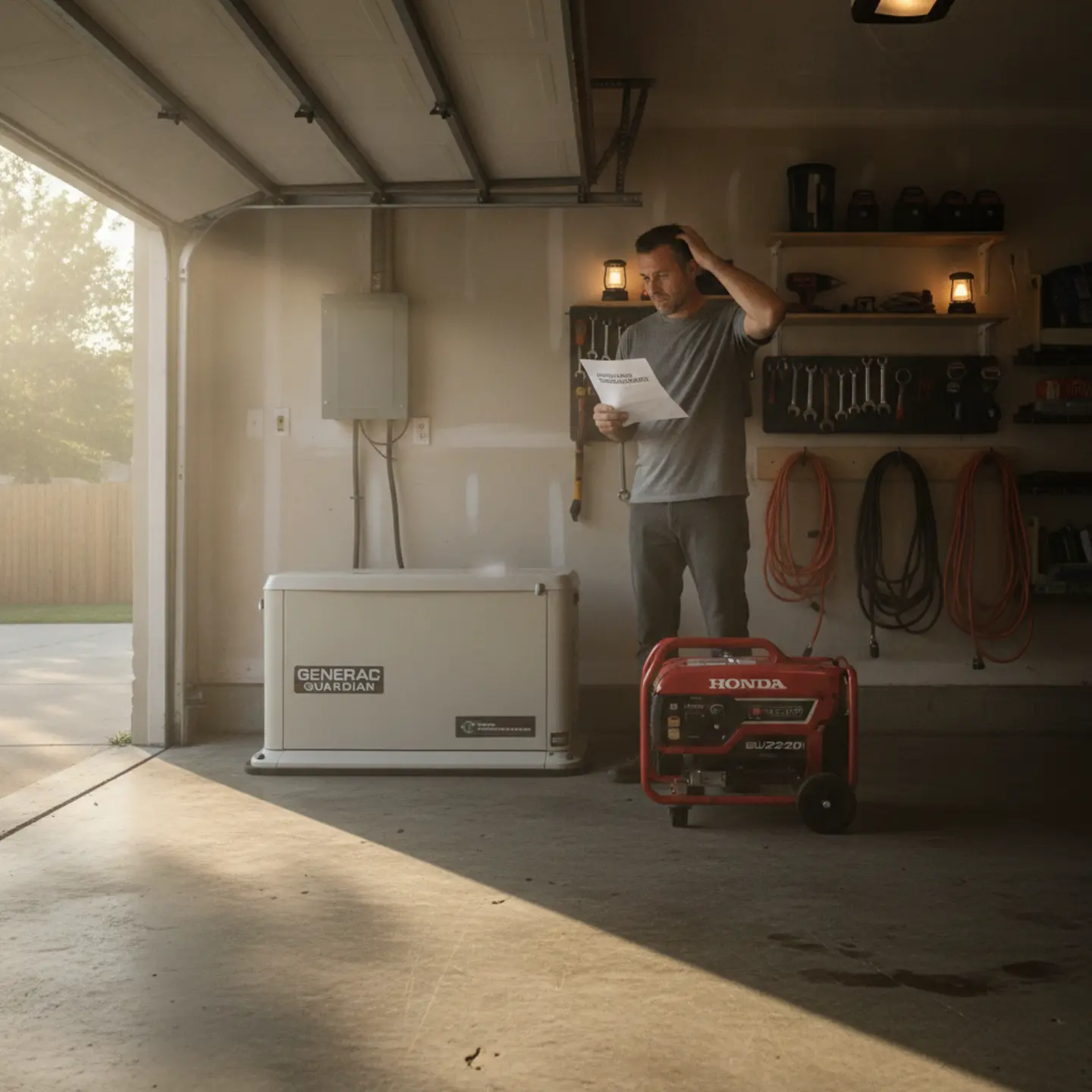
A whole-home standby generator installation in DFW typically costs $10,000–$25,000+, with Epic Electrical’s transparent base price of $14,000 including the unit, electrical hookup, and up to 15 feet of fuel line. Portable generators are cheaper upfront ($400–$3,500 plus installation), but their true 5-year cost of ownership—factoring in fuel, maintenance, and manual operation—often approaches or exceeds a standby unit’s value. The real answer depends on your home’s size, fuel source, electrical panel condition, and how much hands-off, automatic protection matters to you.
Understanding what drives these price differences—and why quotes vary so widely—is the key to avoiding sticker shock and choosing the right backup power solution for your budget and lifestyle.
Epic Electrical
Free Quote & Honest Diagnosis — No Upsells
Core Service Programs:
- Electrical Repairs, Wiring & Lighting for tripping breakers, faulty wiring, GFCI issues, and indoor/outdoor lighting
- EV Chargers, Generators & Panel Upgrades for Level 2 EV charging, whole-home generator installs, panel replacements, and surge protection
- Commercial, Warehouse & Industrial Electrical for restaurants, offices, industrial buildouts, LED retrofits, and dedicated circuits
Why Choose Epic Electrical:
- ✓ Trusted by customers with 140+ five-star Google reviews
- ✓ Father-and-son master electricians — a third-generation electrical family
- ✓ Serving North Richland Hills and the DFW Metroplex since 2009
- ✓ 50+ years of combined electrical experience on every job
- ✓ No upsells, no jargon, no pressure — we fix what’s actually broken
- ✓ Small repairs fixed same-visit; big jobs get a written quote with no hidden costs
- ✓ Texas-licensed electrical contractor (TECL #33192)
Whole-Home Standby Generator: Full Cost Breakdown (DFW 2026)
A standby generator installation isn’t a single line item—it’s a system with several distinct components, each carrying its own cost. When you understand what you’re actually paying for, the quote makes a lot more sense, and you can spot immediately whether a contractor is leaving something out.
| Cost Component | Typical DFW Range | Notes |
|---|---|---|
| Generator Unit (7–10 kW) | $3,000–$6,000 | Essential circuits; smaller homes |
| Generator Unit (11–14 kW) | $4,500–$8,000 | Mid-size whole-home coverage |
| Generator Unit (15–22 kW+) | $5,500–$15,000+ | Full-load coverage; larger homes |
| Installation Labor (electrical & site prep) | $3,000–$7,000 | Varies by complexity and local rates |
| Natural Gas Fuel Line Hookup | $300–$1,500 | Short runs to existing main line |
| Propane Fuel Line & Tank | $1,000–$3,000+ | Tank installation required separately |
| Automatic Transfer Switch (ATS) | $1,000–$3,000 | Included in whole-home installations |
| Electrical Panel Upgrade (if required) | $2,000–$4,500+ | Epic’s floor price for panel changes: $5,800 |
| Concrete Pad | $200–$800 | Standard 3–6 inch pad |
| Permit Fees (electrical, building, gas) | $100–$500 | Varies significantly by DFW city |
| Epic Electrical Base Price (turnkey) | $14,000 | Unit + electrical + 15 ft fuel line included |
Epic Electrical’s $14,000 base price is a genuine turnkey number—not a teaser. It covers the generator unit, complete electrical hookup, and up to 15 feet of fuel source line. That’s how you avoid the bait-and-switch of a low headline price that explodes once the contract is signed. For a detailed breakdown specific to your home, you can request a whole-home generator installation estimate directly.
💡 Sticker Shock Is Real—But Here’s Why It’s Worth It
A $14,000–$20,000 generator installation feels expensive upfront, but a single multi-day power outage in DFW can cost $700–$2,000+ in food loss, hotel stays, and lost productivity. Over 15 years, the annualized cost of a standby unit is roughly $1,400/year—a small price for 24/7 automatic protection and peace of mind.
Why Generator Installation Quotes Vary So Much: Key Cost Escalators
You’ve probably seen quotes ranging from $10,000 to $25,000+ for what sounds like the same job. That gap isn’t random—it reflects real differences in your home’s specific situation. Here’s what pushes costs beyond any base price.
- Fuel line distance beyond 15 feet: Gas piping runs $10–$30 per linear foot beyond the included 15 feet. Underground lines cost significantly more due to trenching labor and equipment.
- Electrical panel incompatibility: If your existing panel is undersized, outdated, or lacks space for generator breakers, a panel replacement adds $2,000–$4,500+ to the project. Epic’s floor price for a panel change is $5,800.
- Load calculation complexity: Larger homes with multiple HVAC units, pools, or EV chargers require more detailed sizing—and often a larger, more expensive generator unit.
- Advanced Automatic Transfer Switch: Larger amperage or load-management systems cost more than basic essential-circuit switches.
- Underground vs. above-ground fuel supply: Trenching for underground gas or propane lines adds substantial labor and equipment costs.
- Brand differences: Kohler units typically command a slight premium over comparable Generac models—roughly 10–20% more for equivalent output.
- Site preparation: Significant grading, tree removal, or landscaping modifications required for proper generator placement increase overall costs.
- Local permit fees: Fees vary by DFW city. Some municipalities require more detailed plan reviews, adding administrative costs and potential timeline delays.
If you’re comparing quotes and one is dramatically lower than the others, ask specifically what it excludes. A quote that omits the transfer switch, concrete pad, or permit fees isn’t cheaper—it’s incomplete. You can compare Generac and Kohler options in detail in our Generac vs. Kohler whole-house generator guide.
Portable vs. Standby Generator: 5-Year Total Cost of Ownership Comparison
The upfront price difference between portable and standby generators is real—but it’s only part of the story. When you factor in fuel, maintenance, manual labor, and safety risks over five years, the gap narrows considerably.
| Cost Factor | Portable Generator | Standby Generator |
|---|---|---|
| Initial Unit Cost | $400–$3,500+ | Included in installation |
| Installation / Hookup | $400–$2,500 (interlock or transfer switch) | $14,000 base (Epic Electrical, turnkey) |
| Fuel (3 major outages over 5 yrs) | $450–$1,050 (gasoline) | Variable (natural gas/propane; more efficient) |
| Maintenance (5 years) | $250–$1,500 (DIY to professional) | $1,500–$4,000 (professional annual service) |
| Estimated 5-Year TCO | $2,850–$4,000+ | $16,000–$18,000+ |
| Operation | Manual startup, refueling required | Fully automatic, no intervention needed |
| Coverage | Selected circuits only | Whole home |
| Noise Level | 60–85+ dB (very loud) | 50–65 dB (enclosed, quieter) |
| Carbon Monoxide Risk | High if improperly placed | Minimal (permanent, properly vented) |
| Theft Risk | High (portable, unsecured) | None (permanent installation) |
| Resale Value Added | Minimal | 50–70%+ cost recouped at sale |
For a portable generator with a proper inlet hookup, see our breakdown of portable generator inlet and outlet installation—and for a deeper look at how these options compare to battery backup systems, our battery backup vs. generator guide walks through the full picture.
The standby’s 5-year TCO is higher—no question. But that number buys you automatic protection the moment the grid goes down, no trips to the gas station at midnight, no carbon monoxide risk, and a home that keeps running while your neighbors are in the dark.
Hidden Costs and Budget Items Most Homeowners Forget
Even a well-structured quote can leave out costs that show up later. Budget for these before you sign anything.
- Annual maintenance contracts: $300–$800 per year for professional service. This isn’t optional—up to 50% of standby generators fail to start when needed due to neglected maintenance.
- Load bank testing: $200–$500 every few years for larger units to verify full-load capability under real conditions.
- HOA architectural review fees: Many DFW HOAs charge application fees and require aesthetic screening. Obtain approval before signing an installation contract.
- Propane tank lease or purchase: If using propane, the tank itself ($500–$2,000+) and initial fill are separate from the generator installation cost.
- Expedited service during peak demand: After major outages, installation backlogs reach 4–8 weeks. Emergency scheduling may carry higher labor rates.
- Financing interest: If financing the installation, factor in APR—typically 0–25% depending on creditworthiness and term length. Our residential project financing guide explains your options clearly.
- Electrical panel relocation or subpanel: If the generator can’t be placed near your existing service, extensive conduit runs increase both labor and material costs.
DFW Market Context: Why Generator Demand Is High and Prices Are Rising
DFW isn’t a market where backup power is a luxury—it’s a market where the grid has repeatedly proven it needs a backup plan. Winter Storm Uri in February 2021 left millions without power for days. The May 2024 severe thunderstorms knocked out power for more than 600,000 DFW residents, with some areas dark for over a week. June 2023 storms affected more than 200,000 Oncor customers. These aren’t once-in-a-generation events anymore.
ERCOT has issued multiple voluntary load reduction requests during extreme weather—signals that the grid is operating with thin reserves even when a full collapse is avoided. For homeowners with remote work setups, refrigerated medications, oxygen concentrators, or simply high-value homes in Southlake, Keller, or Colleyville, that’s not an acceptable risk.
Only an estimated 5–8% of Texas homeowners currently own a standby generator, which means the vast majority of DFW households are still exposed. Demand spikes sharply after major weather events, and installation backlogs can stretch to 4–8 weeks. If you’re thinking about a generator, getting on the schedule before the next storm is the smarter move.
For homeowners in Fort Worth and surrounding communities, the combination of aging distribution infrastructure, rapid population growth, and severe weather frequency makes the case for backup power stronger every year.
Licensing, Permits, and Consumer Protection in Texas
Texas has a clear regulatory framework for generator installation—and it protects you when contractors follow it. The problem is that not all of them do.
Electrical work on a standby generator must be performed by or under the direct supervision of a licensed Master Electrician associated with a registered Texas Electrical Contractor (TECL). You can verify any contractor’s license at tdlr.texas.gov/verify.htm. For the fuel line portion of the installation, a separate license from the Texas State Board of Plumbing Examiners (TSBPE) is required—verify at tsbpe.texas.gov/license-verification. These are two distinct trades with two distinct licensing bodies, and both must be covered.
Permit requirements vary by DFW city. An electrical permit is universal. Building permits and gas/plumbing permits vary between Dallas County and Tarrant County municipalities. Generator placement must also comply with NFPA 37 standards, which govern setback distances from buildings, property lines, and openings to prevent fire hazards.
💡 Pro Tip: Get Your HOA Approval Early
Many DFW HOAs require architectural review, noise limits, and placement restrictions for standby generators. Obtain approval before signing a contract with an installer. This can add 2–4 weeks to your timeline, so plan ahead to avoid delays.
If something goes wrong, the Texas Department of Licensing and Regulation (TDLR) handles complaints against licensed electrical contractors. The Texas Deceptive Trade Practices Act (DTPA) provides additional recourse for false or misleading business practices. Keep copies of your contract, permit documents, inspection reports, and all contractor communications.
How to Vet a Generator Installer: Credentials, Red Flags, and Questions to Ask
The generator market in DFW is competitive—and after a major storm, it gets crowded with contractors who shouldn’t be doing this work. Here’s how to separate the qualified from the questionable.
Non-negotiable credentials:
- TECL license (Texas Electrical Contractor License) — verify at TDLR
- Master Electrician on file with TDLR
- TSBPE license for fuel line work
- Current General Liability and Workers’ Compensation insurance certificates
Questions to ask every installer:
- Can you provide your TECL and TSBPE license numbers and current insurance certificates?
- Who is the Master Electrician overseeing the electrical work?
- Will you handle all electrical and building permits with the city?
- What is the total turnkey cost with a full itemized breakdown?
- What are the manufacturer warranty terms, and what is your labor policy if the unit needs replacement?
- What are the annual maintenance requirements and costs for this specific model?
- Can you provide references from recent residential generator installations?
⚠️ Beware of Unlicensed Electricians and ‘Storm Chasers’
After major outages, unlicensed contractors flood the market with cheap, quick fixes that skip permits, code compliance, and safety. Always verify TECL and TSBPE licenses before hiring. Unlicensed work can void your homeowner’s insurance, create fire hazards, and leave you liable for injuries.
Predatory practices to watch for include install-only quotes that omit the transfer switch or permit fees, “permit laundering” where a licensed contractor pulls the permit but sends unlicensed workers, and high-pressure sales tactics following storm events. If a contractor is vague about license numbers or insists on large cash payments upfront, walk away. For additional context on what proper electrical work looks like, our guide to common home electrical problems covers the red flags that show up in substandard installations.
Why Epic Electrical Is the Right Choice for DFW Homeowners
With 140+ five-star Google reviews, Epic Electrical has built its reputation one honest installation at a time. That kind of track record doesn’t happen by accident—it comes from a team that tells you what you actually need, not what generates the biggest invoice.
Epic is a father-and-son operation with more than 50 years of combined electrical experience between them. This is a third-generation electrical family, and that matters—because accountability is personal when your name is on every job. They’ve been serving DFW since 2009, which means established relationships with local permitting offices, deep familiarity with regional challenges like HOA requirements and severe weather demands, and a reputation that holds up to scrutiny.
As a Texas-licensed electrical contractor (TECL #33192) with a Master Electrician on file, Epic operates with full regulatory accountability on every project. The $14,000 base price for a whole-home standby generator installation is a real number—it includes the unit, the electrical hookup, and up to 15 feet of fuel line. No hidden escalators, no surprise charges after the work starts. If a smaller generator will do the job, or if a cheaper fix exists, Epic will tell you. That’s the whole point.
Beyond generators, Epic handles the panel installations and complex site-specific electrical challenges that many competitors subcontract out or mishandle entirely. You’re not getting a generator-only crew—you’re getting full-service electrical expertise on every aspect of the installation. Read what customers say on the Epic Electrical testimonials page to see what that difference looks like in practice.
Frequently Asked Questions: Home Generator Backup Pricing
Why do generator installation quotes vary so much between contractors in DFW?
Quotes vary because of real differences in what each installation requires. The generator’s kilowattage, fuel line distance and complexity, whether your electrical panel needs an upgrade, the type of automatic transfer switch, site preparation requirements, and local permit fees all affect the final number. A contractor quoting $10,000 and one quoting $22,000 may both be accurate—for different homes with different needs. A detailed load calculation and site assessment by a licensed electrician are the only way to get an accurate, apples-to-apples number. Always ask for a full itemized breakdown, not a lump sum.
What’s the real difference between a portable and a standby generator over 5 years?
A portable generator costs $400–$3,500 upfront but requires manual operation, frequent refueling, and annual maintenance. Factor in fuel costs during outages and 5-year maintenance, and total cost of ownership reaches $2,850–$4,000+. A standby generator costs $10,000–$25,000+ upfront but operates automatically the moment power fails, covers your entire home, and requires only professional annual maintenance ($300–$800/year). Its 5-year TCO runs $16,000–$18,000+, but it eliminates the stress, safety risks, and manual labor of portable operation entirely. The right choice depends on how much hands-off protection matters to you.
What licenses and insurance should I verify before hiring a generator installer in Texas?
Always verify the electrical contractor’s Texas Electrical Contractor License (TECL) at tdlr.texas.gov/verify.htm and confirm a Master Electrician is on file. For fuel line work, verify the plumber or gas fitter’s license from the Texas State Board of Plumbing Examiners (TSBPE) at tsbpe.texas.gov/license-verification. Request current certificates of General Liability and Workers’ Compensation insurance, with you named as an additional insured. These credentials ensure legal compliance, safety, and accountability—and give you recourse through TDLR if something goes wrong.
How much home value does a whole-home standby generator add in DFW?
A whole-home standby generator typically recoups 50–70% or more of its installation cost at resale, according to national data from the National Association of Realtors and the Remodeling Magazine Cost vs. Value Report. In DFW, where power outages and grid reliability are top-of-mind for buyers, a generator is a genuinely desirable amenity—not just a checkbox. In higher-value markets like Southlake, Keller, and Colleyville, it can meaningfully differentiate your home in a competitive listing environment and signal energy resilience to buyers who’ve lived through major outages.
What makes Epic Electrical different from other generator installers in DFW?
Epic Electrical stands out with 140+ five-star Google reviews, a father-and-son team of master electricians with 50+ years of combined experience, and a Texas-licensed TECL (#33192) ensuring full regulatory accountability. Since 2009, Epic has served DFW with transparent pricing—the $14,000 base price includes the unit, electrical hookup, and 15 feet of fuel line, with no hidden escalators. If a cheaper solution exists for your home, Epic will tell you. That’s not a marketing line; it’s how they’ve built their reputation over 15+ years in this market. Get your free estimate from Epic Electrical—no obligation, no pressure.
Ready to Get Honest Generator Pricing for Your DFW Home?
Backup power decisions shouldn’t come with sticker shock or regret. Whether you’re comparing standby and portable options, trying to understand why quotes vary, or ready to move forward with a whole-home installation, Epic Electrical gives you a straight answer—not a sales pitch. Father-and-son master electricians with 50+ years of combined experience, transparent pricing, and zero pressure.
Serving North Richland Hills, Fort Worth, Keller, Southlake, Colleyville, Grapevine, Arlington, and all of DFW.
Pricing, equipment specifications, and project scope mentioned in this article are accurate as of the date of publication and are subject to change. Code requirements and permit needs vary by municipality and property. Please contact us directly for a current quote on your specific home or business.