Key Takeaways
- Code minimums aren’t enough — Most new homes require 25–35 circuits to meet the 2023 NEC, but a well-planned DFW home should have 40 or more to handle modern appliances, remote work, and future needs without immediate limitations.
- Pre-wiring saves real money — Adding a 240V/50A EV charging circuit during construction costs $600–$1,200; retrofitting that same circuit to a finished home costs $1,500–$3,000 or more — a 2–3x cost multiplier that’s entirely avoidable.
- Panel size is a critical decision — 200-amp service is the standard minimum for new Texas homes, but homes over 3,500 sq. ft. or those with pools, hot tubs, or dual EV chargers should budget for 400-amp service from the start.
- Both GFCI and AFCI protection are required — The 2023 NEC (adopted in Texas as of September 2023) expanded requirements for both technologies; improper installation is one of the top defects found in new Texas construction.
- Trust Epic Electrical for honest new home electrical planning with no upsells and 60+ years of combined master electrician experience — visit Epic Electrical to see why DFW homeowners and builders rely on us.
How Many Circuits Does a New Home Need?
Most new homes need 25–35 minimum circuits to meet code, but a well-planned home should have 40 or more to avoid immediate limitations and future retrofitting costs. The exact number depends on your home’s size, appliances, and lifestyle—especially if you’re planning for an EV charger, home office, or generator backup. Getting this right during construction is critical because adding circuits later costs 2–3 times more than pre-wiring them now.
Understanding the real electrical needs of a modern DFW home—beyond bare-minimum code—helps you avoid the regret of underpowered systems and expensive retrofits.
Epic Electrical
Free Quote & Honest Diagnosis — No Upsells
Core Service Programs:
- Electrical Repairs, Wiring & Lighting for tripping breakers, faulty wiring, GFCI issues, and indoor/outdoor lighting
- EV Chargers, Generators & Panel Upgrades for Level 2 EV charging, whole-home generator installs, panel replacements, and surge protection
- Commercial, Warehouse & Industrial Electrical for restaurants, offices, industrial buildouts, LED retrofits, and dedicated circuits
Why Choose Epic Electrical:
- ✓ Trusted by customers with 138+ five-star Google reviews
- ✓ 2 master electricians with over 60 combined years of experience
- ✓ Serving North Richland Hills and the DFW Metroplex since 2009
- ✓ 60+ years of combined electrical experience on every job
- ✓ No upsells, no jargon, no pressure — we fix what’s actually broken
- ✓ Small repairs fixed same-visit; big jobs get a written quote with no hidden costs
- ✓ Texas-licensed electrical contractor (TECL #33192)
Understanding Electrical Code Minimums vs. Real-World Needs
Texas adopted the 2023 National Electrical Code (NEC) as of September 1, 2023. That’s the baseline every licensed electrician must meet. But here’s the thing most builders won’t tell you: code minimums are engineered for safety and baseline functionality, not for the way you actually live in a home in 2026.
A builder’s standard electrical package is designed to pass inspection at the lowest possible cost. It meets code. It does not meet the demands of a home office, a Level 2 EV charger, a high-end kitchen, and a dual HVAC system running simultaneously on a 110°F August afternoon in Keller or Southlake. The gap between “code compliant” and “actually functional for a modern family” is significant—and it shows up immediately after move-in.
Modern appliances draw more power than the loads older code editions anticipated. Remote work has added dedicated circuit demand for home offices. EV adoption is accelerating. And in DFW specifically, air conditioning runs near-continuously for three to four months a year, pushing electrical loads higher than in most other U.S. markets. Code was written as a floor, not a ceiling.
💡 Ask Your Electrician These Questions
Before signing a contract, ask: “Will the panel have spare breaker slots for future expansion?” “Are you pre-wiring for an EV charger?” “What dedicated circuits are you including beyond code minimums?” Red-flag answers like “A 200-amp panel is plenty for any house” or “We just put outlets every 12 feet per code” signal a builder-grade approach that will cost you more later.
Circuit Breakdown: What a 2,500 sq. ft. Home Typically Needs
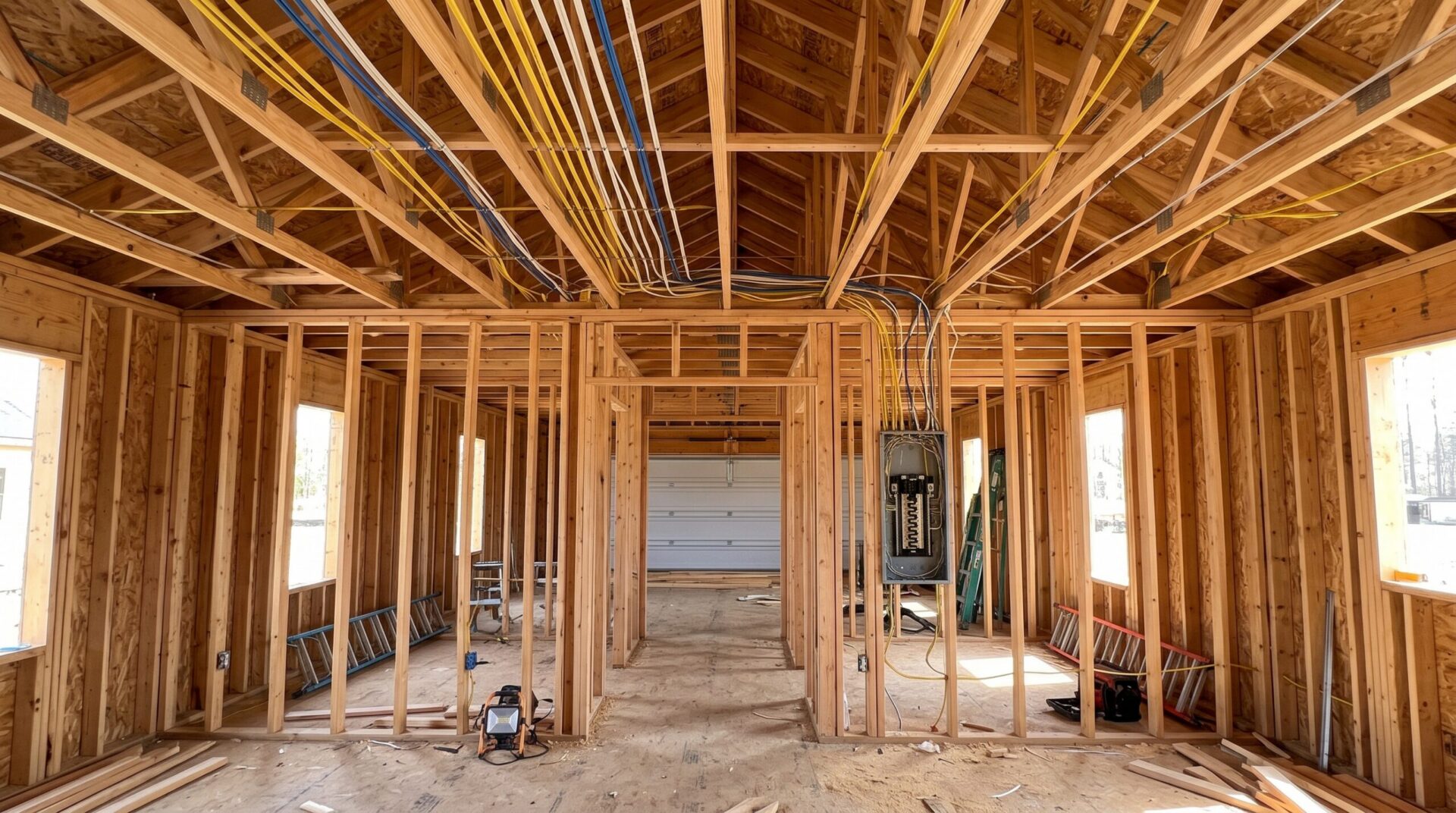
The NEC doesn’t hand you a simple circuit count—it provides load calculation rules. But for a typical 2,500 sq. ft. DFW home, here’s how those rules translate into real circuits. This is the kind of itemized breakdown a quality electrician should walk you through before construction begins.
✅ You’re Not Overthinking This
Many new homeowners feel pressured to accept a builder’s standard package to stay on schedule and budget. But electrical planning is one of the few decisions you can’t easily undo—and mistakes show up immediately when you plug in a vacuum and trip a breaker, or years later when you want to add an EV charger. Asking detailed questions now is exactly the right move.
| Circuit Category | Circuit Type | Typical Count | Notes |
|---|---|---|---|
| General Lighting & Receptacles | 15A | 8–12 | Distributed throughout living spaces, bedrooms, hallways |
| Small Appliance (Kitchen/Dining) | 20A | 2–3 | Dedicated countertop outlet circuits — code requires minimum 2 |
| Laundry Room | 20A | 1 | Dedicated circuit; dryer gets its own 240V circuit separately |
| Bathrooms | 20A | 1–2 | GFCI-protected; can serve multiple bathrooms on one circuit |
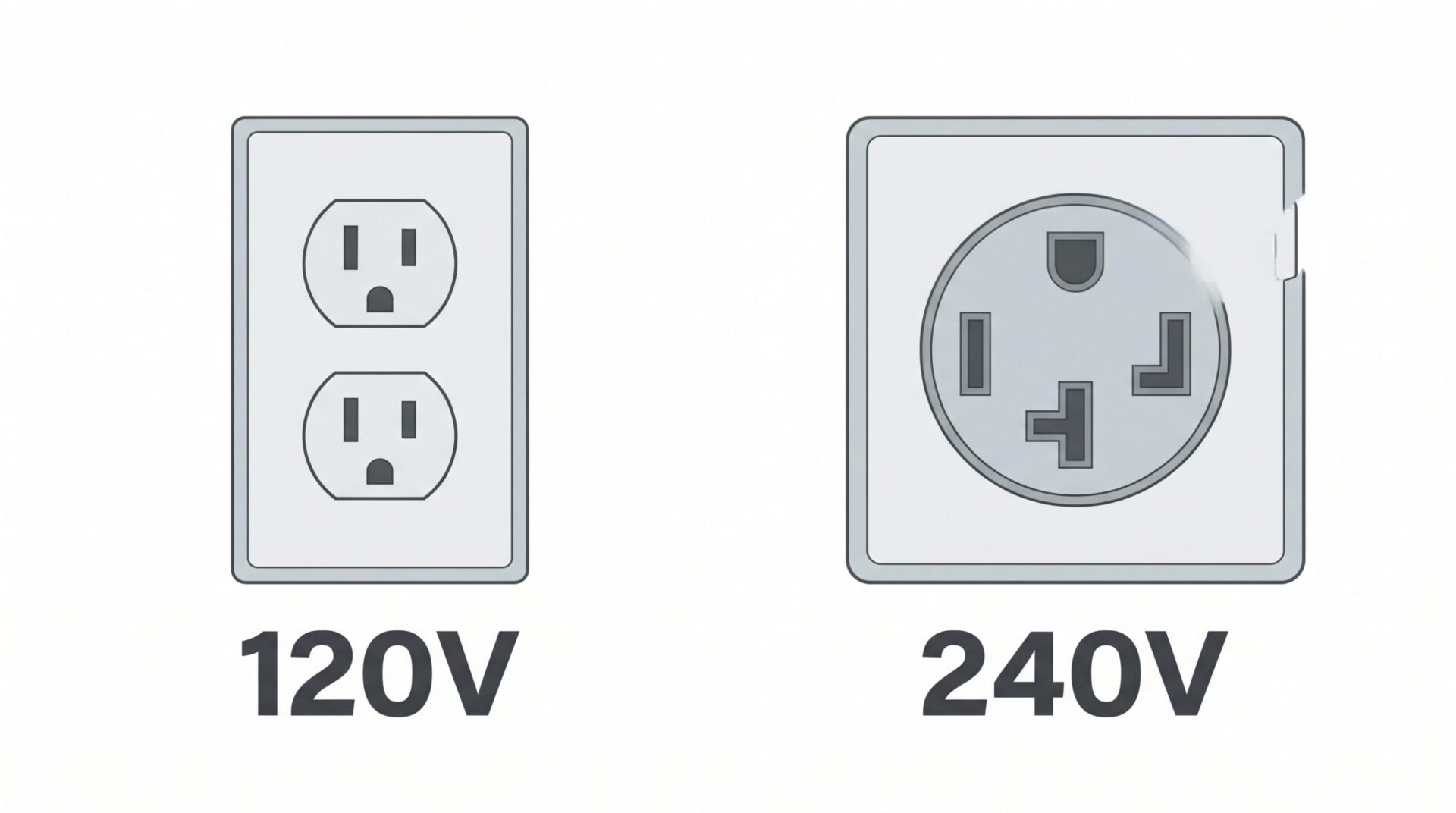
| Dedicated 240V Appliances | 240V | 4–5 | HVAC, electric range, dryer, water heater — each gets its own circuit |
| Dedicated 120V Appliances | 20A | 3 | Dishwasher, garbage disposal, microwave |
| Outdoor & Garage | 20A / 240V | 2+ | Exterior outlets, garage workbench, future EV charging |
| Total Baseline | — | 25–35 | Well-planned homes typically reach 40+ circuits |
That baseline of 25–35 circuits is the floor. A home with a dedicated home office, a garage workshop, a second refrigerator, or a home gym will need additional dedicated circuits for each. Grouping items that should be separate—like putting the refrigerator on the same circuit as the kitchen countertop outlets—causes nuisance trips and is one of the most common builder-grade shortcuts we see. If you’re seeing common electrical problems in a relatively new home, inadequate circuit planning is often the root cause.
Future-Proofing: Planning for EV Chargers, Generators, and Home Offices
The decisions you make during construction lock in your home’s electrical capacity for decades. The good news is that pre-wiring for future needs during the build phase is inexpensive relative to what it costs to retrofit later. The bad news is that most builders won’t bring it up unless you ask.
EV charging is the clearest example. Industry data shows that 30–40% of new homes in major Texas metros are already being pre-wired for Level 2 EV charging—a figure that has more than doubled since 2021. If you’re comparing charger options, our ChargePoint vs. Tesla home charger guide breaks down the hardware side. But the circuit itself—a 240V/50A dedicated line to the garage—is what matters during construction. You can always choose your charger later. You can’t easily add the circuit once the walls are closed.
⚠️ The Retrofit Cost Trap
Adding a circuit during construction costs $600–$1,200. Retrofitting that same circuit to a finished home costs $1,500–$3,000 or more—a 2–3x cost multiplier that’s entirely avoidable with upfront planning. This applies to EV chargers, generator transfer switches, home office circuits, and any other dedicated load you might want in the next five to ten years.
Generator pre-wiring is equally important in Texas. After the 2021 winter storm and repeated summer peak demand warnings from ERCOT, whole-home standby generators have moved from luxury to practical necessity for many DFW homeowners. Pre-installing a transfer switch during construction adds $1,500–$3,500 to your electrical scope but makes future generator installation significantly cheaper and less disruptive. If you wait until after move-in, you’re paying for the generator hardware plus the cost of opening finished walls and ceilings.
Home offices deserve their own dedicated circuit—or two. Sensitive computer equipment, networking gear, and monitors are vulnerable to the voltage fluctuations caused by other appliances sharing the same circuit. A dedicated circuit eliminates nuisance trips and protects your equipment. For DFW homes over 3,000 sq. ft., dual HVAC systems are essentially standard, and each system requires its own dedicated circuit. Variable-speed, high-efficiency units have specific electrical requirements that a builder-grade electrical package may not fully account for.
Panel Size: Why 200-Amp Is Standard (and When You Need 400-Amp)
The main electrical panel is your home’s power distribution hub, and its size determines how much total electrical load your home can handle at once. In Texas, 200-amp service is now the minimum standard for new single-family homes—and for most homes under 3,500 sq. ft. with standard appliance loads, it provides adequate capacity.
But “adequate” and “future-proof” aren’t the same thing. A 200-amp panel installed with no spare breaker slots—a common builder-grade move—leaves you with zero room for expansion. The moment you want to add an EV charger, a hot tub, or a dedicated workshop circuit, you’re looking at a panel replacement rather than a simple circuit addition. That’s an expensive lesson.
The cost to upgrade from 200-amp to 400-amp service during new construction. Retrofitting the same upgrade after move-in is significantly more expensive and disruptive.
400-amp service is the right choice for homes over 3,500 sq. ft., homes with pools or hot tubs, properties with dual EV chargers, or any home with extensive electric appliances. DFW’s extreme summer heat means air conditioning runs near-continuously from June through September, driving electrical loads higher than in most other U.S. markets. Factor that in when sizing your service. You can use our panel upgrade calculator to get a rough sense of what your specific load profile might require.
The panel sizing conversation is one of the first things we have with homeowners and builders before we bid a job. It’s not about upselling—it’s about making sure the system you’re paying for actually serves your home for the next 20 to 30 years.
GFCI and AFCI Protection: What They Do and Where You Need Them
Two acronyms come up constantly in new home electrical planning, and both are worth understanding before you sign off on any electrical scope.
GFCI (Ground Fault Circuit Interrupter) protects people. It detects when electricity is taking an unintended path—like through a person—and cuts power in milliseconds. The 2023 NEC expanded GFCI requirements to cover all receptacles in kitchens, bathrooms, laundry rooms, garages, and outdoor areas. If you’ve ever had an outlet near a sink trip and wondered why, that’s GFCI doing its job.
AFCI (Arc Fault Circuit Interrupter) protects your home from fire. Electrical arcs—when current jumps across a gap in damaged or deteriorating wiring—are one of the leading causes of residential fires. AFCI breakers detect these arcs and cut power before ignition occurs. The 2023 NEC expanded AFCI requirements significantly, now covering bedrooms, living rooms, and most habitable spaces throughout the home.
You need both, and they serve completely different functions. Improper GFCI or AFCI wiring consistently ranks among the top five defects found in new Texas construction by home inspectors. It’s usually a sign of rushed work—a crew moving too fast to wire devices correctly. A quality electrician treats these as non-negotiable details, not afterthoughts. For a deeper look at how GFCI works in specific wiring scenarios, our guide on GFCI protection on 2-wire circuits covers the technical side in plain language.
Cost Breakdown: What to Budget for New Home Electrical in DFW
Electrical pricing in DFW is driven by home size, panel size, the number of dedicated circuits, and the scope of any future-proofing upgrades. Material costs—copper wire, breakers, panel components—remain elevated compared to pre-pandemic levels, though prices stabilized through 2024 and into 2026. Here’s what a complete rough-in and trim-out realistically costs in this market.
| Scope | Estimated Cost Range | Notes |
|---|---|---|
| Under 2,000 sq. ft. — Standard 200A | $12,000–$18,000 | Complete rough-in and trim-out, code-required circuits |
| 2,000–3,500 sq. ft. — Standard 200A | $18,000–$30,000 | Includes dual HVAC circuits, full kitchen appliance package |
| Above 3,500 sq. ft. | $30,000–$50,000+ | Larger panel, more circuits, outdoor living, smart home prep |
| Panel Upgrade: 200A to 400A | Add $3,000–$6,000 | Strongly recommended for larger homes or high-load lifestyles |
| EV Charger Pre-Wire (240V/50A) | Add $600–$1,200 | Costs $1,500–$3,000+ to retrofit after move-in |
| Generator Transfer Switch | Add $1,500–$3,500 | Makes future generator installation far cheaper |
| Each Additional Dedicated Circuit | Add $250–$500 | Home gym, workshop, second refrigerator, etc. |
A future-proofed 3,000 sq. ft. DFW home with a 400-amp panel, EV pre-wire, generator transfer switch, and a comprehensive dedicated circuit package should realistically budget $35,000–$50,000 for electrical. That sounds like a lot until you consider that retrofitting even a handful of those items after move-in could easily cost $10,000–$15,000 more. If budget is a concern, we’re happy to walk through residential electrical financing options that can spread the cost without compromising the scope.
In high-growth DFW submarkets like Keller, Haslet, Roanoke, and Argyle—where custom and semi-custom homes are being built at a rapid pace—we consistently see homeowners who accepted a builder’s standard package and called us within the first year to add circuits. The math almost never works in their favor. Plan it right the first time.
Post-tension slab foundations—standard throughout DFW—mean all in-slab electrical conduit must be perfectly placed before the concrete is poured. There’s no going back. This is one reason experienced new construction electricians matter: a mistake at the slab stage is extraordinarily expensive to correct, and it requires a crew that knows exactly what they’re doing before the pour.
Why Epic Electrical Is the Right Choice for Your DFW New Home
Epic Electrical has been serving the DFW Metroplex since 2009, and we’ve built our reputation on one thing: honest guidance from experienced people who actually know what they’re talking about. Our 138+ five-star Google reviews aren’t from people who were upsold—they’re from homeowners and builders who got straight answers and work they could trust.
Our master electrician team brings 60+ years of combined experience to every project. We’ve seen every shortcut a builder-grade electrical package can take, and we know exactly what those shortcuts cost homeowners five years down the road. As a Texas-licensed electrical contractor (TECL #33192), we know the permitting and inspection requirements in Keller, Southlake, Fort Worth, and every other DFW municipality we work in—including the quirks of each city’s inspection process that can delay a project if you don’t know what to expect.
We review your architectural plans before we bid. We ask about your lifestyle, your future plans, whether you’re thinking about an EV, a generator, a pool, or a home office. We don’t assume you want the minimum. And if the minimum is actually right for your situation, we’ll tell you that too—because we’re not here to sell you circuits you don’t need.
Our office is located at 7304 Hialeah Cir W, North Richland Hills, TX 76182. We serve homeowners and builders across the DFW Metroplex, from Fort Worth to Southlake to Colleyville and beyond. If you’re building in DFW, we know your city’s requirements.
Don’t let a builder’s bare-minimum package limit your new home’s potential. Get a Free Estimate from Epic Electrical today and plan your electrical system the right way.
Frequently Asked Questions: New Home Electrical Circuits
Is the builder’s standard electrical package enough?
Rarely. A builder’s standard package is engineered to meet the bare minimum electrical code requirements at the lowest possible cost. It almost never includes enough dedicated circuits for modern living—no pre-wiring for an EV charger, no dedicated home office circuit, no adequate outdoor power. The result is immediate reliance on extension cords and power strips, which is both inconvenient and a safety concern. Most homeowners who accept a standard package end up calling an electrician within the first year to add what should have been there from the start.
Do I really need a 200-amp panel, or is that overkill?
A 200-amp service is now the standard minimum for new single-family homes in Texas—not overkill, just baseline. It provides adequate capacity for modern appliances, high-efficiency HVAC systems, and leaves some room for future additions. For larger homes (3,500+ sq. ft.) or those with major electrical loads like pools, hot tubs, or multiple EV chargers, a 400-amp service is often the smarter investment. The key question isn’t just whether 200 amps is enough today—it’s whether the panel will have spare breaker slots for tomorrow. A full panel with no room to grow is a problem waiting to happen.
Should I pre-wire for an EV charger even if I don’t have an electric car?
Yes, absolutely. The cost to install a 240V/50A circuit during construction is $600–$1,200—a fraction of what it costs to retrofit the same circuit after move-in ($1,500–$3,000 or more). Beyond the personal convenience, it’s a meaningful feature for resale value. Real estate agents consistently report that homes with EV pre-wiring are more marketable and signal a high-quality build to prospective buyers. You can always choose your charger hardware later; the circuit is what you need to lock in now. Our guide on the cost to charge an EV at home in Texas can help you understand the ongoing cost side of the equation.
What’s the difference between GFCI and AFCI, and do I need both?
You need both, and they protect against completely different hazards. GFCI (Ground Fault Circuit Interrupter) protects people from electrical shock by detecting current leaking to ground—it’s required in wet areas like kitchens, bathrooms, laundry rooms, garages, and outdoor outlets. AFCI (Arc Fault Circuit Interrupter) protects your home from fire by detecting dangerous electrical arcs in wiring—a common ignition source for house fires. The 2023 NEC expanded AFCI requirements to cover more living spaces throughout the home, not just bedrooms. Improperly wired GFCI or AFCI devices are among the most common defects found in new Texas construction, which is why it matters who does the work.
What makes Epic Electrical different from other DFW electricians?
Epic Electrical brings 60+ years of combined master electrician experience, 138+ five-star Google reviews, and deep knowledge of DFW’s local codes and permitting requirements—from Keller to Fort Worth to Southlake. As a Texas-licensed contractor (TECL #33192) and family business serving DFW since 2009, we take time to understand your lifestyle and future needs before we bid, with no upsells or hidden costs. We review your plans, ask the right questions, and tell you honestly what you need—and what you don’t. Get a Free Estimate and see why DFW homeowners and builders trust us to plan their electrical systems the right way.
Ready to Plan Your New Home’s Electrical System the Right Way?
Getting new home electrical circuits right during construction is one of the most cost-effective decisions you’ll make. The difference between a thoughtfully planned system and a builder-grade minimum shows up on day one—and every day after. Epic Electrical will review your plans, walk through your lifestyle and future needs, and give you an honest, detailed estimate with no pressure and no surprises.
We serve homeowners and builders across the DFW Metroplex, including Fort Worth, Keller, Southlake, Colleyville, North Richland Hills, and surrounding communities. Let’s build your home’s electrical system to last.
Serving Fort Worth · Arlington · Keller · Southlake · Colleyville · Grapevine · North Richland Hills · Lewisville · and all of DFW
Pricing, equipment specifications, and project scope mentioned in this article are accurate as of the date of publication and are subject to change. Code requirements and permit needs vary by municipality and property. Please contact us directly for a current quote on your specific home or business.