
Key Takeaways
- Age is the first indicator — Most electrical panels last 30–40 years. If yours is 25+ years old, an inspection is overdue, especially if you’re adding major appliances or experiencing electrical issues.
- Brand matters as much as age — Federal Pacific Stab-Lok, Zinsco, and Challenger panels have documented safety defects and cannot be reliably repaired. Full replacement is the only safe solution, and Texas insurance carriers often require it.
- Warning signs demand action — Flickering lights, burning smells, buzzing sounds, warm panel covers, and frequently tripping breakers are not minor annoyances. They’re your panel telling you something is wrong.
- Delaying replacement carries real financial risk — Electrical fires from faulty panels cause an average of 450 deaths and $1.5 billion in property damage annually in the U.S. Insurance claims can be denied if a known hazardous panel is involved, and a flagged panel can reduce your home’s sale price by $5,000–$15,000.
- Trust Epic Electrical for honest panel assessments, transparent pricing, and no-pressure diagnosis from a team with 60+ years of combined experience — visit Epic Electrical to learn more about serving DFW homeowners since 2009.
How Do I Know If My Electrical Panel Needs Replacing?
Your electrical panel likely needs replacing if it’s 25+ years old, shows visible warning signs like flickering lights or burning smells, contains a hazardous brand like Federal Pacific or Zinsco, or can’t handle your home’s current electrical demands. Most panels are designed to last 30–40 years, but age combined with modern usage patterns often means replacement is necessary for safety and functionality. The good news: knowing what to look for puts you in control of the decision.
Let’s walk through the specific warning signs, hazardous panel brands, and age-related factors that tell you it’s time to call a licensed electrician.
Epic Electrical
Free Quote & Honest Diagnosis — No Upsells
Core Service Programs:
- Electrical Repairs, Wiring & Lighting for tripping breakers, faulty wiring, GFCI issues, and indoor/outdoor lighting
- EV Chargers, Generators & Panel Upgrades for Level 2 EV charging, whole-home generator installs, panel replacements, and surge protection
- Commercial, Warehouse & Industrial Electrical for restaurants, offices, industrial buildouts, LED retrofits, and dedicated circuits
Why Choose Epic Electrical:
- ✓ Trusted by customers with 138+ five-star Google reviews
- ✓ Master electricians — serving North Richland Hills and the DFW Metroplex since 2009
- ✓ 60+ years of combined electrical experience on every job
- ✓ No upsells, no jargon, no pressure — we fix what’s actually broken
- ✓ Small repairs fixed same-visit; big jobs get a written quote with no hidden costs
- ✓ Texas-licensed electrical contractor (TECL #33192)
Warning Signs Your Electrical Panel Needs Immediate Attention
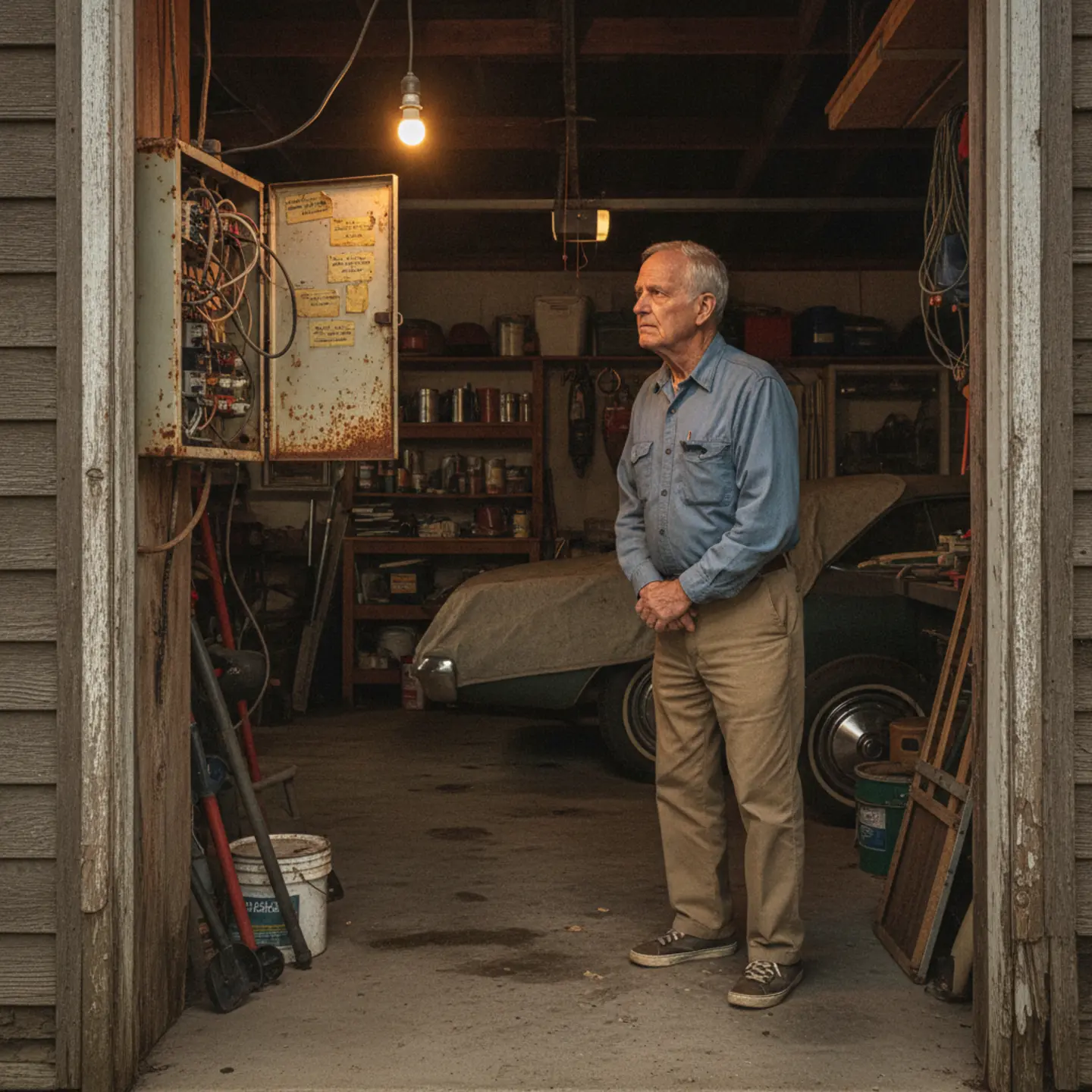
Your panel is not supposed to be something you think about. When it starts making itself known — through sounds, smells, or behavior you can’t explain — that’s the system telling you something is wrong. Here are the specific warning signs that warrant a call to a licensed electrician, not a wait-and-see approach.
- Flickering or dimming lights, especially when a large appliance like a dryer, AC unit, or refrigerator kicks on — this signals the panel is struggling to distribute load properly.
- Burning smell or scorch marks around the panel or breaker box. This is never normal. It indicates overheating or arcing inside the panel and should be treated as an emergency.
- Frequently tripping breakers or a main breaker that won’t stay reset. Occasional tripping is normal; repeated tripping on the same circuit is not.
- Buzzing or humming sounds coming from the panel. A healthy panel is silent. Any audible noise suggests a loose connection, failing breaker, or internal arcing.
- Warm or hot panel cover or breakers. Panels generate some heat, but a cover that’s warm to the touch is a red flag for overloading or internal failure.
- Visible corrosion, rust, or water damage inside or around the panel. Moisture and electricity are a dangerous combination that accelerates component failure.
- Sparking or arcing sounds when breakers are switched. This is a fire hazard and requires immediate professional evaluation — not a DIY fix.
If you’re experiencing any combination of these, the issue may go beyond a single bad breaker. A licensed electrician can determine whether a circuit breaker repair is sufficient or whether the panel itself needs to be replaced.
ℹ️ You’re Not Alone: Panel Issues Are Common in DFW
Approximately 40% of homes in the Dallas-Fort Worth area were built before 1990, meaning many homeowners are facing the same panel age and safety concerns you are. If you’re worried about your panel, you’re in good company — and taking action now puts you ahead of the curve.
Hazardous Panel Brands: Federal Pacific, Zinsco & Challenger
Not all aging panels are created equal. Some brands have documented safety defects that go beyond normal wear — defects that make them genuinely dangerous regardless of how old they are. If your home has one of these panels, the conversation shifts from “should I replace it?” to “how soon can we schedule this?”
In North Richland Hills, Haltom City, and older Fort Worth neighborhoods, these panels show up regularly during home inspections — particularly in homes built between the 1960s and 1990s. Knowing your brand puts you in a much stronger position.
Federal Pacific Stab-Lok Panels
Federal Pacific Electric (FPE) Stab-Lok panels are among the most widely flagged hazardous panels in the country. The core defect: breakers fail to trip under overload conditions, meaning the safety mechanism designed to prevent electrical fires simply doesn’t work. Industry estimates suggest up to 25% of FPE Stab-Lok breakers are defective. The CPSC investigated these panels and found significant failure rates, though they were never officially recalled. They cannot be reliably repaired — the internal design is the problem, not just individual breakers. Full replacement is the only safe resolution.
Zinsco Panels
Zinsco panels (sometimes sold under the GTE-Sylvania name) are known for overheating, poor internal connections, and breakers that fuse to the bus bar — meaning they physically cannot trip even when they should. This creates a silent fire risk that can persist for years without any visible warning signs. Like Federal Pacific, Zinsco panels cannot be made safe through repair.
Challenger Panels
Challenger panels, particularly models manufactured in the 1980s and 1990s, have been associated with overheating and breaker failures. They appear less frequently than FPE or Zinsco panels but are still flagged during home inspections and may trigger insurance issues.
Insurance carriers in Texas — including major carriers like State Farm, Allstate, and Farmers — increasingly refuse to write or renew policies on homes with these panels. Before any real estate closing, a flagged panel almost always becomes a condition of sale. If you’re not sure what brand your panel is, the label is typically on the inside of the panel door. When in doubt, have a licensed electrician take a look at your electrical panel replacement options.
Panel Age: When Your Electrical Panel Becomes a Safety Concern
Even a panel from a reputable brand has a finite lifespan. Most residential electrical panels are designed for a serviceable life of 30–40 years. That sounds like a long time — until you realize that a panel installed when your home was built in 1982 is now well past that threshold.
Here’s a practical age-based framework for thinking about your panel:
- 25–30 years old: Approaching end of expected lifespan. An inspection is strongly recommended, especially if you’re experiencing any electrical issues or planning to add high-demand appliances.
- 30–40 years old: At or beyond typical serviceable life. Replacement should be seriously considered even without obvious warning signs.
- 40+ years old: Considered obsolete in most electrical industry guidance. Replacement is strongly recommended regardless of visible condition.
- 1960s or earlier: These panels lack modern safety features like AFCI and GFCI protection and were never designed for today’s electrical loads. Replacement is urgent.
Age compounds risk when a hazardous brand is involved. A 1985 Federal Pacific panel isn’t just old — it’s old and defective. Modern code requirements, including arc-fault circuit interrupter (AFCI) protection and whole-home surge protection (now required under the 2020 NEC for new or replaced service equipment), often cannot be retrofitted into very old panels. Replacement brings your home into compliance with current safety standards.
In North Richland Hills, approximately 45% of homes were built before 1980 — meaning nearly half the housing stock in this area is working with panels that are at or well past their expected lifespan. This is one of the most common issues our team encounters on service calls throughout the mid-cities area.
Electrical Demand Changes: When Your Panel Can’t Keep Up
Even a panel that’s technically functional can become a problem when your home’s electrical demands outgrow what it was designed to handle. Homes built in the 1960s through 1980s were typically wired for 60–100 amp service. Modern homes — with central HVAC, multiple refrigerators, home offices, and high-efficiency appliances — routinely require 200 amps or more.
Several specific additions commonly push older panels past their limits:
- Electric vehicle chargers: A Level 2 EV charger requires a dedicated 240V circuit and often triggers the need for 200-amp service. If you’re considering an EV, use our EV charging calculator to understand what your home’s electrical system will need.
- High-demand appliances: Hot tubs, large air conditioning units, and modern HVAC systems can push a 100-amp panel to its limits, especially when running simultaneously with other loads.
- Home additions and renovations: Adding square footage or finishing a basement almost always triggers a permit review that will flag an undersized panel.
- Frequent breaker tripping under normal use: If your breakers trip when you run the microwave and the coffee maker at the same time, your panel capacity is the likely culprit — not the appliances.
💡 Pro Tip: Ask About Escalators Before You Commit
Panel replacement costs can vary widely depending on where your panel is located, whether it needs to be moved, and what code upgrades are required. A transparent contractor will break down the base cost and explain common escalators — outside disconnect, relocation, mast work — upfront, so you’re never surprised by the final bill. Use our panel upgrade calculator to get a ballpark before you call.
A panel upgrade to 200-amp service isn’t just about capacity — it’s also about future-proofing your home for the next 30 years of electrical demand. That’s a better investment than living with power limitations or risking overloads that damage appliances or start fires.
Real Estate & Insurance Triggers: Why Your Panel Suddenly Matters
Sometimes the push to replace a panel doesn’t come from inside the house — it comes from a home inspector’s report or a letter from your insurance carrier. These external triggers catch a lot of homeowners off guard, but they’re increasingly common across DFW.
During a home sale, a flagged electrical panel almost always becomes a negotiation point. Buyers will demand replacement or a price credit, and in competitive markets, a panel issue can derail a transaction entirely. A flagged panel in a home inspection report can reduce your sale price by $5,000–$15,000 — often more than the cost of proactive replacement.
On the insurance side, Texas carriers are increasingly identifying Federal Pacific, Zinsco, and Challenger panels and either refusing to write new policies, declining renewals, or adding significant surcharges. If your carrier requires replacement, they’ll typically ask for a certified letter from a Texas-licensed electrician confirming the work was completed with a permit and city inspection. Delaying that replacement can cost hundreds of dollars annually in premium surcharges — on top of the underlying safety risk.
The homeowners who come out ahead are the ones who address the panel proactively — before the inspection, before the insurance letter, before the problem forces their hand on someone else’s timeline.
If you’re buying or selling a home in Fort Worth, Arlington, or the surrounding mid-cities area, our team works directly with real estate agents and buyers to provide the documentation insurance carriers and title companies require. Our Fort Worth electrician services include full permit management and city inspection coordination so the process moves smoothly.
The True Cost of Delaying Panel Replacement
The upfront cost of panel replacement is real — typically $5,800 as a base for a standard 200-amp swap in DFW, with escalators for relocation, mast work, or additional code requirements. That number can feel significant. But it’s worth putting it in context against what delay actually costs.
According to NFPA data from 2017–2021, electrical distribution fires cause an average of 450 civilian deaths, 1,250 injuries, and $1.5 billion in direct property damage annually in the U.S. An electrical fire in your home can result in tens of thousands to hundreds of thousands of dollars in structural damage, smoke remediation, and content replacement — often while you’re displaced from your home. If the fire is attributed to a known hazardous panel, your insurance claim may be denied entirely, leaving you responsible for every dollar of that loss.
Beyond fire risk, the financial math of delay adds up quickly:
- Annual insurance surcharges for hazardous panels: hundreds of dollars per year
- Sale price reduction for a flagged panel: $5,000–$15,000 or more
- Potential claim denial if an incident occurs: full remediation cost out of pocket
- Proactive replacement cost: $5,800–$15,000 depending on scope
Proactive replacement is a fraction — often less than 5–10% — of the potential cost of an electrical fire. That’s not a scare tactic. That’s the math.
If financing is a concern, Epic Electrical can walk you through residential electrical project financing options that make panel replacement manageable without putting your family at risk in the meantime.
⚠️ Red Flags in a Cheap Quote
If a contractor’s quote doesn’t mention pulling a city permit, excludes whole-home surge protection, or skips discussion of code-mandated upgrades like interconnected smoke detectors, it’s likely cutting corners on safety. Always verify the contractor’s TECL license on tdlr.texas.gov before hiring. Epic Electrical’s TECL #33192 is active and verifiable there.
Why Epic Electrical Is the Right Choice for DFW Homeowners
Epic Electrical is a team of master electricians with 60+ years of combined experience serving the DFW area since 2009. That depth of experience isn’t just a talking point. It means they’ve seen the full range of panel conditions across North Richland Hills, Haltom City, Fort Worth, Arlington, and the surrounding mid-cities, and they know exactly what local code requires in each municipality.
With 138+ five-star Google reviews, Epic’s reputation is built on something specific: honest diagnosis. If a single breaker replacement or a minor electrical wiring repair is all your situation requires, that’s what you’ll hear. There’s no incentive to push a full panel replacement when a cheaper fix is the right answer. That’s a different approach than you’ll get from franchise operations or contractors who work on commission.
Every panel replacement quote includes full permit management and city inspection coordination — no hidden fees, no surprises when the inspector shows up. The base price for a standard 200-amp panel replacement starts at $5,800, and common escalators (outside disconnect, panel relocation, mast work, code-required smoke detectors) are explained upfront so you know exactly what you’re agreeing to before work begins. Epic Electrical is a Texas-licensed electrical contractor (TECL #33192), verifiable at tdlr.texas.gov.
Get a free estimate from Epic Electrical today — find out exactly what your panel needs, with no pressure and no surprises.
Frequently Asked Questions About Electrical Panel Replacement
How old does an electrical panel need to be before it typically needs replacing?
Most electrical panels have an expected serviceable life of 30–40 years. If your panel is 25 years old or more, it’s prudent to have it inspected — especially if you’re experiencing any electrical issues or planning to add major appliances like an EV charger or new HVAC system. Panels from the 1960s or earlier are generally considered obsolete, lack modern safety features, and should be replaced regardless of visible condition. Age alone isn’t always the deciding factor, but it’s the most reliable starting point for the conversation.
Is my Federal Pacific Electric (FPE) Stab-Lok panel really dangerous, or can it just be repaired?
Federal Pacific Stab-Lok panels are widely considered a significant fire hazard due to a documented defect where breakers fail to trip under overload conditions — meaning the safety mechanism designed to prevent fires doesn’t reliably work. Industry estimates suggest up to 25% of FPE Stab-Lok breakers are defective. These panels cannot be reliably repaired; the design itself is the problem, not just individual components. A full replacement with a modern, code-compliant panel is strongly recommended, and insurance companies in Texas often mandate it before they’ll write or renew a policy on the home.
What happens if I ignore the warning signs that my electrical panel needs replacing?
Ignoring warning signs like flickering lights, buzzing sounds, burning odors, or frequently tripping breakers can escalate into serious consequences. These symptoms can progress to power surges that damage appliances, increased risk of electrical fire, and potential injury from electric shock. Beyond the physical danger, if an incident occurs and investigation reveals a known faulty panel was in place, your insurance carrier may deny the claim — leaving you fully responsible for fire remediation costs that can run into the hundreds of thousands of dollars.
Can my electrical panel be repaired instead of a full replacement, or is it usually one or the other?
For most modern panels in reasonable condition, minor issues — like a single faulty breaker — can sometimes be resolved by replacing just that breaker. However, if the panel itself is severely outdated, has internal damage or corrosion, is a known hazardous brand like Federal Pacific or Zinsco, or simply cannot meet your home’s current and future electrical demands, a full replacement is typically the safer and more cost-effective long-term solution. A good electrician will tell you honestly which situation you’re in rather than defaulting to the more expensive option.
Why should I choose Epic Electrical over other electrical contractors in DFW?
Epic Electrical stands out because of how they operate, not just what they do. As a team of master electricians with 60+ years of combined experience and 138+ five-star Google reviews, they bring genuine expertise to every diagnosis — and they’ll tell you if a repair is sufficient rather than pushing an unnecessary upgrade. They handle all permits and inspections, offer transparent pricing with a $5,800 base for a standard 200-amp replacement and clear explanations of any escalators, and never hide costs in the fine print. They’ve been serving DFW since 2009 as a Texas-licensed contractor (TECL #33192), and your safety and peace of mind come before any sales pressure. Get a free estimate from Epic Electrical and see the difference honest, expert service makes.
Is Your DFW Home’s Electrical Panel Overdue for an Inspection?
If your panel is 25+ years old, shows any of the warning signs covered in this guide, or carries a brand like Federal Pacific or Zinsco, the smartest move is a professional assessment — not more waiting. Epic Electrical provides honest, no-pressure evaluations for homeowners across North Richland Hills, Fort Worth, Arlington, and the entire DFW Metroplex. You’ll get a straight answer about what your panel actually needs, with transparent pricing and no upsells.
Every quote includes permit management and city inspection coordination. No hidden costs. No surprises.
Serving Fort Worth · Arlington · North Richland Hills · Haltom City · Hurst · Euless · Bedford · Keller · Colleyville · Southlake · Grapevine · and all of DFW
Pricing, equipment specifications, and project scope mentioned in this article are accurate as of the date of publication and are subject to change. Code requirements and permit needs vary by municipality and property. Please contact us directly for a current quote on your specific home or business.