⚡ Key Takeaways
- Traditional switches cost 50–70% less upfront — installed prices run $80–$220 per switch in Southlake, with no hidden wiring surprises.
- Smart switches carry real hidden costs — neutral wire rewiring ($50–$150 per switch), hub devices ($50–$300+), and potential subscriptions can push total installed cost to $750+ per switch.
- 60–80% of Southlake homes built before 2000 lack neutral wires in switch boxes — this single issue is the most common cost driver for smart switch installations.
- Energy savings are real but slow to pay off — smart switches save $20–$100+ annually per switch, but the ROI typically takes 2–5 years to realize.
- Texas law requires a licensed Master Electrician (TECL) for all hardwired switch installations — DIY is technically illegal and voids warranties.
- Smart switches have a shorter lifespan — electronic components typically last 5–10 years vs. 10–20+ years for traditional mechanical switches.
- The right answer depends on your home’s wiring, your budget, and your priorities — not on which technology sounds more impressive.
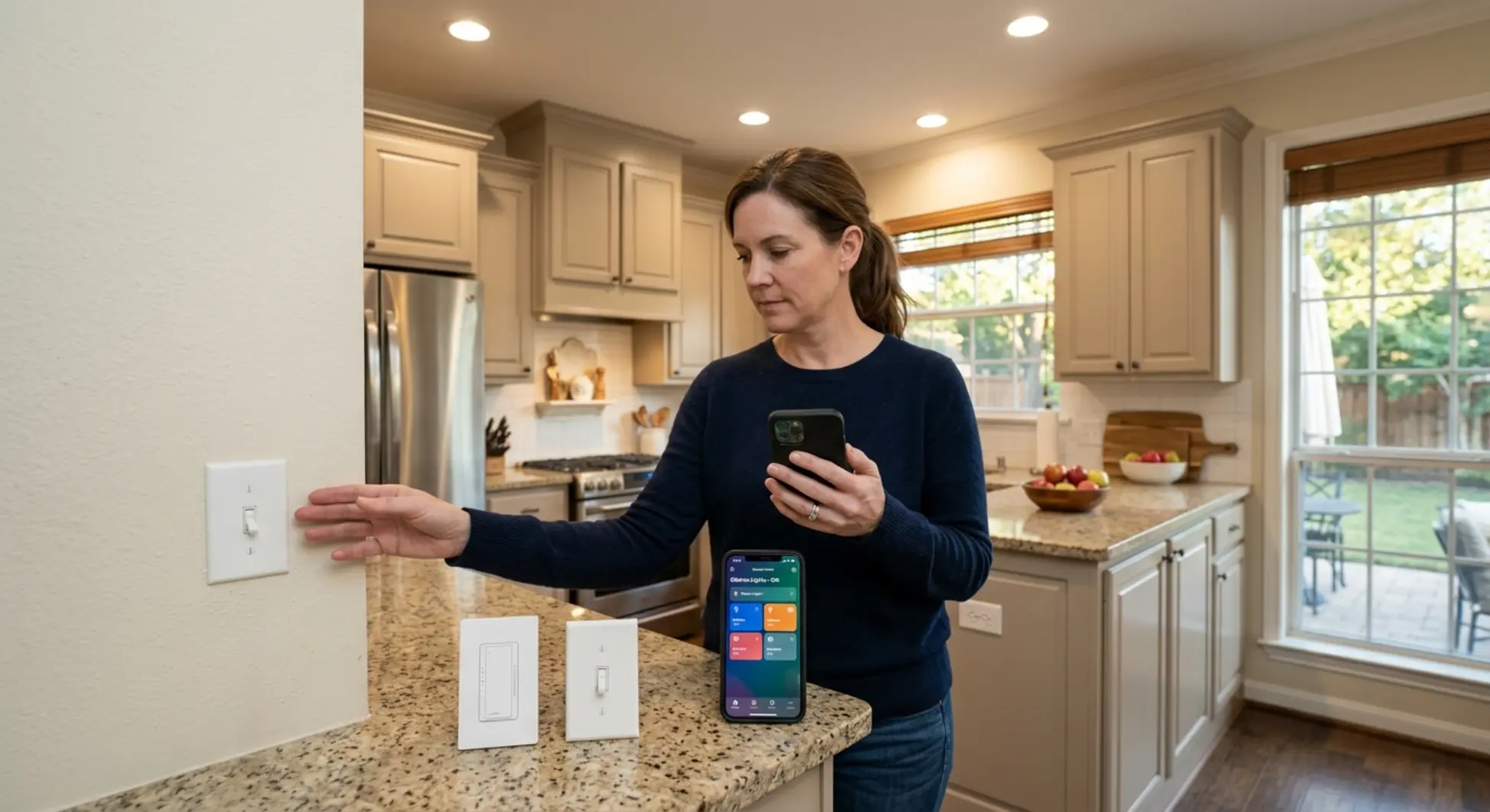
You’re standing in your kitchen at 10 PM, scrolling through smart home reviews on your phone, wondering if those $80 smart switches are worth triple the cost of traditional ones — especially when you’re not even sure if your 1998 Southlake home has the wiring to support them. The reviews are glowing. The demo videos look slick. But nobody’s telling you what the actual installed price is going to be, or whether an electrician is going to show up and tell you the whole project just got $400 more expensive because your walls don’t have neutral wires.
That’s the conversation most guides skip. This one doesn’t. We’re going to walk through the real installed costs for both traditional and smart switches in Southlake, TX — not just the device price you see on Amazon — along with the hidden fees, the wiring complications, and the honest math on whether smart switches actually pay for themselves. If traditional switches are the smarter financial choice for your situation, we’ll tell you that plainly. If smart switches make sense, we’ll tell you that too.
This is what it looks like when an electrician gives you information instead of a sales pitch.
Why Southlake Homeowners Are Asking This Question Right Now
Southlake isn’t a typical suburb. With median home values exceeding $1 million and homeownership rates hovering around 95%, this is a community where property investment is taken seriously. When you’ve put that kind of money into a home, the question of whether to spend another $1,000–$5,000 upgrading your light switches isn’t frivolous — it’s a real financial decision that deserves a real answer.
Smart home adoption is growing across DFW, particularly in affluent suburbs like Southlake, Keller, Colleyville, and Grapevine. Industry data from Parks Associates suggests that by 2025, roughly 20–30% of U.S. households had at least one smart lighting control device installed. In high-income communities like Southlake, that number skews higher. But adoption doesn’t automatically mean satisfaction — and it definitely doesn’t mean every home is wired for it.
Here’s the local wrinkle that makes this question more complicated than it looks: a substantial portion of Southlake’s housing stock was built before 2000. Estimates suggest 30–40% of homes in established Southlake neighborhoods predate modern smart home wiring standards. That matters because most smart switches require a neutral wire in the switch box — and homes built before 2000 frequently don’t have one. That single wiring gap is responsible for more blown smart switch budgets than any other factor.
Labor rates add another layer of complexity. Electrician hourly rates in Southlake and the surrounding DFW area run $100–$200+ per hour — higher than the Texas statewide average of $80–$150/hr and above the national average. If you’re planning electrical upgrades for your Southlake home, the labor component of any installation is going to be a meaningful line item, not an afterthought. That’s not a complaint about local contractors — it’s a reflection of the market, and it’s something you need to factor into your cost comparison honestly.
✅ You’re Not Alone in This Decision
Southlake homeowners are increasingly asking this question as smart home technology becomes more accessible and more aggressively marketed. The fact that you’re comparing costs and weighing options — rather than just buying whatever the YouTube influencer recommended — means you’re making an informed decision, not just following hype. That’s exactly the right instinct.
Traditional Light Switch Installation: What You’ll Actually Pay in Southlake
Before you can evaluate whether smart switches are worth the premium, you need a clear baseline. Here’s what a licensed electrician in Southlake actually charges for traditional switch installation in 2026, broken down by switch type.
| Switch Type | Device Cost | Labor (Southlake) | Installed Total |
|---|---|---|---|
| Single-Pole / 3-Way | $5–$20 | $75–$150 | $80–$170 |
| Dimmer / Timer Switch | $20–$60 | $80–$160 | $100–$220 |
| GFCI Outlet/Switch | $20–$40 | $90–$170 | $110–$210 |
Installation time for a standard switch replacement runs 15–30 minutes per switch for a licensed electrician in Southlake. That’s a clean, predictable job. The electrician turns off the breaker, removes the old switch, connects the new one, and tests it. No surprises, no additional materials, no network setup.
What you won’t find with traditional switches: neutral wire requirements, hub devices, app subscriptions, firmware updates, or compatibility headaches. They work with virtually every wiring configuration found in Southlake homes, old or new. That universality is worth something — especially if your home was built in the 1990s and you haven’t had an electrician open your walls recently.
Why Traditional Switches Remain the Budget-Friendly Choice
The upfront cost advantage is significant — traditional switches come in at 50–70% less than smart switch alternatives when you factor in the full installed price. But the financial advantages don’t stop at the purchase price.
- No hub, app, or subscription fees — ever. What you pay to install is what you pay, period.
- Zero standby power consumption — a traditional switch draws no electricity when the light is off. Smart switches draw a small but continuous load to power their electronics and maintain network connectivity.
- No software dependencies — your switch works whether your Wi-Fi is up or down, whether the manufacturer is still in business, and whether your phone battery is dead.
- Mechanical design means 10–20+ year lifespan — with minimal failure points. There’s no circuit board to fry, no firmware to corrupt, no cloud server to go offline.
If you’re replacing a handful of switches and your primary goal is reliable, code-compliant lighting control at a predictable cost, traditional switches are hard to beat. That’s not a knock on smart technology — it’s just an honest acknowledgment that proven simplicity has real value.
Smart Switch Installation: Breaking Down the Real Costs
Smart switch pricing is where most guides mislead homeowners. They show you the device price — $25 for a Kasa switch, $65 for a Lutron Caseta — and leave out the labor, the hub, the neutral wire rewiring, and the subscription fees. Here’s the complete picture for Southlake installations in 2026.
| Switch Tier | Examples | Device Cost | Labor | Hub Cost | Installed Total |
|---|---|---|---|---|---|
| Entry-Level | Kasa, Treatlife, Wyze | $15–$30 | $100–$200 | None (Wi-Fi) | $115–$230+ |
| Mid-Range | Lutron Caseta, GE Cync | $50–$80 | $120–$220 | $50–$80 | $220–$380 |
| Premium | Lutron RA3, Leviton Decora Pro | $100–$200+ | $150–$250 | $150–$300+ | $400–$750+ |
Important note on neutral wire costs: The labor figures above assume your home already has a neutral wire in the switch box. If it doesn’t — which is the case in 60–80% of Southlake homes built before 2000 — add $50–$150 per switch in additional labor to run new wiring. That cost can push an entry-level smart switch installation from $115 to $280–$380 per switch. We’ll cover this in more detail below because it’s the single most common budget surprise we see.
If you’re comparing brands and want a deeper dive into how Lutron and Leviton stack up specifically for DFW homes, our Lutron vs. Leviton smart switch comparison for Dallas-Fort Worth homes breaks down the differences in detail.
The Neutral Wire Problem: Why Many Southlake Homes Cost More to Upgrade
This is the issue that catches homeowners off guard more than any other. Most smart switches require a neutral wire to power their internal electronics — the circuit board, the Wi-Fi radio, the LED indicator light. Traditional switches don’t need a neutral because they’re purely mechanical: the circuit is either open or closed, and that’s it.
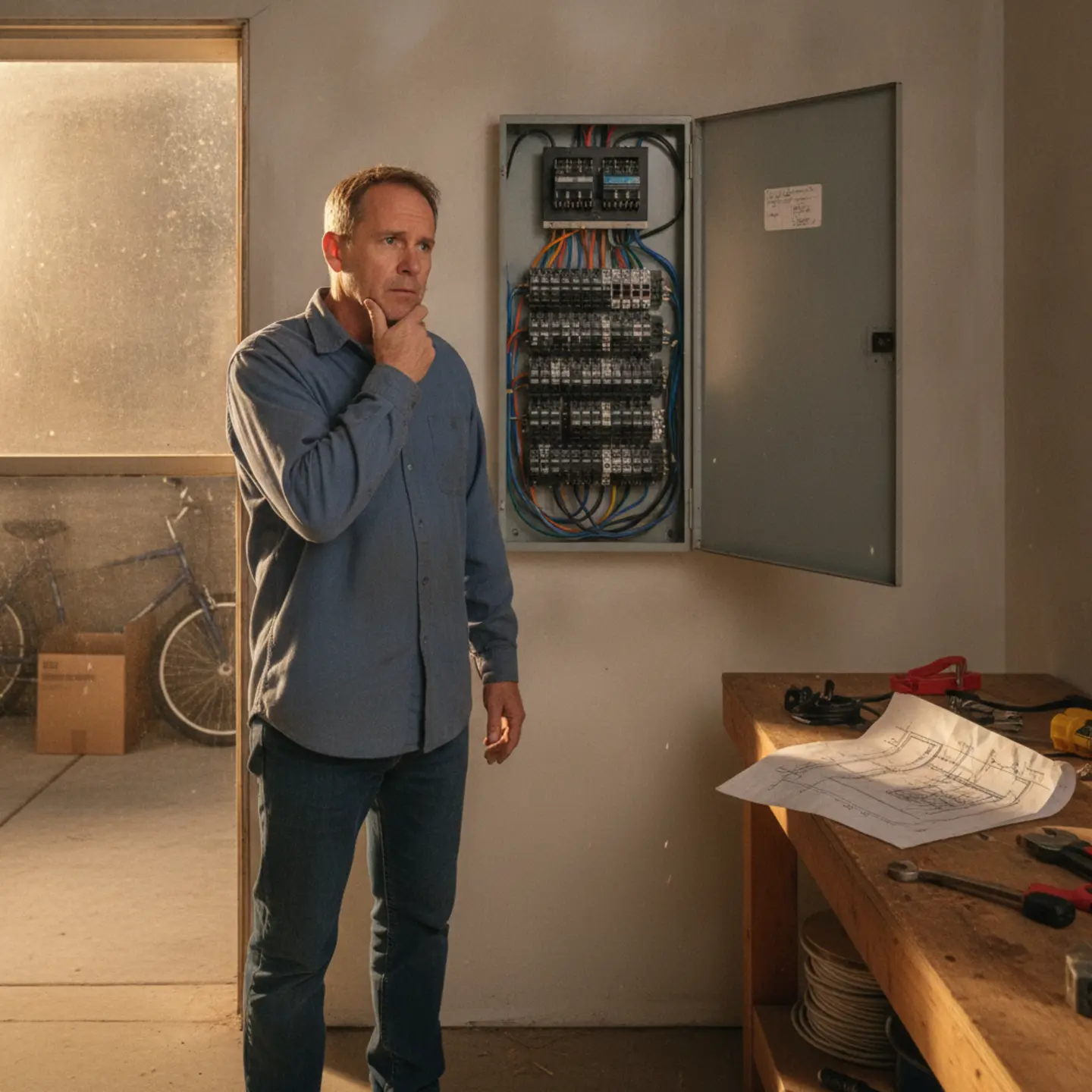
Homes built before 2000 were typically wired with a 2-wire switch configuration: a hot wire and a ground wire. No neutral. When an electrician opens your switch box and finds only two wires, installing a standard smart switch becomes significantly more complicated. They either need to run a new neutral wire from the panel to the switch box — which involves labor, materials, and potentially opening walls — or they need to use a “no-neutral” smart switch model, which exists but comes with limitations in features and compatibility.
Running a neutral wire typically adds $50–$150 per switch in labor alone, depending on how accessible the wiring path is. In a two-story home with finished walls, that number can climb higher. Before you commit to any smart switch installation, an electrical wiring assessment should be the first step — not an afterthought.
Hub vs. Hub-Free Systems: What’s the Difference?
Not all smart switches work the same way, and the hub question is one of the most confusing parts of the buying process. Here’s the plain-English version:
- Hub-required systems (Lutron Caseta, Brilliant): These switches communicate through a dedicated hub device that plugs into your router. The hub acts as the brain of the system. These setups tend to be more reliable and integrate better with smart home ecosystems, but the hub adds $50–$300+ to your initial investment.
- Hub-free systems (Kasa, Treatlife, Wyze): These connect directly to your home Wi-Fi router. Lower upfront cost, but they’re dependent on your Wi-Fi network’s stability and can have connectivity issues, especially in larger homes or homes with older routers.
ℹ️ Hub vs. Hub-Free: What’s the Real Difference?
Hub-required systems (like Lutron Caseta) are more reliable and integrate better with smart home ecosystems, but add $50–$300+ upfront. Hub-free systems (like Wi-Fi-based Kasa) have lower upfront costs but may have connectivity issues or limited scalability. If you’re installing 5+ switches, the hub cost gets spread across the system and becomes less significant per switch. If you’re installing 1–2 switches, that hub cost hits harder.
⚠️ The Neutral Wire Surprise
If your Southlake home was built before 2000, there’s a 60–80% chance your switch boxes don’t have neutral wires. This single issue can add $50–$150 per switch to your installation cost — and many contractors don’t mention it until after they’ve quoted the job. Always ask about neutral wire availability before committing to any smart switch installation. A reputable electrician will assess this upfront, not after you’ve already agreed to a price.
Energy Savings: Do Smart Switches Actually Pay for Themselves?
This is the question that drives a lot of the smart switch conversation, and the honest answer is: it depends on how you use them, and it takes longer than most people expect.
Smart switches can reduce lighting energy consumption by 5–20% through dimming, scheduling, and motion sensing. For a typical Southlake home on Oncor’s service territory, that translates to roughly $20–$100+ in annual savings per switch — depending on how heavily that switch is used, how aggressively you use the automation features, and what your current electricity rate is. Oncor rates have fluctuated, so actual savings vary.
Typical payback period for smart switches vs. traditional switches in Southlake, based on energy savings alone
Let’s run the math on a realistic scenario. Say you’re comparing a traditional dimmer switch installed for $150 versus a mid-range smart dimmer (Lutron Caseta) installed for $300 — a $150 premium. If that smart switch saves you $60 per year in energy costs through scheduling and dimming, you break even in 2.5 years. That’s a reasonable ROI if you’re planning to stay in the home long-term and you actually use the automation features.
But here’s where the math gets messier. If your home needs neutral wire rewiring at $100 per switch, that $150 premium becomes $250. Now your payback period stretches to over 4 years. Add a hub at $75 amortized across 5 switches, and you’re at $265 per switch premium. At $60/year in savings, you’re looking at 4.4 years just to break even — before accounting for potential hub replacement or subscription costs.
Oncor does offer limited smart thermostat rebates, but individual smart switch rebates are rare and typically not available. The federal 179D tax deduction applies to energy-efficient building envelope improvements, not individual residential switches. For energy-efficient electrical upgrades that qualify for incentives, your electrician can walk you through what’s actually available in your situation.
The Math: When Smart Switches Make Financial Sense
- You’re upgrading 5+ switches at once — the hub cost gets amortized, and the per-switch ROI improves significantly.
- You actively use dimming and scheduling — passive ownership of smart switches doesn’t save energy. You have to use the features.
- Your home already has neutral wires — new construction or recent renovations often do. This eliminates the biggest cost driver.
- You’re paying for convenience, not just savings — if remote control, voice activation, and automation routines are genuinely valuable to you, the financial ROI becomes secondary. You’re buying features, not just efficiency.
“The homeowners who get the most out of smart switches are the ones who actually use the scheduling and dimming features consistently. The ones who install them and then just flip them manually like a regular switch — they’re paying a premium for a feature they’re not using.”
Not sure if your Southlake home has neutral wires — or what a smart switch installation would actually cost? That’s exactly what a free electrical assessment is designed to answer. No obligation, no sales pitch — just honest information about your wiring and your options before you commit to anything.
Smart Switches vs. Traditional Switches: Head-to-Head Comparison
Here’s the side-by-side breakdown that cuts through the marketing and gives you the actual tradeoffs. Neither option is universally better — the right choice depends on your home, your wiring, and your priorities.
| Category | Traditional Switch | Smart Switch |
|---|---|---|
| Upfront Cost (Installed) | $80–$220 | $115–$750+ (with hub & rewiring) |
| Installation Complexity | Simple swap, 15–30 min | Neutral wire check, possible rewiring, network setup, 1–3 hrs |
| Lifespan | 10–20+ years | 5–10 years (electronic components) |
| Energy Savings | None (user-dependent) | 5–20% on lighting costs |
| Smart Home Integration | None | Voice control, scheduling, remote access, automation |
| Reliability | Extremely high (mechanical) | Moderate (software/hardware dependencies) |
| 5-Year Maintenance Cost | $0–$20 | $50–$500+ (hub replacement, subscriptions, device failure) |
When Smart Switches Outperform Traditional
Smart switches earn their premium in specific situations. If any of these describe you, the investment is likely worth it:
- You want remote control, voice activation, or complex automation routines that genuinely improve your daily life.
- Energy efficiency through precise dimming and automated scheduling is a real priority — and you’ll actually use those features.
- You’re building new or doing a major renovation where neutral wires are already available and the installation cost is lower.
- You’re investing in smart home infrastructure broadly and the switches are part of a larger ecosystem you’re building out.
For a deeper look at how smart lighting fits into a broader home upgrade, our guide on lighting installation ROI in DFW covers the financial analysis in more detail.
When Traditional Switches Remain the Practical Choice
Traditional switches aren’t a compromise — they’re the right answer in a lot of situations:
- Budget is your primary constraint and you need reliable lighting control without the premium.
- Your older Southlake home lacks neutral wires and rewiring is cost-prohibitive for the number of switches you need.
- You prioritize extreme reliability and simplicity — you want a switch that works every time, regardless of your Wi-Fi status.
- You have basic lighting control needs and automation simply isn’t something you’ll use.
There’s nothing wrong with choosing the option that does exactly what you need without the complexity. Professional electrical installation of traditional switches is fast, clean, and gives you decades of reliable service. Sometimes that’s exactly the right answer.
Licensing, Permits, and Legal Requirements in Southlake
This section matters more than most homeowners realize, and it’s worth reading carefully before you hire anyone or consider doing this yourself.
Texas law — specifically Texas Occupations Code §1305 — requires a licensed Master Electrician (TECL) to perform hardwired electrical switch installations. This applies to both traditional and smart switch installations. A Journeyman Electrician can perform the work but must do so under a Master Electrician’s supervision and license. If someone shows up to install your switches and can’t provide a TECL license number, that’s a red flag you shouldn’t ignore.
TECL licensing requires verified experience, passing examinations on the National Electrical Code (NEC) and Texas-specific regulations, and ongoing compliance with state standards. Texas currently operates under NEC 2023. This isn’t bureaucratic box-checking — it’s the framework that ensures the person working inside your walls knows what they’re doing and is accountable if something goes wrong.
Licensed electricians in Texas are also required to carry General Liability Insurance (typically $300,000–$500,000 minimum) and Workers’ Compensation coverage. Always ask for proof of both before work begins. If an uninsured worker is injured in your home, you could be liable. If unlicensed work causes a fire or electrical failure, your homeowner’s insurance may deny the claim.
On permits: A simple like-for-like switch replacement — swapping an old switch for a new one of the same type — typically doesn’t require a permit from the City of Southlake. However, if new wiring is being run (as is required for neutral wire installation), or if circuit modifications are involved, a permit is generally required. Always confirm with the City of Southlake Building Department before work begins. A good licensed electrician will know which work requires a permit and will pull it for you — that’s part of what you’re paying for.
To verify any electrician’s TECL license before hiring them, visit tdlr.texas.gov and use the “Search Electrical Licenses” tool. Enter the contractor’s name or license number, confirm the status shows “Active,” and review any disciplinary history. A legitimate contractor will have no hesitation providing their license number upfront.
Why DIY Installation Is Risky (Even If You’re Handy)
We understand the impulse. Smart switches come with installation guides. YouTube has tutorials. How hard can it be?
The honest answer: the physical installation isn’t always the hard part. The risks are what happen when something goes wrong — and with electrical work, the consequences of getting it wrong are serious.
- Texas law prohibits unlicensed hardwired electrical work — DIY installation is technically illegal, even in your own home.
- Safety hazards are real — electrical shock, arc flash, and fire risk are all genuine concerns when working with live circuits.
- Warranties may be voided — many smart switch manufacturers require professional installation to honor the warranty.
- Insurance claims can be denied — if unlicensed work is identified as a contributing factor in a fire or electrical failure, your homeowner’s insurer may deny coverage.
- Home inspection complications — when you sell your home, inspectors will flag unlicensed electrical work. That can delay closing or reduce your sale price.
If something goes wrong with licensed work, you have recourse: file a complaint with TDLR, pursue the contractor’s bond, or invoke the Texas Deceptive Trade Practices Act. With DIY work, you’re on your own. That’s a meaningful difference when we’re talking about something that affects the safety of your home and family.
💡 Verify Before You Hire
Before hiring any electrician for switch installation, verify their TECL license at tdlr.texas.gov. Search by name or license number, check for “Active” status, and review any disciplinary history. A legitimate contractor will have no problem providing their license number upfront — in fact, they should offer it before you even ask. If they hesitate or give you a vague answer, that’s your cue to move on.
Common Smart Switch Problems (And Why Traditional Switches Don’t Have Them)
Smart switches are genuinely impressive technology — but they come with a category of problems that traditional switches simply don’t have. If you’re going to make an informed decision, you need to know what you’re signing up for on the maintenance side.
Consumer review data and CPSC complaint records consistently show that smart home devices have higher complaint rates than their traditional counterparts. Here’s what those complaints typically look like in practice:
- Neutral wire requirement: The most common installation blocker in older homes. We’ve covered this, but it bears repeating — it’s the issue that derails more smart switch projects than anything else.
- Wi-Fi connectivity issues: Hub-free smart switches that connect directly to your router can drop off the network, especially in larger homes or homes with older routers. When they drop, they often don’t reconnect automatically and require manual troubleshooting.
- Hub unreliability: If your hub fails, every switch connected to it may become non-functional or revert to basic on/off operation. Hub replacement costs $50–$300+ and may require reconfiguring your entire system.
- App and firmware bugs: Software glitches can cause unexpected behavior — lights turning on or off at wrong times, schedules not executing, or switches becoming unresponsive until the app is updated or the switch is reset.
- Ecosystem compatibility issues: Not all smart switches work seamlessly with all platforms. A switch that works perfectly with Amazon Alexa may have limited functionality with Apple HomeKit, or vice versa. Always verify compatibility before purchasing.
- Company discontinuation risk: This is the one most people don’t think about. If a smart switch manufacturer goes out of business or discontinues cloud support for an older product line, your switches may become “dumb” — physically installed but unable to use their smart features. This has already happened with several smart home brands.
Traditional switches avoid every single one of these issues. There’s no software to glitch, no network to drop, no hub to fail, no company to go out of business. The mechanical design that makes them seem “boring” is the same design that makes them extraordinarily reliable. For reliable electrical solutions that you can count on for 15–20 years without a second thought, traditional switches are hard to beat.
This isn’t an argument against smart switches — it’s an argument for going in with clear expectations. If you’re prepared to occasionally troubleshoot connectivity issues, update firmware, and potentially replace a hub every several years, smart switches are a reasonable investment. If that sounds like more maintenance than you want, traditional switches are the honest answer for your situation.
Curious about other common electrical issues in Southlake homes? Our guide on why your light switch shocks you covers another common concern homeowners bring up during switch assessments.
Getting multiple quotes for your switch installation? Make sure every contractor addresses neutral wire availability, hub costs, and total installed price — not just the device cost. If you’d like a transparent quote that breaks down every line item, that’s how we operate. No surprises after the job starts.
Thinking Beyond Switches: How This Decision Fits Your Bigger Home Picture
Light switch upgrades rarely happen in isolation. Most homeowners asking this question are in the middle of a broader home improvement project — a kitchen remodel, a whole-home smart home buildout, or a pre-sale upgrade to maximize resale value. The context matters for the decision.
If you’re doing a major renovation, that’s the ideal time to install smart switches — walls are open, neutral wires can be run at a fraction of the cost, and the installation integrates cleanly with new construction wiring. If you’re doing a targeted upgrade in a finished home, the calculus is different and the costs are higher.
Southlake’s high home values ($1M+) mean that smart home features can contribute to perceived resale value — but the impact is more psychological than quantifiable. Buyers in this price range expect modern amenities, and smart lighting can be a differentiator. That said, a home with well-maintained traditional switches and a properly upgraded electrical panel will always outperform a home with smart switches and an outdated panel. If you’re weighing electrical priorities, use our panel upgrade calculator to understand whether your panel is the more urgent investment.
For homeowners interested in a broader smart home approach, EV charger installation is another upgrade that pairs well with smart electrical planning. If that’s on your radar, our EV charger installation page covers what’s involved for Southlake homes. Similarly, if outdoor lighting is part of your project, our outdoor lighting installation services can be coordinated alongside interior switch work to minimize labor costs and scheduling.
The point is this: the smart switch vs. traditional switch decision is best made in the context of your whole home’s electrical situation — not as a standalone purchase. An electrician who understands your full picture can help you prioritize where your upgrade dollars will have the most impact.
What Southlake Homeowners Are Asking Right Now
These are the real questions we hear from homeowners in Southlake and across DFW when they’re working through this decision. Straight answers, no fluff.
Do I need a licensed electrician to install smart light switches in Southlake, TX, or can I DIY?
Texas law (Occupations Code §1305) requires a licensed Master Electrician (TECL) to perform hardwired electrical installations, and smart switches fall squarely in that category. DIY installation isn’t just inadvisable — it’s technically illegal in Texas for hardwired work. Beyond the legal issue, DIY installation risks electrical shock, code violations, voided manufacturer warranties, and potential insurance claim denials if something goes wrong. The cost of professional installation is real, but so is the protection it provides.
Do smart switches require a neutral wire in my Southlake home? Most houses here are older.
Yes — the vast majority of smart switches require a neutral wire to power their internal electronics. Homes built before 2000 in Southlake frequently have only a 2-wire switch configuration (hot and ground, no neutral), which means running new wiring is required before most smart switches can be installed. That additional wiring work adds $50–$150 per switch in labor costs. Before committing to any smart switch purchase, have an electrician assess your switch boxes — this is the single most important pre-purchase step for homeowners in older Southlake neighborhoods.
What is the cost of a “hub” for smart switches, and do I really need one?
Hub costs range from $50 to $300+ depending on the system. Some smart switch systems — like Lutron Caseta — require a hub to function at all. Others, like Wi-Fi-based systems (Kasa, Treatlife), connect directly to your router without a hub. Hub-required systems tend to be more reliable and integrate better with smart home platforms, but the hub is a significant upfront cost that should be factored into your total ROI calculation. If you’re only installing 1–2 switches, the hub cost hits harder; if you’re installing 5+, it gets amortized across the system and becomes more manageable per switch.
Will installing smart switches actually save me money on my Oncor electricity bill in Texas?
Potentially yes — but the savings depend heavily on how actively you use the automation features. Smart switches can reduce lighting energy consumption by 5–20% through dimming, scheduling, and motion sensing, which translates to roughly $20–$100+ annually per switch for a typical Southlake home on Oncor rates. However, the higher upfront cost means ROI typically takes 2–5 years to realize, and that timeline extends further if your home required neutral wire rewiring. Oncor does not currently offer direct rebates for individual smart switches, so the savings come purely from reduced consumption.
Do I need a permit from the City of Southlake to replace my old light switches with smart ones?
For a straightforward like-for-like switch replacement where no new wiring is run, a permit is typically not required by the City of Southlake. However, if your installation requires running a neutral wire — which is common in pre-2000 homes — that constitutes new wiring work and usually does require a permit. Circuit modifications or any work that touches your electrical panel will also require a permit. Always confirm with the City of Southlake Building Department before work begins, and hire a licensed electrician who knows which work requires a permit and will pull it properly.
Is it worth the extra cost and complexity to install smart switches over traditional ones in a high-value home like in Southlake?
This is genuinely a “it depends” answer, and anyone who tells you otherwise is oversimplifying. If convenience, voice control, automation, and potential energy savings are priorities you’ll actually use, the premium can be justified — especially in a high-value home where you’re planning to stay long-term. If your primary goal is reliable, low-maintenance lighting control at a predictable cost, traditional switches remain a perfectly viable choice even in a $1M+ home. The technology doesn’t make the decision — your lifestyle and wiring situation do. A free electrical assessment can help you understand exactly what the upgrade would cost in your specific home before you commit.
Ready to Know Exactly What Your Switch Installation Will Cost?
You’ve done the research. You know the questions to ask. The last step is getting an honest number for your specific home — not a national average, not a ballpark, but an actual assessment of your wiring, your switch count, and what the full installed price looks like. That’s what we do.
We’re a family-run electrical team serving Southlake and all of DFW. We’ll tell you if traditional switches are the better call for your situation. We’ll tell you if your home needs neutral wire work before smart switches are viable. No pressure, no upsell — just the information you need to make a confident decision.
Or call us directly: (682) 478-6088
Serving Southlake, Fort Worth, Arlington, Keller, Colleyville, Grapevine, Lewisville, and all of DFW.