
⚡ Key Takeaways
- GFCI and AFCI protect against different hazards — GFCI prevents electrocution near water; AFCI prevents electrical fires from arc faults. You may need both.
- Every bathroom outlet must be GFCI-protected — no exceptions, regardless of how close it is to the sink or tub.
- Kitchen countertop outlets within 6 feet of a sink require GFCI — islands and peninsulas are included in this rule.
- AFCI protection is code-required for bedrooms, living rooms, and dining rooms — and most DFW homes built before 2000 don’t have it.
- Both devices have TEST and RESET buttons — pressing TEST monthly takes 30 seconds and can catch a failed device before it becomes a hazard.
- GFCI outlet replacement is DIY-friendly; AFCI breaker installation is not — panel work should always be handled by a licensed electrician.
- Upgrading an older DFW home doesn’t have to happen all at once — prioritize bathrooms first, then kitchen countertops, then bedrooms.
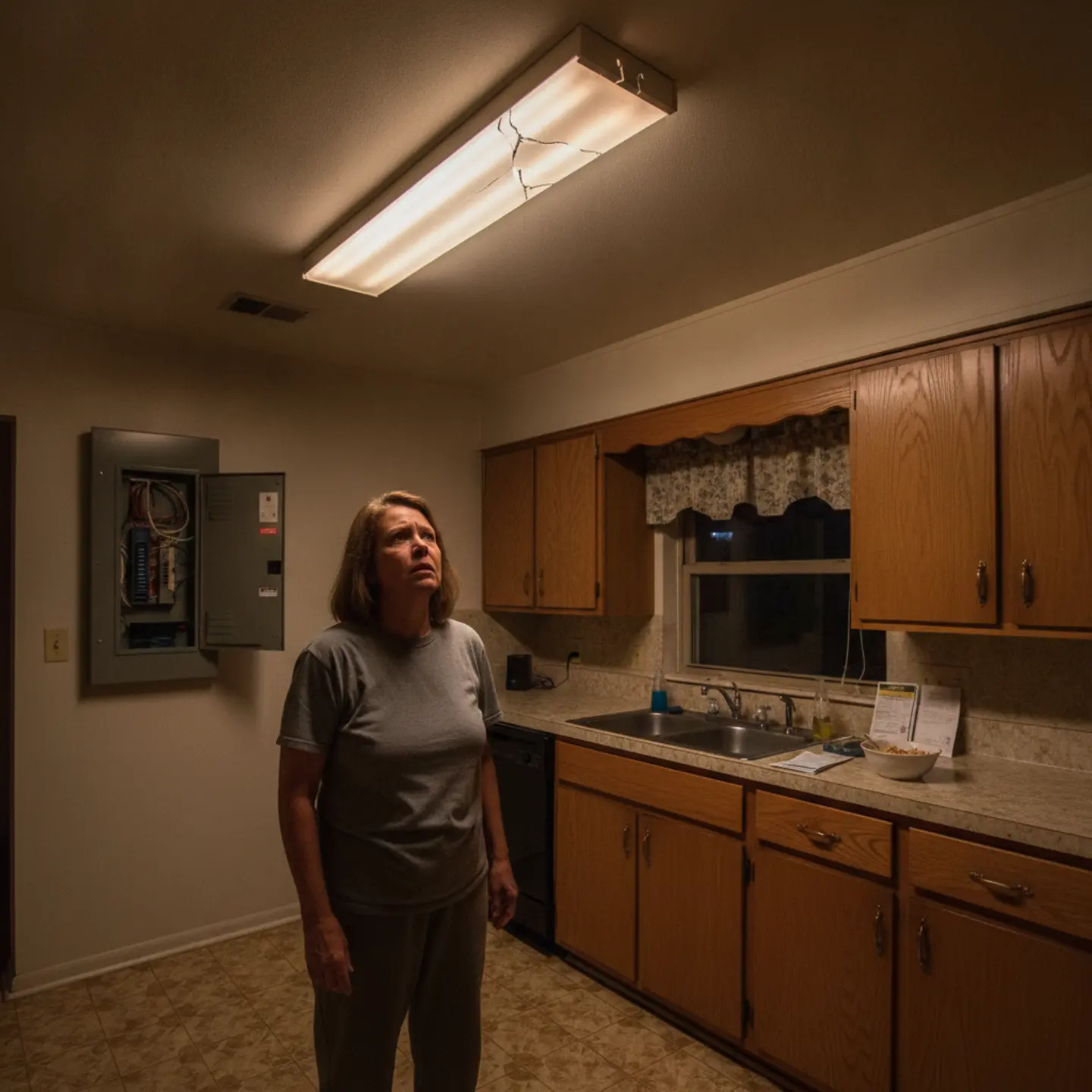
You’re standing in your kitchen. There’s an outlet near the sink with two small buttons on it — one says TEST, one says RESET. Down the hall in the bathroom, there’s another outlet that looks almost identical. But in the bedroom, the outlets look completely different — no buttons at all. And somewhere in your electrical panel, there might be breakers with their own set of labels you’ve never paid much attention to.
If you’ve ever wondered what any of that actually means — whether your home is protected, whether you need to upgrade, and whether those two acronyms (GFCI and AFCI) are the same thing or completely different — you’re in good company. Most homeowners don’t know the difference, and honestly, the way this stuff gets explained online doesn’t help. It’s either too technical or too vague to actually be useful.
We’re going to fix that. By the time you finish reading this, you’ll know exactly what each type of protection does, where it’s required in your home, how to test it, and what it costs to upgrade — without any unnecessary upsell. If your home already has what it needs, we’ll tell you that too. That’s just how we work.
GFCI vs. AFCI: The Basic Difference (And Why It Matters for Your Home’s Safety)
Let’s start with the most important thing: GFCI and AFCI are not the same device, and they don’t protect against the same hazard. Lumping them together is one of the most common sources of confusion we hear from homeowners — and it leads to real gaps in protection. Understanding the difference is the first step toward knowing whether your home is actually safe.
Both are safety devices. Both can be installed as outlets or as breakers. Both have been required by electrical code for decades. But they work in completely different ways, and they exist to prevent completely different types of emergencies. One is about keeping you from getting electrocuted. The other is about keeping your house from catching fire. Those are very different problems that require very different solutions.
If you’re thinking about electrical safety upgrades for your home, understanding which type of protection you actually need — and where — is the most important thing you can do before spending a dollar on anything.
📊 GFCI vs. AFCI: The One-Sentence Difference
GFCI stops electrocution — it’s shock protection near water. AFCI stops electrical fires — it detects dangerous arcing in circuits. Different hazards, different solutions. You may need both, but never for the same reason.
How GFCI Protection Works
A Ground Fault Circuit Interrupter monitors the flow of electricity between the hot wire and the neutral wire in a circuit. Under normal conditions, the amount of electricity flowing out equals the amount flowing back. When those numbers don’t match — even by a tiny amount — it means electricity is leaking somewhere it shouldn’t be. That leak is called a ground fault.
In a bathroom or kitchen, that ground fault is often your body. If you’re holding a hair dryer and it falls into a sink full of water, your body becomes the path electricity takes to reach the ground. Without GFCI protection, that’s a lethal situation. With GFCI protection, the device detects the imbalance and cuts power in approximately 25 milliseconds — faster than your heart can react to the shock.
That speed is the whole point. Standard circuit breakers protect against overloads and short circuits, but they’re not fast enough to prevent electrocution. GFCI is specifically designed for that job. It’s why it’s required anywhere water and electricity could reasonably meet: bathrooms, kitchens, outdoor outlets, garages, laundry rooms, and crawl spaces.
How AFCI Protection Works
An Arc Fault Circuit Interrupter does something completely different. Instead of monitoring current balance, it monitors the quality of the electrical signal moving through a circuit. When wires are damaged, connections are loose, or insulation has worn away, electricity doesn’t flow smoothly — it arcs. That arcing creates intense heat, sometimes reaching thousands of degrees at the point of the arc, and it can ignite nearby materials like wood framing, insulation, or wall cavities.
The dangerous thing about arc faults is that they often happen inside walls, behind outlets, or in places you can’t see. A standard breaker won’t trip because the current draw isn’t necessarily high enough to trigger it. The arc just keeps happening — quietly, invisibly — until something catches fire.
AFCI technology can distinguish between the normal electrical noise generated by appliances and the specific signature of a dangerous arc. When it detects that signature, it cuts power to the entire circuit before the arc becomes a fire. It’s most commonly installed as a breaker in your electrical panel, where it can monitor the full circuit rather than just one outlet.
Where GFCI Protection Is Required in DFW Homes (And Where It’s Not)
✓ Confused About Which One You Need? You’re Not Alone.
Most homeowners don’t know the difference between GFCI and AFCI — and that’s completely understandable. The good news is that the rules are actually pretty clear once you know the basic principle: GFCI goes where water goes. If water could reasonably reach an outlet, that outlet needs GFCI protection.
The National Electrical Code (NEC) has expanded GFCI requirements significantly over the past four decades. If your DFW home was built before 1980, it almost certainly doesn’t meet current GFCI requirements. If it was built before 2000, there are likely gaps. And if it was built before 2008, there’s a good chance your kitchen countertops aren’t fully protected. These aren’t minor technicalities — they’re real safety gaps that are worth addressing.
The core principle behind GFCI placement is simple: proximity to water. If an outlet is in a location where water could realistically reach it — from a sink, a tub, a hose, rain, or even a wet floor — it needs GFCI protection. That principle drives all the specific requirements below.
How Fast Is GFCI Protection?
25ms
A GFCI outlet cuts power in approximately 25 milliseconds when it detects a ground fault — faster than the human heart can react to an electrical shock. Standard breakers are not fast enough to provide this protection.
Kitchen GFCI Code Requirements
In the kitchen, all countertop outlets within 6 feet of a sink edge must be GFCI-protected. This includes outlets on islands and peninsula counters, even if they seem far from the main sink. The 6-foot rule is measured along the countertop surface, not through the air, so the geometry of your kitchen matters.
One thing that surprises homeowners: your refrigerator outlet typically does not require GFCI protection, because refrigerators are almost never positioned within 6 feet of a sink. The same goes for outlets behind ranges or built-in microwaves that aren’t on countertop surfaces. The rule is specifically about countertop receptacles — the outlets you’d use for small appliances like toasters, blenders, coffee makers, and yes, phone chargers sitting on the counter.
If you’re planning kitchen electrical upgrades, GFCI compliance on countertop circuits is one of the first things a licensed electrician will assess. In DFW homes built before 2008, this is one of the most common upgrades we handle — and it’s also one of the most straightforward.
📍 DFW Homeowners: Homes built in Keller, Southlake, Colleyville, and North Richland Hills during the 1990s and early 2000s often have partial GFCI compliance — one or two protected outlets but not full coverage. A quick walk-through can tell you exactly where the gaps are.
Bathroom GFCI Code Requirements
Bathrooms are the clearest case in the electrical code: every outlet in a bathroom must be GFCI-protected. Not just the ones near the sink. Not just the ones in the vanity area. Every single outlet, regardless of its position in the room. The reasoning is straightforward — bathrooms are inherently wet environments. Water splashes, steam condenses, wet hands reach for outlets. The entire room is a potential hazard zone.
This applies equally to half-baths, master baths, guest baths, and any other bathroom configuration. There are no exceptions based on bathroom size or outlet location within the room. If you’re unsure whether your current outlets meet code, our team handles outlet installation and replacement throughout DFW and can assess your home quickly.
⚠️ Red Flag: Your Bathroom Outlets Don’t Have GFCI
If you look at your bathroom outlets right now and don’t see TEST and RESET buttons, those outlets are not GFCI-protected. Water and electricity in the same room without that protection is a genuine safety risk — not a theoretical one. This is one of the most common issues we find in DFW homes built before 1990, and it’s one of the most affordable fixes on the list.
Where AFCI Protection Is Required (And Why Bedrooms Are the Starting Point)
AFCI requirements have expanded significantly since they were first introduced in the 1999 NEC. Originally required only in bedrooms, the code has since extended AFCI protection to living rooms, dining rooms, family rooms, hallways, closets, and most other habitable spaces in a home. If your home was built or substantially rewired after 2014, it should have AFCI protection on most of its circuits.
If it was built before 1999, it almost certainly has none. And that’s a meaningful gap — not because your home is about to catch fire, but because arc faults are one of the leading causes of residential electrical fires, and older wiring is more susceptible to the kind of damage that creates them.
Thinking about panel and breaker upgrades? AFCI breakers are where that conversation starts, and they’re worth understanding before you make any decisions.
Why Bedrooms Are the Priority for AFCI Protection
Bedrooms carry a higher electrical fire risk than most homeowners realize. Think about what’s typically in a bedroom: lamps with cords that get pinched under furniture, phone chargers that run overnight, extension cords that have been in use for years, power strips that get overloaded. These are all scenarios where wiring can be damaged gradually — and where an arc fault can develop slowly, without any obvious warning signs.
The more critical factor is that people sleep in bedrooms. If an arc fault starts developing at 2 a.m., you’re not going to notice the faint smell of burning insulation or the slight discoloration on a wall plate. You’re asleep. By the time the problem is visible, it may already be a fire. AFCI protection in bedrooms is specifically designed for this scenario — to catch the problem before it reaches that point.
Bedrooms are also where cord damage most commonly happens. A lamp cord that runs under a rug, a phone charger that gets bent repeatedly in the same spot, a nightstand that sits on a power cord for years — all of these can create the kind of insulation damage that leads to arc faults. AFCI protection monitors for exactly this type of problem.
AFCI Breaker vs. AFCI Outlet: Which One Is Better?
AFCI protection can be installed two ways: as a breaker in your electrical panel, or as an outlet at the first receptacle on a circuit. Both are code-compliant in certain situations, but they’re not equivalent in terms of coverage.
An AFCI breaker protects the entire circuit — every outlet, every switch, every foot of wiring on that circuit from the panel outward. It monitors the full electrical path and can detect arc faults anywhere along the circuit, including inside walls where you’d never see the problem. This is the more comprehensive solution, and it’s what most licensed electricians recommend.
An AFCI outlet only protects that specific outlet and anything connected downstream from it. It doesn’t protect the wiring between the panel and that first outlet, which is often where arc faults develop in older homes. It’s a simpler retrofit that doesn’t require panel access, but it leaves a portion of the circuit unprotected.
For new construction or full rewiring projects, AFCI breakers are the standard. For older homes where panel access is limited or panel upgrades aren’t in the budget yet, AFCI outlets can be a reasonable interim step — as long as you understand what they do and don’t cover. Learn more about our electrical panel upgrade services if you’re weighing your options.
💡 Not Sure If Your Home Has AFCI Protection?
A professional electrical inspection takes 1–2 hours and gives you a clear picture of exactly where you stand — no pressure, just honest answers. We’ll check every circuit, test every device, and walk you through what we find before recommending anything.
Can You Use GFCI and AFCI Together? Yes — and Sometimes You Need Both
This is one of the questions we hear most often, and the answer is straightforward: GFCI and AFCI protection are completely compatible. They protect against different hazards, they operate independently of each other, and they’re designed to coexist on the same circuit without interference.
You can have GFCI outlets installed on an AFCI-protected circuit — in fact, this is exactly what modern electrical code requires in many situations. A kitchen circuit, for example, might have AFCI protection at the breaker (to prevent fires from arc faults in the wiring) and GFCI outlets at the countertop receptacles (to prevent electrocution near the sink). Both devices are doing their jobs simultaneously, and neither one affects the other’s performance.
The confusion usually comes from the fact that both devices look similar and both involve tripping and resetting. But the mechanism inside is completely different. A GFCI is monitoring current balance. An AFCI is monitoring signal quality. They’re measuring different things, and a trip from one doesn’t affect the other.
When it comes to electrical code compliance for your home, the current NEC actually requires both types of protection in kitchens and bathrooms in many cases — GFCI at the outlets and AFCI at the circuit level. If you’re upgrading an older home, this is worth understanding before you start, because doing one without the other may still leave you short of current code requirements.
One practical note: if you’re replacing an outlet on an AFCI-protected circuit, make sure the replacement outlet is compatible with AFCI breakers. Most modern GFCI outlets are, but it’s worth confirming, especially if you’re buying budget-priced devices. Incompatible combinations can cause nuisance tripping that has nothing to do with an actual fault.
GFCI and AFCI Testing: How to Know If Your Protection Is Actually Working
Here’s something most homeowners don’t know: GFCI outlets can fail silently. The outlet still provides power — it just no longer provides protection. The device inside has degraded to the point where it won’t trip when it should, but nothing on the outside tells you that. The outlet looks normal, works normally, and gives you no indication that the safety mechanism is gone.
That’s exactly why testing matters. Both GFCI and AFCI outlets have TEST and RESET buttons for a reason — they’re meant to be used regularly, not just when something goes wrong. The test takes about 30 seconds per outlet and can be done by any homeowner without any tools.
Monthly GFCI Testing Routine
Testing a GFCI outlet is simple. Plug a lamp or small device into the outlet and turn it on. Press the TEST button. The outlet should cut power immediately — you’ll hear a click, and the lamp will go off. That’s the device working correctly. Press RESET to restore power, and confirm the lamp comes back on.
If you press TEST and the lamp stays on, the GFCI has failed. The outlet is still providing power, but the protection mechanism is no longer functional. That outlet needs to be replaced — not reset, not ignored, replaced. A failed GFCI is not a minor inconvenience; it’s a safety hazard in exactly the locations where safety matters most.
💡 Pro Tip: Test Your GFCI Monthly (It Takes 30 Seconds)
Set a monthly reminder on your phone. Walk through every bathroom, the kitchen countertops, the garage, and any outdoor outlets. Plug in a lamp, press TEST, confirm the power cuts, press RESET. That’s it. This simple habit catches failed devices before they become hazards — and it takes less time than making a cup of coffee.
One thing to be aware of: GFCI outlets protect not just themselves but also any outlets wired downstream from them on the same circuit. In many older homes, a single GFCI outlet in a bathroom protects two or three additional outlets in that same bathroom. If the GFCI outlet fails, all of those downstream outlets lose their protection too, even though they still provide power. Testing the GFCI outlet is the only way to know.
What to Do If a GFCI or AFCI Device Fails the Test
A failed GFCI outlet needs to be replaced. There’s no repair option — these are sealed devices, and when the internal mechanism fails, the only solution is a new outlet. GFCI outlets typically last 10–25 years, but they can fail earlier if they’ve been exposed to moisture, power surges, or heavy use. Our team handles outlet replacement throughout DFW and can verify protection is working before we leave.
A failed AFCI breaker is a different situation. AFCI breakers can’t be tested the same way as AFCI outlets — if you suspect your AFCI breaker isn’t functioning correctly, or if it’s tripping without an obvious cause, that requires professional diagnosis. Don’t attempt to replace a breaker yourself. Panel work involves live components that can cause serious injury if handled incorrectly, and AFCI breakers need to be matched to your specific panel brand and configuration.
If you’ve tested your outlets and found a failure, or if you’re not confident about the testing process, that’s a completely reasonable reason to call a licensed electrician. We’ll test everything, replace what needs replacing, and verify that the protection is working before we leave. No upsell. No pressure. Just a straight answer about what your home needs.
Common Mistakes DFW Homeowners Make With GFCI and AFCI Protection
Most electrical safety problems we see in DFW homes aren’t the result of dramatic failures. They’re the result of small, understandable mistakes that accumulated over time — a missed upgrade here, a workaround there, an assumption that turned out to be wrong. Understanding these common errors can help you avoid them and catch problems that might already exist in your home.
The Nuisance Trip Problem With AFCI Outlets
AFCI outlets have a reputation for tripping when they shouldn’t — what electricians call nuisance tripping. You plug in a vacuum cleaner, a power drill, or an older refrigerator, and the outlet trips even though there’s nothing actually wrong. This is frustrating, but it doesn’t mean the device is defective. It means the AFCI outlet is detecting electrical noise from the appliance that resembles the signature of an arc fault.
Certain devices are more prone to triggering nuisance trips than others. Older motors, fluorescent lighting, and some power tools generate electrical noise that AFCI outlets can misread. This is one of the main reasons most electricians recommend AFCI breakers over AFCI outlets — breakers are better at distinguishing between appliance noise and genuine arc faults, which means fewer false trips.
If nuisance tripping is a recurring problem in your home, don’t just reset the device and ignore it. Talk to a licensed electrician about whether switching to an AFCI breaker solution would eliminate the problem. It usually does, and it also provides better protection in the process.
The Extension Cord Trap
This one is more common than you’d think. A homeowner realizes they don’t have an outlet in the right location — maybe the bathroom vanity area needs an outlet for a hair dryer, or the kitchen counter needs one more receptacle near the coffee station. Instead of adding a proper outlet, they run an extension cord from the nearest GFCI outlet to where they need it.
The problem is that extension cords are not a substitute for properly installed outlets. They create their own hazards: they can be damaged by foot traffic, pinched under furniture, or overloaded with too many devices. And depending on how the extension cord is used, it may not carry the GFCI protection from the outlet it’s plugged into to the devices at the other end.
⚠️ Don’t Use Extension Cords to Bypass GFCI Requirements
If you need an outlet in a specific location — especially near a sink or in a bathroom — the right answer is adding a proper outlet, not running an extension cord from a GFCI outlet nearby. Extension cords are temporary solutions that create their own hazards, and they don’t reliably extend GFCI protection to the devices you’re using. Add the outlet. It’s worth it.
Assuming Older Homes Don’t Need Upgrades
We hear this one regularly: “The house has been fine for 40 years, so it must be okay.” That logic makes sense on the surface, but it doesn’t account for how much electrical code has changed since the 1980s. GFCI requirements for kitchens didn’t exist until 1978, and they’ve expanded several times since then. AFCI requirements didn’t exist at all until 1999. A home that was perfectly code-compliant when it was built may have significant gaps by today’s standards.
The fact that nothing has gone wrong yet doesn’t mean the protection is adequate — it means you’ve been fortunate. A professional electrical safety inspection can tell you exactly where your home stands relative to current code and what the actual risk level is. That’s a much better basis for decisions than “it’s been fine so far.”
Replacing Failed Devices With Standard Outlets
When a GFCI outlet fails, some homeowners replace it with a standard outlet because it’s cheaper and easier to find. This is a mistake that leaves the outlet — and any downstream outlets it was protecting — completely unprotected. The same goes for AFCI outlets. If a safety device fails, it needs to be replaced with the same type of safety device, not a standard receptacle.
GFCI and AFCI Upgrade Costs: What to Expect and How to Prioritize
One of the things we try to be upfront about is cost. Electrical safety upgrades don’t have to be overwhelming or expensive if you approach them strategically. Here’s a realistic breakdown of what GFCI and AFCI upgrades typically cost, along with a practical strategy for prioritizing them if budget is a concern.
| Upgrade Type | Device Cost | Installed Cost (Estimate) | Priority Level |
|---|---|---|---|
| GFCI Outlet Replacement | $15–$30 each | $75–$150 per outlet | High (bathrooms first) |
| AFCI Outlet Replacement | $25–$50 each | $100–$175 per outlet | Medium (bedrooms) |
| AFCI Breaker Installation | $30–$60 each | $150–$300 per breaker | High (comprehensive coverage) |
| Whole-Home AFCI Upgrade | Varies | $800–$2,000+ | Long-term goal |
These are realistic ranges for the DFW market. Actual costs vary based on your home’s layout, the condition of existing wiring, and whether any panel work is needed. If you want a precise number for your specific home, a free electrical estimate is the most reliable way to get one.
Budget-Smart Upgrade Strategy for DFW Homeowners
If you can’t do everything at once — and most homeowners can’t — here’s how to prioritize. Start with bathrooms. Every outlet in every bathroom needs GFCI protection, it’s code-required, and it’s the highest-risk location in your home for electrocution. A typical bathroom has one to three outlets, and replacing them with GFCI outlets is one of the most affordable electrical upgrades you can make.
Next, move to kitchen countertops. All countertop outlets within 6 feet of a sink need GFCI protection. This is also code-required, and kitchens are the second-highest risk location for water-related electrical hazards. After that, tackle bedrooms with AFCI breakers — this is where fire protection matters most and where the investment in breaker-level protection pays off.
✓ GFCI/AFCI Upgrade Priority Checklist:
- Step 1: Bathrooms — Replace all outlets with GFCI receptacles. Every bathroom, every outlet. This is the highest priority and most affordable starting point.
- Step 2: Kitchen Countertops — Replace all countertop outlets within 6 feet of the sink with GFCI receptacles. Include island and peninsula outlets.
- Step 3: Bedrooms — Install AFCI breakers at the panel for bedroom circuits. This provides comprehensive fire protection for the whole circuit.
- Step 4: Living and Dining Rooms — Extend AFCI protection to living room, dining room, and family room circuits.
- Step 5: Outdoor, Garage, and Crawl Space — Add GFCI protection to any remaining exterior or unfinished-space outlets.
DIY vs. Professional Installation: Knowing the Line
GFCI outlet replacement is genuinely DIY-friendly for homeowners who are comfortable working with electrical components. The process involves turning off the breaker, removing the old outlet, connecting the new GFCI outlet to the same wires (following the LINE and LOAD terminal labels carefully), and testing it. If you’re comfortable with basic electrical work and you follow the instructions, this is a reasonable weekend project.
AFCI breaker installation is not a DIY project. It requires opening your electrical panel, working with live components that remain energized even when individual breakers are off, and correctly matching the AFCI breaker to your panel’s brand and configuration. This is work that should always be done by a licensed electrician. The cost of professional installation is worth it for the safety assurance and the verification that the protection is actually working. See how we approach panel upgrades and breaker replacements if you want to learn more about what that process looks like.
What DFW Homeowners With Older Homes Need to Know About GFCI and AFCI
The Dallas-Fort Worth area has a massive stock of homes built between 1960 and 1995. If you live in one of those homes — in Fort Worth, Arlington, Irving, Garland, Mesquite, Grand Prairie, or any of the older neighborhoods throughout Tarrant and Dallas counties — there’s a high probability that your home has significant gaps in GFCI and AFCI protection. That’s not a criticism of how the home was built; it’s just a reflection of how much electrical code has changed in the past 30–40 years.
The good news is that most of these gaps are fixable without a full rewire. GFCI outlets are a straightforward retrofit that works with existing wiring. AFCI breakers can be added to most existing panels. The key is knowing what your home has, what it needs, and whether your panel has the capacity to support the upgrades you want to make.
A home electrical inspection in Dallas-Fort Worth is the most reliable starting point. It takes 1–2 hours, gives you a complete picture of your home’s current protection status, and costs $150–$300 — which is money well spent before you start buying devices or scheduling work.
Assessing Your Home’s Current GFCI and AFCI Protection
You can do a basic self-assessment right now. Walk through your bathrooms and look at the outlets — do they have TEST and RESET buttons? If not, they’re not GFCI-protected. Check your kitchen countertops the same way. Then go to your electrical panel and look at the breakers — AFCI breakers are slightly larger than standard breakers and typically have a small TEST button on the face. If you don’t see any breakers with TEST buttons, your home likely has no AFCI protection.
This self-assessment takes about 10 minutes and gives you a rough picture of where you stand. It won’t tell you everything — for example, a GFCI outlet might be present but failed, or a downstream outlet might be protected by a GFCI outlet in another location that isn’t obvious. But it’s a reasonable starting point before calling a professional.
Panel Limitations in Older DFW Homes
One complication that comes up in older homes is panel capacity. Some electrical panels from the 1970s and 1980s — particularly Federal Pacific and Zinsco panels, which were common in DFW during that era — don’t have space for additional breakers, or they’re not compatible with modern AFCI breakers. In some cases, the panel itself is a safety concern that should be addressed before adding AFCI protection.
This is why professional assessment matters before you start purchasing equipment. An electrician can look at your panel, tell you what brand it is, whether it has capacity for AFCI breakers, and whether the panel itself needs attention. Don’t assume your home can’t be upgraded — but also don’t assume it can without getting a professional opinion first. We give you options, not pressure, and we’ll tell you exactly what’s needed, what it costs, and how long it’ll take.
📍 DFW Homeowners: DFW attic temperatures regularly hit 140°F in July and August. That extreme heat accelerates insulation degradation on older wiring, which increases the risk of arc faults over time. If your home has original wiring from the 1970s or 1980s and has never had an electrical inspection, the combination of aged insulation and no AFCI protection is worth taking seriously.
GFCI and AFCI: Answering the Questions We Hear Most From DFW Homeowners
After years of working in homes throughout Fort Worth, Arlington, Keller, Southlake, and the rest of DFW, we’ve heard the same questions about GFCI and AFCI protection come up again and again. Here are the most common ones, answered directly.
Do I need GFCI if I already have AFCI? Yes, if you’re in a location that requires GFCI. Remember: they protect against different hazards. AFCI protects against electrical fires from arc faults. GFCI protects against electrocution near water. Having one doesn’t substitute for the other. A bathroom circuit can have AFCI protection at the breaker and still need GFCI outlets at the receptacles.
Why does my AFCI outlet keep tripping when I use my microwave or vacuum? This is nuisance tripping, and it means the AFCI outlet is detecting electrical noise from the appliance that resembles an arc fault signature. The device is working — it’s just being overly sensitive to that particular appliance. Switching to an AFCI breaker instead of an outlet usually solves this problem, because breakers are better at distinguishing between appliance noise and genuine faults.
Can I install these myself? GFCI outlets, yes, if you’re comfortable with basic electrical work. Turn off the breaker, swap the outlet, follow the LINE and LOAD terminal labels, test it. AFCI breakers, no — that requires panel access and should always be a professional job. If you’re unsure about your skill level with GFCI outlets, hiring a professional is always the safer choice.
What if my home is old and doesn’t have either type of protection? Prioritize bathrooms first (GFCI), then kitchen countertops (GFCI), then bedrooms (AFCI). You don’t have to do everything at once. Spreading upgrades over time is fine — just start with the highest-risk areas and work from there. An inspection can tell you exactly what your specific home needs.
Frequently Asked Questions About GFCI vs. AFCI Protection
Do I need both GFCI and AFCI protection in my kitchen?
Yes, modern electrical code often requires both. GFCI outlets on countertop receptacles protect against electrocution near the sink, while AFCI circuit protection at the breaker prevents fires from electrical arcs in the wiring. These two types of protection operate independently and don’t interfere with each other — they’re designed to work together. If your kitchen was built or updated after 2014, it should have both; if it’s older, there’s a good chance at least one type is missing.
Why does my AFCI outlet keep tripping when I use my microwave?
This is called a nuisance trip, and it happens because some appliances — particularly those with older motors or high inrush current — generate electrical noise that AFCI outlets can misread as an arc fault signature. It’s frustrating, but it means the device is functioning; it’s just being overly sensitive to that specific appliance. If nuisance tripping is a recurring problem, switching to an AFCI breaker instead of an AFCI outlet often resolves it, because breakers use more sophisticated algorithms to distinguish between appliance noise and genuine arc faults.
Can I install GFCI and AFCI outlets myself, or do I need an electrician?
GFCI outlet replacement is a DIY-friendly task if you’re comfortable working with electrical components — turn off the breaker, remove the old outlet, connect the new GFCI outlet to the correct terminals (LINE vs. LOAD matters), and test it. AFCI breaker installation is a different story entirely: it requires opening your electrical panel, working near live components, and correctly matching the breaker to your panel’s brand and configuration. That work should always be done by a licensed electrician. If you’re uncertain about your comfort level with any electrical work, professional installation is always the safer choice.
My house was built in 1985 and doesn’t have GFCI or AFCI. Do I need to upgrade?
Yes, especially in bathrooms and kitchens. Electrical code has changed substantially since 1985 — GFCI requirements have expanded multiple times, and AFCI requirements didn’t even exist until 1999. Your home was code-compliant when it was built, but it has significant gaps by today’s standards. Start with bathrooms (every outlet needs GFCI) and kitchen countertops (all outlets within 6 feet of the sink need GFCI), then move to bedrooms for AFCI protection. A professional inspection can tell you exactly what your specific home needs and help you prioritize the upgrades that matter most.
How much does it cost to add GFCI and AFCI protection to my home?
GFCI outlets cost $15–$30 each for the device, with installed costs typically running $75–$150 per outlet depending on accessibility and labor. AFCI outlets cost $25–$50 each. AFCI breakers cost $150–$300 each including the panel work. A whole-home AFCI upgrade for all required circuits typically runs $800–$2,000 depending on your home’s size and how many circuits need protection. The good news is that you don’t have to do it all at once — starting with bathrooms and kitchen countertops addresses the highest-risk areas at a very manageable cost.
What’s the difference between a GFCI outlet and a GFCI breaker?
A GFCI outlet protects only that specific outlet and any outlets wired downstream from it on the same circuit. A GFCI breaker protects every outlet and device on the entire circuit from the panel outward. For most kitchens and bathrooms, GFCI outlets are the standard approach — they’re cost-effective and easy to install without panel access. GFCI breakers are less common but offer broader protection and can be a good choice if you want circuit-level coverage or if your panel already needs attention for other reasons. An electrician can help you decide which approach makes more sense for your specific situation.
Ready to protect your DFW home? Whether you’re upgrading a 1980s home or just want to confirm your current setup is actually working, we’re here to help. No high-pressure sales, no unnecessary upgrades — just honest advice, professional installation, and the peace of mind of knowing your family is protected. We’ll tell you exactly what your home needs, what it costs, and how long it’ll take.
Call or Text: (682) 478-6088
Serving Fort Worth, Arlington, Keller, Southlake, Colleyville, Grapevine, Lewisville, North Richland Hills, and all of DFW