Key Takeaways
- Licensed Electrician Required — Any recessed or in-wall outlet installation involves permanent electrical wiring and legally requires a Texas-licensed electrical contractor (TECL) in every DFW city.
- Permits Are Standard — North Richland Hills, Fort Worth, Keller, and most DFW municipalities require an electrical permit even for a single new outlet; unpermitted work can void your homeowner’s insurance and create problems at resale.
- Costs Range from $150 to $800+ — A basic installation off an existing circuit runs $150–$350; a new dedicated circuit from the panel runs $400–$800+, with wall material, insulation type, and wire run length as the main cost drivers.
- DIY Is Dangerous and Illegal — Performing in-wall electrical work without a license in Texas is illegal, poses serious fire and shock hazards, and typically costs 1.5–3× more to fix than hiring a licensed professional from the start.
- Trust Epic Electrical for honest diagnosis, code-compliant recessed outlet installation, and 138+ five-star Google reviews from DFW homeowners — visit Epic Electrical to get started.
How Do You Install a Recessed Outlet for a Smart Display to Make It Look Like It’s Floating?
A recessed or in-wall power outlet for your smart display requires a licensed electrician to run wiring inside your walls, install a flush-mounted box, and ensure the installation meets electrical code. The result is a clean, cord-free look that makes your calendar or smart display appear to float on the wall. The process involves planning the wire route, pulling permits in most DFW cities, and careful drywall work to minimize visible seams.
Here’s everything you need to know about the process, costs, and why hiring a licensed professional is the only safe choice.
Epic Electrical
Free Quote & Honest Diagnosis — No Upsells
Core Service Programs:
- Electrical Repairs, Wiring & Lighting for tripping breakers, faulty wiring, GFCI issues, and indoor/outdoor lighting
- EV Chargers, Generators & Panel Upgrades for Level 2 EV charging, whole-home generator installs, panel replacements, and surge protection
- Commercial, Warehouse & Industrial Electrical for restaurants, offices, industrial buildouts, LED retrofits, and dedicated circuits
Why Choose Epic Electrical:
- ✓ Trusted by customers with 138+ five-star Google reviews
- ✓ Father-and-son master electricians — a third-generation electrical family
- ✓ Serving North Richland Hills and the DFW Metroplex since 2009
- ✓ 50+ years of combined electrical experience on every job
- ✓ No upsells, no jargon, no pressure — we fix what’s actually broken
- ✓ Small repairs fixed same-visit; big jobs get a written quote with no hidden costs
- ✓ Texas-licensed electrical contractor (TECL #33192)
What Is a Recessed Outlet or In-Wall Power Kit?
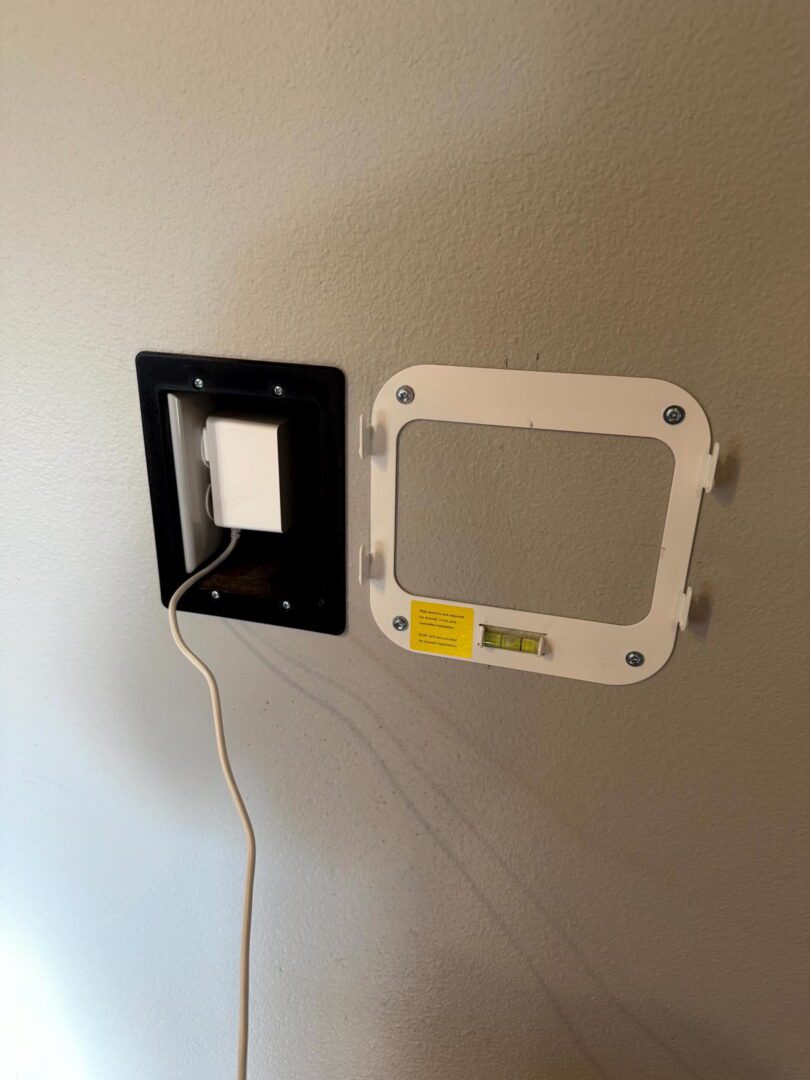
A recessed outlet — also called a flush-mounted or in-wall power outlet — is an electrical receptacle installed inside the wall cavity rather than protruding from the surface. Instead of a standard outlet box that sticks out from the drywall, the receptacle sits completely flush, leaving nothing to bump against or route a cord around.
In-wall power kits from brands like PowerBridge or DataComm take this a step further. These are specialized enclosures designed to safely route both power and low-voltage cables — HDMI, ethernet, USB — through the wall cavity without damaging insulation or violating electrical code. The outlet sits behind your device, the device mounts directly over it, and from across the room, the whole setup looks like the display is simply hovering on the wall.
These installations are permanent electrical work. They must comply with the National Electrical Code (NEC) and local building codes in your DFW city — which means they require a licensed electrician, not a handyman or a YouTube tutorial.
DFW homeowners in suburbs like Southlake, Colleyville, and North Richland Hills are increasingly integrating smart displays, digital calendars, and tablet hubs into their kitchens and entryways. A recessed outlet is the code-compliant way to make that look intentional rather than improvised.
ℹ️ You’re Not Alone in Wanting a Clean Look
Many DFW homeowners struggle with the aesthetic of visible cords and power adapters for smart displays. A recessed outlet is a legitimate, code-compliant solution that professionals install regularly — and it’s more straightforward than most people expect when done by a licensed electrician.
Why You Need a Licensed Electrician for This Work
Texas law is clear on this point: any work involving permanent electrical wiring in a residential home — including adding outlets or running new circuits — must be performed by a licensed electrical contractor holding a Texas Electrical Contractor License (TECL). This isn’t a technicality. It’s a safety standard backed by real consequences for homeowners who skip it.
A licensed electrician ensures the installation meets the current National Electrical Code (NEC 2020, which most DFW cities have adopted). That means proper AFCI protection on new or modified circuits, tamper-resistant receptacles on all new outlets, and GFCI protection in any wet or damp location. These aren’t optional upgrades — they’re code requirements that exist because they prevent fires and electrocutions.
Unlicensed or DIY electrical work on fixed wiring carries serious risks. Electrical fires. Shock hazards. Code violations that void your homeowner’s insurance policy. And when something goes wrong, you’re paying a licensed electrician to diagnose and fix someone else’s mistakes — which consistently costs 1.5 to 3 times more than doing it right the first time. For a job that might have cost $300 done correctly, you’re now looking at $500–$900 in remediation, plus potential permit issues at resale.
Licensed electricians also carry the required insurance — a minimum of $300,000 in general liability coverage under Texas law — which means you have real financial recourse if something goes wrong on your property. That protection disappears the moment you hire someone without a TECL.
For a deeper look at what separates a qualified electrician from someone just advertising the service, our guide on how to hire an electrician walks through the vetting process step by step.
⚠️ Unlicensed Handymen Are a Major Risk
Handymen advertising “outlet installation” or “hidden wiring” on Nextdoor or Craigslist are often not licensed electricians. Unpermitted or improper electrical work can cause fires, void your homeowner’s insurance, and cost thousands to fix. Always verify a TECL license at tdlr.texas.gov before any work begins.
The Recessed Outlet Installation Process: What to Expect
Knowing what the electrician will actually do — and why each step matters — helps you have a more informed conversation and set realistic expectations for the project timeline.
Assessment: The electrician starts by evaluating your wall type (drywall, plaster, brick), insulation, stud placement, and proximity to the electrical panel. This determines the best wire route and whether a new circuit is needed or if an existing nearby outlet can be tapped.
Planning and Permits: Most DFW cities require a permit before any work begins on permanent wiring. Your electrician determines what’s required for your municipality and pulls the permit. This step protects you — it’s what triggers the inspection that confirms the work is safe.
Wire Routing: The electrician runs new electrical wire from the panel or an existing circuit through the wall cavity to the recessed outlet location. This is the most technically demanding part of the job, requiring careful navigation around insulation, fire blocking, and structural elements.
Outlet Installation: A recessed box is set into the wall cavity and the wire is connected to a tamper-resistant receptacle inside the box. The face of the outlet sits flush with the drywall surface.
Testing and Inspection: The electrician tests for proper voltage and grounding before calling for the municipal inspection. A city inspector verifies code compliance before the wall is closed. This is a non-negotiable step — skipping it is what creates problems at resale.
Drywall Repair and Finishing: The electrician patches the wall opening, though painting is typically the homeowner’s responsibility or a separate service. Factor this into your budget from the start.
In North Richland Hills and surrounding Mid-Cities communities, homes built in the 1980s and 1990s often have batt insulation that’s relatively easy to work around. Homes in older parts of Hurst or Bedford — where median home age exceeds 40 years — may have wiring configurations that require additional assessment before routing new circuits.
Costs and Factors That Affect Your Price
Pricing for a recessed outlet installation varies more than most homeowners expect, because the variables are structural — not just labor hours. Here’s an honest breakdown of what drives the number on your quote.
| Scenario | Estimated Cost Range | Key Variables |
|---|---|---|
| Basic install, existing circuit, drywall wall | $150 – $350 | Short wire run, easy access, no new breaker needed |
| New dedicated circuit from panel | $400 – $800+ | New breaker, longer wire run, panel capacity check |
| Plaster, brick, or stucco wall | Add $150 – $400 | Specialized cutting tools, more extensive repair work |
| Blown-in or spray foam insulation | Add $100 – $300+ | Removal and re-insulation required after wiring |
| Wire run of 50+ feet | Add $200 – $400+ | Additional material and labor for longer runs |
| Permit fees (DFW cities) | $50 – $200 | Varies by municipality and scope |
| Drywall patch and paint (separate contractor) | $150 – $400 | Not typically included in electrician quote |
The most common hidden cost homeowners miss is the drywall repair. Electricians are responsible for the electrical work — not the finish carpentry. Budget for patching and painting separately, or plan to DIY that portion if you’re comfortable with it.
If your home has an older or near-capacity electrical panel, adding a new circuit may also surface a panel upgrade conversation. That’s a separate project with its own cost structure — our panel installation page covers what’s involved. A good electrician will tell you upfront if that’s something you need to plan for, not surprise you with it mid-job.
If cost is a concern, it’s worth knowing that financing options exist for larger electrical projects. Our residential project financing guide explains what’s available for DFW homeowners.
Permits and Code Compliance in DFW
North Richland Hills, Fort Worth, Keller, and virtually every DFW city require an electrical permit for any work that alters permanent wiring or adds new outlets — even a single recessed outlet. This surprises some homeowners, but the logic is straightforward: the permit triggers an inspection, and the inspection is what confirms the work is safe before the wall gets closed.
Most DFW cities have adopted the 2020 National Electrical Code (NEC) with local amendments. Key requirements that apply directly to recessed outlet installations include:
- Tamper-Resistant Receptacles: All new outlets in dwelling units must be tamper-resistant (TR). This is non-negotiable under NEC 2020.
- AFCI Protection: New or modified circuits must include Arc-Fault Circuit Interrupter protection. This is the code requirement most commonly missed by unlicensed installers.
- GFCI Protection: Required for outlets in wet or damp locations — kitchens, bathrooms, garages, and outdoor areas. If your smart display is going in a kitchen, this applies to you. Our post on GFCI receptacles explains how these work and why they matter.
- Listed and Labeled Components: In-wall power kits must be UL-listed and installed per manufacturer instructions and NEC Article 110.3(B).
Unpermitted work doesn’t just create a code violation — it creates a paper trail problem. When you sell your home, a buyer’s inspector will often identify work that doesn’t match the permitted record. Remediation at that stage is expensive and time-sensitive. Doing it right the first time is always cheaper.
Always verify your electrician’s license before work begins. You can confirm any contractor’s TECL status at tdlr.texas.gov. Epic Electrical holds TECL #33192, and you’re welcome to verify it.
Red Flags: What to Avoid When Hiring an Electrician
The market for small electrical jobs — outlet installs, hidden wiring, smart home integration — attracts a disproportionate number of unlicensed operators. Here’s what to watch for before you hand anyone access to your walls.
No TECL License: This is the non-starter. Any contractor performing permanent electrical wiring without a current Texas Electrical Contractor License is operating illegally. Don’t accept “I’ve been doing this for 20 years” as a substitute for a license number you can verify.
Refuses to Pull a Permit: A licensed professional knows when a permit is required and pulls it without being asked. If a contractor suggests skipping the permit to “save you money,” that’s a signal they either don’t understand the code or are trying to avoid the inspection their work won’t pass.
No Proof of Insurance: Licensed contractors carry a minimum of $300,000 in general liability coverage. Ask for a Certificate of Insurance before work starts. If they can’t produce one, walk away.
Cash-Only Payment: Legitimate licensed contractors accept checks, credit cards, or bank transfers. Cash-only arrangements often indicate someone trying to avoid a paper trail — and avoid accountability.
Suspiciously Low Quotes: If a quote is significantly below the ranges in this article without a clear explanation, something is being cut. Usually it’s the permit, the proper materials, or the code-compliant installation method.
Vague Scope or Unrealistic Guarantees: A professional electrician asks detailed questions about your wall type, existing wiring, and device requirements before quoting. “No wall damage guaranteed” for an in-wall installation is not a realistic promise — it’s a sales tactic.
For a broader checklist on evaluating contractors, our guide on what to look for when choosing an electrician covers the full vetting process.
💡 Ask These Questions Before Hiring
Always verify the contractor’s TECL license at tdlr.texas.gov, ask if they’ll pull a permit, request proof of insurance, and ask for references from similar jobs. A professional electrician will answer these questions clearly and confidently — without hesitation or deflection.
Why Epic Electrical Is the Right Choice for Your Skylight Calendar Installation in DFW
Epic Electrical is a father-and-son team of master electricians — Mike and Griffin — with 50+ years of combined experience serving the DFW Metroplex since 2009. We hold a current Texas Electrical Contractor License (TECL #33192), carry full insurance coverage, and have built our reputation on honest diagnosis with no upsells. Our 138+ five-star Google reviews reflect what DFW homeowners consistently say: we show up, we explain what’s happening, and we do the work right.
For a recessed outlet or in-wall power installation, we handle the entire process — assessment, permit coordination, professional wiring, code-compliant installation, and drywall repair coordination. We’ll walk you through every step so you understand exactly what’s happening in your walls and why. If there’s a simpler or cheaper solution for your specific situation, we’ll tell you that too. That’s how we’ve operated since day one.
We serve North Richland Hills, Colleyville, Hurst, Southlake, and the entire DFW area. Whether your home has modern wiring or older aluminum wiring that requires specialized remediation, our electrical wiring repair expertise means we have the experience to handle whatever we find inside your walls.
Contact Epic Electrical for a free estimate and honest advice on your recessed outlet installation — no pressure, no upsells, just a straight answer about what your project actually requires.
Frequently Asked Questions
Do I need an electrician to hide TV wires in the wall or install an in-wall power kit for my tablet?
Yes, absolutely. Any work that involves running new electrical wires inside your walls, cutting into existing wiring, or installing new outlets must be performed by a licensed electrician. This ensures the work is safe, up to code, and properly permitted — protecting your home and family from electrical hazards. Low-voltage cable routing (HDMI, ethernet) can sometimes be handled separately, but the moment power is involved, a TECL-licensed contractor is legally required in Texas.
Will installing an in-wall power kit for my smart display require a permit in my DFW city?
Most DFW cities — including North Richland Hills, Fort Worth, and Keller — require an electrical permit for any work that alters your home’s permanent electrical wiring, including adding new outlets or in-wall power solutions. The permit exists to trigger a municipal inspection that confirms the work is safe before the wall is closed. A licensed electrician will know the specific requirements for your municipality and will pull and manage the necessary permits as part of the job.
What are the risks of attempting a DIY in-wall power installation without a licensed electrician?
DIY electrical work on fixed wiring is both extremely dangerous and illegal in Texas without a license. The risks include electrical fires from improper connections, electric shock during installation, code violations that can void your homeowner’s insurance, and costly repairs by a licensed professional to correct the mistakes. Industry data consistently shows that fixing failed DIY electrical work costs 1.5 to 3 times more than hiring a licensed electrician from the start — so the perceived savings evaporate quickly.
How much should I expect to pay for a recessed outlet installation to make my digital calendar look like it’s floating?
The cost varies based on complexity. For a basic installation tapping into an existing nearby circuit with easy wall access, expect roughly $150–$350. If a new dedicated circuit is required from your electrical panel, costs typically range from $400 to $800 or more. Wall material, insulation type, wire run distance, and permit fees all influence the final number. Most electrician quotes do not include drywall patching and painting, so budget an additional $150–$400 for that work separately — or plan to handle it yourself.
What makes Epic Electrical different from other electricians for this type of work?
Epic Electrical is a father-and-son team of master electricians with 50+ years of combined experience and 138+ five-star Google reviews from DFW homeowners. We’re licensed (TECL #33192), fully insured, and committed to honest diagnosis with no upsells or hidden costs. We handle the entire recessed outlet process — assessment, permits, professional wiring, code-compliant installation, and drywall repair coordination — and we explain every step so you know exactly what’s happening and why. If there’s a simpler fix for your situation, we’ll tell you that instead of selling you a bigger job. Get a free estimate from Epic Electrical today and see why DFW homeowners trust us for their electrical needs.
Ready to Make Your Smart Display Look Like It’s Floating?
A clean, cord-free installation is completely achievable — when it’s done by a licensed electrician who knows the code and respects your walls. Whether you’re mounting a Skylight calendar in your kitchen, a tablet hub in your entryway, or any smart display in your DFW home, Epic Electrical handles the entire process from permit to final outlet test.
We serve North Richland Hills, Keller, Southlake, Colleyville, Hurst, Fort Worth, and the entire DFW Metroplex. No pressure. No upsells. Just honest work done right.
Serving Fort Worth · Arlington · Keller · Southlake · Colleyville · Grapevine · North Richland Hills · Hurst · Bedford · and all of DFW
Pricing, equipment specifications, and project scope mentioned in this article are accurate as of the date of publication and are subject to change. Code requirements and permit needs vary by municipality and property. Please contact us directly for a current quote on your specific home or business.