Key Takeaways
- Panel upgrades replace only the main panel — they’re faster, less expensive ($3,000–$12,000), and right for businesses with sound existing wiring that need more capacity.
- Full electrical retrofits replace everything — panel, wiring, circuits, and infrastructure. They’re necessary when wiring is old, damaged, or non-compliant ($8,000–$25,000+).
- DFW’s summer heat is a real factor — electrical demand spikes 40–60% during peak cooling season, meaning your panel needs headroom beyond your everyday baseline.
- Aluminum wiring is a dealbreaker for panel-only upgrades — many DFW buildings from the 1970s–1980s have it, and it requires a full retrofit, not just a new panel.
- A professional inspection is non-negotiable — guessing at what you need is how you end up paying twice or creating a safety hazard.
- Size for tomorrow, not today — plan 30–50% growth beyond your current needs when upgrading, or you’ll be back at this decision in five years.
- Permits and inspections aren’t optional — they protect your business from liability, insurance gaps, and code violations that can shut you down.
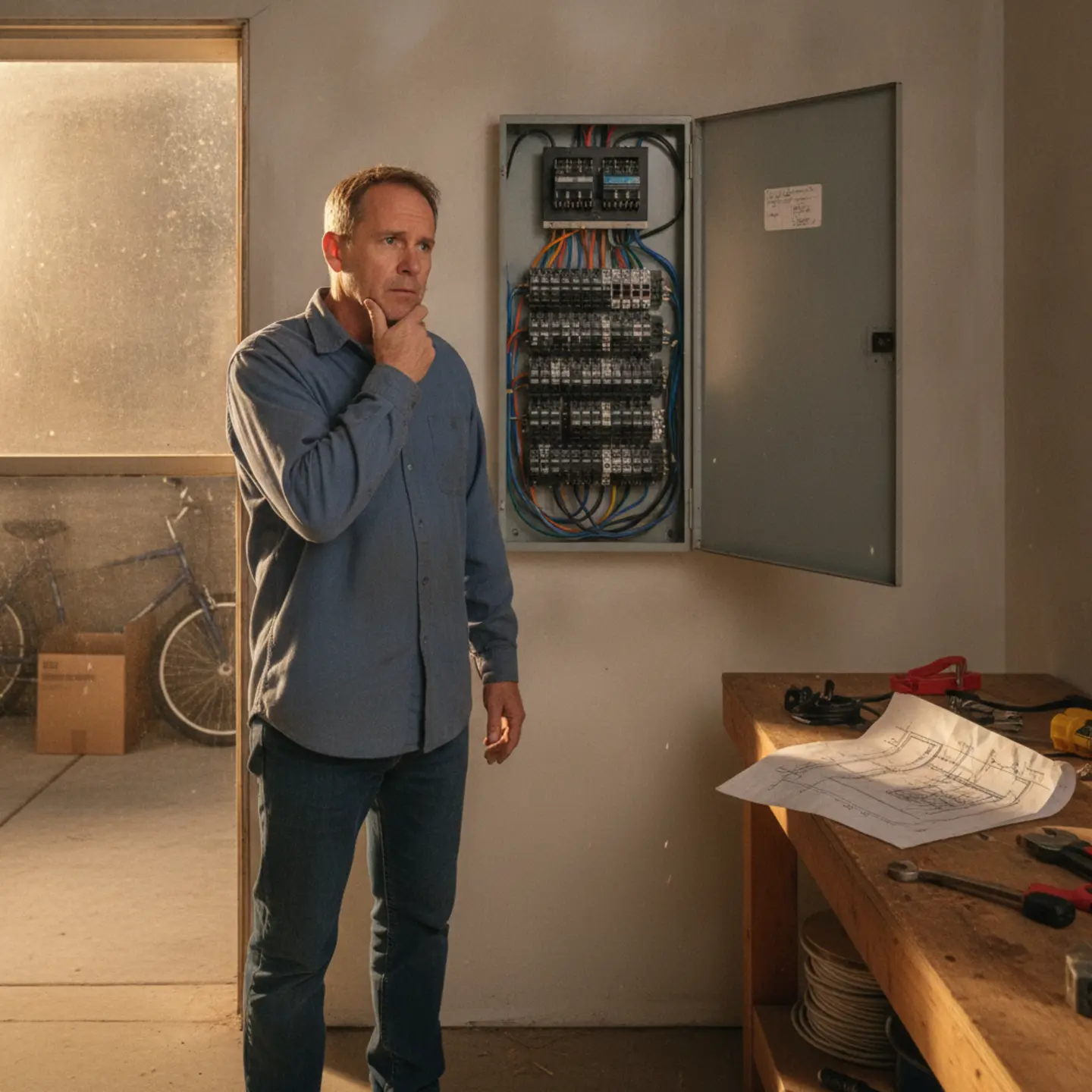
You’ve just signed a lease on a bigger space, or your current operation is humming along better than you ever expected. Business is good. Then your electrician drops the bomb: your panel can’t handle it. Now you’re staring at two quotes that look like they came from different planets — one for a panel upgrade, one for a full electrical retrofit — and nobody’s explaining why the numbers are so far apart or which one you actually need.
That’s a frustrating place to be. You’re not an electrician. You’re a business owner trying to grow, and the last thing you need is to make a $10,000 mistake because someone handed you a quote without an explanation. This article is the translator you’ve been looking for.
We’re going to break down exactly what each option involves, what it costs, how long it takes, and — most importantly — how to know which one fits your situation. No upsell language. No scare tactics. Just honest information from people who believe that if a panel upgrade is all you need, that’s what we’ll tell you.
Why Your Electrical Panel Matters More Than You Think
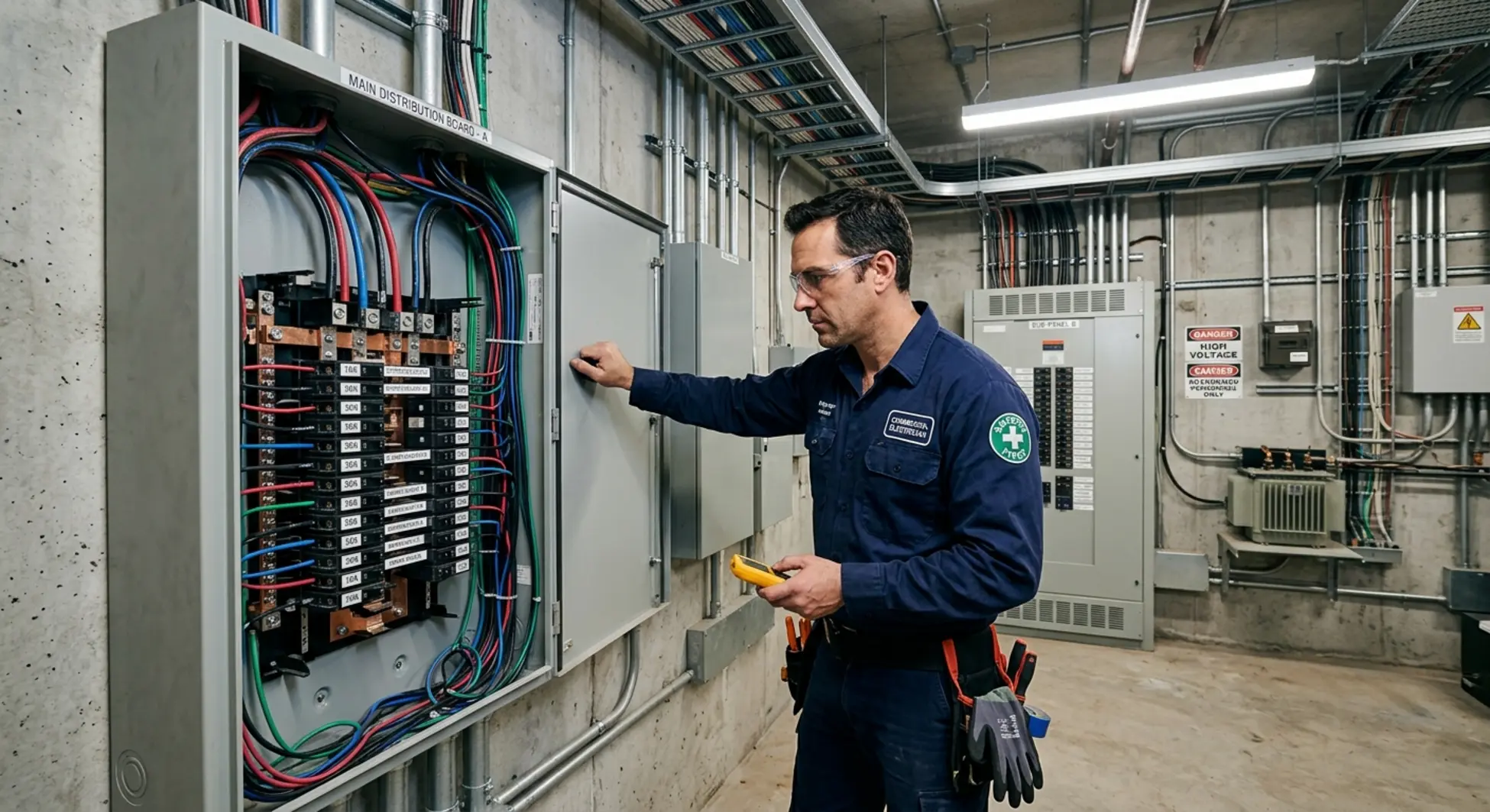
Before we compare options, let’s make sure we’re talking about the same thing. Your electrical panel — sometimes called a breaker box or load center — is the gatekeeper of every watt of electricity that flows through your building. It receives power from the utility company and distributes it through individual circuit breakers to every outlet, light, piece of equipment, and HVAC system in your space. When everything’s working right, you don’t think about it at all. When it’s undersized or compromised, you feel it constantly.
What a Panel Actually Does (No Jargon)
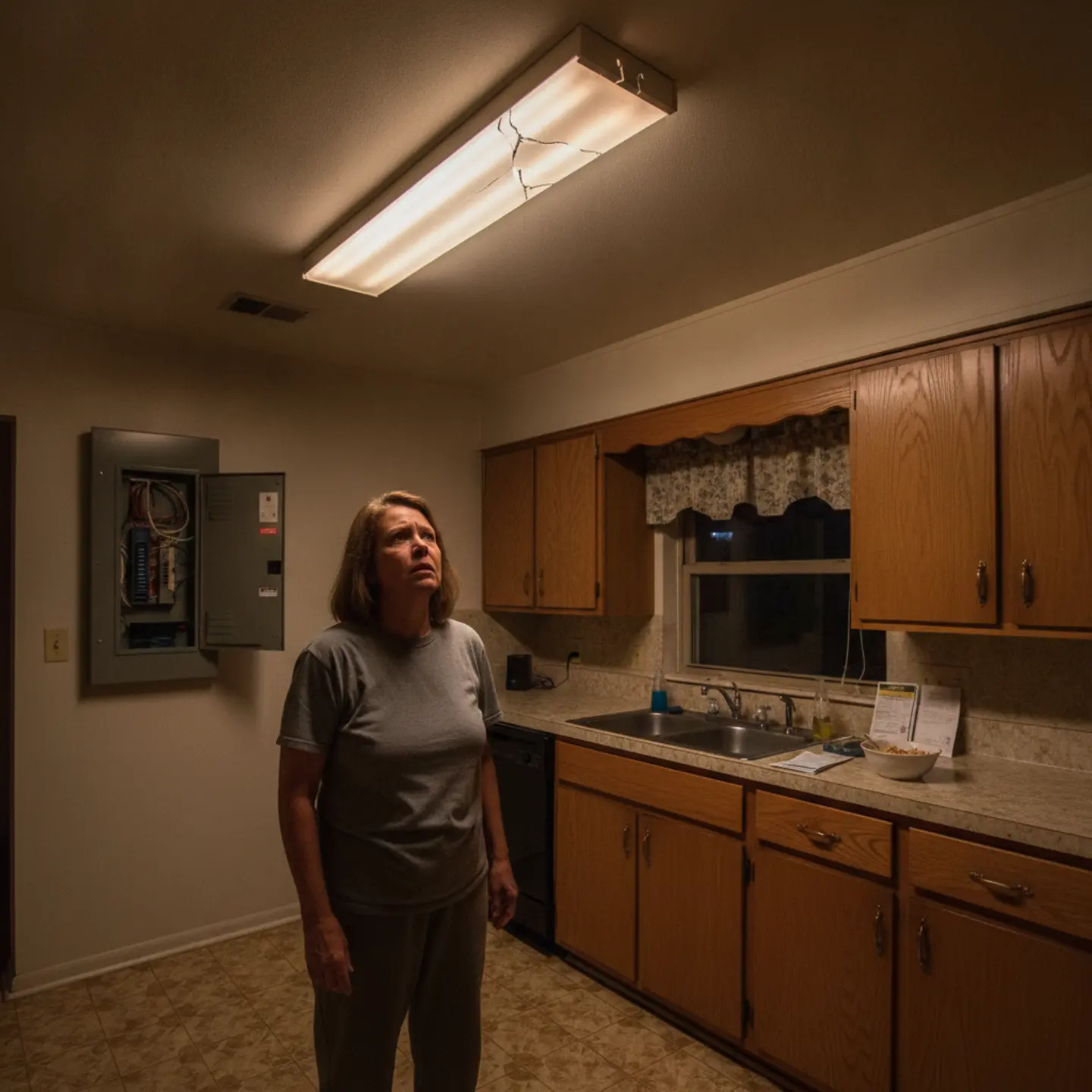
Here’s the simple version: power comes in from the street, hits your panel, and gets divided into smaller, manageable circuits. Each circuit breaker in that panel is designed to protect a specific circuit by cutting power if the demand gets too high. That’s not a flaw — that’s the safety system working exactly as intended. The problem comes when your total electrical demand regularly pushes against the panel’s maximum capacity, or when individual circuits are overloaded because there aren’t enough of them to go around.
When demand exceeds what the panel can safely handle, breakers trip. That’s annoying, but it’s actually the best-case scenario. The worst case is that someone — a previous owner, a well-meaning employee, a contractor cutting corners — bypasses a breaker or replaces it with one rated too high. Now you have a circuit carrying more current than the wiring can handle, and that’s how electrical fires start.
Getting a proper electrical safety inspection before making any decisions isn’t just a formality — it’s the only way to know what your system can actually handle and where the real risks are hiding.
Why Capacity Matters for Texas Businesses
Business growth is almost always tied to increased electrical demand. You add a server rack, a second HVAC unit, industrial equipment, EV charging stations for your fleet, or just more workstations — every one of those additions draws power. And in the Dallas-Fort Worth area, there’s an extra layer that most people don’t account for: the heat.
Summer cooling loads in DFW can spike 40–60% above your baseline electrical demand. A panel that seems perfectly adequate in March can be maxed out by July when your AC systems are running at full capacity around the clock. Running a panel at 80% or more of its rated capacity isn’t just uncomfortable — it’s a code violation and a fire risk. The National Electrical Code requires that continuous loads not exceed 80% of a circuit’s rated capacity, and that applies to your panel as a whole.
This is why capacity planning isn’t just about what you need today. It’s about what your building will need when the temperature hits 105°F and every piece of equipment is running simultaneously.
✅ You’re Not Alone — DFW Businesses Face This Constantly
Rapid growth in the Dallas-Fort Worth area means many business owners hit the same electrical capacity wall. It’s not a sign you’ve done something wrong — it’s a sign your business is thriving. The buildings in this region simply weren’t designed for the electrical demands of modern commercial operations, and catching up is a normal part of growth.
Panel Upgrade Explained: The Faster Fix
A panel upgrade is exactly what it sounds like: you replace your existing electrical panel with a higher-amperage unit. The most common upgrade for small commercial spaces is going from a 100-amp panel to a 200-amp panel, though larger businesses may go to 400 amps or more depending on their needs. The key distinction — and this is important — is that a panel upgrade keeps your existing wiring and infrastructure in place. You’re swapping out the brain, not rewiring the whole building.
This makes a panel upgrade significantly less invasive and less expensive than a full retrofit. It’s the right answer for a lot of growing businesses, and it’s worth understanding what the process actually looks like before you assume you need something more extensive. Our electrical panel upgrade services cover everything from the initial assessment through final inspection sign-off.
The Panel Upgrade Process Step-by-Step
The process starts with an inspection of your existing panel and wiring. A qualified electrician needs to confirm that your current wiring is in good enough condition to support the upgraded panel — because if the wiring is compromised, upgrading the panel alone won’t solve your problems and could actually make them worse by allowing more current to flow through wiring that can’t handle it.
Once the inspection confirms the upgrade is appropriate, the electrician coordinates with your utility company. This typically requires a temporary power shutdown — the utility needs to disconnect service at the meter before the old panel can be safely removed. This is one of the steps that adds time to the process, so it’s worth planning ahead. Utility coordination can add a few days to the schedule if it’s not arranged in advance.
The old panel comes out, the new higher-capacity panel goes in, and the existing circuits are reconnected. After installation, the work is tested and a city or county inspector visits to verify that everything meets code before signing off. That permit and inspection isn’t optional — it’s what protects you legally and keeps your insurance valid.
For most small commercial spaces, the entire process takes one to three days. With good planning, it can often be completed in a single business day, or scheduled over a weekend to minimize disruption to your operations.
When a Panel Upgrade Is Enough
A panel upgrade is the right answer when your existing wiring is in good condition — no signs of corrosion, physical damage, or outdated materials like aluminum or knob-and-tube. If an inspection confirms the wiring is sound, you’re essentially just removing the bottleneck at the panel level without needing to touch everything downstream.
It’s also the right answer when you’re looking to add 30–50% more capacity rather than doubling your electrical infrastructure. If you’re adding a few more workstations, upgrading your HVAC system, or adding a couple of EV chargers, a panel upgrade can handle that growth cleanly. If you’re converting a warehouse into a full manufacturing facility or adding industrial equipment that triples your electrical demand, you may need more than just a new panel.
Finally, a panel upgrade works well when your space layout doesn’t require new circuits in distant areas of the building. If your existing circuit runs are adequate and just need more capacity at the source, the upgrade addresses the problem directly without the cost and disruption of running new wiring throughout the building.
Not sure whether your situation calls for a panel upgrade or something more comprehensive? That’s exactly what a professional electrical assessment is designed to answer — we’ll look at your system, explain what we find, and give you honest options.
Full Electrical Retrofit: The Comprehensive Overhaul
A full electrical retrofit is a different category of work entirely. Where a panel upgrade replaces the panel and leaves everything else in place, a retrofit replaces the panel and addresses the wiring, circuits, outlets, and electrical infrastructure throughout the space. It’s more invasive, takes longer, and costs more — but in certain situations, it’s the only safe and code-compliant option. Understanding when you’re in that situation is the whole point of getting a thorough inspection before committing to either path.
If you’re dealing with an older building, a major renovation, or a system that’s already showing signs of compromise, a full electrical system assessment will tell you what you’re actually working with and what it will take to bring it up to current standards.
What Gets Replaced in a Full Retrofit
The scope of a full retrofit depends on the building and the condition of the existing system, but generally it includes the main panel and all circuit breakers, the wiring from the meter to the panel and throughout the building, outlets and switches that don’t meet current code, and the grounding and bonding systems. Depending on how the building was originally wired, it may also involve replacing conduit, junction boxes, and distribution infrastructure.
This is a significant undertaking. Electricians will be accessing walls, ceilings, and floors to remove old wiring and run new. In a commercial space, this often means coordinating with your operations to minimize disruption — phasing the work so that some areas of the building remain powered while others are being upgraded. A good electrical contractor will plan this carefully with you rather than just shutting everything down on day one.
The end result is a building with modern, code-compliant electrical infrastructure from the meter to every outlet. It’s not just more capacity — it’s a system that’s safe, inspectable, and built to last for decades.
Red Flags That Demand a Full Retrofit
There are certain conditions where a panel upgrade alone is not a safe or code-compliant solution, and any honest electrician will tell you so. The most significant is aluminum wiring. Many DFW buildings constructed in the 1970s and 1980s were wired with aluminum instead of copper, because aluminum was cheaper at the time. The problem is that aluminum expands and contracts with temperature changes more than copper does, which causes connections to loosen over time. Loose connections create heat, and heat creates fire risk. A panel upgrade does nothing to address aluminum wiring — it just allows more current to flow through a system that’s already a liability.
Knob-and-tube wiring is another dealbreaker. This is an even older system found in buildings from the early-to-mid 20th century, and it’s not just outdated — it’s actively incompatible with modern electrical loads and insulation materials. If your building has knob-and-tube, a retrofit isn’t optional.
Visible corrosion, burn marks, or melted insulation anywhere in your electrical system are immediate red flags. These are signs that something has already overheated, and putting more capacity into a compromised system is dangerous. Frequent breaker trips even after a panel upgrade is another signal — it means the problem isn’t just capacity at the panel level, it’s in the wiring or circuits themselves.
⚠️ Don’t Ignore the Inspection Report
If an electrician flags aluminum wiring, corrosion, or code violations during an inspection, a panel upgrade alone won’t fix it. Ignoring these red flags doesn’t make them go away — it puts your business, your employees, and your property at risk. Insurance companies can and do deny claims when pre-existing electrical hazards are documented and unaddressed. The inspection report is information, not a sales pitch. Take it seriously.
Cost Comparison: What You’ll Actually Spend
Let’s talk numbers, because this is usually where the anxiety lives. The cost difference between a panel upgrade and a full retrofit can feel dramatic when you’re looking at quotes side by side, but the gap makes sense once you understand what’s actually included in each option. The goal here isn’t to make either option sound cheap — it’s to help you understand what you’re paying for so you can make an informed decision.
Breaking Down Panel Upgrade Costs
A panel upgrade for a small commercial space typically runs between $5,000 and $12,000. Here’s roughly where that money goes:
- New panel unit: $1,500–$3,000 depending on amperage and brand
- Labor (1–3 days): $1,500–$3,000 for a licensed commercial electrician
- Permits and inspections: $300–$800 depending on your city or county
- Utility coordination: Usually included or minimal additional cost
For residential properties or very small commercial spaces, the lower end of that range applies. For larger commercial spaces with higher amperage requirements or more complex utility coordination, you’ll be toward the higher end. The permit and inspection fees vary by municipality — Fort Worth, Arlington, Keller, and other DFW cities each have their own fee schedules.
One thing worth noting: the cost of a panel upgrade is relatively predictable because the scope is defined. You’re replacing a known component with a known replacement. The surprises, when they happen, usually come from discovering during the inspection that the existing wiring isn’t in the condition everyone assumed — which is exactly why the inspection comes first.
Breaking Down Full Retrofit Costs
A full electrical retrofit for a small to mid-size commercial space typically runs between $8,000 and $25,000 or more. The range is wider because the scope varies significantly based on building size, the condition of existing wiring, and how much of the infrastructure needs to be replaced. Here’s the general breakdown:
- New panel and breakers: $2,000–$4,000
- Wiring and conduit replacement: $3,000–$10,000+ depending on square footage and complexity
- Labor (1–2 weeks): $3,000–$8,000 for a licensed commercial crew
- Permits, inspections, and code upgrades: $500–$2,000
- Temporary power or phased work coordination: $500–$2,000
The wiring cost is the biggest variable. A small office suite with straightforward wiring runs will cost far less than a warehouse or multi-room commercial space where wiring needs to be run through finished walls, ceilings, or conduit throughout the building. The labor cost also reflects the complexity — a retrofit crew is doing significantly more work over significantly more days than a panel upgrade crew.
From a return-on-investment perspective, think of a panel upgrade as removing a bottleneck and a retrofit as rebuilding the road. Both have value, but they’re solving different problems. A retrofit is a long-term infrastructure investment that eliminates safety risks, brings you into code compliance, and gives you a foundation that can support your business for 20–30 years without major electrical work.
Timeline & Disruption: How Long Will This Take?
For a business owner, the cost question and the timeline question are almost equally important. A week of downtime can cost more than the electrical work itself, depending on your operation. Understanding what “disruption” actually means for each option helps you plan intelligently rather than just hoping for the best.
Panel Upgrade Timeline
Most panel upgrades follow a predictable sequence. On day one, the electrician conducts the final inspection, submits the permit application to your local municipality, and notifies the utility company of the planned work. Depending on your city, permit approval can be same-day or take a business day or two. Utility notification requirements vary, so this is worth asking about when you’re scheduling.
On days two and three — often compressed into a single day for straightforward upgrades — the old panel is removed, the new panel is installed, circuits are reconnected and labeled, and the system is tested. The city inspector comes out to verify the work meets code, and once they sign off, power is restored. From your perspective as a business owner, the main disruption is the period when power is off, which is typically a few hours during the actual panel swap.
With good planning, a panel upgrade can often be scheduled after business hours or over a weekend. Many businesses in DFW have had their panels upgraded with zero impact on their operating hours. That’s not always possible depending on utility coordination requirements, but it’s worth discussing with your electrician when you’re setting the schedule.
Full Retrofit Timeline
A full retrofit is a longer commitment, and it’s worth being realistic about what that means for your business. The first week typically involves planning, permits, utility coordination, and a detailed wiring assessment to map out exactly what needs to be replaced and in what order. This planning phase is where a good contractor earns their fee — a well-planned retrofit causes significantly less disruption than one that’s improvised as it goes.
Weeks two and three are the active work phase: old wiring is removed, new wiring is run, and circuits are rebuilt. In most commercial spaces, this is done in phases — one section of the building at a time — so that some areas remain powered while others are being upgraded. This phased approach is essential for businesses that can’t simply shut down for two weeks.
The final phase involves panel installation, comprehensive testing of every circuit, and the city inspection sign-off. A retrofit typically requires multiple inspection visits — one during rough-in (before walls are closed up) and one at final completion. Build that into your timeline expectations.
💡 Pro Tip: Size for Tomorrow, Not Today
When upgrading your panel, plan for 30–50% growth beyond your current electrical needs. The cost difference between a 200-amp and a 400-amp panel is relatively small compared to the cost of doing the upgrade again in five years. A good electrician will help you model your growth trajectory and recommend a panel size that gives you room to expand without another major project. This is one of those decisions where spending slightly more now saves significantly more later.
Wondering whether now is the right time to move forward, or if you can wait a season? A quick consultation can help you understand the urgency, plan around your busiest periods, and avoid the emergency pricing that comes with waiting until something breaks.
The Decision Framework: Panel Upgrade or Full Retrofit?
Here’s the honest truth: you can’t make this decision confidently without a professional inspection. That’s not a sales pitch — it’s just the reality of how electrical systems work. What looks like a straightforward panel upgrade from the outside can turn into a retrofit conversation once an electrician opens up the walls and finds aluminum wiring or corrosion that wasn’t visible from the panel. And what sounds like it might need a full retrofit sometimes turns out to be a clean, well-maintained system that just needs more capacity at the panel level.
A professional electrical inspection gives you the actual facts about your system — not assumptions, not worst-case scenarios, not upsells. It’s the foundation of a good decision. Once you have that information, the framework below will help you interpret it.
Choose a Panel Upgrade If:
- Your wiring is copper, in good condition, and shows no signs of corrosion, damage, or heat stress
- You need 30–50% more capacity, not a complete overhaul of your electrical infrastructure
- Your building passes a basic electrical code inspection with no major violations
- You want to minimize downtime and cost while addressing a clear capacity bottleneck
- You’re planning to stay in the space for five to ten years and your growth trajectory is manageable
Choose a Full Retrofit If:
- Your wiring is aluminum, knob-and-tube, or shows signs of corrosion, burn marks, or physical damage
- You’re doubling your electrical needs or adding major industrial equipment, multiple HVAC systems, or a large EV charging infrastructure
- Your building has documented code violations or outdated systems that a panel swap alone won’t bring into compliance
- You’re planning a major renovation or long-term expansion that will require new circuits throughout the building anyway
- You want to future-proof your electrical infrastructure and eliminate the risk of another major project in five to ten years
ℹ️ It’s Okay to Ask for Help Making This Decision
Electrical systems are complex, and this is a significant financial decision for your business. Getting a professional opinion before committing to either path isn’t overthinking it — it’s smart business. A good electrician will walk you through what they find, explain the options clearly, and let you make the call. If someone’s pressuring you into a decision without showing you the inspection findings, that’s a red flag worth paying attention to.
Ready to figure out which path makes sense for your specific building and business? We’ll walk you through the decision framework with actual findings from your system — not guesswork.
DFW-Specific Considerations: Heat, Growth, and Code
Doing business in North Texas comes with electrical considerations that don’t apply the same way in other parts of the country. The combination of extreme summer heat, rapid regional growth, and a significant stock of older commercial buildings creates a specific set of challenges that are worth understanding before you make any electrical decisions.
Dallas-Fort Worth is one of the fastest-growing metro areas in the country, and that growth isn’t just in new construction. Thousands of businesses are moving into older commercial spaces that were built for a different era of electrical demand — and finding out the hard way that the infrastructure hasn’t kept pace. Understanding electrical code compliance in Texas is part of operating safely in this market.
The DFW Heat Factor
Summer temperatures in the DFW area regularly exceed 100°F, and during heat waves, they can push 110°F or higher. When that happens, every commercial HVAC system in the region is running at or near maximum capacity simultaneously. For your electrical panel, this means that the load profile you see in spring — when you might be running at 60% of panel capacity — can jump to 90% or more by mid-July just from the increased cooling demand, before you add any new equipment or operations.
This is why the 80% capacity rule matters so much in Texas. A panel that’s running at 75% capacity in a mild climate might be fine. In DFW, that same panel is likely to be pushed past its safe operating threshold every summer. When you’re sizing a panel upgrade, you need to account for peak summer cooling load, not just your average daily demand. A good electrician will help you calculate this properly rather than just matching your current draw.
The practical implication: if you’re upgrading your panel, size up. The difference in cost between a panel that handles your current load and one that handles your current load plus 50% growth plus peak summer cooling is not dramatic. The difference in outcomes — not having to redo this work in three years — is significant.
Aluminum Wiring and Older DFW Buildings
A significant number of commercial buildings in the Dallas-Fort Worth area that were constructed between roughly 1965 and 1985 were wired with aluminum. This was a common practice nationally during that period when copper prices spiked, and it’s not unique to Texas — but the DFW climate makes it a more acute concern than in cooler regions.
Aluminum wiring expands and contracts with temperature changes more than copper does. In a climate where temperatures swing from below freezing in winter to 105°F in summer, those expansion and contraction cycles happen repeatedly over decades, gradually loosening connections at outlets, switches, and junction boxes. Loose connections create resistance, resistance creates heat, and heat creates fire risk. The Consumer Product Safety Commission has identified aluminum wiring as a significant fire hazard, and many insurance companies either won’t cover buildings with aluminum wiring or charge significantly higher premiums.
If you’re leasing or purchasing a commercial space in an older DFW building, one of the first questions to ask is whether the building has aluminum wiring. If it does, factor a full retrofit into your budget — not as an optional upgrade, but as a necessary cost of operating safely in that space. A panel upgrade alone won’t address the underlying hazard.
Common Mistakes Business Owners Make
We’ve seen a lot of electrical projects over the years, and there are patterns in how things go wrong. None of these mistakes come from bad intentions — they come from being busy, from trusting the wrong information, or from trying to save money in the short term without seeing the long-term cost. Here’s what to avoid.
The “Cheapest Quote” Trap
Getting multiple quotes is smart. Choosing based on price alone is how you end up with a problem. A low quote often means something is being left out — fewer circuits, lower-grade materials, skipped permits, or work that doesn’t fully address the underlying issue. When you’re comparing quotes, the question isn’t “which is cheapest?” It’s “what does each quote actually include, and why is there a difference?”
Permits and inspections are a specific area where corners get cut. Some contractors will do the work without pulling permits to save time and money. This seems fine until you try to sell the building, file an insurance claim, or get flagged during a code inspection. Unpermitted electrical work is a liability that follows the property, not the contractor. Always verify that permits are included in the quote and that the contractor will coordinate with the city inspector.
“The cheapest option today has a way of becoming the most expensive problem tomorrow. We’ve been called in to fix work that was done without permits, with undersized materials, or with shortcuts that looked fine until they didn’t. Every time, the business owner paid more to fix it than they would have paid to do it right the first time.”
The “Wait Until It Breaks” Gamble
A breaker that keeps tripping isn’t a minor inconvenience — it’s a warning sign that your electrical system is telling you something. Waiting for an actual failure before addressing it means you’ll be dealing with the problem in emergency mode: emergency pricing, rushed work, and business downtime that wasn’t planned for.
Proactive upgrades are almost always less expensive and less disruptive than reactive repairs. When you schedule the work on your terms, you can plan around your slow season, coordinate with your utility company in advance, and choose a contractor you’ve vetted rather than whoever can show up fastest. The businesses that handle electrical upgrades well are the ones that treat the warning signs as the signal to act, not the failure itself.
Not planning for future growth is a related mistake. A panel upgrade that’s sized exactly for your current needs will be insufficient within a few years if your business continues to grow. The cost of sizing up during the upgrade is a fraction of the cost of doing it again. Think about where your business will be in five years, not just where it is today.
📋 Why Permits and Inspections Matter (Even Though They’re Annoying)
Permits and inspections exist to ensure that electrical work meets safety codes — not to create paperwork for its own sake. When a city inspector signs off on your panel upgrade or retrofit, it means the work was done correctly and your building meets current safety standards. That sign-off protects you from liability if something goes wrong, keeps your insurance valid, and ensures that future buyers or tenants don’t inherit undisclosed electrical problems. The permit fee is not the expensive part of an electrical project. The consequences of skipping it can be.
What to Expect During the Work
One of the things that makes electrical work stressful for business owners is not knowing what’s happening. Demystifying the process doesn’t just reduce anxiety — it helps you plan your operations around the work and communicate realistic expectations to your staff and customers.
Before the Work Starts
The most important thing you can do before any electrical work begins is schedule it strategically. If your business has a slow season, a slow week, or even a slow day of the week, that’s when to schedule the work. For a panel upgrade, you might only need a single day of reduced operations. For a retrofit, you’ll want to plan the phasing around your operational calendar.
Clear access to your electrical panel and any areas where wiring will be run is essential. Electricians can’t work efficiently — or safely — if they’re navigating around stored inventory, equipment, or furniture. A few hours of prep work before the electricians arrive can save hours of labor cost and reduce the overall timeline.
Plan for temporary power loss. For a panel upgrade, this is typically a few hours during the actual panel swap. For a retrofit, phased work means you’ll have some circuits live at all times, but you should still have a plan for the areas that will be without power. If your business has equipment that can’t be powered down without consequence — refrigeration, servers, medical equipment — discuss this with your electrician before the work starts so it can be factored into the plan.
During the Work
Expect noise, dust, and the general organized chaos of construction work. Electricians running new wiring through walls and ceilings will be cutting access points, pulling wire, and working in areas that aren’t normally touched. A good crew will keep the mess contained and clean up at the end of each day, but this is active construction work and it looks like it.
The electrician will test circuits and equipment as they go, not just at the end. This is normal and important — it’s how problems get caught before the walls are closed up. If something doesn’t test correctly, it gets fixed in place rather than discovered after the inspector visits.
A city inspector will visit to verify the work meets code. For a panel upgrade, this is typically a single visit at the end. For a retrofit, there may be a rough-in inspection before walls are closed and a final inspection at completion. The inspector’s visit is not something to stress about — it’s the independent verification that the work was done correctly, and it’s in your interest to have it.
How to Choose the Right Electrician for Your Project
The quality of the contractor you choose matters as much as the scope of work you choose. A well-specified project done by the wrong contractor can still go sideways. Here’s how to vet your options and find someone you can trust with a significant investment in your business infrastructure.
Start with licensing and insurance. In Texas, electrical contractors must be licensed by the Texas Department of Licensing and Regulation. Ask for the license number and verify it. Insurance — both general liability and workers’ compensation — protects you if something goes wrong during the project. A contractor who can’t provide proof of both should be removed from consideration immediately.
Look for a licensed electrical contractor in Dallas-Fort Worth with specific commercial experience. Residential electrical work and commercial electrical work have different code requirements, different complexity levels, and different licensing requirements. Make sure the contractor you’re considering has done projects similar to yours.
Red Flags to Watch For
- Electricians who recommend upgrades without conducting a thorough inspection first — they’re guessing, and you’re paying for the guess
- Quotes that seem dramatically lower than others without a clear explanation of what’s different about the scope
- Contractors who won’t provide references from other commercial clients or who can’t show proof of licensing
- Anyone who suggests permits and inspections are optional or that you can save money by skipping them
- High-pressure sales tactics — urgency language, same-day-decision pressure, or discounts that expire immediately
Green Flags That Signal a Good Fit
- They start with a detailed inspection and explain what they find in plain language before recommending anything
- They provide written quotes that break down labor, materials, permits, and any contingencies clearly
- They’re willing to answer questions and explain their reasoning — not just hand you a number and wait for a yes
- They have local references from other DFW business owners and a verifiable track record
- They’re honest about what you need versus what would be nice to have — and they can tell the difference
A good electrician is a partner in your business infrastructure, not just a vendor. The relationship you build with a contractor you trust is worth more than the marginal savings from choosing the lowest bidder. When something unexpected comes up — and in electrical work, something unexpected often does — you want someone who communicates clearly and solves problems honestly.
Frequently Asked Questions
How do I know if my electrical panel needs an upgrade?
The most common signs include frequent breaker trips, outlets that don’t work or work intermittently, lights that dim when appliances turn on, or an electrician flagging capacity issues during a routine inspection. If you’re adding new equipment, expanding your operations, or moving into a space that hasn’t been updated in years, a professional inspection will tell you definitively whether your panel can handle your current and projected demand. Don’t try to diagnose this yourself — the symptoms of an undersized panel can overlap with symptoms of other electrical problems, and getting the diagnosis right is what determines the right solution.
Can I upgrade my electrical panel myself?
No — and this isn’t a gray area. Electrical panel work requires a licensed electrician and must be permitted and inspected by your local municipality. In Texas, performing electrical work without a license is illegal, and DIY electrical work on a commercial property will void your insurance coverage and create significant liability exposure. Beyond the legal issues, the safety risks are real: working on a live panel involves lethal voltages, and mistakes can cause fires, equipment damage, or serious injury. This is one area where professional help is genuinely non-negotiable, not just a recommendation.
How long does a panel upgrade take?
Most panel upgrades for small commercial spaces take one to three days, and with good planning, many can be completed in a single business day. The timeline includes permit approval, utility coordination, the actual panel swap, and the city inspection sign-off. Utility coordination is the variable that can add time — some utilities require advance notice of several days before they’ll schedule a service disconnect. A full electrical retrofit typically takes one to two weeks, depending on the scope of work and whether it’s being phased to keep some systems running during the project. Your electrician should give you a realistic timeline estimate based on your specific situation before work begins.
Will a panel upgrade fix all my electrical problems?
A panel upgrade increases your electrical capacity, but it won’t fix problems that exist in your wiring, circuits, or outlets. If you have damaged wiring, aluminum wiring, code violations, or individual circuits that are failing, those issues will still be present after a panel upgrade — and in some cases, the increased capacity can actually make them worse by allowing more current to flow through compromised wiring. This is exactly why a thorough inspection before any work begins is so important. The inspection identifies what’s actually causing your problems, which determines whether a panel upgrade is sufficient or whether more comprehensive work is needed.
What’s the difference between a panel upgrade and a full electrical retrofit?
A panel upgrade replaces only the main electrical panel with a higher-capacity unit, leaving your existing wiring and circuits in place. It’s faster, less expensive, and appropriate when your wiring is in good condition and you simply need more capacity at the source. A full electrical retrofit replaces the panel and the wiring, circuits, outlets, and electrical infrastructure throughout the building. It’s more comprehensive, more expensive, and necessary when your existing wiring is old, damaged, or non-compliant with current code. The right choice depends entirely on the condition of your existing system, which is why a professional inspection is the essential first step.
How much does an electrical panel upgrade cost in DFW?
A panel upgrade for a small commercial space in the Dallas-Fort Worth area typically costs between $5,000 and $12,000, depending on the amperage of the new panel, the complexity of the installation, and permit fees in your specific city or county. A full electrical retrofit ranges from $8,000 to $25,000 or more, depending on the size of the space and the scope of the wiring work. These are realistic ranges, not worst-case scenarios — but the only way to know your actual cost is to have a professional inspect your system and provide a written quote that breaks down labor, materials, and permits. Any quote that doesn’t include permits should be a red flag.
Ready to Upgrade Your Electrical Panel? Let’s Figure Out What You Actually Need.
We’re a third-generation family business, and we believe in honest advice over high-pressure sales. If a panel upgrade is all you need, we’ll tell you. If a full retrofit makes more sense for your building and your growth plans, we’ll explain exactly why — and give you a clear picture of what the work involves and what it will cost. Either way, you’ll leave the conversation with real information, not a sales pitch.
Serving Fort Worth, Arlington, Keller, Southlake, Colleyville, Grapevine, Lewisville, and all of DFW.
(682) 478-6088