Key Takeaways
- DFW has layered code requirements — Texas follows the NEC baseline, but local municipalities add amendments that catch many manufacturers off guard.
- NEC updates every three years — most manufacturing plants don’t track changes, creating compliance gaps that only surface during inspections.
- Arc flash analysis is mandatory — OSHA and most insurance carriers now require documented arc flash hazard analysis for equipment over 50 volts.
- Common violations are fixable — undersized conductors, grounding failures, and improper disconnects are the most frequent issues we find, and all are correctable.
- Phased upgrades are usually possible — critical safety issues need immediate attention, but most compliance work can be planned around your production schedule.
- Non-compliance costs more than compliance — OSHA fines, denied insurance claims, and production downtime far exceed the cost of proactive upgrades.
- Choose a contractor with manufacturing experience — general commercial electricians often lack the specific knowledge that industrial code compliance requires in DFW.
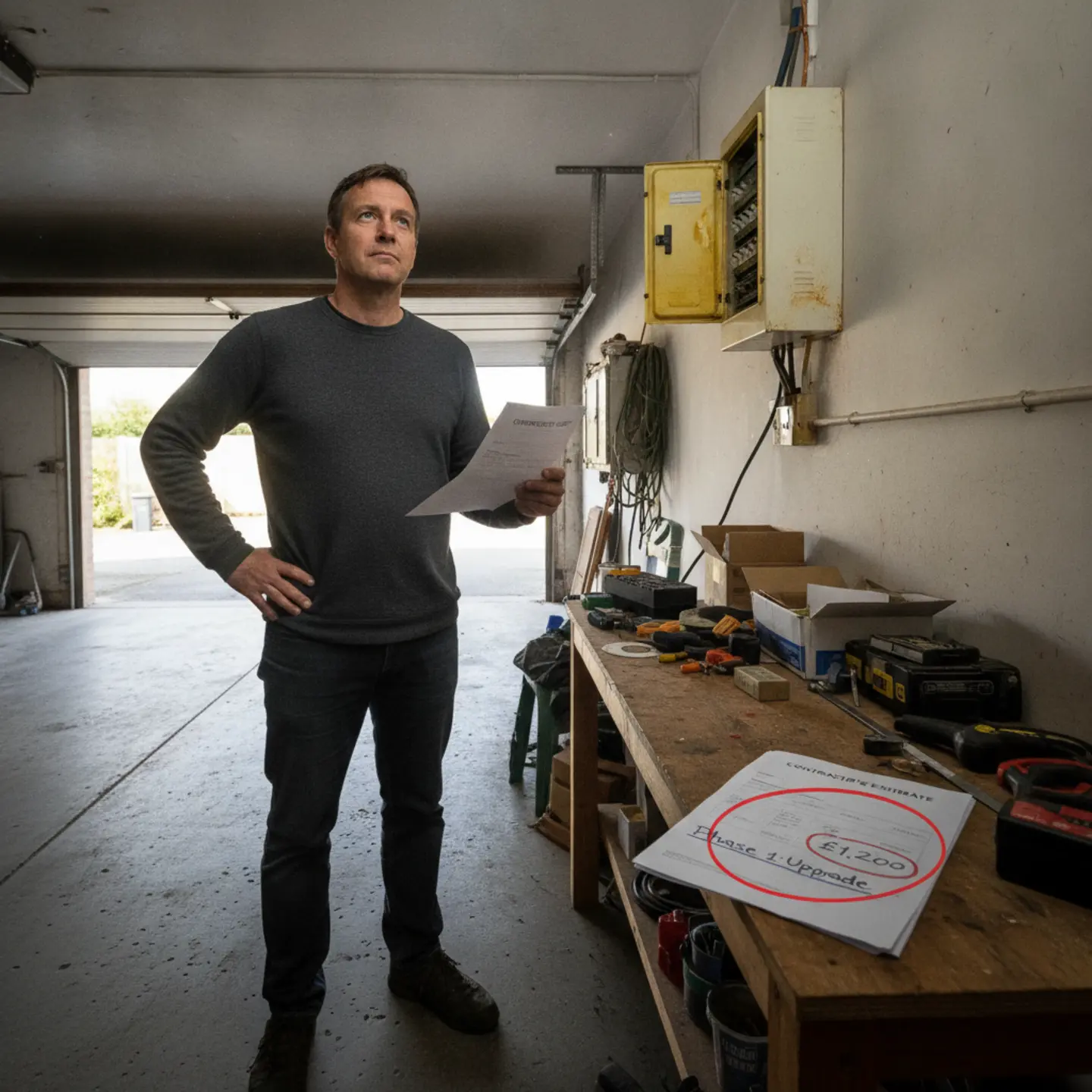
Your production line stops. An electrical inspector flags three code violations. Your insurance company won’t cover the downtime. Now you’re facing fines, retrofits, and lost revenue — all because electrical code requirements shifted and nobody told you.
That scenario plays out in DFW manufacturing plants more often than most facility managers want to admit. It’s not because the people running these plants are careless — it’s because industrial electrical code compliance is genuinely complicated, it changes regularly, and the consequences of getting it wrong are severe enough to disrupt an entire operation. The inspection report sitting on your desk isn’t a judgment. It’s a roadmap. But only if you know how to read it and who to call.
This guide walks through what manufacturing plants in the Dallas-Fort Worth area actually need to know about electrical code compliance — from NEC requirements and arc flash analysis to hazardous location classifications and panel upgrades. We’re going to explain it in plain language, tell you what things actually cost, and help you understand what needs immediate attention versus what can be planned over time. No pressure, no surprise bills.
Why Manufacturing Plants in DFW Face Unique Electrical Code Challenges
Manufacturing facilities in the Dallas-Fort Worth area don’t face the same electrical code landscape as a retail strip center or an office building. The combination of heavy equipment, specialized processes, and the sheer scale of industrial operations creates a compliance environment that’s genuinely more complex — and the stakes when something goes wrong are proportionally higher.
If you’re running a manufacturing operation in DFW and working with a team that provides electrical services in the Dallas-Fort Worth area, the first thing to understand is that your facility exists at the intersection of multiple regulatory layers. Getting any one of them wrong can trigger violations that affect your insurance, your operations, and your workers.
The DFW Manufacturing Growth Problem
The Dallas-Fort Worth metroplex has seen significant industrial growth over the past decade. New distribution centers, expanded manufacturing operations, and an influx of light industrial tenants have filled industrial parks across the region — from the Alliance corridor in Fort Worth to the industrial zones in Grand Prairie, Mesquite, and Garland. That growth is genuinely good news for the regional economy. But it creates a specific electrical problem that shows up repeatedly in the field.
Rapid expansion means older facilities are adding new equipment without updating the electrical infrastructure underneath it. A plant that was built in the 1980s or 1990s to run a specific type of operation now has modern CNC machines, automated conveyor systems, or heavy-duty HVAC equipment drawing far more current than the original electrical system was designed to handle. The equipment gets installed. Production starts. And the electrical system quietly struggles to keep up — until an inspection, a breaker failure, or a fire forces the issue.
New tenants in industrial parks face a related version of this problem. When you lease a space, you inherit the electrical system that the previous tenant left behind. That system was designed for their operation, not yours. If they ran lighter equipment and you’re running heavy machinery, the conductors, panels, and grounding systems may be fundamentally mismatched for your needs — even if everything looks fine on the surface.
State vs. Local Code Confusion
Texas adopts the National Electrical Code (NEC) as its baseline electrical standard, but the state allows — and DFW municipalities actively use — local amendments that modify or add to the NEC requirements. This creates a situation where a manufacturing plant can pass a state-level inspection and still fail a local inspection in Dallas, Fort Worth, Arlington, or any of the other municipalities in the metro area.
Most manufacturers don’t know this distinction exists until they’re sitting in front of an inspector who’s citing a local amendment they’ve never heard of. It’s not a gotcha — it’s just the reality of how electrical regulation works in Texas. The municipalities have legitimate reasons for their amendments, often related to local climate conditions, specific industrial activity in the area, or lessons learned from past incidents. But if you’re not working with someone who knows the local code landscape, these surprises can be expensive.
📋 You’re Not Alone: Code Compliance Confusion Is Common
Most manufacturing plants in DFW have at least one code gap they didn’t know about. The good news: it’s fixable, and you’re not the first to face it. Inspectors expect to find violations in older facilities — that’s why they’re there. A violation report isn’t a failure; it’s the first step toward a safer, more compliant operation.
Understanding the National Electrical Code (NEC) Requirements for Manufacturing
The NEC is the foundation of electrical code compliance in the United States. It’s published by the National Fire Protection Association (NFPA) and updated every three years — which means the version your facility was built to may be two, three, or even four code cycles behind the current standard. For most facilities, that gap isn’t immediately dangerous, but it creates compliance issues that surface during inspections and insurance reviews.
Staying current with NEC changes that affect manufacturing operations requires professional expertise. The code is several hundred pages long, and the sections that apply to industrial facilities — Article 430 for motors and motor circuits, Article 500 for hazardous locations, Article 700 for emergency systems — are among the most technical in the document. Knowing which changes affect your specific operation, and what those changes require you to do, is exactly why industrial electrical services exist as a specialized discipline.
Motor and Heavy Equipment Circuits
Article 430 of the NEC governs motors and motor circuits, and it’s one of the most frequently violated sections in manufacturing environments. The core requirements aren’t complicated in principle: conductors must be properly sized for the load they carry, overcurrent protection must be appropriately rated, and disconnect switches must be accessible and properly labeled.
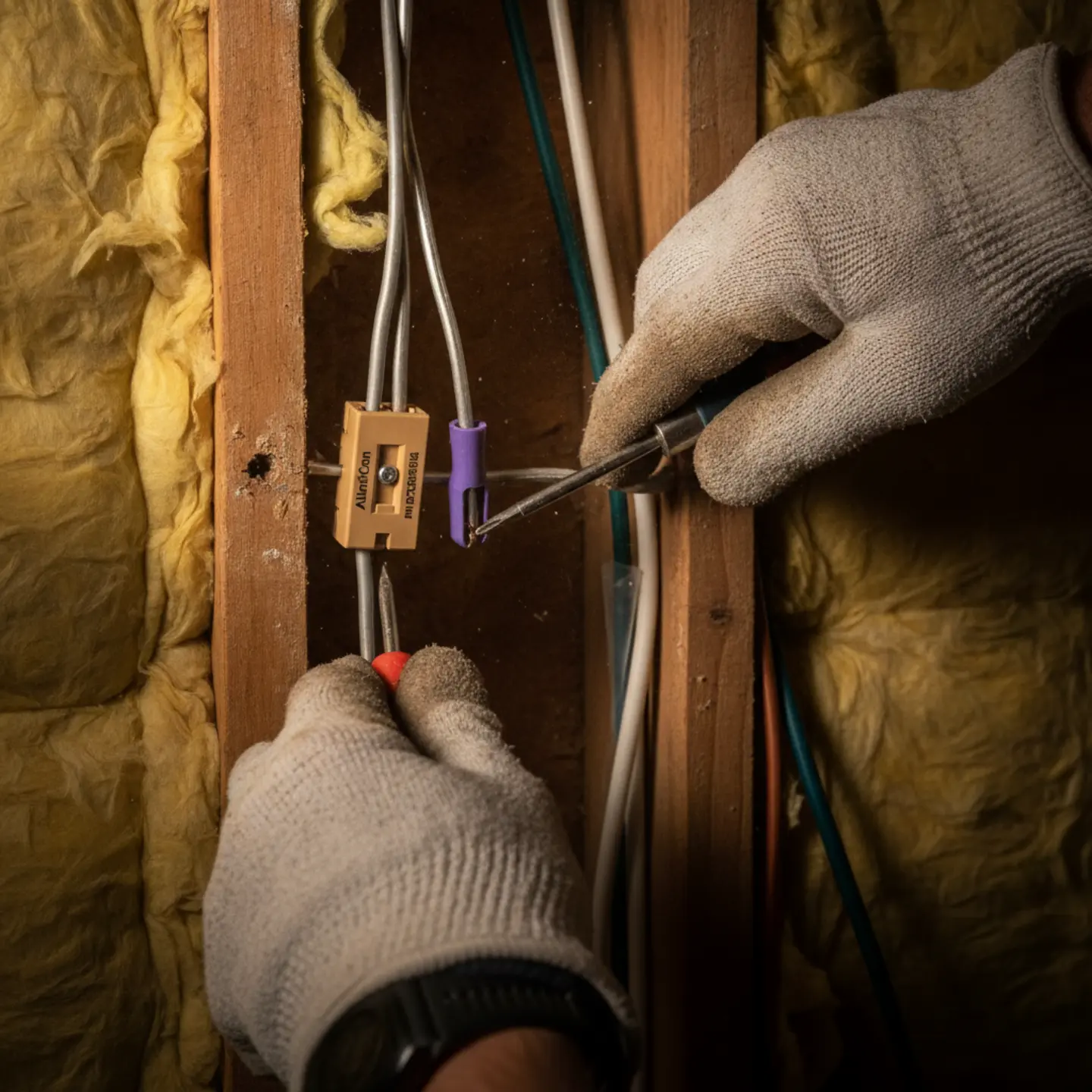
In practice, violations happen because equipment gets upgraded while the original wiring stays in place. A motor gets replaced with a larger unit, but nobody checks whether the existing wire gauge can handle the increased current draw. Over time, that undersized conductor runs hot, degrades the insulation, and creates a fire risk that’s invisible until something fails. Proper wire sizing isn’t just a code requirement — it’s the difference between a motor that runs efficiently for years and one that burns out prematurely and takes surrounding equipment with it.
Disconnect switches are another common problem area. The NEC requires that every motor have a disconnect within sight of the motor and within reach of the operator. “Within sight” means visible from the motor’s operating position — not in the next room, not around a corner, and not blocked by a pallet of inventory that someone stacked in front of it last Tuesday. The requirement exists because workers need to be able to shut down equipment quickly in an emergency, and they can’t do that if the disconnect is inaccessible.
Arc Flash and Worker Safety Requirements
The NEC now mandates arc flash hazard analysis for electrical equipment operating above 50 volts. This requirement has become one of the most significant compliance issues for manufacturing plants in recent years, partly because it’s relatively new and partly because it requires engineering analysis — not just an inspection.
Arc flash is what happens when electricity jumps through the air between conductors or between a conductor and ground. The energy released in an arc flash event can be enormous — temperatures at the arc point can exceed 35,000 degrees Fahrenheit, and the pressure wave from the event can cause serious injuries even at a distance. The analysis calculates the incident energy at each point in your electrical system, and the results determine what PPE workers need to wear when working near that equipment and how far away they need to stay during energized work.
Proper labeling based on the arc flash analysis is required on all equipment. Labels must show the hazard level, required PPE category, and safe approach distances. Workers need training to understand what those labels mean and how to follow them. This isn’t just a compliance checkbox — it’s the system that prevents a maintenance technician from opening a panel without the right protective equipment and getting seriously hurt.
Grounding and Bonding Systems
Grounding and bonding requirements for manufacturing facilities are more demanding than for commercial buildings, and for good reason. Heavy equipment creates electrical noise, static charges, and fault currents that can damage sensitive electronics, create shock hazards, and interfere with control systems. A robust grounding system dissipates these safely.
Bonding — the process of connecting metal structures, equipment housings, and piping systems together so they’re all at the same electrical potential — is critical in facilities with automated equipment or sensitive electronics. Without proper bonding, voltage differences between metal components can cause nuisance trips, equipment damage, and in worst cases, shock hazards for workers who touch two different pieces of equipment simultaneously. In older facilities, corrosion and loose connections degrade grounding systems over time, and the degradation is invisible without testing.
Common Code Violations We Find in DFW Manufacturing Plants
After working with manufacturing facilities across the Dallas-Fort Worth area, certain violations show up again and again. This isn’t a criticism of the people running these plants — most of these problems developed gradually, often as a result of equipment upgrades, operational changes, or simply the passage of time. But knowing what to look for helps you understand what an inspection is likely to find and why it matters.
The Undersized Wire Problem
Undersized conductors on machinery circuits are probably the most common violation we find in manufacturing environments. It happens when equipment is upgraded — a larger motor, a new piece of automated machinery, additional HVAC equipment — but the original wiring remains in place. The installer focuses on getting the new equipment running and doesn’t always assess whether the existing conductors can handle the increased load.
The consequences of undersized wiring develop slowly and then all at once. Voltage drop causes equipment to run inefficiently and can damage motors and control systems over time. The conductors themselves run hotter than they should, which degrades the insulation and eventually creates a fire hazard. By the time the problem is obvious, you may be looking at a panel that’s been running hot for years, with degraded wiring that needs to be replaced rather than just upsized at the connection points.
Grounding Failures in Older Facilities
Grounding systems in older manufacturing facilities often look fine visually but fail when tested. Corrosion at connection points, loose bonding conductors, and grounding electrodes that have degraded over decades all reduce the effectiveness of the grounding system without any visible indication that something is wrong. The problem only becomes apparent when a fault occurs and the grounding system fails to clear it properly — or when a tester measures the grounding resistance and finds it’s far higher than it should be.
Regular grounding resistance testing is the only way to know whether your grounding system is actually working. It’s a relatively quick and inexpensive test, and the results tell you definitively whether your system meets code requirements. If you haven’t had your grounding system tested in the past few years, that’s worth putting on your list — especially if your facility is more than 20 years old.
Other violations we regularly encounter include improper disconnect placement (equipment where the disconnect is in a different room or blocked by stored materials), outdated or missing panel labeling (panels where circuits aren’t identified or where the documentation hasn’t been updated to reflect changes), and hazardous location equipment installed incorrectly — standard fixtures used in areas where explosion-proof or dust-tight equipment is required.
If any of these violations sound familiar, a professional electrical inspection is designed to give you a clear picture of exactly where your facility stands — and a realistic plan for addressing any gaps, prioritized by severity and planned around your production schedule.
Arc Flash Hazard Analysis: What Manufacturers Must Know
Arc flash analysis is one of the most misunderstood requirements in industrial electrical compliance. Many facility managers have heard of it, know vaguely that it’s required, but aren’t entirely sure what it involves or what it costs. Let’s clear that up.
An arc flash analysis is an engineering study that models your electrical system to calculate the amount of energy that would be released if an electrical fault occurred at each point in the system. The result is expressed in calories per square centimeter — a measure of incident energy that directly corresponds to the severity of burns a worker could receive if they were at that location during a fault event. Those numbers determine the PPE category required for work at each location and the safe approach distances workers must maintain.
As part of comprehensive industrial electrical safety systems, arc flash analysis has become a non-negotiable requirement for manufacturing facilities. OSHA’s general duty clause requires employers to protect workers from recognized hazards, and arc flash is explicitly recognized as a serious hazard in manufacturing environments. Most insurance carriers now require documentation of arc flash analysis as a condition of coverage for facilities with significant electrical equipment.
How Arc Flash Analysis Works
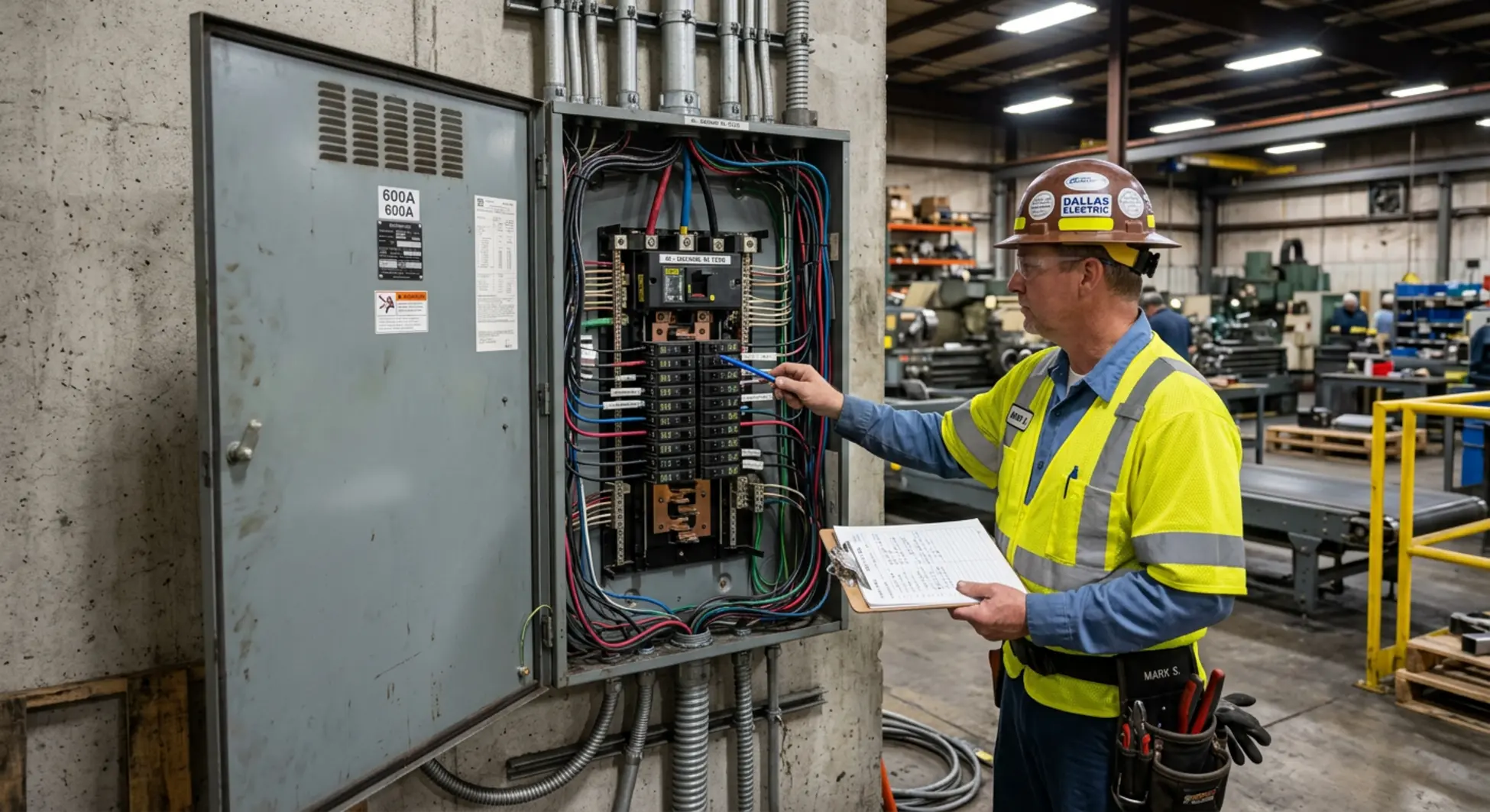
The process starts with a detailed survey of your electrical system — documenting every panel, transformer, switchgear assembly, and major piece of equipment, along with the conductor sizes, overcurrent protection ratings, and system configuration. This data is entered into engineering software that models the system and calculates fault current at each point.
The analysis produces a report showing incident energy levels throughout your facility, along with the PPE requirements and approach distances for each location. For most manufacturing plants, the analysis takes one to three days to complete, depending on system complexity. The results are then used to create arc flash labels that must be affixed to every piece of equipment covered by the analysis.
Labeling and Worker Protection
The labels produced by an arc flash analysis aren’t just compliance paperwork — they’re the frontline safety tool that prevents workers from making dangerous decisions without adequate protection. A properly formatted arc flash label shows the hazard risk category, the required PPE (which ranges from a face shield and gloves for lower-energy systems to a full arc flash suit for higher-energy equipment), the incident energy level, and the restricted and prohibited approach distances.
Worker training is an essential part of making the labeling system work. A label on a panel means nothing if the maintenance technician opening it doesn’t know what the PPE category means or doesn’t have the right equipment available. Training should cover how to read arc flash labels, what PPE is required at each hazard level, and what to do before performing any energized work on industrial equipment.
One important note: arc flash analysis must be updated whenever significant changes are made to the electrical system. Adding a new transformer, changing overcurrent protection ratings, or reconfiguring switchgear can change the incident energy levels throughout the system. An analysis that was accurate five years ago may not reflect the current state of your facility if you’ve added equipment or made system changes since then.
⚡ What Arc Flash Analysis Actually Means (In Plain English)
Arc flash analysis calculates how much energy would be released if an electrical fault happens at a specific point in your system. The result tells you what PPE workers need and how far they should stay away from equipment. It’s not just compliance — it’s the difference between a minor incident and a serious injury. Arc flash analysis typically costs $2,000–$5,000 depending on system complexity, which is a fraction of the liability exposure if a worker is injured without documented hazard analysis in place.
Emergency Disconnect Systems and Lockout/Tagout Compliance
Emergency disconnect systems are one of those requirements that seem obvious in principle but create real compliance problems in practice. The concept is simple: every piece of machinery must have a way to shut off the electrical power quickly and safely, and that shutdown capability must be accessible to the person operating or working on the equipment.
In practice, manufacturing facilities accumulate equipment over years and decades, and the disconnect systems that were properly installed when the equipment was new often become non-compliant as the facility evolves. Storage gets added around equipment. New machinery gets installed in spaces that weren’t designed for it. Production layouts change. The result is disconnect switches that are technically present but practically inaccessible — which is a code violation and an OSHA violation, regardless of whether the switch itself is functioning correctly.
Proper equipment safety upgrades include ensuring that every piece of machinery has a properly positioned, clearly labeled, and fully functional disconnect system. This isn’t just about code compliance — it’s about giving your workers a real way to protect themselves when something goes wrong.
Sight and Reach Requirements
The NEC requires that motor disconnects be within sight of the motor and within reach of the operator. “Within sight” means the disconnect must be visible from the motor’s operating position — you can’t have a disconnect around a corner or behind a partition. “Within reach” is generally interpreted as no more than 50 feet away, though many applications require closer placement. Some equipment may qualify for a locked-in-the-open-position disconnect that’s not immediately adjacent, but this requires specific conditions to be met and documented.
The sight and reach requirements exist because emergencies happen fast. If a worker needs to shut down a piece of equipment immediately, they need to be able to do it without running to another part of the facility. Every second of delay in an emergency shutdown situation increases the risk of injury. This is one of those requirements where the practical safety rationale is completely obvious once you think about it from the worker’s perspective.
Labeling and Testing
Disconnect switches must be clearly labeled to identify which equipment they control. In a facility with multiple machines and multiple disconnects, unlabeled or poorly labeled switches create confusion that can be dangerous in an emergency. Workers under stress don’t have time to trace wiring to figure out which switch controls which machine — the label needs to make it immediately obvious.
Regular testing of disconnect switches is also required. A disconnect that hasn’t been operated in years may be corroded, seized, or otherwise non-functional — you won’t know until you try to use it. Testing should be documented, because documentation is what proves to an inspector or an insurance investigator that your safety systems are actually maintained and functional, not just present on paper.
Lockout/tagout (LOTO) procedures — the process of physically locking out energy sources before performing maintenance — depend entirely on having functional, accessible disconnects. LOTO is one of OSHA’s most frequently cited standards in manufacturing environments, and a significant portion of LOTO violations trace back to electrical disconnect issues rather than procedure failures.
Hazardous Location Classifications and Specialized Equipment
Not every manufacturing environment is the same, and the NEC recognizes that some facilities present specific risks that require specialized electrical equipment and installation methods. Hazardous locations — areas where flammable gases, combustible dust, or ignitable fibers are present — require equipment designed to prevent ignition of those materials. Using standard electrical equipment in a hazardous location is a serious code violation, but more importantly, it’s a genuine fire and explosion risk.
The DFW manufacturing sector includes a wide range of operations that involve hazardous location classifications: grain handling facilities, metal fabrication shops, chemical processing operations, woodworking plants, and textile operations, among others. For specialized industrial electrical installations in these environments, the equipment selection and installation methods are fundamentally different from standard industrial work.
Class I: Flammable Gases and Vapors
Class I locations are areas where flammable gases or vapors are present in concentrations sufficient to create an ignition risk. Chemical plants, refineries, solvent storage areas, and spray painting operations are common examples. Class I locations are further divided into Division 1 (where hazardous concentrations exist under normal operating conditions) and Division 2 (where concentrations only exist under abnormal conditions like equipment failure).
Electrical equipment in Class I locations must be explosion-proof — designed so that any internal ignition cannot propagate to the surrounding atmosphere. Conduit systems must be sealed at specific intervals to prevent gases from migrating through the conduit system. Every component, from light fixtures to junction boxes to motor starters, must be rated for the specific Class I division in which it’s installed. Substituting standard equipment because the explosion-proof version costs more is not an option — the consequences of getting this wrong are catastrophic.
Class II: Combustible Dust Environments
Class II locations involve combustible dust — grain dust, flour, metal dust, wood dust, and similar materials that can form explosive clouds when suspended in air. Grain mills, flour processing plants, metal fabrication shops, and woodworking facilities are common Class II environments in the DFW area. Combustible dust explosions have caused some of the most devastating industrial accidents in U.S. history, and the electrical code requirements for these environments reflect that severity.
Electrical equipment in Class II locations must be dust-tight and non-sparking. Light fixtures must be sealed to prevent dust accumulation on hot surfaces. Motor housings must prevent dust ingress. Conduit systems must be sealed. The goal is to eliminate any electrical component that could either ignite suspended dust directly or provide a hot surface that could ignite settled dust. Regular cleaning to prevent dust accumulation is also part of the overall safety system — electrical compliance alone isn’t sufficient if housekeeping allows dangerous dust buildup.
Class III: Ignitable Fiber Hazards
Class III locations involve ignitable fibers or flyings — materials like cotton lint, textile fibers, and wood shavings that can be ignited if they contact hot surfaces or open sparks. Textile mills, cotton gins, and some paper processing operations fall into this category. Class III requirements focus on preventing fiber accumulation on electrical equipment and eliminating ignition sources that could set accumulated fibers alight.
Proper classification of hazardous locations requires professional assessment. The boundaries of hazardous locations aren’t always obvious — a grain handling operation might have Class II areas in the grain storage and processing zones but standard areas in the office and maintenance shop. Getting the classification right is essential, because both over-classification (requiring expensive specialized equipment where it’s not needed) and under-classification (using standard equipment where specialized equipment is required) create problems.
Panel Upgrades and Capacity Planning for Growing Operations
Manufacturing operations grow. New equipment gets added, production lines expand, and the electrical demand on the facility increases over time. The electrical panel that was correctly sized for the original operation may be significantly undersized for the current one — and an undersized panel creates a cascade of problems that affect both compliance and operations.
Overloaded panels cause breaker trips that interrupt production. They run hot, which accelerates wear on the panel components and creates fire risk. They force workers and maintenance staff to work around limitations — resetting breakers, managing which equipment runs simultaneously — rather than running the facility efficiently. And they create code violations that become apparent the moment an inspector looks at the load calculations.
Thoughtful electrical panel upgrades and capacity planning are one of the most impactful investments a growing manufacturing operation can make. Done right, a panel upgrade eliminates current problems and creates the capacity for future growth without requiring another round of expensive retrofitting in a few years.
⚠️ The Hidden Danger: Outdated Electrical Systems in Growing Operations
Adding new machinery to an old electrical system is like adding lanes to a highway with the same power plant. Overloaded panels cause breaker trips, equipment damage, and fire hazards. If you’re expanding your manufacturing operation, get a capacity assessment before adding equipment — not after you’ve already installed it and started tripping breakers.
Load Calculation and Capacity Assessment
A professional load calculation does more than add up the nameplate ratings on your equipment. It accounts for demand factors (not all equipment runs at full load simultaneously), starting currents for motors (which can be six to eight times the running current during startup), and the specific characteristics of your operation. A facility that runs multiple large motors that start at different times has a very different load profile than one that starts everything simultaneously.
Motor starting current is one of the most commonly overlooked factors in capacity planning. A 50-horsepower motor might draw 65 amps at full running load but 400 amps or more during startup. If your panel isn’t sized to handle those starting currents, you’ll experience voltage sags that affect other equipment, nuisance breaker trips, and potential damage to the motor itself from repeated failed starts. Proper load calculation accounts for these peaks, not just the steady-state running loads.
Planning for Future Growth
One of the most expensive mistakes in panel design is sizing for current needs only. A panel that’s correctly sized today but has no spare capacity will require replacement or expansion the next time you add significant equipment. Building in spare breaker spaces and adequate bus capacity costs relatively little at the time of installation but saves enormously when the next round of equipment arrives.
The same principle applies to the service entrance and main distribution equipment. If your utility service is already at capacity, adding a new panel won’t help — you’ll need a service upgrade as well. Getting ahead of that requirement, rather than discovering it when you’re trying to install new equipment on a production deadline, is the difference between a planned upgrade and an emergency retrofit.
Preventive Maintenance and Code Compliance Documentation
The most expensive electrical problems in manufacturing facilities are the ones that could have been prevented. A connection that runs hot for months before failing. A grounding system that degrades slowly until a fault exposes the problem. A panel that’s been overloaded for years before a breaker failure causes a production shutdown. These aren’t unpredictable failures — they’re the predictable result of systems that weren’t being monitored and maintained.
Shifting from a reactive maintenance approach to a preventive one isn’t just good practice — it’s increasingly required by insurance carriers and code officials. Preventive electrical maintenance programs for manufacturing facilities typically include regular inspections, thermal imaging, testing of safety systems, and documentation of all maintenance activities.
Thermal Imaging and Predictive Maintenance
Thermal imaging is one of the most powerful tools available for preventive electrical maintenance. An infrared camera can identify hot spots in panels, connections, and equipment that are invisible to the naked eye but indicate developing problems. A connection that’s running 30 degrees hotter than it should be is failing — slowly, but failing. Thermal imaging catches that before it becomes a fire or a production shutdown.
A thermal scan of your main electrical panels, distribution equipment, and major machinery connections can be completed in a few hours and provides a snapshot of the health of your electrical system. Problems identified during a thermal scan can typically be corrected during planned maintenance windows, rather than during emergency shutdowns. The cost difference between a planned repair and an emergency repair is significant — and the cost difference between a repair and a fire is not worth calculating.
💡 Pro Tip: Thermal Imaging Catches Problems Before They Fail
Overheating connections and components show up on thermal imaging long before they cause failures. A quick thermal scan of your panel and major equipment can identify issues that visual inspection misses entirely — and prevent the kind of expensive, unplanned downtime that disrupts production schedules and damages customer relationships. We recommend thermal imaging as part of any annual electrical maintenance program for manufacturing facilities.
Testing and Documentation
Grounding resistance testing, insulation resistance testing on motors and cables, and functional testing of safety systems (emergency stops, arc flash protection devices, disconnect switches) should all be part of a regular maintenance program. Each of these tests is relatively quick and inexpensive, and each provides documented evidence that your safety systems are functioning as required.
Documentation is the part of preventive maintenance that many facilities undervalue — until they need it. When an inspector asks for maintenance records, when an insurance investigator is reviewing a claim, or when a liability attorney is examining whether a facility was properly maintained, documentation is the evidence that protects you. Maintenance records that show regular testing, identified problems, and completed repairs tell a story of a responsibly operated facility. The absence of documentation tells a different story.
Equipment labeling and circuit documentation must also be kept current as the facility changes. A panel directory that was accurate five years ago but doesn’t reflect the equipment changes since then is worse than useless in an emergency — it actively misleads workers who are trying to shut down the right circuit quickly. Keeping documentation current is an ongoing responsibility, not a one-time task.
Working with Inspectors: What to Expect and How to Prepare
Electrical inspections make a lot of facility managers nervous, and that anxiety often leads to one of two counterproductive responses: either avoiding inspections as long as possible, or going into an inspection without preparation and hoping for the best. Neither approach serves you well. Understanding what inspectors are actually looking for and how to work effectively with them makes the whole process much less stressful.
DFW inspectors are thorough, but they’re not adversaries. Their job is to verify that your facility meets code requirements — not to find violations for their own sake, and not to shut you down. When they find violations, they want you to correct them. That’s the whole point. A good inspector will explain what they found, why it’s a violation, and what’s required to correct it. Working with that process, rather than against it, is the most effective approach.
Professional code compliance inspections and corrections involve knowing how to communicate with inspectors and navigate the correction process — which is a skill that comes from experience, not just technical knowledge.
Preparing for an Inspection
The most effective preparation for an electrical inspection is organization. Have your documentation ready: as-built drawings of your electrical system (or as close to current as you have), maintenance records, previous inspection reports, and any permits for electrical work that’s been done in the facility. Inspectors appreciate working with facilities that have their documentation in order — it signals that the facility is managed responsibly and makes the inspector’s job easier.
Before the inspection, walk through the facility and address the obvious issues. Blocked disconnects, missing panel labels, burned-out exit signs, and visible wiring damage are all things you can identify and correct without professional help. Addressing these before the inspection doesn’t just reduce the violation count — it demonstrates to the inspector that you take code compliance seriously, which sets a positive tone for the entire inspection.
Understanding Inspection Results
Violations found during an inspection are typically categorized by severity. Critical violations represent immediate safety hazards — things like exposed live conductors, non-functional emergency systems, or hazardous location equipment that’s creating an imminent fire or explosion risk. These require immediate attention and may result in the affected area being shut down until corrections are made.
Major violations are code non-compliance issues that need to be corrected but don’t represent immediate hazards. These typically have correction timelines of 30 to 60 days, though the specific timeline is set by the inspector based on the nature of the violation. Minor violations — often documentation issues, labeling problems, or minor installation deficiencies — may have longer correction timelines.
A failed inspection isn’t a disaster. It’s a roadmap. The violation report tells you exactly what needs to be corrected, and working through those corrections systematically — prioritized by severity, planned around your production schedule — is exactly what the process is designed to enable. The goal is a compliant facility, and the inspection is one step toward that goal.
Planning electrical upgrades before an inspection — or before adding new equipment — is always easier and less expensive than dealing with emergency repairs or code violations under pressure. We can help you prioritize work, plan around your production schedule, and get accurate estimates before you commit to anything.
The Cost of Non-Compliance vs. The Investment in Code-Compliant Systems
Let’s talk about money, because that’s ultimately what drives most decisions about electrical upgrades in manufacturing facilities. The honest answer is that proactive compliance is almost always cheaper than reactive response — but the math isn’t always obvious until you lay it out.
OSHA fines for electrical violations range from a few thousand dollars for serious violations to $156,259 per violation for willful or repeated violations (as of current OSHA penalty schedules). A single inspection that finds multiple serious violations can result in fines that dwarf the cost of the corrections that would have prevented them. And OSHA fines are just the beginning of the financial exposure.
Investing in industrial electrical system upgrades proactively is fundamentally a risk management decision. The question isn’t whether the upgrades cost money — they do. The question is whether that cost is larger or smaller than the expected cost of the problems they prevent.
Calculating the True Cost of Downtime
Production downtime from electrical failures is one of the most significant financial risks in manufacturing. When a panel fails, a motor burns out from undersized wiring, or a breaker trips and won’t reset because the circuit is overloaded, production stops. Every hour of downtime has a cost: lost production, idle labor, potential customer penalties for missed delivery commitments, and the premium cost of emergency electrical repairs versus planned work.
For a manufacturing facility running two shifts, even a single day of unplanned downtime can easily cost $50,000 to $100,000 or more when all the factors are included. A panel upgrade that costs $15,000 and eliminates that risk pays for itself the first time it prevents a failure. The math is straightforward — the challenge is that the upgrade cost is certain and immediate, while the downtime cost is probabilistic and future. Preventive upgrades eliminate that uncertainty.
Insurance and Liability Protection
Insurance coverage for manufacturing facilities increasingly depends on documented code compliance. Many carriers now require periodic electrical inspections as a condition of coverage, and claims arising from incidents where code violations contributed to the loss are frequently denied or reduced. A fire caused by undersized wiring in a facility that hasn’t had an electrical inspection in a decade is a very different insurance situation than a fire in a facility with documented maintenance records and recent compliance certifications.
Liability exposure from worker injuries is potentially unlimited. If a worker is injured in an arc flash incident and the facility didn’t have a required arc flash analysis or the required PPE wasn’t available, the employer’s liability exposure extends well beyond workers’ compensation. Documented compliance — arc flash analysis completed, labels installed, PPE provided, workers trained — is the evidence that demonstrates the employer took the required steps to protect workers. Without that documentation, the liability exposure is much harder to defend.
“We’ve seen contractors recommend expensive upgrades when a simple repair would solve the problem. We won’t do that. If there’s a cheaper way to meet code, we’ll tell you. That’s how a family business stays in business — by being straight with people.”
How to Choose an Electrical Contractor for Industrial Code Compliance Work
Not all electrical contractors are equipped to handle industrial code compliance work. General commercial electricians may be excellent at what they do, but manufacturing environments require specific knowledge of NEC industrial articles, hazardous location requirements, arc flash analysis, and the local DFW code amendments that affect manufacturing facilities. Choosing the wrong contractor can result in work that doesn’t actually bring you into compliance — which means you’ve spent money and still have violations.
Epic Electrical’s industrial services are built around the specific requirements of manufacturing facilities in DFW. We’re a third-generation family business, and our approach is straightforward: we explain what’s required, why it matters, and what it costs — and if there’s a cheaper way to solve the problem, we’ll tell you. That’s not a marketing line. It’s how we’ve built relationships with manufacturing clients across the metroplex.
Questions to Ask Potential Contractors
When evaluating electrical contractors for industrial code compliance work, ask specific questions that reveal their actual experience level. How many manufacturing plants have they worked with in DFW? Can they provide references from facilities similar to yours — similar size, similar equipment, similar processes? How do they stay current with NEC updates and local code amendments? What’s their process for working with inspectors, and have they handled correction work after failed inspections?
A contractor who can answer these questions specifically and confidently, and who can provide references that you can actually call, is demonstrating real experience. A contractor who gives vague answers or pivots to talking about their residential work is telling you something important about their industrial expertise.
Ask about their approach to estimates as well. A detailed estimate that breaks down labor, materials, and timeline by task gives you something you can evaluate and compare. A vague estimate with a single number and no breakdown doesn’t tell you what you’re getting, and it doesn’t give you any basis for holding the contractor accountable to the scope of work.
Red Flags to Avoid
Watch out for contractors who pressure you into work without explaining why it’s needed. If a contractor tells you that you need a complete panel replacement but can’t explain the load calculation that demonstrates the current panel is inadequate, that’s a red flag. A legitimate recommendation comes with a clear explanation of the problem, the code requirement it violates, and why the proposed solution addresses it.
Vague estimates with no breakdown of costs are another warning sign. You should know what you’re paying for before you commit to any significant electrical work. A contractor who won’t provide a detailed estimate is either uncertain about the scope of work (which is a problem) or deliberately keeping the details vague (which is a bigger problem).
Contractors who are unfamiliar with local DFW code amendments, who can’t name the inspectors they’ve worked with in your municipality, or who are unwilling to provide references from manufacturing clients should be approached with caution. Industrial electrical compliance work is specialized, and the contractor you hire should be able to demonstrate that specialization concretely.
✅ Honest Truth: Sometimes the Cheaper Fix Is the Right Fix
We’ve seen contractors recommend expensive upgrades when a simple repair would solve the problem. We won’t do that. If there’s a cheaper way to meet code — a repair instead of a replacement, a targeted upgrade instead of a full system overhaul — we’ll tell you. That’s how a family business stays in business: by being straight with people and earning the next call.
Ready to get your manufacturing plant code-compliant? We’re a third-generation family business with deep roots in DFW manufacturing. Get a free estimate and see how we approach industrial electrical work — no high-pressure sales, just honest expertise and a clear plan.
Frequently Asked Questions About Industrial Electrical Code Compliance in DFW
How often do manufacturing plants need electrical inspections in Texas?
Texas doesn’t mandate a specific inspection frequency for manufacturing facilities, but most insurance companies require annual or biennial inspections as a condition of coverage. If you’ve added equipment, changed your operations significantly, or had a previous violation, more frequent inspections are wise — the risk profile of your facility has changed, and your compliance documentation should reflect that. We recommend at least every two years for active manufacturing plants, and annually for facilities with hazardous location classifications or significant equipment additions.
What’s the difference between a code violation and a safety hazard?
A code violation is a failure to meet electrical code standards — it may or may not be immediately dangerous. A safety hazard is something that poses an immediate risk of injury or fire. Some violations are both; others are code issues that need correction but aren’t currently creating imminent danger. For example, missing arc flash labels are a code violation and a safety issue, but they’re not an immediate hazard in the way that an exposed live conductor is. Either way, both categories need to be addressed — the difference is in the urgency and the timeline for correction.
Can we upgrade our electrical system in phases, or does it all have to be done at once?
Phased upgrades are often possible and can be a smart way to manage costs and minimize production disruption. The key is prioritization: critical safety issues — arc flash hazards, grounding failures, non-functional emergency disconnects — typically need immediate attention and can’t wait for a phased approach. Less urgent compliance items, like panel capacity upgrades or documentation improvements, can often be planned over a longer timeline. We’ll help you understand which category each issue falls into and build a realistic upgrade plan that works with your production schedule and budget.
How much does an arc flash analysis cost, and is it really necessary?
Arc flash analysis typically costs $2,000–$5,000 depending on the complexity of your electrical system and the number of equipment locations that need to be analyzed. Yes, it’s necessary — if your facility has equipment operating above 50 volts (which every manufacturing plant does), arc flash analysis is required by OSHA’s general duty clause and by most insurance policies. The cost is small compared to the liability exposure if a worker is injured and you don’t have documentation showing that you identified and communicated the hazard. We’ve seen facilities spend more on a single day of production downtime than the cost of a complete arc flash analysis.
What happens if we fail an electrical inspection?
A failed inspection isn’t a disaster — it’s a roadmap for corrections. The inspector will issue a report listing violations by severity: critical violations (immediate hazards) need to be addressed right away; major violations typically have 30–60 days for correction; minor violations may have longer timelines. The inspector will explain what’s required for each correction, and in most cases, they’re willing to work with you on realistic timelines if you demonstrate that you’re taking the corrections seriously. We help clients understand their violation reports, plan the corrections, and communicate effectively with inspectors throughout the process.
Do we need a licensed electrician to do all electrical work in a manufacturing plant?
Yes. Texas requires licensed electricians for most industrial electrical work, and for good reason — the stakes in manufacturing environments are high enough that unlicensed work creates serious liability exposure. Some minor maintenance tasks might be performed by qualified facility staff under specific conditions, but any work involving circuits, equipment installation, panel modifications, or code compliance corrections must be done by a licensed electrical contractor. This protects your facility, your workers, and your insurance coverage. If an incident occurs and unlicensed work is found to have contributed to it, the liability implications are severe.
Get Your DFW Manufacturing Plant Code-Compliant — Without the Runaround
Stop worrying about what an inspector might find or what happens when the next piece of equipment gets added. We’ll walk through your system, explain exactly what needs to be fixed and why, and give you an honest estimate with no surprises. If there’s a cheaper fix, we’ll tell you — that’s just how we operate.
Epic Electrical is a third-generation family business serving manufacturing facilities across Dallas, Fort Worth, Arlington, Keller, Southlake, Colleyville, Grapevine, Lewisville, and the surrounding DFW area. We’ve been doing this long enough to know that the best way to earn your trust is to be straight with you from the first conversation.
Epic Electrical — Third-generation DFW electrical contractors. If there’s a cheaper fix, we’ll tell you.
(682) 478-6088