Key Takeaways
- Wired Ring doorbells require a licensed electrician in Texas — any work involving wiring, transformers, or new circuits legally requires a TECL-licensed contractor.
- Transformer compatibility is the #1 DIY failure point — Ring doorbells need 16–24V AC at 10–40VA; most older Mid Cities homes have undersized transformers that won’t support them.
- Installation costs range from $100 to $700+ — depending on whether your wiring is compatible, whether the transformer needs replacing, and how complex the wire run is.
- Aluminum wiring (common in 1960s–70s homes) requires specialized connectors — standard wire nuts create fire hazards; this is not a DIY situation under any circumstances.
- Permits may be required for new wiring or transformer work — skipping them can cause serious problems during home sales, insurance claims, or code inspections.
- Verify any electrician’s TECL license through TDLR — takes two minutes at tdlr.texas.gov and protects you from unlicensed work that can void your insurance.
- Bundling smart home installations reduces per-device costs — if you’re adding outdoor cameras or security lighting, scheduling everything together saves on travel and setup time.
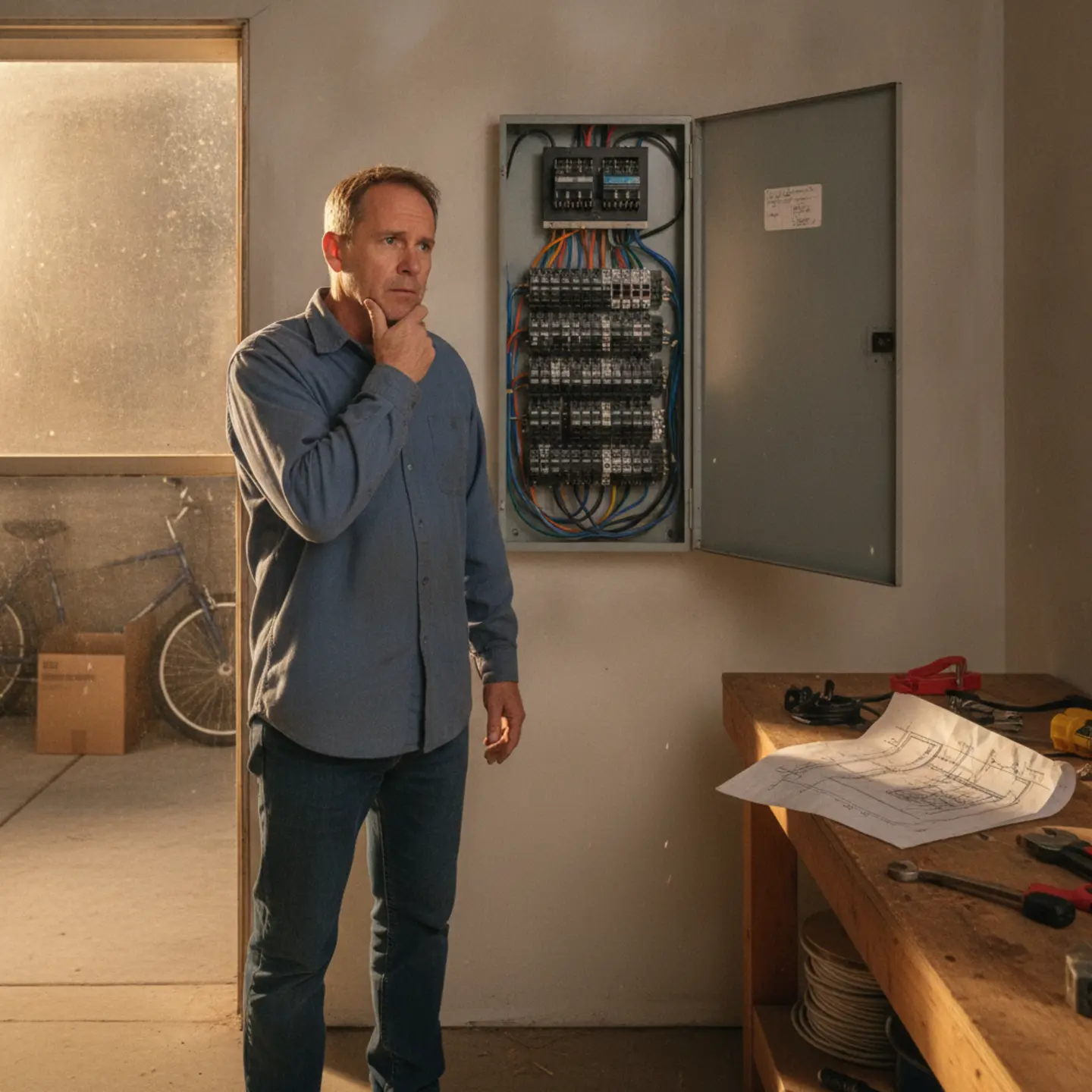
You’ve ordered a Ring Doorbell, watched a YouTube installation video, and thought it’d be a quick weekend project. Then you opened your electrical panel, looked at the transformer, and realized you have no idea what voltage it’s rated for—or whether it’s even compatible. Sound familiar?
You’re not in bad company. Thousands of Mid Cities homeowners have landed in exactly the same spot: device in hand, confidence fading, YouTube tutorial suddenly looking a lot less reassuring. The videos make it look simple because they skip the part where the transformer is wrong, the wiring is aluminum, or the existing doorbell circuit runs through a finished wall with no accessible path. That’s where things get complicated—and expensive if you get it wrong.
This guide is for homeowners who want straight answers. We’ll walk you through what Ring doorbell installation actually costs in the DFW Mid Cities area, what Texas law says about who can legally do the work, how to spot a qualified electrician versus someone who’s going to create more problems than they solve, and what to expect based on your specific home’s wiring situation. No fluff, no scare tactics—just the information you need to make a confident decision.
Why Mid Cities Homeowners Are Installing Ring Doorbells (And Why It’s Not Always a DIY Job)
💡 You’re Not Alone in Wondering If You Can DIY This
Plenty of handy homeowners have watched YouTube videos and thought a Ring doorbell installation would be a quick weekend project. The problem? Most of those videos skip the transformer testing step—which is where things go wrong. Estimates suggest 20–40% of Ring installations encounter some wiring issue, most commonly an undersized or incorrect voltage transformer.
Package theft isn’t a minor inconvenience in the DFW metro—it’s a persistent, documented problem. Texas consistently ranks among states with high property crime rates, and porch piracy follows population density. The Mid Cities corridor, which includes Bedford, Euless, Hurst, Colleyville, North Richland Hills, Keller, Southlake, Grapevine, and surrounding communities, has seen the same surge in video doorbell adoption that’s happening nationally. The National Retail Federation estimates millions of packages are stolen annually, and homeowners who’ve been hit once aren’t waiting to be hit again.
Beyond theft deterrence, the shift to remote work has changed how people think about their front doors. Monitoring deliveries from a home office, screening visitors without walking downstairs, getting alerts when a package arrives—these aren’t luxury features anymore. They’re practical tools that fit how a lot of Mid Cities residents actually live and work.
Insurance companies are also paying attention. Some providers now offer premium discounts for homes with video security systems, creating a direct financial incentive that goes beyond convenience. In communities like Colleyville and Southlake—where median household incomes are among the highest in the region—smart home investments are increasingly standard, not exceptional.
Here’s the complication: a significant portion of the Mid Cities housing stock predates smart home technology by decades. Homes built in the 1970s, 1980s, and even early 1990s were wired for simple mechanical doorbells—a completely different electrical requirement than what a Ring Pro or Ring Video Doorbell Wired demands. The transformer that’s been sitting in your utility closet since 1978 was designed to ring a chime, not power a Wi-Fi-connected camera with night vision and motion detection.
That’s the gap between “I can swap this out myself” and “I need a professional”—and it’s wider than most YouTube videos suggest. If you’re in Hurst or Colleyville and your home was built before 1990, the odds are meaningful that your existing doorbell setup won’t support a modern Ring device without some level of professional intervention. That’s not a scare tactic; it’s just the reality of older housing stock meeting newer technology. Our Hurst electrician services and Colleyville electrician services handle this exact situation regularly.
The Real Cost of Ring Doorbell Installation in DFW (What You’ll Actually Pay)
⚠️ The Transformer Surprise (And Why It’s the #1 DIY Failure Point)
Most older Mid Cities homes have transformers rated for simple mechanical doorbells—typically 8–10V. Ring doorbells need 16–24V at 10–40VA. If you don’t test this first, you’ll install the device, it won’t work, and you’ll have wasted time and potentially damaged the transformer or the Ring itself. The transformer itself costs $30–$60, but professional installation adds $200–$400 in labor—a cost most homeowners don’t see coming.
Let’s talk about money honestly, because the cost range for Ring doorbell installation is genuinely wide—and the difference between the low end and the high end comes down to what your home’s existing electrical situation looks like. Here’s what you’re actually looking at in the DFW Mid Cities market in 2026:
| Scenario | Estimated Cost | What’s Included |
|---|---|---|
| Simple replacement (compatible wiring) | $100–$250 | Swap old doorbell, test voltage, connect Ring |
| Transformer upgrade/replacement | $350–$700+ | Test existing transformer, install new one, verify specs |
| New low-voltage wiring run | $250–$500+ | Fish wire through walls/attic, connect to transformer |
| Aluminum wiring (specialized work) | $400–$800+ | Proper connectors, safety compliance, full testing |
| Service call minimum (most electricians) | $75–$150 | Base fee for the visit, regardless of work done |
Permit fees, where required, typically run $25–$100 depending on the city. Hurst, Colleyville, and Southlake each have their own thresholds—more on that in the permits section below.
Why Transformer Upgrades Cost More Than You’d Expect
The transformer is the piece of this puzzle that catches most homeowners off guard. Ring doorbells require 16–24V AC at 10–40VA. That’s a specific electrical requirement, and it’s not negotiable—if your transformer doesn’t meet it, the device either won’t work at all or will behave erratically (dropping Wi-Fi, failing to record, not chiming).
The transformer unit itself is inexpensive—$30–$60 at any hardware store. The cost is in the labor. A licensed electrician has to locate the existing transformer (often tucked inside a utility closet, attic, or near the electrical panel), test it with a multimeter, confirm it’s inadequate, safely disconnect it, install and wire the new one, and verify the entire circuit is performing correctly. That’s 1–2 hours of skilled labor, which is where the $200–$400 labor cost comes from.
This is also the #1 reason DIY Ring installations fail. Homeowners skip the transformer testing step, install the device, and then spend hours troubleshooting connectivity issues before realizing the problem was never the Ring—it was the power source. If you want to avoid that frustration entirely, an electrical wiring assessment before installation will tell you exactly what you’re working with.
DIY vs. Professional Installation: The Real Cost Comparison
On paper, DIY looks cheaper. The Ring device itself runs $100–$250, you might spend $30 on a new transformer if you think to buy one, and maybe $20 on a bypass kit for digital chimes. Total out-of-pocket: $200–$350 before your time.
But that math assumes everything goes right. If you damage the transformer during installation, that’s $100–$300 in replacements. If you damage the Ring device through improper voltage, that’s another $100–$250. If you wire it incorrectly and void the Ring warranty, you’re buying a new device at full price. And if you have aluminum wiring and use the wrong connectors, you’ve created a fire hazard that won’t announce itself until something goes wrong.
Professional installation at $100–$700+ includes warranty on labor, code compliance, proper troubleshooting, and the peace of mind that comes from knowing someone with a TECL license and insurance did the work. It also protects your home’s resale value—a point we’ll come back to in the permits section.
💡 Pro Tip: Ask About Bundling Other Smart Home Work
If you’re planning to install outdoor outlets for Ring cameras, security lighting, or other electrical upgrades, bundling them into one service call can reduce per-device costs since the electrician’s travel time and setup are already accounted for. The total project cost will be higher, but the per-item cost often comes down. Ask about this when you’re getting quotes.
Do You Actually Need a Licensed Electrician? (Texas Law Says Yes—Here’s Why)
This question comes up constantly, and the answer depends on which type of Ring doorbell you’re installing and what your home’s wiring situation looks like.
Battery-powered Ring doorbells—the ones that don’t require existing wiring—can technically be installed by anyone. You’re mounting a device to a wall and connecting it to Wi-Fi. No electrical work involved, no license required.
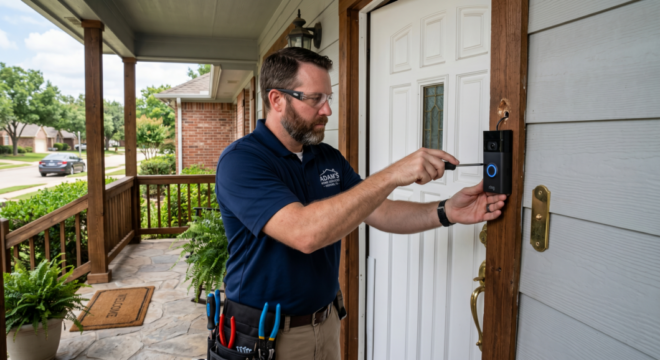
Wired Ring doorbells are a different story entirely. Under Texas law, any work involving electrical wiring, transformer modifications, or new circuits requires a licensed Texas Electrical Contractor (TECL holder). This isn’t a gray area or a technicality—it’s the Texas Occupations Code, enforced by the Texas Department of Licensing and Regulation (TDLR).
That means the handyman who offers to install your Ring doorbell for $75 is operating illegally if he touches your transformer or runs any wire. It also means that if something goes wrong—a fire, a shock, a failed home inspection—you’re holding the bag. Your homeowner’s insurance may deny claims related to damage from unlicensed work, and home inspectors will flag it during a sale.
TDLR enforcement actions show hundreds of cases annually involving unlicensed electrical activity in Texas. The agency actively investigates complaints and can issue fines for both the unlicensed worker and, in some cases, the homeowner who hired them. The risk isn’t theoretical—it’s documented and ongoing.
How to Verify Your Electrician’s License (It Takes 2 Minutes)
Before you hire anyone to touch your doorbell wiring, take two minutes to verify an electrician’s TECL license through TDLR’s online search tool. Here’s exactly how:
- Go to tdlr.texas.gov/licensesearch
- Select “License Type” and choose “Electrical”
- Search by the contractor’s business name or individual license number
- Verify the license status shows “Active” — not expired, suspended, or inactive
- Check the “Disciplinary Actions” section for any history of violations
- Ask for proof of General Liability Insurance ($300,000+ minimum) and Workers’ Compensation coverage
If an electrician can’t or won’t provide their TECL number for verification, that’s an immediate red flag. Any legitimate licensed contractor will have this information readily available and won’t hesitate to share it.
What Happens If You Hire Unlicensed Work (Spoiler: It’s Bad)
The consequences of unlicensed electrical work aren’t just theoretical. Home inspectors and appraisers are trained to identify work that wasn’t done by licensed contractors, and they flag it. When you go to sell your home—whether that’s next year or a decade from now—unpermitted, unlicensed electrical work can kill a deal or force expensive remediation before closing.
Insurance implications are equally serious. If a fire starts in your electrical system and an investigation reveals the work was done by an unlicensed contractor, your insurer has grounds to deny the claim. That’s not a risk worth taking to save $100 on a doorbell installation.
And then there’s the safety dimension. Older homes in the Mid Cities area—particularly those built in the 1960s and 1970s—may have aluminum wiring, which requires specialized connectors and handling. Improper connections on aluminum wiring create overheating risks that can smolder inside walls for months before becoming a visible problem. This is the kind of hazard that doesn’t announce itself until it’s too late.
Not sure if your home’s wiring is compatible? That’s exactly what a free estimate is designed to answer. A licensed electrician can test your transformer and give you a clear picture of what’s needed—no guesswork, no surprises.
Wiring Compatibility: The #1 Reason DIY Ring Installations Fail
🔌 Why Aluminum Wiring Matters (And Why It’s Not a DIY Fix)
Homes built in the 1960s–1970s often have aluminum wiring instead of copper. Aluminum requires special connectors (COPALUM or AlumiConn) to prevent overheating and fire hazards. Standard wire nuts don’t work safely with aluminum—the connection can loosen over time as the metal expands and contracts, creating heat buildup inside your walls. This is a licensed electrician job, period.
Ring doorbells require specific low-voltage AC power: 16–24 volts, 10–40 volt-amperes. That’s the spec, and it’s not flexible. Your existing doorbell transformer either meets it or it doesn’t—and there’s no way to know without testing it.
Homes built before 1990 frequently have transformers designed for simple mechanical doorbells that operate at 8–10V. These were perfectly adequate for a chime that went “ding-dong”—they’re not adequate for a device that streams HD video, connects to Wi-Fi, runs motion detection algorithms, and maintains a constant power draw. The mismatch isn’t subtle; it’s significant enough to cause device failure, connectivity drops, or transformer damage.
Testing voltage requires a multimeter and knowledge of how to use it safely around live electrical components. It’s not complicated for someone with electrical training, but it’s not a task for someone who learned from a YouTube video either. An experienced electrician can test your transformer in minutes and give you a definitive answer about whether your existing setup will work.
Aluminum Wiring: A Special Concern for Older Mid Cities Homes
Between approximately 1965 and 1975, aluminum wiring was widely used in residential construction as a cost-saving alternative to copper. Many homes in Hurst, Colleyville, North Richland Hills, and surrounding Mid Cities communities that were built during this period have aluminum wiring throughout.
The problem isn’t the aluminum itself—it’s what happens at connection points. Aluminum expands and contracts at a different rate than copper, and over time, connections made with standard wire nuts can loosen, creating resistance and heat. The National Electrical Code requires COPALUM or AlumiConn connectors for any new connections to aluminum wiring—standard wire nuts are not an acceptable solution and create documented fire hazards.
If your home has aluminum wiring and you’re installing a Ring doorbell, this is not a situation where “being handy” changes the calculus. A licensed electrician with specific experience in aluminum wiring systems must handle the connections. The risk of getting it wrong isn’t a device malfunction—it’s a fire that starts inside your wall and isn’t visible until it’s already serious.
Not sure if your home has aluminum wiring? Look at the wire insulation near your electrical panel—aluminum wiring is typically labeled “AL” on the jacket. If you’re not sure, a licensed electrician can identify it quickly during a site visit. Our team at Epic Electrical handles aluminum wiring regularly and can assess your specific situation as part of any electrical wiring inspection.
What to Do If Your Home Has No Existing Doorbell Wiring
Some Mid Cities homes—particularly those that were never set up with a traditional doorbell, or where the original wiring was removed during a renovation—have no existing low-voltage wiring to work with. In this case, a new wire run is required, and the cost reflects that additional work.
Running new low-voltage wire typically costs $250–$500 or more, depending on the distance from the transformer to the doorbell location and the routing complexity. If the wire needs to travel through a finished attic, inside finished walls, or around obstacles like HVAC systems or structural members, the time and complexity increase accordingly.
The electrician will fish wire through the most accessible path available—often through the attic, down an interior wall, and out through the exterior wall at the doorbell location. In some cases, conduit installation is the cleaner solution. Either way, this is a job that requires proper tools, knowledge of how to work in attic spaces safely, and an understanding of low-voltage wiring requirements under the NEC.
Questions to Ask Before Hiring an Electrician (Don’t Skip These)
Getting quotes from electricians is straightforward. Getting good quotes from qualified electricians requires asking the right questions. Here’s what to ask—and what the answers tell you about who you’re dealing with.
- “Are you a licensed Texas Electrical Contractor (TECL)?” — Non-negotiable starting point. Get the license number and verify it yourself at TDLR.
- “Do you have experience installing Ring Doorbells and working with low-voltage systems?” — Not all electricians specialize in smart home work. This is a legitimate differentiator.
- “What voltage and VA rating does my existing transformer have, and will you test it?” — Any electrician who can’t answer this question or dismisses it doesn’t understand the job.
- “What’s your process if my wiring isn’t compatible or needs a new run?” — Shows they’ve thought through complications and won’t be surprised by common scenarios.
- “Are permits required for this work in my city, and will you handle them?” — Responsible contractors know local codes and take ownership of the permit process.
- “Can you provide proof of insurance and references from recent smart home or doorbell installations?” — Essential for protecting yourself and verifying their experience.
Homeowners in the DFW area typically get 2–4 quotes before hiring an electrician for smart home work, and research often takes 1–3 weeks. That’s a reasonable process—don’t let anyone rush you out of it. The decision drivers that matter most are trust and reputation (reviews and referrals), license and insurance verification, clear pricing with a detailed written quote, and demonstrated experience with smart home devices specifically.
For residents in the eastern Mid Cities corridor, our Bedford electrician services and Euless electrician services cover those communities specifically—local knowledge matters when it comes to permit requirements and common housing stock issues.
Red Flags That Should Send You Looking Elsewhere
Equally important as knowing what to ask is knowing what to watch for. These are the warning signs that an electrician isn’t the right fit for this job:
- Refuses to test your existing transformer or dismisses concerns about voltage compatibility — this is the first thing a qualified electrician should want to check.
- Claims permits aren’t needed when they likely are for new wiring or transformer work — this suggests either ignorance of local codes or a willingness to cut corners.
- Pressure tactics, rush pricing, or reluctance to provide detailed written quotes — legitimate contractors don’t need to pressure you.
- Can’t explain what voltage or VA rating means or why it matters for Ring doorbells — basic knowledge gap that signals a lack of experience with low-voltage systems.
- No verifiable TECL license or insurance proof — walk away immediately.
- Prices significantly lower than competitors without clear explanation — usually means unlicensed work, skipped permits, or inadequate materials.
Ready to move forward? A licensed electrician in your area can walk you through your specific situation, test your transformer, and provide a detailed quote—so you know exactly what you’re paying for before any work begins.
Permit Requirements by Mid Cities City (Hurst, Colleyville, Southlake, and More)
✅ Permits Seem Like a Hassle, But They Protect You
Skipping permits might save a few hundred dollars upfront, but it can cost you thousands during a home sale when an inspector flags unpermitted electrical work. Licensed electricians handle permits as part of doing the job right—it’s not an add-on, it’s standard practice for any work that requires one.
Permit requirements for Ring doorbell installation vary by city and by the scope of work involved. Here’s the general framework for the Mid Cities area:
Simple doorbell replacement using existing compatible wiring: In most Mid Cities jurisdictions—Hurst, Bedford, Euless, Colleyville, Southlake—a straight swap that uses existing wiring and doesn’t modify the transformer or circuit typically doesn’t require a permit. You’re essentially replacing one device with another on an existing, unchanged circuit.
New wiring runs, transformer replacements, or circuit modifications: This is where it gets more variable. When new wire needs to be run, a transformer replaced, or any modification made to an existing circuit, a permit is often required—and the threshold varies by city. Southlake and Colleyville tend to have more rigorous inspection processes than some smaller municipalities. Hurst and Bedford have their own permit offices with specific requirements.
The safest approach is to let your licensed electrician determine what’s required for your specific city and scope of work. A good electrician will know the local requirements and handle the permit application as part of the job. If an electrician tells you permits definitely aren’t needed without first knowing your city and the full scope of work, that’s a flag worth noting. For specific questions about your city’s requirements, contacting a licensed Southlake electrician or your local building department will get you a definitive answer.
Texas has adopted the 2023 National Electrical Code (NEC) as its baseline standard, though local jurisdictions may apply amendments. The NEC includes specific provisions for low-voltage systems—including how they must be separated from high-voltage wiring and what power sources are acceptable. A licensed electrician working under current code knows these requirements; an unlicensed handyman typically doesn’t.
What Happens If You Skip a Required Permit
The consequences of skipping a required permit aren’t hypothetical—they show up at predictable, inconvenient moments. Here’s the realistic sequence of events:
- During a home sale: The home inspector flags unpermitted electrical work. The buyer’s lender may require remediation before closing. You’re now paying to have the work redone—properly, with permits—or negotiating a price reduction that costs more than the permit would have.
- During an insurance claim: If a fire or electrical incident occurs and an investigation reveals unpermitted work, your insurer has grounds to deny the claim. This is documented in insurance policy language—it’s not a technicality, it’s standard exclusion language.
- During a code enforcement action: Cities can issue fines and require removal and reinstallation of unpermitted work. The cost of doing it twice is always more than doing it right the first time.
- On your home’s value: Unpermitted work can negatively affect appraisals and creates a disclosure obligation in Texas real estate transactions. It’s a liability that follows the property.
Seasonal Timing: When to Schedule Your Ring Doorbell Installation
Timing your installation isn’t just about convenience—it affects how quickly you can get scheduled with a qualified electrician and, in some cases, what your options look like.
The holiday season (October through December) is peak demand for Ring doorbell installations across the DFW metro. Package theft concerns spike as holiday shipping volumes increase, and homeowners who’ve been thinking about a video doorbell all year finally pull the trigger. The result is that top-rated electricians in the Mid Cities area can have scheduling backlogs of 2–4 weeks during this period. If you’re ordering a Ring in October and expecting it installed by Thanksgiving, plan ahead.
Spring and summer (April through August) also see elevated demand, driven by the home sales season and general home improvement momentum. The DFW metro’s active real estate market means a lot of homeowners are upgrading properties before listing, and smart home installations are a common pre-sale improvement. During this period, scheduling windows can stretch similarly.
The relative off-season—January through March and September—tends to offer shorter scheduling windows and better availability. If your installation isn’t urgent, these months are often the easiest time to get a preferred appointment slot. Some contractors may also offer slightly better availability for bundled projects during slower periods.
One practical strategy: if you’re planning multiple smart home upgrades—outdoor Ring cameras, security lighting, additional outdoor outlets—bundling them into a single service call during a less busy period can work in your favor on both scheduling and overall cost. Our Grapevine electrician team and Keller electrician services handle bundled smart home projects regularly and can help you plan the most efficient approach.
Top Licensed Electricians in Mid Cities: Compared and Reviewed
The Mid Cities corridor is served by a significant number of licensed electricians, but the segment that specializes in smart home and low-voltage work is more constrained. Not every general electrician has deep experience with Ring doorbells, transformer diagnostics, and the specific compatibility issues that come with older Mid Cities housing stock. Here’s how to think about your options.
Epic Electrical (Mid Cities-Based, Family-Owned)
Address: 7304 Hialeah Cir W, North Richland Hills, TX 76182
TECL License: Active, verified through TDLR
Service Area: Dallas-Fort Worth, including Hurst, Colleyville, Southlake, Bedford, Euless, North Richland Hills, Grapevine, Keller, and surrounding Mid Cities communities
Specialties: Residential electrical work, smart home installations, low-voltage wiring, transformer diagnostics and replacement, aluminum wiring systems
Approach: Third-generation family business with a no-pressure philosophy. If there’s a cheaper fix, they’ll tell you. Transparent pricing, detailed written quotes, and honest assessment of what’s actually needed—no upsells, no manufactured urgency.
Customer Feedback: Known for straightforward communication, willingness to explain technical details in plain language, and fair pricing without upsells. The father-son team has deep roots in the Mid Cities community and prioritizes long-term relationships over quick sales.
Notable Differentiator: As a family business that’s been serving this community for three generations, Epic Electrical’s approach is built around what’s right for the homeowner—not what generates the highest ticket. If your transformer is fine and you just need a simple swap, that’s what they’ll tell you. Visit the Epic Electrical homepage to learn more about their services and service area.
Comparison: What to Look For in Other Local Electricians
When evaluating other electricians in the Mid Cities area for Ring doorbell installation, the same standards apply regardless of company size or marketing presence:
- Verify TECL license status and check disciplinary history through TDLR before any conversation about pricing.
- Ask specifically about Ring doorbell and low-voltage installation experience — a general electrician who primarily does panel work and commercial wiring may not be the best fit for this specialized task.
- Request proof of General Liability Insurance ($300,000+ minimum) and Workers’ Compensation coverage — this protects you if something goes wrong during the installation.
- Get detailed written quotes that break down labor, materials, and any potential additional costs — a quote that just says “$350 installed” without line items is a flag.
- Read recent reviews on Google, Angi, and Nextdoor, paying specific attention to comments about communication, unexpected charges, and whether the electrician explained what they were doing.
- Ask for references from recent smart home or doorbell installations — not just general electrical work.
The Fort Worth electrician services market is competitive, and there are good options available. The key is doing the verification work upfront rather than discovering problems after the job is done.
Common Installation Scenarios: What to Expect
Your Ring doorbell installation will fall into one of four scenarios, and knowing which one applies to your home before you call an electrician will help you ask better questions and evaluate quotes more accurately.
Scenario 1: The Straightforward Swap
Your home already has doorbell wiring and a transformer rated 16–24V AC at 10–40VA. The electrician disconnects the old doorbell, connects the Ring, tests voltage, confirms the chime is compatible, and you’re done.
- Timeline: 30 minutes to 1 hour
- Cost: $100–$250 plus service call minimum
- Likelihood in older Mid Cities homes: Relatively uncommon—most homes built before 1990 don’t have transformers rated to Ring’s specifications
This is the best-case scenario, and if your home qualifies, you’re in good shape. The only way to know for certain is to test the transformer—which is why that step should never be skipped.
Scenario 2: Transformer Replacement
Existing wiring is compatible and accessible, but the transformer is undersized or providing the wrong voltage. The electrician tests the current transformer, confirms it’s inadequate, and installs a new one rated for Ring’s requirements.
- Timeline: 1–2 hours
- Cost: $350–$700 (includes transformer, labor, testing, and verification)
- Likelihood: The most common scenario in homes built before 1990
This is where most DIY attempts break down. The homeowner installs the Ring, it doesn’t work correctly, they spend hours troubleshooting the device and the Wi-Fi, and eventually discover the transformer was the problem all along. A licensed electrician identifies and resolves this in the first visit.
Scenario 3: New Wiring Run
Your home has no existing doorbell wiring, or the existing run is inaccessible due to renovations or routing through finished spaces. The electrician runs new low-voltage wire from the transformer to the doorbell location.
- Timeline: 2–4 hours depending on routing complexity
- Cost: $250–$500+ plus transformer work if needed
- Likelihood: Common in homes that never had a traditional doorbell or where wiring was removed during renovation
This scenario requires the most planning and may involve attic access, wall fishing, or conduit installation. In some cases, minor drywall patching is needed after the wire run. A good electrician will walk you through the routing plan before starting work so there are no surprises.
of Ring doorbell installations encounter wiring compatibility issues—most commonly an undersized transformer. Testing before installation prevents this entirely.
Wondering which scenario applies to your home? The only way to know for certain is to have a licensed electrician assess your existing setup. You can get a detailed quote that includes a transformer test and wiring assessment—so you know exactly what you’re dealing with before any work begins.
Wondering which scenario applies to your home? Get a free estimate from a licensed electrician who can assess your wiring, test your transformer, and give you an accurate cost upfront—no surprises, no pressure.
Safety Considerations: Why This Isn’t a DIY Project (Even If You’re Handy)
Being handy is a genuine asset as a homeowner. It saves money, builds confidence, and makes you more capable of maintaining your home over time. But “handy” and “qualified for electrical work” aren’t the same thing, and this is a distinction worth understanding clearly.
Low-voltage systems are generally less dangerous than line-voltage (120V/240V) circuits, but they’re not without risk. Transformer work involves connections to the home’s main electrical system. Improper connections—even at low voltage—can create shock hazards, damage expensive equipment, or cause overheating in wire insulation. The risks are lower than panel work, but they’re real.
“The issue isn’t whether you’re capable of following instructions—it’s whether you have the diagnostic tools, the safety training, and the code knowledge to handle what you find when the instructions don’t match your specific situation.”
That’s the real gap. YouTube tutorials work when your home matches the scenario in the video. When your transformer is in an unusual location, your wiring is aluminum, your chime is digital and needs a bypass kit, or your wire run goes through a finished wall—the tutorial stops being useful and your judgment has to fill the gap. Without electrical training, that’s a risky position to be in.
Improper grounding or bonding is another concern that doesn’t get enough attention in DIY discussions. Grounding issues may not cause immediate problems—they create conditions where problems are more likely to occur and more severe when they do. Code violations in this area may not show up until a home inspection or an insurance investigation after an incident.
The bottom line: if your installation is a simple swap with compatible existing wiring and a correctly rated transformer, the risk profile is lower. If anything else is involved—transformer replacement, new wire run, aluminum wiring, digital chime bypass—professional installation isn’t just the safer choice, it’s the right one. Our team provides residential electrical services that include full safety assessments as part of any installation work.
Frequently Asked Questions About Ring Doorbell Installation
Do I need an electrician to install a Ring Doorbell, or can I do it myself?
If your home already has compatible doorbell wiring and a correctly rated transformer (16–24V AC, 10–40VA), a simple swap might be manageable for a confident DIYer—though we’d still recommend having a licensed electrician verify the transformer specs first. However, if new wiring is needed, the transformer must be upgraded, or you have aluminum wiring, professional installation by a licensed electrician is strongly recommended for both safety and proper function. In Texas, any work involving wiring modifications or transformer replacement legally requires a TECL-licensed contractor, so the DIY option has clear limits.
What happens if my existing doorbell transformer isn’t strong enough for the Ring Doorbell?
If your transformer provides insufficient voltage or amperage, the Ring Doorbell may malfunction, drop Wi-Fi connectivity, fail to record reliably, or damage itself or the transformer over time. This is the most common reason Ring installations fail—the device gets blamed for what is actually a power supply problem. A licensed electrician can test your current transformer with a multimeter, confirm whether it meets Ring’s requirements (16–24V AC, 10–40VA), and replace it if needed. The transformer unit itself costs $30–$60; the labor to install it safely adds $200–$400, making this a $350–$700 repair in most cases.
Do I need a permit to install a Ring Doorbell in Hurst, Colleyville, or other Mid Cities areas?
A simple replacement using existing compatible wiring typically doesn’t require a permit in most Mid Cities jurisdictions. However, if new wiring needs to be run, a transformer is replaced, or any modification to an existing circuit is involved, a permit may be required—and the threshold varies by city. Hurst, Colleyville, Southlake, and Bedford each have their own permit offices and requirements. The safest approach is to let your licensed electrician determine what’s required for your specific city and scope of work, since they’ll know the local requirements and can handle the permit application as part of the job.
Can a handyman install a Ring Doorbell in Texas?
A handyman can legally install a Ring Doorbell only if it involves absolutely no modifications to existing electrical wiring or transformer work—essentially just swapping a battery-powered unit or mounting a device that’s already connected to compatible, unchanged wiring. If any electrical connections, wiring runs, or transformer work are needed, a licensed electrician (TECL holder) is legally required under the Texas Occupations Code. Handyman services that offer wiring or transformer work are operating illegally, and hiring them creates liability for you as the homeowner—including potential insurance claim denials and issues during home sales.
My house has aluminum wiring. Is it safe to install a Ring Doorbell?
Installing any electrical device on aluminum wiring requires specialized knowledge and the correct connectors—specifically COPALUM or AlumiConn connectors, which are designed to create safe, stable connections with aluminum wire. Standard wire nuts are not safe with aluminum wiring because the metal expands and contracts differently than copper, causing connections to loosen over time and creating heat buildup and fire hazards inside your walls. A licensed electrician with specific experience in aluminum wiring systems must perform this work—it is not a DIY-friendly situation regardless of your skill level or confidence with basic electrical tasks.
How much does it typically cost to run new doorbell wire if my house doesn’t have any?
Running new low-voltage wire for a Ring Doorbell typically costs $250–$500 or more, depending on the distance from the transformer to the doorbell location, whether the wire needs to be fished through finished walls or attics, and how accessible those spaces are. If the routing is straightforward—through an open attic and down an exterior wall—the cost tends to be toward the lower end. If the wire needs to travel through finished spaces, around obstacles, or requires conduit installation, costs increase accordingly. A detailed quote from a licensed electrician will give you an accurate estimate based on your specific home’s layout.
Ready to Get Your Ring Doorbell Installed Right?
If you’ve made it this far, you know more about Ring doorbell installation than most homeowners—and you know enough to make a confident decision. Whether your home needs a simple swap or a full transformer upgrade and new wire run, the right electrician will tell you exactly what’s needed and what it costs before any work begins.
We’re a family business, three generations deep, with roots in this community. If there’s a cheaper fix, we’ll tell you. If your existing setup works fine, we’ll tell you that too. No pressure, no upsells—just honest work done right.
Serving Hurst, Colleyville, Southlake, Bedford, Euless, North Richland Hills, Grapevine, Keller, and the entire Mid Cities corridor.
Or call us directly: (682) 478-6088
Fort Worth · Arlington · Keller · Southlake · Colleyville · Grapevine · Lewisville · and all of DFW